Jump to ratings and reviews
Rate this book

Bizarre: The Most Peculiar Cases of Human Behavior and What They Tell Us about How the Brain Works

Rate this book
The brain: brilliant, powerful... and utterly bizarre.

Why would someone be terrified they might slip down a shower drain? Or insist they've turned into a cat? What can rare brain disorders—and surprisingly common mental quirks—teach us about how we think, feel, and behave?

In Bizarre, neuroscientist Dr. Marc Dingman explores the strangest corners of the mind, from delusions and phobias to everyday oddities that defy logic. These phenomena aren't just curiosities—they offer surprising insights into memory, emotion, decision-making, and the very nature of consciousness.

With clarity, empathy, and a touch of humor, Bizarre invites readers to see the brain not just as our most powerful tool, but as a machine that is endlessly weird—and endlessly revealing.

288 pages, Paperback

First published February 1, 2023

45 people are currently reading
3356 people want to read

About the author

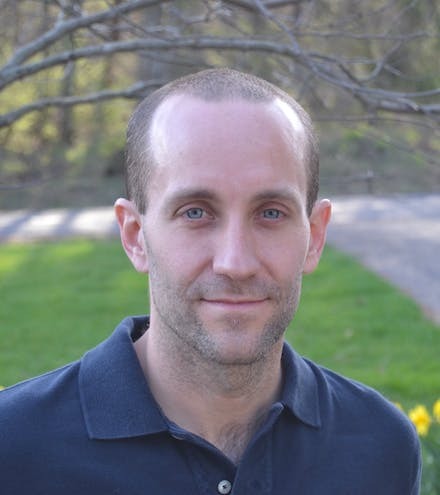
Marc Dingman

9 books42 followers
Ever since my undergraduate years, I've been captivated by the complexities of the human brain—its mysteries, functions, and the science that unravels it all. This fascination has evolved into a lifelong curiosity about everything neuroscience.

Currently, I teach courses in neuroscience and the health sciences at The Pennsylvania State University. Outside the classroom, I'm dedicated to making neuroscience accessible and engaging for everyone who shares my passion for learning about the brain. Through my writing and my YouTube channel, Neuroscientifically Challenged, I break down complex concepts into easy-to-understand segments that are both informative and concise.

Ratings & Reviews

What do you think?
Rate this book

Friends & Following

Create a free account to discover what your friends think of this book!

Community Reviews

5 stars
77 (29%)
4 stars
125 (48%)
3 stars
46 (17%)
2 stars
9 (3%)
1 star
0 (0%)
Displaying 1 - 30 of 62 reviews
Profile Image for Petra X.
2,455 reviews35.7k followers
Currently reading
April 12, 2023
Update 3 Issues. The author's discussion of prosopagnosia is completely incorrect. I have it to some extent, my bf has it too. Oliver Sacks had it to the extreme, and the author makes out everyone has it to that level and it's just not true. So that has led me to wonder about all the other presentations of bizarre syndromes and behaviour he details. But overall, still a brilliant book.
__________

Update 2. Lycanthropy. Since he was 11, and he was now 24, David had thought he was a cat. His own cat, Lola told him so and had taught him cat language. He played, hunted and lived like a cat "and (regrettably) even engaged in sexual activity with cats". He also had a crush on a tigress at the local zoo whom he hoped to rescue. He was treated in hospital for 6 years with drugs and therapy, but his conviction of being a cat never left him. David's disorder is called lycanthropy, the delusion that one has changed or can change into an animal (not just a wolf as in popular mythology.

As in (1) Cotard's Syndrome, is is a Delusional Misidentification Syndrome. There are three elements of this. Depersonalisation - they no longer see themselves as the people they really are. Derealisation - they are living in a dreamscape and not the real world and a failure in the brain's plausability-checking mechanism. Interesting isn't it?
__________

1. I had heard of Cotard's Syndrome - where people believe they are dead, but the first one described in the book, 'Hilde', who after a stroke, not only insisted she was dead but berated her family for not burying her! They wrapped her in a shroud and laid her in bed, but that didn't work she wanted a proper burial. This soothed her for a while, but every few months it would start up again... she was dead and needed a proper funeral. Bizarre indeed.
Profile Image for Bharath.
943 reviews630 followers
January 14, 2023
Bizarre is a very readable book, with a lot of unusual cases of people whose behaviour was far out of the usual. This is not a serious science book, though there are some broad level possibilities offered for such behaviours.

The book starts with the case of Charles Whitman, an ex-marine who after murdering his mother and wife, killed 14 people in and around the University of Texas at Austin. He left notes that stated that since some time he was feeling odd, and had unusual & irrational thoughts. While there is no definite link between any kind of mental illness and mass shootings, this case raised such possibilities. There are other cases which are less threatening to others – a Danish woman who believed she did not have her internal organs anymore, a man who believed he was a cat and tried to befriend a tiger, few who eat odd things, people who hoard cats/TVs etc, people with phobias and fears, a lady who was in love with the Eiffel Tower and many such interesting cases. In most of these cases, the exact deviation in the brain functioning and treatment has not been arrived at. There have been advances in brain science which have offered some first level analysis and possible reasons.

The book is easy to get through and it is not big either. The novelty factor does wear off though after the first few stories.

Thanks to Netgalley, the publisher and author for a free electronic review copy.
Profile Image for Barbara.
1,775 reviews5,295 followers
March 17, 2025


Marc Dingman has a Ph.D. in Neuroscience and is a faculty member in the Department of Biobehavioral Health at Pennsylvania State University. In this book Dingman discusses the human brain, and disorders that result when the brain malfunctions.


Author Marc Dingman

Scientists generally acknowledge that our brain determines who we are at the most fundamental level, and disruptions to our brain function can drastically change our behavior and personality. Dingman uses specific examples to illustrate this, and writes, 'In this book, we'll examine cases of people who, because of some deleterious influence on their brain, had their typical experience with the world categorically transformed.' Dingman goes on to explain, 'While most of the unusual phenomena I'll discuss in this book are brought about by some adverse effect on the brain - such as trauma, a tumor, infection, stroke, or psychiatric condition - others are curious manifestations of an otherwise normal brain, the far end of the spectrum of human behavior.'


The human brain

Some of the examples Dingman discusses seem bizarre, perhaps even funny, but the author emphasizes that these are real people who experienced considerable suffering, and they deserve respect.

For every patient Dingman cites, he describes the person's aberrant behavior or problem; depicts the parts of the brain involved (with illustrations); and offers some hypothesis about what might be going on in the brain to cause the symptoms. The book is accessible to the layperson, and doesn't require advanced knowledge of neurobiology.

Each chapter covers a different aspect of brain malfunction, including: Identification, Physicality, Obsessions, Exceptionalism, Intimacy, Personality, Belief, Communication, Suggestibility, Absence, Disconnection and Reality.

I'll provide some examples, to give a feel for the book.

🧠🧠 Cotard's syndrome is a rare mental disorder in which the affected person holds the delusional belief that they are dead; are decaying; are empty inside; don't exist; etc. Dingman describes several people with this affliction, one of whom he calls Will.


Distorted self-image of a person with Cotard's Syndrome

Following a motorcycle accident, Will - a 28-year-old stockbroker - fell into a coma. Will woke up several days later, and spent months in the hospital recovering from his injuries. Will had ongoing problems like a stiff right leg and partial blindness, but most serious of all, Will thought he was dead.

Will's mother took him on a trip to South Africa, to help him recover, but the heat convinced Will he was in hell.....further proof that he was dead. Will speculated that his cause of death might be a blood infection; a vaccination for yellow fever; or AIDS (which he didn't have).


Dingman explains that Cotard's Syndrom starts with a brain dysfunction, such as a trauma or tumor. This malfunction causes symptoms of derealization (a sense that your environment and the events happening around you seem to be part of another world) and depersonalization (a feeling of disconnection from yourself and your surroundings). The author observes, Cotard's syndrome patients tend to assume that if there is something wrong with their experience, the problem likely originates with them, and "the explanation their brain lands on is that they are dead, decaying, possessed, or something else along those strange existential lines."

Dingman writes that these kinds of delusions result from damage to the 'plausibility-checking mechanism' in the right side of the brain, and he discusses the disorder in detail.


*****

🧠🧠 Lycanthropy is a condition in which people with brain malfunctions have the highly unusual belief that they are not human. Dingman explains that a search of the medical literature turns up descriptions of people who believed they could change into a cat, dog, wolf, cow, horse, frog, bee, snake, wild boar, goose, bird, and even a gerbil.


A person with lycanthropy might think they're a wolf

The author writes about several cases of lycanthropy in detail, including a woman he calls Aleyna. Aleyna was a 47-year-old female who suffered from depression. After several weeks of taking anti-depression medicine, Aleyna started sticking out her tongue for no reason, then quickly retracting it back into her mouth. Aleyna then said she had transformed into a snake....or rather that Aleyna was dead, and the devil had replaced her with a snake.


When Aleyna was brought to the hospital, she was tempted to bite (and kill) members of the hospital staff....and she did try to bite the hands of several hospital workers. Medication normally used for schizophrenic patients helped Aleyna, and she was released from the hospital.

Once again, Dingman notes that these kinds of symptoms demonstrate failure in the 'plausibility-checking mechanism' of the brain. In addition, these patients experience a problem with the 'mental representation of the body and its parts', which scientists call the body schema. Neurological disorders can generate an inaccurate body schema.

Researchers have identified several brain areas that may work together to form the body schema, including different parts of the cerebral cortex, or outer layer of the brain.


Dingman provides additional examples of lycanthropy, along with illustrations of the brain parts thought to be responsible.

*****

🧠🧠 In some people, brain dysfunction results in improvements in certain skills, or even savant-like talents. In fact, it's been suggested that people in general may possess latent unusual abilities. Dingman describes several 'sudden' savants, including a man called Derek Amato.

Derek was 40-years-old and at loose ends, without a permanent profession. Derek had owned a pressure-washing business; sold cars; did public relations for a non-profit organization; taught karate; delivered mail; and more. Then, on a visit to his home town, Derek hit his head while diving and suffered a serious concussion.

From then on Derek suffered from headaches, memory problems, and extreme sensitivity to light. He also developed a new talent. On seeing a keyboard in his friend's house, Derek was drawn to the instrument, and - though Derek never had piano lessons - he began to play with "the fluidity of a professional pianist." Derek "composed a new piece of music on the spot, smoothly interweaving chords and notes that had - up until that moment - been unknown to him." After that, Derek devoted his life to music.


Derek had 'acquired savant syndrome', defined as the sudden development of exceptional skills, usually after brain injury or disease. This condition is so rare that scientists have no real explanation for the syndrome.

The author describes various savants, such as people with extraordinary mathematical abilities; calendar skills (given a date, they immediately know the day of the week); artistic talents; and more.

****

Dingman did a deep dive into the neurological literature and describes a wide array of symptoms that might result from brain injuries or brain malfunctions. These encompass things like: people who think their loved ones have been replaced by lookalikes; people who can only see things on one side (right or left); people who feel their limbs don't belong to them and want them amputated; people with a compulsion to eat things that aren't food (hair, cigarette ashes, matches, etc.); people who fall in love with inanimate objects (such as the Eiffel Tower or safety pins); people who suddenly lose an ability, like reading or writing; people who abruptly start speaking with a foreign accent; and much more.


For each phenomenon Dingman describes, he gives the current thinking about the parts of the brain involved (with illustrations), how these parts of the brain interact with each other, and how the symptoms arise.

In his conclusion, Dingman points out that anyone, at any time, might suffer an accident or health crisis that damages the brain, or experience neurological changes associated with aging. In an interview, Dingman noted, "One of the things that writing this book really impressed upon me is that the sense of self – that we feel is immutable and is part of us throughout our entire lives – can be changed pretty easily through an event like a traumatic brain injury or a stroke. Many of the patients I talk about in the book had one event and the next day they were completely different for the rest of their lives."


Thus Dingman advises: "Take advantage of the functionality of your brain while you can: create memories, experience emotion, indulge in pleasure (and practice restraint), think deeply, engage your body - do all those things your brain permits you to do, and do them with great gusto."


The book is interesting and enlightening, and would appeal to a wide array of people interested in science and the brain.

Thanks to Netgalley, Marc Dingman, and Nicholas Brealey Publishing for a copy of the manuscript.

You can follow my reviews at http://reviewsbybarbsaffer.blogspot.com
Profile Image for India M. Clamp.
308 reviews
July 18, 2023
Dr. Dingman has savant like skills when teaching---I recall. He publishes a series on YouTube called "2-Minute Neuroscience." Reading "Bizarre: The Most Peculiar Cases of Human Behavior and What They Tell Us about How the Brain Works" is reminiscent of the literary cadence of Dr. Oliver Sacks' (UCLA) details on the ordinary cases and patients he treated---specifically "The Man Who Mistook His Wife for a Hat." Marc Dingman highlights neurological cases/findings from modern technology now available to diagnose maladies afflicting the brain.

“We take it for granted that our view of the world around us will be consistent, coherent, and rational. But we rely on properly functioning neural components to create that comprehensible worldview, and those components—like parts to any machine—can fail.”
—Marc Dingman PhD

Parts that fail, bring forefront into my mind cases of patients having an amorous attachments to inanimate objects. In one extreme case, the object of desire is “The Eiffel Tower.” Furthermore, the curious of case of "Phineas Gage" is highlighted and how disruptions to the brain cause severe to just "bizarre" alterations of our personality. Our brain does many odd things on a quotidian basis---without our knowledge or consent. For every "odd" behavior of focus, Dr. Dingman assists our confoundedness with an explanation of what may be happening inside the afflicted brain. Read!
This entire review has been hidden because of spoilers.
Profile Image for 8stitches 9lives.
2,853 reviews1,724 followers
June 8, 2023
Bizarre is a fascinating and unputdownable book on the weird and wonderful oddities and miracles of our brains. As someone who has a whole shelf dedicated to everything written by the illustrious Oliver Sacks, I knew that I was on to a winner if this could come anywhere close to as intriguing and entertaining as each of those; let's just say, it didn't disappoint. In fact, rarely have I discovered neuroscience covered in such an eminently readable style - Dingman has toed the line perfectly between keeping the backbone, depth and detail of what he's talking about and not introducing too much terminology that a layman may have trouble understanding. I feel anyone from teenagers right through to elder generations would find this both accessible and comprehensible.

The chapters titles, which give you an idea what will be discussed, are as follows: Identification; Physicality; Obsessions; Exceptionalism; Intimacy; Personality; Belief; Communication; Suggestibility; Absence; Disconnection; and Reality. In each chapter, several related illnesses or syndromes presumed through research to be precipitated or caused by brain abnormalities are explained, and examined and the narrative liberally and enthusiastically infused with a plethora of real-world examples of patients suffering from those conditions. They cover more widely known disorders such as Obsessive Compulsive Disorder (OCD), hoarding behaviours and lycanthropy through to those that are lesser known, which goes for 99.9% of disorders in these pages. A must-read for anyone interested in neuroscience and how the human brain functions.
Profile Image for Janalyn, the blind reviewer.
4,610 reviews140 followers
January 1, 2023
This was one of the strangest yeah most interesting book I’ve read in a long time. From people who thought they were walking corpses to those who believe they had too many limbs turn on and on the stories were boundless but what makes his book so great is not only does the author tell us a strange stories but then he goes on to explain why scientist and psychologist believe they happen and I found both The entertainment and the information also interesting. I also enjoyed mr. Dingmans writing style he made it to where not only is it is he telling you educational academical information but it totally doesn’t feel like that. I am definitely going to be looking for more books by this author in the future. If you love the strange and obscure you’ll love the book Bizarre by author Mark Dingman. You will be entertained educated and by the end if you’re paying attention you will have more sympathy for those who are different from us. I received this book from NetGalley and the the publisher but I am leaving this review voluntarily please forgive any mistakes as I am blind and dictate my review.
Profile Image for Kade Gulluscio.
975 reviews64 followers
February 9, 2023
I received a copy of this book in exchange for my honest review. Thank you NetGalley.

I have to admit I'm surprised which how much I enjoyed this book. Bizarre is about human behavior and how the brain works. It was educational, but also quite fun to read.
Each section of the book had an interesting / rare case of human behavior was quite cool to read about.

The human body is fascinating and scary at times. I really did enjoy this book, and I'd recommend it to others as well!
Profile Image for Cav.
907 reviews205 followers
April 30, 2023
"We move through our lives maintaining a somewhat intentional unawareness of how one unexpected event can completely transform who we are and how we experience the world..."

Bizarre got off to a bit of a slow start, but ended up being a super-interesting (and slightly terrifying) look into the human psyche; at its many extremes.

Author Marc Dingman received his Ph.D. in neuroscience in 2013 from the Pennsylvania State University. Since then, he has been a faculty member in the Biobehavioral Health Department at the Pennsylvania State University, where teaches courses in neuroscience and the health sciences.

Marc Dingman:
198930

The writing in the book opens with an introduction that mentions the famous historical case studies of Charles Whitman and Phineas Gage. Although with such interesting subject matter, I was expecting the book to hit the ground running, with a more high-energy intro.
Dingman continues the quote from the start of this review:
"...Many of the neurological changes you’ll read about in this book are the type that no one ever expects will happen to them; yet they do happen to people every day. And just like the cases I’ll discuss, your mental life can be drastically and unpredictably altered in a matter of minutes, and you may never be the same."

The formatting of Bizarre is a combination of many historical case studies, coupled with the underlying neurological causes thought to be responsible for the pathologies.

To be honest; it is kind of a frightening book. Some of the illnesses and/or conditions he describes here are pretty grim and completely baffling. So, it's probably not a good one for hypochondriacs LOL.

Much of what was talked about here was new to me. I particularly enjoyed some very interesting writing about savants that I have not heard elsewhere. The author goes on a deep dive into the suspected neurobiology associated with these pathologies.

The Most Peculiar Cases of Human Behavior talked about here are:
• Cotard’s syndrome
• Capgras syndrome
• Clinical lycanthropy
• Phantom limbs
• Body Integrity Identity Disorder
• Pica
• Obsessive-compulsive disorder (OCD)
• Hoarding
• Savants; Kim Peek
• Objectum sexuals; sexual fetishes, paraphilias
• Dissociative identity disorders (DID); multiple personality disorder
• Psychogenic ("Voodoo") death
• The placebo/nocebo effect
• Psychosomatic illnesses; functional neurological disorders (FNDs)
• Foreign accent syndrome (FAS)
• Suggestibility; cults, "folie à deux"
• Mankind's inborn pro-social wiring; the power of culture, Solomon Asch's famous conformity experiments
• Agnosias
• Alien hand syndrome
• Aphasias
• Alice in Wonderland syndrome, (AIWS)

The book finishes with this somewhat ominous (but prescient) warning:
"If your brain works the way it should, then congratulations. Appreciate this moment while it lasts. Because your brain—and the rest of your body— will not work this well forever. Our brains are magnificent organic machines, but like all machines, they will eventually fail. So, take advantage of the functionality of your brain while you still can: create memories, experience emotion, indulge in pleasure (and practice restraint), think deeply, engage your body—do all those things that your brain permits you to do, and do them with great gusto. Never take your brain, and the capabilities it endows you with, for granted."

***********************

I enjoyed Bizarre. I would recommend it to anyone interested.
4.5 stars.
Profile Image for Rory Fox.
Author 9 books45 followers
January 18, 2023
From people insisting that they are dead and should be immediately buried, to people mistaking inanimate objects for living beings; Bizarre catalogues a fascinating collection of medical conditions. Some people eat odd things. Others think they are cats or dogs. And still others marry objects like the Eiffel Tower. We even hear about human exceptionality, such as the extraordinary gifts of savants.

The author presents well explained descriptions and explanations of each condition; and they are interlaced with histories of real cases histories. This enables readers to get a clear understanding of the issues, and of how they actually manifest and affect people in their daily lives.

Particularly commendable was the author’s care to clarify what was scientific fact, and what was opinion. There is a trend in some scientific writing, towards a kind of dogmaticism. But this book completely avoided prejudicial over-assertings of assumptions and opinions. The author even refused to take a definite view on whether parents ‘seeing’ dead children is always hallucination, or whether it could occasionally be a genuine interaction with the supernatural. The truth is that no one can prove every instance either way, and it is refreshing to see such honesty clearly stated.

One limitation of the book is its scope. It presents many examples of conditions, but clearly it cannot include every possible example of bizarreness. I would have welcomed a more explicit treatment of dysrationalia, and the questions it raises about whether examples of irrationality are medical, as opposed to a ‘mere’ illogicality (if such a distinction can be made). The book did press questions of plausibility, and whether the mind’s plausibility checking procedures can sometimes go awry, but clearly there are significant questions about the extent to which people can be responsible for more general aspects of their reasoning, especially when it concludes to bizarre claims.

The conclusion of the book warns against the binary thinking that would view people as either having a particular condition, or not. In reality, most, if not all conditions probably involve spectra, so that people can experience aspects of conditions. Yes, it is tempting to take a binary view on conditions like Cotards Syndrome, where people claim to be dead. Either people are claiming to be dead, or they aren’t (!). But the underlying contributory factors to Cotards syndrome, whether they be depersonalisation, derealisation (etc), arguably can, and do, manifest to varying degrees.

Overall, a fascinating book, clearly written and accessible to curious readers from any background.

(These are honest comments based on a free review copy).
Profile Image for Annette Jordan.
2,809 reviews53 followers
March 16, 2023
Bizarre by Marc Dingman is a fascinating book about one of the most complex and interesting , as well as one of the least understood, organs in the human body - the brain. The author explores the relationship between brain function and human behaviour, often using bizarre and peculiar cases to illustrate his points, and this makes for intriguing reading, even though the author admits that in many of these cases the full link between the two is not fully understood. By using unusual case studies to illustrate the concepts the reader is entertained while being informed in a way that is designed to be easily understood by those without a scientific background. The book is broken down into sections like identification, physicality, obsessions and personality and within each of these broad categories more specific conditions are discussed, so that there is a natural progression in the information the reader is given to build upon. Despite having a background in medical sciences I learned a lot while reading this, and I will admit it sent me down more than one rabbit hole.
This is an accessible, entertaining and informative book and one that I would highly recommend.
I read an ARC courtesy of NetGalley and the publisher, all opinions are my own.
Profile Image for Alexa Esperanza.
65 reviews21 followers
January 16, 2023
Bizarre is such an interesting book! I would recommend this to anyone who is curious about neuroscience and human behavior. I really appreciate that this author does a good job of explaining complex medical/scientific concept in a way that’s easy for the everyday person to follow along with.

(The only issue i have with this book is not really with the book itself but with the formatting of the kindle ARC version. There were copyright notices in almost every paragraph with random words in between other words and sentences and even blocking some words out, which made quite a few parts more confusing to read than i think is necessary. I’m hoping this publisher’s ARC’s are better formatted in the future)
Profile Image for Margaret.
Author 1 book9 followers
June 18, 2025
I was recommended this book by a friend who is a psychology professor. Despite my concern with the title, I thought I'd give it a go.

What was my issue with the title? It just feels a bit voyeuristic to me. I found the title "Bizarre" a bit off-putting as it seemed a harsh judgement for the people who lived through these experiences. The author does comment on that early on in the book and ends on a statement imploring everyone to treat everyone humanely, but the title does invite the reader to see the cases presented as something completely outside the "normal" human experience regardless of the caveats he makes inside the book. One point he makes is how common some of the experiences in the book are and yet he did not consider that when choosing the title of the book he may be making some of his readers feel bad about themselves or their loved ones who have had these experiences. I assume he thought this would be empowering, and I hope for anyone that recognizes themselves in a case study that that is their takeaway from this book.

The author is an engaging writer who presents a variety of case studies with minimal commentary and simplified explanations of what was going on. This book is aimed at people who are interested in learning a little more about how their brain works (or who are drawn in by the "bizarre" case studies). As an anatomy professor, I took issue with some of the ways things were simplified (read my comments on highlights), but in the end I doubt anyone is using this book to help them learn neuroanatomy so that's just my issue. He does cite research articles for all of his case studies, which is always a plus for a popular science book. I do wish he wasn't quite so glib, particularly in some of his footnotes.

So, why the three stars? A part of it was since there wasn't as much actual scientific explanation as I had hoped, it felt a bit voyeuristic. This began with the very first case (the University of Texas tower shooter) which grabs you immediately, but then ends with a lot of disclaimers of how most shooters do not have brain tumors or easily identifiable neurological issues. That left me with the impression that he chose cases more on shock value and not to illustrate a particular neurological condition.

Another part of it is that I can't get past the title or the odd simplifications in anatomy. (See my comments on some of my highlights for the specifics.) I also felt that even though he said something like "hey, a lot of this may just be on the spectrum of normal", he proceeds to treat that same behavior as, well, "bizarre" and a product of an issue in the brain.

I was disappointed in the section that included the evil eye. It started out well in terms of relating how beliefs might result in illness or even death. However, once the chapter went on to the evil eye, it felt too superficial. I wish the author had not tried to include so many things and gone into a little more depth on just a few. If you are interested in the evil eye or some of the other culture-bound syndromes, I encourage you to pick up some anthropology books. I grew up knowing people who engaged in pica (clay-eating) or what anthropologists usually call geophagy. He doesn't mention this, but in some countries in Europe, Asia and Africa, clay and other types of "dirt" are sold in markets and shops. It is completely normal within some cultures even though it is presented as "bizarre" in this book. There are many more hypotheses about why people eat soil beyond what you will get in this book. (And remember, you've probably happily eaten sand as silicon dioxide is commonly used in packaged/processed foods to prevent clumping.)

There are also a few simplifications that worry me. For example, his description of gynandromorphophilia as a paraphilia involving "attraction to transgender women" is not accurate. Because this term was so poorly explained, it denies the reality of the diversity of transgender women's anatomy (not all have a penis) and is potentially hurtful to trans women and those in relationships with them by implying that their love and/or attraction is abnormal. Granted, there is a larger issue with this I think it is incredibly hurtful to trans women to be thought of as not typically arousing to others, which is part of the definition of paraphilia. (Paraphilias are defined as intense and recurring sexual arousal patterns focused on something not typically thought of as arousing that cause clinically significant distress and/or potential harm to others....think pedophilia, for example.) In fact, the DSM-5 does not specifically list this as a paraphilia. Are their people out there who have obsessive and destructive thoughts about transgender women? Yes, but there are people out there who have obsessive and destructive thoughts about cisgender women and those conditions are not considered paraphilias either. I am sure the author would be horrified that anyone read this section in this manner, but I really think that he and his editors did not think this through.

I know a lot of folks have enjoyed this book, but it just wasn't my cup of tea.
Profile Image for Tracey Allen at Carpe Librum.
1,154 reviews125 followers
July 27, 2023
I was in the mood for another engaging audiobook experience like Gory Details by Erika Engelhaupt recently, when I picked up Bizarre - The Most Peculiar Cases of Human Behavior and What They Tell Us about How the Brain Works by Marc Dingman.

The best chapter of the book by far was the chapter on Obsessions and the prevalence of pica, an eating disorder that makes patients eat things that most people would find unpalatable. Dingman includes cases where patients have eaten cigarette ashes, raw potatoes, burnt matchsticks, toothpaste and hair. It reminds me of the TV show Strange Addiction I once watched where an American woman was eating 'cushion' (foam from the inside of cushions and mattresses) and another was eating cigarette ashes.

Chapter 10 Out of Time included an interesting case of time agnosia, and Chapter 10 No Imagination reminded me of a case in my own family of a person unable to visualise in their mind's eye. The inability to produce mental imagery is known as aphantasia and it's estimated only 1-3% of the population have it.

Many different forms of agnosia and neurological disorders were covered, but none seemed bizarre or peculiar at all. Perhaps the title was too sensational, or I've been desensitised over the years having already learned about these conditions elsewhere and they're no longer strange and engrossing to learn about.

An annoying overuse of the word 'thus' at the start of sentences and 'such as' throughout the audiobook were draining and I felt for the narrator, who must have been hanging for the author to change up their opening lines.

Bizarre - The Most Peculiar Cases of Human Behavior and What They Tell Us about How the Brain Works by Marc Dingman was an informative listen and is recommended for those with an interest in neuroscience and/or brain science.
Profile Image for Cap'n.
42 reviews
December 31, 2022
Thanks to Netgalley for providing me with an ARC for review.

I could not stop reading this book. It is well constructed and has a nice progression. Each chapter builds on concepts you have read in earlier chapters so it's never too much information at once.

It's full of information and nuanced in it's approach. It doesn't deal in absolutes and allows you to think for yourself.

It's definitely a book I'll think about often, also one that I've been talking about with people already.

It's not a book for professional neuroscientists, as it is written so that most people will understand the concepts. It's a book for all who are interested in the workings of the human brain.

While it answered many questions I didn't know I had, it also left me with many new questions. It is a great starting point on neurobiology and made me want to read more on the subject.

The only thing that would have made this book better is if the author had provided a list of books to continue reading on the ideas he presented.
Profile Image for Samantha.
1,908 reviews39 followers
July 29, 2023
I started reading this book the same day that I bought it (which admittedly doesn't happen often, to the dismay of my TBR pile), but I found the topic to be incredibly intriguing and so couldn't wait to dive right in. The writing was clear, concise, and yet easily understood by a reader without a medical background. I also appreciated the author's sensitivity to the myriad of mental topics. I have already purchased Dingman's other book and plan to read it soon.
Profile Image for Menglong Youk.
409 reviews69 followers
November 27, 2023
Amazing (and scary) that there are tons of weird psychological conditions out there. The explanations in this book are useful to resolve our bizarre experiences that once could only be explained by superstitions.
15 reviews
January 7, 2025
Interesting reading, I like the way it interlinks previous chapters with eachother
Profile Image for For The Novel Lovers.
472 reviews8 followers
October 1, 2024
Book Review

Title: Bizarre: The Most Peculiar Cases of Human Behavior and What They Tell Us About How the Brain Works by Marc Dingman

Genre: Non-Fiction, Science, Medical

Rating: 4 Stars

This book focuses solely on the mind and human behaviour which has always fascinated especially when it comes mental disorders and mental illness since I suffer with them myself and this didn’t disappoint. The book itself is split into twelve sections that focuses on different aspect of human behaviour and what the mind does with these different disorders. The first section which focuses on disorders revolving around identification which was fascinating to read about.

As mentioned, the first part focuses on identification disorders and for many the first that might come to mind is face blindness which is mentioned within the book but two stand out to me in this first section for being both rare and unusual in their presentation. The first of these is Cotard’s Syndrome, which is a condition where the person afflicted genuinely believes they are dead. This has many different presentations, and these range from believing that they have died, and their body is being possessed by some other entity to believing that they have died, and their body is actively rotting while they are trapped inside. Now, while this might sound like the plot to a bad B movie, it is entirely real and the way the mind processes this information and makes the person believe they aren’t alive anymore was fascinating as it can range from trauma like an accident which causes the mind to make this assumption to many other causes. The second is Capgras Syndrome which is a form of imposter syndrome where people afflicted believe that the people around them even their closest loved ones have been replaced by imposters. These people believe that their friends and family have been replaced by people that look and act like the originals but when asked what seems different about them to lead them to this conclusion, nothing can be pinpointed. Again, this disorder can be caused by several different factors, but the mind remains intact outside of this one belief and many afflicted will continue to live with these people even though they believe they aren’t the same people.

The next section which was particularly interesting to me was the section on physicality. These disorders relate to ways in which the mind makes the person believe that something is different about their body. One such disorder is clinical lycanthropy, now many will be familiar with the term of lycanthropy as it refers to werewolves in fiction but in medicine, it refers to people who believe that they have the body of an animal and act accordingly. In some cases, this can mean something as simple as consuming food related to that animal and can progress to the afflicted finding themselves attracted to the same species, they believe they are which can get complication and controversial at times. This is exceedingly rare which only around 50 known cases worldwide but provides an eye-opening insight into the strange ways the mind can bend itself without our knowledge or consent. Another condition mentioned in this chapter is phantom limb syndrome which many will be familiar with. Phantom limb syndrome is explained relatively easily but it can be distressing for those involved. It tends to affect those that have had limbs amputated and it is the physical sensation of the limb still being present as the mind hasn’t adjusted to the loss of the limb. For some this can just be the feeling that the limb is still there when it isn’t but other can suffer severe pain from the phantom limb which can’t be abated through regular means because the limb no longer exists, but the mind believes it does.

The last section I will discuss is the one of exceptionalism, which was one of the most interesting by far, in my opinion. This looks at disorders of the mind that cause exceptional abilities in those afflicted. This disorder is known as agenesis of the corpus callosum, meaning this vital collection of nerves is completely missing from the brain of the person afflicted. While this might seem like a drawback, and it can be but in some it can heighten or enhance parts of the mind. In one case, a child born with a low IQ had this condition and it results in them have insane abilities to memorize and remember huge quantities of information which they could recall on command. They also had the ability to pinpoint dates, meaning when asked what day of the week a given date fell on, they could make the calculation in second and was correct almost all the time. However, the reason this disorder is mentioned is because scientists and doctors have been unable to explain why the missing nerves can cause these exceptional abilities in some and yet be debilitating in others. One theory is that in the people who have these abilities the mind has essentially rewired itself to account for the missing nerve which are vital for communication between the two hemispheres of the brain and it is this rewiring that allows the abilities to come to light.

Overall, this book was a wild ride that delves deep into what these disorders are, how they are caused if it is known and theorizes on possible causes if it’s not. Looking so deep into the mind was astounding since a lot is still unknown about the mind and how it works especially in how it adjusts to injury or illness. Having seen with my own eyes how illnesses like tumor and cancer can affect the minds of people afflicted and how it can drastically change their behaviour, seeing the reasons why laid out makes the transition less drastic. If you are remotely interesting the psychological or medical aspects of the mind then definitely pick this book up.
This entire review has been hidden because of spoilers.
Profile Image for Mike Smith.
527 reviews18 followers
August 18, 2024
Bizarre is an excellent title for this book about some of the more unusual ways that human brains can go wrong. Neuroscientist Marc Dingman shows how studying abnormal brains can tell us much about how normal brains work (an approach similar to that taken in The Disordered Mind: What Unusual Brains Tell Us About Ourselves, which I read in 2018).

In twelve concise chapters, Dingman examines different ways that brain injuries, illnesses, or inherent differences (such as genetic differences and mutations) can cause our behaviour, thinking, and our very perception of reality to stray from what most would consider "natural".

Among the topics that Dingman surveys are:
- self-identity, as in patients who believe they are dead
- sensing the condition of one's body, such as patients who thought they had animal bodies or had too many or not enough limbs or body parts
- various types of obsessions, such as patients who are compelled to eat non-food items or have OCD
- patients with exceptional talents, such as knowing the day of the week for any past or future calendar date, near-perfect memory recall, and other types of savant behaviour
- patients who fall in love with inanimate objects, fetishes, and extreme sexual feelings and behaviours
- multiple personality disorders and other ways that the brain can dissociate in response to traumatic experiences
- the capability for what we believe to affect our physical health, such as patients who believed so strongly that they were going to die, they did, even though they had no diseases serious enough to kill them at the time
- communication problems, such as with reading, writing, speaking, or hearing
- how trust can make us accept what others say about the world, even if it goes against all available evidence, as in the case of a woman who's mother was so convinced the neighbours were playing music at all hours of the day and night that the woman began hearing it, too, even though there was no music at all
- deficits or changes in your senses and perceptions, such as phantom scents or no scents at all (I have a very weak sense of smell after a series of sinus infections over 30 years ago; I live in world almost entirely without odour, good or bad)
- when body parts go rogue and seem to have minds of their own, such as the stroke patient whose hand tried to attack the nurse that was tending to him, or just won't work at all
- cases where a patient's sense of reality changes, such as feeling that you or your body parts have grown or shrunk tremendously, and other hallucinations

Dingman is a good writer and his explanations are clear and entertaining. He looks at cases of unusual brain behaviour and discusses which parts of the brain may be involved and what those brain areas are responsible for. I've read enough neuroscience books that there was little that I hadn't encountered before, but for readers new to the subject, this would be a very good introduction to brain science.

My takeaway is that the way we perceive the world depends on how our brains process the signals coming in from all our senses. Each human brain is unique, so the way we perceive the world is unique to each of us. It's important to remember that not everyone sees the world the way we do (for example, since I can't smell much, I can't tell by smell when it's time for the garbage to be taken outside). This book highlights some extreme cases, but like many things about brain function, there is a spectrum of what's "normal" and what's "abnormal". There are discussions to be had about topics like legal responsibility for our actions if our brains are showing us a world that is different from what the majority experiences or if our brains are making our bodies do things that we are not consciously controlling.

In a time where misinformation and disinformation make it ever harder to know what is "true", perhaps a little understanding for those who perceive and act differently is in order. So long as we have brains that can go astray, patience, compassion, and vigilance will be required.
Profile Image for Schizanthus Nerd.
1,317 reviews304 followers
December 29, 2022
I’m fascinated by why humans do the strange things we do. This book answered some of the questions I’ve had, as well as some I didn’t have until I started reading.

While I have an interest in neuroscience, I don’t have a scientific background so am usually hesitant to dive into books that explore it. The blurb made this one sound like it would be accessible without a bunch of prior knowledge so I took a chance. I loved it so much that I practically inhaled it.

I have so much more appreciation for the complexities of the brain and how much we still don’t know about how it works. Given how many of its parts are involved in tasks that we often do without a second thought, it’s astounding that we function at all.
Just speaking a simple sentence, for example, requires the successful execution of operations such as word retrieval, the application of syntax (i.e., the rules used to properly arrange words in a sentence), coordinating the activity of the muscles involved in speech, sprinkling in appropriate changes in tone and pitch, and so on. Each of these tasks might require the contribution of different parts of the brain, causing language to be reliant on a large number of functioning brain regions for it to be fully operational.
This book explains how the different parts of the brain work but I’m also much more aware now of the many ways that things can go wrong. Illness, trauma and other unexpected bumps in the road that affect even one part of the brain can have life changing consequences.

Each chapter covers a different area of behaviour: identification, physicality, obsessions, exceptionalism, intimacy, personality, belief, communication, suggestibility, absence, disconnection and reality.

There are so many disorders and syndromes covered in this book, some I’d already heard of but others that were new to me. There’s Cotard’s syndrome, where you’re convinced you’re dead or have lost organs, blood or body parts, and Capgras syndrome, where you believe people close to you have been replaced by imposters. There’s clinical lycanthropy/zoanthropy, pica, hoarding, objectophilia, dissociative identity disorder, the placebo effect, folie à deux, agnosia, alien hand syndrome, Alice in Wonderland syndrome and more.
Despite how strange some of them may seem, they often just represent the extremes of the spectrum of normal human tendencies - and they are not completely foreign to us.
A lot of the stories will stay with me but probably none more so than that of Kim Peek, who had a condition called an encephalocele, “where an incompletely developed cranium allows part of the brain to bulge outside the skull - potentially twisting, distorting, and damaging brain tissue in the process.” Despite considerable brain damage, Kim was able to do something extraordinary.
He eventually could read a page in 8 to 10 seconds while memorizing all the information on it. He even began reading and comprehending the right and left pages of a book simultaneously (with his right and left eyes).
By the time he died in 2009 at the age of 58, Kim had read - and memorized - more than 12,000 books.

Morbid curiosity may make you want to read this book but, thanks to the author’s approach, you never lose sight of the fact that these are real people you’re reading about, people who have often suffered greatly as a result of what’s happening in their brain.

This book did what I’m always looking for in non-fiction. I learned plenty of interesting new things. It held my attention. It made me think. It made me want to learn more.

Content warnings include .

Thank you so much to NetGalley and Nicholas Brealey Publishing, an imprint of John Murray Press, for the opportunity to read this book.

Blog - https://schizanthusnerd.com
Profile Image for J Kromrie.
2,502 reviews49 followers
March 17, 2024
Thanks to Netgalley and the publisher for this eARC.

Marc Dingman's "Bizarre" takes readers on a captivating journey into the enigmatic world of human behavior. With a blend of scientific rigor and storytelling finesse, Dingman delves into peculiar cases that challenge our understanding of the brain.

From the patient who fears slipping down the shower drain to the man convinced he's a cat and the woman who snacks on cigarette ashes, these cases are more than mere oddities. They offer profound insights into the intricacies of our minds. As neuroscientists grapple with these mysteries, they uncover essential details about brain function.

Dingman's writing is both informative and entertaining. He seamlessly weaves together scientific research, personal anecdotes, and historical context. Readers will be intrigued by the weird and wonderful things our brains do daily, often without our awareness or consent.

The book's strength lies in its ability to make complex neuroscience accessible. Dingman strikes a balance between depth and readability, making it ideal for curious minds and dinner-party conversations alike. Whether you're a science enthusiast or simply fascinated by the human psyche, "Bizarre" offers a fresh perspective on the brain's inner workings.

Key points:

- The brain is simultaneously brilliant and bizarre.
- Neuroscientists learn from these peculiar cases.
- Gain a deeper appreciation for the stability of your reality.

In summary, "Bizarre" is a delightful exploration of the mind's quirks, leaving readers with a newfound wonder for the intricate organ that shapes our existence.
Profile Image for Daniela.
208 reviews4 followers
June 24, 2023
3.5

I'm writing this review in what I hope is the peak of this year's heat, and I can't help but thinking that if I concentrate on driving my thoughts away from the sweat beads I feel forming all over my body, then I will be able to bear it.

It's never short of amazing to think about the extraordinary power the brain holds. What we know it to be capable of and what we can't even fathom it could do if we knew how to unlock more of its power. How it can trick us into believing, perceiving, feeling, and doing all kinds of things.

Because yes, "tricking our brain into..." doesn't sound right anymore after reading this book. It's our brain that tricks us, is it not? Although, it's funny to think of it as a separate thing, when the truth is that the brain is as much part of us biologically as it is what makes us us; without it we just wouldn't… be. Think brain damage and its consequences.

Bizarre is a digestible read. For each chapter, the author covers a different theme and follows the same formula: starts out with an odd real-life case and then explains and theorizes how and where inside the brain it happens. There are visuals, footnotes, and examples of other cases along the way. I found the tone at times a bit awkward, though. As if he was trying to be cool but didn't quite achieve it.

Plenty of the syndromes and conditions discussed really are intriguing. I didn't know about aprosodia and found it very interesting. There's definitely a lot to learn.

Thank you, NetGalley and Nicholas Brealey Publishing, for a copy of this manuscript.
Profile Image for BookStarRaven.
232 reviews6 followers
February 14, 2023
Bizarre by Mar Dingman is an intimate look at what happens when different parts of the brain are damaged or affected by outside influence.

The field of neuroscience is a wide-open frontier. The brain is only beginning to be understood. Even the mechanisms of modern drugs to treat psychosis, depression and anxiety are often little understood. From OCD and Hoarding to Alien Hand Syndrome and Alice-in-Wonderland Syndrome, Dingman explores the possible causes in the brain for these disorders.

For all that we DO know about the brain, there seem to be hundreds more things we do not know. The brain is an extraordinary organ with amazing abilities. I found this book somewhat terrifying. It’s a scary idea that a change in brain chemistry or a concussion could lead you to behave in a way you never would have before. I like to think that I am who I am because of genetics and what I’ve done to improve myself. The idea of losing part of myself to a brain injury is particularly terrifying.

I enjoyed this book; it was written in an engaging and thoughtful manner. I recommend it to anyone interested in psychology or neuroscience.
2,016 reviews8 followers
August 27, 2023
I think the brain is the final frontier…

Forget space – let’s figure out the human mind first! I really enjoyed this fact-filled but entertaining bird walk through the human psyche. Lycanthropy is really a thing – yes, it is. This could have been a book to actually hurt my brain but instead, rather than too-technical, it walked me easily through some really wild but interesting concepts. From people insisting they were dead to thinking they were werewolves, the real-life cases described ran the gamut from borderline horrifying to honestly, touching. Spanning decades, the stories were taken from case studies and doctor’s files, all the more intriguing because they were true. Adding the diagnosis or analysis of the patient’s symptoms or behaviours, meant a first-hand (or bed-side) view of observations and (hopefully) care…

Highly entertaining!

*I happily read this book
**Thank you to Nicholas Brealey Publishing & NetGalley
Profile Image for Elze Aalbers.
35 reviews1 follower
February 22, 2023
This book is like the tv-program " Bizarre bodies' but then for the brain and more respectful. The author does a great job at show casing "bizarre" cases of changes in behaviour that have happened in the past and how they can be explained neurologically. By doing so the author does not only tell you more about interesting behavioral cases, but also about the basic brain functions and how the brain normally works. He really did so in an easy writing style, he managed to make a difficult topic understandable for readers that are not experts on this topic. I also think he did it in a very respectful and inclusive way, showing that behaviour that we might call "bizarre" is actually not that far from regular behaviors.

Thank you netgalley for giving me the chance to read this book in exchange for an honest review.
Profile Image for Russell Atkinson.
Author 17 books40 followers
February 26, 2024
Dr. Strangelove Syndrome (where one hand fights the other or even tries to strangle its owner) is but one of the fascinating anomalies discussed in this book. Our brains are complex and not fully understood. Trauma and other factors can alter or interfere with our brain functions and this book describes many real-life cases of some of the most bizarre. The author does not sensationalize or ridicule and still he manages not to sound too clinical. I think the tone is just right. I learned a lot, and the plethora of names for all the syndromes or symptoms amazed me. I'm sure I won't remember many of them, but it was interesting just to realize they were common enough to have acquired a name and some were known even back in ancient Greek or Roman times. It's difficult to give five stars to a book without a storyline or plot, but I was intrigued all the way to the end.
1,018 reviews13 followers
June 11, 2023
Thank you to the author, Nicholas Brealey US and NetGalley, for an ARC in exchange for an honest review.

Yes, the brain is absolutely the most fascinating organ in the endlessly fascinating human body. The author gives a clear - and for the layman easily accessible. - overview of the many ways in which dysfunction can manifest in the brain. It didn't read like a scientific paper, which I found very positive. At the same time, I did get the feeling the patients were not seen as human individuals, but as "Case A with diagnosis X" etc. This may have been due to ensuring the privacy of the patients presented, and the cases were discussed with sensitivity, so maybe it's just a hypersensitivity to this issue on my part.
Profile Image for Lisa Konet.
2,337 reviews10 followers
September 4, 2023
This reminds me of the book version of "My Strange Addiction" TV show. The author is a neuroscientist and writes about why people do strange things. The author himself seems to be fascinated with this aspect of brain studies and behaviors. The different cases were interesting.

However, I became bored with this. It was interesting to a point but this was not what I was expecting to read with a title called "Bizarre." What is not bizarre is the disappointment with the context of this book. It could have been more than what was presented. There are other things with people that are more bizarre.

Cannot recommend. Thanks to NetGalley, Marc Dingman and Nicholas Breaklry Publishing for an ARC in exchange for an honest review.

Already available.
Profile Image for Jimmie.
326 reviews8 followers
February 28, 2024
I took a chance to read Bizarre when this bood was offered as a discount. Wow, what a great find! The author did a great job of explaining a very techincal subject in a way I could understand. I have always been facinated about the complexities of the human brain and the various connections that allow the brain to process.

Bizarre spoke to me like no other book I can remember reading. I leared a lot about how the brain works and what happens when things go haywire regarding the brain. The author provided background information regarding brain disorders. provided insights to these disorders and explained how the brian in wired.

I found this a very educational book and I highly recommend this book to anyone that wants to know what makes the brain tick.
Displaying 1 - 30 of 62 reviews

Can't find what you're looking for?

Get help and learn more about the design.