

What do you think?
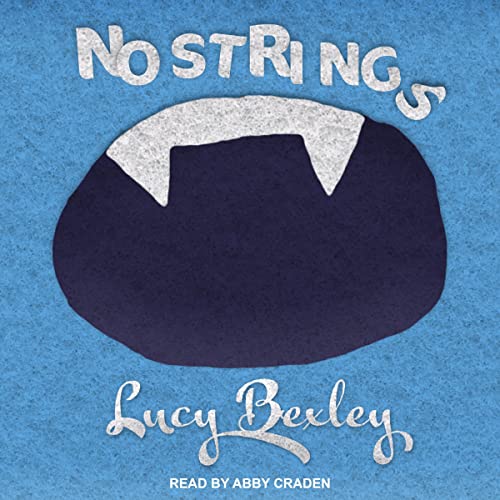
No Strings
Fun is the one thing Elsie Webb takes seriously. Though she’d be having a lot more of it if Haelstrom Media paid her enough to actually get out of debt. She’s determined to hold out on contract negotiations for her kids’ television show Fangley Heights until she gets what she deserves. There’s only one problem, the head of the network just died and left her future more uncertain than ever.
Forty-eight hours and one funeral–that’s all Jones Haelstrom has to get through before she can return to her life in LA that’s as ordered and sparse as an IKEA showroom. When she steps in as CEO of her father’s media company, Elsie Webb is her first problem to deal with. Elsie ends up challenging Jones in ways she never could have predicted, starting with an attraction neither can avoid.
As their attraction teeters on the edge of something more both agree to keep it casual. A no-strings agreement and disclosure to HR should be enough to keep things between Jones and Elsie from getting tangled, right?
CW: this story includes the death of an estranged parent off-page and prior to the story beginning
Forty-eight hours and one funeral–that’s all Jones Haelstrom has to get through before she can return to her life in LA that’s as ordered and sparse as an IKEA showroom. When she steps in as CEO of her father’s media company, Elsie Webb is her first problem to deal with. Elsie ends up challenging Jones in ways she never could have predicted, starting with an attraction neither can avoid.
As their attraction teeters on the edge of something more both agree to keep it casual. A no-strings agreement and disclosure to HR should be enough to keep things between Jones and Elsie from getting tangled, right?
CW: this story includes the death of an estranged parent off-page and prior to the story beginning
Audiobook
First published January 11, 2022
About the author
Lucy Bexley
10 books421 followersLucy Bexley grew up in Michigan. Her favorite lake is Erie and her favorite Dunes are Sleeping Bear. She started reading romance novels in 2019 and hasn’t been able to put them down since. She fell in love with stories featuring queer women getting their happily ever afters. Lucy lives in Boston with her partner, dog, two cats, and eleven bookcases. She’s a fan of terrible jokes, seltzer, MarioKart, and silence.
www.lucybexley.com
www.lucybexley.com
Ratings & Reviews
Friends & Following
Create a free account to discover what your friends think of this book!
Community Reviews
Displaying 1 - 30 of 211 reviews

January 14, 2022
4.5⭐️ – If I ever have to work for someone again, I want Jones Haelstrom to be my boss. Jones’ father just died and her life is upside down. Instead of flying back to L.A. promptly, as she’d planned, she’s stuck in New York, as the acting CEO of her father’s media company and acting guardian of her six-year-old brother, whose mother disappeared as soon as the funeral was over. At least it allows Jones to take a break from her own mother… Elsie Webb is trying to get Haelstrom Media to pay her what she deserves for her kids’ television show, Fangley Heights. Negotiating isn’t what she’s best at but she’s had enough of not being taken seriously. Because if there’s one thing Elsie takes seriously, it’s her show and its star, her “monster son”, child vampire Fangley. And yes, he’s a puppet.
The other thing Elsie takes seriously is fun, in delightful contrast to Jones, who has a hard time not being serious about everything. Blame her childhood, and maybe trying to deal with uneven mental health. At forty-two, Jones is doing her best not to be a burden to anyone, and to simply live her life. She doesn’t want anything to do with her father’s company, but she’s responsible and reliable. She’s also fair and when Elsie’s contract comes before her eyes, she tries to make things right.
As Elsie puts it, it’s not so much that Jones is kind than that she has the desire to be. She tries hard and that’s everything. Despite apparently not being aware of it, Elsie is effortlessly kind, at least when it comes to Jones and her little brother Bentley. Both MCs are wonderful, flawed and good and so very human. I love how Elsie hides behind her jokes and overall cute quirkiness and I loved seeing Jones finally open up and letting who she really is show. There were moments when I wished the two of them would talk rather than think but then it worked out. And the miscommunication never feels artificial. It’s not a gimmick the author uses to create conflict. It’s the characters being human.
Besides the MCs, there are a few secondary characters I loved and a couple I loved to hate. Bentley, Jones’ kid brother, is adorable, Elsie’s roommate Avery is brilliant, Stu and Trey are awful and I have to agree with Elsie, I too know quite a few people I would happily donate to Goodwill. The mothers – Jones’ and Bentley’s – are half and half…
I loved Must Love Silence last year, and I’m starting this new year loving No Strings. I love how Lucy Bexley combines jokes and topics that require a delicate touch. In Must Love Silence, it was sobriety and anxiety. Here it’s Bipolar Disorder. I’ve written this I don’t know how many times, I may sometimes be easily pleased as a reader but not when it comes to making me laugh. Slapstick comedy isn’t my thing. I don’t laugh easily at jokes, which, growing up, made me a black sheep of sorts. Lucy Bexley’s blend works pretty well for me, however, and I think it’s because of that mix I mentioned above.
This book made me smile a lot, laugh enough, it made my heart all warm and gooey, put lumps in my throat one minute, dissolved them the next. And left me slightly melancholy that Jones, Elsie, Benz and Avery aren’t my friends in real life. I’m going to miss them.
No Strings is also pretty hot at times. You should absolutely read the Salty Epilogue, which you’ll get by subscribing to Bexley’s newsletter (or you can download it here, but please consider joining the author’s newsletter, which is another way to support your favourite authors).
Also, I wish Fangley Heights was a real show and I could add a Fangley puppet to my family.
I received a copy from the author and I am voluntarily leaving a review.
The other thing Elsie takes seriously is fun, in delightful contrast to Jones, who has a hard time not being serious about everything. Blame her childhood, and maybe trying to deal with uneven mental health. At forty-two, Jones is doing her best not to be a burden to anyone, and to simply live her life. She doesn’t want anything to do with her father’s company, but she’s responsible and reliable. She’s also fair and when Elsie’s contract comes before her eyes, she tries to make things right.
As Elsie puts it, it’s not so much that Jones is kind than that she has the desire to be. She tries hard and that’s everything. Despite apparently not being aware of it, Elsie is effortlessly kind, at least when it comes to Jones and her little brother Bentley. Both MCs are wonderful, flawed and good and so very human. I love how Elsie hides behind her jokes and overall cute quirkiness and I loved seeing Jones finally open up and letting who she really is show. There were moments when I wished the two of them would talk rather than think but then it worked out. And the miscommunication never feels artificial. It’s not a gimmick the author uses to create conflict. It’s the characters being human.
Besides the MCs, there are a few secondary characters I loved and a couple I loved to hate. Bentley, Jones’ kid brother, is adorable, Elsie’s roommate Avery is brilliant, Stu and Trey are awful and I have to agree with Elsie, I too know quite a few people I would happily donate to Goodwill. The mothers – Jones’ and Bentley’s – are half and half…
I loved Must Love Silence last year, and I’m starting this new year loving No Strings. I love how Lucy Bexley combines jokes and topics that require a delicate touch. In Must Love Silence, it was sobriety and anxiety. Here it’s Bipolar Disorder. I’ve written this I don’t know how many times, I may sometimes be easily pleased as a reader but not when it comes to making me laugh. Slapstick comedy isn’t my thing. I don’t laugh easily at jokes, which, growing up, made me a black sheep of sorts. Lucy Bexley’s blend works pretty well for me, however, and I think it’s because of that mix I mentioned above.
This book made me smile a lot, laugh enough, it made my heart all warm and gooey, put lumps in my throat one minute, dissolved them the next. And left me slightly melancholy that Jones, Elsie, Benz and Avery aren’t my friends in real life. I’m going to miss them.
No Strings is also pretty hot at times. You should absolutely read the Salty Epilogue, which you’ll get by subscribing to Bexley’s newsletter (or you can download it here, but please consider joining the author’s newsletter, which is another way to support your favourite authors).
Also, I wish Fangley Heights was a real show and I could add a Fangley puppet to my family.
I received a copy from the author and I am voluntarily leaving a review.

January 23, 2022
OMG! Lucy Bexley’s No Strings was so fuckin’ cute! I enjoyed myself immensly.
The place looked like a renaissance painting. One of the gnarly ones with demons battling, gnashing teeth, and gore. But beautifully lit. In the middle of the room, two boys were bound together with a golden cord. One of the deep red velvet drapes had been pulled from the window, and the bright sunlight sliced through the room.
Elsie clapped her hands. “Okay tiny folks, free the prisoners! It’s craft time.”
There were so many lol! Moments in this book, and Elsie Webb and Jones Halestrom were just adorable together. I loved Elsie’s ongoing commentary on the rich people’s shenanigans. The scenes of Jones ‘managing’ Bentley’s birthday party, visiting a kid’s fencing match, and the gummy bears incident are just a few of many hilarious scenes.
However, Bexley did not shy away from a more serious topic with Jones’ bouts of depression. But she does infuse so much warmth and care into the characters that it never becomes too heavy. I really, really loved this book and highly recommend it.
f/f very sexy
Themes: New York, Haelstrom Media, Fangley Heights, age gap, bipolar, Charity’s prolonged ‘me time’, Birdie.
5 Stars
-----------second read, december 2022------------
Only fitting that I will end my reading year with one of the books I enjoyed most in 2022. I finished the audio book version today, just in the nick of time. The narration was done by the fabulous Abby Craden and she was a right fit. She proves she is well suited to perform the more comedic material as well. I highly recommend!
still 5 stars
----3rd re-read----------
It was so worth diving back into No Strings again. Still funny as hell. Jones and Elsie are still as fab as I remembered. A must read!
5 Stars
The place looked like a renaissance painting. One of the gnarly ones with demons battling, gnashing teeth, and gore. But beautifully lit. In the middle of the room, two boys were bound together with a golden cord. One of the deep red velvet drapes had been pulled from the window, and the bright sunlight sliced through the room.
Elsie clapped her hands. “Okay tiny folks, free the prisoners! It’s craft time.”
There were so many lol! Moments in this book, and Elsie Webb and Jones Halestrom were just adorable together. I loved Elsie’s ongoing commentary on the rich people’s shenanigans. The scenes of Jones ‘managing’ Bentley’s birthday party, visiting a kid’s fencing match, and the gummy bears incident are just a few of many hilarious scenes.
However, Bexley did not shy away from a more serious topic with Jones’ bouts of depression. But she does infuse so much warmth and care into the characters that it never becomes too heavy. I really, really loved this book and highly recommend it.
f/f very sexy
Themes: New York, Haelstrom Media, Fangley Heights, age gap, bipolar, Charity’s prolonged ‘me time’, Birdie.
5 Stars
-----------second read, december 2022------------
Only fitting that I will end my reading year with one of the books I enjoyed most in 2022. I finished the audio book version today, just in the nick of time. The narration was done by the fabulous Abby Craden and she was a right fit. She proves she is well suited to perform the more comedic material as well. I highly recommend!
still 5 stars
----3rd re-read----------
It was so worth diving back into No Strings again. Still funny as hell. Jones and Elsie are still as fab as I remembered. A must read!
5 Stars

February 25, 2022
Elsie is the underappreciated creator of a children’s tv show, starring her vampire puppet, Fangley. When the CEO of the media company dies, his daughter, Jones, flies back to New York to help tie up loose ends with the business and to give support to her young stepmother and six year old brother, Bentley aka Benz. Fangley Heights is very popular but the bts drama involving a sleazy executive’s sabotaging of Elsie prompts Jones to act on her behalf.
Elsie is a gem, full of sunshine and a bit of lark. She brightens the page every time she appears and I can’t help but smile at her funnies. Jones, the other main character, is a mix of strength and vulnerability who I rooted for to find her peace. Together they light up the world, standing tall for one another so that each can discover their best selves but being present for the fails too. Their relationship is a wonderful mix of sharp minds, good hearts, and steamy sex.
The book has that IT Factor that sets readers and clubs abuzz because it barrels in unapologetically with the right mix of delirious charm, memorable characters, and tender moments that keep everything perfectly imperfect. Benz and Fangley now reside in a small part of my heart as does the rest of the Fangley Heights world. No Strings is a respite from the world. Read it and then read it again when you need a bit of warmth.
Elsie is a gem, full of sunshine and a bit of lark. She brightens the page every time she appears and I can’t help but smile at her funnies. Jones, the other main character, is a mix of strength and vulnerability who I rooted for to find her peace. Together they light up the world, standing tall for one another so that each can discover their best selves but being present for the fails too. Their relationship is a wonderful mix of sharp minds, good hearts, and steamy sex.
The book has that IT Factor that sets readers and clubs abuzz because it barrels in unapologetically with the right mix of delirious charm, memorable characters, and tender moments that keep everything perfectly imperfect. Benz and Fangley now reside in a small part of my heart as does the rest of the Fangley Heights world. No Strings is a respite from the world. Read it and then read it again when you need a bit of warmth.

January 28, 2026
3.5 ⭐
I struggled with this book and I have to admit, it's hard for me to rate it. There are so many things that were great about this book. First of all: Elsie. She's just perfect. Funny, always ready for banter, caring, and with a very, very big heart. She always has just the right words and knows how to handle even the most difficult situations. And well, she's also a little crazy. She and her best friend, Avery, have a great foundation, and I enjoyed the banter between the two of them. Jones is also a likable character, and her bipolar disorder was portrayed really realistically. It was great how she cared for her little brother, Bentley, unconditionally despite all the obstacles. There were many scenes with the little guy, and the connection between him and Elsie was just adorable.
But I somehow missed more interaction between Jones and Elsie. The pace was either much too slow or suddenly too fast. Yes, they had sweet and lighthearted moments, but then they didn't meet again for several chapters. In a book with almost 400 pages, I would have liked to see many more chapters just about the two of them. I couldn’t root for them.
The third act conflict was, well... I didn't understand Jones at all. Yes, fear of losing her job, okay. But did she even need it? She was only filling in temporarily and didn't need the money. Why put so much pressure on Elsie? Or ignore her for days beforehand? After their history, I found that somewhat inconclusive.
Overall, it's a book that made me laugh at times, with nice characters and some heartwarming moments. Still, I couldn't quite connect with the plot. If you like spice, you should read the salty epilogue. There you'll find the spice I missed in the book.
Thanks to my buddyread, Luna, I laughed even more. Thanks for that!
I struggled with this book and I have to admit, it's hard for me to rate it. There are so many things that were great about this book. First of all: Elsie. She's just perfect. Funny, always ready for banter, caring, and with a very, very big heart. She always has just the right words and knows how to handle even the most difficult situations. And well, she's also a little crazy. She and her best friend, Avery, have a great foundation, and I enjoyed the banter between the two of them. Jones is also a likable character, and her bipolar disorder was portrayed really realistically. It was great how she cared for her little brother, Bentley, unconditionally despite all the obstacles. There were many scenes with the little guy, and the connection between him and Elsie was just adorable.
But I somehow missed more interaction between Jones and Elsie. The pace was either much too slow or suddenly too fast. Yes, they had sweet and lighthearted moments, but then they didn't meet again for several chapters. In a book with almost 400 pages, I would have liked to see many more chapters just about the two of them. I couldn’t root for them.
The third act conflict was, well... I didn't understand Jones at all. Yes, fear of losing her job, okay. But did she even need it? She was only filling in temporarily and didn't need the money. Why put so much pressure on Elsie? Or ignore her for days beforehand? After their history, I found that somewhat inconclusive.
Overall, it's a book that made me laugh at times, with nice characters and some heartwarming moments. Still, I couldn't quite connect with the plot. If you like spice, you should read the salty epilogue. There you'll find the spice I missed in the book.
Thanks to my buddyread, Luna, I laughed even more. Thanks for that!

October 22, 2022
I loved this! It’s sweet and funny and I adored Jones and Bentley and sometimes Elsie too.
This deals with a character who has depression and I was so happy to see that meeting “the one” didn’t automatically cure her and make her better.
Highly recommend this!
This deals with a character who has depression and I was so happy to see that meeting “the one” didn’t automatically cure her and make her better.
Highly recommend this!

April 19, 2022
9/10
//i think this was my third time reading this (listening to the audiobook) and the story is still very cheesy and adorable. i love benz
I loved this.
ADORABLE COVER!
I honestly wasn't expecting to love this as much as I do. I mean I had a feeling it was good one and I've been waiting for the release but damn.
And I'm happy cause I actually haven't read a book in a bit since I've been disappointed too many times lately. But this is the perfect book to pull you back into the reading world.
It's funny, it's touching and I simply adore the characters. Truly the rom com everyone needs.
I can't get over it. I wish it was like a milion page journey or something, though, that'd probably be too much. But do you know what?? I wanna be friends with most of the f*cking characters. And that's - umm wanted to say rare but it's actually - the first time it happend to me (being a picky person and all). Or are these characters just amazing and precious and everyone's unique and friendly and man I wish they were real. And lived in Belgrade as well. And we somehow knew eachother.
Bit of a stretch innit.
No, but Elsie, Jones, Benz, Avery and even Charity grew on me pretty quickly. I mean even the kids puppet show did.
I almost read the whole book in one go but sleep changed my plans. Couldn't wait to wake up to continue reading it though!
Wish Jones could be my boss as well but I doubt any of us are lucky enough.
Why not 10/10? I don't know. It didn't feel like a whole 10 but it's definitely close. I guess I missed some things in the story or am I just too selfish and I wanted to read more? Yeah, I feel like there were pretty good situations to explore the relationship Jones has/had with her parents but it never really came. I guess the 1 point missing is for the past relationships Jones and Elsie had with their parents or, well, anyone really. A BACKSTORY. Yes, that's what I've been trying to say. A bit of a (better in Jones case) backstory was missing. The characters were amazing and I adored them but they actually lacked some history on them that would make them more real. The only thing I didn't really like is the part where everything culminates.
In the end I want to say that I loved the authors writing and I was actually pleasantly suprised. Lucy Bexley makes everything fun and serious at the same time and you can just feel everything off the pages. Most of the time I really wish the authors don't read the reviews I write (you really shouldn't read too many bad reviews on you work I guess) but also sometimes I wish I could congratulate the author in person or like buy them a drink or something. But what's left is that I just hope some of the authors see the good reviews I write on their books because those books made me happy and they should definitely keep up the amazing work they do.
Will be adding Lucy Bexley's other books to my to read shelf and I also can't wait to find this one on Book Depository so I could buy a paperback as well!
P.S. Get that Salty or should I say Spicy Epilogue. Everything's just amazing in the book including the extra epilogue.
//i think this was my third time reading this (listening to the audiobook) and the story is still very cheesy and adorable. i love benz
I loved this.
ADORABLE COVER!
I honestly wasn't expecting to love this as much as I do. I mean I had a feeling it was good one and I've been waiting for the release but damn.
And I'm happy cause I actually haven't read a book in a bit since I've been disappointed too many times lately. But this is the perfect book to pull you back into the reading world.
It's funny, it's touching and I simply adore the characters. Truly the rom com everyone needs.
I can't get over it. I wish it was like a milion page journey or something, though, that'd probably be too much. But do you know what?? I wanna be friends with most of the f*cking characters. And that's - umm wanted to say rare but it's actually - the first time it happend to me (being a picky person and all). Or are these characters just amazing and precious and everyone's unique and friendly and man I wish they were real. And lived in Belgrade as well. And we somehow knew eachother.
Bit of a stretch innit.
No, but Elsie, Jones, Benz, Avery and even Charity grew on me pretty quickly. I mean even the kids puppet show did.
I almost read the whole book in one go but sleep changed my plans. Couldn't wait to wake up to continue reading it though!
Wish Jones could be my boss as well but I doubt any of us are lucky enough.
Why not 10/10? I don't know. It didn't feel like a whole 10 but it's definitely close. I guess I missed some things in the story or am I just too selfish and I wanted to read more? Yeah, I feel like there were pretty good situations to explore the relationship Jones has/had with her parents but it never really came. I guess the 1 point missing is for the past relationships Jones and Elsie had with their parents or, well, anyone really. A BACKSTORY. Yes, that's what I've been trying to say. A bit of a (better in Jones case) backstory was missing. The characters were amazing and I adored them but they actually lacked some history on them that would make them more real. The only thing I didn't really like is the part where everything culminates.
In the end I want to say that I loved the authors writing and I was actually pleasantly suprised. Lucy Bexley makes everything fun and serious at the same time and you can just feel everything off the pages. Most of the time I really wish the authors don't read the reviews I write (you really shouldn't read too many bad reviews on you work I guess) but also sometimes I wish I could congratulate the author in person or like buy them a drink or something. But what's left is that I just hope some of the authors see the good reviews I write on their books because those books made me happy and they should definitely keep up the amazing work they do.
Will be adding Lucy Bexley's other books to my to read shelf and I also can't wait to find this one on Book Depository so I could buy a paperback as well!
P.S. Get that Salty or should I say Spicy Epilogue. Everything's just amazing in the book including the extra epilogue.

August 8, 2022
Abby Craden 5 ⭐️
Story 4 ⭐️ Light and funny summer read.
Story 4 ⭐️ Light and funny summer read.

January 12, 2022
Lucy Bexley has a beautiful mind. Not like that math guy Russell Crowe played in the movie, back when Russell Crowe was relevant. No, Lucy Bexley's mind comes up with amazing things like puppet sex jokes, a cat named Ratatouille and accidental pot gummy ingestion. All of these and more make No Strings the first must read of 2022.
Elsie Webb is the creator and puppeteer for Fangley Heights, a popular kids show. The show is in its third year and Elsie's contract negotiations are stalled. The latest contract offer from the network is insulting and she is done being undervalued. When the head of the network dies and his daughter is put in charge temporarily, a new contract is far from the only thing she finds herself wanting.
Jones Haelstrom flies back to New York for her father's funeral and is only planning to stay a few days. But soon she finds herself taking care of her six year old brother when his mother needs some time away and also running the network. The more time she spends with Elsie and Bentley the more she begins to feel like she has finally found a home.
The first meeting between Elsie and Jones is a metaphor for their relationship. Jones braces for the worst, but then gets hit with the hammer Elsie throws at her, a prop hammer that bounces right off. Elsie constantly surprises Jones in the best way. Jones has dealt with anxiety, depression and hypomania for years and people either want to fix her or simply don't understand her. Elsie washes her dishes, takes her for a walk and is just there for her.
Elsie is the perfect mix of serious and silly. She takes care of Jones while wrapping that care in a joke. Jones feels like she skipped childhood and went straight to middle age. With Elsie she can let go and have fun and begins to see life in bold colors instead of the boring gray she was existing in.
The supporting characters are wonderful. Bentley is adorable and you can't help but feel for him. At six years old he loses his father and then his mother disappears. His sister, who is decades older is now taking care of him. He wakes up with nightmares each night, but with Elsie's help, Jones and Bentley begin to forge an unshakable bond. Bentley gains a sister but also a fun, puppet making playmate in Elsie.
Elsie's roommate and best friend, Avery, is the best. They tell Elsie when she's being unreasonable and point out Elsie's feelings when "casual" is no longer an option. And they also leave edibles lying around so we can experience Jones really letting go.
Lucy Bexley is absolutely hilarious, and I laughed so much reading this book. But what makes her special is how well she combines comedy with serious subjects. Jones depression and anxiety are handled beautifully, and Elsie's reaction is how everyone should handle dealing with someone who has mental health issues. Elsie doesn't treat Jones as a burden or someone she needs to fix, she treats her as if she's perfect exactly as she is. She lets her be vulnerable while bringing out her delightfully absurd side.
I have had this book for a few weeks and have already read it three times. It makes me happy, and I know it will do the same for you. Thank you, Lucy Bexley for sharing your quirky, beautiful mind with us!
An ARC was provided by the author for an honest review.
https://sapphicbookreview.com/review/...
Elsie Webb is the creator and puppeteer for Fangley Heights, a popular kids show. The show is in its third year and Elsie's contract negotiations are stalled. The latest contract offer from the network is insulting and she is done being undervalued. When the head of the network dies and his daughter is put in charge temporarily, a new contract is far from the only thing she finds herself wanting.
Jones Haelstrom flies back to New York for her father's funeral and is only planning to stay a few days. But soon she finds herself taking care of her six year old brother when his mother needs some time away and also running the network. The more time she spends with Elsie and Bentley the more she begins to feel like she has finally found a home.
The first meeting between Elsie and Jones is a metaphor for their relationship. Jones braces for the worst, but then gets hit with the hammer Elsie throws at her, a prop hammer that bounces right off. Elsie constantly surprises Jones in the best way. Jones has dealt with anxiety, depression and hypomania for years and people either want to fix her or simply don't understand her. Elsie washes her dishes, takes her for a walk and is just there for her.
Elsie is the perfect mix of serious and silly. She takes care of Jones while wrapping that care in a joke. Jones feels like she skipped childhood and went straight to middle age. With Elsie she can let go and have fun and begins to see life in bold colors instead of the boring gray she was existing in.
The supporting characters are wonderful. Bentley is adorable and you can't help but feel for him. At six years old he loses his father and then his mother disappears. His sister, who is decades older is now taking care of him. He wakes up with nightmares each night, but with Elsie's help, Jones and Bentley begin to forge an unshakable bond. Bentley gains a sister but also a fun, puppet making playmate in Elsie.
Elsie's roommate and best friend, Avery, is the best. They tell Elsie when she's being unreasonable and point out Elsie's feelings when "casual" is no longer an option. And they also leave edibles lying around so we can experience Jones really letting go.
Lucy Bexley is absolutely hilarious, and I laughed so much reading this book. But what makes her special is how well she combines comedy with serious subjects. Jones depression and anxiety are handled beautifully, and Elsie's reaction is how everyone should handle dealing with someone who has mental health issues. Elsie doesn't treat Jones as a burden or someone she needs to fix, she treats her as if she's perfect exactly as she is. She lets her be vulnerable while bringing out her delightfully absurd side.
I have had this book for a few weeks and have already read it three times. It makes me happy, and I know it will do the same for you. Thank you, Lucy Bexley for sharing your quirky, beautiful mind with us!
An ARC was provided by the author for an honest review.
https://sapphicbookreview.com/review/...

January 10, 2022
I had the pleasure of reading this gem early and it's just an absolute delight.
I'll link my full review soon but if you like witty sarcastic sunshine girls who love using humour to deflect awkward tension (and who doesn't?) you'll love Elsie and all her antics.
I'll link my full review soon but if you like witty sarcastic sunshine girls who love using humour to deflect awkward tension (and who doesn't?) you'll love Elsie and all her antics.

January 26, 2022
Fangley is a popular little puppet vampire that brings in high ratings for Haelstrom Media. His mommy, Elsie, isn't compensated nearly enough for creating the children's show Fangley Heights. She has is trying to renegotiate her contract to represent what she deserves but the suits continue to counter offer increasingly insulting terms.
Jones Haelstrom's father, head of Haelsrom media, passes away and she is forced to temporarily step in as acting CEO and take care of her much younger brother.
This is an entertaining story about two flawed characters that come into each other's lives and end up being the support they didn't know they needed. Elsie is a quirky character with a great personality. You can't help but develop a little crush on her. But I really appreciated Jones and her and how Bexley tackled the topic of her crushing depression that can't be solved with someone wanting to fix her.
There were plenty of funny moments where I laughed out loud. And there were some moments I suspected were supposed to be funny, but I felt left out of the joke. (This is probably all on me. I'm always the slowest/last person to get a joke and most of the time it has to be explained to me.)
But overall, this had a great balance between comedy, drama, and romance. It was sweet at times. I loved how they were so clearly good for each other but because of their situation (and perfectly well meaning but terribly executed contract), they couldn't really discuss how their feelings were changing. I couldn't have asked for a better book to start the year off with.
I recommend this to those who love romance, puppets, babysitting, bad contract negotiations, purple pens, and peanut butter smothered pop tarts.
Jones Haelstrom's father, head of Haelsrom media, passes away and she is forced to temporarily step in as acting CEO and take care of her much younger brother.
This is an entertaining story about two flawed characters that come into each other's lives and end up being the support they didn't know they needed. Elsie is a quirky character with a great personality. You can't help but develop a little crush on her. But I really appreciated Jones and her and how Bexley tackled the topic of her crushing depression that can't be solved with someone wanting to fix her.
There were plenty of funny moments where I laughed out loud. And there were some moments I suspected were supposed to be funny, but I felt left out of the joke. (This is probably all on me. I'm always the slowest/last person to get a joke and most of the time it has to be explained to me.)
But overall, this had a great balance between comedy, drama, and romance. It was sweet at times. I loved how they were so clearly good for each other but because of their situation (and perfectly well meaning but terribly executed contract), they couldn't really discuss how their feelings were changing. I couldn't have asked for a better book to start the year off with.
I recommend this to those who love romance, puppets, babysitting, bad contract negotiations, purple pens, and peanut butter smothered pop tarts.

April 2, 2022
This is my second time reading/listening to this and I enjoyed it even more this time around, so I'm gonna bump this up to a 5.
First, Abby Craden. (Yes, that is my entire first point. She is a goddess.)
Second, I love seeing well-written characters with neurodivergence that is actually of consequence to the story (not just a surface-level trait to make a character seem deeper/more complex). I loved that Jones' struggles weren't downplayed or magically solved by Elsie's existence, but instead, Elsie was compassionate and understanding with her. Both characters displayed great self-awareness and emotional intelligence, and there were a lot of really great lines and dialogue to that effect.
Aside from that, I love the chemistry between the MCs, the humour and banter, the communication and consideration. All of that really lends an air of realism that I find very engaging.
The conflict in this story was also great; I always appreciate when it comes down to something more than just stupidity, miscommunication, or stubbornness between MCs. The fact that they dealt with their workplace romance responsibly but things still didn't just conveniently work out without any ramifications made things feel more realistic.
And the strings at the end...my heart ❤️
I definitely recommend this one for a funny, heartfelt, and all around sweet romance.
First, Abby Craden. (Yes, that is my entire first point. She is a goddess.)
Second, I love seeing well-written characters with neurodivergence that is actually of consequence to the story (not just a surface-level trait to make a character seem deeper/more complex). I loved that Jones' struggles weren't downplayed or magically solved by Elsie's existence, but instead, Elsie was compassionate and understanding with her. Both characters displayed great self-awareness and emotional intelligence, and there were a lot of really great lines and dialogue to that effect.
Aside from that, I love the chemistry between the MCs, the humour and banter, the communication and consideration. All of that really lends an air of realism that I find very engaging.
The conflict in this story was also great; I always appreciate when it comes down to something more than just stupidity, miscommunication, or stubbornness between MCs. The fact that they dealt with their workplace romance responsibly but things still didn't just conveniently work out without any ramifications made things feel more realistic.
And the strings at the end...my heart ❤️
I definitely recommend this one for a funny, heartfelt, and all around sweet romance.

February 2, 2026
When I saw the cover I immediately thought that this was going to be just another light rom-com that had some sweet and spicy moments. And although I wasn’t entirely wrong, there was more beneath the surface. The mental health representation was unexpected but welcomed, and I appreciated how well it was portrayed. I sympathized with that protagonist and her struggle with the disorder tugged at my heartstrings.
Elsie and Jones would've been cute together if they had spent more time...together. The relationship just felt weak and lacked the spark that couples need if I'm going to root for them. It would've helped to have been there for important moments between the couple, but there were times when those moments were flashbacks, and I was left feeling disappointed. Then there was the inner monologue that was just so overwhelming. I reached a point where I was just over it and pushed through it just to get to the ending.
I swear that it wasn’t all disappointing because there were sweet moments between Jones and her much younger brother. I mean that took age gaps between siblings to a whole other level, but it made them unique in my eyes. The close-knit friendship Elsie and Riley had was filled with banter and unwavering support that made me laugh and tear up. As sweet as those moments were, I don’t see myself rereading this, but fans of sapphic rom-coms might like it.
Thanks to Stuffl for making this a buddy read. Your hilarious commentary is always appreciated!
Elsie and Jones would've been cute together if they had spent more time...together. The relationship just felt weak and lacked the spark that couples need if I'm going to root for them. It would've helped to have been there for important moments between the couple, but there were times when those moments were flashbacks, and I was left feeling disappointed. Then there was the inner monologue that was just so overwhelming. I reached a point where I was just over it and pushed through it just to get to the ending.
I swear that it wasn’t all disappointing because there were sweet moments between Jones and her much younger brother. I mean that took age gaps between siblings to a whole other level, but it made them unique in my eyes. The close-knit friendship Elsie and Riley had was filled with banter and unwavering support that made me laugh and tear up. As sweet as those moments were, I don’t see myself rereading this, but fans of sapphic rom-coms might like it.
Thanks to Stuffl for making this a buddy read. Your hilarious commentary is always appreciated!

June 18, 2022
I loved everything about this audiobook!
It's fun without being silly, sweet without being saccharine and deceptively deep without being heavy. The main characters Elsie Webb and Jones Haelstrom are interesting, admirable, occasionally imperfect and so likable (puppeteer Elsie especially so!) The story is well written and edited. The secondary characters are strong - including Avery, the non-binary best friend and occasional conscience of Elsie. I appreciated their relationship and interactions. There's also a great kid in Jones' little brother Bentley, who worms his way into our hearts just as he does his big sister's and Elsie's.
While I really enjoyed Must Love Silence, I felt like this was a book that Bexley was born to write. Her humor, compassion and intelligence is on full display and I found myself smiling throughout. Elsie and Jones' chemistry is palpable and sexy, and while there is something of an age gap, it never felt unbelievable. This has me looking forward even more to Bexley's recent book HOWL: Home of the Wayward Lovers, part of the iHeart SapphFic Pride Collection!
Narrator Abby Craden worked her magic on the audio and obviously had a blast narrating this. It was such a joy to listen to!
I one thousand percent recommend this book! Especially for those looking for something a little lighter and feel-good, but with substance.
It's fun without being silly, sweet without being saccharine and deceptively deep without being heavy. The main characters Elsie Webb and Jones Haelstrom are interesting, admirable, occasionally imperfect and so likable (puppeteer Elsie especially so!) The story is well written and edited. The secondary characters are strong - including Avery, the non-binary best friend and occasional conscience of Elsie. I appreciated their relationship and interactions. There's also a great kid in Jones' little brother Bentley, who worms his way into our hearts just as he does his big sister's and Elsie's.
While I really enjoyed Must Love Silence, I felt like this was a book that Bexley was born to write. Her humor, compassion and intelligence is on full display and I found myself smiling throughout. Elsie and Jones' chemistry is palpable and sexy, and while there is something of an age gap, it never felt unbelievable. This has me looking forward even more to Bexley's recent book HOWL: Home of the Wayward Lovers, part of the iHeart SapphFic Pride Collection!
Narrator Abby Craden worked her magic on the audio and obviously had a blast narrating this. It was such a joy to listen to!
I one thousand percent recommend this book! Especially for those looking for something a little lighter and feel-good, but with substance.

April 30, 2023
Another brilliant read! You can't go wrong with Lucy Bexley! Her writing, plot, characters, and humour are always spot on 👌

August 29, 2022
I enjoyed the humor in this book, it was very well combined with delicate topics like Bipolar disorder, depression and accepting people as they are without trying to fix them. The ending though felt a little rushed, I wish we'd gotten more insight into Elsie and Jones' next endeavor and taking their relationship to the next level.
Abby Craden's narration was as enjoyable as ever.
Abby Craden's narration was as enjoyable as ever.

January 18, 2022
Elsie's such a great character. I absolutely adored her. Hilarious and kind and everything in between. She's awesome.

March 26, 2022
This book was so much fun! The perfect balance of funny and sweet, with plenty of heart. I laughed out loud so many times (even during the epilogue!) and was left with a big smile on my face.

January 16, 2022
I’ve wanted to read this book ever since the cover reveal! For someone who loves and still watching cartoons for kids, No String is solid to my favorite comfort book list.
The whole book is adorable just like the cover(I’m crazy about the cover. It’s so cute I want to squeeze them😵.) Both Elsie and Jones, and oh Fangley the vampire puppet are lovable. I also love Lucy's unique humor style and how she put it in the book, I can’t help laughing too many times. If you’re looking for a sweet, fun romance, this one is definitely for you.
The whole book is adorable just like the cover(I’m crazy about the cover. It’s so cute I want to squeeze them😵.) Both Elsie and Jones, and oh Fangley the vampire puppet are lovable. I also love Lucy's unique humor style and how she put it in the book, I can’t help laughing too many times. If you’re looking for a sweet, fun romance, this one is definitely for you.

June 30, 2026
2.5 stars rounded up.
I'm pretty sure this was one of the very first books I added to my TBR when I made my Goodreads account years ago. I was excited to finally get to it because it has a couple of my favourite tropes: age gap and boss/employee. Unfortunately, it just wasn't for me.
The biggest issue was how overloaded it felt with constant inner monologues and heavy descriptions. Every chapter genuinely felt like 20% dialogue and 80% narration gearing up for that dialogue, then analysing it afterwards. It made the story drag at a pace that I found really difficult to get through.
That said, there were somethings I enjoyed. I liked that Elsie had a unique profession (puppeteer), Abby Craden's narration was fantastic, and I thought the representation of Jones's bipolar and depression felt realistic and well done.
I'm pretty sure this was one of the very first books I added to my TBR when I made my Goodreads account years ago. I was excited to finally get to it because it has a couple of my favourite tropes: age gap and boss/employee. Unfortunately, it just wasn't for me.
The biggest issue was how overloaded it felt with constant inner monologues and heavy descriptions. Every chapter genuinely felt like 20% dialogue and 80% narration gearing up for that dialogue, then analysing it afterwards. It made the story drag at a pace that I found really difficult to get through.
That said, there were somethings I enjoyed. I liked that Elsie had a unique profession (puppeteer), Abby Craden's narration was fantastic, and I thought the representation of Jones's bipolar and depression felt realistic and well done.
May 2, 2022
I love Lucy Bexley’s writing, it’s poignant and punny. The jokes are extremely cheesy but I here for them.
Elsie came up with this idea for a children’s show when she was in theatre school and it got picked up while she was just finishing. She’s negotiating a better contract, a well deserved better contract but the higher ups are not being very helpful or honest. That is until Jones arrives at the scene. Struggling with the loss of her father, taking care of her 6 year old brother (who she had never met until the funeral), being interim CEO of Haelstrom Media and her Bipolar II, it’s all a bit much. But Elsie is there to brighten her days with puppet puns, jokes and just generally taking care of her. Something Jones hasn’t known before.
The story is cute and funny, with some serious undertones (mental health, family and taking care of each other). I loved it.
Elsie came up with this idea for a children’s show when she was in theatre school and it got picked up while she was just finishing. She’s negotiating a better contract, a well deserved better contract but the higher ups are not being very helpful or honest. That is until Jones arrives at the scene. Struggling with the loss of her father, taking care of her 6 year old brother (who she had never met until the funeral), being interim CEO of Haelstrom Media and her Bipolar II, it’s all a bit much. But Elsie is there to brighten her days with puppet puns, jokes and just generally taking care of her. Something Jones hasn’t known before.
The story is cute and funny, with some serious undertones (mental health, family and taking care of each other). I loved it.
February 20, 2022
This was a very easy, fun read. There are laugh-out-loud moments, and an interesting mystery and business challenge driving the plot. I enjoyed it enough to put it on my must-read list, which for books I've read, means that I would read again. I should probably just create a 'read again' shelf...

Read
September 19, 2022I’ve been putting off reading ‘No Strings’ for a little bit. It’s silly, really. I know that Lucy Bexley can WRITE. Like, write the heck out of words. Collect them and join them and make them have a bit of a chat so that by the time we get eyeballs on those words, they’ve become an outstanding story and you’re immersed, folks. That’s what a Bexley book does.
Because Lucy can write like she does and because a lot of this book talks about bipolar, I knew that some of it was going to hit close. Not totally hit, like a well-aimed frypan when you’re trying to brain an intruder, but fly past just close enough to make me catch my breath.
That’s the thing about bipolar. It often flies past but actually you can’t catch your breath and understanding why takes a lot of determination.
We’ll get to that.
First, let’s talk about the humour, the fun, the awesome ridiculous. Elsie Webb, writer, actor, the actual creator—thanks very much—of the hugely popular children’s show ‘Fangley Heights’ is heavily invested in fun. It’s the one thing she takes seriously. Working for Haelstrom Media, the parent company of the show, is not fun and there are way too many strings attached to her job and she can’t find a handy pair of scissors.
Jones Haelstrom still isn’t sure, when she was little, that the invitation to when fun was being handed out got lost in the mail. Her life is ordered and structured and not fun, really. Jones flies from LA to New York because her father—who she never really knew—dies and his very young wife—who Jones also doesn’t know really well—flies off to Bali/Bermuda/Back of Beyond, leaving Jones to take care of the house, Bentley—her six year old brother—and the CEO-ing of Haelstrom Media. It’s a lot.
Jones pops into the studio, completely unsure what it is that she’s actually supposed to be CEO-ing. She watches the filming of an episode of ‘Fangley Heights’ and of course she meets Elsie. The two can’t be more different; their outlooks on life, their observations of people, their beliefs about what constitutes a concern. Oops. Lots of strings floating about, untethered, looking for a home.
That’s how strings work, you know. Pretending to be all untethered and everything. Because when Elsie and Jones decide that their burgeoning… ‘thing’…should be sans strings, those floaty and untethered strings laugh diabolically and become fibrous guided missiles.
As in ‘Must Love Silence’ (another Bexley book I loved - see essay-thingy) Lucy delivers the real via a character’s wisdom, like Avery, Elsie’s enby flatmate, the raw via insightful analogies, then the self-deprecating or the slapstick or observations of the ludicrous, just to smooth it out. She makes us feel things through the characters, and for the characters, then gives us a chance to breathe with sharp, witty humour. Actually, we don’t get to breathe then either, since we’re laughing so hard.
Much of the humour comes from Elsie who has developed her talent for keeping people at bay by deflecting their depth of affection, by deflecting difficult discussions, by commentating on life to push it away from her own. It comes across in her scripts for the children’s show. The permission that the puppets give for the other characters to express emotions and make connections gives Elsie a chance to see what it could be like to attach some strings. The important point that Lucy Bexley makes—completely on purpose—is that Elsie’s puppets are not marionettes. They are hand puppets and therefore they don’t have strings. Handy, that. The not-having-strings thing. It makes it easier, whether they want to or not, for the humans behind to collect so many.
Elsie isn’t a fan of strings, but she has them; right there wrapped around her heart. Strings which tie her to Fangley (her puppet), to Avery, to the people in her daily life who she uses as material for the show. The problem is that Elsie believes strings are trip hazards. It’s a shame that Jones becomes a hypothetical OH&S incident report; what with the strings that aren’t supposed to be there because Elsie and Jones write a contract and agree upon the no strings policy and…oh dear.
Jones is a no strings kinda gal as well, but for an entirely different reason. Jones has bipolar disorder and oh my God, Lucy Bexley writes this chemical imbalance disorder with care, with insight, and with the nuance that it needs because each person experiences bipolar differently. The majority of the story is quite fast-paced, except when Jones is in the depths of a depressive episode. Lucy slows the pace, lengthens the sentences, makes room for us to sit with Jones and understand.
The fast/slow prose is so bloody clever. How about this for a beautiful sentence…
“She couldn’t explain her depression or her bouts of mania, so she’d found it was better not to mention them at all.”
You know how we talk about ‘straight passing’ queer folk. Bipolar folk attempt the same but as ‘normal passing’, because it disturbs people if you’re too happy or too sad or too much.
Jones doesn’t pick up loose strings or give out the ones she has because to do so means that other people might see inside and they’d drop their end of the string and run and Jones would be left holding a collection of limp cords. Self-protection. Don’t be vulnerable. Pass as normal.
Talk about resonating. I was a veritable tuning fork when I sat with Jones in her chapters.
Jones has a controlled, rigidly calm mania. No wild high, high, highs. No benders, or alcoholic-infused trips to metaphorical Bali. Just exhaustion from a lack of sleep because her brain won’t stop.
“Even as a kid she’d been vigilant against feeling uninhibited. So many times it had been a harbinger of the high before the crash.”
The problem is that your brain is only inside your head through sheer willpower; you tie it down with some string. A lot of bipolar is up and down to the side to the left to the side to the left now spin your partner round and round and back to the start and here we go again. It’s easy to become tangled in those strings.
“Sometimes the thought of dealing with the flotsam of messes left by the wave of her low was enough to pull her back under.”
So, unhelpfully, along comes New York and Bentley and management and a dead father and his missing wife which is distressing…and Elsie, who is pure joy. Jones is both attracted to and fearful of Elsie because in her experience “unbridled joy…was almost always false.”
I feel like Jones has the most macrame to create. Elsie already has strings; some she doesn’t even realise. Jones? Maybe she’s never been into a store that even sold string. With each step forward in their relationship, they create tiny knots in their string lines and forget that they both know how to use scissors. Wait until you get to the library scene with Bentley and Elsie. What a gorgeous thread that is when it joins those two through Elsie’s elaborate storytelling and Bentley’s wonder. That thread of contentment and permanency.
Strings tether us to things that matter. Elsie and Jones discover that their strings are made of love; like Christmas lights that sparkle.
Elsie says that; “Loving someone was so much more than taking care of them.”
Vulnerability is a string.
Happiness is a string.
There is no great break-up in this story; no lack of communication, or tantrum about not listening or fight about the colour of a main character’s car. Instead, Jones and Elsie tug at the ends of their strings. At the same time. Then walk towards each other because vulnerability and happiness and love together can create a single length of the enduring.
It would be a perfect amount of whelms to be inside Lucy Bexley’s mind. What an amazing place; full of colour, and metaphors, and analogies, and trees that are fairy floss and—I don’t know about the trees but it’s probably true. She’s a wonderful writer and ‘No Strings’ is another excellent book, all because Lucy spent time watching coloured clouds chase each other across the rainbow sky in her brain.
Because Lucy can write like she does and because a lot of this book talks about bipolar, I knew that some of it was going to hit close. Not totally hit, like a well-aimed frypan when you’re trying to brain an intruder, but fly past just close enough to make me catch my breath.
That’s the thing about bipolar. It often flies past but actually you can’t catch your breath and understanding why takes a lot of determination.
We’ll get to that.
First, let’s talk about the humour, the fun, the awesome ridiculous. Elsie Webb, writer, actor, the actual creator—thanks very much—of the hugely popular children’s show ‘Fangley Heights’ is heavily invested in fun. It’s the one thing she takes seriously. Working for Haelstrom Media, the parent company of the show, is not fun and there are way too many strings attached to her job and she can’t find a handy pair of scissors.
Jones Haelstrom still isn’t sure, when she was little, that the invitation to when fun was being handed out got lost in the mail. Her life is ordered and structured and not fun, really. Jones flies from LA to New York because her father—who she never really knew—dies and his very young wife—who Jones also doesn’t know really well—flies off to Bali/Bermuda/Back of Beyond, leaving Jones to take care of the house, Bentley—her six year old brother—and the CEO-ing of Haelstrom Media. It’s a lot.
Jones pops into the studio, completely unsure what it is that she’s actually supposed to be CEO-ing. She watches the filming of an episode of ‘Fangley Heights’ and of course she meets Elsie. The two can’t be more different; their outlooks on life, their observations of people, their beliefs about what constitutes a concern. Oops. Lots of strings floating about, untethered, looking for a home.
That’s how strings work, you know. Pretending to be all untethered and everything. Because when Elsie and Jones decide that their burgeoning… ‘thing’…should be sans strings, those floaty and untethered strings laugh diabolically and become fibrous guided missiles.
As in ‘Must Love Silence’ (another Bexley book I loved - see essay-thingy) Lucy delivers the real via a character’s wisdom, like Avery, Elsie’s enby flatmate, the raw via insightful analogies, then the self-deprecating or the slapstick or observations of the ludicrous, just to smooth it out. She makes us feel things through the characters, and for the characters, then gives us a chance to breathe with sharp, witty humour. Actually, we don’t get to breathe then either, since we’re laughing so hard.
Much of the humour comes from Elsie who has developed her talent for keeping people at bay by deflecting their depth of affection, by deflecting difficult discussions, by commentating on life to push it away from her own. It comes across in her scripts for the children’s show. The permission that the puppets give for the other characters to express emotions and make connections gives Elsie a chance to see what it could be like to attach some strings. The important point that Lucy Bexley makes—completely on purpose—is that Elsie’s puppets are not marionettes. They are hand puppets and therefore they don’t have strings. Handy, that. The not-having-strings thing. It makes it easier, whether they want to or not, for the humans behind to collect so many.
Elsie isn’t a fan of strings, but she has them; right there wrapped around her heart. Strings which tie her to Fangley (her puppet), to Avery, to the people in her daily life who she uses as material for the show. The problem is that Elsie believes strings are trip hazards. It’s a shame that Jones becomes a hypothetical OH&S incident report; what with the strings that aren’t supposed to be there because Elsie and Jones write a contract and agree upon the no strings policy and…oh dear.
Jones is a no strings kinda gal as well, but for an entirely different reason. Jones has bipolar disorder and oh my God, Lucy Bexley writes this chemical imbalance disorder with care, with insight, and with the nuance that it needs because each person experiences bipolar differently. The majority of the story is quite fast-paced, except when Jones is in the depths of a depressive episode. Lucy slows the pace, lengthens the sentences, makes room for us to sit with Jones and understand.
The fast/slow prose is so bloody clever. How about this for a beautiful sentence…
“She couldn’t explain her depression or her bouts of mania, so she’d found it was better not to mention them at all.”
You know how we talk about ‘straight passing’ queer folk. Bipolar folk attempt the same but as ‘normal passing’, because it disturbs people if you’re too happy or too sad or too much.
Jones doesn’t pick up loose strings or give out the ones she has because to do so means that other people might see inside and they’d drop their end of the string and run and Jones would be left holding a collection of limp cords. Self-protection. Don’t be vulnerable. Pass as normal.
Talk about resonating. I was a veritable tuning fork when I sat with Jones in her chapters.
Jones has a controlled, rigidly calm mania. No wild high, high, highs. No benders, or alcoholic-infused trips to metaphorical Bali. Just exhaustion from a lack of sleep because her brain won’t stop.
“Even as a kid she’d been vigilant against feeling uninhibited. So many times it had been a harbinger of the high before the crash.”
The problem is that your brain is only inside your head through sheer willpower; you tie it down with some string. A lot of bipolar is up and down to the side to the left to the side to the left now spin your partner round and round and back to the start and here we go again. It’s easy to become tangled in those strings.
“Sometimes the thought of dealing with the flotsam of messes left by the wave of her low was enough to pull her back under.”
So, unhelpfully, along comes New York and Bentley and management and a dead father and his missing wife which is distressing…and Elsie, who is pure joy. Jones is both attracted to and fearful of Elsie because in her experience “unbridled joy…was almost always false.”
I feel like Jones has the most macrame to create. Elsie already has strings; some she doesn’t even realise. Jones? Maybe she’s never been into a store that even sold string. With each step forward in their relationship, they create tiny knots in their string lines and forget that they both know how to use scissors. Wait until you get to the library scene with Bentley and Elsie. What a gorgeous thread that is when it joins those two through Elsie’s elaborate storytelling and Bentley’s wonder. That thread of contentment and permanency.
Strings tether us to things that matter. Elsie and Jones discover that their strings are made of love; like Christmas lights that sparkle.
Elsie says that; “Loving someone was so much more than taking care of them.”
Vulnerability is a string.
Happiness is a string.
There is no great break-up in this story; no lack of communication, or tantrum about not listening or fight about the colour of a main character’s car. Instead, Jones and Elsie tug at the ends of their strings. At the same time. Then walk towards each other because vulnerability and happiness and love together can create a single length of the enduring.
It would be a perfect amount of whelms to be inside Lucy Bexley’s mind. What an amazing place; full of colour, and metaphors, and analogies, and trees that are fairy floss and—I don’t know about the trees but it’s probably true. She’s a wonderful writer and ‘No Strings’ is another excellent book, all because Lucy spent time watching coloured clouds chase each other across the rainbow sky in her brain.

February 8, 2022
Such a great and fun story. I laughed so much and loved both main characters, but especially Elsie. This author has a talent for keeping a smile on the readers face through out the book. If you like a good wlw rom-com this is your book! 4.5⭐️

October 23, 2022
This wasn’t awful. Nor was it compelling. 2.5 stars.
Sometimes, I feel like I am in an endless loop, re-reading the same derivative story, only with the setting, characters’ occupations and the nature of the conflict swapped around. It’s like all of these authors read a bunch of fanfic and thought, “I can write a romance!”
The tell for me is in the stereotyped language: Especially the smirking and quirking. I’m going to start counting the number of smirks and quirks. Do lesbians smirk all the time? Do they all know how to quirk their eyebrows? (I count 10 smirks but only three eyebrow quirks here, so not even close to a record for lesbian romances.) Even the sex scenes are repetitive after a while. And don’t get me started on the stilted, happy-ever-after endings. I know that’s part of the romance trope, but does it always have to be the exact same script, so mind-numbingly boring after a while?
Moving on to the substance: The main characters were instantly attracted without the buildup necessary to make it convincing. And there was a whole lot of implausibility that needed to be swallowed in order to suspend disbelief. After her father’s sudden death, Jones just waltzes in as temporary CEO of his company and is able to take over with no executive assistant or apparent learning curve. She doesn’t even have anyone answering the phone for her. Meanwhile, her estranged stepmother (whom Jones has never met) disappears off the face of the earth, leaving her 6-year-old son in the care of a stranger, and no one so much as quirks an eyebrow. Worst of all, Jones has all the power but does nothing to rein in her evil, nepotist underling and his asinine nephew. Why not?!
On the plus side, I did like the fact that Jones suffered from bipolar disorder, and the way that was handled. Also, the political angle of the right wing mobilizing to come for the kids’ vampire show featuring a poly lesbian vampire aunt. But that alone wasn’t enough to recommend this novel.
Yet another minority opinion here, I see.
Sometimes, I feel like I am in an endless loop, re-reading the same derivative story, only with the setting, characters’ occupations and the nature of the conflict swapped around. It’s like all of these authors read a bunch of fanfic and thought, “I can write a romance!”
The tell for me is in the stereotyped language: Especially the smirking and quirking. I’m going to start counting the number of smirks and quirks. Do lesbians smirk all the time? Do they all know how to quirk their eyebrows? (I count 10 smirks but only three eyebrow quirks here, so not even close to a record for lesbian romances.) Even the sex scenes are repetitive after a while. And don’t get me started on the stilted, happy-ever-after endings. I know that’s part of the romance trope, but does it always have to be the exact same script, so mind-numbingly boring after a while?
Moving on to the substance: The main characters were instantly attracted without the buildup necessary to make it convincing. And there was a whole lot of implausibility that needed to be swallowed in order to suspend disbelief. After her father’s sudden death, Jones just waltzes in as temporary CEO of his company and is able to take over with no executive assistant or apparent learning curve. She doesn’t even have anyone answering the phone for her. Meanwhile, her estranged stepmother (whom Jones has never met) disappears off the face of the earth, leaving her 6-year-old son in the care of a stranger, and no one so much as quirks an eyebrow. Worst of all, Jones has all the power but does nothing to rein in her evil, nepotist underling and his asinine nephew. Why not?!
On the plus side, I did like the fact that Jones suffered from bipolar disorder, and the way that was handled. Also, the political angle of the right wing mobilizing to come for the kids’ vampire show featuring a poly lesbian vampire aunt. But that alone wasn’t enough to recommend this novel.
Yet another minority opinion here, I see.

January 26, 2022
This book is funny! Full of hilarious jokes and funny situations and in true Lucy Bexley style, some serious themes as well. But it’s written in a way that it all blends well making this an enjoyable read (similarly to Must Love Silence)
One of the many things I love about Bexley’s writing style, you don’t get character development in the traditional sense. As you read the more you get to know these characters and understand them. Which I think is why Elise and Jones are so relatable. Elise is funny, puppeteer, and very sweet/caring. I really liked Elise because she seems like the type of person who doesn’t get taken seriously but really deserves to be. Jones is great, grew up too fast and is in need of someone to make her take it easy.
But hey! Take a read yourself and laugh and feel all swoony while doing so!
One of the many things I love about Bexley’s writing style, you don’t get character development in the traditional sense. As you read the more you get to know these characters and understand them. Which I think is why Elise and Jones are so relatable. Elise is funny, puppeteer, and very sweet/caring. I really liked Elise because she seems like the type of person who doesn’t get taken seriously but really deserves to be. Jones is great, grew up too fast and is in need of someone to make her take it easy.
But hey! Take a read yourself and laugh and feel all swoony while doing so!

March 4, 2022
Really enjoyed this book. Elise is very honest and genuine and caring person. Great humor in it too. Loved the soccer team names.

April 12, 2022
Not too sure about this - excellent story, well rounded and fun characters, good humour, should be 5*s all the way. But something missing.

March 13, 2022
A sweet, goofy romance. What can I say? I want a Fangley puppet of my own. Elsie and Avery set the tone and watching Jones grow in confidence with Elsie by her side was a wonderful side benefit. Lots of laughs.

April 2, 2025
I always love Bexley's sense of humor! And the humor is strong with this one. Oh, and sweet MCs. BUT I don't like puppets. Nope never. Ever. Well except maybe this time. This is a fantastically cute romance that I truly enjoyed.

March 4, 2022
just as charming on a re-read, i didn't cry this time because i was more prepared. loved being able to discuss with the BDTB crew for 2022 #Bangittarius Sagittarius Season Romance Challenge.
Jones Haelstrom was only supposed to fly to NYC to attend her father's funeral. Jones only spent that one summer with her father as an intern at Haelstrom Media, but now it seems she's set to helm the company, take on the care of her 6 year old half-brother, and try to get the talented, funny, and absolutely slightly infuriating lead puppeteer of the network's hit kids' show Fangley Heights to sign her new contract.
Elsie Webb is ready to walk and willing to walk off with her puppet and her talent, but something about new temporary head of Haelstrom Media keeps her coming back to work. Everything about Jones screams sexy, uptight, and starchy, and Elsie would love to unravel her.
But as Elsie gets to know Jones and Jones' half-brother, maybe she won't want to stick around for just Fangley Heights anymore either...
This damn book with a puppet mouth cover made me cry. Very tender, yet hilarious and snarky, I loved the way grief for someone you barely had a relationship with was handled.
Delightful - more from this author please.
On KU as of the time of this writing 3/4/22 bg
Jones Haelstrom was only supposed to fly to NYC to attend her father's funeral. Jones only spent that one summer with her father as an intern at Haelstrom Media, but now it seems she's set to helm the company, take on the care of her 6 year old half-brother, and try to get the talented, funny, and absolutely slightly infuriating lead puppeteer of the network's hit kids' show Fangley Heights to sign her new contract.
Elsie Webb is ready to walk and willing to walk off with her puppet and her talent, but something about new temporary head of Haelstrom Media keeps her coming back to work. Everything about Jones screams sexy, uptight, and starchy, and Elsie would love to unravel her.
But as Elsie gets to know Jones and Jones' half-brother, maybe she won't want to stick around for just Fangley Heights anymore either...
This damn book with a puppet mouth cover made me cry. Very tender, yet hilarious and snarky, I loved the way grief for someone you barely had a relationship with was handled.
Delightful - more from this author please.
On KU as of the time of this writing 3/4/22 bg
Displaying 1 - 30 of 211 reviews