

What do you think?

The Maybe-Bird
The Maybe-Bird marks Jennifer Elise Foerster as a visionary voice in contemporary poetry. Through a spiraling sequence of lyric poems, a cast of voices—oracles, ghosts, water—speaks to a long history of genocide, displacement, and ecological devastation. Foerster uses new poetic forms and a highly conceptual framework to build these poems from myth, memory, and historical document, resurfacing Mvskoke language and story on the palimpsest of Southeastern U.S. history. Foerster leads us on a journey through the visible and invisible landscapes of our human story, through what feels like multiple lifetimes, where we hear the language of the shifting weather, and stand on the haunted edge of the world.
- GenresPoetryIndigenous
122 pages, Paperback
Published January 1, 2022
Ratings & Reviews
Friends & Following
Create a free account to discover what your friends think of this book!
Community Reviews
Displaying 1 - 13 of 13 reviews

Read
December 22, 2022Blending myth, history, dance, song, landscape, and language, Jennifer Foerster’s newest collection reimagines how we can think of and speak of lives lived and living in the Southwest. “What art/should be assembled through such a scene,” she asks early on. The answer is both revealed and unravelled, lyric after lyric, in this book’s sequences of song, document, translation, and transmutation. The stories these poems tell are often harrowing, and just as often filled with honey, with bees and with flies and with forests and gardens and shells. A stunning collection.
Review originally published with Orion Magazine: https://orionmagazine.org/article/12-...
Review originally published with Orion Magazine: https://orionmagazine.org/article/12-...

May 24, 2025
Gorgeousgorgeous, one of the coolest things I’ve read in a whole

December 1, 2023
What is a body of land, as in, a land seen and felt like it inhabited your body. Like the land was a myth. But it’s not a myth. And your body cannot be inhabited by land. Maybe this feels a little obscure, and I might register it as the difficulty of Foerster’s book. The imagistic language she uses to understand the land, and the history of the land, and what it means that she fits in that history, both in the historic fact of the genocide directed to her people and in the present fact that she inhabits this land. How The Maybe-Bird reckons with all these premises in a series of tight lyric poems is disorienting.
Or rather, the poems feel disoriented. In that way where the poet keeps trying to hold some ground, but then that ground slips out from under her. And what it felt like she was describing, she is still describing, but there’s something else getting described, too. And how is she going to attend to both of these at once? It’s disorienting.
And I would argue it’s built into the book’s design. Is it possible to articulate a land inhabiting you? Is there language that can occupy the body sufficiently so that it sufficiently expresses this tie to the land? And is a book like this mainly about the land? Or is it about language? Is it about the relationship between language and a mythical forest, and how the actual land invigorates the myth while also complicating it? In the book’s notes, Foerster indicates the book’s construction is modeled after a “net.” Which, in practice, involves an interlocking set of lines repeating at set intervals.
And maybe this careful pattern lends an irony to the book’s disorientation. Or its slippery descriptions of scene. Yes, the poems are layered. Yes, the layers have that sifting quality to them where one image kind of fades into the next. But the poetic line that might signal the shift to a new observation is often feels familiar to the reader. It’s been the title of a previous poem. Or it was a line that had appeared earlier, in a particularly meaningful space. The book has that free lyric submersion effect where one image washes into the next, or sifts down to the next. But the language accomplishing these transitions are repeated lines. An effect that is exciting to read, and aware of its accomplishment as the book builds these repeated lines into a familiar fabric for the reader, but is still committed to the poetic moment.
Or rather, the poems feel disoriented. In that way where the poet keeps trying to hold some ground, but then that ground slips out from under her. And what it felt like she was describing, she is still describing, but there’s something else getting described, too. And how is she going to attend to both of these at once? It’s disorienting.
And I would argue it’s built into the book’s design. Is it possible to articulate a land inhabiting you? Is there language that can occupy the body sufficiently so that it sufficiently expresses this tie to the land? And is a book like this mainly about the land? Or is it about language? Is it about the relationship between language and a mythical forest, and how the actual land invigorates the myth while also complicating it? In the book’s notes, Foerster indicates the book’s construction is modeled after a “net.” Which, in practice, involves an interlocking set of lines repeating at set intervals.
And maybe this careful pattern lends an irony to the book’s disorientation. Or its slippery descriptions of scene. Yes, the poems are layered. Yes, the layers have that sifting quality to them where one image kind of fades into the next. But the poetic line that might signal the shift to a new observation is often feels familiar to the reader. It’s been the title of a previous poem. Or it was a line that had appeared earlier, in a particularly meaningful space. The book has that free lyric submersion effect where one image washes into the next, or sifts down to the next. But the language accomplishing these transitions are repeated lines. An effect that is exciting to read, and aware of its accomplishment as the book builds these repeated lines into a familiar fabric for the reader, but is still committed to the poetic moment.

November 30, 2023
Intriguing, powerful, occasionally opaque, which is something that might diminish on a second reading, but is also embedded in the approach. In some ways reminded me of a combination of Arthur Sze's scientifically informed ecological excavations and the tribally and linguistically specific approach of Ray YoungBear. Foerster triangulates the Mvskoe Creek heritage of dispossession with the pressures on the 21st century envirionement in ways that feel right. And then there's a very detailed explanation of a deep formal structure--lots of recurring lines and images in a tightly controlled system--that I'm not sure what to make of. (Terrance Hayes does something similar in So To Speak, so there may be some kind of aesthetic shift going on that I'm only dimly aware of. And Foerster clearly values the elusiveness and silence surrounding, underlying the lines.
A few lines:
the green effluvient alphabet of silence
drowning the sound of your retreat
into the violent order of hours
where I lose you by turning to hear you,
the imprint of birdsong in an empty sky.
or:
I had wanted to leave it behind--
this garden of stolen language, planted
in a night that had no story to tell--
to let them believe in your magic. Mine:
a hole in time's glove, a tear in the sky
Poems to start with: "my face in the sediment, decling"; "A hole in time's glove, tear in the sky"; "To be a bridge of my own lamentation"; "Ravens in the scorched black sycamore"; "And you came to the edge of the visible"; I lay my aloneness in the beast's shrine"; "Of silence: Drowned the sound of your retreat".
A few lines:
the green effluvient alphabet of silence
drowning the sound of your retreat
into the violent order of hours
where I lose you by turning to hear you,
the imprint of birdsong in an empty sky.
or:
I had wanted to leave it behind--
this garden of stolen language, planted
in a night that had no story to tell--
to let them believe in your magic. Mine:
a hole in time's glove, a tear in the sky
Poems to start with: "my face in the sediment, decling"; "A hole in time's glove, tear in the sky"; "To be a bridge of my own lamentation"; "Ravens in the scorched black sycamore"; "And you came to the edge of the visible"; I lay my aloneness in the beast's shrine"; "Of silence: Drowned the sound of your retreat".
October 3, 2022
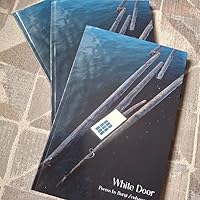
This fantastic collection had me spellbound from the first page. The poems are woven together to form a gorgeous, book-length, wreath as opposed to a precisely hammered crown. Foerster says in her notes and appendix, which are integral to the reading experience, that "The Maybe-Bird" is a net, and provides what she calls its choreography, and a graph. I love the idea of a net and this net particularly, and the wreath it turned out to be for me. Lines and images echo back and forth and invoke a mythical, yet not unattainable, place. The repetitions allow for variation and deepening of meaning. It was also simply fun to try and remember, to find the lines in their respective places in this choreography. A book I will delve into again. Impossible to appreciate it all in one reading.
January 4, 2023
Incredible book of poems, the language is so gorgeous and really textured. The construction of the book is so advanced and I have the deepest respect for Foerster for putting together something so complex, complicated, and intricate. Definitely cut a little above my head. My only contention with this book is that it almost lacks an emotional register that I prefer to engage with in poems– I don't know quite else how to explain it other than that, they wash over very beautifully but I personally did not feel an emotional tether or invitation into the majority poems. That being said, I still very much enjoyed the reading experience and the spiraling effect the book produces. The last 20 pages are incredible.
March 25, 2026
This book enchanted me, haunted me. I started reading on my couch and I did not leave home until I finished it. Absolutely stunning.
I often try to quote my favorite series of lines in a book of poems, but that would be impossible here. What makes these lines so great is their layering, their enmeshment.
“We entered the spiral. Began again.” This book tells stories over and over again, giving us characters old and new. It never tells the same story twice yet it only tells one story: “I wander the grove of recycled thoughts”
“I want a breath where there is no body,
to write the sentence of a shifting tide”
“Poems are to be found in the forest
not the mind, like clean-gnawed femurs of deer
who, stalked by hunters, lure them into caves.”
I often try to quote my favorite series of lines in a book of poems, but that would be impossible here. What makes these lines so great is their layering, their enmeshment.
“We entered the spiral. Began again.” This book tells stories over and over again, giving us characters old and new. It never tells the same story twice yet it only tells one story: “I wander the grove of recycled thoughts”
“I want a breath where there is no body,
to write the sentence of a shifting tide”
“Poems are to be found in the forest
not the mind, like clean-gnawed femurs of deer
who, stalked by hunters, lure them into caves.”

February 14, 2024
Language as a spiral of unknowing with recursion that left me in awe.
Her process for creating a "net" through poetry is among the most ambitious, precise, and immersively profound reading experiences I've encountered.
More people need to read this.
Her process for creating a "net" through poetry is among the most ambitious, precise, and immersively profound reading experiences I've encountered.
More people need to read this.

February 13, 2026
The "net" of the titular poem and its appendix is one of the most formally exciting, mind-blowing things I've ever seen in a poetry collection. I also read it for a graduate class, so I don't have time to write an in-depth review. But: run don't walk to get this!!!
March 17, 2025
I return to this book often, sometimes just to read a page at random, and I continue to appreciate the way it inspires a depth of perception. This is a powerful collection, a weaving, of poems.

October 9, 2025
The language was a bit too flowery for me? Indulgent, I got lost in the words. I enjoyed the repetition which made it all like a dream. Maybe it was floating above me

Read
May 27, 2026A f**king a force . . . brain melting simplicity in absolute truth . . . read it, immediately.

August 22, 2026
Absolutely gorgeous. I want to eat these poems.
Displaying 1 - 13 of 13 reviews