

What do you think?

Konráð #1
خفايا الليل
"خفايا الليل" والرواية تأليف الكاتب الأيسلندي أرنالدور أندريداسون/ الروائي الذي بيعت 14 مليون نسخة من رواياته وتُرجمت إلى 40 لغة عالمية.
332 pages, Kindle Edition
First published January 1, 2017
About the author
Arnaldur Indriðason
58 books3,392 followersArnaldur Indriðason has the rare distinction of having won the Nordic Crime Novel Prize two years running. He is also the winner of the highly respected and world famous CWA Gold Dagger Award for the top crime novel of the year in the English language, Silence of the Grave.
Arnaldur’s novels have sold over 14 million copies worldwide, in 40 languages, and have won numerous well-respected prizes and received rave reviews all over the world.
Arnaldur’s novels have sold over 14 million copies worldwide, in 40 languages, and have won numerous well-respected prizes and received rave reviews all over the world.
Ratings & Reviews
Friends & Following
Create a free account to discover what your friends think of this book!
Community Reviews
Displaying 1 - 30 of 646 reviews

July 1, 2021
Thanks to NetGalley, St. Martin's Press, and Minotaur Books for the opportunity to read this compelling ARC. I had previously enjoyed a couple of this author's books and am a big fan of Nordic Noir, especially those with an Icelandic setting. I found the atmosphere to be cold and dark, like the personality of its new protagonist, retired Detective Konrad. It is both an in-depth character study and an intensive police procedural that made it slow-paced, as investigations into cold cases must be in real-life situations.
We learn that Konrad is a gloomy person, direct and abrupt with others. His father was harsh with him and abusive towards his mother. His mother left home with his sister, but he was forced to remain with his father, who was a criminal and used his son in some of his criminal schemes. Konrad's father was murdered years before, and that killing has never been solved. Konrad was bullied in school because of a withered arm. He learned to be brutal in revenge as a result. However, this disability did not prevent him from becoming an effective police officer. This handicap comes into the story towards the end.
His beloved wife died of cancer. He left the police force six years before to care for her and retired amidst his grief at her death. He feels guilty about being unfaithful to her with a co-worker. He denies being bored in his retirement but has not acquired a fulfilling pastime and only takes pleasure with visits with his grandchildren at his son's home.
Konrad has been haunted by a cold case he was never able to solve. Thirty years earlier, a businessman, Sigurvin, disappeared in 1985. His former partner, Hjaltain, was arrested on circumstantial evidence and a witness claiming he heard the two men arguing before his disappearance. Hjaltain was released due to inadequate proof of his involvement and always proclaimed his innocence. Konrad thought him guilty.
A group of German tourists have just discovered Sigurvin's body uncovered by melting ice in a glacier. The body has been perfectly preserved for thirty years. Forensic evidence points to murder. A police officer draws him reluctantly back into the case. She tells him that Hjaltain is back in prison and has requested to speak to him. Konrad agrees because he has always been bothered by the case and is bored. He hopes Hjaltain is prepared to confess to him. He is ordered not to get involved in the case beyond his interview with the imprisoned man. Hjaltain still professes his innocence, and Konrad is rude and unsympathetic to him during their encounter. He also pleads with Konrad to find the true culprit.
Konrad becomes more involved in the case after a woman visits him, requesting he find out who killed her brother, a man named Villi, in a hit and run in 2009. It becomes evident that the two cases may be connected. As a young boy, Villi encountered a strange man around the time and at the place where Sigurvin vanished. The man threatened the young boy that he would kill him if he ever spoke of his presence. His sister believes he was deliberately killed for what he witnessed as a child.
Konrad begins a slow, deliberate investigation as a private citizen and retired police officer, methodically uncovering clues. This involves questioning anyone involved in the earlier cases who are still alive, going through old files, and surveillance of suspects from his car. The book became slow-paced and tedious for me at this point, and there was a minimum of action. However, I felt this must be how attempts to solve cold cases must be in real life. Because Konrad does not have police authority to investigate, doors are slammed in his face if witnesses do not want to cooperate. The lead investigator from 1985 is a corrupt cop who is hostile towards him.
What is surprising is that many of the witnesses and suspects still have sharp and vivid memories after all that time. They recall things they did not reveal in the past or admit to giving false testimony. Konrad's investigation uncovered clues, such as acquaintances from a childhood Boy Scout troop, fraudulent spiritualism, liquor and drug smuggling, a vehicle demolition shop, forced statements, and a hidden stash of money. Can all these clues be tied together?
I was left wondering if the police will now reinstate Konrad in some capacity. The long-ago murder of his father is still unresolved, and will he continue to investigate it further? He is feeling some guilt about the imprisonment of Hjaltain, who has since died, protesting his innocence. Konrad also has a secret about his role in the act of recent revenge that cannot be uncovered. There is much to be resolved, and I am looking forward to the second book featuring Detective Konrad. Hopefully, this gruff, sad detective will show a glimmer of happiness in the next book in the series.
Recommended to those who like Nordic Noir and a slow-paced, detailed police procedural. 3.5 stars rounded off to 4.
We learn that Konrad is a gloomy person, direct and abrupt with others. His father was harsh with him and abusive towards his mother. His mother left home with his sister, but he was forced to remain with his father, who was a criminal and used his son in some of his criminal schemes. Konrad's father was murdered years before, and that killing has never been solved. Konrad was bullied in school because of a withered arm. He learned to be brutal in revenge as a result. However, this disability did not prevent him from becoming an effective police officer. This handicap comes into the story towards the end.
His beloved wife died of cancer. He left the police force six years before to care for her and retired amidst his grief at her death. He feels guilty about being unfaithful to her with a co-worker. He denies being bored in his retirement but has not acquired a fulfilling pastime and only takes pleasure with visits with his grandchildren at his son's home.
Konrad has been haunted by a cold case he was never able to solve. Thirty years earlier, a businessman, Sigurvin, disappeared in 1985. His former partner, Hjaltain, was arrested on circumstantial evidence and a witness claiming he heard the two men arguing before his disappearance. Hjaltain was released due to inadequate proof of his involvement and always proclaimed his innocence. Konrad thought him guilty.
A group of German tourists have just discovered Sigurvin's body uncovered by melting ice in a glacier. The body has been perfectly preserved for thirty years. Forensic evidence points to murder. A police officer draws him reluctantly back into the case. She tells him that Hjaltain is back in prison and has requested to speak to him. Konrad agrees because he has always been bothered by the case and is bored. He hopes Hjaltain is prepared to confess to him. He is ordered not to get involved in the case beyond his interview with the imprisoned man. Hjaltain still professes his innocence, and Konrad is rude and unsympathetic to him during their encounter. He also pleads with Konrad to find the true culprit.
Konrad becomes more involved in the case after a woman visits him, requesting he find out who killed her brother, a man named Villi, in a hit and run in 2009. It becomes evident that the two cases may be connected. As a young boy, Villi encountered a strange man around the time and at the place where Sigurvin vanished. The man threatened the young boy that he would kill him if he ever spoke of his presence. His sister believes he was deliberately killed for what he witnessed as a child.
Konrad begins a slow, deliberate investigation as a private citizen and retired police officer, methodically uncovering clues. This involves questioning anyone involved in the earlier cases who are still alive, going through old files, and surveillance of suspects from his car. The book became slow-paced and tedious for me at this point, and there was a minimum of action. However, I felt this must be how attempts to solve cold cases must be in real life. Because Konrad does not have police authority to investigate, doors are slammed in his face if witnesses do not want to cooperate. The lead investigator from 1985 is a corrupt cop who is hostile towards him.
What is surprising is that many of the witnesses and suspects still have sharp and vivid memories after all that time. They recall things they did not reveal in the past or admit to giving false testimony. Konrad's investigation uncovered clues, such as acquaintances from a childhood Boy Scout troop, fraudulent spiritualism, liquor and drug smuggling, a vehicle demolition shop, forced statements, and a hidden stash of money. Can all these clues be tied together?
I was left wondering if the police will now reinstate Konrad in some capacity. The long-ago murder of his father is still unresolved, and will he continue to investigate it further? He is feeling some guilt about the imprisonment of Hjaltain, who has since died, protesting his innocence. Konrad also has a secret about his role in the act of recent revenge that cannot be uncovered. There is much to be resolved, and I am looking forward to the second book featuring Detective Konrad. Hopefully, this gruff, sad detective will show a glimmer of happiness in the next book in the series.
Recommended to those who like Nordic Noir and a slow-paced, detailed police procedural. 3.5 stars rounded off to 4.

August 17, 2025
Ein eher ruhiger Krimi mit einer düsteren Atmosphäre.
Es geht um einen lange zurückliegenden Fall. Jetzt, nach Jahrzehnten, wird die Leiche eines vermissten Mannes in einem Gletscher entdeckt.
Kommissar Konráð, der in dem Vermisstenfall damals ermittelte, wird benachrichtigt. Er ist inzwischen zwar schon Rentner, beginnt aber trotzdem, den Fall neu aufzurollen.
Diese "Cold Cases" habe ich in Büchern grundsätzlich gerne. Ich mag das Rätselhafte und Geheimnisvolle, das Entdecken neuer Spuren.
Dieses Buch würde ich als nicht wirklich spannend beschreiben, eher interessant.
Es geht um einen lange zurückliegenden Fall. Jetzt, nach Jahrzehnten, wird die Leiche eines vermissten Mannes in einem Gletscher entdeckt.
Kommissar Konráð, der in dem Vermisstenfall damals ermittelte, wird benachrichtigt. Er ist inzwischen zwar schon Rentner, beginnt aber trotzdem, den Fall neu aufzurollen.
Diese "Cold Cases" habe ich in Büchern grundsätzlich gerne. Ich mag das Rätselhafte und Geheimnisvolle, das Entdecken neuer Spuren.
Dieses Buch würde ich als nicht wirklich spannend beschreiben, eher interessant.

July 22, 2021
3.5 stars, rounded down
There’s something about Icelandic noir thrillers that I really enjoy. In addition to the dark, barren landscapes and the cold biting air, the people seem to have a certain reserve to them as well.
The Darkness Knows is the first in a new series by Arnaldur Indridason. Konrad is a retired detective, haunted by a case that was never solved. So, when the body of the murdered man shows up in a glacier thirty years later, his curiosity is piqued and he begins re-examining the case.
The book moves at a slow pace. Konrad is an interesting character, and we are told much about his life. We learn his father was murdered, another crime that was never solved. The investigation is hampered by the time lapse between the murder and now. People have died, others recant their testimonies. There are lots of possible suspects and I didn’t have a clue as to how it would come together.
The interaction between Konrad and Marta, the actual police detective on the case, was realistic and worked well. It will be interesting to see how this series progresses.
With translated books, I’m never sure if choppy writing is due to translation or the author’s style. The writing here is pretty basic, stark almost.
My thanks to NetGalley and St. Martin’s Press for an advance copy of this book.
There’s something about Icelandic noir thrillers that I really enjoy. In addition to the dark, barren landscapes and the cold biting air, the people seem to have a certain reserve to them as well.
The Darkness Knows is the first in a new series by Arnaldur Indridason. Konrad is a retired detective, haunted by a case that was never solved. So, when the body of the murdered man shows up in a glacier thirty years later, his curiosity is piqued and he begins re-examining the case.
The book moves at a slow pace. Konrad is an interesting character, and we are told much about his life. We learn his father was murdered, another crime that was never solved. The investigation is hampered by the time lapse between the murder and now. People have died, others recant their testimonies. There are lots of possible suspects and I didn’t have a clue as to how it would come together.
The interaction between Konrad and Marta, the actual police detective on the case, was realistic and worked well. It will be interesting to see how this series progresses.
With translated books, I’m never sure if choppy writing is due to translation or the author’s style. The writing here is pretty basic, stark almost.
My thanks to NetGalley and St. Martin’s Press for an advance copy of this book.

January 26, 2022
3.5 stars
This review was first posted on Mystery and Suspense. Check it out for features, interviews, and reviews. https://www.mysteryandsuspense.com/th...
In this first book in the 'Detective Konrad' series, the retired detective looks into a very cold case.
*****
Konrád, a retired police detective in Reykjavík, Iceland has been brooding about a case for 30 years.

Three decades ago an entrepreneur named Sigurvin disappeared, and Detective Konrád was an investigator on the case.

The prime suspect was Sigurvin's former business partner Hjaltalín, who was heard to argue with Sigurvin and threaten his life.

Hjaltalín was detained, but he loudly proclaimed his innocence, and - with no corpse - there was insufficient evidence to prosecute. So Hjaltalín walked free, but his life was blighted by a cloud of suspicion.

Now, 30 years later, Sigurvin's body has been found by tourists hiking on the Langjökull glacier.


The medical examiner determines Sigurvin was killed by blows to the head, the murder case is reopened, and Hjaltalín - now suffering from end-stage throat cancer - is arrested once again. Hjaltalín insists on speaking to retired Detective Konrád, who agrees, thinking Hjaltalín wants to confess and clear his conscience.
Konrád visits Hjaltalín in jail, where the sick man is weak, frail, and confined to his bed. Instead of confessing, Hjaltalín insists he's innocent, and asks Konrád to find the real killer and make him pay.

Since Konrád is retired he has no authority to investigate Sigurvin's death, but the case still haunts him. Moreover, the discovery of Sigurvin's body triggers people's memories, and a woman named Herdis comes to Konrád with a story about her brother Villi.

The tale goes as follows: When Villi was a child, he liked to play around the abandoned water tanks on Öskjuhlíd Hill, in central Reykjavík.

One night, nine-year-old Villi encountered a stranger on Öskjuhlíd, who chased Villi off and threatened to kill him if he spoke about the encounter. Soon afterwards Sigurvin vanished after being seen arguing with a man on Öskjuhlíd. Villi didn't realize he may have seen the killer until many years later, when he watched a true crime documentary about Sigurvin's disappearance.
Afterwards, in 2009, Villi was killed by a hit-and-run driver. Now that Sigurvin's body has been found, Herdis speculates that Villi's death may be connected to Sigurvin's murder, and she asks Konrád to look into it. This gives the retired detective a good excuse to poke around in the Sigurvin case, which he does with the help of friends and contacts in the police department.

This is a cold case police procedural that feels very authentic, with Konrád diligently following clues that lead from place to place and person to person - clues that sometimes provide useful information and sometimes fizzle out.

The book is also a character study of Konrád, who has a thorny past. Konrád was born with a withered arm, to a brutal father who abused his mother. When Konrád's mother had enough and fled with his sister, Konrád's father insisted the boy stay with him. The dad - who was a smuggler, thief, and fraud - made Konrád participate in his illegal activities, and Konrád became a juvenile delinguent who committed crimes, skipped school, and drank. Then Konrád's father was stabbed to death and his murder was never solved.
The homicide spurred Konrad to clean up his act, get an education, and join the police force. Konrád married, had a son, became a grandfather, and was doing well until his wife got terminal cancer and Konrad retired to take care of her. Konrád's story is filled with events from his life, like the time he was bullied at school; his rare visits with his mother; how he met his beloved wife; and more.

The atmosphere and landscape of Iceland make a fine backdrop to this compelling Nordic noir, which is expected to be the debut of a new series from award-winning author Arnaldur Indridason.
You can follow my reviews at https://reviewsbybarbsaffer.blogspot.com

April 20, 2026
„Doar întunericul știe” de Arnaldur Indriðason este primul volum din seria dedicată lui Konráð și, din punctul meu de vedere, o carte care merită atenția. Este genul acela de roman polițist care nu se grăbește, dar care te ține curios până la final.
Mai multe în recenzia de pe blog: https://carti.blog/2026/04/20/doar-in...
Mai multe în recenzia de pe blog: https://carti.blog/2026/04/20/doar-in...

July 14, 2021
This is the first book I have read by Arnaldur Indriðason, and I look forward to reading more of his works. I picked this one up because I saw that Indriðason was considered the "undisputed King of the Icelandic thriller."
A well-preserved body is found on a glacier. It turns out to be a man who disappeared thirty years ago and was never found. Back then they had interrogated and held a business associate of the man, but were unable to charge him as they didn't have enough evidence. Now, they bring the man in again, but he denies being involved. Konrad was the policeman who handled the original investigation, and he is brought in again, even though he is retired, to assist with the case since he has all the background information. This case has weighed heavily on Konrad all these years because it was never solved. Then, some new information turns up that helps Konrad move forward in trying to figure out what happened in this cold case.
I enjoyed reading this thriller and found Konrad to be an interesting character. I see that he appeared in an earlier book called The Shadow District, and will have to check that book out to see if maybe it deals with the original 30-year-old case. The investigation kept my attention and the path through the cold case was compelling.
Thanks to St. Martin's Press through Netgalley for an advance copy. This book will be published on August 17, 2021.
A well-preserved body is found on a glacier. It turns out to be a man who disappeared thirty years ago and was never found. Back then they had interrogated and held a business associate of the man, but were unable to charge him as they didn't have enough evidence. Now, they bring the man in again, but he denies being involved. Konrad was the policeman who handled the original investigation, and he is brought in again, even though he is retired, to assist with the case since he has all the background information. This case has weighed heavily on Konrad all these years because it was never solved. Then, some new information turns up that helps Konrad move forward in trying to figure out what happened in this cold case.
I enjoyed reading this thriller and found Konrad to be an interesting character. I see that he appeared in an earlier book called The Shadow District, and will have to check that book out to see if maybe it deals with the original 30-year-old case. The investigation kept my attention and the path through the cold case was compelling.
Thanks to St. Martin's Press through Netgalley for an advance copy. This book will be published on August 17, 2021.

April 27, 2021
The Darkness Knows by Arnaldur Indriðason gives new meaning to the term “cold case” when the body of a long-missing man is found on the Langjökull glacier in western Iceland. This solves one piece of a puzzle of a man who went missing 30 years earlier, but it raises many other questions. Who killed him, and why?
Konrád is a retired police detective who investigated the case decades earlier. When the main suspect in the case is arrested once more and says that he will only speak to Konrád, he reluctantly obliges. At one time, he questioned whether or not the man was telling the truth when he insisted that he was innocent; now he thinks he must be guilty. Mustn’t he?
This is a case that will not let him go. When the sister of another man who disappeared comes to him looking for answers, Konrád promises to help, despite the pushback from his former police colleagues. The more he rehashes old territory and revisits witnesses, the more he wonders if the two events could be related.
Having read several of Indriðason’s Inspector Erlendur novels, I am familiar with his writing style. However, I found this book more enjoyable for several reasons. First, Konrád is more outgoing. He has had to overcome a slight physical birth abnormality that led to bullying when he was young, and he didn’t always live a clean, law-abiding life as a young man. While it’s not a barnburner by any means, the plot does move at a faster speed than the Erlendur books, and it held my interest.
There were a couple things that nagged at me a bit, though. There is a relationship mentioned early on that is just dropped with no resolution. Also, there is a lot of emphasis on Konrád’s relationship with his father, and this is left unresolved. This leads me to believe that this may be the focus of an upcoming book, as there is quite a mystery there.
I did enjoy this character and the way he persevered, using his connections within the police department even though he was retired. He can push when he needs to, and his instincts are still sharp. I would read a second Konrád book if one comes about.
My thanks to NetGalley, Minotaur Books, and the author for this ARC copy in exchange for my unbiased review.
4 stars.

February 15, 2024
As the title suggests, this is a dark novel indeed, and the setting is Iceland. This is a new series from a master mystery writer and I can’t wait to read further volumes. The main character is a retired detective, Konrad who is a quiet, contemplative man with a depth of character. Kudos to the translator: Victoria Cribb, and narrator: Sean Barrett who both performed their work incredibly well.
What touched me most about this book was the relationship between Konrad and his late wife, Erna. Konrad had tended to her lovingly through a terminal illness. Towards the end she had been bed bound, however Erna insisted they go on one last outing together.
"The last thing they ever did together was to drive out to the Seltjarnarnes Peninsula, the westernmost point of Reykjavik to watch a luna eclipse."
Konrad tucks her carefully into the pre-warmed car, as it is so bitterly cold.
"The north wind had been blowing for the past couple of days and frost had settled like a crystalline blanket over the city streets and squares."
They arrive at the peninsula and Konrad parks the car to watch the luna eclipse through the windscreen while warmly ensconced inside.
"The wind whistled around the car. The longer they sat there, their eyes adapting to the dark, the better they could make out the vast starry vault of the sky, with its sea of lights reaching them from far back in time."
Then, Erna insists that she wants to get out of the car, so she can see the eclipse more clearly. Konrad objects as it is so cold, however his heart is softened and he bends to Erna's wishes.
“She was glad they could share this moment, when time became both present and eternity at once.”
Next, Konrad nestles her in the car for the ride home. Upon arrival, Konrad realizes Erna has passed away during their journey. He sits in quiet contemplation for a while, before lifting her gentling and carrying her into their home where he lays her on their bed.
Finally, he proceeds to tell Erna “what he’d forgotten to tell her in the car on the way home: about how the moon was described somewhere in a poem. That it was the brooch of the night. The old friend of lovers.”
“It was the shortest day of the year and the longest in Konrad’s life. It lasted only four hours and twelve minutes. And went on for eternity.”
What touched me most about this book was the relationship between Konrad and his late wife, Erna. Konrad had tended to her lovingly through a terminal illness. Towards the end she had been bed bound, however Erna insisted they go on one last outing together.
"The last thing they ever did together was to drive out to the Seltjarnarnes Peninsula, the westernmost point of Reykjavik to watch a luna eclipse."
Konrad tucks her carefully into the pre-warmed car, as it is so bitterly cold.
"The north wind had been blowing for the past couple of days and frost had settled like a crystalline blanket over the city streets and squares."
They arrive at the peninsula and Konrad parks the car to watch the luna eclipse through the windscreen while warmly ensconced inside.
"The wind whistled around the car. The longer they sat there, their eyes adapting to the dark, the better they could make out the vast starry vault of the sky, with its sea of lights reaching them from far back in time."
Then, Erna insists that she wants to get out of the car, so she can see the eclipse more clearly. Konrad objects as it is so cold, however his heart is softened and he bends to Erna's wishes.
“She was glad they could share this moment, when time became both present and eternity at once.”
Next, Konrad nestles her in the car for the ride home. Upon arrival, Konrad realizes Erna has passed away during their journey. He sits in quiet contemplation for a while, before lifting her gentling and carrying her into their home where he lays her on their bed.
Finally, he proceeds to tell Erna “what he’d forgotten to tell her in the car on the way home: about how the moon was described somewhere in a poem. That it was the brooch of the night. The old friend of lovers.”
“It was the shortest day of the year and the longest in Konrad’s life. It lasted only four hours and twelve minutes. And went on for eternity.”

May 21, 2021
Konrad, a retired policeman in Iceland, is shocked when a missing person from one of his old cases turns up frozen in a glacier. Even though it is not his case anymore, he decides to talk to people involved at the time. Could there be a connection with a 30 year old hit and run? Was the man who was accused of the crime telling the truth when he said he was innocent? This page turner is recommended for fans of Nordic Noir, or anyone who would like to read a novel by the "undisputed King of the Icelandic thriller." Thanks to the publisher and Edelweiss for the ARC.
July 16, 2025
With an upcoming trip to Iceland in the works, I wanted to tick off two boxes: a better understanding of the country and some crime thrillers to entertain me. After reading his thoroughly compelling Inspector Erlendur series, I found this collection by Arnaldur Indriðason, which has me even more excited for ly upcoming trip. In the series debut, retired Detective Konrad is called to help with a case when someone is found frozen inside an Icelandic glacier. The victim is tied to a missing person’s case from three decades before. Retired Detective Konrad is called back into service to tackle this cold case and finally tie up loose ends. Indriðason keeps the reader hooked and eager to help solve the case.
After a frozen body is found deep within a glacier, it appears to match that of a man who went missing three decades before. The crime went nowhere at the time, though the prime suspect was held for a time, but released when there was not enough to hold him. The police are abuzz, but need the right person for the job.
With the discover of the body, the original suspect is arrested once more and retired Detective Konrad is called back to head the investigation. This case has weighed heavily on Konrad’s mind all these years. Being back in the rush of police work, Konrad seeks to make new connections to solve the case.
Konrad’s probing leads to a woman coming forward to share news her brother provided. While Konrad wants to speak to the man, the witness has long died, leaving the retired detective to put the pieces together on his own. However, there is new momentum and Konrad has a fire within him to solve this long-forgotten case. Arnaldur Indriðason delivers a great series debut that is as exciting as the Erlendur collection.
Arnaldur Indriðason has been someone whose books I wanted to read, but it is only now, with tickets to Reykjavík purchased, that I chose to take the plunge. I love Scandinavian noir thrillers, though this one is not as dark as some. The narrative sets the framework for a great introduction of Iceland and its various settings. The story gets going from the opening pages and provides a gripping idea or two. Characters are well-developed, especially Detective Konrad, whose backstory is fleshed out during the larger mystery. Plot points provide twists from start to end, which keep the story sharp. Arnaldur Indriðason knows how to develop a great mystery and builds it effective while revealing much in short order.
Kudos, Mr. Indriðason, for yet another winning series debut that has me wanting to read more!
Love/hate the review? An ever-growing collection of others appears at:
http://pecheyponderings.wordpress.com/
After a frozen body is found deep within a glacier, it appears to match that of a man who went missing three decades before. The crime went nowhere at the time, though the prime suspect was held for a time, but released when there was not enough to hold him. The police are abuzz, but need the right person for the job.
With the discover of the body, the original suspect is arrested once more and retired Detective Konrad is called back to head the investigation. This case has weighed heavily on Konrad’s mind all these years. Being back in the rush of police work, Konrad seeks to make new connections to solve the case.
Konrad’s probing leads to a woman coming forward to share news her brother provided. While Konrad wants to speak to the man, the witness has long died, leaving the retired detective to put the pieces together on his own. However, there is new momentum and Konrad has a fire within him to solve this long-forgotten case. Arnaldur Indriðason delivers a great series debut that is as exciting as the Erlendur collection.
Arnaldur Indriðason has been someone whose books I wanted to read, but it is only now, with tickets to Reykjavík purchased, that I chose to take the plunge. I love Scandinavian noir thrillers, though this one is not as dark as some. The narrative sets the framework for a great introduction of Iceland and its various settings. The story gets going from the opening pages and provides a gripping idea or two. Characters are well-developed, especially Detective Konrad, whose backstory is fleshed out during the larger mystery. Plot points provide twists from start to end, which keep the story sharp. Arnaldur Indriðason knows how to develop a great mystery and builds it effective while revealing much in short order.
Kudos, Mr. Indriðason, for yet another winning series debut that has me wanting to read more!
Love/hate the review? An ever-growing collection of others appears at:
http://pecheyponderings.wordpress.com/

August 23, 2021
Some of the reviews I read put me off a bit; they made the book seem a bit darker than I thought it was and the character not very likable in this Nordic Noir. I didn’t find the main character, Konrád that negative or disagreeable. Yes, he has had a hard life, but despite an abusive childhood, physical deformity, his anguished bereavement following the death of his wife, and his forced retirement, it seems maybe he is getting himself together. He enjoys his family and is dogged in finding out the truth about a crime he couldn’t solve years ago.
Some might think it surprising the new information that comes to light or the clear memories thirty years later. However, just watch some episodes of Dateline and it might not be so surprising.
I enjoyed this book and did not feel it was slow placed. I also found it interesting learning a bit about Icelandic history and culture.
There were a few plot lines. Some were resolved; others perhaps left open for the second book in the Detective Konrád series.
Some might think it surprising the new information that comes to light or the clear memories thirty years later. However, just watch some episodes of Dateline and it might not be so surprising.
I enjoyed this book and did not feel it was slow placed. I also found it interesting learning a bit about Icelandic history and culture.
There were a few plot lines. Some were resolved; others perhaps left open for the second book in the Detective Konrád series.

September 8, 2021
“The Darkness Knows” is the story of a cold murder case, really old and really cold, in fact, frozen in a glacier. A tour guide is escorting a group on an Iceland glacier tour. People come to Iceland for the landscape, the pure air and the peace and quiet, not for frozen corpses on glaciers. The body is so well preserved in the ice that the man could have died that day. The corpse is identified as Sigurvin, a man who vanished without a trace more than thirty years previously. Time has passed; witnesses are dead or moved, and memories are faulty, however, those events from the past are changing everything in the present; there are things that must be settled, controlled, and finished.
Konrád, now retired from the police department, had invested time and energy in the original investigation, and his unsolved case has been reopened. The narrative is told mostly from Konrád’s perspective; readers know what he sees, hears, and thinks. He never really stopped looking for answers in this case; no one ever really retires from a case like this one. Looking back, the original investigation turned out to be rather sloppy, only half-finished. The current case is still fundamentally stalled until an unexpected woman visitor changes everything. The search moves with purpose, and the pacing provides structure. There is no rushing through these pages.
“The Darkness Knows” is a compelling mystery, and as a bonus, it highlights Iceland’s culture and geography with everyday activities interspersed throughout the narrative. People watch the grey waters of the glacial river churning against the rocks as they had for countless millennia, drink their coffee unhurriedly, chat about road conditions, and reminisce about what it was like growing up in Reykjavík. I received a review copy of “The Darkness Knows” from Arnaldur Indridason, St. Martin's Press, and Minotaur Books.
Konrád, now retired from the police department, had invested time and energy in the original investigation, and his unsolved case has been reopened. The narrative is told mostly from Konrád’s perspective; readers know what he sees, hears, and thinks. He never really stopped looking for answers in this case; no one ever really retires from a case like this one. Looking back, the original investigation turned out to be rather sloppy, only half-finished. The current case is still fundamentally stalled until an unexpected woman visitor changes everything. The search moves with purpose, and the pacing provides structure. There is no rushing through these pages.
“The Darkness Knows” is a compelling mystery, and as a bonus, it highlights Iceland’s culture and geography with everyday activities interspersed throughout the narrative. People watch the grey waters of the glacial river churning against the rocks as they had for countless millennia, drink their coffee unhurriedly, chat about road conditions, and reminisce about what it was like growing up in Reykjavík. I received a review copy of “The Darkness Knows” from Arnaldur Indridason, St. Martin's Press, and Minotaur Books.

Read
March 19, 2022لقد عثر فوجٌ سياحي في إحدي المُجلدات بايسلندا على جثة مدفونة في الجليد...إنه رجل الأعمال المفقود منذ ثلاثين عاماً..
عندئذٍ يتم إبلاغ المحقق " كونراد " والذي كان يحقق في القضية وقد تقاعد دون القبض على القاتل...
يُستأنف التحقيق من جديد ، وبالطبع لن يُفضل المحقق أن يبقى خارج القضية ويدعهم يتدبرون أمرهم...
إنطلاقاً من عددٍ من الإشارات يبدأ بتقصي الأمر من جديد ويقودك ذلك لقضية مقتل شاب إثر اصطدام بسيارة لتتقاطع مع القضية الأساسية...لينتهي المطاف بالتعرف على هوية المتورطين...
لا أدري لما يُفضل الكاتب أن يتوارى القاتل في مشهد خاطف في بداية الرواية ومن ثم يظهر بالنهاية...
لماذا لا يذكر القاتل في مقاطع غامضة على هامش الأحداث كأن يقول أنا مازلت هنا...
وبالرغم من ذلك ...أُبدي إعجابي بالتفاصيل المرسومة بعناية ، الاهتمام بالجانب الإنساني كعادة " أرنالدور " ، والعيش في ظل الأشباح القديمة....
عندئذٍ يتم إبلاغ المحقق " كونراد " والذي كان يحقق في القضية وقد تقاعد دون القبض على القاتل...
يُستأنف التحقيق من جديد ، وبالطبع لن يُفضل المحقق أن يبقى خارج القضية ويدعهم يتدبرون أمرهم...
إنطلاقاً من عددٍ من الإشارات يبدأ بتقصي الأمر من جديد ويقودك ذلك لقضية مقتل شاب إثر اصطدام بسيارة لتتقاطع مع القضية الأساسية...لينتهي المطاف بالتعرف على هوية المتورطين...
لا أدري لما يُفضل الكاتب أن يتوارى القاتل في مشهد خاطف في بداية الرواية ومن ثم يظهر بالنهاية...
لماذا لا يذكر القاتل في مقاطع غامضة على هامش الأحداث كأن يقول أنا مازلت هنا...
وبالرغم من ذلك ...أُبدي إعجابي بالتفاصيل المرسومة بعناية ، الاهتمام بالجانب الإنساني كعادة " أرنالدور " ، والعيش في ظل الأشباح القديمة....

April 27, 2022
Thoroughly enjoyed the multi-layered protagonist of this tale, an older retired officer slowly drawn back into an unsolved case from his grey murky past, and look forward to reading where Mr Indridason takes him next... Wherever that is count me in.
In the meantime I'll grab some of said author's earlier novels because I found his writing style to be immensely diggable. I just love me some Icelandic fiction!!!
Four Stars A'Twinkling
In the meantime I'll grab some of said author's earlier novels because I found his writing style to be immensely diggable. I just love me some Icelandic fiction!!!
Four Stars A'Twinkling

August 13, 2021
Times had changed, Konráð thought, as he took the main road out of town across the seemingly endless expanse of moss-covered lava fields, passing the familiar landmarks: the green-roofed building of the Little Café, standing alone among the wastes, and the distinctive black-cinder slopes of Mount Vífilfell.
The Darkness Knows opens with a group of German tourists and their guide at the melting glacier Langjökull who stumble across the body of a man named Sigurvin, missing for 30 years. The body is intact, frozen in time, the blows to his head the cause of death, but killed elsewhere – the victim’s clothes unsuited to the mountain terrain, and his car found at Öskjuhlíd – a wooded hill close to centre of Reykjavík.
In a case that stirred the nation, retired Reykjavík detective Konráð led the original investigation into the man’s disappearance, which pointed to his former business partner Hjaltalín, based on an accusation forced from a witness under duress. Hjaltalín claims his innocence to his own deathbed, wanting Konráð to bring the real killer to justice.
While unable to take part in the reopened case, Konráð is approached by a woman Herdís, whose brother Villi Hákonarson was killed in hit and run accident on Lindargata in the winter of 2009, after leaving a bar where he and a friend had been watching a soccer match. As Konráð tracks down witnesses, the thought occurs that the two cases might be connected.
This was one of those slow, brooding mysteries that Indriðason excels at. So many characters, so many secrets, that I overlooked the real killer. There is back story too on Konráð – still mourning his wife lost to cancer - who has his own skeleton in the closer in his father, indicted of fraud and deception, knifed to death on Skúlagata. (His accomplice, a so-called medium, died soon after, leaving open the possibility that both men had been murdered for another book).
But the silent character throughout is the landscape of fire and ice, that forges the character of its people, living so far north in the Atlantic, touching the Arctic Circle. There are glimpses of the Viking past in the place names and punctuation, to the more recent history of global warming, the 2010 eruption of the volcano Eyjafjallajökull closing airports across Europe, of Snæfellsjökull, the inspiration for Verne’s “Journey to the centre of the Earth, and the Global Financial Crisis that wiped out savings and cost many people their homes and livelihoods. The final confrontation over the turbulent glacial meltwaters of the River Ölfusá is a classic.
The Darkness Knows opens with a group of German tourists and their guide at the melting glacier Langjökull who stumble across the body of a man named Sigurvin, missing for 30 years. The body is intact, frozen in time, the blows to his head the cause of death, but killed elsewhere – the victim’s clothes unsuited to the mountain terrain, and his car found at Öskjuhlíd – a wooded hill close to centre of Reykjavík.
In a case that stirred the nation, retired Reykjavík detective Konráð led the original investigation into the man’s disappearance, which pointed to his former business partner Hjaltalín, based on an accusation forced from a witness under duress. Hjaltalín claims his innocence to his own deathbed, wanting Konráð to bring the real killer to justice.
While unable to take part in the reopened case, Konráð is approached by a woman Herdís, whose brother Villi Hákonarson was killed in hit and run accident on Lindargata in the winter of 2009, after leaving a bar where he and a friend had been watching a soccer match. As Konráð tracks down witnesses, the thought occurs that the two cases might be connected.
This was one of those slow, brooding mysteries that Indriðason excels at. So many characters, so many secrets, that I overlooked the real killer. There is back story too on Konráð – still mourning his wife lost to cancer - who has his own skeleton in the closer in his father, indicted of fraud and deception, knifed to death on Skúlagata. (His accomplice, a so-called medium, died soon after, leaving open the possibility that both men had been murdered for another book).
But the silent character throughout is the landscape of fire and ice, that forges the character of its people, living so far north in the Atlantic, touching the Arctic Circle. There are glimpses of the Viking past in the place names and punctuation, to the more recent history of global warming, the 2010 eruption of the volcano Eyjafjallajökull closing airports across Europe, of Snæfellsjökull, the inspiration for Verne’s “Journey to the centre of the Earth, and the Global Financial Crisis that wiped out savings and cost many people their homes and livelihoods. The final confrontation over the turbulent glacial meltwaters of the River Ölfusá is a classic.

February 5, 2022
Après un long trajet avec Erlendur, Indridason entraîne un autre policier, Kónrad, dans la même quête: résoudre des vieilles enquêtes au point mort, le dada de l'auteur. Kònrad n'est même plus policier puisque retraité. Autant torturé par son passé, son père violent et demi-gangster, sa femme adorée disparue, que ne l 'est Erlendur.
Enquête tout en finesse, la patte talentueuse de Indridason, des personnages d'une grande banalité brossés à en devenir complexes, des personnages en souffrance totale.
Petit manque: une immersion moins fouillée dans l'Islande brumeuse et son histoire également torturée.
Enquête tout en finesse, la patte talentueuse de Indridason, des personnages d'une grande banalité brossés à en devenir complexes, des personnages en souffrance totale.
Petit manque: une immersion moins fouillée dans l'Islande brumeuse et son histoire également torturée.

January 11, 2022
Thoughts soon.
November 12, 2022
A Cold Case for Konrad
Review of the Vintage Digital eBook (July 1, 2021) translated by Victoria Cribb from the Icelandic language original Myrkrið veit [The Darkness Knows] (November 1, 2017).
We first met retired Icelandic CID detective Konrad in The Shadow District (Icelandic orig. 2013/English trans. 2017) where he is retracing the steps of the Flovent & Thorson team in their final case from 1944. That book has a lot of the Konrad backstory, so you could call it Konrad #0.5 as a prequel to Indridason's complete Konrad series (2017-2020).
The Darkness Knows is yet another cold case for Konrad, as finally the body of a man missing from 30 years ago comes to light from the melting ice of the Langjökull glacier. Konrad is several years retired but is called back by his CID colleague Marta to make a last attempt to obtain a confession from the prime suspect who could not be charged at the time due to lack of evidence. A confession is not forthcoming and Konrad attempts to finally unravel the truth, even if he has no official standing.

Map of Iceland showing the location of the Langjökull glacier about 100 km north east of the capital Reykjavik. Image sourced from Wikipedia.
The investigation leads him to an incident at the old water tanks on Öskjuhlíð Hill in Reykjavik, before they were converted into a modern day tourist attraction. It also leads him to yet another unsolved crime from several years earlier, a hit-and-run on Lindargata in the Skuggahverfi (Shadow District) of Reykjavik, where Konrad himself grew up and which was once a more notorious and dangerous part of town.
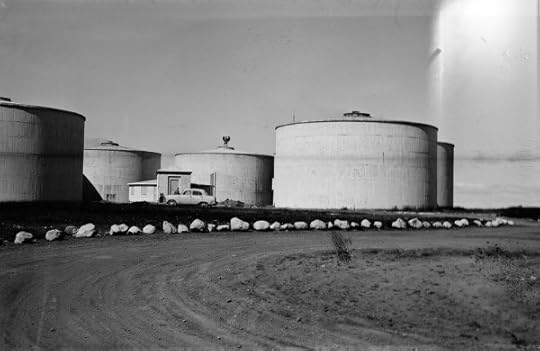
Photograph of the old water tanks on Öskjuhlíð Hill in Reykjavik. Image sourced from Reykjavik Grapevine Magazine.
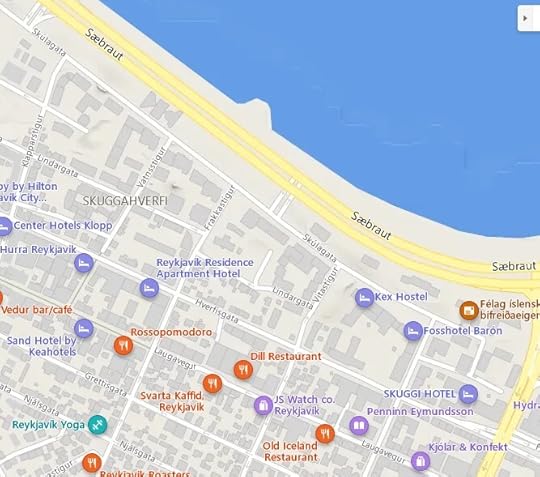
A map of the Skuggahverfi (Shadow District) of Reykjavik. Image from Bing Maps sourced from Twitter.
I am really enjoying these recent books by Indridason which involve much more 'normal' Scandi-noir detectives rather than the tortured souls of other Nordic Noir. Konrad has had his demons in the past but at 70+ years of age he obviously takes a much more relaxed route in his uncovering of past crimes. I look forward to the future translations of the series from the Icelandic originals. The Girl on the Bridge (Konrad #2) is expected to be published in English in 2023 (March 23 on Kindle/April 25 in Paperback) translated from the Icelandic original Stúlkan hjá brúnni (2018).
Trivia and Links
The old water tank complex on Öskjuhlíð Hill was converted to the modern tourist attraction known as the Perlan (The Pearl) in 1991.
Read about Nine Fascinating Facts about Geothermal Energy and Reykjavik at Iceland Magazine.
Review of the Vintage Digital eBook (July 1, 2021) translated by Victoria Cribb from the Icelandic language original Myrkrið veit [The Darkness Knows] (November 1, 2017).
We first met retired Icelandic CID detective Konrad in The Shadow District (Icelandic orig. 2013/English trans. 2017) where he is retracing the steps of the Flovent & Thorson team in their final case from 1944. That book has a lot of the Konrad backstory, so you could call it Konrad #0.5 as a prequel to Indridason's complete Konrad series (2017-2020).
The Darkness Knows is yet another cold case for Konrad, as finally the body of a man missing from 30 years ago comes to light from the melting ice of the Langjökull glacier. Konrad is several years retired but is called back by his CID colleague Marta to make a last attempt to obtain a confession from the prime suspect who could not be charged at the time due to lack of evidence. A confession is not forthcoming and Konrad attempts to finally unravel the truth, even if he has no official standing.
Map of Iceland showing the location of the Langjökull glacier about 100 km north east of the capital Reykjavik. Image sourced from Wikipedia.
The investigation leads him to an incident at the old water tanks on Öskjuhlíð Hill in Reykjavik, before they were converted into a modern day tourist attraction. It also leads him to yet another unsolved crime from several years earlier, a hit-and-run on Lindargata in the Skuggahverfi (Shadow District) of Reykjavik, where Konrad himself grew up and which was once a more notorious and dangerous part of town.
Photograph of the old water tanks on Öskjuhlíð Hill in Reykjavik. Image sourced from Reykjavik Grapevine Magazine.
A map of the Skuggahverfi (Shadow District) of Reykjavik. Image from Bing Maps sourced from Twitter.
I am really enjoying these recent books by Indridason which involve much more 'normal' Scandi-noir detectives rather than the tortured souls of other Nordic Noir. Konrad has had his demons in the past but at 70+ years of age he obviously takes a much more relaxed route in his uncovering of past crimes. I look forward to the future translations of the series from the Icelandic originals. The Girl on the Bridge (Konrad #2) is expected to be published in English in 2023 (March 23 on Kindle/April 25 in Paperback) translated from the Icelandic original Stúlkan hjá brúnni (2018).
Trivia and Links
The old water tank complex on Öskjuhlíð Hill was converted to the modern tourist attraction known as the Perlan (The Pearl) in 1991.
Read about Nine Fascinating Facts about Geothermal Energy and Reykjavik at Iceland Magazine.

August 9, 2021
Cold cases do not come much colder than one involving a corpse discovered in a glacier after thirty years. Not only was the victim murdered, there may have been a subsequent murder committed to facilitate a cover-up. Inspector Konrád is recalled from retirement to deal with the prime suspect, a man Konrád is beginning to think innocent. He must now untangle decades of lies and false alibis in order to get to the truth.
"The Darkness Knows" by Arnaldur Indriðason is set in Iceland. I was never aware that "Nordic Noir" was a niche but the pace and the landscape sustain a suspenseful tension throughout. After finishing this I see where some reviewers are put off or bored by Indriðason's writing style-- which puzzles the hell out of me. Do not pick this up if you are looking for "The Fast and the Furious". A good mystery is always fun, but it really is a treat when you come across one by an author who is a master at what he is doing. 5 stars.
Thank you to St. Martin's Press, Minotaur Books, Arnaldur Indriðason, and NetGalley for the advance reader copy in exchange for an honest review.
"The Darkness Knows" publishes on August 17, 2021 and this review will be posted on Amazon, Barnes & Noble, BookBub, Facebook and Twitter on that day. #TheDarknessKnows #NetGalley.
"The Darkness Knows" by Arnaldur Indriðason is set in Iceland. I was never aware that "Nordic Noir" was a niche but the pace and the landscape sustain a suspenseful tension throughout. After finishing this I see where some reviewers are put off or bored by Indriðason's writing style-- which puzzles the hell out of me. Do not pick this up if you are looking for "The Fast and the Furious". A good mystery is always fun, but it really is a treat when you come across one by an author who is a master at what he is doing. 5 stars.
Thank you to St. Martin's Press, Minotaur Books, Arnaldur Indriðason, and NetGalley for the advance reader copy in exchange for an honest review.
"The Darkness Knows" publishes on August 17, 2021 and this review will be posted on Amazon, Barnes & Noble, BookBub, Facebook and Twitter on that day. #TheDarknessKnows #NetGalley.

August 20, 2021
As always an impressive contribution to the Nordic Noir arc by Indridason!
Climate change has revealed a body in a glacier. A case that goes back 30 years or so and that has haunted retired detective Konrad.
Called back to investigate the case he and we, start slowly but as the trajectory gains momentum Konrad uncovers twists and turns that intrigue and satisfy.
A St. Martin's Press ARC via NetGalley
Climate change has revealed a body in a glacier. A case that goes back 30 years or so and that has haunted retired detective Konrad.
Called back to investigate the case he and we, start slowly but as the trajectory gains momentum Konrad uncovers twists and turns that intrigue and satisfy.
A St. Martin's Press ARC via NetGalley

May 13, 2026
This is my first read by this author incidentally maybe his first book. The novel opens dramatically when a group of tourists on an Icelandic glacier discover a body emerging from melting ice. The corpse turns out to be Sigurvin, a businessman who vanished about thirty years earlier. The case had once attracted major attention but was never solved.
The discovery pulls retired detective Konráð back into the investigation. Konráð had worked on the original case and always believed the prime suspect—Sigurvin’s business associate, Hjaltalín—was guilty. But when the suspect, now old and dying, again insists he is innocent and begs Konráð to find the real killer, Konráð begins to question everything he thought he knew.
As he revisits old files, interviews forgotten witnesses, and uncovers hidden relationships, another seemingly unrelated death—a hit-and-run involving a young man named Villi—starts to connect to the original disappearance. The deeper Konráð digs, the more he finds that multiple people have spent decades protecting dangerous secrets.
At the same time, Konráð is forced to confront his own troubled past—his abusive father, unresolved guilt, and his late wife’s memory. This personal history makes the investigation feel as much about Konráð himself as about solving a murder.
It’s all about :
* Memory and buried secrets
* Guilt, revenge, and family trauma
* How old crimes continue shaping the present
* Iceland’s stark landscape as almost a character in itself
The book is more psychological and atmospheric than action-driven—ideal if you enjoy authors like Henning Mankell or Tana French. I would give the book 4 stars
Dr. Javed Rasheed
The discovery pulls retired detective Konráð back into the investigation. Konráð had worked on the original case and always believed the prime suspect—Sigurvin’s business associate, Hjaltalín—was guilty. But when the suspect, now old and dying, again insists he is innocent and begs Konráð to find the real killer, Konráð begins to question everything he thought he knew.
As he revisits old files, interviews forgotten witnesses, and uncovers hidden relationships, another seemingly unrelated death—a hit-and-run involving a young man named Villi—starts to connect to the original disappearance. The deeper Konráð digs, the more he finds that multiple people have spent decades protecting dangerous secrets.
At the same time, Konráð is forced to confront his own troubled past—his abusive father, unresolved guilt, and his late wife’s memory. This personal history makes the investigation feel as much about Konráð himself as about solving a murder.
It’s all about :
* Memory and buried secrets
* Guilt, revenge, and family trauma
* How old crimes continue shaping the present
* Iceland’s stark landscape as almost a character in itself
The book is more psychological and atmospheric than action-driven—ideal if you enjoy authors like Henning Mankell or Tana French. I would give the book 4 stars
Dr. Javed Rasheed

November 17, 2021
This novel is the first of a new series by the Founding Father of Icelandic crime, featuring retired Detective Konrad. Konrad is a cold and gloomy person and, the more we learn of his back story, the less surprising that is. Brought up largely by a brutal, criminal father and suffering a withered arm. Although quite successful as a police officer, he left the force early to care for his wife, who died of cancer six years previously.
One unsolved case that always haunted Konrad was the disappearance of businessman Sigurvin thirty years ago and, when the body is eventually discovered buried in a melting glacier, Konrad is called out of retirement to re-interview his only suspect, Sigurvin’s associate Hjaltain, who still maintains his innocence.
Then Konrad discovers that a man named Villi, killed by a hit and run in 2009, could, as a boy, have witnessed Sigurvin’s murder. What follows is a slow-paced police procedural as Konrad gradually begins to unearth new evidence, which some are determined should remain hidden.
It’s impossible to warm to Konrad, although one can understand why he is like he is. A marked contrast to the author’s original protagonist Erlendur, who somehow manages to rise above all the trials he’s had to face, whilst Konrad seems perpetually weighed down by his.
Despite being a slow novel, this is well plotted and well written.
One unsolved case that always haunted Konrad was the disappearance of businessman Sigurvin thirty years ago and, when the body is eventually discovered buried in a melting glacier, Konrad is called out of retirement to re-interview his only suspect, Sigurvin’s associate Hjaltain, who still maintains his innocence.
Then Konrad discovers that a man named Villi, killed by a hit and run in 2009, could, as a boy, have witnessed Sigurvin’s murder. What follows is a slow-paced police procedural as Konrad gradually begins to unearth new evidence, which some are determined should remain hidden.
It’s impossible to warm to Konrad, although one can understand why he is like he is. A marked contrast to the author’s original protagonist Erlendur, who somehow manages to rise above all the trials he’s had to face, whilst Konrad seems perpetually weighed down by his.
Despite being a slow novel, this is well plotted and well written.

July 12, 2021
Great opening to a new series from Arnaldur
After having let Kommisar Erlendur — the character who made him famous — die in the cold of the Western fjords, Arnaldur has been casting around for a new detective to build a series on...with not much success.
But wait... here's Konráð! Retired police detective, widower and unassuming nice guy with some sharp edges he inherited from his abusive, criminal father (who was murdered...can we see future mysteries keep coming back to that? No, perish the thought).
Konráð's shtick seems like it's going to be people, okay women, asking him to look into situations or events they believe were unjust or "just won't leave them alone". Since he's retired, boredom levels are high and he's a gentlemen who can't turn down a middle-aged damsel-in-emotional-distress, he takes the case. (Of course he does)
That's exactly what happens here, allowing Konráð to revisit a decades old cold case (LITERALLY, the body was frozen in a glacier) he never adequately solved...and getting it right this time.
The pace is much quieter and considered than the Erlendur series. It's not the intense police investigation we're used to because a) Konráð is playing hobby detective with close ties to the police, but not a member of the police and b) he's much older and zipping around he's not going to do.
This combo could really work.
One thing though: Arnaldur's always had problems tying up his mysteries gracefully, and the end situation in this series opener is somewhat awkward and therefore somewhat unsatisfying. That's really the only detractor from the story and simply a deficit of the author (we all have them), not a blight on the novel.
All-in-all, Arnaldur has most likely struck character gold with Konráð and I'm looking forward to more mysteries with him.
After having let Kommisar Erlendur — the character who made him famous — die in the cold of the Western fjords, Arnaldur has been casting around for a new detective to build a series on...with not much success.
But wait... here's Konráð! Retired police detective, widower and unassuming nice guy with some sharp edges he inherited from his abusive, criminal father (who was murdered...can we see future mysteries keep coming back to that? No, perish the thought).
Konráð's shtick seems like it's going to be people, okay women, asking him to look into situations or events they believe were unjust or "just won't leave them alone". Since he's retired, boredom levels are high and he's a gentlemen who can't turn down a middle-aged damsel-in-emotional-distress, he takes the case. (Of course he does)
That's exactly what happens here, allowing Konráð to revisit a decades old cold case (LITERALLY, the body was frozen in a glacier) he never adequately solved...and getting it right this time.
The pace is much quieter and considered than the Erlendur series. It's not the intense police investigation we're used to because a) Konráð is playing hobby detective with close ties to the police, but not a member of the police and b) he's much older and zipping around he's not going to do.
This combo could really work.
One thing though: Arnaldur's always had problems tying up his mysteries gracefully, and the end situation in this series opener is somewhat awkward and therefore somewhat unsatisfying. That's really the only detractor from the story and simply a deficit of the author (we all have them), not a blight on the novel.
All-in-all, Arnaldur has most likely struck character gold with Konráð and I'm looking forward to more mysteries with him.

June 28, 2023
جثة تظهر في المثلجات بعد ثلاثين عاماً!
فتح التحقيقات مرة أخرى بعد غلقها لعدم العثور على أثر للجثة!
ظهور الكثير من الحقائق والمفاجآت طوال الطريق!
هل تعلمون من الذي كشف كل هذا؟
شرطي متقاعد!
فيا ترى ما الذي دفعه للبحث في هذه القضية؟
وما الحقائق التي كشفها خلال بحثه؟!
رحلتي الأولى مع أندريداسون،
لم تكن كما أملت، لكن أتمنى الرحلة القادمة تكون أفضل وتُصلح ما تم إفساده مع هذه الرواية.
تمت
١٣ يونية ٢٠٢٣
فتح التحقيقات مرة أخرى بعد غلقها لعدم العثور على أثر للجثة!
ظهور الكثير من الحقائق والمفاجآت طوال الطريق!
هل تعلمون من الذي كشف كل هذا؟
شرطي متقاعد!
فيا ترى ما الذي دفعه للبحث في هذه القضية؟
وما الحقائق التي كشفها خلال بحثه؟!
رحلتي الأولى مع أندريداسون،
لم تكن كما أملت، لكن أتمنى الرحلة القادمة تكون أفضل وتُصلح ما تم إفساده مع هذه الرواية.
تمت
١٣ يونية ٢٠٢٣

April 7, 2026
‘The Darkness Knows: A Novel’, #1 in the nordic Detective Konrad series, is a very good noir mystery! Until a book club selected one of the novels in this series, I had never heard of the author Arnaldur Indridason. I can’t pronounce his name, but I will be looking for his books in the future!
Detective Konrad has had the usual stresses of the job as a policeman, but adding to his angst is the recent death of his wife Erna from cancer. His retirement from the Reykjavik CID police also was problematic - he attacked a jailed prisoner who was mouthing off. Although Konrad is not liked by some of his former peers, his old partner Marta still is willing to give him assistance with police files and other internal police information. He has one son, Húgó, who is married to Sirrí. They have twelve-year-old twin boys. Konrad also has a sister, Elísabet, or Beta for short. He is only recently becoming familiar with Beta since she had gone to live with their mother when their parents had divorced. Konrad’s father was a criminal, most of his crimes involving scams and smuggling, but with occasional burglaries done here and there. He had been murdered, his body found stabbed in front of an abattoir. The murderer was never identified. Konrad had participated in some of his father’s activities until he was a young man.
I have copied the book blurb for ‘The Darkness Knows’:
”Retired detective Konrad returns to a haunting cold case in The Darkness Knows by Arnaldur Indridason, the "undisputed King of the Icelandic thriller." —The Guardian (UK)
A frozen body is discovered in the icy depths of Langjökull glacier, apparently that of a businessman who disappeared thirty years before. At the time, an extensive search and police investigation yielded no results—one of the missing man’s business associates was briefly held in custody, but there wasn’t enough evidence to charge him.
Now the associate is arrested again and Konrad, the retired policeman who originally investigated the disappearance, is called back to reopen the case that has weighed on his mind for decades.
When a woman approaches him with new information that she obtained from her deceased brother, progress can finally be made in solving this long-cold case.
In The Darkness Knows, the master of Icelandic crime writing reunites readers with Konrad, the unforgettable retired detective from The Shadow District. This is a powerful and haunting story about the poisonous secrets and cruel truths that time eventually uncovers.”
Since others may be as ignorant of the author as I was, I have included his bio:
”Arnaldur Indriðason has the rare distinction of having won the Nordic Crime Novel Prize two years running. He is also the winner of the highly respected and world famous CWA Gold Dagger Award for the top crime novel of the year in the English language, Silence of the Grave.
Arnaldur’s novels have sold over 14 million copies worldwide, in 40 languages, and have won numerous well-respected prizes and received rave reviews all over the world.”
‘The Darkness Knows’ is written in a spare ‘Dragnet’ manner, and the pacing is a walk: one step at a time, the introduction of several suspects, a periodic reveal of ex-police Detective Konrad’s biography. I don’t know if it is the translation into English from the original Icelandic that is affecting the book’s written presentation, but I like it nonetheless! It is the perfect tone fitting the winter landscape of Iceland as I imagine it to be.
I couldn’t help noticing the title is among those I’ve come across that I consider particularly ridiculous. There are sooooooo many books with dumb titles, but occasionally a title irks me more than normal. Who decides what the novels will be named?
Just for fun, I googled the longest word in Icelandic:
“What is Iceland's longest word?
Vaðlaheiðarvegavinnuverkfærageymsluskúrslyklakippuhringurinn
Vaðlaheiðarvegavinnuverkfærageymsluskúrslyklakippuhringurinn! This is the longest word in the Icelandic language and has letters. It translates to “the key ring to the tool work shed in the road works of Mount Vaðlaheiði””
Detective Konrad has had the usual stresses of the job as a policeman, but adding to his angst is the recent death of his wife Erna from cancer. His retirement from the Reykjavik CID police also was problematic - he attacked a jailed prisoner who was mouthing off. Although Konrad is not liked by some of his former peers, his old partner Marta still is willing to give him assistance with police files and other internal police information. He has one son, Húgó, who is married to Sirrí. They have twelve-year-old twin boys. Konrad also has a sister, Elísabet, or Beta for short. He is only recently becoming familiar with Beta since she had gone to live with their mother when their parents had divorced. Konrad’s father was a criminal, most of his crimes involving scams and smuggling, but with occasional burglaries done here and there. He had been murdered, his body found stabbed in front of an abattoir. The murderer was never identified. Konrad had participated in some of his father’s activities until he was a young man.
I have copied the book blurb for ‘The Darkness Knows’:
”Retired detective Konrad returns to a haunting cold case in The Darkness Knows by Arnaldur Indridason, the "undisputed King of the Icelandic thriller." —The Guardian (UK)
A frozen body is discovered in the icy depths of Langjökull glacier, apparently that of a businessman who disappeared thirty years before. At the time, an extensive search and police investigation yielded no results—one of the missing man’s business associates was briefly held in custody, but there wasn’t enough evidence to charge him.
Now the associate is arrested again and Konrad, the retired policeman who originally investigated the disappearance, is called back to reopen the case that has weighed on his mind for decades.
When a woman approaches him with new information that she obtained from her deceased brother, progress can finally be made in solving this long-cold case.
In The Darkness Knows, the master of Icelandic crime writing reunites readers with Konrad, the unforgettable retired detective from The Shadow District. This is a powerful and haunting story about the poisonous secrets and cruel truths that time eventually uncovers.”
Since others may be as ignorant of the author as I was, I have included his bio:
”Arnaldur Indriðason has the rare distinction of having won the Nordic Crime Novel Prize two years running. He is also the winner of the highly respected and world famous CWA Gold Dagger Award for the top crime novel of the year in the English language, Silence of the Grave.
Arnaldur’s novels have sold over 14 million copies worldwide, in 40 languages, and have won numerous well-respected prizes and received rave reviews all over the world.”
‘The Darkness Knows’ is written in a spare ‘Dragnet’ manner, and the pacing is a walk: one step at a time, the introduction of several suspects, a periodic reveal of ex-police Detective Konrad’s biography. I don’t know if it is the translation into English from the original Icelandic that is affecting the book’s written presentation, but I like it nonetheless! It is the perfect tone fitting the winter landscape of Iceland as I imagine it to be.
I couldn’t help noticing the title is among those I’ve come across that I consider particularly ridiculous. There are sooooooo many books with dumb titles, but occasionally a title irks me more than normal. Who decides what the novels will be named?
Just for fun, I googled the longest word in Icelandic:
“What is Iceland's longest word?
Vaðlaheiðarvegavinnuverkfærageymsluskúrslyklakippuhringurinn
Vaðlaheiðarvegavinnuverkfærageymsluskúrslyklakippuhringurinn! This is the longest word in the Icelandic language and has letters. It translates to “the key ring to the tool work shed in the road works of Mount Vaðlaheiði””

March 13, 2023
Such a pleasant gentle read by a master storyteller.
This is a dark crime that resurfaces when the body, previously ‘buried ‘ in a glazier is found.
The case from some thirty years ago was not Detective Konrád best work or his finest hour. Now retired, the discovery of the body confirms foul play, he was murdered. A case few could ever forget, suddenly becomes an investigation demanding a conclusion. But after so long can the truth ever emerge or will it stay buried; frozen in time.
An ingenious premise. Taking a recently retired detective, with more reason than most, to seek out answers drives the story along that slowly gathers momentum but frustratingly always lacks clarity, peering back through the mists of time.
It is so frustrating that Arnaldur Indriðason is one of my favourite authors and this work has been neglected by me. I fell in love again, with the methodical police work and the Icelandic location. Re-united with the author who brought me so much joy in his Inspector Erlendur Series.
The work of translation by Victoria Cribb is first class and lifts the words into a pleasing voice that is both measured and always informative. I like that the author speaks of and includes historical events into his story bringing his characters a more rounded and fleshed out reality.
The subject of a glacier giving up a body isn’t a unique plot line. However, the writer takes something that is fundamental to Iceland; it’s growing tourist influx and makes a story about a senseless crime that resonates with human nature across European culture. That crime has consequences on the victim, their family, the accused and witnesses. The perpetrators also, even if many years later, they cannot remain unaffected forever.
I like the different levels of justice at play here that the author explores. The guilt that cannot be buried and the sense that a secret hidden within a glacier is never lost forever. The melt waters and rushing torrents will not wash the blood from their hands.
Such clever and well crafted fiction. A reminder that good crime mysteries need a framework, a flow and familiar situations to make them great. Yet by far the most important ingredient is an author comfortable in themselves, capable and competent to create these things with the natural skills of recounting a brilliant story you can rejoin along the way. Like meeting an old friend where the distance or time between conversations is inconsequential.
Reading an Arnaldur Indriðason novel is such an experience. Whether you rush through to the end, or take your time reflecting on a couple of chapters as time allows there is real joy in reading his work.
This is a dark crime that resurfaces when the body, previously ‘buried ‘ in a glazier is found.
The case from some thirty years ago was not Detective Konrád best work or his finest hour. Now retired, the discovery of the body confirms foul play, he was murdered. A case few could ever forget, suddenly becomes an investigation demanding a conclusion. But after so long can the truth ever emerge or will it stay buried; frozen in time.
An ingenious premise. Taking a recently retired detective, with more reason than most, to seek out answers drives the story along that slowly gathers momentum but frustratingly always lacks clarity, peering back through the mists of time.
It is so frustrating that Arnaldur Indriðason is one of my favourite authors and this work has been neglected by me. I fell in love again, with the methodical police work and the Icelandic location. Re-united with the author who brought me so much joy in his Inspector Erlendur Series.
The work of translation by Victoria Cribb is first class and lifts the words into a pleasing voice that is both measured and always informative. I like that the author speaks of and includes historical events into his story bringing his characters a more rounded and fleshed out reality.
The subject of a glacier giving up a body isn’t a unique plot line. However, the writer takes something that is fundamental to Iceland; it’s growing tourist influx and makes a story about a senseless crime that resonates with human nature across European culture. That crime has consequences on the victim, their family, the accused and witnesses. The perpetrators also, even if many years later, they cannot remain unaffected forever.
I like the different levels of justice at play here that the author explores. The guilt that cannot be buried and the sense that a secret hidden within a glacier is never lost forever. The melt waters and rushing torrents will not wash the blood from their hands.
Such clever and well crafted fiction. A reminder that good crime mysteries need a framework, a flow and familiar situations to make them great. Yet by far the most important ingredient is an author comfortable in themselves, capable and competent to create these things with the natural skills of recounting a brilliant story you can rejoin along the way. Like meeting an old friend where the distance or time between conversations is inconsequential.
Reading an Arnaldur Indriðason novel is such an experience. Whether you rush through to the end, or take your time reflecting on a couple of chapters as time allows there is real joy in reading his work.

August 28, 2021
In a true cold case (sorry about that...but not really) Arnaldur Indridason returns with a novel featuring Konrad, a retired police detective, who is drawn back to an old inquiry when a guided glacier tour comes upon a body. Climate change has released a body missing for thirty years! Because of his involvement in the original case, Konrad was advised of the new development. And from there new investigations, official and unofficial, commence. He is advised to stay out of the way of the official, police investigation.
Konrad’s story divides between his personal and professional lives, both of which have had ups and downs over recent years. The descriptions of his life with his wife are often almost poetic. When he he is dealing with or even thinking about the past crime and his work life, the prose is quite different and more simple. Konrad is a complicated, conflicted man who appears to have some background to be explored further. I would read that book or books. Iceland itself is a character in the book and its geography, weather, seasons all are features in the story, as they seem to be in other novels set in that country.
Rating 3.5 rounded down to 3. Recommended to those who enjoy Scandinavian noir mysteries.
A copy of this book was provided by the publisher through NetGalley in return for an honest review.
Konrad’s story divides between his personal and professional lives, both of which have had ups and downs over recent years. The descriptions of his life with his wife are often almost poetic. When he he is dealing with or even thinking about the past crime and his work life, the prose is quite different and more simple. Konrad is a complicated, conflicted man who appears to have some background to be explored further. I would read that book or books. Iceland itself is a character in the book and its geography, weather, seasons all are features in the story, as they seem to be in other novels set in that country.
Rating 3.5 rounded down to 3. Recommended to those who enjoy Scandinavian noir mysteries.
A copy of this book was provided by the publisher through NetGalley in return for an honest review.

August 22, 2021
The Darkness Knows
Author: Arnaldur Indriðason
When a well-presevered body is found on a glacier, a retired detective gets pulled into the case. The dead man disappeared 30 years before and the investigation stalled for lack of evidence. Konrad comes back to re-open the case. New information, the body, and sheer determination might finally solve this death.
I got sucked right into this book! I can see why this author is known as the "king'' of Icelandic suspense thrillers. The setting, the cold case, the main character -- totally hooked from the start!
I read about 2/3 of my review copy, paused, and snagged the audio book from Audible, as my local libraries (I have cards from 3) have no books by this author. I wanted to HEAR the story -- hits harder for me if I listen on audio. Just personal preference. There are several books in this series, and the author has another series, Detective Erlendur, as well. ST MARTIN'S PRESS/MACMILLAN AUDIO: Please please please please make more of this author's work available in English!!!! PLEASE! I am begging with this face:
(I had a picture of the wide-eyed Puss in Boots in my review....but I can't figure out how to attach the photo here. Gave up. Just imagine it.....beg beg beg beg beg)
You cannot resist The Face. And I can't wait for more books!
The audiobook is fantastic! Narrated by Sean Barrett, the audio is just shy of 9 hours long. Easy listening length. Barrett does a superb job of voice acting. Very entertaining listening experience!
For thriller/suspense fans & those who love icelandic detective procedurals -- I highly recommend this book! And, I have to say this would make a great movie or television show! Someone make it happen!
**I voluntarily read a review copy of this book from St Martin's Press (and purchased the audio book as well so this disclaimer really isn't necessary but I'm including it for more begging -- PLEASE more in English!). All opinions expressed are entirely my own.**
Author: Arnaldur Indriðason
When a well-presevered body is found on a glacier, a retired detective gets pulled into the case. The dead man disappeared 30 years before and the investigation stalled for lack of evidence. Konrad comes back to re-open the case. New information, the body, and sheer determination might finally solve this death.
I got sucked right into this book! I can see why this author is known as the "king'' of Icelandic suspense thrillers. The setting, the cold case, the main character -- totally hooked from the start!
I read about 2/3 of my review copy, paused, and snagged the audio book from Audible, as my local libraries (I have cards from 3) have no books by this author. I wanted to HEAR the story -- hits harder for me if I listen on audio. Just personal preference. There are several books in this series, and the author has another series, Detective Erlendur, as well. ST MARTIN'S PRESS/MACMILLAN AUDIO: Please please please please make more of this author's work available in English!!!! PLEASE! I am begging with this face:
(I had a picture of the wide-eyed Puss in Boots in my review....but I can't figure out how to attach the photo here. Gave up. Just imagine it.....beg beg beg beg beg)
You cannot resist The Face. And I can't wait for more books!
The audiobook is fantastic! Narrated by Sean Barrett, the audio is just shy of 9 hours long. Easy listening length. Barrett does a superb job of voice acting. Very entertaining listening experience!
For thriller/suspense fans & those who love icelandic detective procedurals -- I highly recommend this book! And, I have to say this would make a great movie or television show! Someone make it happen!
**I voluntarily read a review copy of this book from St Martin's Press (and purchased the audio book as well so this disclaimer really isn't necessary but I'm including it for more begging -- PLEASE more in English!). All opinions expressed are entirely my own.**

August 15, 2021
*3-3.5 stars. 'There are secrets only the darkness knows...' Set in Iceland where the body of a man who disappeared 30 years earlier is found in the melting ice of a glacier. The detective who worked the original case, Konrad, is now retired but gets drawn back into the periphery of the current investigation, unofficially of course. As he talks to people, he becomes aware there may actually be two unsolved crimes here...
Dark and brooding nordic noir with the plodding pace of a police procedural. Konrad, a widower, is a bit torn apart by his mistakes, both personal and professional. Can he now at least unravel this case that's been dogging him for the past 30 years?
I received an arc of this new thriller from the publisher via NetGalley in exchange for an honest review. Many thanks to them for the opportunity.
Dark and brooding nordic noir with the plodding pace of a police procedural. Konrad, a widower, is a bit torn apart by his mistakes, both personal and professional. Can he now at least unravel this case that's been dogging him for the past 30 years?
I received an arc of this new thriller from the publisher via NetGalley in exchange for an honest review. Many thanks to them for the opportunity.

September 13, 2021
The Darkness Knows
This is a Detective Konrad novel and the first in the series! LOOK I actually started at the first book! The book is about a homicide that happened 30 years before the body was found frozen in time and ice, so is perfectly preserved. Not to be surprised, it happens in Iceland.
For a translated book, it was well done and the story flowed page after page. The characters were well-drawn and the plot was quite interesting. Well worth the read!
4 stars
Happy Reading!
This is a Detective Konrad novel and the first in the series! LOOK I actually started at the first book! The book is about a homicide that happened 30 years before the body was found frozen in time and ice, so is perfectly preserved. Not to be surprised, it happens in Iceland.
For a translated book, it was well done and the story flowed page after page. The characters were well-drawn and the plot was quite interesting. Well worth the read!
4 stars
Happy Reading!
Displaying 1 - 30 of 646 reviews