

What do you think?

The Lazarus Heist
Based on the No 1 hit podcast 'The Lazarus Heist'
'You'll never see North Korea the same way again' Oliver Bullough, Sunday Times bestselling author of Moneyland
'One of the most incredible cyber-espionage stories I've ever heard, told by one of the UK's best tech journalists' Jamie Bartlett, author of The Missing Crypto Queen
'Madly intriguing' Guardian
Meet the Lazarus Group, a shadowy cabal of hackers accused of working on behalf of the North Korean state. It's claimed that they form one of the most dangerous criminal enterprises on the planet, having stolen more than $1bn in an international crime spree. Their targets allegedly include central banks, Hollywood film studios and even the British National Health Service. North Korea denies the allegations, saying the accusations are American attempts to tarnish its image.
In this staggering, global investigation, award-winning journalist Geoff White examines how the hackers have harnessed cutting-edge technology to launch a decade-long campaign of brazen and merciless raids on its richer, more powerful adversaries. It's not just money they're after. The Lazarus Group's tactics have been used to threaten democracies, gag North Korea's critics and destabilize global peace.
From the bustling streets of Dhaka, to the glamorous studios of Hollywood, to the glittering casinos of Macau and the secretive dynastic court of Pyongyang, this shocking story uncovers the secret world of the Lazarus Group, their victims and the people who have tried - and ultimately, so far failed - to stop them.
'Cyber warfare and criminal hacking has never been more pertinent. This a must read to understand the threats currently facing all of us globally' Annie Machon, author of Spies, Lies and Whistleblowers
'You'll never see North Korea the same way again' Oliver Bullough, Sunday Times bestselling author of Moneyland
'One of the most incredible cyber-espionage stories I've ever heard, told by one of the UK's best tech journalists' Jamie Bartlett, author of The Missing Crypto Queen
'Madly intriguing' Guardian
Meet the Lazarus Group, a shadowy cabal of hackers accused of working on behalf of the North Korean state. It's claimed that they form one of the most dangerous criminal enterprises on the planet, having stolen more than $1bn in an international crime spree. Their targets allegedly include central banks, Hollywood film studios and even the British National Health Service. North Korea denies the allegations, saying the accusations are American attempts to tarnish its image.
In this staggering, global investigation, award-winning journalist Geoff White examines how the hackers have harnessed cutting-edge technology to launch a decade-long campaign of brazen and merciless raids on its richer, more powerful adversaries. It's not just money they're after. The Lazarus Group's tactics have been used to threaten democracies, gag North Korea's critics and destabilize global peace.
From the bustling streets of Dhaka, to the glamorous studios of Hollywood, to the glittering casinos of Macau and the secretive dynastic court of Pyongyang, this shocking story uncovers the secret world of the Lazarus Group, their victims and the people who have tried - and ultimately, so far failed - to stop them.
'Cyber warfare and criminal hacking has never been more pertinent. This a must read to understand the threats currently facing all of us globally' Annie Machon, author of Spies, Lies and Whistleblowers
287 pages, Kindle Edition
First published June 9, 2022
About the author
Geoff White
15 books92 followersGeoff White is an author, speaker, investigative journalist and podcast creator. He has worked for the BBC, Audible, Penguin, Sky News, The Sunday Times and many more. In a career spanning 20 years he has covered everything from billion-dollar cyber heists to global money laundering rings and crypto-gangsters.
His new book, Rinsed, reveals technology’s impact on the world of money laundering and will be published by Penguin Random House in June 2024.
He has given keynote talks for some of the world’s biggest brands, including Microsoft, HSBC, Mastercard, Atos, Orange and Bank of America.
His last book, The Lazarus Heist – From Hollywood to High Finance: Inside North Korea’s Global Cyber War was published by Penguin Random House in June 2022, and is available now on Amazon, Waterstones, and Bookshop.org. It sprang from the hit 10-part BBC podcast series of the same name, which Geoff co-hosted and which immediately ranked number one in the UK Apple chart and within the top 7 in the US.
An experienced public speaker, he has given keynote talks at some of the UK’s largest conferences, in addition to hosting events and chairing panels at venues ranging from London’s Chatham House think-tank to the Latitude music festival.
Geoff’s first book, Crime Dot Com: From Viruses to Vote Rigging, How Hacking Went Global, was published in August 2020 by Reaktion Books and was described as “a fascinating, often gripping read”.
He has written and presented two major podcast series for Audible. The Dark Web exposed the shadow internet created by the US military and now home to hackers, crooks and freedom fighters. It has been a top ten hit on the platform since its launch in 2017. Artificial Intelligence: Friend or Foe? revealed the origins of AI, and showed how the technology is seeping into everyday life.
Geoff’s own podcast series Cybercrime Investigations takes listeners inside the world of an investigative journalist, detailing the twists and turns as the story unfolds.
He was also the co-creator of The Secret Life of Your Mobile Phone, a live, interactive phone hacking stage performance which showed how the global technology industry is harvesting the data leaking from your handset. The show was a sell–out hit at the Edinburgh Fringe Festival 2017, and has been performed at music festivals, political conferences and for corporate clients.
As the technology correspondent for Channel 4 News, one of the UK’s leading daily news programmes, Geoff won multiple awards for his work on the Snowden leaks, the hacking of Britain’s largest ISP TalkTalk and his exposés of fraud in the internet dating industry. He was the creator of the programme’s Data Baby project, a unique experiment which used a fictional online persona to expose how personal data is used – and abused – online.
His new book, Rinsed, reveals technology’s impact on the world of money laundering and will be published by Penguin Random House in June 2024.
He has given keynote talks for some of the world’s biggest brands, including Microsoft, HSBC, Mastercard, Atos, Orange and Bank of America.
His last book, The Lazarus Heist – From Hollywood to High Finance: Inside North Korea’s Global Cyber War was published by Penguin Random House in June 2022, and is available now on Amazon, Waterstones, and Bookshop.org. It sprang from the hit 10-part BBC podcast series of the same name, which Geoff co-hosted and which immediately ranked number one in the UK Apple chart and within the top 7 in the US.
An experienced public speaker, he has given keynote talks at some of the UK’s largest conferences, in addition to hosting events and chairing panels at venues ranging from London’s Chatham House think-tank to the Latitude music festival.
Geoff’s first book, Crime Dot Com: From Viruses to Vote Rigging, How Hacking Went Global, was published in August 2020 by Reaktion Books and was described as “a fascinating, often gripping read”.
He has written and presented two major podcast series for Audible. The Dark Web exposed the shadow internet created by the US military and now home to hackers, crooks and freedom fighters. It has been a top ten hit on the platform since its launch in 2017. Artificial Intelligence: Friend or Foe? revealed the origins of AI, and showed how the technology is seeping into everyday life.
Geoff’s own podcast series Cybercrime Investigations takes listeners inside the world of an investigative journalist, detailing the twists and turns as the story unfolds.
He was also the co-creator of The Secret Life of Your Mobile Phone, a live, interactive phone hacking stage performance which showed how the global technology industry is harvesting the data leaking from your handset. The show was a sell–out hit at the Edinburgh Fringe Festival 2017, and has been performed at music festivals, political conferences and for corporate clients.
As the technology correspondent for Channel 4 News, one of the UK’s leading daily news programmes, Geoff won multiple awards for his work on the Snowden leaks, the hacking of Britain’s largest ISP TalkTalk and his exposés of fraud in the internet dating industry. He was the creator of the programme’s Data Baby project, a unique experiment which used a fictional online persona to expose how personal data is used – and abused – online.
Ratings & Reviews
Friends & Following
Create a free account to discover what your friends think of this book!
Community Reviews
Displaying 1 - 30 of 161 reviews

September 28, 2022
"...But this story isn’t just about computer hacking. As I’ve dug deeper into the group’s alleged activities, I’ve unearthed the global criminal network that facilitates its operations: a dark realm encompassing dodgy bankers in the Philippines, hapless philanthropists in Sri Lanka, gambling sharks in Macau, used-car salesmen in Japan and Instagram millionaires in Dubai..."
The Lazarus Heist was a super-interesting look into the criminal operations of "The Hermit Kingdom" that is officially (and extremely ironically) known as The Democratic People's Republic of Korea - or DPRK, for short.
Author Geoff White is one of the UK’s leading technology journalists and a global specialist on cybercrime. He has reported on the Snowden leaks, investigated the hacking of Britain’s largest internet service provider TalkTalk, exposed fraud in the online dating industry and won multiple awards. His work has appeared in outlets including Channel 4 News, the BBC and the Sunday Times. His podcast series The Dark Web has been a top-ten hit on Audible since its launch in 2017 and his latest podcast, The Lazarus Heist, which he co-hosted with Jean Lee for the BBC World Service, was number one in the UK Apple chart.
Geoff White:
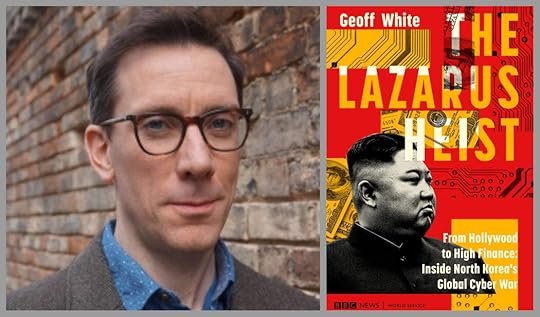
White gets the book off on a good foot, with a well-written intro. He has a decent writing style, that I found both interesting and engaging. This one is a page-turner that should have no trouble holding the reader's attention. Well, the first half or so of the book, anyhow...
The audiobook version I have was also read by author; also a nice touch.
Unfortunately, I found the writing here got a bit tedious and long-winded towards the end. I found my attention wandering at times. Possibly a subjective thing; it is what it is.
I think the author could have livened up this with more rigorous editing, IMHO.
The author continues the quote above, detailing the scope of the problem:
He provides the reader with a bit of background in this quote:
Continuing on; White provides a brief history of the peninsula since the Japanese occupation of 1910. He describes the state's relationship with Russia and China; fellow Communist allies. He also describes the events that would lay the groundwork for the regime's criminal enterprises. Some great writing here.
Some more of White covers in these pages includes:
• Kim Il-sung's vast harems of young women, stationed all over the country.
• The birth of his son Kim Jong-il; The God myth of his birth atop Mount Paektu.
• High-quality Counterfeit US currency made by the regime; dubbed the "Superdollar."
• Internet and electronic networking in North Korea.
• The DPRK's nuclear capabilities.
• The ascension of Kim Jong Un after his father's death.
• Cyber attacks by hackers in the DPRK.
• Hacking Hollywood; Sony Pictures 2014 movie: "The Interview." "The Fappening." Vast email leaks from Sony Studio execs.
• The hacking of the global SWIFT banking transfer system.
• The crooks laundering the money through casinos.
• The airport assassination of Kim Jong Nam; his possible ties to the CIA.
• Ransomware attacks.
• Hacking of Bitcoin exchanges; thefts of digital currency.
• The aftermath; the suspects and arrests made.
• Hacking vaccine companies during the COVID pandemic.
**********************
I enjoyed The Lazarus Heist; for the most part... The author did a decent job with this book. If you are curious about the workings of the most secretive country on Earth, then this one needs to be on your list.
I would recommend it to anyone interested.
4 stars.
The Lazarus Heist was a super-interesting look into the criminal operations of "The Hermit Kingdom" that is officially (and extremely ironically) known as The Democratic People's Republic of Korea - or DPRK, for short.
Author Geoff White is one of the UK’s leading technology journalists and a global specialist on cybercrime. He has reported on the Snowden leaks, investigated the hacking of Britain’s largest internet service provider TalkTalk, exposed fraud in the online dating industry and won multiple awards. His work has appeared in outlets including Channel 4 News, the BBC and the Sunday Times. His podcast series The Dark Web has been a top-ten hit on Audible since its launch in 2017 and his latest podcast, The Lazarus Heist, which he co-hosted with Jean Lee for the BBC World Service, was number one in the UK Apple chart.
Geoff White:
White gets the book off on a good foot, with a well-written intro. He has a decent writing style, that I found both interesting and engaging. This one is a page-turner that should have no trouble holding the reader's attention. Well, the first half or so of the book, anyhow...
The audiobook version I have was also read by author; also a nice touch.
Unfortunately, I found the writing here got a bit tedious and long-winded towards the end. I found my attention wandering at times. Possibly a subjective thing; it is what it is.
I think the author could have livened up this with more rigorous editing, IMHO.
The author continues the quote above, detailing the scope of the problem:
"...It’s a sprawling underworld of crooks and fixers wielding extraordinary power and handling vast quantities of money, most of whom operate way beyond the reach of any police or law-enforcement agency.
At the centre of it all is a small team of highly ambitious hackers seemingly capable of penetrating their targets with unsettling stealth. Most of the victims in this book had no idea they were under attack until it was too late – their money gone, their data leaked and their computers trashed.
To understand North Korea’s alleged hacking campaigns is to understand the modern world of crime. It’s bewilderingly swift, knows no borders and relies on a shadowy network of accomplices. These digital offensives are perhaps the biggest threat to our ever-growing online existence..."
He provides the reader with a bit of background in this quote:
"The country is trapped in a financial death spiral triggered by a damaging series of events that has unfolded over the course of its relatively short history and accelerated rapidly in the last three decades. At one point North Korea ran so short of money that it failed in its most basic duty to its people, millions of whom are believed to have starved to death thanks to economic mismanagement and dogmatic adherence to ideological goals.
Simultaneously, its pursuit of nuclear weapons saw it hit with international sanctions – all of which will be explored in the following chapters. The net result is that one of the poorest countries in the world has little chance of making money legitimately. According to many experts, North Korea has instead turned to crime, in the past experimenting with forgery, smuggling and even crystal-meth production, before finally discovering a far more reliable and lucrative form of income: computer hacking."
Continuing on; White provides a brief history of the peninsula since the Japanese occupation of 1910. He describes the state's relationship with Russia and China; fellow Communist allies. He also describes the events that would lay the groundwork for the regime's criminal enterprises. Some great writing here.
Some more of White covers in these pages includes:
• Kim Il-sung's vast harems of young women, stationed all over the country.
• The birth of his son Kim Jong-il; The God myth of his birth atop Mount Paektu.
• High-quality Counterfeit US currency made by the regime; dubbed the "Superdollar."
• Internet and electronic networking in North Korea.
• The DPRK's nuclear capabilities.
• The ascension of Kim Jong Un after his father's death.
• Cyber attacks by hackers in the DPRK.
• Hacking Hollywood; Sony Pictures 2014 movie: "The Interview." "The Fappening." Vast email leaks from Sony Studio execs.
• The hacking of the global SWIFT banking transfer system.
• The crooks laundering the money through casinos.
• The airport assassination of Kim Jong Nam; his possible ties to the CIA.
• Ransomware attacks.
• Hacking of Bitcoin exchanges; thefts of digital currency.
• The aftermath; the suspects and arrests made.
• Hacking vaccine companies during the COVID pandemic.
**********************
I enjoyed The Lazarus Heist; for the most part... The author did a decent job with this book. If you are curious about the workings of the most secretive country on Earth, then this one needs to be on your list.
I would recommend it to anyone interested.
4 stars.

February 11, 2024
Kandydat na życiowego ulubieńca w kategorii literatura faktu.

January 13, 2024
zasłużone pięć gwiazdek, przez ten reportaż po prostu się płynie, a podczas tej przeprawy dodatkowo wzrasta wiedza, nawet ta normalnie mało przystępna

January 26, 2023
An interesting insight into the very real, surprisingly outlandish, world of cyber crime and online hackers. If only the North Korean hackers that are the subject of this book could somehow hack into my friend James ‘the big oaf’ Kidd’s brain and teach him how to read at the pace of an intellectual rather than that of an ape.

July 22, 2023
Super interesting. Very accessible for people who are not tech-savvy. White does an incredible job at following North Korea’s cyber endeavors with great storytelling. It’s rare for me to say that a non-fiction book is a page-turner, but this was 100% that.
The only thing that didn’t work for me was the message that concludes the introduction about how we don’t need expensive software or any special training to avoid falling victim to cyber criminals and that this book will give information about how to do that. I feel the message of ‘don’t click on weird e-mails, double-check you know the e-mail address that is sending you links, etc.’ works for 100% of us.
However, because this book is about North Korean hackers and their ‘cyber war’, I don’t feel the message made any sense. All the cases explained by White dealt with how North Korea allegedly got into big companies or banking systems because of people clicking on phishing e-mails and so on, yet it seems Alex Smith clicked on the wrong e-mail and now every user of that banking system is in trouble. I don’t work for a bank but I use one, so maybe Mr Smith needs this book, but I’m the one who’s read it and it seems now I’m paranoid that the people working at my bank don’t know not to click on random links.
So, yeah, loved the North Korea stuff. Super accessible. Great book, really. It even has tips and information about avoiding scammers and so on, but when it comes to avoiding North Korean hackers… I’m not sure. I am now just scared that my bank doesn't give proper cybersecurity training.
The only thing that didn’t work for me was the message that concludes the introduction about how we don’t need expensive software or any special training to avoid falling victim to cyber criminals and that this book will give information about how to do that. I feel the message of ‘don’t click on weird e-mails, double-check you know the e-mail address that is sending you links, etc.’ works for 100% of us.
However, because this book is about North Korean hackers and their ‘cyber war’, I don’t feel the message made any sense. All the cases explained by White dealt with how North Korea allegedly got into big companies or banking systems because of people clicking on phishing e-mails and so on, yet it seems Alex Smith clicked on the wrong e-mail and now every user of that banking system is in trouble. I don’t work for a bank but I use one, so maybe Mr Smith needs this book, but I’m the one who’s read it and it seems now I’m paranoid that the people working at my bank don’t know not to click on random links.
So, yeah, loved the North Korea stuff. Super accessible. Great book, really. It even has tips and information about avoiding scammers and so on, but when it comes to avoiding North Korean hackers… I’m not sure. I am now just scared that my bank doesn't give proper cybersecurity training.

January 2, 2023
I am deeply suspicious of how neatly this narrative fits together, but I have no specific reason to think any details here are wrong. My priors for a book like this would lead me to estimate that it's got like 30-50% of the details wrong, but there's nothing in the way it was told that leads me to believe that it was approached in a particularly sloppy way.
The book is interesting if true, and it certainly rings true, but based on what I know of how journalism operates, that raises a lot of red flags for me. I realizes that this leaves the author with no way to win with me, but alas, if he's one of the ultra-rare breed of journalists with good epistemic norms who can also spin accurate and nuanced stories that are also entertaining, then hopefully he understands that the vast majority of the field compromise many of the other desirable characteristics in that description in favor of "entertaining", and he'll understand.
The book is interesting if true, and it certainly rings true, but based on what I know of how journalism operates, that raises a lot of red flags for me. I realizes that this leaves the author with no way to win with me, but alas, if he's one of the ultra-rare breed of journalists with good epistemic norms who can also spin accurate and nuanced stories that are also entertaining, then hopefully he understands that the vast majority of the field compromise many of the other desirable characteristics in that description in favor of "entertaining", and he'll understand.

August 9, 2022
What if you mix Hollywood glamour, intricate money laundering techniques and add a dash of toxins?
You'll get The Lazarus Heist!
It is an amazingly well written story that covers many topics from history to Instagram influencers, from crypto to synthetic identities. An absolute page turner!
As well as being entertaining it's also educational and to some level eye opening.
It reads like a good series, every chapter covering a different topic, but as you go it all ties into one story.
This year's must read for sure!
You'll get The Lazarus Heist!
It is an amazingly well written story that covers many topics from history to Instagram influencers, from crypto to synthetic identities. An absolute page turner!
As well as being entertaining it's also educational and to some level eye opening.
It reads like a good series, every chapter covering a different topic, but as you go it all ties into one story.
This year's must read for sure!
September 22, 2022
This was an interesting behind-the-scenes look at some of North Korea's biggest cybercrimes. White's research into the how and why of the crimes shows in the level of the detail he presents regarding the backstory of the major players. I think infosec and non-infosec folks alike will enjoy this book.
July 18, 2023
"The Lazarus Heist" by Geoff White is a gripping and meticulously researched account that delves into the heart of one of the most audacious cyber crime operations in modern history. White takes readers on a thrilling journey through the shadowy world of North Korea's cyber warfare, exposing a global network of deception, intrigue, and high-stakes cyber attacks.
At the core of the book lies the infamous Lazarus Group, a secretive hacking collective with alleged ties to the North Korean regime. White masterfully reveals their evolution from Hollywood's hacking of Sony Pictures to their audacious multi-billion-dollar cyber heists on financial institutions worldwide. The book includes a detailed discussion on the 2016 hacking of Bangladesh Bank, the central bank of Bangladesh. Being a citizen of it, this book is of particular interest to me.
One of the book's standout qualities is the author's ability to explain complex technical details in a manner that's accessible to both tech-savvy readers and those unfamiliar with cyber warfare. White strikes a perfect balance between in-depth technical analysis and captivating storytelling, making "The Lazarus Heist" a compelling page-turner.
What truly sets this book apart is the extensive research that underpins every chapter. White meticulously uncovers previously undisclosed information, drawing from interviews with experts, investigators, and former hackers. As a result, readers are treated to an insider's view of the cyber crime underworld, allowing us to understand the motivations and techniques behind the Lazarus Group's brazen actions.
Moreover, "The Lazarus Heist" shines a light on the broader implications of cyber warfare on a global scale. From the impact on international relations to the vulnerabilities of financial systems, the book opens our eyes to the ever-increasing threat of state-sponsored cyber attacks and their potential consequences.
While the book is a thrilling exposé of the Lazarus Group, it also serves as a cautionary tale about the vulnerabilities of our interconnected world. It prompts readers to ponder the pressing need for international cooperation in combating cyber threats and developing stronger cybersecurity measures.
In conclusion, "The Lazarus Heist" is an engrossing and eye-opening account that provides an in-depth understanding of North Korea's cyber warfare capabilities. Geoff White's expert storytelling and in-depth research make this book a must-read for anyone interested in cybersecurity, espionage, or the rapidly evolving landscape of global cyber warfare. Prepare to be both entertained and enlightened by this enthralling exploration of a real-life cyber thriller.
At the core of the book lies the infamous Lazarus Group, a secretive hacking collective with alleged ties to the North Korean regime. White masterfully reveals their evolution from Hollywood's hacking of Sony Pictures to their audacious multi-billion-dollar cyber heists on financial institutions worldwide. The book includes a detailed discussion on the 2016 hacking of Bangladesh Bank, the central bank of Bangladesh. Being a citizen of it, this book is of particular interest to me.
One of the book's standout qualities is the author's ability to explain complex technical details in a manner that's accessible to both tech-savvy readers and those unfamiliar with cyber warfare. White strikes a perfect balance between in-depth technical analysis and captivating storytelling, making "The Lazarus Heist" a compelling page-turner.
What truly sets this book apart is the extensive research that underpins every chapter. White meticulously uncovers previously undisclosed information, drawing from interviews with experts, investigators, and former hackers. As a result, readers are treated to an insider's view of the cyber crime underworld, allowing us to understand the motivations and techniques behind the Lazarus Group's brazen actions.
Moreover, "The Lazarus Heist" shines a light on the broader implications of cyber warfare on a global scale. From the impact on international relations to the vulnerabilities of financial systems, the book opens our eyes to the ever-increasing threat of state-sponsored cyber attacks and their potential consequences.
While the book is a thrilling exposé of the Lazarus Group, it also serves as a cautionary tale about the vulnerabilities of our interconnected world. It prompts readers to ponder the pressing need for international cooperation in combating cyber threats and developing stronger cybersecurity measures.
In conclusion, "The Lazarus Heist" is an engrossing and eye-opening account that provides an in-depth understanding of North Korea's cyber warfare capabilities. Geoff White's expert storytelling and in-depth research make this book a must-read for anyone interested in cybersecurity, espionage, or the rapidly evolving landscape of global cyber warfare. Prepare to be both entertained and enlightened by this enthralling exploration of a real-life cyber thriller.

November 24, 2024
Book starts with the recent (2018) ATM hacking in India, where the threat actors were able to steal $100 million in less than 24 hours - it was a worldwide operation. It gives bird's eye view of why and what the hackers were able to do and throws a light on who they are - North Korean hackers funded by the state.
It goes in depth into almost $1 billion dollar hack from Bangladesh Bank - from planning to execution, and interesting connections with ransomware attack, Hollywood Sony and cryptocurrency companies hacking.
Throughout the book, I had this feeling - 'am I watching well-made Hollywood movie on heist or, the whole heist is inspired from the movies'. Definitely, one of the well-researched books on cyber crimes with great detailing on each threat actor as well as behavioral and (introductory) technological aspect.
Some thoughts that still linger in my mind are:
- how North Koreans are able to adapt quickly to technologically advancements (especially given the constraints) compared to the rest of the world
- how AI could increase the cyberattacks (perfectly crafter phishing emails, faster coding etc) and how best to use them in cyberdefense to protect common people
- in most cases, the detection came from humans' attention - spelling error in transactions, missing intermediary banks during SWIFT transaction, linking 'Jupiter' to Iranian ship as well as same ID card with color variations - will AI still help in finding these clues faster or would it miss it considering the correlation?
- in case of SMEs as well as charities, how can they protect themselves to fall victim for such scams? Also, how can common people trust charities for donations anymore?
- it's scary to know NSA also tries to take advantage of zero day vulnerabilities to its advantage - though politically it might seem beneficial but it still affects common people on the receiving end
- as Geoff mentions in conclusion, this book definitely serves as a starting point on cyberawareness.
Recommended by one of my best friends - an interesting addition to my cyber goodreads list. Since it's a book based BBC service podcast - the whole series is available on YouTube.
Only a few of investigative journalists have an effect on me for recurring/repeat reads, since Geoff White's writing is similar to how I would tell an incident without missing any detail - naturally, Rinsed: From Cartels to Crypto How the Tech Industry Washes Money for the World's Deadliest Crooks is added to my 'to-read' list.
It goes in depth into almost $1 billion dollar hack from Bangladesh Bank - from planning to execution, and interesting connections with ransomware attack, Hollywood Sony and cryptocurrency companies hacking.
Throughout the book, I had this feeling - 'am I watching well-made Hollywood movie on heist or, the whole heist is inspired from the movies'. Definitely, one of the well-researched books on cyber crimes with great detailing on each threat actor as well as behavioral and (introductory) technological aspect.
Some thoughts that still linger in my mind are:
- how North Koreans are able to adapt quickly to technologically advancements (especially given the constraints) compared to the rest of the world
- how AI could increase the cyberattacks (perfectly crafter phishing emails, faster coding etc) and how best to use them in cyberdefense to protect common people
- in most cases, the detection came from humans' attention - spelling error in transactions, missing intermediary banks during SWIFT transaction, linking 'Jupiter' to Iranian ship as well as same ID card with color variations - will AI still help in finding these clues faster or would it miss it considering the correlation?
- in case of SMEs as well as charities, how can they protect themselves to fall victim for such scams? Also, how can common people trust charities for donations anymore?
- it's scary to know NSA also tries to take advantage of zero day vulnerabilities to its advantage - though politically it might seem beneficial but it still affects common people on the receiving end
- as Geoff mentions in conclusion, this book definitely serves as a starting point on cyberawareness.
Recommended by one of my best friends - an interesting addition to my cyber goodreads list. Since it's a book based BBC service podcast - the whole series is available on YouTube.
Only a few of investigative journalists have an effect on me for recurring/repeat reads, since Geoff White's writing is similar to how I would tell an incident without missing any detail - naturally, Rinsed: From Cartels to Crypto How the Tech Industry Washes Money for the World's Deadliest Crooks is added to my 'to-read' list.

February 16, 2024
„Przyglądając się operacjom w cyberprzestrzeni, przekonujemy się wciąż, że oni naprawdę potrafią korzystać z najnowszych technologii internetowych. Ci Koreańczycy z Północy są w czołówce i umieją się adaptować. Lepiej rozumieją naszą technologię, kulturę i społeczeństwo, niż kiedykolwiek sądziliśmy”.
„Wielki skok Grupy Lazarus” Geoffa White’a to książka, która w takim samym stopniu zdumiewa, co przeraża. Dzisiejsza rzeczywistość przypomina scenariusze hollywoodzkich filmów, w których niezwykle sprawni hakerzy włamują się do systemów informatycznych i uniemożliwiają pracę oddziałów ratunkowych. Geoff White przedstawia sposób funkcjonowania globalnej sieci przestępczej, w której centrum znajdują się zuchwali hakerzy z Grupy Lazarus – północnokoreańscy cyberwojownicy stanowiący ogromne zagrożenie dla stabilizacji i bezpieczeństwa na całym świecie. Zagłębiając się w historię poznajemy serię ataków przeprowadzonych na niebywałą skalę. Szczegółowość i precyzja wykonania zaplanowanych oszustw zaskakuje i wywołuje uzasadniony niepokój. Co dziwi najbardziej, to właśnie fakt, że mowa tutaj o działalności Koreańczyków z Północy.
Nie potrafię wybrać jednego ulubionego rozdziału. Książka okazała się ciekawsza niż niejeden film akcji, tym bardziej, że jest oparta na faktach. Podczas czytania na bieżąco dzieliłam się wrażeniami z moim domowym informatykiem, który już mi zapowiedział, że bierze się za lekturę, jak tylko ja skończę czytać.
Nie znałam wcześniej autora ani nie słyszałam o jego podkaście „The Lazarus Heist”, ale śledztwo i porządny research jakie przeprowadził budzą mój szacunek i apetyt na więcej.
Wylogujcie się z internetu i czytajcie! To fascynująca rzecz.
„Wielki skok Grupy Lazarus” Geoffa White’a to książka, która w takim samym stopniu zdumiewa, co przeraża. Dzisiejsza rzeczywistość przypomina scenariusze hollywoodzkich filmów, w których niezwykle sprawni hakerzy włamują się do systemów informatycznych i uniemożliwiają pracę oddziałów ratunkowych. Geoff White przedstawia sposób funkcjonowania globalnej sieci przestępczej, w której centrum znajdują się zuchwali hakerzy z Grupy Lazarus – północnokoreańscy cyberwojownicy stanowiący ogromne zagrożenie dla stabilizacji i bezpieczeństwa na całym świecie. Zagłębiając się w historię poznajemy serię ataków przeprowadzonych na niebywałą skalę. Szczegółowość i precyzja wykonania zaplanowanych oszustw zaskakuje i wywołuje uzasadniony niepokój. Co dziwi najbardziej, to właśnie fakt, że mowa tutaj o działalności Koreańczyków z Północy.
Nie potrafię wybrać jednego ulubionego rozdziału. Książka okazała się ciekawsza niż niejeden film akcji, tym bardziej, że jest oparta na faktach. Podczas czytania na bieżąco dzieliłam się wrażeniami z moim domowym informatykiem, który już mi zapowiedział, że bierze się za lekturę, jak tylko ja skończę czytać.
Nie znałam wcześniej autora ani nie słyszałam o jego podkaście „The Lazarus Heist”, ale śledztwo i porządny research jakie przeprowadził budzą mój szacunek i apetyt na więcej.
Wylogujcie się z internetu i czytajcie! To fascynująca rzecz.

February 19, 2026
Kim Jong Un(o más cybercrime)
*Would rate this a 3.5 but Goodreads doesn’t allow that? Insane.*
Fairly decent read, certainly picks up in the back half.
I could have done away with the first chapter and just got straight into the second chapter (which describes North Korea’s history and how it became what it is today.) Learning about the country’s history was a surprisingly interesting read (maybe my favorite part) but also did a better job of setting up for the rest of the book than the intro-hype of the 1st chapter.
Small critique, but Geoff White repeats a lot throughout this book. Not just key details, but whole ideas or sentences. I can’t call it annoying, but I was questioning just how necessary it was to repeat certain sentences or paragraphs throughout my read - I said “yeah man, I know” in my head more times than I could keep track of.
If this is something that even slightly interests you, I think you should give it a shot. It’s perhaps a little dense in points, but I walked away from this book saying “damn” like my brain got fed whole foods for the entire day - it learned some stuff!
*Would rate this a 3.5 but Goodreads doesn’t allow that? Insane.*
Fairly decent read, certainly picks up in the back half.
I could have done away with the first chapter and just got straight into the second chapter (which describes North Korea’s history and how it became what it is today.) Learning about the country’s history was a surprisingly interesting read (maybe my favorite part) but also did a better job of setting up for the rest of the book than the intro-hype of the 1st chapter.
Small critique, but Geoff White repeats a lot throughout this book. Not just key details, but whole ideas or sentences. I can’t call it annoying, but I was questioning just how necessary it was to repeat certain sentences or paragraphs throughout my read - I said “yeah man, I know” in my head more times than I could keep track of.
If this is something that even slightly interests you, I think you should give it a shot. It’s perhaps a little dense in points, but I walked away from this book saying “damn” like my brain got fed whole foods for the entire day - it learned some stuff!

February 4, 2025
WHAT I LIKED: Everything. I loved everything about this book in all its insanity, craziness, twists and turns, and so on. The fact that the Lazarus Heist is a project based on a real historical occurrences is mind-blowing just as it is frightening. Obviously, many generations are aware, at least to some extent, about the wild antics that have come out of the "Hermit Kingdom" aka North Korea, but this book just takes it to a whole other level. I was hooked from start to finish and I probably spent less than 5 hours total reading it. My first 5-star read of 2025- woohoo!
WHAT I DIDN'T LIKE: Honestly, I don't have many negative things to say about this book because White did a fantastic job at not only exploring in-depth investigative journalism in an almost near inaccessible scenario, he explained the findings in a way that made it easy for even the least technologically incompetent people (me) to understand. The book does zig zag a lot, but I think that because White wrote this book based on the chronological order of this podcast, it makes sense the
WOULD I RECOMMEND? Absolutely. Although it could be helpful with unpacking the narrative, you really don't need a background in Korean history, corruption, or current affairs to be able to ingest some of the complicated events that unfold. If those topics don't interest you all that much, I still wholeheartedly recommend this book solely on the basis of how insane it is and I want you all to read so we can be in awe of its insanity together.
WHAT I DIDN'T LIKE: Honestly, I don't have many negative things to say about this book because White did a fantastic job at not only exploring in-depth investigative journalism in an almost near inaccessible scenario, he explained the findings in a way that made it easy for even the least technologically incompetent people (me) to understand. The book does zig zag a lot, but I think that because White wrote this book based on the chronological order of this podcast, it makes sense the
WOULD I RECOMMEND? Absolutely. Although it could be helpful with unpacking the narrative, you really don't need a background in Korean history, corruption, or current affairs to be able to ingest some of the complicated events that unfold. If those topics don't interest you all that much, I still wholeheartedly recommend this book solely on the basis of how insane it is and I want you all to read so we can be in awe of its insanity together.

April 25, 2024
Bardzo dobrze napisany reportaż - nie zanudza, a czytanie szybko schodzi. Podoba mi się jak autor tłumaczył zagadnienia z IT - mimo że ja je znałam, to wiem że osoby spoza tego obszaru miałyby problemy. Lekki język, bez zbędnego przedłużania. Autor często nawiązuje do poprzednich rozdziałów, co pozwala nam połączyć wątki.
Co do opowiedzianej historii - wow. To pierwsze moje spotkanie z książką o Korei Północnej i można powiedzieć, że wcześniej nie miałam żadnego doświadczenia ani wiedzy o tym kraju, poza oczywistymi faktami. Książka dała mi fajny ogląd na powiązania Koreańczyków z innymi państwami i to jak wygląda życie w tym skrytym tajemnica państwie.
Na pewno nie jest to moja ostatnia pozycja o Korei Północnej.
Co do opowiedzianej historii - wow. To pierwsze moje spotkanie z książką o Korei Północnej i można powiedzieć, że wcześniej nie miałam żadnego doświadczenia ani wiedzy o tym kraju, poza oczywistymi faktami. Książka dała mi fajny ogląd na powiązania Koreańczyków z innymi państwami i to jak wygląda życie w tym skrytym tajemnica państwie.
Na pewno nie jest to moja ostatnia pozycja o Korei Północnej.

March 3, 2024
4,5. Petarda - do tej pory tak dużo nie myślałam o północnokoreańskich hakerach, a tu proszę - fabuła niczym z hollywoodzkiego filmu sensacyjnego, zuchwałe napady na banki, powiązania z zorganizowaną przestępczością… i zupełna bezwzględność hakerów. Świetny reportaż, bardzo się cieszę, że Szczeliny po raz kolejny nie zawodzą!

April 10, 2025
A fun romp! The author clearly loves heists and comes quite close to admiring the plucky North Koreans emptying the Bank of Bangladesh, lifting money out of ATMs and doing something complex with crypto assets. The book itself is a good blend of narrative and interesting about how North Korea funds itself - a fun, quick read.

October 9, 2025
Labai gera knyga phishingo prevencijai - daug istorijų kaip atidarytas vienas laiškas užsuko milijoninius nuostolius.
Man patiko dalis apie Š Korėjos kontekstą, labai nedaug žinau apie juos, tai susilipdė geresnis vaizdinys.
Šiaip gerai parašyta, autoriaus audible įskaityta, gal kai kur kartojasi ar nuklysta nuo esmės, bet tikrai stipri knyga ir patiks tiems, kam įdomu cyber crime istorijos.
Man patiko dalis apie Š Korėjos kontekstą, labai nedaug žinau apie juos, tai susilipdė geresnis vaizdinys.
Šiaip gerai parašyta, autoriaus audible įskaityta, gal kai kur kartojasi ar nuklysta nuo esmės, bet tikrai stipri knyga ir patiks tiems, kam įdomu cyber crime istorijos.
January 4, 2026
4,5 ⭐
Książka reportaż, która równie dobrze mogłaby być thrillerem. Świetne przedstawienie Korei jako Państwa niezwykle rozwiniętego w temacie cyberataków. Dobrze przeprowadzona narracja, wyjaśniająca wszystko szczegółowo nie dając nam chwili na nudę czy przytłoczenie niepotrzebnymi informacjami. Świetnie zachowany balans przedstawiający historię grup typu Lazarus jak ich znaczenia na skali światowej z przytoczeniem sytuacji z ostatnich kilkunastu lat. Bardzo polecam.
Książka reportaż, która równie dobrze mogłaby być thrillerem. Świetne przedstawienie Korei jako Państwa niezwykle rozwiniętego w temacie cyberataków. Dobrze przeprowadzona narracja, wyjaśniająca wszystko szczegółowo nie dając nam chwili na nudę czy przytłoczenie niepotrzebnymi informacjami. Świetnie zachowany balans przedstawiający historię grup typu Lazarus jak ich znaczenia na skali światowej z przytoczeniem sytuacji z ostatnich kilkunastu lat. Bardzo polecam.

June 13, 2024
Listened to the podcast version of this and glad I did. Super duper interesting and wild. Although at times it did feel like it was repeating similar stories and with my attention span I lost a bit of interest - however…those stories are key to the story! Overall - nuts!

February 17, 2026
This book is a great read all the way through. Even though i got lost midway through the book with all the information that is given, this book really opens your eyes on how crazy cybersecurity technology (or lack of) can be. Also learning about some North Korean history is pretty cool given the fact that the country is very peculiar from the rest of the world.

March 26, 2024
Czyta się jak dobry thriller. Momentami czegoś brakuje - jakichś mostów między wydarzeniami, końcówek wątków, ale ogrom informacji i tak powala

January 28, 2026
Reads like a page turning crime thriller (which it is, I guess), but this is outstanding, meticulously researched and properly gripping stuff.

August 4, 2026
This surprised me! In a bad way ☹️ content was really interesting and I learned a decent amount (which is cool bc I’m honestly pretty well read re: North Korea) but the writing was very amateur to me
December 27, 2025
It ended somewhat abruptly but I enjoyed the interviews, OSINT, and research spun into a narrative timeline of the DPRK's history that led to its modern day criminal proclivities.

January 12, 2024
Wrócę tu z opinią, jak tylko będę mogła.
Edit: 25.01.2024 - minął mi okres milczenia, więc mogę napisać o tym kilka słów.
Książka jest fenomenalna. Autor przeprowadził śledztwo i zgłębił naprawdę trudny temat. W końcu hakerzy starają się być nieuchwytni.
W tej historii niczym z filmu akcji, mkniemy przez coraz to śmielsze posunięcia grupy północnokoreańskich hakerów. Kradzieże milionów dolarów? Zero problemu. Włamania do banków? Luzik. Przejęcie systemu Sony Entertainment? Nigdy nie było łatwiej.
Dodatkowo autor odnosi się do historii Korei, ukazując różne wersje faktów czy też niefaktów o rodzinie Kimów. Sama pisząc licencjat na temat Korei Północnej, trafiałam na te same informacje, co Geoff White, więc cieszę się, że nie postawił on tylko na jedną perspektywę.
Żałuję, że w polskich mediach nie było o tych sprawach turbo głośno, bo przy wypłacaniu pieniędzy z jednego z banków, w naszym kraju też były tzw. słupy. 👀
Edit: 25.01.2024 - minął mi okres milczenia, więc mogę napisać o tym kilka słów.
Książka jest fenomenalna. Autor przeprowadził śledztwo i zgłębił naprawdę trudny temat. W końcu hakerzy starają się być nieuchwytni.
W tej historii niczym z filmu akcji, mkniemy przez coraz to śmielsze posunięcia grupy północnokoreańskich hakerów. Kradzieże milionów dolarów? Zero problemu. Włamania do banków? Luzik. Przejęcie systemu Sony Entertainment? Nigdy nie było łatwiej.
Dodatkowo autor odnosi się do historii Korei, ukazując różne wersje faktów czy też niefaktów o rodzinie Kimów. Sama pisząc licencjat na temat Korei Północnej, trafiałam na te same informacje, co Geoff White, więc cieszę się, że nie postawił on tylko na jedną perspektywę.
Żałuję, że w polskich mediach nie było o tych sprawach turbo głośno, bo przy wypłacaniu pieniędzy z jednego z banków, w naszym kraju też były tzw. słupy. 👀
July 10, 2026
Ik dacht dat dit een soort casa di papel was, nou niet dus lol. Dit is zware kost en had wat mij betreft in de helft van de paginas gemogen
January 28, 2025
Very enlightening book about the cyber crimes committed by North Korea. Listening to Darknet Diaries is what brought me to reading this.
February 9, 2025
Reading The Lazarus Heist felt like diving into a real-life cyber-thriller. It is perfect combination of crime, geo-politics and tech. It unpacks the incredible story of North Korea’s Lazarus Group, allegedly behind the a cyber criminal enterprise focused on pulling off incredible heist like Sony Pictures hack, the Bangladesh Bank heist and our very own Maharashtra-based Cosmos Co-op bank, all for North Korean Regime. What stood out to me was how the authors made complex cybercrime tactics understandable without dumbing things down, keeping the tension high while explaining the stakes.
That said, there were moments when I wished for a bit more evidence to support some of the claims. Certain connections felt speculative, and while they were compelling, I found myself questioning just how conclusive they really were. Still, the human stories, political backdrop, and global implications were eye-opening. It’s a rare book that manages to be both informative and entertaining, and this one struck that balance well. If you’re curious about how digital crime and geopolitics collide, this book is a must-read. It left me thinking not just about cybersecurity—but about how invisible threats are shaping the world around us.
That said, there were moments when I wished for a bit more evidence to support some of the claims. Certain connections felt speculative, and while they were compelling, I found myself questioning just how conclusive they really were. Still, the human stories, political backdrop, and global implications were eye-opening. It’s a rare book that manages to be both informative and entertaining, and this one struck that balance well. If you’re curious about how digital crime and geopolitics collide, this book is a must-read. It left me thinking not just about cybersecurity—but about how invisible threats are shaping the world around us.

May 1, 2025
Sometimes when hearing about events that happened during my adult life I think "whoa that was a big deal. How did I miss that?" I had heard about North Korea hacking into Sony Pictures or something like that after The Interview came out. But I needed someone to shake me and be like yo dude this is a big deal.
North Korea is at war with the west. They have their best and brightest minds working to support their regime through all sorts of brilliant hacks and schemes. The level of detail and preparation that went into the Bangladesh Bank Heist is insane. They know us much better than we know them.
The book was awesome. It didn't cover any new ground from the podcast, but I enjoyed hearing all the material again since its been a couple years since I listened to the podcast. It is one crazy story after another. North Korea's hackers are extraordinarily talented and driven.
I would probably recommend listening to the podcast, but both the book and the podcast are great.
North Korea is at war with the west. They have their best and brightest minds working to support their regime through all sorts of brilliant hacks and schemes. The level of detail and preparation that went into the Bangladesh Bank Heist is insane. They know us much better than we know them.
The book was awesome. It didn't cover any new ground from the podcast, but I enjoyed hearing all the material again since its been a couple years since I listened to the podcast. It is one crazy story after another. North Korea's hackers are extraordinarily talented and driven.
I would probably recommend listening to the podcast, but both the book and the podcast are great.
Displaying 1 - 30 of 161 reviews