In this award-winning memoir translated from Italian to English, a Jewish girl grows up during a difficult time of racial discrimination and war, and discovers light in unexpected places. This classic, powerful story from Lia Levi is adapted for young readers, with beautiful black-and-white illustrations, a family photo album, and a powerful author's note to readers.
1938, Italy. Six-year-old Lia loves to build sandcastles at the beach and her biggest problem is her shyness and quiet, birdlike voice--until prime minister Mussolini joins forces with Hitler in World War II, and everything changes.
Now there are laws saying Jewish children can't go to school, Jews can't work, or go on vacation. It's difficult for Lia to understand why this is happening to her family. When her father loses his job, they must give up their home and move from city to city.
As war comes closer, it becomes too dangerous to stay together, and Lia and her sisters are sent to hide at a convent. Will she ever be "just a girl" again?
The memoir is full of poignant moments of friendship and loss, dreaded tests at school, told in Lia's captivating voice, as she grows into a young teen. Just a Girl is an important addition to the WWII Jewish canon.
Quei bambini scampati alla Shoah: i sogni spezzati dei figli del destino Quattro giovani attori interpretano le tragiche adolescenze di altrettanti bambini ebrei, da Liliana Segre a Tullio Foa [gli altri sono Lia Levi e Guido Cava]. La loro storia in tv il 23 gennaio su Rai 1 - L’idea di partenza è stata del produttore Mario Rossini di Red Film: «Ho spesso pensato negli anni, da genitore, quanto dev’essere stato doloroso per quei padri e quelle madri aver dovuto dire “tu da domani non vai più a scuola perché sei di religione ebraica”. Da lì è partito tutto. Dalla stretta al cuore che provavo come padre, dal pugno nello stomaco che avvertivo».
Scritto per gli adulti, ma adatto anche ai ragazzi grazie a una scrittura piana ma evocativa, “Una bambina e basta” diventa testimonianza ancora una volta preziosa per raccontare il punto di vista di una bambina (la vicenda è autobiografica, è bene sottolinearlo, racconta quanto accaduto all’autrice quando aveva dodici anni di età) che non fu deportata insieme alla sua famiglia, ma che visse nascosta alcuni mesi, separata dal padre, ma insieme alle sorelle e alla madre, in un convento di suore nel centro di Roma. Quello che colpisce, una volta di più, proprio perché è brava Lia Levi, che scrive questo breve memoriale narrativo solo nel 1994, è la capacità con la quale riesce a restituire al lettore lo stupore non solo degli ebrei adulti per lo scenario che si va delineando contrariamente alle previsioni che volevano Roma e gli ebrei romani intoccabili (perché sotto la simbolica protezione del Papà e del Vaticano), ma anche, soprattutto, quello dei bambini, che si trovano a muovere nell’incertezza, a respirare e a fare propria la paura degli adulti, a non comprendere quali siano le loro colpe e cosa li aspetta per il futuro. In questo scenario in cui fa da sfondo la Roma di Monteverde e di Villa Sciarra, dei tedeschi e dei rastrellamenti e dell’ebrea che “vendeva” i suoi simili ai nazisti (il riferimento è a Celeste Di Porto, la cui storia è raccontata in parte in Portico d’Ottavia 13, figura enigmatica mai chiarita fino in fondo), delle identità nascoste e degli americani che sono sbarcati ad Anzio ma non arrivano mai, fa tenerezza la confusione spirituale della piccola Lia, il suo desiderio di volersi forse confondere con le altre bambine del collegio meditando una conversione al cristianesimo, il suo carattere docile ma capace di dare forma, da adulta, alle contraddizioni degli adulti, di mettere a fuoco non solo i gesti di carità di cui furono destinatari i bambini, ma anche le piccole meschinità di cui furono oggetto. Allora anche le privazioni che sembrano minuscole in confronto al dramma patito da quanti non tornarono o tornarono devastati nel corpo e nello spirito, trovano un loro spazio nella memoria collettiva che cerca di ricostruire, non dimenticare, non cancellare, e una sua collocazione che gli conferisce una dignità nuova.
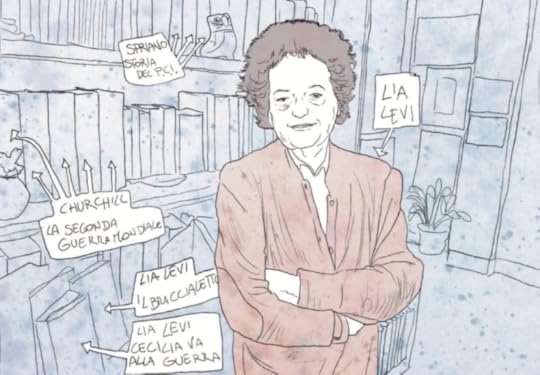
Ho incontrato Lia Levi per la seconda volte poche settimane fa, in occasione della presentazione in libreria di Questa sera è già domani, vincitore del Premio Strega Giovani 2018, e ancora una volta sono rimasta colpita dalla sua presenza brillante, dalla sua forza e dalla sua determinazione che si concretizzano, ancora adesso che ha ottantasette anni e che non ha più al suo fianco il marito Luciano Tas, (compagno di una vita (e protagonista insieme alla sua famiglia delle vicende raccontate), nell’andare nelle scuole d’Italia non solo per promuovere il suo libro, ma soprattutto per poter parlare (come ha fatto per tutta la vita) con i ragazzi e raccontargli ancora oggi che c’è bisogno di memoria, cosa è stata la sua vita, qual è stato il prezzo che ha dovuto pagare per poter tornare a essere “una bambina e basta”.
«La Shoah e quel silenzio spezzato che mi ha fatto rinascere»
This is a beautiful, unique, short and simple written story that is called “Just a Girl” written by Lia Levi. She is the author and a Holocaust survivor. She won an award for her first memoir book “Just a girl” for the adult readers in 1994. She later adapted the book with the same title for younger readers in 2021, in adding a black illustration and included the photos. This story helps the young readers today to understand what was like when she lives there as a young girl during the war. This is a true story of an Italian young girl who was born in Pisa, Italy in 1931 and she originally grew up in Turin. As a child being 6 years old when the war started, she didn’t understand about being discrimination, antisemitism, deportation, the list goes on. As a result, did she get lucky? Did her family survive? What happened? You can decide.
"First of all, I need to tell you something important. In the war that I'm telling you about, the Germans were the bad guys. But you must not think that being German makes someone a bad guy. Like all the people in the world, there are kind and very kind Germans. And bad and very bad Germans."
Lia Levi's Just a Girl: A True Story of World War II is special.
There was, despite the bleak and horrific events going on during that time period, times of warmth and hope. Every time I went back to the audiobook, my attention was sorely focused on learning more about Levi's childhood during WWII. And I appreciated the way she'd sometimes break the fourth wall to reassure her youngest readers when needed.
And the audiobook was truly excellent. Carlotta Brentan was a great narrator.
Dal 1938, anno di introduzione delle leggi razziali in Italia, fino alla liberazione di Roma da parte degli Americani: Lia Levi dà voce ai ricordi della sua infanzia, in un memoir breve ma riflessivo. Fra le pagine non c’è spazio per le atrocità dei nazisti né per la violenza, fisica e psicologica subita dagli ebrei, c’è solo la voce, sottile eppur potente, di una bambina ingenua e disarmata, che fatica a capire cosa sta accadendo e perché sta accadendo. La perdita della casa, la dipartita della tata tanto amata, poi la fuga in un convento di suore, la paura, i tanti “perché” che restano senza risposta. E, in chiusura, a incubo finito, è una frase della madre, amata e coraggiosa, a sancire il titolo del memoir: “Tu non sei una bambina ebrea, sei una bambina e basta”: un’identità umana a prescindere dall’appartenenza religiosa, nella quale, crescendo, la piccola Lia, è stata costretta a “incasellarsi”. Uno sguardo in più, tenero e ingenuo, su ciò che è stato.
Una rilettura fatta a distanza di 15 anni e che non ricordavo assolutamente. Toccante la scrittura dolce accompagna il lettore attraverso i pensieri di una bimba di 12 anni, la più grande di tre sorelle e di come lei affronta il periodo del nazifascismo e delle deportazioni in Italia. Mai vengono nominate le atrocità del momento, mai un contatto diretto con l’orrore ma si percepisce attraverso le righe la paura e l’incertezza. I mille cambiamenti, la separazione dalle proprie abitudini, dai genitori e infine il nascondersi in un convento dove successivamente le raggiungerà solo la mamma. Un turbinio di emozioni e un flusso di coscienza profondo seppur ingenuo. Molto interessante il punto di vista infantile, un libro adatto ad ogni età a mio avviso delicato e forte come solo la vera storia autobiografica di una bambina può essere.
Una lettura veloce da fare tutta d’un fiato.
“Non sei una bambina ebrea, hai capito? Hai capito? Sei una bambina. Una bambina e basta.”
Una breve lettura, dal punto di vista di una bambina, sulla storia (autobiografica) dell’autrice durante le leggi razziali in Italia. Di origine torinese, con la famiglia si sposterà prima a Milano, poi a Roma e per finire con la madre in un convento di suore, appena fuori dalla capitale..
Fortunatamente la protagonista con la sua famiglia riuscirà a salvarsi, perdendo comunque tutti i loro averi e diversi parenti.
Come tutti i libri su questo tema, merita di esser letto, per saperne di più e non dimenticare.
This entire review has been hidden because of spoilers.
I was excited to read this because though I've read dozens upon dozens of books about the experiences of Jews during World War II, I don't think I'd ever read one set in Italy before. I'm so glad I was able to read this as an advanced copy so I can rave about it to everyone!
This story is a memoir of the author's experiences as a child in Italy during World War II, and it reads as if she is a grandmother telling you stories about her childhood. This is a perfect introduction to the experiences of Jews during World War II for very young children. I especially love the way she cuts into her story - sort of breaking the fourth wall - to make sure children understand what is happening and reassure them that she and her family will ultimately be ok. I think for a book geared at a younger audience, which this one is, that is the perfect way to tell this story.
"I miei pensieri sono tornati elementari e balbettanti come se avessi cinque anni", così scrive Lia Levi riorganizzando i suoi ricordi di bambina e l'esperienza della Seconda Guerra Mondiale. Con l'ingenuità dell'infanzia ricostruisce gli spostamenti della sua famiglia, i discorsi sussurrati degli adulti, l'incontro con dei nemici inspiegabilmente gentili, la vita sotto le bombe, la fuga in un convento di suore e la religione ebraica, stigma verso cui prova sentimenti di colpa e rabbia, ma che la caratterizza come il colore dei capelli e la forma degli occhi. Gli adulti cercano di nascondere l'atrocità ai bambini, ma qualcosa filtra e Lia rievoca per noi l'angoscia e lo stupore di fronte ad un momento storico incomprensibile ancora oggi. Dolore, speranza e nostalgia si mescolano in un sapiente racconto reso speciale dalla voce narrante, del tutto attonita e incapace di trovare un senso in quella realtà caotica.
I pensieri di una bambina raccontati da una adulta, con la maestria di una scrittrice che ci fa vivere la storia nel suo dispiegarsi, facendo scendere la nostra ottica all' altezza degli occhi di quella bambina. Il mondo degli ebrei italiani adulti, prima ignari, poi incoscienti e infine dolorosamente in fuga dalle atrocità mantenendosi ancorati alla propria religione, contemporaneamente loro forza e loro condanna. Gli occhi di una bambina che vede il cattolicesimo come religione buona di suore caritatevoli e salvifiche a fronte di un dio ebraico che punisce e non sostiene. Lia Levi come sempre non delude
This book is “an adaptation for younger readers” from another book by the author. It also just won a major award. I have doubts about such young readers reading or hearing this story.
Elementary level read- aloud with my kids as we get ready to read about WW2. This is a true story about an Italian girl, Lia Levi, who experienced displacement and discrimination as a young Jewish girl during WW2. She tells of being confused about what was happening in the war (why wont Mussolini let Jewish kids go to school?), how her family had to hide in a convent, separated from her parents, until the war ended.
Gratefully, this was a story about survival. While so many People died during this war, Lia was able to live a fairly happy life, despite the hardships and devastation of war. She shines a light on the people that stepped up to help protect the Jews, as her mother says, because after all, they are just people, like everyone else.
This was told in a very young voice and tone, which felt confusing at times. I wish Lia would have told her story with her adult voice to help explain things a little better. I had to fill in a lot of blanks for my middle graders as we read because the essence of the story was lost on them a bit with such a childlike explanation of things.
"Le madri ebree sono tigri, leonesse, contendono alla vita ogni boccone, rubano ogni centimetro. Loro devono difendere i figli: per questo non hanno spazio per libri e sinagoghe. Papà, tu che avevi capito tutto di Hitler, di Mussolini e dei geroglifici del nostro destino, perchè sei lì, paralizzato?" Questo forse il senso del libro. Oltre al titolo, naturalmente. Con gli occhi di una bambina e basta viene vista la guerra, il suo prima, il suo durante, il suo dopo. Racconta di come era timida e normale prima, di come abbia dovuto rifugiarsi in un convento cattolico (con relativa tentazione al paradiso cattolico) durante, di come sia tornata "una bambina e basta" dopo...sempre grazie alla madre. Bello, breve, tenero...un altro sguardo di quel che è stato.
I decided to read and review one of the other book club titles, Just a Girl: A True Story of World War II, as my international trade book title for older readers. I was intrigued by the title and the fact that it was a true story, and I was pleasantly surprised by how much I enjoyed it. In this memoir, Lia Levi tells the story of growing up as a Jewish girl during World War II. At the start, we are introduced to a shy six-year-old Lia and her family, who live in Italy and soon realize that their lives will be drastically changed by Mussolini’s orders. While she does not quite understand why, Lia has to learn how to navigate these drastic changes and racial discrimination. She observes how her family responds to her father losing her job and the sacrifices her parents make in order to keep their family safe. I appreciated that the book is written by Lia Levi herself, from her own perspective as a young girl, which makes it particularly appealing to younger readers.
In the book, Lia describes herself as very shy and compares her voice to that of a baby bird, but soon gains her voice as she quickly learns to adapt to her new normal. I noted Lia’s coming of age as she gains more confidence and steps into a more of a big sister/leader role, as many of the girls in her boarding school look up to her. This is most evident when she described a time when she felt like a mother figure to a three-year-old girl, despite being only 12 years old at the time.
I appreciated that the memoir is written in a childlike manner, yet still addresses the complexity of World War II. Levi also takes the time to explain what was happening during this period in a clear and concise way that makes it more understandable to all readers. I would recommend this book for upper elementary-aged students, but this could definitely be read aloud to lower elementary-aged students. This book can serve as a mentor text for personal narratives or be used to explore the diverse perspectives of individuals who lived through World War II.
Toccante, emotivo, profondo. Una carezza sul viso, un “andrà tutto bene” come metafora della vita. Lia Levi e la sua storia, fatta di dolore e sofferenza, di “nascondino” diversi dagli altri soltanto perché ebrea. L’autrice sottolinea: siamo tutti bambini “e basta” senza nessuna distinzione senza nessuna etichetta, tutti liberi di vivere e di essere felici.
La fanciullesca alterità di una bimba rispetto al mondo adulto e la mentalità borghese: due cose più forti dell'orrore della Shoah, di ogni male tangente. Il mondo continua, sempre.
pertama x bisa slse dngerin audiobook, biasanya icip" doang se bab-dua bab wkwkk 🙈
buku ini tntg WWII thn 1938 di Italia, dari sudut pandang anak Yahudi-Itali bernama Lia, 6 tahun, yg awalnya punya kehidupan biasa. Lia punya dua adik, papa mama, pengasuh, dan keluarga besarnya, yg semuanya hidup damai. sampai suatu hari Lia dilarang pergi sekolah umum, trs dipindahin ke sekolah khusus anak" Yahudi. ga lama papanya juga diberhentikan dari tmpt kerjanya karna adanya peraturan orang Yahudi gaboleh kerja.
keadaan jd lebih genting, dan keluarga Lia hrs pindah", ke Milan, ke Roma, sampai akhirnya terpecah belah. Lia dan kedua adiknya dititipkan di sekolah asrama Katolik, papa dan mamanya jg sembunyi terpisah. ga kerasa waktu berlalu, sampai Lia uda berumur 12 tahun, saat akhirnya ada tanda" selesai perang.
buku ini berdasarkan masa lalunya penulis, Lia Levi sendiri, yg skrg udah jadi nenek" yg bahagia, meski masa kecilnya dihancurin sama perang dunia. lewat buku ini, ak sekali lagi ngeliat perang dunia kedua yg memakan jutaan nyawa org Yahudi. apalagi sudut pandangnya dr kacamata anak kecil, yg gatau tntg politik dan alasan org bisa sebegitu kejamnya sama org lain.
sayangnya logat narrator audiobook ini ngeselin sih. pas nyebut nama (nama orang, tempat, makanan) tuh pake logat Italia gitu. telinga ngapakku cuma diprogram buat bhs Inggris biasa, ga kenal logat Italia 👺👺👺 selain nyebut nama" oke sih, masi normal logatnya.
Just a Girl by Lia Levi is the children's adaptation of the author's experience as a Jewish child during the time of Hitler. Lia lives in a city in Italy as the war begins. As the war progresses, Lia's family must move several times to stay safe. The family ends up being separated, with the children living with nuns in a convent in Rome while her father is on the run. She describes the tyranny of Mussolini and the hope for saving from all of the Allies, that she calls the "Americans."
As I was reading this book, I thought of so many ways this book could be used in the classroom. It's very difficult to find historical information that details the injustices of war in a way that is child-friendly for a child in the preteen years. The author does not shy away from sharing some of the injustices of the war, but it is done in language that will not be scary for younger children. This book would be a wonderful source of information for children who do not need to know the deep horrors that are committed during war. My classroom library serves students beginning the third grade through junior high. This book would be accessible for any of these grades.
Bel libro per un tema per niente bello. Lia Levi rivive la sua infanzia di bambina ebrea nel 1938. La voce ingenua ma potente di una bambina in mezzo allo scempio della guerra, del nazismo e di Mussolini, che non voleva vedere bambini ebrei da nessuna parte. Lia non capisce perché deve stare nascosta, non capisce perché non può più andare a scuola, giocare normalmente, fare tutto quel che i bambini fanno di solito. Un libro che getta uno sguardo nel passato, che serve da monito a chi vive oggi il presente affinché, forse, non vengano rifatti quegli errori. Dico forse, perché l'uomo ancora non ha capito niente e continua a far guerre. Ascoltato in audiolibro e consigliato a tutti, da leggere anche ai bambini.
JUST A GIRL: A TRUE STORY OF WORLD WAR II Lia Levi
A short book written for children to understand the issues that children faced during WWII when the Nazis invaded Itlay. It is a memoir of the author who is Jewish and had to hide from the Nazis as a child and is written as if told by the child Levi. I really, really enjoyed this little book and think it was a great read. I have not read many books about Itlay's involvement in the war or how it was for the Italian Jews. This is a child's book and is told from the position of what the author knew at the time when she was a child.
Della stessa autrice, che ho avuto il piacere di conoscere di persona, avevo già letto "Il braccialetto", apprezzandone la prosa fluida. "Una bambina e basta", che ha vinto anche il Premio Elsa Morante nel 1994, è certamente il suo libro più conosciuto e l'unico largamente autobiografico, ambientato all'epoca delle leggi razziali, fra il ‘39 e il '45. La Levi ripercorre con uno stile scorrevole, a volte perfino distaccatamente ironico, ricordi della sua infanzia, accompagnandoci in un mondo di cui riusciamo a cogliere suoni, colori, sapori e profumi. Non deve essere stato facile scrivere di quel momento tragico della sua vita, eppure mi ha colpito il fatto che sia riuscita a farlo in modo delicato, mantenendo lo stesso sguardo della bambina che era in quel momento. Ciò è evidente già nello stesso incipit: "Non mi piacciono i grandi quando decidono di farti un discorso: si sentono evoluti e magnifici, ti guardano negli occhi, cercano il tono a mezza altezza… ora saprai tutto anche tu, ci pensano loro a impacchettarti la notizia come una merendina.". Mi ha fatto piacere ascoltare l'autrice in una delle tante intervista su YouTube (https://www.youtube.com/watch?v=_O5Zj...), dove, tra le altre cose, definisce Roma "città d'accoglienza" (dopo varie peripezie e traslochi, infatti, il padre era riuscito finalmente a trovare in questa città un lavoro "segreto" e in questa città Lia Levi ancora vive).
I appreciate this children's adaptation of Lia Levi's memoir so much. Many readers know a lot about World War II and how it affected Germany and France and Britain; Italy, not so much. Here, we see a young Jewish girl with two sisters, and parents whom they have to be separated from, as they try to ride out the war and stay safe in Mussolini's Italy. It's a wonderful testimony to Levi's courage and spirit and to the nuns who sheltered the girls at a Catholic boarding school. Her afterword illuminates even more of the story for her young readers. A stirring tribute to children who suffer displacement and dislocation during wartime, with lovely photos of Lia and her family from 1938-1948.
Read with Lark and Lochlan. This was a children's autobiography of a Jewish Italian girl in Italy. I think this was based off Lia Levi's autobiography that she adopted for kids. Very well done and the timing was perfect to talk about how we can still find good things during very hard times. I love stories of resiliency when going through hard things. Lochlan was having a very hard day and this helped us work through it and find glimmers of good things throughout his day and week.
I thought this was a great book to introduce WWII to young kids. I actually really liked the last chapter and the end letter from the author. I think it was the best teaching on racism, and how to see others as equal, that I have heard. A much better approach than our education system is currently teaching!! I would encourage everyone to read those two chapters!!
I’m always eager to read a book about WWII from a perspective I haven’t yet learned. This is a young girl and her family in Italy who are Jewish and live under Mussolini’s rule. Written in a very easy to understand way.
This is the children’s adaptation from the original story and is for young readers. It gives the perspective from Italian child who did not have to evacuate, but had to relocate. I like the author’s side note that she includes to explain a bit more.
È sempre interessante vedere come i bambini vivono le situazioni nelle quali sono costretti a vivere, come interpretano le parole dei grandi, come vivono le paure e questo libro che ha la voce di una bambina ebrea durante la guerra ne è una bella testimonianza
I like the idea of this book and the story itself. But I found the writing style odd and, even as an adult, hard to follow. I think it would be difficult for a child reader.