Jump to ratings and reviews
Rate this book

A Personal Record by Joseph Conrad

Rate this book
A Personal Record (1912) both documents and fictionalizes Joseph Conrad's early life and the opening stages of his careers as a writer and as a seaman. It is also an artistic and political manifesto. The introduction traces Conrad's sources and gives the history of writing and reception. The essay on the text and the apparatus set out the textual history. The notes explain literary and historical references, identify places, and gloss foreign terms. Four maps and a genealogical table supplement this explanatory material. This edition of A Personal Record, established through modern textual scholarship, presents Conrad's reminiscences and the volume's two prefaces in forms more authoritative than any so far printed.

150 pages, Paperback

First published January 1, 1912

25 people are currently reading
396 people want to read

About the author

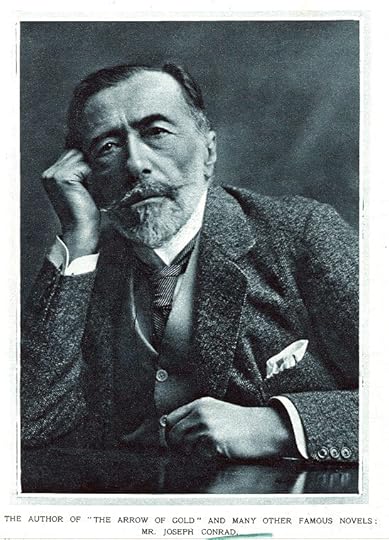
Joseph Conrad

3,016 books4,836 followers
Joseph Conrad was a Polish-British novelist and story writer. He is regarded as one of the greatest writers in the English language and, although he did not speak English fluently until his twenties, he became a master prose stylist who brought a non-English sensibility into English literature. He wrote novels and stories, many in nautical settings, that depict crises of human individuality in the midst of what he saw as an indifferent, inscrutable, and amoral world.
Conrad is considered a literary impressionist by some and an early modernist by others, though his works also contain elements of 19th-century realism. His narrative style and anti-heroic characters, as in Lord Jim, for example, have influenced numerous authors. Many dramatic films have been adapted from and inspired by his works. Numerous writers and critics have commented that his fictional works, written largely in the first two decades of the 20th century, seem to have anticipated later world events.
Writing near the peak of the British Empire, Conrad drew on the national experiences of his native Poland—during nearly all his life, parceled out among three occupying empires—and on his own experiences in the French and British merchant navies, to create short stories and novels that reflect aspects of a European-dominated world—including imperialism and colonialism—and that profoundly explore the human psyche.

Ratings & Reviews

What do you think?
Rate this book

Friends & Following

Create a free account to discover what your friends think of this book!

Community Reviews

5 stars
36 (20%)
4 stars
54 (30%)
3 stars
70 (39%)
2 stars
14 (7%)
1 star
3 (1%)
Displaying 1 - 30 of 30 reviews
Profile Image for Lisa of Troy.
923 reviews8,109 followers
November 1, 2023
How did this get published?

When the blurb says, this work is digressive in structure, that is a bad sign (and the understatement of the year!).

A Personal Record is supposed to be a memoir, but a whole lot of nothing happens. The author goes to sea because he speaks French, but he took about one to two hours to get to this point.

This book is filled with extremely, long boring sentences and paragraphs that go on for more than a page. The best metaphor for this book is a gentleman muttering boring, repetitive thoughts to himself.

Frequently, the author would mention that the other characters in the book are no longer living or how the people he encounters might possibly be someone he used to know or not. The author himself seems to have had no excitement in his own life and tries to pass down stories from others that may or may not have happened.

Some points in the book might have been funny, but the execution just didn’t stick.

This book bored me to tears. If your house needs to be cleaned, you will be called into action, anything but to avoid reading this book.

Connect With Me!
Blog Twitter BookTube Facebook Insta
Profile Image for Irena Pasvinter.
411 reviews113 followers
December 27, 2023
I found out about the existence of this memoir by Joseph Conrad only recently, from a very negative GR review, which presented "A Personal Record" as a messy pile of disjointed ramblings of zero interest.

Nevertheless, as Joseph Conrad happens to be my hero and inspiration in the crazy enterprise of writing fiction in a language that isn't one's mother tongue, I decided to make my own judgement. A pile of ramblings not restricted by chronological order "A Personal Record" might very well be, but I found most of these ramblings interesting and some fascinating. I could easily relate to his description of his insecurity as an "outsider" who dared to work on a novel, his eagerness to know the opinion of the first person who agreed to read his story, eagerness mixed with trepidation and fear of his story not making sense and having no promise. His reflections on literary critics also made for a curious read.

I haven't thought about this before, but it seems obvious after reading this memoir: Joseph Conrad's becoming a writer was the second time in his life when he broke conventions and overstepped boundaries. The first time was when he, a sixteen-year-old Polish noble, took it into his head he would become a seaman, a merchant marine, preferably with the British merchant fleet. And not only he took it into his head, but he also accomplished this goal.


Image credit:NYPL Digital Gallery, Public domain, via Wikimedia Commons

Another theme I found extremely interesting were his reminiscences of his childhood and of Napoleonic wars and Polish rebellions against Russian tsars, in which members of his family took active part. Obviously, Joseph Conrad wasn't aware of Putin's "revelations" that Ukraine was invented by Lenin and didn't exist back then, in the 19th century -- Józef Teodor Konrad Korzeniowski, aka Joseph Conrad, repeatedly referred to it as Ukraine.

Actually, "A Personal Record" was the second memoir written by Conrad. His first one Joseph Conrad : The Mirror of the Sea was devoted to his sea life . I'm looking forward to reading it in the future.


Image credit:Zygmunt Put, CC BY-SA 4.0 , via Wikimedia Commons
Profile Image for Darwin8u.
1,828 reviews9,032 followers
February 12, 2025
My second Conrad of the day. Reading his two memoirs about his early life (Personal Record) and his sea life (Mirror of the Sea). Both were great. Both reminded me a bit of my dad. My dad had a similar call to the sea (and a low draft number during Vietnam). Both were men whose experience in the Navy shaped them for the better for the rest of their lives. My dad never became a writer (other than a piece published in the New York Times), but the same reserved spirit of kindness and work resides in both Conrad and my dad. So, emotionally, how can I not adore these? Really? All ships sail toward Poland and Idaho.
Profile Image for Bepina Vragec.
258 reviews56 followers
Read
February 24, 2023
Nije neki prevod, moram da kažem. Konfuzan na više mesta, pa hoćeš-nečeš na kraju mora da se konsultuje original, tako da je preporučljivo za inače dostupnim (Gutenberg,npr) digitalnim originalom u startu i posegnuti.

Konrad, kako mu stiže, skače s teme na temu prilikom prisećanja na događaje iz svoje prošlosti za koje smatra da su ga formirali kao pisca, a kroz to anegdotalno pripovedanje provlači priču o jeziku (engleski mu je 'third' posle poljskog i francuskog); te otkud poriv za pisanje, kao i lična smatranja o književnoj kritici i literaturi kao umetnosti.

Must read nije, ali biva povremeno zabavno.
Profile Image for Ronald Wise.
831 reviews32 followers
November 3, 2013
This book leaves me feeling as though I’ve had a long and rewarding conversation with Joseph Conrad. I’m in the process of reading all his books in the order in which they were written, and with each of his novels I’ve become more and more impressed with this man’s mastery of his adopted language – English – and his astute perception of humanity and a great variety of its members.

In this book I found what I had hoped to find in his earlier autobiographical Mirror of the Sea, before being somewhat disappointed to learn that it focused almost exclusively on the general experience of sea life, and otherwise contained very little of his story before and after his life at sea. In contrast, this autobiography provided satisfying answers as to how this young Polish man from a landlocked region of eastern Europe came to be one of the most respected English writers of maritime literature.

Perhaps most rewarding of this presentation was the deeper respect I felt for this man concerning his attitude about life and mankind. Throughout are comments indicating his continual awareness of his mortality, and that he and the other memorable characters he has met and/or used in his fiction are only passing phenomena. His story about the inspiration for, and the precarious survival of the manuscript of his first novel – Almayer’s Folly – is especially rich in clues to his unique abilities of perception and expression, and to the good fortune leading to its publication – good fortune both for him and posterity.
Profile Image for midnightfaerie.
2,258 reviews128 followers
February 25, 2025
A Personal Record by Joseph Conrad gave great insight into the man who wrote the classic "Heart of Darkness". I must say, if one plans on reading this, they must get the copy that has "A Familiar Preface" by Conrad, who spends some time justifying some of his decisions in how he wrote the book to the critics. It was probably one of my favorite parts of the book and found myself agreeing with him on many points. It seems there are two main points that most of the critics focused on, the first being that he didn't write in his native language, polish. I won't give it away, but his eloquence in stating so matter of factly his reasons was impressive and it made me admire the man even more. The second criticism that he speaks to is that his father was depicted as a "Revolutionary". Conrad was born in what used to a part of Poland that is now Russia and speaks of his father as a patriot more than a revolutionist and cites the differences in text. Those that have reviewed his book say that much of the book centers around these two themes, his choice to write in English instead of Polish and his "sad" Polish youth. Conrad doesn't necessarily agree. I have to say, I really enjoyed "A Familiar Preface". I think he speaks to many of his critics about many different criticisms, not just the two stated earlier. It's almost sad that he feels that he has to justify himself, but really, don't we all when it comes to artistic expression?

There are two points to these other criticisms that he makes that I find enthralling. The first deals with the fact that his "autobiography" is not in chronological order. It's more a series of essays of various occasions in his life that has influenced him. Who's to say that an autobiography has to be in chronological order? His response to this is (And I find this brilliant) is "Could I begin with the sacramental words, 'I was born on such a date in such a place?' The remoteness of the locality would have robbed the statement of all interest." The wording is just beautiful. I mean who writes/thinks like that? Apparently Conrad does, which is why we love him.

The second point is when he speaks of one of his critics saying that all he writes should have an element of "heroic truth". So there may be some embellishments, or as he says, "impressions" of events that are not all exact fact. His response, again is brilliant. And here I must quote,
"My answer is that if it be true that every novel contains an element of autobiography - and this can hardly be denied, since the creator can only express himself in his creation - then there are some of us to whom an open display of sentiment is repugnant."

He then goes on later to say, "No artist can be reproached for shrinking from a risk which only fools run to meet and only genius dare confront with impunity."

At first I thought, no, this isn't true. But then after contemplation, realized he was right! It was only my defensiveness as an artist that wills the idea of everyone being able to express anything they want and how they want without incrimination. But really, all we have to do is think of even one book that we disliked to know that we condemn so easily, and because of it, how can we call another artist a coward from shrinking from that risk? Talk about enlightenment. In any case, the more I read Conrad the more I want to bow down to this man. Too bad he's dead.

As for the book...Conrad talks of his life, the influence of his uncle, growing up in Russian Poland, and his sailing and the writing of Almayer's Folly. While I find his influences and experiences interesting, it was nowhere near as interesting as "A Familiar Preface" which is in the beginning of the book. After finishing the book and going back to do some Googling on it, I found that this was the case with most people who have read it. The preface was also the part of the book most quoted from, which is completely understandable. The only thing that stands out to me in the book is his weird fascination with the story of his uncle eating the dog when he was starving and in the military. He finds it so fascinating, he uses it in analogies and themes throughout the book, bringing it up over and over again. No, I agree with the critics on how Conrad is all over the place in this piece and seems to jump from topic to topic. It gave a little insight into the man but not anywhere near as good as Heart of Darkness.

I would like to note that although he speaks of Almayer's Folly quite a bit, and I still wish I had read it first, I don't think it is imperative that you read it first. Mostly because in all his talking about it, I don't think it was so much about the story of the book than the fact it was the first thing he wrote. He uses it to discuss becoming a writer and how he came to write. I also find it interesting that he says he never thought to be a writer, almost like it hadn't occurred to him, even though, to the reader, it was quite evident he was meant to. At first I was like, really? But then started to think about my life of writing and realized it was the same for me. It never occurred to me even though I had notebook after notebook filled with writing as a child, even though I was constantly making up stories in my head, and even won contests. Now, thirty years later, I finally realize I'm allowed to dive into a passion that probably won't make me any money and am continually surprised I hadn't done it before. In any case, this is a good addition to some of Conrad's smaller works if you're looking for more information on the author. I look forward to reading many more of Conrad's works.

Profile Image for Φώτης Καραμπεσίνης.
430 reviews221 followers
November 6, 2025
Σκέψεις για τη λογοτεχνία, τη θάλασσα, τη ζωή, από έναν συγγραφέα του οποίου η προσφορά υπήρξε τεράστια. Αγαπώ όσα έχει γράψει, το ύφος του και την κοσμοθεωρία του. Υπάρχουν σελίδες σε αυτό το μικρό σχετικά βιβλίο που ανατροφοδοτουν τη σκέψη, διευρύνοντας τη συνείδησή μας.
Profile Image for Gary Dale.
Author 2 books26 followers
March 13, 2013
I started reading this book believing it would be a stock standard autobiography. Well, it wasn't. And Joseph Conrad himself tells you that it wouldn't be so. However, what you do get is memories of people and periods in Conrad's life that shaped and developed the man. This doesn't tell the man's life story but it does tell the story of his life. I was grateful also for the stories of Conrad's uncle as well and of the genesis of his first novel, Almeyer's Folly. This book is a must for Joseph Conrad aficionados like me.
Profile Image for Ben.
13 reviews4 followers
July 22, 2007
My issue, dated 1920, is actually a reprint of Conrad's original "Personal Record," and it includes a new preface along with various, unrelated letters to newspaper editors about current events.

"A Personal Record" is a long, intimate, and at times self-deprecating introspective into Conrad's creative process (or lack thereof), bundled up with assorted memories of his younger life spent in exile. The "Record" often meanders into tangential stories about Conrad's relatives (including a fascinating story of his uncle's flight out of Russia after Napoleon's failed conquest), detached sermons about issues of unique interest to Conrad, and musing about his identity as a Polish native with oft-misunderstood Anglophile sentiments.

The latter half is "Notes on Life Letters," a collection of letters sent to editors of prominent newspapers about current events, stories of Conrad's adult life as a seaman, etc. I found of particular interest Conrad's sentimental stories of British Merchant Marine, his letters on the Titanic sinking, and his editorials on the events leading up to World War I. In addition to his prominence as an author, Conrad's letters to editors easily distinguish him as a wise commentator. It was fascinating to read Conrad deftly deconstruct and lampoon the cult of Technology that blinded common sense on both sides of the Atlantic in the aftermath of the Titanic disaster. Likewise, Conrad's letters on the dangers of nationalism and imperialism before and during WWI displayed a depth of understanding about the horrors of warfare that was lacking in the leaders of "superpowers" then, and which sadly still lacks today.
Profile Image for Jim.
2,407 reviews794 followers
April 1, 2022
Joseph Conrad's A Personal Record is, like The Mirror of the Sea a series of anecdotes from the past. In the case of A Personal Record, the concentration is on the start of his two careers, as a master mariner and as a writer. Whenever my intention began to flag, Conrad found another anecdote which revived my interest. One of my favorites is at the end of the book, telling of his first encounter as a pilot for the Port of Marseilles with a British ship:
We were then very near her and, on a sudden impulse, I volunteered to pull bow in the dinghy which shoved off at once to put the pilot on board while our boat, fanned by the faint air which had attended us all through the night, went on gliding gently past the black, glistening length of the ship. A few strokes brought us alongside, and it was then that, for the very first time in my life, I heard myself addressed in English—the speech of my secret choice, of my future, of long friendships, of the deepest affections, of hours of toil and hours of ease, and of solitary hours, too, of books read, of thoughts pursued, of remembered emotions—of my very dreams! And if (after being thus fashioned by it in that part of me which cannot decay) I dare not claim it aloud as my own, then, at any rate, the speech of my children. Thus small events grow memorable by the passage of time. As to the quality of the address itself I cannot say it was very striking. Too short for eloquence and devoid of all charm of tone, it consisted precisely of the three words “Look out there!” growled out huskily above my head.
Profile Image for Kate.
837 reviews15 followers
September 2, 2013
Conrad's sentences and stories are amazing enough; what really knocks me out is that they are written in his THIRD language. I'm not sure what I want to read more: a biography of this singular man or more of his fiction.
Profile Image for Reid Williamson.
108 reviews4 followers
November 18, 2023
A rather self-congratulatory but helpful look at a genius-of-letters' internal life. Loved the references to Napoleon and the good stock of quotes on a writer's quest for vibrance. The interplay of life at sea and novel making, or as Conrad puts it, "tale-telling", is rich in portraying a writer's experience.
Profile Image for Matthew.
1,167 reviews39 followers
October 14, 2016
There are two things I can predict about anybody who reads A Personal Record hoping to learn a good deal about the real Joseph Conrad. Firstly, I can safely say that they will be disappointed. Secondly, I can add that they obviously do not know Conrad’s works very well if they had that expectation. Conrad’s ‘personal record’ is, of course, nothing of the sort.

This is the case with all Conrad’s works including The Mirror of the Sea, Conrad’s other semi-autobiographical work. To some extent all of Conrad’s works are personal expressions of his attitudes, beliefs and experiences.

However the personal elements are always shrouded in a good deal of artistic and literary language that often leaves the reader uncertain about where Conrad the man fits into his own works. Can you pin down precisely the meaning of Heart of Darkness or Nostromo, or even The Secret Agent or Under Western Eyes?

A Personal Record is no exception. Like Tristram Shandy, it appears to begin with a birth, and then proceeds through a state of digressions to a point where the narrative ends with an anecdote that took place several years earlier than the account began.

In Conrad’s case, that birth is not his own, so much as the birth of his first novel, Almayer’s Folly. Of course we struggle to get a very clear picture of the genesis of Conrad’s writing career. There is an account of another sailor who praised the work, and a supposed meeting with Almayer (presumably the man who inspired the character), but we never really get close to the inspiration or the ideas that Conrad wished to put into the book.

Indeed a good deal of A Personal Record is taken up with describing everyone but Conrad, making this a very impersonal record. Insofar as we glimpse Conrad, it is as a man making a kind of apologia for ‘betraying’ his own birthright.

Conrad left his native Poland and did not take up the fight for its independence from Russia. He also chose to write his works in English rather than his native language. Hence A Personal Record contains allusions to Polish relatives, the fight for Poland, his love of the English and his choice of English as the language for his book. In this, there is a hint of guilt and self-justification.

These stories have a strong element of myth-making about them, and it is characteristic of Conrad that the best passages in this non-fictional personal account are those which sound the most fictional and impersonal. It seems unlikely that Conrad really remembers all the dialogue and incidentals of his anecdotes in quite the vivid detail that he describes them, and a good deal of artistic licence is employed in producing them. Notably when Conrad tries to describe his own thoughts, the language is circumlocutory and abstract.

This makes A Personal Record a rather frustrating read. Perhaps this is one reason why it is hard to find a good deal of analysis of the work. Jocelyn Baines, is complimentary, but spends little time on it in his biography, and the Wikipedia page has little to say either. There is an Introduction in my copy, but that did not shed much light either.

Tristam Shandy is able to get away with a loose digressive narrative, because its purported biography is entirely fictional, and the work is an intentional attempt to humorously break down narrative structures in favour of a loose collection of shaggy dog tales. A Personal Record does not get away with it, in spite of some humorous irony in the telling, because it is supposed to be a factual account, but it ends by leaving us further from the subject matter than when we began.

It is true that the early chapters were not too popular, causing Conrad to abandon writing it, and contenting himself with publishing what he had completed. This may account for the unfinished quality and unsatisfactory ending.

However, it seems hard to imagine that Conrad could ever have hammered these meandering stories into a coherent semi-autobiography. Indeed I doubt that Conrad ever wished to truly bare his soul to the reader, and I imagine that the confusing narrative is intentionally obscure.

There are some enjoyable passages in A Personal Record. However, like The Mirror from the Sea, it seems often like a good deal of finely-written scene setting for a story that never arrives. Conrad never really steps down from the mantle of fiction writing to offer us something truly personal, and this results in a rather uneven work.
Profile Image for False.
2,432 reviews10 followers
Read
December 30, 2019
Together with The Mirror of the Sea, Joseph Conrad's A Personal Record (1911) is one of his two openly autobiographical books. A short volume of reminiscences, it was written originally for an ambitious literary periodical.

Conrad was born in Poland, moving to live in France in 1874. He subsequently joined the British merchant navy, and did not begin writing novels until he was nearly forty. In this book he describes his cultural heritage, and the central motives in his life as a seaman and a writer separated from the country where he was born. Events of his life are shown in sudden flashes of reflection, sometimes playful, but more often serious and definitive.

This is a captivating and moving book, which gives us illuminating insights into Joseph Conrad's real past; his family and national background, and his persistent quest to impose on his life a meaning consistent with the exacting demands of the moral principles he had formulated and in which he strongly believed.

'Those who read me know my conviction that the world, the temporal world, rests on a few very simple ideas; so simple that they must be as old as the hills. It rests notably, amongst others, on the idea of Fidelity.' (from A Personal Record)

I original read this first edition copy through the Library of Congress on August 2, 1989
Profile Image for Alex Anderson.
378 reviews8 followers
February 28, 2019
I always get the feeling, when reading anything Conrad, of a continuous, delicious soul scrubbing rush of verbal manna that I am in constant fear is going to wear off but never does, or that I am going to build up a tolerance to but never do. No matter how small or big a hit of his writings I take, it consistently threatens to smother me by ripping the oxygen out of my lungs.

The man could write a chapter on the topic of a filthy commode and I would remain inexplicably transfixed with fascination, reading with admiration and gusto about it long into the night.

Here written in classic symphonic Conradian style, great long sentences and page length paragraphs of gorgeousity whirring out page after page in exhaustive thoroughness.

In any case, from this work, one learns as much about Conrad the man as from any of his other novels. As masterful a bit writing as ever, leaving the reader as much enthralled in the dark of a distant and charismatic enigma as he ever was.
Profile Image for Cyrille Honoré.
213 reviews2 followers
April 20, 2020
Fausse autobiographie ou autobiographie romancée, je ne sais pas comment le décrire. Ce n’est pas un roman, c’est (volontairement) déstructuré. Il est peut-être de bon ton de savoir apprécier ce genre de livre et d’y voir le génie de l’artiste entre deux lignes, (très bien) caché quelque part. Je n’y ai vu personnellement que du verbiage sans grand intérêt.
Profile Image for Tom Leland.
412 reviews24 followers
September 7, 2021
Much of Conrad I can't follow. I often find myself in the middle of a story with no idea how I got there...and often I simply can't, or at times won't, follow his winding, roundabout and ponderous diction. Even so, I was eager to hear him in his natural voice -- but I was only sporadically interested in the subject matter he covered.
Profile Image for Turrientes.
37 reviews9 followers
October 4, 2018
“Me atrevería a decir que en la actualidad me siento forzado, inconscientemente forzado, a escribir un volumen tras otro de igual forma que en el pasado me sentí forzado a hacerme a la mar, a emprender un viaje tras otro. Las hojas han de caer unas sobre otras tal como otrora cayeran unas tras otras las leguas marinas, a medida que pasaban los días, sin cesar, hasta llegar a buen puerto...”

*

“Hay quienes, según tengo oído, escriben en un vagón de ferrocarril, y quienes podrían incluso escribir en el palo de un gallinero; yo en cambio debo confesar que, por mi naturaleza sibarita, no consiento en escribir sin disponer cuando menos de algo que asemeje una silla y una mesa. Renglón a renglón, y no página tras página; así fue creciendo La locura de Almayer”.

*

“Desde el momento en que empecé a ennegrecer la primera página del manuscrito de La locura de Almayer (página que contendría unas doscientas palabras, la misma proporción de palabras por página que ha seguido conmigo a lo largo de los quince años que llevo dedicados a la vida de la escritura), desde el momento mismo en que, con la simpleza propia de mi corazón y la pasmosa ignorancia de mi mente, escribí aquella página, la suerte estuvo echada. Jamás vadeó nadie el Rubicón tan a ciegas como yo, sin invocar a los dioses, sin temor de los hombres”.
Profile Image for Noel Cisneros.
Author 2 books26 followers
January 23, 2021
Un escritor que fue también un marinero en la segunda mitad del siglo XIX, descendiente de la nobleza polaca que luchó por su indepedencia contra los rusos, conminado por un amigo editor hace esta crónica, oportunidad única no sólo de conocer de viva voz la vida de uno de los escritores más perspicaces del alma humana (y críticos de los proyectos colonialistas europeos) sino de su tiempo y la historia misma. En sus memorias evoca a su abuelo y al hermano de éste, que arruinados por el padrastro se enlistaron en el ejército napoleónico para conocer la derrota en Rusia, para después volver a su tierra y volver a conocer la derrota frente al imperio que domina su nación. La forma en que decide dedicarse al mar y las opciones para él, joven noble polaco, para ello. Pero todo lo anterior Conrad lo supedita a su decisión de escribir, a cómo todo ello fue, de alguna manera, una preparación para su escritura.
Profile Image for Oscar Lilley.
356 reviews2 followers
June 16, 2021
I swear I dont know what Joseph Conrad is talking about half the time. But I'm drawn to his writing and always left wanting to read more. I look forward to reading his first novel that he poured so much love into.
28 reviews
August 7, 2018
Si bien el libro no me resulto demasiado interesante, me resulto atractiva la forma de escribir del autor.
Profile Image for Matthew Carr.
Author 18 books94 followers
January 8, 2023
I loved this very personal reflection on Conrad’s writing past and the craft of writing. As close as he has come to a memoir and a must-read for all Conrad lovers!
Profile Image for Galicius.
978 reviews
May 21, 2017
Chapter 1 recalls his first attempts at Almayer’s Folly which he wrote mostly at sea. His first reader was a passenger on his ship who dies a few weeks later. There are some recollections of early life including the often quoted passage when he was nine year old and looked at a map of Africa and pointed to the blank space and said “When I grow up I shall go there.” (p. 17)

Chapter 2 has more autobiographical recollections of his youth until about the time he ventures out West. He travels to Switzerland earlier where he hears English for the first time from some tourists.

Chapter 3 is a rather interesting recounting of Conrad’s family history going back a couple of generations from the time of Napoleon’s retreat from Moscow in which his Conrad’s great-uncle participated to the failed Revolution of 1963. There are some fascinating descriptions of scenes involving a Cossack and peasant raid and harsh criticism by Conrad of both Napoleon and Russian imperialism.

Chapter 4 is about the real Almayer.

Chapter 5 is hard to comment on. Towards the end Conrad mentions spending twenty months on Nostromo which was both a “failure” and “astonishing” to critics. He also makes kind remarks about Stephen Crane whom he met. Stephen gave his son a dog which he felt every boy should have.

Chapter 6 is about Conrad’s exams in seamanship at the Port of London. They were all verbal exams by different examiners each time lasting from forty minutes to three hours.

Chapter 7 Conrad takes us from his last seamanship exam to the beginning of his sea career when his uncle sends him to Marseilles. He describes his first experiences with sea life.
Profile Image for Fábio Fernandes.
Author 158 books147 followers
April 21, 2014
Conrad is one of my favorite classic authors. I feel a sort of proximity to him because we both came from countries where English wasn't neither the first nor the second language; Educated in French (I wasn't), Conrad learned English later in life, and became one of the best writers in English of his time. He is one of my personal idols in this respect.

This particular book (another one of my Seattle Collection) is a short one. I took a long time to read it because, like everything Conrad, I like to savor its words, to learn whatever I can - even if it's just a biographical report. But, in Conrad's case, of course it's not just a biographical report - it's a lesson in life and in writing.
Profile Image for Israel E.
12 reviews
December 21, 2015
Simplemente unas interesantes memorias de la vida de Conrad, creo que aparte de ser marino algo muy interesante es que parece sentirse alguien sin patria, realmente no puedo decir que hable tan concretamente de su vida en Polonia como cuando vivió en Rusia e Inglaterra vivir así me imagino debe ser frustrarte de cierta forma.

Sigo teniendo esas sensaciones encontradas con las lecturas de Conrad, me gusta el tema la trama pero creo que no me gusta como escribe. sin embargo quiero seguir leyendo más de él creo que sus títulos me gustan demasiado.
Displaying 1 - 30 of 30 reviews

Can't find what you're looking for?

Get help and learn more about the design.