Rewritten, expanded review, got to write it before I forget it! So I'm in Miami now, back from our 60+ day trip, and have finally finished this book. On the trip, what struck me most was that no country was like the next one, even those that were ex-Soviet or shared the same majority religion. That was also what I found most interesting about this book.
Pakistan is the most conservative, particularly in its restrictions on women and the legal and cultural treatment of them. It was the one country we didn’t visit. India is much more culturally diverse, but still has significant gender inequality in every aspect of society. When we were in the Sikh Temple in Delhi, it did feel a great deal more inclusive. The Sikhs believe in absolute equality between men and women. I am not sure that completely translates into practice.
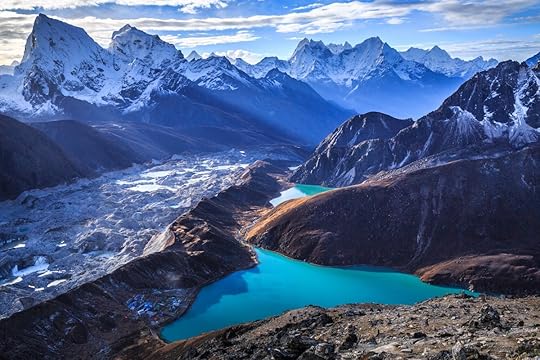
Bhutan is very different again. It is an isolated Buddhist country where women have legal equality and certainly greater sexual freedom. It is a matrilineal, though not matriarchal, society. But guess who does the housework, childrearing and cooking as well as working outside the home? Nevertheless, there is a woman minister determined to make the position of women equal in reality as well as on paper.
Nepal is not nearly as conservative. Women are visible at all levels, but poverty, caste and traditional patriarchal attitudes still make life difficult. There is also serious trafficking of women to India for forced labour or sexual exploitation, so being a woman there is still extremely difficult.
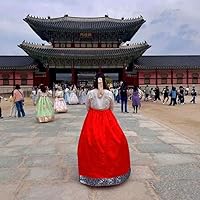
China is different again. When we visited Hong Kong, Shanghai and Beijing last year, we met several women who had lived abroad. One was a Morgan Stanley banker who had worked in Chicago for five years but returned to China because she felt it was safer and offered a better standard of living. It certainly seemed safer to us. People would leave their shopping and helmets on their electric bikes without fear of theft. The cities we visited were also remarkably clean and green, and at least for the middle class, the standard of living seemed very high, particularly given how low prices were.
So the book, like our travels, was interesting for the contrast between the countries. Even if they are in the same part of the world, they did not necessarily have much in common.
__________
Bhutan: We were by the lookout point at Taktsang Gompa, or Tiger's Nest, the monastery 3,000 ft above the Paro Valley that clings to the mountain and is reachable only on foot, and there were a lot of wild flowers and weeds. Well, not weeds, marijuana. The guide said that at weekends, as part of their civic duty, teachers bring students to cut down the marijuana, which they can take home to feed their cows and pigs if the family have any. I thought that in the US or UK, schoolchildren wouldn't be allowed within a mile of marijuana plants, let alone take them home, although I do realise that very few actually have any cows or pigs to feed.
Some days later my partner came into our hotel room in Bumthang with an armful of leaves. I said sarcastically, "It's Palm Sunday then, is it?" And he said the guide had given them to him, they were marijuana leaves. The guide told him farmers used to grow them and give them to pigs as it kept them happy, and only with the coming of the internet did they discover that people smoked them to get high! The pigs probably got the munchies too, which would have fattened them up for the farmers.
Although there are many pigs raised in Bhutan, there are no abattoirs at all because of the government's Buddhist stance. All meat is supposedly imported from India. However, there are an awful lot of small 'meat shops' around and pork is the favourite meat, so someone is despatching these high and happy fat pigs.
It has been a very hard tour of Bhutan so far. Driving up to 6 hours a day, going in the same day from the subtropical, banana-growing climate of Punakha, where we stayed in little cottages overlooking the Mo Chu river, up to the almost arctic cold of the Pele La pass, 2.1 miles above sea level. There we picked tiny, juicy, sweet red and white strawberries and a strange, sky-blue berry that was kind of polystyrene-like with no taste but a great colour. Drivers here reckon that 30 km an hour is a good rate. The roads are so twisty, going up and down the mountains between passes, and often very narrow with unsupported cliff edges.
So tomorrow we are on our way back to Paro for a couple of days of more temple-ing, and then on to Delhi. As it is about 105F there, we are looking at fancy hotels like Leela Palace or the Oberoi with multiple restaurants, lots of art, libraries etc, so we don't actually have to go out. Since these ultra-luxe hotels are only around $200 a night, we feel we can treat ourselves and recover from non-stop touring in Kathmandu and Bhutan.
The marijuana, I tossed it out of the window of course. Drugs are illegal here and when in Rome etc. But I have to admit I was a bit regretful, it was very high quality.