“His voice finds shape within every fragment. It is a voice that is at once forlorn and passionate and preoccupied with beauty. . . . Joshua Beckman’s poetry wears its heart on its sleeve.”—Slope
“Through repetition, rhythm, and a pervasively taut but accessible voice, Beckman sweeps us through his poems.”—Rain Taxi
One of poetry’s genuinely necessary voices, Joshua Beckman offers a magnanimous vision of the poetic and social landscape, masterfully combining traditional and contemporary concerns and speech patterns in attending to a degraded, yet wondrous world. Take It is a gift of profound generosity.
I feel now like I am saying sorry for something, when what I am saying here is that the unknowing spirit is greater than the knowing spirit, that no matter what emboldened structure descends to stand before you in its plan and fullness, you do not know what it is.
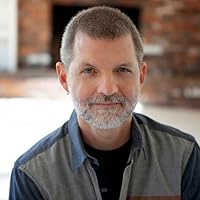
Joshua Beckman was born in New Haven, Connecticut. He is the author of Shake (Wave Books, 2006), multiple collections of collaborative work, and numerous translations. He lives in both Brooklyn and Seattle.
Joshua Beckman was born in New Haven, Connecticut. He is the author of six books, including Take It (Wave Books, 2009), Shake and two collaborations with Matthew Rohrer: Nice Hat. Thanks. and Adventures While Preaching the Gospel of Beauty. He is an editor at Wave Books and has translated numerous works of poetry and prose, including Poker by Tomaz Salamun, which was a finalist for the PEN America Poetry in Translation Award. He is also the recipient of numerous other awards, including a NYFA fellowship and a Pushcart Prize. He lives in Seattle and New York.
Wow - apparently I started this book almost a year ago. Okay. First of all, let me say that I don’t read much poetry. Every once in awhile I’d pick this up and read one or two or maybe three poems...and while I very much like the way the author uses words and language, I almost never (or never?) could tell what the hell he was talking about. Which leaves me wondering more about the poet (is he one of those guys who believes himself to be stylistically superior but who’s actually a douche?) rather than the poems.
I found it hard to tell when he was parodying “serious “ poetry and when he really was being serious. The same for whatever he’s trying to say about petit-bourgeoisie, at times a parody, other times, “this is my life now.” Some of the stranger metaphors came across like Mad Libs, funny, maybe even a kind of kick, but then abandoned and undeveloped. Sorry maybe it’s me.
I should be giving this extra stars because in my head and out loud, I keep referring to the poet at Beckham, which is certainly unfair, since neither Posh nor David be he. Ahem.
That said, I didn't like this as much as _Shake_, which is one of my favorite books of poems of the last five years or so. This didn't really work as well for me, despite some really dynamite poems-- instead of a single sequence of poems (which you might think it was, since the poems here lack titles), it read to me like a couple nestled narratives. At least one of these adopted an Elizabethan diction (or Beckman's approximation of one, at least), and I didn't think that worked as well for him-- the additional pressure of that syntax and diction seemed to prevent him from really breaking open the language in a way that revealed the feeling poet behind it....
I sort of felt that way about a lot of this, that it didn't quite work, but in ways that are sort of hard to figure. This might turn out to be a transitional book to even better work, able to bring in a yet wider frame of reference. But the accomplishments of this book are not as striking as the not-just-yet moments.
I've always liked Beckman--his poetry has a real philosophical edge to it, a compassion for himself and the Other. His newest didn't let me down. Of course, I still get that inkling of frivolity, a slight immaturity not of craft or voice, but rather of persona. Now that I'm married, having a child, and getting ready to delve into my life work, sometimes his poems don't reach me, or are instead left behind in my past--but this is an exception, by and large. "'No one ever knows what to wish for.'" he says, and he is right.
Full of smart yet not self-conscious turns of phrase like "let me fall down the unbuilt hill, let me die / in the inconsiderate sun", I really enjoyed the elasticity of Beckman's voice.