In these peculiar times, we are thrust back into ourselves in a kind of suspension: one in which only private life exists yet threatens to become trivial through a sense of mutual, overarching dread.
Lent from award-winning writer Kate Cayley is built from this tension, exploring domestic and artistic life amidst the environmental crisis and the surprising ways that every philosophical quandary—large and small—converges in the home, in small objects, conversations, and moments. The grotesque and the tedious, the baroque and the banal, intertwine in the first three sections. Meticulous depictions of spectacle run into the repetition of daily domestic life: trying to explain time to children, day trips to the planetarium, and the warnings of strangers; these are interspersed with depictions such as Mary Shelley recalling the monster, the inner life of a seventeenth century portrait sitter, and Ted Hughes's second wife telling her story to the dead Sylvia Plath. The title section explores religious faith; how belief is itself a repetition, a slow accumulation over time, just like love or forgiveness.
Lent is an exquisite work of our era, asking us to contemplate what it means to live in a broken world—and why we still find it beautiful.
Kate Cayley is the artistic director and co-founder of For Stranger Theatre. The Hangman in the Mirror is her first novel for young adults. Her writing, including poetry and short fiction, has appeared in a variety of literary magazines. She is currently the writer in residence at the Tarragon Theatre in Toronto, Ontario.
Enjoyed this book of poems. Rather refreshing. Lent was a great last poem, but the numbering distracted me. I think just using a symbol in between sections I would have liked better, but I understand why it won the Mitchell Award.
Trite. Predictable as the lauding of stale, dry-rotted form, reused and washed regardless of viability. Redone and paraded as
novel or interesting until the most patriotic centrists are laughing CanLit out of the room, calling it a cab to go collect its dignity.
Or perhaps I am to give Kate their flowers upon a further reread.
As it stands, Lent has left me craving something with more gristle and marrow to gnaw on while begging for forgiveness. My weakness of
will and insatiable search for a half-decent poetry collection has erased my promises of accepting what I have been given as being adequate.
For today, as today is all that can be spoken of in candour, I remain starved for any poetry spared from strict adherence to the tired, untrue assumption that if one uses good form and is honest, one will eventually write something worth reading.
But, as has always been, I will forgive and be forgiven.
TLDR ... thoroughly underwhelming and incredibly unoriginal.
This entire review has been hidden because of spoilers.
I kept writing "Incredible" by so many poems that it got repetitive, but that's actually appropriate, given how much this collection focuses on the repetitions of attention, forgiveness, and praise that make up devotion. This is (and, yes, the title gives it away) a deeply contemplative, spiritual book without being precious or preachy. It is a rare gem, and the title poem remains one of the best things I have ever read.
I liked this one -- captures well the parts of living that feel exceptional/singular, then turn out to be matters of habit and repetition more than anything (grief, forgiveness, raising kids). "Until the groove is worn into the stone." Currently experiencing this truth as both stifling and beautiful.
Also, "Assia Wevill Considers Herself" and "Mary Shelley at the End of Her Life, Recalling the Monster"
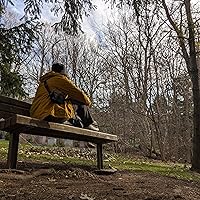
I heard Kate Cayley read from Lent at Knife|Fork|Book’s Fertile Festival this year. Liked what I heard. Ordered the book. Finished it tonight. Damn, it’s good. I can see myself returning to poems like Semi-Lockdown or Mishima and the Park Bench or the title poem over and over. And I don’t often do that with poetry.
Idk, I just didn't like it. Found myself bored and uninterested, dragging my feet to finish this collection. I enjoyed Lent and a few others but nothing stuck, and I know I won't be reminiscing on any of these poems.
Everyone has a season. I'm a Lent person. I found this volume because I was looking for "Lenty" books about Lent to read during Lent. Jackpot. But not in a Merton or Bonhoeffer way. I don't know if she believes in a God or not. I haven't figured that out. Kate is an expert on commemorating time. She has beautifully captured that inward focus on appearances and meanings that I love about this season. Impressive. Years from now, these are the words that will make these times come back to me.