Jump to ratings and reviews
Rate this book
Rate this book
Almayer ​légvára

Költők nem daloltak nagyobb szeretettel és gyöngédséggel szerelmükről, mint Korzienovski a tengerről és a vitorlásról. Negyvenéves, mikor a trópusi láz Londonba kényszeríti vissza. Ekkor - unalmában - apró történeteket ír, majd kiadja Joseph Konrad néven legpompásabb regényét, a Félvért. Egyetlen csapásra meghódítja az angolokat. Kevés idegen származású író olvadt úgy bele az angolságba, mint Joseph Conrad. Nem csupán tárgya, a tenger, hanem stílusa is egészen angol: keresetlen, egyszerű. Csupa mese és történés Joseph Conrad ez első regénye. A cselekmény egyetlen szenvedélyes iramban, szinte 24 óra alatt pereg le s mégis maga a cselekmény mit sem sejtet a trópusi dráma fülledt, villamossággal telített levegőjének feszültségéből.

106 pages

First published January 1, 1892

116 people are currently reading
1625 people want to read

About the author

Joseph Conrad

3,082 books4,847 followers
Joseph Conrad was a Polish-British novelist and story writer. He is regarded as one of the greatest writers in the English language and, although he did not speak English fluently until his twenties, he became a master prose stylist who brought a non-English sensibility into English literature. He wrote novels and stories, many in nautical settings, that depict crises of human individuality in the midst of what he saw as an indifferent, inscrutable, and amoral world.
Conrad is considered a literary impressionist by some and an early modernist by others, though his works also contain elements of 19th-century realism. His narrative style and anti-heroic characters, as in Lord Jim, for example, have influenced numerous authors. Many dramatic films have been adapted from and inspired by his works. Numerous writers and critics have commented that his fictional works, written largely in the first two decades of the 20th century, seem to have anticipated later world events.
Writing near the peak of the British Empire, Conrad drew on the national experiences of his native Poland—during nearly all his life, parceled out among three occupying empires—and on his own experiences in the French and British merchant navies, to create short stories and novels that reflect aspects of a European-dominated world—including imperialism and colonialism—and that profoundly explore the human psyche.

Ratings & Reviews

What do you think?
Rate this book

Friends & Following

Create a free account to discover what your friends think of this book!

Community Reviews

5 stars
307 (16%)
4 stars
706 (37%)
3 stars
638 (34%)
2 stars
180 (9%)
1 star
37 (1%)
Displaying 1 - 30 of 204 reviews
Profile Image for Jim Fonseca.
1,163 reviews8,487 followers
July 24, 2020
[By the way, as an old classic, this novel is available free on-line from various sites such as gutenberg.org]

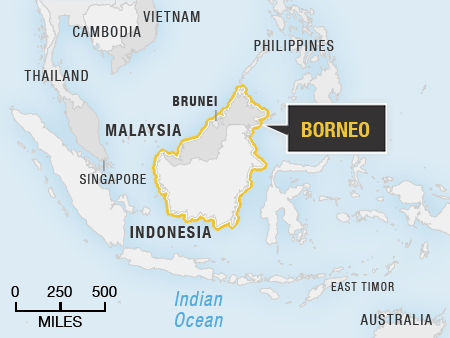
This was Conrad’s first novel. It’s a tale of personal tragedy and colonialism. The setting is on the southern part of the island of Borneo, present-day Indonesia,. formerly the Dutch East Indies. The Dutch are nominally in control in that Dutch warships appear now and then to show the flag but the area is so isolated and relatively unimportant that Almayer is the only Dutch settler in the region, indeed the only white person. It’s a frontier and there’s no real government. Arabs, Chinese and Malays compete for trade and economic control. The time is the late 1800’s but slavery is still practiced despite its formal abolition by the Dutch.

description

Almayer has blown the little fortune he had building two European-style houses in the wilderness. He still schemes with other fortune-hunters to pursue gold up the river where the head-hunters live, but his only real ambition is to get out. He hates his shrewish-Malay wife but he loves his beautiful daughter by her, whom everyone refers to a “half-caste.” She so beautiful that she is a local legend and Dutch sailors hear of her before they even arrive on his river.

Almayer has many follies. Locals use the title to refer to his newest house, but it could apply to both of his European-style houses in that tropical wilderness. His hope that British rule will replace Dutch rule is folly. (He hopes for this even though he is Dutch.) His dreams of searching for gold are folly. Marrying the wife he did was folly. But so is believing that he will get enough money to take his daughter to Europe and leave this god-forsaken place behind – and that his daughter shares his desire to leave. (Almayer himself has never been to Europe, he just dreams of it.)

Almayer’s own Malay wife literally screams constantly at him and the servants. This is the main reason why they live in separate houses. Some of the locals say she’s a witch; all agree she’s a witch spelled with a ‘b.’

description

The young woman loves her father but she has no interest in his dream of going to Europe. The plot has a bit of a soap-opera air about it as various wealthy local men eye his daughter and conspire (and try to bribe) her mother for her hand. Almayer begins a descent into alcohol and opium.

There’s plenty of racism and misogyny to go around in the novel (published in 1895) where there are multiple groups jockeying for control and resources: the indigenous Malays, Arabs, Chinese and the Dutch. Each group has nasty stereotypical opinions of the others. Some examples are seen in talk of two young Malay girls who are “no better than dressed-up monkeys.” Or a Dutch sailor who speaks of Almayer’s daughter: “You can’t make her white but she’s a good girl for all that.” Of a Malay slave girl we are told she is a “half-formed savage” and when she is hurt she suffers the “dumb agony of a wounded animal.”

But what’s interesting is how Conrad takes shots at the whites (Dutch), so one might say he’s an equal opportunity racist. His wife hates her husband as his fortune declines and as he spends his time dreaming of senseless adventures. She hates the European style house and furnishings: she burns the imported furniture for cooking fuel and she tears down the European drapes to make clothing for her servants. The daughter turns against white culture and says at one point to the Dutch sailors “I hate the sight of your white faces.” One of the Arabs says of the daughter “She is like a white woman who knows no shame.” And one the Malay leaders says, “I am like a white man talking too much of what is not men’s talk when they speak to one another.”

It's been said of Conrad’s most famous book, Heart of Darkness, that the book is ambiguous in its outlook on colonialism since it seems to attack Belgian colonialism while praising that of the British. The same could be said of Almayer’s Folly: Almayer seems to be anticipating a coming golden age of British occupation when the Dutch will be overthrown and he builds his new house largely in anticipation of the good times to come when the British arrive.

This book (and others by Conrad) is a fascinating read in trying to figure out what his message is. Is he decrying racism by accurately portraying how it was blatantly talked of and practiced in his times? Or, is it as Chinua Achebe (author of Things Fall Apart) famously said: Conrad is simply a racist?

A sample of the writing:

“She drew back her head and fastened her eyes on his in one of those long looks that are a woman’s most terrible weapon; a look that is more stirring than the closest touch, and more dangerous than the thrust of a dagger, because it also whips the soul out of the body, but leaves the body alive and helpless, to be swayed here and there by the capricious tempests of passion and desire; a look that enwraps the whole body, and that penetrated into the innermost recesses of the being, bringing terrible defeat in the delirious uplifting of accomplished conquest….Men …wish to live under that look forever. It is the look of woman’s surrender.”

description

Here’s a good article about some of these issues in the context of Conrad’s Heart of Darkness. https://www.newyorker.com/magazine/19...

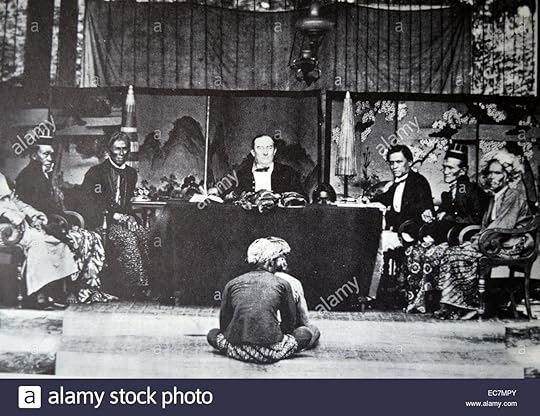
Top photo of an Indonesian man being tried by a Dutch court from alamy.com
Map showing Borneo from npr.org
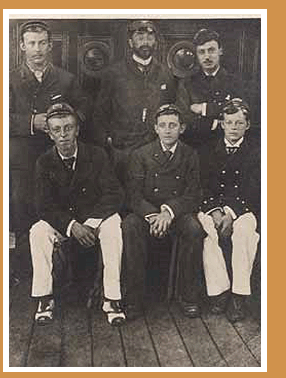
The author from brainpickings.org
Profile Image for Lyn.
2,009 reviews17.6k followers
October 16, 2017
First published in 1895, Almayer’s Folly was Joseph Conrad’s first novel, written within a year after he stepped onto the dock after his long career at sea.

Set in colonial Borneo, Almayer’s Folly deals with many of the themes that he would return to again and again over his successful and influential career as a writer: a dependency on the seas and the river trade, colonialism, race – particularly as between the natives and the European colonists, distinctions between Eastern and Western cultures, and a fundamental, soul searching journey to determine and explore the dissimilarities between good and evil.

I tend to compare every Conrad novel to his 1899 masterpiece Heart of Darkness, but this novel bears the closest resemblance to his later work Victory, with its plot twists and intrigue. The most striking element of this book is the antagonistic relationship between Almayer, a European colonist blindly and pathetically paralyzed by his greed for gold and a psychologically misplaced racial identity and his Malayan wife who despises him. Repeatedly styled as a “witch” Mrs. Almayer and her husband vie for the love and affection of their daughter, Nina, who may be a personified Conradian metaphor for the duality of colonial tension.

description
Profile Image for W.D. Clarke.
Author 3 books350 followers
August 10, 2023
No two human beings understand each other. They can understand but their own voices. You wanted me to dream your dreams, to see your own visions—the visions of life amongst the white faces of those who cast me out from their midst in angry contempt. But while you spoke I listened to the voice of my own self;
A grower, it starts slow and ends with portents of the later grandeur of Nostromo and Lord Jim...

What's so impressive even at the early stage of this first novel is how Conrad refuses to see any of his characters univocally: men, women, whites, Malays, patriarchs, offspring—all are subject to polyvalent vision and ambiguous utterance, even as they skewer each other with vociferous stereotyping. If Conrad is the novelist of colonialism, then, he is also its self-aware guilty conscience.

I must add a couple of tips:
1) I have two editions, a vintage hardback and the Modern Library eBook...the latter is well worth chasing down, as the explanatory notes are superb and Nadine Gordimer's introduction, while brief, is solid, lacking only in length.
2) There are some excellent video lectures on the novel, which is not often taught or read.. the first of four is here: https://www.youtube.com/watch?v=P96da...
3) There is also the brilliant, late Chantal Ackerman's film adaptation (2012), a must-see: https://www.themoviedb.org/movie/8681...

Now on to An Outcast of the Islands (1896), Conrad's 2nd novel (and 2nd in the Lingard trilogy, which ends with The Rescue (1920), a book he laboured on for 24 years)...
Profile Image for Φώτης Καραμπεσίνης.
435 reviews221 followers
August 11, 2022
Αν και το πρώτο του μυθιστόρημα, οπότε δεν ανήκει στις κορυφαίες του στιγμές, παραμένει ένα βιβλίο του Κόνραντ.
Που σημαίνει ότι οι θεματικές, αλλά και το αφηγηματικό ύφος του είναι παρόντα. Υπάρχουν εμπνευσμένες σελίδες εκεί, σκέψεις και γραφή που προκαλούν ρίγος.
Φυσικά, αξίζει.
Profile Image for Carlo Mascellani.
Author 15 books291 followers
December 17, 2019
In un clima di malinconia e insoddisfazione generale, si consuma.la disillusione di Almayer, fulgido esempio della ben nota teoria dell'ostrica che il buon Verga descrisse nella novella Fantasticheria e sviluppò ampiamente ne I Malavoglia.
Profile Image for Philip.
1,767 reviews112 followers
October 29, 2023
UPDATE (2022): So…boring as this book was (see original review below), apparently someone back in 2012 thought it would make a good movie; and that "someone" was a French director that the critics love (so 87% critic's score on Rotten Tomatoes) but audiences - who understand how "entertainment" works - rightly don't (hence the 41% audience score)…anyway, this was the SLLOOWWEEESST and most BOR-INGGZZZzzzz movie I have ever seen; like watching paint dry except that paint eventually WILL DRY, whereas this movie apparently NEVER ENDS…

And for some reason they also decided to reset the story in the…1950s, 1960s? And so it begins at a night market karaoke nightclub in some unnamed Southeast Asian city, where a guy in a shiny blue blazer lip syncs Dean Martin's "Sway" - which is the most action-packed scene in the entire film! After that it's just junglejunglejungle and rainrainrain and unhappy Dutch and Malay and mixed race people acting VERY unhappy and then (at some point apparently - I may have fallen asleep for a while)…the end.

I'm sure more cultured people than me will disagree, but despite living two years in Belgium (the French "Wallonia" side, whose flag features an angry chicken), I do NOT get French cinema; I do NOT get French music (seriously, Edith Piaf, "La Vie En Rose"?), and I most definitely do NOT get expensive French wine, especially since I live just a few miles from Trader Joe's, where I can buy unlimited bottles of Charles Shaw's finest for under $4 in all the popular flavors and colors, including the pink one that tastes like soda.

Do like their pastries, though.

ORIGINAL REVIEW (2014): Conrad's first novel, a truly Shakespearean tragedy of East Borneo and a veerry lonely and depressed/depressing Orang Putih. Similar in many ways to the later Lord Jim, but with none of Jim's inherent dignity and morality, Almayer is just a loser from start to finish - although his story is no less sad for his lack of any sympathetic characteristics.

Reading Conrad is never easy; and so while I enjoyed this for its thoroughly Malay setting, it was still a chore to get through, like a class assignment. Preferred it to The Shadow Line - written a good 20 years later - but really think that's more than enough of ol' Joe for a good while.
Profile Image for Tristram Shandy.
875 reviews264 followers
May 4, 2015
“No Two Human Beings Understand Each Other. They Can Understand but Their Own Voices.”


Profile Image for Debbie Zapata.
1,980 reviews57 followers
October 11, 2021
Oct 9, 8pm ~~ Review asap.

Oct 10, 9pm ~~ I noticed a couple of weeks ago that the novel Suspense by Joseph Conrad was a new addition to Project Gutenberg. I had not heard of this book so I made a note of it, thinking I would read it fairly soon. But when I was ready, I did a little research and learned that Suspense was Conrad's final book and it was unfinished when he died.

Now I don't know about anyone else, but I don't want to spend a whole lot of time on a book that I know is not finished, especially one by an author who makes a reader work the way Conrad does. So I decided against Suspense. But I was still in the mood for Conrad so I went to the opposite end of his career and chose the first novel he wrote, Almayer's Folly. GR claims it is the first of three in a 'Lingard Trilogy', so I thought I would zip through all three by the end of October.

But I did not expect to get so caught up in the natural drama that is happening over in the Canary Islands. I began to watch live stream of the volcano erupting on La Palma island and my computer reading time suffered terribly because of that. I got lost from one session to the next, not remembering who was who or what was going on in the story. Conrad is not the type of author to let you get away with this type of spotty reading. He takes concentration, at least for me.

Now I will confess that I paid closer attention in the first eight of twelve chapters, but after that I skimmed because I decided to give up on my little Conrad Project. I can't help it, I want to watch the evolution of this volcano. I am somewhat hypnotized by it all.

And so quite honestly I cannot say very much about the book itself. I think I will need to come back to it someday and make a better effort. Almayer was a trader who accepted an offer from Lingard: marry my adopted daughter and I will set you up in business while I go on my merry way doing what I would rather do. Of course he didn't express it quite that way, but that was the gist of it. Lingard pretty much disappears early in the book and if he showed up later I missed seeing him. He was much more of an interesting character than Almayer, and I would have loved to have followed him in his adventures rather than stay with Almayer.

Almayer was a poor businessman, and not much of a man at all. Lazy and greedy and not ever seeming to understand what was going on around him. That's okay, though, because I didn't understand much of it either. Too many names tossed about, a little too much intrigue for me to follow. I would like to think that without my volcano distraction I might 'get it' better so someday I will come back, reread and find out.


Profile Image for Paul Cornelius.
1,042 reviews42 followers
February 7, 2017
The thing is that neither Almayer, his daughter, Nina, or his wife fit in. Neither does his would-be partner, Dain. Everyone lacks connection in this short novel. But none more than Almayer himself. He is a misfit in the most literal sense of the word. Uncomfortable with the natives, his family, or his sponsor, he lives his life adrift. As the novel puts it when describing the building of his new house on the first page, the decay has set in even as it is being built. And Almayer all but rushes to that eventual fate, while those around him disintegrate and disappear from the text and our consciousness.
Profile Image for Riccardo Mazzocchio.
Author 3 books87 followers
December 10, 2025
Ricco di dettagli, a volte eccessivi, intenso. Il suo primo racconto. "Let him slay the white men that come to us to trade, with prayers on their lips and loaded guns in their hands. Ah!” — she ended with a sigh—”they are on every sea, and on every shore."
Profile Image for Owen Hatherley.
Author 43 books545 followers
June 12, 2025
The style isn't quite there, with no Marlow, no flow of rich, contradictory, apocalyptic prose, and the dialogue is often quite bad, but already here in Conrad's first you've got imperialism as - whatever JC's stated opinions might have been - a total system that by necessity makes human connection and love impossible.
Profile Image for Calzean.
2,770 reviews1 follower
January 9, 2018
Another continent and another dark, dank river story by Conrad. Almayer is an European who has never lived in Europe. He lives on a river in Sabir (Malaysia) at a time where the Dutch and English were still fighting/arguing who ruled but tensions and rebellion were in the air. He is forced to marry the adopted Malay daughter of another European who promises Almayer wealth and fortune. Of course, this is Conrad so all plans and promises flop and Almayer lives a depressed life with a wife who hates him and a daughter verging on womanhood and needing to escape.
The local Raj and his offsider bring a unique view of how the Malays saw the whites as greedy, rude and insensitive. They are also huge misogynists.
There is a love story with the daughter and Dain, a Prince from Bali who plans to blow up a Dutch war ship. But the story revolves around the folly of Almayer’s life, and the folly of Europeans who believe they were superior to others. In his first novel, Conrad must have made many waves in his portrayal of the European trader.
Profile Image for Darwin8u.
1,835 reviews9,034 followers
April 13, 2013
Not my favorite Conrad, not even second tier, but it is still amazing to read. This was Conrad's debut novel and you can see flashes of his big themes (not yet mature) swirling in the deep water of his words.

'Almayer's Folly' reminded me of a gloomy, obsessive Melville novella or an alienated E. M. Forester story. It is one of those novels that if you love Conrad, you will want to read eventually (I'd read Heart of Darkness, Nostromo, Lord Jim, and Typhoon first). If your only exposure to Conrad is 'Heart of Darkness' and you aren't quite sure you liked that ... I'd skip this one.
Profile Image for Naim al-Kalantani.
283 reviews17 followers
Read
April 24, 2020
Tamat juga novel yang meletihkan ini. Novel ini ditulis untuk terjemahkan secara visual bagaimana keadaan di Sarawak pada satu ketika dahulu — setepatnya di Sambir. Conrad berjaya visualkan melalui sebuah novel.

Bukan sahaja memvisualkan persekitaran & suasana — bahkan perasaan, mimik muka, gaya gerak, pakaian watak, dan hampir sempurna dan dapat diimaginasi oleh pembaca.

Seperti yang dikatakan, novel ini meletihkan. Ia disebabkan oleh Conrad melukiskan dengan begitu panjang penerangannya. Ia tidak bosan! Sama sekali tidak. Tapi ia meletihkan — perenggannya panjang-panjang sekali. Dan apabila Conrad ingin memvisualkan sesuatu, sangatlah detail sehingga pembaca sendiri boleh lost sebab tak tahu hujung pangkal cerita dah. Aku sendiri pun beberapa kali mengulang perenggan yang sama sebab lost apa yang dia cerita.

Dalam autobiografi ‘Dari Salina Ke Langit Petang’, A. Samad Said menyebut novel Conrad beberapa kali sebagai bahan rujukan Pak Samad untuk menulis Sungai Mengalir Lesu. Pak Samad tak nyatakan novel mana, tetapi aku yakin Almayer’s Folly inilah yang dimaksudkan oleh beliau.

Terjemahan novel ini bagus sekali. Apa yang ditulis sangat tepat. Aku tak tahu bagaimana bahasa Inggerisnya, tetapi terjemahan ini sangat cantik dan teratur ayatnya.

Apa yang bermasalah dalam novel ini — selain perenggannya yang panjang — ialah Conrad tak warning pembaca sama ada ia adalah imbas kembali atau tidak. Pembaca kadang-kadang lost sebab ini — sama ada flashback atau ia sebuah pelukisan.

Ingat lagi aku pernah berbual dengan Wan Nor Azriq dulu-dulu. Masa tu di pernah cakap dia suka baca novel yang tak banyak dialog. Dan aku pula cakap aku suka baca novel yang banyak dialog. Mungkin masa tu aku terkesan dengan novel dari seorang tokoh yang suka guna dialog dalam novelnya tanpa diskripsi yang detail. Jadi sekarang, bila baca Kemudi ni, aku faham dah kenapa Wan Azriq suka baca novel yang kurang dialog dan ditambah lagi Pak Samad ada menerangkan di dalam autobiografinya mengenai novel yang tak banyak dialog ini. Pak Samad menulis Salina sarat dengan dialog. Ketimbang dengan Sungai Mengalir Lesu memang dia nak kurangkan dialog tersebut.

U-Wei Haji Saari mengangkat novel ini ke layar perak dengan tajuk Hanyut (2012, tetapi ditayangkan di Malaysia 2016). Penonton rasanya kurang terpesona dengan scene yang ditunjukkan — bukan sebab U-Wei gagal — tetapi sebab scene dalam filem selalunya penonton akan ‘tengok macam itu sajalah’ kecuali ada perasan subteks atau ada signifikan. Jadi, ini yang U-Wei nak angkat — walaupun tak semua penonton orang alert.

Contohnya; Conrad nak melukiskan keadaan ‘malam’ sepanjang dua mukasurat, tetapi kalau. Kita visualkannya di dalam filem, kita hanya nampak 1 scene dan hanya memerlukan beberapa saat saja. Jadi siapa yang baca novel, akan tahu gambaran tersebut. Diberitahu tadi — Conrad menulis novel ini berdasarkan penelitian dan pengalamannya tentang Tanah Melayu.

Nak tak nak, bila aku baca novel ini, aku akan visualkan pelakon yang sama dalam Hanyut. Itulah kelemahan bila tonton filem dulu baru baca teks. Dan seperti biasa — mana lebih sedap? Memang novellah lebih sedap berbanding filem. U-Wei dapat catch novel ini ke layar perak, tetapi sebagai penonton — yang mana novel ini ditulis untuk menggambarkan Sambir — filem tersebut hanya 80% sahaja dari apa yang dilukiskan oleh Joseph Conrad.
Author 6 books253 followers
July 17, 2019
The Con-Man's first novel, like all first novels, has both good and bad qualities. The good qualities are those that furtively hint at the greatest to come three novels and four years later, with Hearts of Darkness. Folly is also the story of a wayward European trapped/ensconced in a culture not his own and doling out the barbarity with as much generosity as the natives supposedly do (or don't, as it turns out). Almayer is much more sympathetic than Kurtz, though, and his story largely revolves around his attempts to make a better life for his daughter Nina, a surprisingly vigorous character (for the time), a half-caste girl that men like to stare at. It's all this staring that stirs up trouble, what with Almayer's gunpowder-smuggling and the political machinations of Malay and Arabs alike! The shit hits the fan, then, and events deteriorate quickly.
But what about the bad qualities I mentioned above? Honestly, they are few. Like all first novels, Conrad over-stretches his imagination at times with too-lush descriptions, especially of terrain, though he will fuse that with his narrative with adeptness in later works. Here it just fills like literal filler. The characters are all fine, though a few are a little too ambiguous for such an unambiguous work.
Profile Image for Subashini.
Author 6 books175 followers
December 18, 2016
The language that describes landscapes is dense and rich; the themes of alienation in the externally and inwardly destructive colonial psyche are ripe for further analysis. Perhaps, if I cared enough, I would be interested to note Conrad's Polish heritage and the obsession with Englishness that Almayer has in this book. Conrad is cynical about Almayer (who is Dutch) and the English, but he cannot imagine his Malay characters as anything but savages. Every so often when it feels like he might be able to get past that, he appears to run into a wall--like a conceptual block--and the narrative pulls back to describe how a Malay character was behaving in a way that was typical to his or her race; that is, in a "savage", remote and inscrutable manner. For all the beauty of the language in certain parts of this slim novel, and the complexity of the ideas submerged in the straightforward narrative, the book is ultimately tedious, small-minded, and mean-spirited. This is because of Conrad's orientalism, which despite his talent and skill in crafting a sentence, renders him without imagination. A novel cannot succeed on repetitions of stereotypes.
Profile Image for Naeem Nedaee.
73 reviews3 followers
April 9, 2018
I have always wondered how Conrad could learn English from sailors without having a tutor let alone write with such overwhelming vigor and "worderly" style. I mean, he had to be a real prodigy without exaggeration. I can find themes and symbols in Almayer's Folly that resonate with Heart of Darkness as my first Conrad pick. It also resonates with my life as a perfectionist who could never fulfill what I had in mind.
Profile Image for Hannes Blank.
17 reviews
October 7, 2017
Nun, ich bin zwar ein großer Fan der Werke von Joseph Conrad, aber "Almayers Wahn" (unter diesem Titel las ich die Erzählung in einer Ausgabe gesammelter Werke) hat mir nicht ganz so gut gefallen: Es hat Längen, kommt nicht so recht vorwärts. Ansonsten wieder super: All diese Glücksritter und Desillusionierten, Verzweifelten und Aufschneider, das ist einfach große Klasse. Nur halt die Handlung kommt in "Almayers Wahn" nur sehr zähn voran.
Profile Image for Steve.
899 reviews275 followers
April 14, 2010
About as fine a first novel as I've ever read.
Profile Image for Gary.
300 reviews62 followers
February 1, 2022
I really enjoyed this book. This is, in part, because it is set in Borneo, an island I adore (at least, the Brunei part where they haven’t cut down all the jungle). More specifically, it is set in eastern Borneo in what today is Indonesian territory but in the book, of course, it is part of the Dutch East Indies because Indonesia as a state didn’t exist in 1895.

Anyway, the book is about Almayer, a Dutchman living in a village 30 miles up a little-known river in Borneo. He is/was a trader who has a lot of problems: there is stiff competition from another trader who is ‘in’ with the local Rajah; local politics is complex; he has a terrible relationship with his wife, his daughter has returned from Singapore, where he hoped she would move in more genteel society and get on in life, and she, being extremely beautiful, attracts attention in a way he would rather she didn’t.

Almayer doesn’t handle his life terribly well, and the story is one where we witness his problems and how he deals with them. The book is very well written, and for such a small volume – only 144 pages – Conrad really gets you inside the characters’ heads, especially Almayer’s.

There is an important racial element in the story because in 1895 race was a big deal and people were generally very racist. Almayer’s daughter is of mixed race, which is why she couldn’t get on in Singapore society; his competitors are Arabs and the Rajah is Malay, of course; the Dutch are in charge but largely absent until a crucial point in the story that forces things to come to a head. Almayer himself, despite being married to a Filipina woman (the survivor of a band of Sulu Sea pirates), is racist, desperate for his daughter to move to Europe and marry a white man, and these views colour many characters’ actions, as in so many stories of the past.

The tale comes across as very realistic and entirely possible, with Life throwing spanners in the works at inoppertune moments, and people being self-destructive despite their efforts.
Profile Image for George K..
2,758 reviews368 followers
October 19, 2019
Έκτο βιβλίο του Τζόζεφ Κόνραντ που διαβάζω και για άλλη μια φορά δηλώνω ιδιαίτερα ικανοποιημένος, τόσο από την ιστορία, όσο κυρίως από την υπέροχη γραφή και την όλη ατμόσφαιρα μιας άλλη εποχής. Μάλιστα, με αυτό το μυθιστόρημα ο Τζόζεφ Κόνραντ έκανε το συγγραφικό του ντεμπούτο, οπότε μπορεί να δει κανείς το βιβλίο σαν μια καλή ευκαιρία για να έρθει σε πρώτη επαφή με το έργο του (αν και φυσικά δεν είναι από τα κορυφαία του!). Από τις πρώτες κιόλας σελίδες ο Κόνραντ δείχνει τη δύναμη που έχουν η πένα και η φαντασία του, προσφέροντας απλόχερα στον αναγνώστη κάποιες πραγματικά υπέροχες περιγραφές τοπίων και σκηνικών. Φυσικά, η όλη αποτύπωση της ζωής στο αποικιακό Βόρνεο των τελών του 19ου αιώνα είναι εξαιρετικά ρεαλιστική και γλαφυρή, όπως θα περίμενε κανείς από έναν τόσο οξυδερκή λογοτέχνη. Επίσης ο συγγραφέας σκιαγραφεί κάποιους ενδιαφέροντες χαρακτήρες, που πάω στοίχημα ότι βασίζονται σε ανθρώπους που γνώρισε κάποια στιγμή στην πολυτάραχη ζωή του, όταν ήταν στο εμπορικό ναυτικό. Η γραφή πολύ καλή και γεμάτη σιγουριά, μπάζει τον αναγνώστη με χαρακτηριστική ευκολία στον κόσμο του βιβλίου, ανάμεσα στα κεντρικά πρόσωπα του δράματος. Προτείνεται με κλειστά μάτια.
14 reviews
December 2, 2009
The covert plot of the novel is Abdulla's scheme to eliminate Almayer. It is only subtly alluded to until the end, of course, when Abdulla finally arrives, prayer beads in hand, to confirm with some regret, his competitors final humiliation.

Some have reduced Conrad to a mere racist, but it is noteworthy, that that Almayer is ultimately destroyed by his own racial prejudice.

Almayer's Folly might have been Conrads first work, but it still left me drained and unable to read anything else for a few days.

This entire review has been hidden because of spoilers.
Profile Image for David Stevens.
15 reviews
September 26, 2017
Very well written even though his first proper novel. Already displays the themes that run through many of his works: inappropriate behaviour of westerners, out of harmony with the environment and the community in far flung parts of the empire , self-destructive ambition.
The language is gorgeous
Profile Image for Iza B. Aziz.
222 reviews29 followers
January 28, 2024
Saya tak sangka novel Kemudi buat saya ralit, tersenyum, marah dan berdebar-debar!

Walaupun gaya penulisan Joseph Conrad amat mengelirukan, namun hasil terjemahan dapat menangkis semua itu. Saya seolah-olah membaca novel yang ditulis asalnya dari Bahasa Melayu. Syabas buat dua penterjemah dari ITBM.
_____________________
Sama seperti Durjana di Hati, novel Kemudi turut membawa aspek kolonial dan tamak. Apa yang berbeza ialah tentang watak Nina, iaitu gadis berdarah campuran Eropah dan Melayu. Nina bagi saya adalah tumpuan utama novel ini.

Kehendak hatinya telah mengubah kedudukan Almayer. Tanpa sedar, Joseph Conrad mungkin menggunakan Nina sebagai kritikan buat bangsanya sendiri. Hujah Nina pada bahagian akhir membuka mata saya tentang Almayer yang sememangnya tamak tapi lemah.

Saat awal novel Kemudi hingga pengakhirannya. Saya nak tanya, apa yang Almayer lakukan untuk kekayaan? Ada hasil? Tentang kasih dan cinta pula?
_____________________
Oleh kerana garapan terjemahan baik, keindahan dan kengerian alam pesisir sungai Simbar dapat dihayati. Seperti Joseph Conrad pernah sampai di hutan hujan tropika Borneo.

Saya harap filem Hanyut yang diadaptasi dari novel ini dapat ditayangkan semula. Tertanya-tanya bagaimana agaknya pengarah U-Wei menyusun atur plot Kemudi yang janggal dan agak berterabur.
_____________________
Profile Image for Fabio Raffaelli.
9 reviews17 followers
August 13, 2013
Conrad ci presenta la storia di un uomo bianco, ambizioso, che vive in Malesia e che sposa la figlia adottiva di un ricco uomo. A quei tempi di suddivisione in classi razziali, questo matrimonio appariva sconsiderato ad un occidentale, ma Almayer, il protagonista, non esita ad accettarlo per il suo desiderio di denaro e scalata sociale. Ma il matrimonio, soprattutto dopo l'allontanamento della figlia nata dai consorti, risulta infelice, arrivando a rendere Almayer sempre più arcigno e sua moglie quasi folle, via via considerata sempre più una pazza e una strega. Intanto le condizioni economiche della famiglia, a causa anche dell'ostracismo dei potenti locali, divengono sempre più difficili, e le allettanti mire di ricchezza si tramutano in un incubo di malversazione quotidiana.
Solo il ritorno della figlia muterà la situazione, tra l'amore del padre, quello di un giovane principe locale e la folle speranza della madre in un matrimonio che decreti l'allontanamento della figlia dai malsani uomini bianchi.
Conrad in questo romanzo, avventuroso ma riflessivo, è capace di raccontarci la vita e il pensiero di un uomo che deve continuamente misurare le sue brame con una realtà che riesce infallibilmente a cancellare le sue speranze. La ricchezza, la serenità familiare, i progetti di rinascita economica, l'avvenire della figlia, una serena vecchiaia: tutti aneliti che vengono miseramente smentiti e negati, rendendo Almayer sempre più sconsolato e amareggiato. La follia di Almayer non è solo un nome dato dagli europei visitatori alla sua casa in costruzione, ma è anche la costante situazione dell'uomo Almayer e, per estensione, di tutti gli uomini: frustrazioni e continue disillusioni che si rispecchiano in una vita sempre parca di elargizioni felici e positive. Con magistrale ironia, non sarà infatti la vita a dare il dono più prezioso ad Almayer, cioè la serenità, bensì la morte, lungo un cammino di privazione mentale e smarrimento di sé che è l'unico in grado di donare pace interiore.
Se quest'opera è mossa da uno spiccato pessimismo di fondo, non così è la narrazione:pur non essendo un capolavoro, infatti risulta piacevole la lettura, sia per chi desidera una storia avventurosa ed esotica, sia per chi cerca una più forte rappresentazione del pensiero dell'autore.
Profile Image for Doctor Moss.
584 reviews36 followers
July 31, 2018
Almayer’s Folly is Conrad’s first novel. Although I’ve read several of Conrad’s novels, I’m not confident enough to definitely rank this among his other works. I do think it shows an earlier stage in his narrative skills than some of his later, better known works.

Like other Conrad stories, it places colonialism at the center, along with colonialism’s related themes of race, class, and the kinds of dreams that colonialism affords. Kasper Almayer is a Dutch trader in nineteenth century Borneo. His dreams are entwined with the promise of treasure, his hopes for and love for his daughter, and of course the rewards of wealth and status.

His dreams and his folly are synonymous. The locals refer to the pretentious house that Almayer has had built, as the future home of a dream life, as his folly. But it’s the whole package that really seems to be the folly — a white man {“the only white man on the east coast”) hoping to find and/or make something of himself in the colonial world that he couldn’t accomplish elsewhere.

Those hopes are understandable when fueled by a vision of opportunity in an undeveloped land and by simple naivety. The colonial world isn’t a blank canvas — it’s just one that is unfamiliar enough that it’s hard to read and easy to misread. In particular, Almayer’s dedication to and hopes for his daughter run up against some hard realities. She is his daughter by way of a business-like marriage to a Malay wife. She is “half white” among the Malays, no matter that she is his daughter, and she is half Malay to herself. What’s more, like any daughter but especially one at a colonial crossroads, she has a mind and will of her own that is inevitably at odds with her father’s dreams.

Neither his daughter nor the colonial world they inhabit is going to fall into line for Almayer.

The book itself takes some time to get going. Probably the first quarter of the book is exposition — stage setting and backfilling for the story that finally joins the present tense. From there on, Conrad’s narrative is compelling. There are twists and turns, although they follow a pattern that lets your mind run a little bit ahead of the story. Not necessarily a bad thing, since so much of what Conrad conveys is more a dawning realization of Almayer’s folly than just a resolution of events.
Profile Image for Eddy.
50 reviews14 followers
February 3, 2018
For a first text, I'm remarkably impressed. Conrad delivers a story of fatherhood, isolation, colonialism, and existentialist thought in a concise 200-page novel set in Malaysia. Rich emotion towards the end definitely moved me, and provided an insight into the life of both the white folk of colonial villages, and the nature of those affected by colonialism.

My only complaint is that the text did a bit too much worldbuilding in the first half of the text, but I can forgive this for it being part of a series.
20 reviews1 follower
March 6, 2008
Conrad wrote three books I LOVE set in Malaysia. The Planter of Malaya, An Outcast of the Islands and Almayers Folly. All three are related and really give a wonderful wonderful picture of what it was like to be sent there in the 19th century. I highly recommend these books over most others of Joseph Conrad. As usual I cannot remember exactly the year I read them, but not too long ago. And they stay with me.
Displaying 1 - 30 of 204 reviews

Can't find what you're looking for?

Get help and learn more about the design.