

What do you think?

The Partition Trilogy #2
Hyderabad
Mir Osman Ali Khan, Asaf Jah VII, is the Nizam of Hyderabad, the largest Princely State of the Crown. It sits in the belly of newly independent India to which Jawaharlal Nehru and Vallabhbhai Patel want Hyderabad to accede. The Communists have concurrently mounted a state-wide rebellion. But the Nizam's family has ruled Hyderabad for 200 years. As the wealthiest man in the world, whom the British consider numero uno amongst India's princes, he will not deal with two-penny Indian politicians! An ancient prophecy, however, hangs over the Nizam - the Asaf Jahi dynasty will last only seven generations. So, he keeps his jewel-laden trucks ready for flight even as he schemes with his army of militant Razakars. Meanwhile, in the palace thick with intrigue, the maid Uzma must decide where her loyalties with the peasantry or the Nizam. Among the Communist recruits, Jaabili finds love in unexpected quarters. Violence escalates and lawlessness mounts. Caught between a volatile Nizam and a resolute India, what price will Hyderabad pay? Advance Praise for Book 2 of The Partition Trilogy 'Hyderabad! A liberation? A tragedy? The result of the Ironman's will and Nehru's vision to build a nation? The daydreams of a Nizam? The diplomatic strategies of Nehru and Dickie? Dreams of a Communist revolution? The common people's struggles and sacrifices for land and a fistful of grain? But everything finally ends with a never-ending, silent violence on women's bodies in the formation of a state. This is well-researched history woven as a thrilling novel by a terrific novelist, Manreet Sodhi Someshwar.' - Volga, author of Vimukta Kadha Samputi Praise for Book 1 of The Partition Trilogy 'Breathtaking in scope, painful yet gentle to the touch.' - Taslima Nasreen 'Vivid and atmospheric.' - Aanchal Malhotra 'Current, relevant and important.' - Sabyn Javeri 'Deftly weaves the big strands of history with the finer threads of human feeling.' - Manu S. Pillai 'Clearly a passion project ... brilliantly traces our collective heritage.' - The Deccan Herald 'Does not let the subaltern disappear into the shadow of the giants...' - Scroll.in 'Deft writing ... Lahore is a timely reminder of what hatred among brothers can do ... Gripping and laced with pulsating emotions, it is a book worth reading.' - The Hindu BusinessLine 'Unputdownable' - The Week
Unknown Binding
First published September 25, 2022
Ratings & Reviews
Friends & Following
Create a free account to discover what your friends think of this book!
Community Reviews
Displaying 1 - 30 of 68 reviews

July 8, 2022
When one thinks of Partition, one thinks of Punjab and perhaps of Bengal. The bloodshed on the both sides of the border. People uprooting themselves from the only home they knew. Trains pulling into stations with coachloads of slaughtered people. Refugee camps crammed with bewilderment, nostalgia and a determination to start afresh. The stories of Partition that we talk about are stories enabled by Radcliffe.
But, far away from the stories that dominate 1947, is the story of how Hyderabad came to be a part of India. It is a story that most Indians are not aware of- even many of us who live in Hyderabad do not realise that the city will officially celebrate 75 years of being a part of the Indian Union only in September 2023.
Manreet Sodhi Someshwar’s “Hyderabad (The Partition Trilogy #2)” looks at the many contradictory forces that were pushing against each other for months, before culminating in Operation Polo (or Police Action, depending on who you speak to) and the annexation of the state of Hyderabad into the Indian Union.
The comparison with her previous book, “Lahore (The Partition Trilogy # 1)” are inevitable. There are similarities and there are differences. Like “Lahore”, “Hyderabad” is told at two levels- the high level political negotiations between the people who history books talk about, and the stories of the common people who were being pulled apart by forces beyond their control but who never surrendered their agency in dealing with them.
“Hyderabad” has many tangled webs, because the story itself has many tangled webs.
Many of the characters we met in Lahore make a reappearance- Patel, Mountbatten, Nehru, Menon. But there is also a new set of equally memorable characters.
There is the Nizam, the richest man in the world, who seeks independence- “I have written to the Viceroy”, he thunders, “I should certainly be able to remain within the family of the British Commonwealth”. An almost tragic figure, he comes under the spell of the charismatic leader of the Razakars, and ends up losing everything he fought for, including his place in history as a visionary ruler.
El Edroos, the Commander in Chief of the Hyderabad Army who finds himself increasingly sidelined by the Razakar rabble rousers. Kasim Razvi, the head of the Razakars who uses bombastic words and pompous display to get the Nizam to commit to a course he cannot later escape from. Walter Monckton, the Nizam’s legal advisor, who does his best to negotiate a favourable treaty with Delhi, but is reigned in at every stage.
There are these people who are known, and there are the unknown who bear the brunt of the uncertainty. There are the Communists who fight against the tyranny of the feudal system. Men and women who risk everything to seek rights for the peasants. If one thinks of women as the submissive gender, there are women who display unexpected physical and moral courage to do what they think is right. Women who rebel against having to serve as concubines to their masters, but who take lovers of their own. Women who were forced to abort an illegitimate child, but who rose to being poison tester and then lady in waiting to the nobility.
Running through the entire book like a fine line of embroidery is Princess Nilofeur. The exquisitely beautiful niece of the Last Khalif, who was married to the Nizam’s younger son. Forever in the shadow of her cousin who was married to the older son, in this book, Nilofeur dazzles. Her grace, her concern for others, her empathy and even her sense of humour. Nilofeur who sits in the royal car while her lady-in-waiting gets her Osmania biscuits and Irani chai from a café frequented by Communist sympathisers. Nilofeur, fresh as a rose, in the dank and dusty King Koti where the Nizam’s family resides. It is worth reading the book just for her interaction with her best friend Emily, and her lady-in-waiting.
While the narrative dwells gently on the people, the events of the last few days of the Nizam’s rule, the entry of the Indian Army, and the subsequent surrender are delivered in quick paragraphs, almost like images from a black and white documentary shot in those times.
The book leaves you wanting more. Even though you know they are fictional characters, you want to know what happened to the common people who you grew to love through the book. You also want to read more on how Hyderabad came to be a part of the Indian Union.
If you are a Hyderabadi who is aware of the history of 1947-48, you will love the book for the descriptions of the city, its cuisine and its culture, as also for the powerful stories of people who lived in those times. If you do not know much about the history of the city, learning about it is an added bonus.
But, far away from the stories that dominate 1947, is the story of how Hyderabad came to be a part of India. It is a story that most Indians are not aware of- even many of us who live in Hyderabad do not realise that the city will officially celebrate 75 years of being a part of the Indian Union only in September 2023.
Manreet Sodhi Someshwar’s “Hyderabad (The Partition Trilogy #2)” looks at the many contradictory forces that were pushing against each other for months, before culminating in Operation Polo (or Police Action, depending on who you speak to) and the annexation of the state of Hyderabad into the Indian Union.
The comparison with her previous book, “Lahore (The Partition Trilogy # 1)” are inevitable. There are similarities and there are differences. Like “Lahore”, “Hyderabad” is told at two levels- the high level political negotiations between the people who history books talk about, and the stories of the common people who were being pulled apart by forces beyond their control but who never surrendered their agency in dealing with them.
“Hyderabad” has many tangled webs, because the story itself has many tangled webs.
Many of the characters we met in Lahore make a reappearance- Patel, Mountbatten, Nehru, Menon. But there is also a new set of equally memorable characters.
There is the Nizam, the richest man in the world, who seeks independence- “I have written to the Viceroy”, he thunders, “I should certainly be able to remain within the family of the British Commonwealth”. An almost tragic figure, he comes under the spell of the charismatic leader of the Razakars, and ends up losing everything he fought for, including his place in history as a visionary ruler.
El Edroos, the Commander in Chief of the Hyderabad Army who finds himself increasingly sidelined by the Razakar rabble rousers. Kasim Razvi, the head of the Razakars who uses bombastic words and pompous display to get the Nizam to commit to a course he cannot later escape from. Walter Monckton, the Nizam’s legal advisor, who does his best to negotiate a favourable treaty with Delhi, but is reigned in at every stage.
There are these people who are known, and there are the unknown who bear the brunt of the uncertainty. There are the Communists who fight against the tyranny of the feudal system. Men and women who risk everything to seek rights for the peasants. If one thinks of women as the submissive gender, there are women who display unexpected physical and moral courage to do what they think is right. Women who rebel against having to serve as concubines to their masters, but who take lovers of their own. Women who were forced to abort an illegitimate child, but who rose to being poison tester and then lady in waiting to the nobility.
Running through the entire book like a fine line of embroidery is Princess Nilofeur. The exquisitely beautiful niece of the Last Khalif, who was married to the Nizam’s younger son. Forever in the shadow of her cousin who was married to the older son, in this book, Nilofeur dazzles. Her grace, her concern for others, her empathy and even her sense of humour. Nilofeur who sits in the royal car while her lady-in-waiting gets her Osmania biscuits and Irani chai from a café frequented by Communist sympathisers. Nilofeur, fresh as a rose, in the dank and dusty King Koti where the Nizam’s family resides. It is worth reading the book just for her interaction with her best friend Emily, and her lady-in-waiting.
While the narrative dwells gently on the people, the events of the last few days of the Nizam’s rule, the entry of the Indian Army, and the subsequent surrender are delivered in quick paragraphs, almost like images from a black and white documentary shot in those times.
The book leaves you wanting more. Even though you know they are fictional characters, you want to know what happened to the common people who you grew to love through the book. You also want to read more on how Hyderabad came to be a part of the Indian Union.
If you are a Hyderabadi who is aware of the history of 1947-48, you will love the book for the descriptions of the city, its cuisine and its culture, as also for the powerful stories of people who lived in those times. If you do not know much about the history of the city, learning about it is an added bonus.

June 7, 2024
✦ 𝐑𝐄𝐕𝐈𝐄𝐖 ✦ 𝐇𝐘𝐃𝐄𝐑𝐀𝐁𝐀𝐃 ✦
• One of the best books explaining the history of the partition with such thorough explanation is HYDERABAD by Manreet Sodhi Someshwer. The second book in the Partition Trilogy, Hyderabad, by Manreet Sodhi Someshwar, gives an account of the situation in Hyderabad during the 1947 India partition. 🎯
• HYDERABAD deals with the internal web with high political strategies.
"I have written to the Viceroy," thundered the richest man in the world, The Nizam, who demanded independence. "I should certainly be able to remain within the family of the British Commonwealth."
He becomes enchanted with the charismatic Razakar leader, a nearly tragic figure who ultimately loses everything he battled for, including his legacy as a visionary state leader. However, the Asaf Jahi dynasty is only expected to last seven generations, according to an ancient prophecy that hangs over the Nizam. So he keeps his trucks loaded with jewels ready for takeoff and schemes with his army of militant Razakars. 'We got what we wanted but lost what we had.' 🌿
• Maid Uzma is forced to decide between her allegiance to the Nizam and the peasantry in the midst of all this intrigue. Unexpectedly, Jaabili, one of the Communist recruits, finds love. This is unexpected! The characters are uniquely presented and apt in every part. Their historical presentation is unbelievable. It was like taking a trip back in time to read this entire book. 🍂
• The events of the final days of Nizam's rule, the arrival of the Indian Army, and the subsequent surrender are presented in brief paragraphs, almost like stills from a black-and-white documentary from that era, even though the narrative gently focuses on the people. 🌻
• This book contains stories of love and rebellion as well as tales of common men and political figures, nawabs, and courtesans. There are references to well-known locations and cuisine from that era throughout the book, which is just another fantastic illustration of the author's thorough research. This is my 4✨ read so far. 🦋
• One of the best books explaining the history of the partition with such thorough explanation is HYDERABAD by Manreet Sodhi Someshwer. The second book in the Partition Trilogy, Hyderabad, by Manreet Sodhi Someshwar, gives an account of the situation in Hyderabad during the 1947 India partition. 🎯
• HYDERABAD deals with the internal web with high political strategies.
"I have written to the Viceroy," thundered the richest man in the world, The Nizam, who demanded independence. "I should certainly be able to remain within the family of the British Commonwealth."
He becomes enchanted with the charismatic Razakar leader, a nearly tragic figure who ultimately loses everything he battled for, including his legacy as a visionary state leader. However, the Asaf Jahi dynasty is only expected to last seven generations, according to an ancient prophecy that hangs over the Nizam. So he keeps his trucks loaded with jewels ready for takeoff and schemes with his army of militant Razakars. 'We got what we wanted but lost what we had.' 🌿
• Maid Uzma is forced to decide between her allegiance to the Nizam and the peasantry in the midst of all this intrigue. Unexpectedly, Jaabili, one of the Communist recruits, finds love. This is unexpected! The characters are uniquely presented and apt in every part. Their historical presentation is unbelievable. It was like taking a trip back in time to read this entire book. 🍂
• The events of the final days of Nizam's rule, the arrival of the Indian Army, and the subsequent surrender are presented in brief paragraphs, almost like stills from a black-and-white documentary from that era, even though the narrative gently focuses on the people. 🌻
• This book contains stories of love and rebellion as well as tales of common men and political figures, nawabs, and courtesans. There are references to well-known locations and cuisine from that era throughout the book, which is just another fantastic illustration of the author's thorough research. This is my 4✨ read so far. 🦋

January 30, 2023
review - https://booksteacupreviews.com/2023/0...
Hyderabad, second book in the Partition trilogy, picks up from where the first book, Lahore, ended. A month before the Independent Day in August 1947, more than 500 princely states acceded to India except three- Hyderabad, Kashmir and Junagadh- as the author said, King, Queen, and Pawn in game of partition and independence- two states with Muslim rulers and one with majority Muslim people. This is the story of the refusal of Hyderbad’s Nizam to accede to India at any cost and Prime Minister of India- Jawaharlal Nehru, the last Viceroy of India- Mountbatten, and Deputy Prime Minister – Vallabhbhai Patel trying to make Hyderabad accede to India.
Right or wrong, this part of history is too complex and controversial and the author perfectly captured the essence and atmosphere of the time period. The author not just focused on the situation and chaos in Hyderabad but also on Delhi and the troubles of the newly independent India and ministers had their heads full with all the problems.
All the problems and the events that happened during the one year of the Standstill agreement made me, just a reader, impatient and tired of all dramas, chaos, and unnecessary mindless bloodshed… I can’t imagine what leaders and people of that time might have gone through.
I also liked the aspect that showed how the efforts of Patel and Nehru trying to accede Hyderabad to India was seen as bullying by some people around the world. Most of all I liked seeing how different resistance groups in Hyderabad worked and how they developed their networking. It was interesting to get a realistic view of the situation of normal people through secondary characters that not just included poor or resistant groups but also included Nizam’s household.
What was most heartbreaking was how in all the chaos it was poor and women and children who suffered most, how the wildfire of Hindu-Muslim differences ruined people’s lives, how toxic that fire is that it still exists and still leaders are fueling that toxicity!! It was poignant to read the death report at the end. I can’t help but agree with what author said,
“What is undeniable is this: Hindu-Muslim harmony as facet of Hyderabad was gone… We got what we wanted but we lost what we had.”
I can’t wait to see how the author writes Kasmir, the last book of this trilogy.
Why 4 Stars-
While I loved the portrayal of India during and after Independence and all the struggle it has to face before and after freedom with a closer look at the situation in Hyderabad and Delhi in chronological order, I found the pace slow and I felt all the frustrations and tiredness with the slow process of annexing Hyderabad in India. I didn’t have the patience of the first Prime Minister of India and after a certain point, I just wanted to flip pages fast so I can finally reach to the main point of how exactly they carried out Operation Polo which took less than a week. I also have a question about who exactly ordered the Hyderabad force to fall back and not engage with the Indian army in its capital, was it Nizam or Laik Ali? (I don’t think this was answered straightforwardly, let me know if I’m wrong)
Overall, Hyderabad is convoluted, touching, and well-written historical fiction on the political upheaval India faced around and after the Independence.
Hyderabad, second book in the Partition trilogy, picks up from where the first book, Lahore, ended. A month before the Independent Day in August 1947, more than 500 princely states acceded to India except three- Hyderabad, Kashmir and Junagadh- as the author said, King, Queen, and Pawn in game of partition and independence- two states with Muslim rulers and one with majority Muslim people. This is the story of the refusal of Hyderbad’s Nizam to accede to India at any cost and Prime Minister of India- Jawaharlal Nehru, the last Viceroy of India- Mountbatten, and Deputy Prime Minister – Vallabhbhai Patel trying to make Hyderabad accede to India.
Right or wrong, this part of history is too complex and controversial and the author perfectly captured the essence and atmosphere of the time period. The author not just focused on the situation and chaos in Hyderabad but also on Delhi and the troubles of the newly independent India and ministers had their heads full with all the problems.
All the problems and the events that happened during the one year of the Standstill agreement made me, just a reader, impatient and tired of all dramas, chaos, and unnecessary mindless bloodshed… I can’t imagine what leaders and people of that time might have gone through.
I also liked the aspect that showed how the efforts of Patel and Nehru trying to accede Hyderabad to India was seen as bullying by some people around the world. Most of all I liked seeing how different resistance groups in Hyderabad worked and how they developed their networking. It was interesting to get a realistic view of the situation of normal people through secondary characters that not just included poor or resistant groups but also included Nizam’s household.
What was most heartbreaking was how in all the chaos it was poor and women and children who suffered most, how the wildfire of Hindu-Muslim differences ruined people’s lives, how toxic that fire is that it still exists and still leaders are fueling that toxicity!! It was poignant to read the death report at the end. I can’t help but agree with what author said,
“What is undeniable is this: Hindu-Muslim harmony as facet of Hyderabad was gone… We got what we wanted but we lost what we had.”
I can’t wait to see how the author writes Kasmir, the last book of this trilogy.
Why 4 Stars-
While I loved the portrayal of India during and after Independence and all the struggle it has to face before and after freedom with a closer look at the situation in Hyderabad and Delhi in chronological order, I found the pace slow and I felt all the frustrations and tiredness with the slow process of annexing Hyderabad in India. I didn’t have the patience of the first Prime Minister of India and after a certain point, I just wanted to flip pages fast so I can finally reach to the main point of how exactly they carried out Operation Polo which took less than a week. I also have a question about who exactly ordered the Hyderabad force to fall back and not engage with the Indian army in its capital, was it Nizam or Laik Ali? (I don’t think this was answered straightforwardly, let me know if I’m wrong)
Overall, Hyderabad is convoluted, touching, and well-written historical fiction on the political upheaval India faced around and after the Independence.

November 11, 2022
In the early 18th century, a Mughal courtier, Nizam-ul-Mulk Mir Qamar-ud-Din, was appointed the Subedar of the Deccan. On his way south, Nizam-ul-Mulk went to seek the blessings of his spiritual guide, the Sufi saint Hazrat Nizamuddin Aurangabadi. Since Nizam-ul-Mulk was hungry, the saint offered him kulchas wrapped in a yellow cloth. The Subedar ate seven kulchas—and the saint blessed him: Nizam-ul-Mulk would be king, and his dynasty would rule for seven generations.
The Asaf Jahi dynasty, of which Nizam-ul-Mulk was the founder, did rule Hyderabad for the next seven generations, and those legendary kulchas, along with the yellow cloth, featured on the Asaf Jahi flag.
A humble association for a state so powerful. In 1947, Hyderabad was not just one of the biggest and most powerful princely states of India; its Nizam, Mir Osman Ali Khan, was the wealthiest man in the world. He considered himself a sovereign ruler, and a sovereign ruler he wished to remain. Bolstering the Nizam’s resolution was the rabid Kasim Razvi, who, along with his ragtag militia (the Razakars), embarked on an anti-Hindu, anti-India tirade. At the same time, an opposing camp, consisting of Communists, Congress supporters and others at odds with Razvi, had emerged. Far away in Delhi, while trying to control sectarian violence and resettle refugees, Nehru, Mountbatten, Vallabhbhai Patel and their colleagues were debating ways to get Hyderabad to accede to India peaceably.
Manreet Sodhi Someshwar’s Hyderabad, the second book of The Partition Trilogy, focuses on this space, this time. The novel, set between July 1947 and September 1948, moves between a large cast of characters, both fictitious and real, divided between Delhi and Hyderabad.
In Delhi, there are mostly the real people, the statesmen trying to bring about an amicable settlement with Hyderabad: Mountbatten, now readying to return to England; Nehru and Patel, their differences cropping up at a time when their unity is paramount; Gandhi, trying desperately to keep the flag of ahimsa flying. In Hyderabad, there is the Nizam, with a garage full of trucks loaded with treasure, ready to flee. There is the rabble-rousing Kasim Razvi, and the men the Nizam has appointed to important posts: the commander-in-chief El Edroos, and the Prime Minister Mir Laik Ali. There is the Nizam’s Turkish daughter-in-law, Niloufer, bitter but philosophical. There is, even, the flamboyant Sidney Cotton, on a clandestine mission.
It is in Hyderabad, too, that the fictitious characters of this book are concentrated, almost all as people opposing Razvi. There is Niloufer’s companion and maid, Uzma; the firebrand Jaabili, escaped from a life of gross exploitation to join the leftist Sangham; and the underground pressman, Daniyal, risking life itself to speak the truth. All battling to uphold syncretism and peace in an atmosphere increasingly virulent and bigoted.
Mention ‘Partition’ to the average non-Hyderabadi Indian, and chances are the associations will be of mass exodus, violence and horror along the Pakistan borders. Sodhi Someshwar, with Hyderabad, fills that gap and reveals some of the oft-ignored aspects of Partition. This novel shines the light on the Nizam’s Hyderabad, with the tensions and stresses, both political and personal, that tugged it in different directions.
Hyderabad follows a pattern similar to that of Lahore, the first book in The Partition Trilogy: the action switches between Delhi and the other city, between real-life characters and fictitious. In this book, however, perhaps because of the convoluted nature of the problem and the larger cast of the characters, there is a markedly greater emphasis on the real, historical people: the Indians and the English trying to solve the knotty issue of Hyderabad’s accession.
The fictitious characters are relatively few here, and though their joys, worries, and politics come through vividly, their stories are not given as much space as those of the real personalities. This does not offer the heart-searing, very personal insight that was Lahore; instead, it is primarily an entertaining and fast-paced depiction of Hyderabad in 1947-48. The pain and the fear are there, but taking a back seat to the suspense.
(From my review for Open: The Magazine: https://openthemagazine.com/lounge/bo...)
The Asaf Jahi dynasty, of which Nizam-ul-Mulk was the founder, did rule Hyderabad for the next seven generations, and those legendary kulchas, along with the yellow cloth, featured on the Asaf Jahi flag.
A humble association for a state so powerful. In 1947, Hyderabad was not just one of the biggest and most powerful princely states of India; its Nizam, Mir Osman Ali Khan, was the wealthiest man in the world. He considered himself a sovereign ruler, and a sovereign ruler he wished to remain. Bolstering the Nizam’s resolution was the rabid Kasim Razvi, who, along with his ragtag militia (the Razakars), embarked on an anti-Hindu, anti-India tirade. At the same time, an opposing camp, consisting of Communists, Congress supporters and others at odds with Razvi, had emerged. Far away in Delhi, while trying to control sectarian violence and resettle refugees, Nehru, Mountbatten, Vallabhbhai Patel and their colleagues were debating ways to get Hyderabad to accede to India peaceably.
Manreet Sodhi Someshwar’s Hyderabad, the second book of The Partition Trilogy, focuses on this space, this time. The novel, set between July 1947 and September 1948, moves between a large cast of characters, both fictitious and real, divided between Delhi and Hyderabad.
In Delhi, there are mostly the real people, the statesmen trying to bring about an amicable settlement with Hyderabad: Mountbatten, now readying to return to England; Nehru and Patel, their differences cropping up at a time when their unity is paramount; Gandhi, trying desperately to keep the flag of ahimsa flying. In Hyderabad, there is the Nizam, with a garage full of trucks loaded with treasure, ready to flee. There is the rabble-rousing Kasim Razvi, and the men the Nizam has appointed to important posts: the commander-in-chief El Edroos, and the Prime Minister Mir Laik Ali. There is the Nizam’s Turkish daughter-in-law, Niloufer, bitter but philosophical. There is, even, the flamboyant Sidney Cotton, on a clandestine mission.
It is in Hyderabad, too, that the fictitious characters of this book are concentrated, almost all as people opposing Razvi. There is Niloufer’s companion and maid, Uzma; the firebrand Jaabili, escaped from a life of gross exploitation to join the leftist Sangham; and the underground pressman, Daniyal, risking life itself to speak the truth. All battling to uphold syncretism and peace in an atmosphere increasingly virulent and bigoted.
Mention ‘Partition’ to the average non-Hyderabadi Indian, and chances are the associations will be of mass exodus, violence and horror along the Pakistan borders. Sodhi Someshwar, with Hyderabad, fills that gap and reveals some of the oft-ignored aspects of Partition. This novel shines the light on the Nizam’s Hyderabad, with the tensions and stresses, both political and personal, that tugged it in different directions.
Hyderabad follows a pattern similar to that of Lahore, the first book in The Partition Trilogy: the action switches between Delhi and the other city, between real-life characters and fictitious. In this book, however, perhaps because of the convoluted nature of the problem and the larger cast of the characters, there is a markedly greater emphasis on the real, historical people: the Indians and the English trying to solve the knotty issue of Hyderabad’s accession.
The fictitious characters are relatively few here, and though their joys, worries, and politics come through vividly, their stories are not given as much space as those of the real personalities. This does not offer the heart-searing, very personal insight that was Lahore; instead, it is primarily an entertaining and fast-paced depiction of Hyderabad in 1947-48. The pain and the fear are there, but taking a back seat to the suspense.
(From my review for Open: The Magazine: https://openthemagazine.com/lounge/bo...)

December 31, 2022
The second book in the Partition Trilogy, Hyderabad, by Manreet Sodhi Someshwar, gives an account of the situation of Hyderabad during the 1947 India partition. After Lahore, part one of the trilogy that focused on the country partition, Hyderabad is dedicated to the intra-country divisions of the princely state.
The story catapults into the world of Nizams and his truckloads of treasure. The second book, like in the first part, switches between Delhi and Hyderabad to provide the reader with the details of both scenarios. The author convincingly writes about the situation of Hyderabad spanning over a year and giving its readers a ponderous look into Hyderabad’s petrified and brutal time.
Whenever anyone mentions partition, all we think about is India-Pakistan Partition that happened with so much violence and killings. But Manreet in her trilogy throws light upon other facets of that partition too. The struggle was not just limited to Lahore and Punjab but was spread across Hyderabad also, which in today’s times, includes most of central India.
Read the full review on:
https://readreactreview21.wordpress.c...
The story catapults into the world of Nizams and his truckloads of treasure. The second book, like in the first part, switches between Delhi and Hyderabad to provide the reader with the details of both scenarios. The author convincingly writes about the situation of Hyderabad spanning over a year and giving its readers a ponderous look into Hyderabad’s petrified and brutal time.
Whenever anyone mentions partition, all we think about is India-Pakistan Partition that happened with so much violence and killings. But Manreet in her trilogy throws light upon other facets of that partition too. The struggle was not just limited to Lahore and Punjab but was spread across Hyderabad also, which in today’s times, includes most of central India.
Read the full review on:
https://readreactreview21.wordpress.c...
May 19, 2024
What an incoherent mess ! Seems to have been written by a (typical) teenager.
Tries to fill-in characters to the brim and then just does nothing with them. No insights. No context. A loud tone which tells (shouts!) and not shows. This is like the movie “The Vaccine War”, but its saving grace is that its not propaganda. And a couple of scenes are v.good.
—————————————-
An amazing coincidence that I have come across 2 books that are perfect examples of how not to write science non-fiction and historical fiction respectively. In this case, I would advise the author to give up writing altogether.
Tries to fill-in characters to the brim and then just does nothing with them. No insights. No context. A loud tone which tells (shouts!) and not shows. This is like the movie “The Vaccine War”, but its saving grace is that its not propaganda. And a couple of scenes are v.good.
—————————————-
An amazing coincidence that I have come across 2 books that are perfect examples of how not to write science non-fiction and historical fiction respectively. In this case, I would advise the author to give up writing altogether.

May 10, 2024
The second instalment of The Partition Trilogy delivers yet another tale of heartwrenching semi-fictional incidents. Hyderabad is hurdled in the complexities of a majority Hindu population being governed by a Nizam and what followed on the road to independence, left chaos in its wake.
The stories we uncover here are both captivating and tragic in equal measures like someone decided to paint the city red. One doesn't read these books to be nearly entertained, we read them to be familiar and aware of the cost paid by one's ancestors to get where we are today. And like I said for book one, though the story is fictional, it still carries glimpses of the past, of people like us, buried in shadows when others pull the string.
Thank you @manreetsomeshwar @harpercollinsin for the ARC copy.
It breaks my heart as I proceed ahead with the trilogy, but I would happily go through with Kashmir (the next book) to relieve the pain all over again.
The stories we uncover here are both captivating and tragic in equal measures like someone decided to paint the city red. One doesn't read these books to be nearly entertained, we read them to be familiar and aware of the cost paid by one's ancestors to get where we are today. And like I said for book one, though the story is fictional, it still carries glimpses of the past, of people like us, buried in shadows when others pull the string.
Thank you @manreetsomeshwar @harpercollinsin for the ARC copy.
It breaks my heart as I proceed ahead with the trilogy, but I would happily go through with Kashmir (the next book) to relieve the pain all over again.
September 2, 2024
3.75 stars
While independence of India from the British Raj was already achieved there were still big issues. The Nizam of Hyderabad, the ruler of one of the largest Princely States refuses to accede to the Indian government. Initially supported by Pakistan and Jinnah he digs in his heels and is prepared to go to battle to defend his family’s rule of seven generations.
In comes a myriad of characters;the Communists, the Arya Samaj, the Razakers and armed peasants. The most colorful of characters is Uzma who works within the palace as a princess’ assistant and Jaibilli, who runs away from the palace to work as a courier for the Sangham.
While independence of India from the British Raj was already achieved there were still big issues. The Nizam of Hyderabad, the ruler of one of the largest Princely States refuses to accede to the Indian government. Initially supported by Pakistan and Jinnah he digs in his heels and is prepared to go to battle to defend his family’s rule of seven generations.
In comes a myriad of characters;the Communists, the Arya Samaj, the Razakers and armed peasants. The most colorful of characters is Uzma who works within the palace as a princess’ assistant and Jaibilli, who runs away from the palace to work as a courier for the Sangham.

November 18, 2022
The book begins in the time period of July 1947 – the cusp of India’s independence. The leaders of India and the new state of Pakistan are ready for the British officers to end their tenure and start an independent government afresh. But the state of Hyderabad doesn’t concede. The Nizam, Nawab Mir Osman Ali, who rules over the princely state wants his land to remain independent amidst the tussle between India and Pakistan. Being surrounded by India on all sides, joining the Indian union seems to be the obvious choice but the Nizam doesn’t want to hear of it. He neither wants to join India nor Pakistan. And, thus, begins the turbulent state of affairs in Hyderabad.
The characters like Jawaharlal Nehru, Mahatma Gandhi, Sardar Vallabhai Patel, Lord and Lady Mountbatten, etc all lend their characteristics to the story that shaped India in its most turbulent period. The book showcases the responsibilities these leaders dealt with but it also opens the reader’s eyes to how individuals were affected by the partition. For example, the revolutionaries in Hyderabad who fought for their beliefs, the countless immigrants who were left without home and hearth, and many more who died for no fault of theirs; the story of our independence is their sacrificial story.
The reader goes through a myriad of emotions while reading this book and rightly so. The language flows with apt Indian and Urdu denotations like khidmatgar etc. very appropriately conjured at the right moments. The pace of the narration is smooth and the storyline is absorbing. Each chapter is kept short and to the point which helps the reader grasp the details quickly. The author has poetically described some instances, and I felt compelled to read them again and again. The author has a brilliant way of putting thoughts into words, I must say!
The author describes the state of the Indus river overloaded with bodies, that chapter alone describes the pain of the people during the time articulately. A quote from the chapter for your reference:
“The waters that 3,000-year-old Sanskrit hymns proclaimed were mixed with milk and honey were weighed down instead with blood and corpses. That summer of 1947, the mighty Indus refused to feed the Indian Ocean, which therefore could not birth the annual monsoon.”
The author’s writing style rightly describes the people’s suffering during the partition and its impact that is felt even today. A heart-touching quote from the book regarding the same:
“Over 2,00,000 of them had poured into the city of a million people, clamouring for home, food and water, but above all, revenge.”
Toward the end, a comparison between Tugliyan Sitambar and the current situation of Hyderabad I made. I really enjoyed this quote from the same:
“Forty years later, a deluge would arrive again, in September; it would shatter lives and change Hyderabad forever, once again.”
As for my opinion, I simply loved the book. The highlight of the book is the writing- simply brilliant! It is obvious that the author has done her research but the way she has put thoughts, experiences, and pain into words is simply outstanding. The book was intended to educate the reader about the hardships of the partition and what it meant for the state of Hyderabad and it has done exactly that.
This is a book that I would highly recommend to historical fiction lovers.
The characters like Jawaharlal Nehru, Mahatma Gandhi, Sardar Vallabhai Patel, Lord and Lady Mountbatten, etc all lend their characteristics to the story that shaped India in its most turbulent period. The book showcases the responsibilities these leaders dealt with but it also opens the reader’s eyes to how individuals were affected by the partition. For example, the revolutionaries in Hyderabad who fought for their beliefs, the countless immigrants who were left without home and hearth, and many more who died for no fault of theirs; the story of our independence is their sacrificial story.
The reader goes through a myriad of emotions while reading this book and rightly so. The language flows with apt Indian and Urdu denotations like khidmatgar etc. very appropriately conjured at the right moments. The pace of the narration is smooth and the storyline is absorbing. Each chapter is kept short and to the point which helps the reader grasp the details quickly. The author has poetically described some instances, and I felt compelled to read them again and again. The author has a brilliant way of putting thoughts into words, I must say!
The author describes the state of the Indus river overloaded with bodies, that chapter alone describes the pain of the people during the time articulately. A quote from the chapter for your reference:
“The waters that 3,000-year-old Sanskrit hymns proclaimed were mixed with milk and honey were weighed down instead with blood and corpses. That summer of 1947, the mighty Indus refused to feed the Indian Ocean, which therefore could not birth the annual monsoon.”
The author’s writing style rightly describes the people’s suffering during the partition and its impact that is felt even today. A heart-touching quote from the book regarding the same:
“Over 2,00,000 of them had poured into the city of a million people, clamouring for home, food and water, but above all, revenge.”
Toward the end, a comparison between Tugliyan Sitambar and the current situation of Hyderabad I made. I really enjoyed this quote from the same:
“Forty years later, a deluge would arrive again, in September; it would shatter lives and change Hyderabad forever, once again.”
As for my opinion, I simply loved the book. The highlight of the book is the writing- simply brilliant! It is obvious that the author has done her research but the way she has put thoughts, experiences, and pain into words is simply outstanding. The book was intended to educate the reader about the hardships of the partition and what it meant for the state of Hyderabad and it has done exactly that.
This is a book that I would highly recommend to historical fiction lovers.
November 7, 2023
I'm rating it with 5 stars because it totally blew my mind, and the most important reason for me giving 5 stars has to be the fact that this is not a quintessentially written academia-history book it's definitely more than that. It's a political thriller that'll put you on the edge throughout. The whole story of integrating Hyderabad into the Indian union is an important part of the history, which most of us forget. I believe that knowing the history of the land that you reside in is very important for you to understand how and why the society around you works in a certain way. The book travels back and forth from Delhi to Hyderabad. It shows you what went behind the scenes to get the nizam sign the instrument of accession. It talks about the ideological conflict between the razakars and the communists. I'll absolutely recommend it. It made me fall in love with reading history once again.
December 29, 2024
I was more enthusiastic about Lahore in this trilogy. I felt that the number of nonfictional characters here started to bog down the read. The numerous names felt like that "Russian novel" syndrome. As a result, I read other books in the interim.
I liked the fictional storylines the most. These seemed coherent and interesting...and less forced.
It felt with the author was jamming too much historical events and people into this book. It became unwieldy. A stricter and more creative editor could have guided her to prioritize better and restructure various sections to be tighter (and delete or severely cut her coverage of many characters--major and minor ones).
Now I'm not sure how I'll proceed with Kashmir: Book 3 of The Partition Trilogy
I liked the fictional storylines the most. These seemed coherent and interesting...and less forced.
It felt with the author was jamming too much historical events and people into this book. It became unwieldy. A stricter and more creative editor could have guided her to prioritize better and restructure various sections to be tighter (and delete or severely cut her coverage of many characters--major and minor ones).
Now I'm not sure how I'll proceed with Kashmir: Book 3 of The Partition Trilogy

May 29, 2024
Hyderabad is all about that crazy time right after India got its freedom, honing in on when Hyderabad was joining India. The city itself is like a character with its interesting past, traditions, and political drama. The story does a great job of showing how religion, power, and politics all played out during that intense period.
The characters in 'Hyderabad' are so well-written, each with their own motivations and struggles. Princess Niloufer and her companion Uzma live in this fancy world full of poison, opium, and courtly politics. The author pays so much attention to detail, especially in the Nizam's house. We get to see all the scheming and plotting of Communist leaders, the mysterious Nizam, and the rebellious Kasim Razvi, leader of the Razakars. Their interactions and conflicts really drive the story, showing all sorts of human emotions and ambitions. Manreet Sodhi Someshwar's writing is just amazing. She mixes historical facts with made-up stuff to really make the story come alive. Her descriptions of Hyderabad's streets and landmarks are so vivid, you feel like you're right there. It's like she's transporting you back in time. The way she uses old-timey words just adds to the whole vibe of the story. She's a master at blending real events with imagination.
'Hyderabad' deals with stuff like who we are, sticking with our peeps, and the fight between old school and new school ways of thinking. It's all about how folks juggle what they want with what they're supposed to do, while trying to find their place in a world that's always changing. The book shows how power plays out between different groups, kind of like how India was fighting for freedom. The pace is chill, so you can really soak in the history and how the characters interact. It switches between fancy rooms in Hyderabad and political drama in Delhi, keeping things interesting. The mix of romance, suspense, and real events flows smoothly. And it's easy to read - enough details to paint a picture, but not so much that it drags on. Pretty much anyone can dig it.
Hyderabad really sticks with you. It shows a city on the edge of change, conflicting ideas, and sacrifices made during those crazy times hit home. Some might find the politics a bit tricky, but if you stick with it, the story is deep and detailed. It's a great pick for history buffs, fans of historical fiction, or anyone interested in diving into India's past. Overall, 'Hyderabad' is a complicated, emotional, and well-written historical novel that perfectly captures India after independence. So, grab a cup of tea or some Osmania biscuits and let this book take you back to a crucial moment in our history.
The characters in 'Hyderabad' are so well-written, each with their own motivations and struggles. Princess Niloufer and her companion Uzma live in this fancy world full of poison, opium, and courtly politics. The author pays so much attention to detail, especially in the Nizam's house. We get to see all the scheming and plotting of Communist leaders, the mysterious Nizam, and the rebellious Kasim Razvi, leader of the Razakars. Their interactions and conflicts really drive the story, showing all sorts of human emotions and ambitions. Manreet Sodhi Someshwar's writing is just amazing. She mixes historical facts with made-up stuff to really make the story come alive. Her descriptions of Hyderabad's streets and landmarks are so vivid, you feel like you're right there. It's like she's transporting you back in time. The way she uses old-timey words just adds to the whole vibe of the story. She's a master at blending real events with imagination.
'Hyderabad' deals with stuff like who we are, sticking with our peeps, and the fight between old school and new school ways of thinking. It's all about how folks juggle what they want with what they're supposed to do, while trying to find their place in a world that's always changing. The book shows how power plays out between different groups, kind of like how India was fighting for freedom. The pace is chill, so you can really soak in the history and how the characters interact. It switches between fancy rooms in Hyderabad and political drama in Delhi, keeping things interesting. The mix of romance, suspense, and real events flows smoothly. And it's easy to read - enough details to paint a picture, but not so much that it drags on. Pretty much anyone can dig it.
Hyderabad really sticks with you. It shows a city on the edge of change, conflicting ideas, and sacrifices made during those crazy times hit home. Some might find the politics a bit tricky, but if you stick with it, the story is deep and detailed. It's a great pick for history buffs, fans of historical fiction, or anyone interested in diving into India's past. Overall, 'Hyderabad' is a complicated, emotional, and well-written historical novel that perfectly captures India after independence. So, grab a cup of tea or some Osmania biscuits and let this book take you back to a crucial moment in our history.

June 7, 2024
Is it a spoiler if I say Hyderabad merged with India ?🫣😅
This is the second book of Partition trilogy - Hyderabad, which can also be read as a standalone book, but i recommend to go in order, like I did. As I said in last post, I’m a history buff, and I thought I’m very familiar with the Hyderabadi drama, but this book humbled me. Knowing the faces of leaders and Nawab already made it very easy to visualise and at the it felt like watching a movie.
I started admiring the author more💕⭐️🌸⚜️🎀✨. The efforts to write such a trilogy combining history and fiction, without tainting the facts is a mad talent💫. And her vocabulary is damn too elegant (I made tabs just for vocab) and narrative is very poetic which brings out the essence of the book and make it wholesome.
Things I love about this book
✨ The cover!!!!!! Like, look at it, it’s has this royal aesthetic elegance⚜️
✨ Cameo of Beli Ram, Kishan Singh and others from Lahore
✨ PoV of women in their struggles, trauma and their personal life ( this book has many empowered women )
✨ Map. I said in Lahore, I loved the character list and but I wanted a map there and seeing here one in this is nice💕✨.
I felt this book is much more emotional and intense than Lahore, this book felt powerful for me. I’m totally recommending this trilogy series to all. Now I’m off to Kashmir and I’m so excited to finish this.
This is the second book of Partition trilogy - Hyderabad, which can also be read as a standalone book, but i recommend to go in order, like I did. As I said in last post, I’m a history buff, and I thought I’m very familiar with the Hyderabadi drama, but this book humbled me. Knowing the faces of leaders and Nawab already made it very easy to visualise and at the it felt like watching a movie.
I started admiring the author more💕⭐️🌸⚜️🎀✨. The efforts to write such a trilogy combining history and fiction, without tainting the facts is a mad talent💫. And her vocabulary is damn too elegant (I made tabs just for vocab) and narrative is very poetic which brings out the essence of the book and make it wholesome.
Things I love about this book
✨ The cover!!!!!! Like, look at it, it’s has this royal aesthetic elegance⚜️
✨ Cameo of Beli Ram, Kishan Singh and others from Lahore
✨ PoV of women in their struggles, trauma and their personal life ( this book has many empowered women )
✨ Map. I said in Lahore, I loved the character list and but I wanted a map there and seeing here one in this is nice💕✨.
I felt this book is much more emotional and intense than Lahore, this book felt powerful for me. I’m totally recommending this trilogy series to all. Now I’m off to Kashmir and I’m so excited to finish this.

October 23, 2022
The first book in the trilogy focused on the partition of the country and its impact as people rediscovered their identities across a line drawn on a map, but the second one focuses on the individual identity of the state and how lines can create discord among people, whether they are being drawn or removed. The plot of the story has been crafted in detail with due importance and time given to the central characters. The focus of the plot stays on the Nizam and the steps he takes to maintain his stance, and how elements, both inside and outside of the state attempt to change the status quo. I liked the fact that the plot maintains its rhythm throughout the book and that while there are smaller stories moving in tandem with the big picture, they connect back to it at multiple points. The book spans almost a year and through that period we are presented a picture of not just a young country in turmoil, but a Princely State at crossroads, having to consider options that could very well decide the ultimate fate of not just the kingdom, but also of the dynasty. While Lahore was more fast-paced and interactive, Hyderabad is a more sober, slower book that aims to highlight that while some choices can have long term impacts, the impact of non-decisiveness can be even longer. What I didn’t like about the book was the fact that the middle was a bit slow for me and I felt that the plot could’ve been moving at a better pace as the characters seem stuck in the same rut. I also felt that the part about the Communists was left underexplored and felt as if it was acting as a filler for the gaps in the timelines about the actual events. The climax, however was interestingly done and the ending of this book was quite satisfactory.
The primary characters of the book have their footings in History and I am not commenting on them, however I was hooked by the way Manreet uses the historical narratives and events to add substance to these historical figures she puts in this fictionalized account of the Independence and the partition. The power she imparts to each of her characters in the story is impressive and I liked how she has empowered the female characters in this book, be it Uzma or Jaabili. Another aspect I liked about the book is that Manreet creates an image of the Nizam that is easy to comprehend and the manner in which his character evolves over the course of a year is an interesting study. I personally loved Uzma’s character and with the backstory that is presented, as a reader, you cannot help but empathize with her, given the hardship she had faced.
The primary characters of the book have their footings in History and I am not commenting on them, however I was hooked by the way Manreet uses the historical narratives and events to add substance to these historical figures she puts in this fictionalized account of the Independence and the partition. The power she imparts to each of her characters in the story is impressive and I liked how she has empowered the female characters in this book, be it Uzma or Jaabili. Another aspect I liked about the book is that Manreet creates an image of the Nizam that is easy to comprehend and the manner in which his character evolves over the course of a year is an interesting study. I personally loved Uzma’s character and with the backstory that is presented, as a reader, you cannot help but empathize with her, given the hardship she had faced.
January 15, 2023
Book Review: Hyderabad II The Partition Trilogy
Author: Manreet Sodhi Someshwar
Publisher: Harper Collins india
Genre: Historical Fiction
First Publication: 2022
Language: English
“Hyderabad” is the story of its accession to India after independence and partition. A story of bloodshed, politics, rebellion and grave stubborn determination.
It is the not-so-famous tale surrounding the trauma of partition brought to light by Manreet Sodhi Someshwar.
“When it comes to partition, people generally talk about Punjab, Kashmir and Bengal. But the story of Hyderabad was kind of forgotten. When I started researching, I found that there is this entire story about Hyderabad. This is my story of Hyderabad and there might be millions of stories yet to be told about the partition”, says Manreet Sodhi. ( https://www.newindianexpress.com/stat...)
This book is the second in series of the partition trilogy penned by Manreet Singh Sodheshwar… the first being “Lahore” and “Kashmir” the next in line.
Mir Osman Ali Khan, the Nawab of Hyderabad is loath to hand over his independence to India in 1947. He is supported and used by his close advisor, Kasim Razvi, Leader of Majlis-e-Ittehad-ul-Muslimeen, Council for Unity of Muslims. And is further egged on by Mohammed Ali Jinnah, from across the border.
Resultantly, Hyderabad plunges into chaos after August 1947 with prominent and unpleasant repercussions of the core involvement of Razakars, Karim Razvi’s paramilitary wing of Majlis.
Flitting between the drawing rooms of Delhi and the palace of Nizam, “Hyderabad” draws and creates a vivid imagery of the fury and violent turmoil then. Whereas “Lahore” was full of searing anguish and pain, “Hyderabad” is full of politics… cunning manoeuvres, personal ambitions and idealism of the Communists. Love story is sewn in, but the baton of this book lies in court connivance and intrigue.
Maybe the milieu demanded so.
Jaabli. Daniyal. Uzma. Niloufer. Emily Perkins. The characters are fleeting.
But each character reflects a different piece of history, varied principles, backgrounds and agendas. Jaabli who runs away from her bonded life to find freedom with Communists. Uzma who in deference to the helplessness of her parents, was given up as a part of custom to serve in the palace. Daniyal, the fiery, self-righteous rebel, the Communist cause. Niloufer, the daughter-in-law of the Nizam, the other side of life. Emily Perkins, her friend from school days who is on a trip to Hyderabad to savour the royalty and ambitiously pen a book on imperial grandeur.
The Nawaz, Mir Osman Ali Khan is depicted as an unkempt, disorganised king who is just not able to relinquish his royal glory and unable to recognise the changing realities of the new times. Manufacturing of ammunition and devious plans to stockpile with aid of Sidney Cotton seems a blind, incongruous attempt to stave off the inevitable.
Ultimately acceding to India in September 1947, Hyderabad’s story is like every story of the Indian partition. A tale of tears, anguish, hope and final conciliation.
The book is enlightening. The magnitude of the drama and unrest which unfolds in Hyderabad in the wake of Indian independence is not so well-known as the sagas of Punjab and Kashmir.
But for me, between the two books of the trilogy, ‘Lahore” and “Hyderabad”, my personal favourite is “Lahore”.
What is commendable, however, and which is clearly reflected in both the books is the passion of Manreet Someshwar Sodhi in documenting and showcasing the blood-torn days of partition. Her earnestness and the exhaustive research is there on every page of the book. And that is a great feat by itself. Must have been a daunting task.
Am really looking forward to the next -“Kashmir”.
Author: Manreet Sodhi Someshwar
Publisher: Harper Collins india
Genre: Historical Fiction
First Publication: 2022
Language: English
“Hyderabad” is the story of its accession to India after independence and partition. A story of bloodshed, politics, rebellion and grave stubborn determination.
It is the not-so-famous tale surrounding the trauma of partition brought to light by Manreet Sodhi Someshwar.
“When it comes to partition, people generally talk about Punjab, Kashmir and Bengal. But the story of Hyderabad was kind of forgotten. When I started researching, I found that there is this entire story about Hyderabad. This is my story of Hyderabad and there might be millions of stories yet to be told about the partition”, says Manreet Sodhi. ( https://www.newindianexpress.com/stat...)
This book is the second in series of the partition trilogy penned by Manreet Singh Sodheshwar… the first being “Lahore” and “Kashmir” the next in line.
Mir Osman Ali Khan, the Nawab of Hyderabad is loath to hand over his independence to India in 1947. He is supported and used by his close advisor, Kasim Razvi, Leader of Majlis-e-Ittehad-ul-Muslimeen, Council for Unity of Muslims. And is further egged on by Mohammed Ali Jinnah, from across the border.
Resultantly, Hyderabad plunges into chaos after August 1947 with prominent and unpleasant repercussions of the core involvement of Razakars, Karim Razvi’s paramilitary wing of Majlis.
Flitting between the drawing rooms of Delhi and the palace of Nizam, “Hyderabad” draws and creates a vivid imagery of the fury and violent turmoil then. Whereas “Lahore” was full of searing anguish and pain, “Hyderabad” is full of politics… cunning manoeuvres, personal ambitions and idealism of the Communists. Love story is sewn in, but the baton of this book lies in court connivance and intrigue.
Maybe the milieu demanded so.
Jaabli. Daniyal. Uzma. Niloufer. Emily Perkins. The characters are fleeting.
But each character reflects a different piece of history, varied principles, backgrounds and agendas. Jaabli who runs away from her bonded life to find freedom with Communists. Uzma who in deference to the helplessness of her parents, was given up as a part of custom to serve in the palace. Daniyal, the fiery, self-righteous rebel, the Communist cause. Niloufer, the daughter-in-law of the Nizam, the other side of life. Emily Perkins, her friend from school days who is on a trip to Hyderabad to savour the royalty and ambitiously pen a book on imperial grandeur.
The Nawaz, Mir Osman Ali Khan is depicted as an unkempt, disorganised king who is just not able to relinquish his royal glory and unable to recognise the changing realities of the new times. Manufacturing of ammunition and devious plans to stockpile with aid of Sidney Cotton seems a blind, incongruous attempt to stave off the inevitable.
Ultimately acceding to India in September 1947, Hyderabad’s story is like every story of the Indian partition. A tale of tears, anguish, hope and final conciliation.
The book is enlightening. The magnitude of the drama and unrest which unfolds in Hyderabad in the wake of Indian independence is not so well-known as the sagas of Punjab and Kashmir.
But for me, between the two books of the trilogy, ‘Lahore” and “Hyderabad”, my personal favourite is “Lahore”.
What is commendable, however, and which is clearly reflected in both the books is the passion of Manreet Someshwar Sodhi in documenting and showcasing the blood-torn days of partition. Her earnestness and the exhaustive research is there on every page of the book. And that is a great feat by itself. Must have been a daunting task.
Am really looking forward to the next -“Kashmir”.
May 15, 2024
"Muslim-majority Pakistan and Hindu-majority India. One got the river, the other got the name. But what of the Indus? Was she asked what she wanted? To go east or west? Her colour preference - saffron or green? Did she like the Cresent more than the spinning wheel? Did she, the mighty Indus, realize she was free but divided? More importantly, did she care?"
Books seldom make me emotional. But whenever it does, I cherish every moment of it. The Partition trilogy is one such trilogy which made me think of my country and my surroundings. I have already finished readind the first book in the series, Lahore and the third one, Kashmir(i read the third one before the second one, because i was dying to read it first!). Now when i completed the second book in this series, Hyderabad, i understood the relevance, the research the author has done in writing these gem of books!
In Hyderabad, we see the city of charminar struggling to stand. The partitis already decided, dates are final and some princely states have been given the choice to join either country or be independent. The Nizam of Hyderabad, Asaf Jah VII, wants his princely state to be free. His famiiy has rules Hyderabad for 200 years. But how will he do it? Some people want free Hyderabad and some people want it to be with India. But the common thing among this is, the one affected, i.e., it's citizens.
Among all this, a communist rebellion is starting to form in the state. Jabili joins one such rebellion and meets new people. Uzma, the confidante of Nizam's daughter in law, Princess Niloufar is yef to decide whom should she pick, the Nizam's palace or the rebellions.
India has always been a place where all types of people reside who follow different cultures and different religions. But as we read through the book, we find its secularism in danger. Other than the characters of Nizam of Hyderabad and Jabili, the other characters which fascinated me are Uzma, Emily Perkins and Kasim Razvi. The placement of all characters are so well done, its almost like I am reliving all the incidents! I liked reading about the Sangham too. Through Jabili, I was intrigued to know more about it.
Like the other two books, Hyderabad is also a well researched book. It will not disappoint you if you are a political buff. Even if you are not, it'll make you eager for more knowledge in history. I would always recommend the Partition trilogy to any reader because it raised some pretty good and unanswered questions in my mind. I hope to read more such amazing books from the author!
Books seldom make me emotional. But whenever it does, I cherish every moment of it. The Partition trilogy is one such trilogy which made me think of my country and my surroundings. I have already finished readind the first book in the series, Lahore and the third one, Kashmir(i read the third one before the second one, because i was dying to read it first!). Now when i completed the second book in this series, Hyderabad, i understood the relevance, the research the author has done in writing these gem of books!
In Hyderabad, we see the city of charminar struggling to stand. The partitis already decided, dates are final and some princely states have been given the choice to join either country or be independent. The Nizam of Hyderabad, Asaf Jah VII, wants his princely state to be free. His famiiy has rules Hyderabad for 200 years. But how will he do it? Some people want free Hyderabad and some people want it to be with India. But the common thing among this is, the one affected, i.e., it's citizens.
Among all this, a communist rebellion is starting to form in the state. Jabili joins one such rebellion and meets new people. Uzma, the confidante of Nizam's daughter in law, Princess Niloufar is yef to decide whom should she pick, the Nizam's palace or the rebellions.
India has always been a place where all types of people reside who follow different cultures and different religions. But as we read through the book, we find its secularism in danger. Other than the characters of Nizam of Hyderabad and Jabili, the other characters which fascinated me are Uzma, Emily Perkins and Kasim Razvi. The placement of all characters are so well done, its almost like I am reliving all the incidents! I liked reading about the Sangham too. Through Jabili, I was intrigued to know more about it.
Like the other two books, Hyderabad is also a well researched book. It will not disappoint you if you are a political buff. Even if you are not, it'll make you eager for more knowledge in history. I would always recommend the Partition trilogy to any reader because it raised some pretty good and unanswered questions in my mind. I hope to read more such amazing books from the author!

December 11, 2022
The book takes back to the year 1947 when Hyderabad was the most prosperous princely independent state not willing to accede to India. The state was reeling under communal tension, which gave birth to many different groups secretly working to attain freedom.
The book speaks about the Asaf Jahi dynasty that ruled the princely state of Hyderabad for seven generations. The present ruler, Nawab Sir Mir Osman Ali Khan Siddiqi, the Nizam of Hyderabad, was unwilling to compromise his independent sovereignty and personal prestige and denied accession to India as his dynasty has ruled over the wealthiest state for 250 years. Under his rule, Hyderabad saw much development in all sectors and was spoken in the same breath as Mecca and Constantinople in the Islamic world. An old prophecy was also constantly looming over Nizam's mind that said the seventh generation of the Asaf Jahi dynasty would be the last rulers of Hyderabad.
The book speaks about the Asaf Jahi dynasty that ruled the princely state of Hyderabad for seven generations. The present ruler, Nawab Sir Mir Osman Ali Khan Siddiqi, the Nizam of Hyderabad, was unwilling to compromise his independent sovereignty and personal prestige and denied accession to India as his dynasty has ruled over the wealthiest state for 250 years. Under his rule, Hyderabad saw much development in all sectors and was spoken in the same breath as Mecca and Constantinople in the Islamic world. An old prophecy was also constantly looming over Nizam's mind that said the seventh generation of the Asaf Jahi dynasty would be the last rulers of Hyderabad.

May 7, 2024
'We got what we wanted but lost what we had.'
After reading Lahore, book 1 of the partition trilogy, I immediately started reading Hyderabad: Book 2.
Though like Lahore, this book is based on the same concept. I was still hooked to the book. It was fun to know how Baganagaram was and what was thought of it.
This book is an exploration of the events, exigencies, and decisions that led to the ascendance of the Princely State of Hyderabad into an independent India.
This book is yet another great example of extensive research by the author, for as you read, you will find references to popular places and foods at that time.
I loved all the common-people arcs in this book. This book has everything from common men to political leaders, nawabs to courtesans, and love stories to rebel stories.
This is fast-paced, and I completed reading it in 2 days. I recommend it to all readers who want to learn more about Hyderabad.
After reading Lahore, book 1 of the partition trilogy, I immediately started reading Hyderabad: Book 2.
Though like Lahore, this book is based on the same concept. I was still hooked to the book. It was fun to know how Baganagaram was and what was thought of it.
This book is an exploration of the events, exigencies, and decisions that led to the ascendance of the Princely State of Hyderabad into an independent India.
This book is yet another great example of extensive research by the author, for as you read, you will find references to popular places and foods at that time.
I loved all the common-people arcs in this book. This book has everything from common men to political leaders, nawabs to courtesans, and love stories to rebel stories.
This is fast-paced, and I completed reading it in 2 days. I recommend it to all readers who want to learn more about Hyderabad.
August 21, 2023
Fantastic piece of writing by an author who can be considered a figure of authority on Historical fiction in the same vein as Late Khushwant Singh. Having lived in Hyderabad for 2-3 years, I can relate to description of the land and culture. I was shocked that it was written during COVID lockdown in NYC; without even visiting Hyderabad. But utterly disappointed that there's no book review on YouTube, and no hype whatsoever...

January 22, 2023
A well researched & informative book.
August 21, 2024
Let us talk about Hyderabad, a 5 star read. I started this book on 22nd July, expecting to complete it in a few days. That did not happen. I read it in a very laid back manner, taking many breaks and finally completed it today, 21st August. Almost a month later. Not the book's fault, only mine as I had other things to do and reading wasn't engaging me. Despite not reading this book for long stretched periods of time, it captivated my interest and whenever I'd pick it up again, I'd be back in the flow of the book. Daniyal and Jaabili will forever be my favourite characters. When I started reading Lahore, I knew that it wouldn't be as interesting as Hyderabad. Hyderabad was something very new to me and I hadn't really known much about the Nizam or how much of a painstaking, frustrating process it was to incorporate Hyderabad back into India. This book did not disappoint and I connected to the characters way more than I did to the characters of Lahore, although it was nice to have updates about them. The book was wrapped up nicely and satisfied me well, unlike Lahore. I'm proud to say that the author's writing has improved significantly and this book doesn't have middle book syndome. Now, with all of that aside, I want to focus on the negative aspects of this book.
The writing: Although improved, it is still lacking. You must've heard of the very popular advise for writers, 'Show, not tell.'. Well this book fails in actually showing the scenes. Most of the story is told, which makes it boring. And I know, facts have to be told but there can be way more scenes than there actually are in this book. This is also the reason why I couldn't connect to Lahore's characters. I feel like the author writies scenes which are only important to the plot. She forgets that to connect emotionally to the characters, we need more of non plot centric scenes and more meaningful ones.
The pacing: It has definitely improved from the last book, but it could be better. I see that the author tries to cut down scenes and make chapters short, and while I am a big fan of that, I do believe it is more important to have more knowledge rather that just short chapters so the pacing feels fast.
In conclusion, this book for me is a 5 stars because it met my expectations. Daniyal's death was heartbreaking, although it would've been nice to know what was going through Jaabli's mind at that time and how she decided that she'd take revenge. It just felt a little rushed. I also realise that however much we wanted to stand by peace, sometimes we have to make decisions that are the lesser evil as said in the book. Because trying to settle for peace, in this case, lead to delay the inevitable. I'm very proud of Jawaharlal Nehru, Sardar Vallabhbhai Patel and others for handling it so well, because the Nizam, who was one of the most richest man in that time, unexpectedly was also a very delusional and frustrating man to deal with.
The writing: Although improved, it is still lacking. You must've heard of the very popular advise for writers, 'Show, not tell.'. Well this book fails in actually showing the scenes. Most of the story is told, which makes it boring. And I know, facts have to be told but there can be way more scenes than there actually are in this book. This is also the reason why I couldn't connect to Lahore's characters. I feel like the author writies scenes which are only important to the plot. She forgets that to connect emotionally to the characters, we need more of non plot centric scenes and more meaningful ones.
The pacing: It has definitely improved from the last book, but it could be better. I see that the author tries to cut down scenes and make chapters short, and while I am a big fan of that, I do believe it is more important to have more knowledge rather that just short chapters so the pacing feels fast.
In conclusion, this book for me is a 5 stars because it met my expectations. Daniyal's death was heartbreaking, although it would've been nice to know what was going through Jaabli's mind at that time and how she decided that she'd take revenge. It just felt a little rushed. I also realise that however much we wanted to stand by peace, sometimes we have to make decisions that are the lesser evil as said in the book. Because trying to settle for peace, in this case, lead to delay the inevitable. I'm very proud of Jawaharlal Nehru, Sardar Vallabhbhai Patel and others for handling it so well, because the Nizam, who was one of the most richest man in that time, unexpectedly was also a very delusional and frustrating man to deal with.
This entire review has been hidden because of spoilers.

November 22, 2022
Let me take the pleasure of introducing you to a book with its unique take on the partition. It is the tale of a once-happy family that became devastated and broken due to the cunning tactics played by its members. Some wanted to be even, but some just wanted to remain odd. Separation was inevitable, as they say. But some responsible adults fought for their unity and woefully failed at it. As destroyed as they were, the children had to decide to go with one of them or stay independent. Many books earlier have spoken about the other offspring who is still in turmoil, but this one is about the fascinating member of all.
The cheerful and chirpy daughter, Hyderabad, grows into a naughty and adorned young woman. She was pampered and loved by all. But one day, she suddenly finds herself torn between her separated parents and forced to choose a side. Nobody asked her if she wished for them to live as one big happy family. She wailed, wept, and screamed for help. She even said, "I am enough!". But no one was to listen. She was scrutinised and put to the test. They pushed her until she could no longer carry on and completely broke down. Only the powerful ones would decide for her, and they deprived her of her voice. But fate led her to the best of her destinies in retrospect by counteracting all the evil plots. But the process and the aftermath were horrendous. They thrashed and stripped her physically and of her rights while others watched silently. Everyone was at fault, but no one was to blame.
This is the journey of Hyderabad's transformation and final take on the partition. A gripping story of how it eventually became a part of India after being an independent state under the Nizam's rule for over 200 years. After partition, India wants Hyderabad for itself as much as Pakistan wants it too. Hyderabad is divided as one section intends to remain independent while others want to join either India or Pakistan. Women like Uzma, the maid in the Nizam's palace and Jaabili, the communist recruit fight for its cause in their own way. This book talks about the political battle, the conspiracies and the struggles of ordinary people, especially women in the partition fight.
PROS: While many books have spoken about the common problems and political commotion during the partition period, this book covers the struggles and courage of women during that period.
A must-read fiction on the partition as the writing is so beautiful and captivating.
I loved the suspense, the romance and the inclusion of mythic elements in the book. It was very original and also relevant.
CONS: The fact that I still haven't read the first part yet (hopefully will do soon), and the third book of the series isn't released yet!!!!!
A must-read for all historical fiction lovers.
MY REVIEW: 4.5/5
The cheerful and chirpy daughter, Hyderabad, grows into a naughty and adorned young woman. She was pampered and loved by all. But one day, she suddenly finds herself torn between her separated parents and forced to choose a side. Nobody asked her if she wished for them to live as one big happy family. She wailed, wept, and screamed for help. She even said, "I am enough!". But no one was to listen. She was scrutinised and put to the test. They pushed her until she could no longer carry on and completely broke down. Only the powerful ones would decide for her, and they deprived her of her voice. But fate led her to the best of her destinies in retrospect by counteracting all the evil plots. But the process and the aftermath were horrendous. They thrashed and stripped her physically and of her rights while others watched silently. Everyone was at fault, but no one was to blame.
This is the journey of Hyderabad's transformation and final take on the partition. A gripping story of how it eventually became a part of India after being an independent state under the Nizam's rule for over 200 years. After partition, India wants Hyderabad for itself as much as Pakistan wants it too. Hyderabad is divided as one section intends to remain independent while others want to join either India or Pakistan. Women like Uzma, the maid in the Nizam's palace and Jaabili, the communist recruit fight for its cause in their own way. This book talks about the political battle, the conspiracies and the struggles of ordinary people, especially women in the partition fight.
PROS: While many books have spoken about the common problems and political commotion during the partition period, this book covers the struggles and courage of women during that period.
A must-read fiction on the partition as the writing is so beautiful and captivating.
I loved the suspense, the romance and the inclusion of mythic elements in the book. It was very original and also relevant.
CONS: The fact that I still haven't read the first part yet (hopefully will do soon), and the third book of the series isn't released yet!!!!!
A must-read for all historical fiction lovers.
MY REVIEW: 4.5/5

August 8, 2026
A British-bootlicking islamophobe writes a book on a state that she doesn’t belong to and has no historical research background.
I picked up this book as part of research for my own book that will be based in Hyderabad. I was so excited to read a book on Hyderabad and its untold history. Once I got my hands on it, the back page blurb made it obvious what the intentions of this woman were writing this book - starts with a P and ends with an A.
The first few pages feel nothing like a historical fiction and instead feels like a history textbook. It is also very incoherent. And then just as it starts to get better, she drags the Nizam through the mud, berating every single thing about him in the most classless way possible. While the Nizam was known for his generosity and the fairness he maintained between hindus and muslims, this woman thinks she can just waltz in and ruin that image with this bad performing book. Every single time you see the name of the Nizam, you can be assured that she is going to follow it by throwing in mean, baseless and absurd insults at him that have never been heard of before. The whole Razakars situation, a lot of the claims made by her regarding the Nizam were so blatantly false, I had to reach out to actual historians to fact-check. Turns out it is definitely part of media propaganda that aims to tarnish the name of muslim kings and attempts to rewrite history against them and destroy their reputation.
It becomes clear with every white person she mentions that she is a proud bootlicker of the barbaric crowd that enslaved us for two centuries. All the British people she mentions are portrayed as considerate and sophisticated people who are constantly thinking about a peaceful merger between Hyderabad and India.
She calls the burqa a “tent” and keeps talking about women who are thankful that they don’t have to wear it, portrays instances where women throw on the burqa to cover their identity to carry out spy activities and mentions how uncomfortable it. Have you ever worn one? How would you know what it feels like to have one on? Why do you think that a woman is told by her male guardian to wear one? Do you think we wear it to cover our identities?
As the book progresses, you see the invasion of India into Hyderabad coming. Needless to say it’s filled with false claims. Anyway, once we reach the “Operation Polo” aka Police Action, you would expect her to talk about it in the same detailed way that she wrote the whole book with some absolutely unnecessary chapters too. But no. She does a despicable disservice, just glossing over it in short pathetic paragraphs, a quick mention of the literal genocide that went on for 2 weeks like “oh yeah lots of muslims died. Bye.”
PLEASE DO NOT PICK UP THIS PROPAGANDA BOOK. IT IS NOT GOOD EVEN AS A HISTORICAL FICTION. HAS ABSOLUTELY NOTHING TO REDEEM ITSELF.
I picked up this book as part of research for my own book that will be based in Hyderabad. I was so excited to read a book on Hyderabad and its untold history. Once I got my hands on it, the back page blurb made it obvious what the intentions of this woman were writing this book - starts with a P and ends with an A.
The first few pages feel nothing like a historical fiction and instead feels like a history textbook. It is also very incoherent. And then just as it starts to get better, she drags the Nizam through the mud, berating every single thing about him in the most classless way possible. While the Nizam was known for his generosity and the fairness he maintained between hindus and muslims, this woman thinks she can just waltz in and ruin that image with this bad performing book. Every single time you see the name of the Nizam, you can be assured that she is going to follow it by throwing in mean, baseless and absurd insults at him that have never been heard of before. The whole Razakars situation, a lot of the claims made by her regarding the Nizam were so blatantly false, I had to reach out to actual historians to fact-check. Turns out it is definitely part of media propaganda that aims to tarnish the name of muslim kings and attempts to rewrite history against them and destroy their reputation.
It becomes clear with every white person she mentions that she is a proud bootlicker of the barbaric crowd that enslaved us for two centuries. All the British people she mentions are portrayed as considerate and sophisticated people who are constantly thinking about a peaceful merger between Hyderabad and India.
She calls the burqa a “tent” and keeps talking about women who are thankful that they don’t have to wear it, portrays instances where women throw on the burqa to cover their identity to carry out spy activities and mentions how uncomfortable it. Have you ever worn one? How would you know what it feels like to have one on? Why do you think that a woman is told by her male guardian to wear one? Do you think we wear it to cover our identities?
As the book progresses, you see the invasion of India into Hyderabad coming. Needless to say it’s filled with false claims. Anyway, once we reach the “Operation Polo” aka Police Action, you would expect her to talk about it in the same detailed way that she wrote the whole book with some absolutely unnecessary chapters too. But no. She does a despicable disservice, just glossing over it in short pathetic paragraphs, a quick mention of the literal genocide that went on for 2 weeks like “oh yeah lots of muslims died. Bye.”
PLEASE DO NOT PICK UP THIS PROPAGANDA BOOK. IT IS NOT GOOD EVEN AS A HISTORICAL FICTION. HAS ABSOLUTELY NOTHING TO REDEEM ITSELF.

May 12, 2024
When one reflects on the Partition, Punjab and Bengal typically come to mind, evoking images of widespread bloodshed along the border. Families torn apart, forced to abandon their homes, and trains arriving at stations filled with the tragic aftermath. Refugee camps overflowing with confusion, longing, and a resilient determination to begin anew. Yet, overshadowed by the prevailing tales of 1947, lies the lesser-known account of Hyderabad’s integration into India.
In 1947, Hyderabad stood not only as one of India’s largest and most influential princely states but also boasted Mir Osman Ali Khan, the world’s wealthiest individual, as its ruler. Determined to maintain his sovereignty, the Nizam staunchly opposed integration into India. Meanwhile, in distant Delhi, amidst efforts to quell sectarian violence and aid refugee resettlement, leaders like Sardar Patel and Nehru deliberated on peaceful methods to persuade Hyderabad to join India.
“Hyderabad” is the second installment of The Partition Trilogy. Spanning from July 1947 to September 1948, the novel intricately weaves together the lives of a diverse array of characters, blending both fictional personas with historical figures, as they navigate the turbulent landscapes of Delhi and Hyderabad.
Manreet’s storytelling captivates from the outset, it encapsulates the essence of its chosen theme. Evocative of its setting, the narrative deepens in intensity with each turn of the page. The novel maintains a steady rhythm, skillfully exploring a myriad of themes including politics, violence, resilience, and the quest for identity amidst the backdrop of separation and tragedy. While certain historical nuances may have been omitted, the narrative remains firmly anchored by a robust central plot.
Jaabli’s flight from a constrained existence to embrace freedom contrasts sharply with Uzma’s resigned acceptance of her fate. Daniyal emerges as a fiery, self-righteous rebel deeply committed to the Communist cause, while Niloufer embodies a perspective from the other side of the social spectrum. Emily Perkins arrives in Hyderabad driven by a desire to experience royalty and ambitiously document imperial grandeur.
While the fictional characters in this narrative are sparse, their emotions, concerns, and political stances are portrayed vividly. While themes of pain and fear linger in the background, they are overshadowed by the narrative’s focus on suspense.
Manreet’s sincerity and meticulous research are evident, a testament to her dedication and hard work. Undertaking such a comprehensive endeavor must have been quite daunting, making her achievement all the more impressive.
In 1947, Hyderabad stood not only as one of India’s largest and most influential princely states but also boasted Mir Osman Ali Khan, the world’s wealthiest individual, as its ruler. Determined to maintain his sovereignty, the Nizam staunchly opposed integration into India. Meanwhile, in distant Delhi, amidst efforts to quell sectarian violence and aid refugee resettlement, leaders like Sardar Patel and Nehru deliberated on peaceful methods to persuade Hyderabad to join India.
“Hyderabad” is the second installment of The Partition Trilogy. Spanning from July 1947 to September 1948, the novel intricately weaves together the lives of a diverse array of characters, blending both fictional personas with historical figures, as they navigate the turbulent landscapes of Delhi and Hyderabad.
Manreet’s storytelling captivates from the outset, it encapsulates the essence of its chosen theme. Evocative of its setting, the narrative deepens in intensity with each turn of the page. The novel maintains a steady rhythm, skillfully exploring a myriad of themes including politics, violence, resilience, and the quest for identity amidst the backdrop of separation and tragedy. While certain historical nuances may have been omitted, the narrative remains firmly anchored by a robust central plot.
Jaabli’s flight from a constrained existence to embrace freedom contrasts sharply with Uzma’s resigned acceptance of her fate. Daniyal emerges as a fiery, self-righteous rebel deeply committed to the Communist cause, while Niloufer embodies a perspective from the other side of the social spectrum. Emily Perkins arrives in Hyderabad driven by a desire to experience royalty and ambitiously document imperial grandeur.
While the fictional characters in this narrative are sparse, their emotions, concerns, and political stances are portrayed vividly. While themes of pain and fear linger in the background, they are overshadowed by the narrative’s focus on suspense.
Manreet’s sincerity and meticulous research are evident, a testament to her dedication and hard work. Undertaking such a comprehensive endeavor must have been quite daunting, making her achievement all the more impressive.

May 26, 2024
The Partition of India was probably the most significant historical event in the history of Modern India. The Partition involved not only dividing the country into two new states but also the integration of several princely states into either India and Pakistan. The Partition trilogy by Author Manreet Singh Sodhi, explores the stories behind the integration of such princely states with 'Hyderabad' being the second book in the trilogy.
The story revolves around the Hyderabad princely state and it's ruler Nizam Mir Osman Ali Khan. Having failed to obtain an Independence guarantee from the British, the Nawab refuses to merge with India and is backed by Pakistan. Alarmed by this decision with severe geo-political ramifications, the Indian state decides to act, setting in motion a yearlong tussle with both sides preparing for a bloody conflict. Will Pakistan succeed in their designs or will India be able to thwart them? Who will prevail in this showdown between the states?
Set in the months before and after the Partition, Hyderabad is a political thriller that explores the events and decisions that led to the Partition and merger of the Hyderabad state in India. The story captures the events around the Partition amidst the grim atmosphere in North India due to the horrific killings on both sides of the border, the political machinations by the Nawab, Pakistan and the British envoys and also the tense political tension which kept spiralling out of control till the violent showdown.
The events are narrated chronologically and the key characters of the time like Nehru, Patel & the Nawab are well represented but so are the different minor characters like Dickie, Cotton, Uzma, Jaabili and others. While being fictional characters, the book is able to convey their motivations, emotions, concerns, and political stances; each character representing a different stratum of the society of the time.
The best thing about the book is the extensive research that has gone into the book, analysing every action and events subsequent to the Partition. It reveals the finer details of the conflict, from the intense negotiations, the international pressures, the resistance movements against the Nizam and preparations of battle. Every aspect has been accurately captured, making this a truthful depiction of the events. I only wish that the book had dedicated more chapters to the freedom struggle movements and Operation Polo in particular.
Overall, Hyderabad is well crafted historical fiction with well-crafted characters and extensive research, shedding light on a forgotten chapter of Indian history.
The story revolves around the Hyderabad princely state and it's ruler Nizam Mir Osman Ali Khan. Having failed to obtain an Independence guarantee from the British, the Nawab refuses to merge with India and is backed by Pakistan. Alarmed by this decision with severe geo-political ramifications, the Indian state decides to act, setting in motion a yearlong tussle with both sides preparing for a bloody conflict. Will Pakistan succeed in their designs or will India be able to thwart them? Who will prevail in this showdown between the states?
Set in the months before and after the Partition, Hyderabad is a political thriller that explores the events and decisions that led to the Partition and merger of the Hyderabad state in India. The story captures the events around the Partition amidst the grim atmosphere in North India due to the horrific killings on both sides of the border, the political machinations by the Nawab, Pakistan and the British envoys and also the tense political tension which kept spiralling out of control till the violent showdown.
The events are narrated chronologically and the key characters of the time like Nehru, Patel & the Nawab are well represented but so are the different minor characters like Dickie, Cotton, Uzma, Jaabili and others. While being fictional characters, the book is able to convey their motivations, emotions, concerns, and political stances; each character representing a different stratum of the society of the time.
The best thing about the book is the extensive research that has gone into the book, analysing every action and events subsequent to the Partition. It reveals the finer details of the conflict, from the intense negotiations, the international pressures, the resistance movements against the Nizam and preparations of battle. Every aspect has been accurately captured, making this a truthful depiction of the events. I only wish that the book had dedicated more chapters to the freedom struggle movements and Operation Polo in particular.
Overall, Hyderabad is well crafted historical fiction with well-crafted characters and extensive research, shedding light on a forgotten chapter of Indian history.

May 24, 2024
The tumultuous period of the Partition often brings to mind the blood-soaked regions of Punjab and Bengal. However, the lesser-known yet equally significant story of Hyderabad’s integration into India is brought to life in "Hyderabad," the second book in The Partition Trilogy by Manreet Sodhi Someshwar. Spanning from July 1947 to September 1948, this novel intricately weaves a narrative that includes both historical figures and fictional characters navigating the upheaval in Delhi and Hyderabad.
At the heart of the story is Mir Osman Ali Khan, the Nizam of Hyderabad, who was determined to preserve his sovereignty amidst the seismic shifts occurring across the Indian subcontinent. His resistance to joining the Indian Union sets the stage for a dramatic exploration of political maneuvers, communal strife, and personal turmoil. Leaders like Sardar Patel and Nehru are depicted grappling with the challenge of integrating Hyderabad peacefully, even as the country was strained by sectarian violence and the massive refugee crisis.
Manreet's storytelling is both gripping and evocative, seamlessly blending fact with fiction to create a rich tapestry that captures the essence of the period. Characters like Jaabli seeking freedom, Uzma resigned to her fate, Daniyal the passionate communist, and Niloufer from the upper echelons of society are vividly drawn, humanizing the broader historical events. Their emotions and political struggles add depth to the narrative, making the historical drama resonate on a personal level.
The novel stands out for its historical accuracy and nuanced portrayal of the socio-political landscape. Manreet delves into themes of politics, violence, resilience, and identity against the tragic backdrop of the Partition. Her meticulous research and dedication shine through, making the historical context both informative and engaging.
The Nizam's fear of an ancient prophecy about the downfall of his dynasty adds a layer of mythological intrigue, juxtaposed with the stark realities of political conspiracy and communal violence. This blend of history and mythology enriches the narrative, providing a multi-faceted perspective on the events of 1948.
"Hyderabad" is a compelling addition to The Partition Trilogy, offering an unbiased and heartfelt portrayal of one of India's most tumultuous periods. Manreet Sodhi Someshwar's novel not only educates but also moves, making the historical events palpably real through the eyes of those who lived through them.
At the heart of the story is Mir Osman Ali Khan, the Nizam of Hyderabad, who was determined to preserve his sovereignty amidst the seismic shifts occurring across the Indian subcontinent. His resistance to joining the Indian Union sets the stage for a dramatic exploration of political maneuvers, communal strife, and personal turmoil. Leaders like Sardar Patel and Nehru are depicted grappling with the challenge of integrating Hyderabad peacefully, even as the country was strained by sectarian violence and the massive refugee crisis.
Manreet's storytelling is both gripping and evocative, seamlessly blending fact with fiction to create a rich tapestry that captures the essence of the period. Characters like Jaabli seeking freedom, Uzma resigned to her fate, Daniyal the passionate communist, and Niloufer from the upper echelons of society are vividly drawn, humanizing the broader historical events. Their emotions and political struggles add depth to the narrative, making the historical drama resonate on a personal level.
The novel stands out for its historical accuracy and nuanced portrayal of the socio-political landscape. Manreet delves into themes of politics, violence, resilience, and identity against the tragic backdrop of the Partition. Her meticulous research and dedication shine through, making the historical context both informative and engaging.
The Nizam's fear of an ancient prophecy about the downfall of his dynasty adds a layer of mythological intrigue, juxtaposed with the stark realities of political conspiracy and communal violence. This blend of history and mythology enriches the narrative, providing a multi-faceted perspective on the events of 1948.
"Hyderabad" is a compelling addition to The Partition Trilogy, offering an unbiased and heartfelt portrayal of one of India's most tumultuous periods. Manreet Sodhi Someshwar's novel not only educates but also moves, making the historical events palpably real through the eyes of those who lived through them.

November 24, 2022
“Hindustan had become free. Pakistan had become independent soon after its inception, but man was still a slave in both these countries – the slave of prejudice … slave of religious fanaticism … slave of barbarity and inhumanity.” ― Saadat Hasan Manto
When the British ultimately left India, the subcontinent was partitioned into two sovereign nation-states: Hindu-majority India and Muslim-majority Pakistan. Immediately, one of the biggest migrations in human history began, and hundreds of thousands were lost and never reached their destination and families. 15 August 1947 was a day that brought independence to both countries, soaked in ordinary people's blood, tears, and terrors.
Our authors are continuously trying their best to bring the real picture of that horrifying event to feel sympathetic for the loss and rage of ordinary people. Set in 1948, “Hyderabad” by “Manreet Sodhi Someshwar” is one of those books featuring a raw and unbiased perspective of a blood-soaked legacy and how dirty politics terrorized ordinary people’s life.
Amidst partition chaos, where the people were confused about which side to choose, the Nizam of the princely state “Hyderabad” vehemently claimed, “Hyderbad will remain free.” Nizam's stubbornness has caused Hyderabad to burn in a flame of conspiracy and politics. The Communists start the revolt against Nizam’s Razakars, his personal military force, who wreak havoc on the commoner’s life. In the midst of all this, the Nizam is worried by an ancient prophecy that the Asaf Jahi dynasty will live only seven generations, so he keeps his jewel-laden vehicles ready for escape! Among all the chaos and havoc, there was a love story that worked as a balm on my aching heart.
Manreet Sodhi vividly narrates the partition's haunting events, reflecting ordinary people's raw emotions. And the ideologies of political leaders, like the scheming Jinnah. Nizam’s prophecy peppered the story with mythological elements and presented an exciting wholesome story. I love the realistic character development from the secular symbol Nehru to the stubborn, mean, yet wise Asaf Jahi, to the scheming Jinnah to Iron man Sardar Patel.
Overall, This Partition trilogy is a must-read for readers who like to read about the unbiased perspective of partition.
When the British ultimately left India, the subcontinent was partitioned into two sovereign nation-states: Hindu-majority India and Muslim-majority Pakistan. Immediately, one of the biggest migrations in human history began, and hundreds of thousands were lost and never reached their destination and families. 15 August 1947 was a day that brought independence to both countries, soaked in ordinary people's blood, tears, and terrors.
Our authors are continuously trying their best to bring the real picture of that horrifying event to feel sympathetic for the loss and rage of ordinary people. Set in 1948, “Hyderabad” by “Manreet Sodhi Someshwar” is one of those books featuring a raw and unbiased perspective of a blood-soaked legacy and how dirty politics terrorized ordinary people’s life.
Amidst partition chaos, where the people were confused about which side to choose, the Nizam of the princely state “Hyderabad” vehemently claimed, “Hyderbad will remain free.” Nizam's stubbornness has caused Hyderabad to burn in a flame of conspiracy and politics. The Communists start the revolt against Nizam’s Razakars, his personal military force, who wreak havoc on the commoner’s life. In the midst of all this, the Nizam is worried by an ancient prophecy that the Asaf Jahi dynasty will live only seven generations, so he keeps his jewel-laden vehicles ready for escape! Among all the chaos and havoc, there was a love story that worked as a balm on my aching heart.
Manreet Sodhi vividly narrates the partition's haunting events, reflecting ordinary people's raw emotions. And the ideologies of political leaders, like the scheming Jinnah. Nizam’s prophecy peppered the story with mythological elements and presented an exciting wholesome story. I love the realistic character development from the secular symbol Nehru to the stubborn, mean, yet wise Asaf Jahi, to the scheming Jinnah to Iron man Sardar Patel.
Overall, This Partition trilogy is a must-read for readers who like to read about the unbiased perspective of partition.
August 26, 2024
"My review of Hyderabad", the second part of the Partition Trilogy by Manreet Sodhi Someshwar.
3.25/5 🌟
India was going to attain independence from colonial rule on the 15th of August, 1947. The partition was about to create a whole new state, the Islamic Republic of Pakistan. The British left India in that turmoil and gave the Princely States the option to either join India or Pakistan, or stay independent. Amongst this political instability was Hyderabad, a Muslim kingdom, reigned by the direct descendants of the Mughal Emperor Alamgir's most trustworthy general Mir Qamaruddin Khan. The Razakars, a radical Muslim community was trying to dominate the Hyderabadi political arena. Pandit Jawaharlal Nehru, Sardar VallabhBhai Patel and other leaders and Hindu nationalists of India very well knew how the Nizami Regime and the Razakars of Hyderabad could act as a dagger in India's chest by cooperating with India's newly formed foe- Pakistan. Would the Indian sunrise transform into a sunset or would it cut through the dark clouds to forever dominate the sky?!?
This is the untold tale of the accession of the Hyderabad state into the Republic of India. Someshwar presents a much needed story and a well-thought and researched idea.
It was an unusual situation when I ordered the book due to its appealing cover and fascinating theme. The trilogy has a somewhat huge fanbase, but this is one of my brutally honest, critical reviews. The book did have an interesting plot in the first phase. But somewhere, it lacked adequate required character depiction and simply captivating language. The plotline got distorted in the middle and the information accuracy slowly shrunk under fictional monotony. I love the characters and plotline of the novel but I had better expectations from the author, especially owing to the fame the book has received. My review could be contradicting a few others' opinions, but then again, it is my perspective only. My review does not intend to hurt any individual or community and does not represent any sort of negative emotions towards the plotline, characters or the author.
This book might have sufficed in informational content but its depictional format is not quite appealing. Albeit being a mundane book, I would recommend it to those who are truly interested in reading the classic political dramas set in 1947 Indian Subcontinent.
3.25/5 🌟
India was going to attain independence from colonial rule on the 15th of August, 1947. The partition was about to create a whole new state, the Islamic Republic of Pakistan. The British left India in that turmoil and gave the Princely States the option to either join India or Pakistan, or stay independent. Amongst this political instability was Hyderabad, a Muslim kingdom, reigned by the direct descendants of the Mughal Emperor Alamgir's most trustworthy general Mir Qamaruddin Khan. The Razakars, a radical Muslim community was trying to dominate the Hyderabadi political arena. Pandit Jawaharlal Nehru, Sardar VallabhBhai Patel and other leaders and Hindu nationalists of India very well knew how the Nizami Regime and the Razakars of Hyderabad could act as a dagger in India's chest by cooperating with India's newly formed foe- Pakistan. Would the Indian sunrise transform into a sunset or would it cut through the dark clouds to forever dominate the sky?!?
This is the untold tale of the accession of the Hyderabad state into the Republic of India. Someshwar presents a much needed story and a well-thought and researched idea.
It was an unusual situation when I ordered the book due to its appealing cover and fascinating theme. The trilogy has a somewhat huge fanbase, but this is one of my brutally honest, critical reviews. The book did have an interesting plot in the first phase. But somewhere, it lacked adequate required character depiction and simply captivating language. The plotline got distorted in the middle and the information accuracy slowly shrunk under fictional monotony. I love the characters and plotline of the novel but I had better expectations from the author, especially owing to the fame the book has received. My review could be contradicting a few others' opinions, but then again, it is my perspective only. My review does not intend to hurt any individual or community and does not represent any sort of negative emotions towards the plotline, characters or the author.
This book might have sufficed in informational content but its depictional format is not quite appealing. Albeit being a mundane book, I would recommend it to those who are truly interested in reading the classic political dramas set in 1947 Indian Subcontinent.

June 6, 2024
"Hyderabad" is part of Manreet Sodhi Someshwar's "The Partition Trilogy" and she provides this rich tapestry of the turmoil of India after independence. This novel takes us through the socio-political unraveling in The Hyderabad, the largest of the Indian princely states under the British yoke ruled over by the Osman Ali Khan Asaf Jah VII between July 1947 and Sept 1948.
As a matter of fact, the Nizam of Hyderabad, Mir Osman Ali Khan was to signify a firm-worded no to the Indian leadership regarding joining the newly-formed India. He’s well-established in his prosperity and power but that’s where his luck runs out – or does it? For it’s said that that after seven generations his family will bring about the destruction of his glorious kingdom. This historical background lays the groundwork for an interesting plot enhanced by careful work and conscious employment of historical fiction elements.
It entwines numerous characters, some of them notable personalities of the period, others more likely fictions, all becoming threads of the over plot. Uzma who is a maid in the palace finds herself in political confusion between the Nizam and the angered peasants. Accepting and conforming to Marxist idealisms, Jaabili, a young recruit of the increasing communism movement, unexpectedly fall in love with one of the revolutionary comrades, thereby portraying a small corner of the politically charged love among the war.
It can be noted that the author was apt in describing the socio-political environment which makes the book inspiring and insightful. The story portrays the aspect of Hyderabad ‘s stand against integration with India and on the other side, political leaders like Jawahar Lal Nehru and Sardar Patel,eagerly willing to integrate Hyderabad into India.The narrative moves swiftly for a historical context, and the readers get a sense of the increasing tension and turmoil present during these times.
In conclusion, Hyderabad was a historical and somehow emotional novel that was written and frankly speaking, quite a heartfelt book. It enlightens one of the besieged chapters of the Partition. It's a strong follow-up to "Lahore," and a nice bridge to the trilogy's finale.
As a matter of fact, the Nizam of Hyderabad, Mir Osman Ali Khan was to signify a firm-worded no to the Indian leadership regarding joining the newly-formed India. He’s well-established in his prosperity and power but that’s where his luck runs out – or does it? For it’s said that that after seven generations his family will bring about the destruction of his glorious kingdom. This historical background lays the groundwork for an interesting plot enhanced by careful work and conscious employment of historical fiction elements.
It entwines numerous characters, some of them notable personalities of the period, others more likely fictions, all becoming threads of the over plot. Uzma who is a maid in the palace finds herself in political confusion between the Nizam and the angered peasants. Accepting and conforming to Marxist idealisms, Jaabili, a young recruit of the increasing communism movement, unexpectedly fall in love with one of the revolutionary comrades, thereby portraying a small corner of the politically charged love among the war.
It can be noted that the author was apt in describing the socio-political environment which makes the book inspiring and insightful. The story portrays the aspect of Hyderabad ‘s stand against integration with India and on the other side, political leaders like Jawahar Lal Nehru and Sardar Patel,eagerly willing to integrate Hyderabad into India.The narrative moves swiftly for a historical context, and the readers get a sense of the increasing tension and turmoil present during these times.
In conclusion, Hyderabad was a historical and somehow emotional novel that was written and frankly speaking, quite a heartfelt book. It enlightens one of the besieged chapters of the Partition. It's a strong follow-up to "Lahore," and a nice bridge to the trilogy's finale.
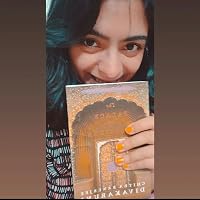
July 15, 2025
Manreet Sodhi Someshwar’s Hyderabad is an ambitious attempt to chronicle a deeply complex moment in Indian history: the princely state’s resistance to joining the Indian Union in 1947–48. Set against the crumbling grandeur of the Nizam’s court, the rise of the Razakars, and the backdrop of Partition, the novel aims to be a sweeping political and human tapestry.
And to its credit, it is sweeping. But it’s also, at times, suffocating under its own sprawl.
The novel introduces us to multiple threads—royalty (Uzma, the Nizam), rebellion (Jaabili), colonial observers (Pamela Mountbatten), and the displaced (Beliram and his daughter Pammi). Each character offers a different lens on the city of Hyderabad in its final, fevered days before Operation Polo.
You understand what’s going on. The politics are clear. The stakes are real. The tension is palpable. But the experience of reading often feels like flipping between disconnected vignettes. Just as you begin to invest in one narrative, the story veers elsewhere. Some characters fade into the background before they ever feel real.
While the multi-perspective structure is meant to create a panoramic effect, it sometimes ends up fragmenting the emotional heart of the story. Certain characters—like Pamela Mountbatten or even the Nizam—feel more like historical placeholders than fully developed people. Others, like Pammi, serve as symbols (a child of Partition) but don’t anchor the plot in any lasting way.
Jaabili’s arc, arguably the most emotionally gripping, is powerful but undercut by narrative detours that dilute her impact.
Someshwar’s prose can be lyrical and atmospheric, but it occasionally lapses into exposition-heavy passages. There’s a sense that the author is telling history, not always letting it breathe through story. The result is a book that often feels more like an illustrated essay than an immersive novel.
Hyderabad is a commendable attempt to wrestle with a lesser-known episode of post-colonial Indian history. It’s intellectually engaging and politically urgent. But as fiction, it struggles to balance historical scope with narrative intimacy.
You leave the book more informed, perhaps even stirred, but not quite moved.
This entire review has been hidden because of spoilers.
Displaying 1 - 30 of 68 reviews