The New York Times bestseller, now adapted for a new generation of young readers, leaders, thinkers, and activists. A groundbreaking call to action that examines how racism affects and harms all of us and how we need to face it head-on, together.
The future can be prosperous for everyone, but only if we address the problems of racial and economic inequality.
McGhee believes that all people, of all ages and all backgrounds, need to rethink their attitude toward race and strive together to create opportunities that benefit everyone.
This book is a call to action. McGhee examines how damaging racism is, not only to people of color but also to white people. She offers hope and real solutions so we can all prosper. An expert in economic policy, McGhee draws lessons both from her work at a think tank and from her travels around the country talking to everyday Americans fighting for a more just and inclusive society.
The people she meets prove how the stories we tell ourselves about race and belonging influence the policies that determine our shared economic future.
The Sum of Us provides hope that with understanding and open-mindedness, the world can be more united and equitable than it is today.
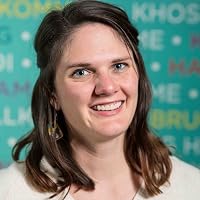
Heather Charisse McGhee is an American political commentator and strategist. She is a former president and currently a distinguished senior fellow of Demos, a non-profit progressive U.S. think tank. McGhee is a regular contributor to NBC News and frequently appears as a guest and panelist on Meet the Press, All In with Chris Hayes, and Real Time with Bill Maher.
Whether you read the original version or this young readers version, The sum of Us is a must-read for white Americans to see just how much racism is hurting us as much as the marginalized communities it is obviously harming.
I think that important topics like institutional racism should be addressed at middle and high school levels. If kids are able to make rude and racist comments in school at these ages then they're old enough to learn about the truth of our country and how blatant mistreatment towards different races has effected everyone in the U.S. McGee's young reader adaptation is the perfect vessel to do so, it highlights the damaging effects of racism in a simple and factual way that allows young readers to see the world through her perspective clearly. Learning about social issues shouldn't be something left to social media and the online world, schools should be embracing new and progressive books like this, making them an option for reading in school libraries and as summer reading selections. There's nothing dangerous about being educated about the world we live in.
This adaptation takes an extremely important book that I believe every American should read and makes it shorter and more accessible. Although it's written for young adults, I never felt like things were explained differently for a younger audience like other young adult adaptations of adult nonfiction books have done. The audiobook was excellent. Lots and lots to discuss!
I bought this to add to my classroom library, but as always, I try to read what I buy my students first. It is well written and compelling and I was able to read it in two days despite very heavy material. While it is written at an easier level, the concepts are still very big or abstract for 5th graders. Instead I’d recommend that all teachers read this. We teachers love books, but are short on time, want to educate ourselves, but can get bogged down with too many tasks. The book is a perfect balance that really explains why racism hurts all of us. It doesn’t use terms like white fragility, but instead explains the how and why of white fragility. In a time when states are banning curriculum about slavery and racism, this books is a must read for educators who want to find the words to help ourselves and our communities find strength in the truth and the strength of working together. It reminds me of conversations held with my 5th graders when discussing the writers of the US Constitution and whether or not it was really written for all of us. How much of it was intentional, how much was implicit bias, how much was a lie we told ourselves so we could sleep at night? How can we be better? The possibility of a female president of multiple racial identities who seems positive and hopeful, but honest and demanding makes me feel like the premise of this book can become a promise for our country. That we can become the melting pot patchwork quilt of beautiful backgrounds and differences, a radical social experiment that could eventually work out for more than the few, the fortunate, and the wealthy.
Thank you to Libro.fm and Penguin Random House for the ALC!
I read the young readers edition of The Sum of Us for two reasons: one, we were doing an event for the book with McGhee and I wanted to know it before I worked the event. And two, I thought reading the young readers version would make me better equipped to read the adult version.
But the brilliance of this edition is that McGhee doesn’t talk down to her young readers, not once. I didn’t feel like I was reading a book adapted for kids who couldn’t understand a more complicated book. I felt like I was simply reading a book about racism in the United States that happed to be marketed to younger audiences. It’s such an effective text.
I also found it to be a really optimistic text. McGhee’s empathy and positivity are clear in her writing. This could be, at least in the audiobook, partially due to the fact that she reads it. But I think often when we do work to dismantle the harm caused by racism, we see problem after problem, and the solutions can seem hard to reach. The Sum of Us adapted for young readers says, no, see, we can do it as long as we do it together.
A great book to put in a classroom. But also, a great book to read if you’re an adult and you’re not quite sure where to start. I’d still like to read the original edition but I really did like this one.
Heather McGhee has explored how we all suffer from racism regardless of where we live and work. She talks about the zero-sum mentality which is the idea that progress for one group of people will hold other groups back. This audience for this adaptation is for young readers and what could be better since they are at an age of studying the issues involved with the zero-sum mentality.
On page 199, Heather says that her journey across US from California to Mississippi to Maine, tallying the costs of racism, has led her to five discoveries about how we can prosper together:
Make sure you read what these discoveries are 1.Start aiming for a Solitary Dividend; 2.the quickest way to get there is to "refill the pool of public goods for everyone"; 3. when it comes to designing solutions, one size has never fit all; 4. We truly need each other to uproot the zero sum; 5.We've got to get on the same page before we can turn it....setting the facts straight so we can move together with a new story. See pages 199-200 to get more information about Heather's discoveries.
Thank you to NetGalley and Random House Children's for providing me an e-arc of this book in exchange for an honest review
I've said this before and I'll say it again: as an adult, I love reading Young Readers Editions. They take works and topics that are important for everyone to know about and distil them into easily digestible formats.
In this educational and informative book, McGhee explains a lot of the institutional racism that has been prevalent in the US since the colonial era. Many of these government-sanctioned injustices were things I had not previously learned about, but McGhee explains clearly and concisely how they have hurt minority groups in this country, particularly African Americans, contributed to racist beliefs, and ultimately hurt everyone, White Americans included.
She explains a lot of the zero-sum beliefs (thinking that suggests that if "others" get something, there will inherently be less for you) that have perpetuated racism in this country, shows how they are not true and are often cultivated at powerful levels in order to divide people, and instead argues for a solidarity dividend, or the kinds of political gains that can only be achieved by rejecting zero-sum thinking and working together across racial lines.
Teens and adults alike can benefit from reading this book. It shows how racism is a problem for everyone's quality of life and some of the progress we might be able to make if not divided along racial lines.
Although this is a version adapted for Young Readers, I believe teenagers would have a difficult time grasping some of the concepts in this book. I found myself having to go back and read many sentences more than once just because the sentence structure was a bit all over the place. And while I found McGhee's ideas interesting, I got sick of hearing "research says" and then having no sources listed. I know that there is a note at the end of the book that says "supplemental references are available for download" at her website, but when I visited the website it was really just teaching guides and conversation resources. As a librarian trying to teach students about citing sources, and checking sources for credibility, this book does not set a good example. I would be interested to see if the full "adult" version of this book includes the research she is referencing. Overall, I just think there are more engaging and understandable texts for teenagers out there that cover these ideas in a better way.
A review of America’s adoption of “zero sum” thinking, dating to the early colonial emigrants who came here equipped with that experience from their homelands. Black enslaved people fit the model perfectly and we have never really recovered. McGhee cites chapter and verse of government policy and community practice that structured public goods as the prerogative of white citizens, ultimately, she argues, to the detriment of all Americans. Not only are we still (and recently most emphatically) divided and prejudiced racially, leading to estrangement and dissension, but the 90% of us who are not in the 1% category of household wealth are “sitting in the bottom of the drained pool” of public resources—high student loans, unaffordable home ownership, distrust of and frustration with government services. She ends this dire analysis, with which I do not disagree, with an exhortation to work toward common good, seek the “Solidarity Dividend.” Maybe the current awful political environment will drive us all to that end. One can only hope.
McGhee writes a powerful book that reveals the irrational believe many have that human rights exist in a zero-sum game dynamic (meaning that if we treat the "have nots" with dignity and justice, than the "haves" will lose rights and wealth). First, we should create just laws and policies, but, second, the harm targeted to people of color ends up harming poor whites and often middle class whites as well. In other words, racist views and the resulting policies and laws hurst everyone. Racism is irrational and harms everyone.
The cover of the book depicts a pool. One of the chapters describes how pools funded by tax dollars denied Blacks entry. When laws required cities to desegregate pools, many cities created private clubs for the use of those pools or closed down the pools rather than have integrated swimming.
The book also explains red lining, voter suppression, predatory subprime mortgages and many other examples of policies intended to suppress the rights and wealth building of Black people (and Lantinx people and non-European immigrants), which is bad enough but also ends up harming more than the intended target.
McGhee talks about breaking down and crying on a couple of occasion because of the mean-spirited, unfair, and devastating outcomes of unjust laws and policies that harm generations of people of all colors. For example, the south has a very low ratio of population to hospitals and to schools, all dating back to the economies of slave-owning plantation owners, who saw no (economic) reason for investing in public services since they did not need educated or healthy people of any color to help them run their big plantations. They preferred to just get more free or cheap labor rather than to invest in the overall wellness (of mind and body) of people in their community outside of the wealthy landowners who had private schools and private healthcare.
It's astonishing how greedy people can be and how they create rationalizations (they are children, they are animals, they are vermin) to support their wealth with unjust laws and policies.
If I were teaching a middle school class or high school class--or a 100-level university class--on American history, I would assign this book.
This book is angering, fascinating, and important! McGhee makes it very clear how racism is at the root of various dysfunctions in the United States, such as our lack of affordable healthcare and housing. People are generally aware that the results disproportionately harm people of color, but McGhee also discusses how the reality is that life is measurably harder for millions of white Americans, as well, as a direct result of racism.
This edition is adapted for younger readers, but it's still quite intellectual. I would be surprised if it's interesting of accessible for readers any younger than ~13.
Thanks to @libro.fm and the publisher for allowing me to listen to an ALC of this important book. As I listened, I found myself getting angrier and angrier that our country just keeps perpetuating racism. The government is supposed to be "for the people," but the founders only meant white well-to-do men when they said "people." Although I agree that there are ways that communities can oversome some of the challenges, I don't think there is hope for sweeping change until our entire political system is overhauled and the almighty dollar is no longer king. While this book is adapted for young readers, I think the content is most suitable to high schoolers and up.
This was supposed to be adapted for younger readers but I think it might be a little too overwritten for most teens. It was very similar to Dying of Whiteness, but less in-depth. It covered the history of racism in many aspects of our nation, with a focus on how these racist systems and policies eventually hurt white people as well. It was mostly well written but I think it will miss its target audience. Maybe just using individual chapters for focus studies in the classroom would help.
Today marks the last meeting of our community read of this book. What an amazing storyteller Heather is, to encompass so much history of how America has gotten to where it is today and the great truth that we all need each other to truly turn this country around and make it prosper. Staying divided and operating out of fear and hate not only hurts those that so many have turned their anger towards, but it hurts all of us! This is a must read for every American.
My almost 9-yr old rates this 4.75/5 Throughout the book he asked thoughtful questions and expressed his disbelief at why white people have done such terrible things. By no means is he feeling guilty to be white. As a parent o am grateful he won’t be having to unlearn as much as I have over my life.
This is a very well written accounting of America and all the systems we built here. The author included many stories and interviews that highlight each of the issues she examines. Overall, I found it thoroughly effective and honest. I sincerely hope many people will read either edition of this work.
Adapted for young readers. This is a look at how racism hurts everyone - which is a switch in perspective for many. It is a really thought provoking call to action about changing the way we think about race and work together to benefit everyone. She offers hope and solutions. If everyone read this book and did what she said, we could live in a different world! Highly recommend
Another book that can enlighten readers as to our shared history in the United States. And how we can’t make others suffer without suffering ourselves. It’s so sad to me that at least half the country cannot see that promulgating policies that help the least fortunate will advance everyone’s interests. It truly is the sum of us that would really make our nation great again. I highly recommend everyone read this book.
Heather McGhee did an outstanding job of giving tangible and shocking examples of how racism impacts white people as well as people of color. This book is perfect for young adults as well as adults.
Thanks to LibroFMs Educator ALC program for a review copy of this audiobook.
Excellent and accessible for middle grade readers. The stories are told in a way that young readers will question events of the past and have them access current issues in the world- such as politics, religion and climate change through the lens of race.
While interested in all young reader books and adaptation, I preferred the original. This version would fit with an older young reader, for while it leaves out many of the research citations (which I prefer), it still covers a lot of advanced political and research topics.
Another book recommended by my son, the school librarian. This should be required reading for every high school student in the country. Rich with the history of racism in the US as well as the stories of individuals, McGhee teaches, challenges and offers hope.
“We have not allowed our diversity to be our superpower.”
There is a lot to this book and I’m not sure how much simpler it is made in the YA version. Some is complicated - as is the issue. It is clear that society wins when all is fair.
This book is an amazing example of how racism affects everyone, both the people being discriminated against and the people who are not. I love this book so much and recommend it to anyone who wants to learn about equal rights.