

What do you think?
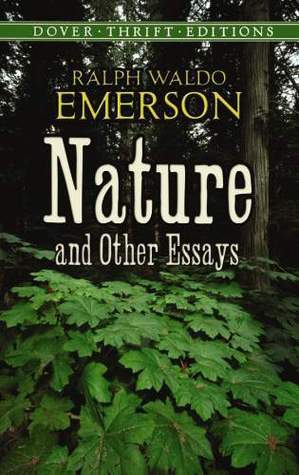
Nature and Other Essays
He was an ordained minister, renowned orator, and beloved author and poet whose ideas on nature, philosophy, and religion influenced authors such as Henry David Thoreau and Walt Whitman. Through his writings, Emerson ardently professed the importance of being an individual, resisting the comfort of conformity, and creating an art of living in harmony with nature. This soul-satisfying anthology of twelve favorite essays is a treasure.
In the title essay, Emerson writes about the extraordinary power of nature as a way of bringing the divine into our lives. In "Gifts," he reminds us that flowers and gold may be acceptable to those we love, but "the only gift is a portion of thyself." "Spiritual Laws" points out that because a higher law than our own rules the world, there is no need for struggle. Other essays include "Character," "Prudence," "Intellect," "Love," "Beauty," "The American Scholar" address and others. Readers of all ages will want to keep this volume on hand to inspire and refresh the spirit
In the title essay, Emerson writes about the extraordinary power of nature as a way of bringing the divine into our lives. In "Gifts," he reminds us that flowers and gold may be acceptable to those we love, but "the only gift is a portion of thyself." "Spiritual Laws" points out that because a higher law than our own rules the world, there is no need for struggle. Other essays include "Character," "Prudence," "Intellect," "Love," "Beauty," "The American Scholar" address and others. Readers of all ages will want to keep this volume on hand to inspire and refresh the spirit
176 pages, Paperback
First published January 1, 1860
About the author
Ralph Waldo Emerson
3,316 books5,517 followersRalph Waldo Emerson was born in Boston in 1803. Educated at Harvard and the Cambridge Divinity School, he became a Unitarian minister in 1826 at the Second Church Unitarian. The congregation, with Christian overtones, issued communion, something Emerson refused to do. "Really, it is beyond my comprehension," Emerson once said, when asked by a seminary professor whether he believed in God. (Quoted in 2,000 Years of Freethought edited by Jim Haught.) By 1832, after the untimely death of his first wife, Emerson cut loose from Unitarianism. During a year-long trip to Europe, Emerson became acquainted with such intelligentsia as British writer Thomas Carlyle, and poets Wordsworth and Coleridge. He returned to the United States in 1833, to a life as poet, writer and lecturer. Emerson inspired Transcendentalism, although never adopting the label himself. He rejected traditional ideas of deity in favor of an "Over-Soul" or "Form of Good," ideas which were considered highly heretical. His books include Nature (1836), The American Scholar (1837), Divinity School Address (1838), Essays, 2 vol. (1841, 1844), Nature, Addresses and Lectures (1849), and three volumes of poetry. Margaret Fuller became one of his "disciples," as did Henry David Thoreau.
The best of Emerson's rather wordy writing survives as epigrams, such as the famous: "A foolish consistency is the hobgoblin of little minds, adored by little statesmen and philosophers and divines." Other one- (and two-) liners include: "As men's prayers are a disease of the will, so are their creeds a disease of the intellect" (Self-Reliance, 1841). "The most tedious of all discourses are on the subject of the Supreme Being" (Journal, 1836). "The word miracle, as pronounced by Christian churches, gives a false impression; it is a monster. It is not one with the blowing clover and the falling rain" (Address to Harvard Divinity College, July 15, 1838). He demolished the right wing hypocrites of his era in his essay "Worship": ". . . the louder he talked of his honor, the faster we counted our spoons" (Conduct of Life, 1860). "I hate this shallow Americanism which hopes to get rich by credit, to get knowledge by raps on midnight tables, to learn the economy of the mind by phrenology, or skill without study, or mastery without apprenticeship" (Self-Reliance). "The first and last lesson of religion is, 'The things that are seen are temporal; the things that are not seen are eternal.' It puts an affront upon nature" (English Traits , 1856). "The god of the cannibals will be a cannibal, of the crusaders a crusader, and of the merchants a merchant." (Civilization, 1862). He influenced generations of Americans, from his friend Henry David Thoreau to John Dewey, and in Europe, Friedrich Nietzsche, who takes up such Emersonian themes as power, fate, the uses of poetry and history, and the critique of Christianity. D. 1882.
Ralph Waldo Emerson was his son and Waldo Emerson Forbes, his grandson.
The best of Emerson's rather wordy writing survives as epigrams, such as the famous: "A foolish consistency is the hobgoblin of little minds, adored by little statesmen and philosophers and divines." Other one- (and two-) liners include: "As men's prayers are a disease of the will, so are their creeds a disease of the intellect" (Self-Reliance, 1841). "The most tedious of all discourses are on the subject of the Supreme Being" (Journal, 1836). "The word miracle, as pronounced by Christian churches, gives a false impression; it is a monster. It is not one with the blowing clover and the falling rain" (Address to Harvard Divinity College, July 15, 1838). He demolished the right wing hypocrites of his era in his essay "Worship": ". . . the louder he talked of his honor, the faster we counted our spoons" (Conduct of Life, 1860). "I hate this shallow Americanism which hopes to get rich by credit, to get knowledge by raps on midnight tables, to learn the economy of the mind by phrenology, or skill without study, or mastery without apprenticeship" (Self-Reliance). "The first and last lesson of religion is, 'The things that are seen are temporal; the things that are not seen are eternal.' It puts an affront upon nature" (English Traits , 1856). "The god of the cannibals will be a cannibal, of the crusaders a crusader, and of the merchants a merchant." (Civilization, 1862). He influenced generations of Americans, from his friend Henry David Thoreau to John Dewey, and in Europe, Friedrich Nietzsche, who takes up such Emersonian themes as power, fate, the uses of poetry and history, and the critique of Christianity. D. 1882.
Ralph Waldo Emerson was his son and Waldo Emerson Forbes, his grandson.
Ratings & Reviews
Friends & Following
Create a free account to discover what your friends think of this book!
Community Reviews
Displaying 1 - 24 of 24 reviews

June 15, 2024
Transformative. You can't stay the same after such a book. Three hundred bestselling self-help books couldn't do half of what this one can.
“Oh mighty love! Man is one world, and hath Another to attend him.”
Ralph Waldo Emerson has a distinctive worldview, which I don't find in other philosophers. It's a bold statement, I know—admittedly, my lack of wit enables me to say it. However, neither the French nor the Germans or Greeks I read had such a lyrical and dreamy yet logical taste to it.
His philosophy has some "American Dream" to it, but not in the consumerist and rat-raced way we now know it. Emerson promotes the idea that each of us has divine individuality and genius. Yes, genius—no less than Plato or Galileo. Moreover, he states that "Shakespeare will never be made by the study of Shakespeare." To him, imitation is a synonym for suicide. One can unlock individuality only if he's courageous enough to "be, not seem". It sounds light, but it is hefty of a task.
Overall, this book is rich in various departments and guaranteed to add plenty to one's understanding of the world and the human condition. And, most importantly, oneself. I highly highly recommend it.
"It is easy in the world to live after the world's opinion; it is easy in solitude to live after our own; but the great man is he who in the midst of the crowd keeps with perfect sweetness the independence of solitude."
“Oh mighty love! Man is one world, and hath Another to attend him.”
Ralph Waldo Emerson has a distinctive worldview, which I don't find in other philosophers. It's a bold statement, I know—admittedly, my lack of wit enables me to say it. However, neither the French nor the Germans or Greeks I read had such a lyrical and dreamy yet logical taste to it.
His philosophy has some "American Dream" to it, but not in the consumerist and rat-raced way we now know it. Emerson promotes the idea that each of us has divine individuality and genius. Yes, genius—no less than Plato or Galileo. Moreover, he states that "Shakespeare will never be made by the study of Shakespeare." To him, imitation is a synonym for suicide. One can unlock individuality only if he's courageous enough to "be, not seem". It sounds light, but it is hefty of a task.
Overall, this book is rich in various departments and guaranteed to add plenty to one's understanding of the world and the human condition. And, most importantly, oneself. I highly highly recommend it.
"It is easy in the world to live after the world's opinion; it is easy in solitude to live after our own; but the great man is he who in the midst of the crowd keeps with perfect sweetness the independence of solitude."

November 23, 2014
Ralph Waldo Emerson est un homme extraordinaire, une sorte de Kant qui aurait passé une bonne journée à courir dans les forêts et les prairies ou un Rousseau vigoureux et optimiste. Il voit la nature, et l'homme lui-même, comme un démembrement, une manifestation d'une sorte de grand tout, l'Esprit. Chacun doit suivre sa nature, qui est bonne parce qu'elle est divine et unique, et non les usages ou la société, qui sont plutôt corrompus. Il est important de compter sur soi-même (self reliance). Il y a des phrases extraordinaires sur comment la propriété est un bien pour celui qui la constitue, la crée, et ensuite une charge et une sorte de souci pour ses héritiers. Ralph Waldo Emerson nous encourage en nous disant qu'il n'est pas plus facile pour le peureux d'être peureux, que pour le brave d'être brave ; ou comment, malgré les apparences, le Bien est à l'oeuvre et progresse. Circles est un texte extraordinaire qui explique que les contradictions sont les extrémités d'un même objet, qui finissent par être résolus par une vision supérieure plus englobante. La différence entre les idéalistes et les réalistes est expliquée mieux qu'aucun prof de philo ne l'a jamais fait. Penchant nettement du premier côté, RWE a des pages touchantes sur la difficulté qu'il y a à être idéaliste et à le rester (les idéalistes sont comme les marins, on n'en trouve pas de vieux), et cependant explique de façon convaincante pourquoi il faut l'être. Des pages pénétrantes sur Montaigne, aussi... Il est confondant de voir comment ces pages écrites à l'ombre des sapins de l'Amérique primitive, avec leur exaltation de la bravoure, de la simplicité, de la probité et de l'indépendance, arrivent à nous toucher dans un monde dépressif et hypertechnologisé. Il m'est agréable de penser que RWE a été le maître de D.Thoreau qui a inspiré les Désobéissants.

April 6, 2014
I picked up this piece because of Emerson's known role as a mentor of Thoreau, and was curious to find out what he had to say of our state of being. I'd wager his writing style is even more abstract and metaphorical than that of his successor - the nods to ancient Greece and Rome, and the old continent in general, are bordering on excessive. Also, the Bible plays a lot greater part in his works - the lack of this might have resulted Thoreau to have a lot more redeeming, timeless value for future generations. However, as a transcendentalist his form of religion - while still covering every aspect of his thought - is still more "progressive" than that of average Christian of our day. His optimistic, yet surprisingly realistic views on science and its possibilities are also an interesting peek back in history.
According to the four stars given I "really liked" the book, and as with other works in similar vein, after returning to its pages in the future with a thirst for words, the real personal value of the book will settle down. The tone of his "high English" and abundance of references obscured by the veils of time might repel a great deal of modern readers, but those digging into the origins of modern Western philosophy should give it a go.
According to the four stars given I "really liked" the book, and as with other works in similar vein, after returning to its pages in the future with a thirst for words, the real personal value of the book will settle down. The tone of his "high English" and abundance of references obscured by the veils of time might repel a great deal of modern readers, but those digging into the origins of modern Western philosophy should give it a go.
December 30, 2022
thought provoking. I read this over a long time, giving the essays time to percolate in my brain. Mr. Emerson's essays are poetry. His writing is delicious to my brain.
June 12, 2009
Overall just ok, though the Nature essay does contain my new favorite quote: "The greatest delight which the fields and woods minister, is the suggestion of an occult relation between man and the vegetable." Hah! And it's awesome in every sense of the word "occult", which has a few definitions: 1) of or relating to supernatural influences, 2) beyond human comprehension, and 3) available only to the initiate; secret. Indeed.

October 23, 2017
Finding the time to focus on this book has eluded me until recently. I find Emerson difficult to read at times as most of his essays read like transcripts of speeches (indeed, some of them are). He exudes "positive thinking" in the Norman Mailer sense of the phrase, but with a transcendental bent that keeps on giving its spiritual encouragement. In each of Emerson's essays there is a gem of absolute truth, just waiting for us to confirm in our own experience (as he would probably say). But these gems tend to be packed away in wads and wads of cotton wool. It is not until the final essay (or, more correctly, speech), "The American Scholar", where the reader reaches the summit and can look back on a trail of wisdom marked by that same cotton wool. Emerson's ideas of self-reliance and the worthiness of the American ideal (in opposition to Continental ideas in particular) I suspect provide lessons for Australians that are just waiting to be learnt. America's cultural cringe has long disappeared from living memory and it may well be time for Australia to reach the same heady level. There is too much in such a short book to cover in detail, and each essay's gem must be mined laboriously (and as Emerson might say, there is nothing wrong with scholars doing a bit of physical labour). But two authors mentioned by Emerson stick in my mind. First, Thomas Carlyle (his work, too, I am stuck on due to a lack of focus and will get back to it now), mentioned in the cover blurb as someone Emerson met during his travels to Europe, and Swedenborg, and his ground-breaking "Heaven and Hell". Emerson comes close to enunciating how one might find one's "nature" (in the Stoic sense of the word) as a starting point for action. For this alone it is worth knowing. But also, his statement about the role of colleges (p. 154) has given me a way to re-align my teaching strategy. The travails of the present really were no different to the past; we seem rather to have forgotten to remember old lessons hard-won.

May 25, 2022
One of the greatest books out there!
I’m in awe! I didn't expect to admire it this much. It’s more like of a bundle of a guide for a wandering and adventurous soul.
I don’t know how to review this book.
It is difficult to put it into words. Thus, if you have the intention to read it, then just read it and see what surprises you’ll get.
If you’ll read this book for the advantage of critical study, then you will not enjoy it as much as you’ll just go through it without expectations and heavily ponder strongly.
Just feel the beauty of it, and you’ll understand it. Your emotions and thoughts will meet and make something out of the meaning, maybe without caring about the main meaning behind it.
I’m in awe! I didn't expect to admire it this much. It’s more like of a bundle of a guide for a wandering and adventurous soul.
I don’t know how to review this book.
It is difficult to put it into words. Thus, if you have the intention to read it, then just read it and see what surprises you’ll get.
If you’ll read this book for the advantage of critical study, then you will not enjoy it as much as you’ll just go through it without expectations and heavily ponder strongly.
Just feel the beauty of it, and you’ll understand it. Your emotions and thoughts will meet and make something out of the meaning, maybe without caring about the main meaning behind it.
May 20, 2026
Beautifully written on the topic of Nature and man’s innate connection to the Roots. Major part of early American Transcendentalism, and clearly stated through the first 60 or so pages through a major emphasis on man’s need to return to Nature to satiate the soul.
“What your heart thinks is great is great”
Sums up his thoughts majorly here.
Towards the end of the book he touches on intellect and its different forms, wether that be modern school teaching or book knowledge - and how either if improperly used can consume the soul and push it further away from original perspective.
Lacking one star because of the difficulty to read, pages took ages but that’s also what made it great, nice expansive read and a great intro to American-based philosophy for me.
“What your heart thinks is great is great”
Sums up his thoughts majorly here.
Towards the end of the book he touches on intellect and its different forms, wether that be modern school teaching or book knowledge - and how either if improperly used can consume the soul and push it further away from original perspective.
Lacking one star because of the difficulty to read, pages took ages but that’s also what made it great, nice expansive read and a great intro to American-based philosophy for me.

October 12, 2023
I've never thought of myself as much of an essay reader, at least in a full-on book form, but hey, this is one of those classic pieces and I found myself thoroughly enjoying my wander through the thoughts of Mr. Emerson. He's definitely wordy, as one would expect, but he is a master of the craft and is not only a delight to read for the sheer beauty of the prose, but he had more deep insights than I anticipated (perhaps I should have?) The essays span all sorts of topics, different ones appealing more and meaning more than others, but each one certainly had its merits.
March 18, 2026
(realistically closer to ★★★¼)
A writer with a lot of ideas, though at times it feels like those ideas are being repeated across different categories. To his credit, he often refines and clarifies those ideas in impressively clear language. Still, there are moments where it feels like he’s rehashing the same core concept in slightly different ways—perhaps to reinforce his original point, but it can become repetitive.
A writer with a lot of ideas, though at times it feels like those ideas are being repeated across different categories. To his credit, he often refines and clarifies those ideas in impressively clear language. Still, there are moments where it feels like he’s rehashing the same core concept in slightly different ways—perhaps to reinforce his original point, but it can become repetitive.
September 10, 2019
Man Thinking
Although written a few centuries ago the ideas are timely for today's culture. The author noted books are written to inspire the next generation to write books to inspire. For myself it was a difficult read. However, the author's thoughts inspired me to read it again in the future to pan the words for golden nuggets that I probably overlooked.
Although written a few centuries ago the ideas are timely for today's culture. The author noted books are written to inspire the next generation to write books to inspire. For myself it was a difficult read. However, the author's thoughts inspired me to read it again in the future to pan the words for golden nuggets that I probably overlooked.

May 5, 2020
Highs and Lows
There are infinite highs and lows while reading Emerson’s essay. Moments of incredible awakening and introspective exploration are shortly followed by incidences where deciphering his message feels near impossible. This is certainly a piece which requires multiples visits to make sense of all he has to say.
There are infinite highs and lows while reading Emerson’s essay. Moments of incredible awakening and introspective exploration are shortly followed by incidences where deciphering his message feels near impossible. This is certainly a piece which requires multiples visits to make sense of all he has to say.

March 6, 2024
Very wordy, but pleasantly refreshing. This work feels a lot like a historical artifact, a lens of some sort into the past. If you’re into analyzing communication and thought from ages ago, this is it. As a side note, to get past the elaborate writing I recommend imagining a narrator with a thick 1800s British accent.

January 24, 2023
Emerson is America’s most profound and enduring spiritual voice, and this is the best collection of his writings. It is not possible to digest it after one reading. It should be the companion to all thoughtful seekers of meaning and peace in this life.
May 28, 2017
Very interesting insights on how nature inherits everything there is to know. However, the poetic language and his writing style can make it challenging to extract the main thought from the essay.
October 27, 2022
Deep thoughts spoken in old English.
March 21, 2024
This man was smoking a lot of things he found in nature
December 11, 2025
Second read through, which is rare for me. One of my favorites.
"Whoso would be an individual must be a nonconformist. Nothing is at last sacred but the integrity of your own mind."
"Whoso would be an individual must be a nonconformist. Nothing is at last sacred but the integrity of your own mind."
May 7, 2012
I decided to finish this since it is Emerson's birthday today. I can conclude that this is a fascinating read which is undoubtedly profound. It's not as approachable as Walden, and many of the analogies flew right over my head, but nonetheless it caused some great reflection as all good philosophy does. "The Happiest man is he who learns from nature the lesson of worship."

October 30, 2010
Older obscure words and references but a great book indeed. I will read this again soon.
March 8, 2013
There are parts I enjoyed. Not the best book I've ever read though
Read
November 18, 2016Gave up. Wanted to love it and be inspired instead I was just bored.
October 11, 2021
DNF. Too difficult to follow. Unrelatable.
April 10, 2023
Only read Nature (1836).
Displaying 1 - 24 of 24 reviews