Jump to ratings and reviews
Rate this book

Mouse Cage

Rate this book
Troy carries more secrets with him than most. A test subject for experimental surgery, a clone gengineered from modified lab mice, an addict. He tells himself that his past is behind him, but he’ll never escape his childhood in Lake North’s labs. What was done to him there, what he was made into, what he did.

Fifteen years after the Emancipation freed him, a prestigious charity invites him to speak about it at their fundraising evening. That’s where Troy meets the love of his life – Jennifer. A woman with a hundred and sixty-seven clone sisters and a past she doesn’t like talking about. Hurts that don’t show on the outside. Dark secrets she’s unwilling to even whisper.

Troy’s perfect match.

But when the past begins catching up to Troy, not even their love will be strong enough to protect him if he can’t face the agonizing truth of who he and Jennifer really are.

For a pair of experts at hiding from the truth, finding a way to stop lying to themselves and each other isn’t the happily ever after for their story. It’s the start.

649 pages, Kindle Edition

Published July 13, 2022

3 people are currently reading
55 people want to read

About the author

Malcolm F. Cross

12 books31 followers
Malcolm F. Cross, otherwise known by his internet handle 'foozzzball', lives in London and enjoys the personal space and privacy that the city is known for. When not misdirecting tourists to nonexistent landmarks and standing on the wrong side of escalators, Malcolm is likely to be writing science fiction and fantasy. A member of the furry fandom, he won the 2012 Ursa Major Award for Best Anthropomorphic Short Fiction.

Ratings & Reviews

What do you think?
Rate this book

Friends & Following

Create a free account to discover what your friends think of this book!

Community Reviews

5 stars
8 (50%)
4 stars
6 (37%)
3 stars
1 (6%)
2 stars
1 (6%)
1 star
0 (0%)
Displaying 1 - 9 of 9 reviews
Profile Image for Andrew Hindle.
Author 27 books52 followers
July 27, 2022
The Stories from San Iadras series is a 22 Short Films About Springfield-style collection that also includes SPSFC alum Dog Country, which sadly I haven’t read (but I fully intend to rectify that). Let’s call Mouse Cage the “Steamed Hams” part of the collection, for want of a better way to boot this distressing comparison onwards.

Never having read much furry-based fiction, or even actually knowing it existed, or even knowing anything much about furries except that they’re the most dedicated and usually the most heavily overdressed cosplayers at any convention I have ever attended (and I say that as a husky gentleman[1] in spandex) and that they definitely don’t crap in litter boxes at USian high schools … given all that, I wasn’t sure what to expect from a speculative fiction premise like this. Essentially, Cross has created a universe in which furries actually happened. In the not-too-distant future, human experimentation has resulted in the cloned production of large sibling-batches of hybridised animals capable of speech, drug habits, and wearing people clothes. They’re used for all sorts of things (the furries, not the clothes), none of them particularly nice, until the Emancipation that begins their integration into society. The main centre of which, for furries, is the subtitular city of San Iadras.

But having used the phrase “furry-based fiction,” I will have scared away a lot of people for absolutely no logical reason. This book, and I’m going to assume this series, is so much more than that. Think The Island of Doctor Moreau. Cross sure did (and lampshaded it perfectly, might I add). What he does with this premise is bleak, and gut-wrenching, and wonderful, and asks us what it means to be human in a way only the best stories do. And its exploration of sibling dynamics and the weight of family responsibility is matched only by its examination of trauma.

Troy is the ‘eldest’ of a large (albeit not as large as it once was) family of cloned mouse / human hybrids, a batch of brothers all named after various cities and all suffering various forms of trauma from the obscene experiments and assorted cruelties visited upon them at Lake North, the facility where they were raised. Although furries of all kinds are now free, and the Salcedo family are out in the world making their own way in a wide range of lofty fields of endeavour, the past is always there. And always threatening to drag them back.

They’re out … and they never will be.

This endlessly complex and emotionally charged story follows Troy as he attempts to succeed with his life’s work against the impetus of entrenched and jealous human peers; keep his family safe and happy and in line even when it’s him who needs the most help; carry out a complicated relationship with Jenny, another deeply damaged furry from a different gene batch; and deal with the multitude of horrible things that happened to him and his brothers in Lake North. The narrative leads us through nightmare country, with an extended stopover in drug addiction international airport, and the in-flight service of raunchy furry uglies-bumping is at once copious and pitifully inadequate, at once raw and hopelessly, irretrievably burned.

Yes, this is one of the more spectacularly fucked-up lives I have seen committed to paper, and I can only imagine the dog-based soldier furries of the other Cross book (which we see tantalisingly woven into this tale, giving us an eye-widening glimpse of scope and the incredible love with which Cross has created his tragically flawed world) are just as heartbreaking.

Just fucking read this book.

Sex-o-meter

Furries be horny, there’s not much more I can say on the subject. Okay, that’s not fair – the majority of the sex scenes take place between two characters, open relationship or not – I’d expect the same in ‘most any romance novel possessed of a healthy amount of rumpy pumpy. Humans be horny. It’s not the furries’ fault, whether on the page or out here in real life. I give it two sexy, sexy animal people cavorting under an actual kitchen-based aurora borealis while being watched by a grumpy school superintendent, out of a possible burning house with a virgin school principal doing isometric exercise against the window frame. I don’t get it but we started this journey with a Simpsons reference and by God we’re going to see it through.

Gore-o-meter

You want body horror? Look no further than a book where the main character and his entire family are sentient goddamn lab mice. What Mouse Cage lacks in out-and-out explosions and brutality, it more than makes up for with vivisection, organ removal, amputation trauma, compulsive self-harm, gross sadistic nurses, you name it. Four flesh-gobbets out of a possible five.

WTF-o-meter

This book was well outside my comfort zone and I’m thoroughly glad I read it. There are unanswered questions aplenty here, about the world of San Iadras and its origins and its ultimate fate. I wouldn’t call these questions WTFs as such, though. Once you’ve come to terms with the (frankly pretty classic sci-fi) premise of human / animal hybrids, there’s not really much pure crazy in this one. And that’s okay. That’s not what this story is for. The familiar, not the surreal, is what makes Mouse Cage so powerful. I’m going to be honest here, I think the WTF-o-meter had sex with the sex-o-meter, because I’m getting the same reading about the aurora borealis here. Except the window frame is made of furry body parts and burned children. Jesus, maybe it was a three-way with the gore-o-meter. This book made my meters fuck each other in an attempt to escape the reality of – ohhh I see what this is.

Final Verdict

Wow. I mean, wow. Okay, I would have liked a bit more of a plot arc and resolution for five stars, to say nothing of the fact that I have no doubt even better stories are on their way from this author and I want somewhere to expand upwards. I also get that this was a snapshot, a thread in a tapestry, and wasn’t really about half of the stuff it looked like it was about. This was the story of Troy, unwilling and unwitting head of a family so dysfunctional it’d make Jango Fett stare. And Troy’s story, like real life stories, doesn’t really have a plot so much as a pinballesque series of events and challenges and setbacks. Still, given that, I found the abrupt ending strangely uplifting rather than surprising or upsetting. What a story! Four stars on the Amazon / Goodreads scale.

---

[1] A husky gentleman, not a husky gentleman. No, I mean not – okay fine. Fat, I meant fat.
Profile Image for Joshua Mousey.
32 reviews5 followers
November 14, 2025
I should've read The Island of Doctor Moreau before reading this...

joking aside, if I could give this book 6 out of 5 stars, I absolutely would for Mouse Cage. This book has done four things for me: become one of my new favorite books, break the record for the longest book I've read, send me through every stage of grief multiple times, and hook me in the fastest from the jump. The length of it was quite intimidating at first, but I was still willing to give it a shot since I liked Dog Country. Just from the first chapter of the sample, I was locked in like a death row inmate in Alcatraz. This was likely because the prose was not only accessible, but it carried the story along at a reasonable pace, even if it encompasses a variety of morbid subject matter. To think it'd only get more harrowing from there.

I thought Edane Estian was broken, but Troy Salcedo and Jennifer Dixon are on a brand new level. Their relationship is frustrating, but it's portrayed in a way that makes me still root for their bond to last, regardless of how much they screw up, repeat the same mistakes, or let their trauma get projected onto other people and themselves. It takes the concept of two damaged characters finding solace in each other's company in spite of their flaws and the chains of their past weighing them down, and cranks it up to 11. Everything about their relationship, and the rest of the world around them, is the raw, undisputed, embodiment of trying to canoe through The North Sea, and I adore it. Troy's willing to let himself suffer a cycle of abuse and neglect since he thinks it's what he deserves after all he's done back then, thus his life becomes a hell of an entropy as the story goes.

Jennifer is someone I really like as well, but have more conflicting things to say on. Her whole thing before meeting Troy Salcedo was more or less being an escort for other men, and a part time exotic dancer, the latter of which she still does. When she enters a relationship with Troy, or at least tries to since they're both still figuring things out, she sees him as another lonely man to cheer up and even says she'll be selfish every now and then, and warns that they might hurt each other from their trauma's influences on them. At first I thought of this as her spending time with Troy while doing her exotic dancing, as in showing herself off to other men since there's more to her than that, even though she sees something in Troy that reminds her of her own nurturing tendencies. They're both the eldest of their siblings and have to set an example for them being well adjusted among them, despite the horrors they endured, but that'll be explored later. Troy readily accepts her offer since Jen is not only a big source of comfort for him given his abandonment issues, and motive of not wanting to be alone or wanting anyone to be alone, but Jen readily accepts him too. It becomes an open relationship that they know wouldn't work because deep down, both want and expect different things later on.

At first, she considers Troy her only man at this point, but when she cheats on him with someone named Andy for example, snoops through Troy's phone for traces of other women he's been with since in her words, Troy doesn't fuck like a single guy (which she should've known when Troy told her he was used for sex back then, unless she just forgot that), she has a break down and admits she plays up the facade of someone who genuinely loves him despite not knowing or feeling what real love even is, and she thought of him as someone who'd abandon her from her mistake of cheating and both will feel bad about each other after cutting it off. The book narrates this as something Troy needs to fix instead of her, when it ought to be Jen who needs to fix it all and reassure Troy she's for him only, but it's him that does so the same way he reassures his clone brothers they're all okay when they have a nervous breakdown. I initially had a problem with this, but the more I thought of it, the more it made sense for Troy to be the one to fix it since it's consistent with how he keeps blaming himself for unfortunate events. Granted, he does do some things that result in consequence justifiably from that trait of his, but it something he learns to stop doing later on from other things.

Troy could leave Jennifer if he had as much self respect as the average person, but his fears of abandonment prevent him from doing so. The crux of Troy's commitment to Jen is can be summed up in the following:

“He ignores the bad stuff going on, sometimes. He wants things to seem perfect because, uh.” Troy dry swallowed. “We know we’re not perfect. And we get scared of losing people we love.” He glanced at the graves. “You’re important to him. That’s all.”


To Jen, she's seeing herself as lesser than based on her troubled upbringing and she isn't used to feeling genuinely appreciated let alone vulnerable with her struggles, like Troy. How many times will she make the same mistake for her to get a grip on herself, and how long can Troy tolerate it? They can't keep up this self-deprecating, negative projection of their insecurities for long, can they? They're always comforting each other out of nightmares and panic attacks, so it's got to count for something in terms of them both seeing they need each other more than they think; especially Jen. Those scenes can get repetitive, but it highlights how one's scars don't fade the instance they get reassurance and comfort; they go away slowly over time. Troy and Jen have their ups and downs, but the downs don't mean they aren't making progress. They have each other to love and care for throughout their struggles, regardless of what the rest of the world sees them as, or made them out to be. Even when Troy is hurt, he insists that he isn't insofar as he's lying to himself like the cooperate or betrayal game where the latter option hurts him inside. He doesn't want to feel that pain again, but Jen does these things that end up hurting Troy anyway when she thinks she's protecting him. For example, she makes an empty promise about staying with him and being there for him, which Troy has every right to see as a commitment of sorts instead of remaining in an open relationship, but she doesn't follow up on that when she denies letting him move in with her. At that point, she breaks up with him to avoid shattering his expectations again. It's like Jennifer desperately wants to love someone genuinely, but can't commit to it at all since she doesn't deserve to do that, not with the lifestyle she lives to get by anyway. It's not even that simple to just communicate things like these to each other without closeted skeletons escaping again, and that's all the more tragic since it's the last thing they want, and there's no need in retreading old ground with them.

One scene I really like in particular is during their conversation regarding how Troy isn't seen as someone special and exclusive to Jennifer, and she does her best to reassure him that she is:

“Troy. Baby, baby.” She rubbed at his side harder. “It’s not like that.” “It’s like you don’t want me like I want you, Jen. I’m not special. You can have anybody, but you don’t want me, you pick them. And they’re all better than me.” “But I do want you. You are special to me, I promise.” “How do I know that?” he squeaked. Jennifer kissed his cheek, buried her face into his shoulder. “You’re my little blackbird.” “What?” Mindlessly he put his hand on her back, stroking hard. “Remember? You had a nightmare, and I told you that I was missing my favorite blackbird with a pink flicky tail and twitchy nose. And you said—” “Girl-bird with the stripes.” “Yeah,” she murmured.


This foreshadows Jen's realization of liking Troy because she can let herself be vulnerable with him. Similar scenes are like that, such as this,

Her hand slipped to his shoulder, and she stepped in against him. Face to face, expression pained. “Troy. I just want you to know, even if... Even if things stay fucked up between us, I’m here for you. If you just need to talk to someone, I will be there. If you need someone to talk to after one of your nightmares, I’ll do that too.” Her voice wavered for a moment. “If... If you still want me...”


and this,

“You poor bastard,” she whispered. “Losing all your brothers fucked you up in just the right way to make you so scared of losing people that you can’t break up with me, can you? Even if you know you should.”


This comes full circle with Troy letting himself feel the kind of pain he's grown accustomed to, even if he doesn't want to admit it hurts him because he wants to take care of Jen the same way she takes care of him. Doubly so with this passage:

Troy watched her shake, watched her start to cry again. “You can do that to me. It’s okay,” he whispered. He dug his arms around her, pulled her against him until she was sniveling into his shoulder. Until she was shaking her head, making hoarse half-sounds. “It’s not okay,” she wheezed. “Yes it is.”


On another note, Troy finds a lot of solace in the color green like The Grass Greene show and Jennifer's eyes, hence why he wants to be exclusive to her. She can't be though since she's so flamboyant with others, and Troy's feels like just another man to her in this instance:

“Oh God, sweetie...” Troy shivered in place, shaking his head. “Not sweetie. I wanna be special to you, like I was before.” “You are special.” She stepped around the counter, hesitantly hugged him from the side. “No I’m not!” He pushed his face into her shoulder. “I was special, we had this thing and it meant something, it meant I choose you, but... when I’m not here you choose anyone but me."


It could be argued he knew what he was getting himself into with the open relationship thing, but does someone like him knows what that means? He's got so little self esteem and experience with true love that he can't bring himself to abandon something, someone, he grew a strong, comforting bond with, especially since he is still figuring it out.

As great as the setting is, it was somewhat hard to follow the look of certain locations sometimes (similar issue I took with Dog Country). Granted, it's good that the chapter headers explain where the next plot beat occurs, but it's when some specifics of the locations are described where it got hectic for me to keep up with; however, the locations started to add up the more I went on. North America's described well, but its proximity to San Iadras, and San Iadras itself, is full of a bit too much in-universe jargon for materials that lost me every now and then. Not to mention how chock full of hyper specific science terms the book has. Some of the experimental procedures flew over my head as I am not into the subject as much as others are, so they can be a drag to read through. This is a me thing though because I'm not a science nerd like Troy, and Malcolm F. Cross presumably, but I get how important they are. This is made up for with the attitudes of its citizens. With how oblivious and sometimes insensitive outsiders are to the furries' situation, and with how some even contributed to the hellish formative years of Troy and his brothers, it made for an even more sorrowful reading experience that still kept me flipping pages that only get bigger with ideas the book explores. Sometimes, people date furries in this book just for the novelty of being with one instead of wanting to form a genuine bond out of love and care, as per Florence’s problems with his romantic life. There's even an interesting parallel to Doctor Moreau where the experimental animals aren't able to adapt to normal society beyond the rules and regulations the scientists placed on them, as if it makes said scientists just in their actions. It's as if the animals don't have their own agency or can't develop it on their own. Of course that would anger Troy the same way it would anger anyone to see people justify the actions of an abuser (there's likely racism parallels to draw from here, or I guess speciesm in this case, but you get the idea), hence why I said I should've read Doctor Moreau before reading this because that parallel would've hit harder.

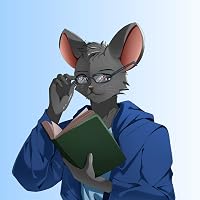
One section near the end, specifically when Troy is giving his speech, struck a particular chord with me.

“As my parent, my padre, put it when I discussed this speech with him recently: Just because I was made by people and institutions who did not love me, it does not mean that I was not made with love. The love of my family, of my friends, and the love and sympathy of strangers, have all helped to make me the person I am. “That love has, in every sense but the genetic, helped to make me human. Just as the love of those around you has made you more human. “If we give someone our love, and our kindness, we also give them their humanity.”

It’s as if he's asking what it means to be a person, something that was being hinted at and built up from the first chapter. In an attempt to answer this within the book's context, it means not letting your imperfections prevent you from being your best self, and being okay with requesting help in desperate, vulnerable times. To give and receive kindness in that sense represents one's humility and love, something all people need. The Salcedo brothers do this for each other all the time, given how they had the same upbringing and share the same pain and trauma, as well as Troy and Jennifer by the end of the story. Even Padre Munez does so when the Salcedos lived in his orphanage. They look out for each other, especially Troy who feels like he doesn't need or deserve the help offered to him at his low points. This sentiment is doubly reinforced with Troy's talk with Munez on how all organisms, humans and animals alike, come from the same soil, and were the apples of the same eye. As Troy says himself, theologists saw animals as a connection to God. They were given their innate nature to survive by Him, who I'd imagine wants the creatures He made to love and care for each other in that sense. This is the complete opposite of what Lake North's scientists saw The Salcedos as. They've been dumbing them down to experiments to be tortured and discarded, although Troy and the others made an effort to get by through sneaking around the lab for various substances. Said substances play a role in shaping Troy's addiction cycles and how he gets helped out of that as well when he doesn't need them anymore. Not to mention how the brothers always did their best to not leave each other alone, or be left out. It's all internally consistent with Troy's arc, and an exceptional display of some of the human condition's darkest woes.

Speaking of such things, the relationship between Troy and the rest of his brothers also fantastic to witness. The air tight family dynamic they all have with each other is nothing short of heartfelt. Them taking care of each other financially and emotionally through the highs and lows of each other's lives, while being their own characters respectively, really sells the strong bond they have with each other, especially for Troy with the numerous setbacks he suffers.

This book is not for the weak. I came out of it knowing more about survivor's guilt, addiction cycles, and toxic relationships than I anticipated, as well as how one can amend those distresses. It's through Troy Salcedo's experiences with these that made him one of my favorite characters in all of fiction, and all of Mouse Cage a highly cathartic read. Very well done.
Profile Image for James Steele.
Author 37 books74 followers
October 24, 2022
Set in the same place as Dog Country (Goodreads book report: https://www.goodreads.com/review/show...), we now follow a group of lab mice as they try to live normal lives after Emancipation. Cloned from the same genestock and used for various experiments, they still live with the trauma of what they experienced while they pursue advanced degrees in engineering and nuclear physics.

Troy finds Jennifer, a Thylacine, and for a while he lets himself believe that this relationship could be a permanent thing, despite the anxiety he lives with. Part 1 of the story is all about Troy’s love life and taking comfort in his time with someone else while dealing with his nightmares.

That’s all well and good, but I think it could have been condensed, as the central conflict in this part boils down to: guy wants a committed relationship but the girl never agreed to that, so he’s mad at her.

Jennifer told him from the start that this would be an open relationship, so when he finds out she has been sleeping with other men while he’s away, he gets upset. Their arguments stemming from this feel contrived, and they go in circles without moving the story forward or driving character development. Troy’s reaction almost seems to come from his past trauma, but the connection isn’t quite there. He’s not mad at her because he’s reacting to something he experienced in the past; he really does seem to be mad at her because he made a commitment but she told him up front she is not good at commitments, so he’s the one being unreasonable and emo, holding her to a standard she did not agree to.

Those parts lost me, but there is enough backstory and worldbuilding going on to balance them out. Still, I read most of this part waiting for the story to move beyond Troy’s love life. It’s a long time to wait for the story to begin, and the writing style helps the reader feel Troy’s anguish. Being a lab mouse. Being conscious of the experiments done to him... and now he’s just expected to live a normal life now.

In Part 2 the story begins as Troy’s life falls apart, and now the reader gets to understand who he really is when he has nothing to distract him from memories of his past. From the knowledge of what he was designed to be. What follows is how this PHD nuclear scientist falls back into drug addiction, gradually coming to realize he even used sex as a coping mechanism not just because of his past trauma but because of his genestock. Lab mice of his strain were easily addicted to opium. Lab mice of his strain compensated for stress by having lots and lots of sex. He’s doing it. As a child, he had to learn and do well or the doctors in the lab would have killed him. He’s still doing all of it, and he doesn’t want to admit he is not okay.

If anyone found out he wasn’t okay, the lab might decide he is no longer necessary.

As a lab mouse, Troy broke his brothers, so now he feels obligated to keep them fixed, even at his own expense.

Watching him come apart at the seams is heartbreaking. The narrative style helps the reader live it with Troy as his story intersects with the crowdfunded rebellion from the previous book, War Dogs.

In Part 3, Troy returns home after playing a small part in that rebellion, seemingly unchanged after being taken captive and witnessing a landscape (and hundreds of people) torn apart by biological weapons. He and Jennifer resume their on/off relationship, with Jennifer seemingly unmoved by everything he went through.

Jennifer was also made for a purpose. She, too, must admit everything is not okay.

All the clues do add up in the end. The trauma he and Jennifer went through as children and how it affects them now, though they don’t want to admit it.

The journey to dealing with their past could probably have been condensed (part one especially), and their arguments go in circles for so long I began to lose patience. Their situation could have been resolved much sooner had they simply talked about the things that are bothering them, but that is the point of Mouse Cage: pretending everything is all right. Pretending to be fine. Walking around with that mask on for years and years at a time, more afraid of letting the mask slip and revealing oneself for who one really is, and then having to look in the mirror.

It’s good to see them come to terms with who they are and what happened to them. Though Jennifer’s side of the story could have been executed better (and Troy really should have figured out much, much sooner that she was hiding from something, too), the past is what really carries the story. The childhood they endured as gene-modded animals built for a purpose, and how it affects our main characters in ways they don’t want to admit. Seeing how they are forced to come to terms with all of it makes an engaging read. Mouse Cage is one hell of a ride that compels the reader to live their trauma, too, and for that it is a major accomplishment and a story worthy of respect.
Profile Image for Anhedral.
11 reviews
July 31, 2022
'Mouse Cage' is the latest, the longest, and (in my view) the best of Malcolm Cross' stories set in the near-future city of San Iadras – a city in which five percent of the population are anthropomorphic clones, newly emancipated from the shadowy Estian Incorporated. The viewpoint character, Troy, bears a tattoo starting with the letters BLM. He's a black laboratory mouse.

Troy, like his 23 identical brothers, was created for one purpose only: to be sentient, intelligent subjects for medical experimentation. The team of 'scientists' responsible display levels of sadism that rank right alongside those of Josef Mengele.

It should be clear, then, that 'Mouse Cage' is emphatically not a laugh-out-loud kind of a book; it contains a good number of passages that are viscerally painful to read. But by the time of the book's present day, Troy and his brothers are free citizens, so everything's fine now, yes?

Well... no. Not really. Not at all, in fact. Troy has a long, long road to travel – but as things turn out, he may not have to walk it quite alone. The burgeoning love between Troy and Jennifer, another anthropomorphic clone, is at the emotional and profoundly beautiful core of the book. As for what Jennifer and all her sisters were created for, and why she can never utter the words 'I love you' – well, it turns out she has a history too, but it's one she'll only tell you about in her own sweet time.

The balance to so much trauma in the writing comes not only in moments of genuine humour, but most especially in the lovemaking scenes. Sex is famously difficult to write well, but Cross achieves it magnificently. Yes, the language angles gently towards the poetic in these passages, but the craft on display is never done for show; rather, the shift in style seems to suggest that the lovers transcend their own mortality during their timeless moments of rapture. The writing becomes incandescent, almost numinous, and the sentiments evoked are all the more glorious when understood against the horrors of Troy's past. Lovers of Sarah Hall's short stories such as 'Mrs Fox' will find a lot to like in the nuanced, nicely optimised sentences of Malcolm Cross.

In short, I found both Troy and Jennifer to be immediately relatable, easy for the reader to fall in love with despite their manifold flaws. There is a generous supporting cast, each of whom has his or her own well-differentiated personality too. The settings, meanwhile, are so vividly imagined and described as to feel truly palpable.

'Mouse Cage' is, at its core, a love story – one of the most beautiful and poignant a reader could ever hope to encounter. But as a meditation on creation, grief, survivor's guilt ('eighteen years after it should have been you, not him') and addiction it is also much, much more. Anthropomorphic they may be, but in all of their suffering and joy Jennifer and Troy are exquisitely, even painfully human. 'Mouse Cage' is a high watermark in the extensive canon of anthro literature; storytelling this well crafted deserves a readership drawn from more than sci-fi and fantasy enthusiasts alone. Just like Jennifer and Troy's love, 'Mouse Cage' truly is a marvel.
Profile Image for Ziggy Nixon.
1,149 reviews36 followers
Read
September 6, 2022
Troy usually feels broken. Broken and afraid. Troy is tired of being a frightened mouse.

No rating. Full disclosure, I only made it a bit past halfway through this book - still over 350 pages spread over 4 days of reading! - before throwing in the towel. Sadly, I just didn't connect with the characters nor the plot. Unlike Cross's other 'furry' offer, "Dog Country", I never could manage to get engaged at all with the story of Troy (sorry for the unintentional rhyming), his brothers or what to me was just a sad tale about loving the wrong - and utterly undeserving - girl. Don't misunderstand: the writing itself is not bad at all and the basic concept is still fascinating and unique. My lack of a rating is not a statement about any of the content (exception: there are nearly 100 mentions of "dry swallowing", so I'm not really sure what was up with that). It just wasn't a book that won me over, full stop.

But yes, just as with "Dog Country", the cruel history of "Mouse Cage" is still tragic and almost borderline overwhelming. You feel for these absolutely poor creatures who are created and mistreated by our society 100 years or so into the future. They are each seemingly wracked with unending and horrible nightmares filled with torture and pain and the memories of mistreatment in their birth labs. Even now that they're "out", we are witness to their anxiety, their insecurities as wave after wave of soul-consuming guilt strikes at each. Not only are they facing their own "coming of age" realities, but truly, "coming of identity" as living - and free - beings! Obtaining personhood is not an easy thing for sure and at least in that regard, Cross makes his message very clear.

The book does read as if its almost YA in some parts - and admittedly the back and forth about relationships ("I love you, do you love me?") was a tad much for me. This is true even though the players are for all intents and purposes adults, albeit most of them seem to be more than quite naive. Speaking of which: be prepared as there are obviously some VERY ADULT themes as well (the book banners of the world are gonna love some of this stuff)! But it's very clear that they're still learning to be, well, not human but some "acceptable" version of same. Like the author says about something as inoccuous as sweating: (they do so) "in a way vaguely analogous to a human being." So yes, they're dealing with their freedom, their relationships, their mortality and even their sexuality. Oh and do note that we get to see the MOST BIZARRE wedding ceremony I've ever been exposed to in ANY format. But still, so much of what we see and what happens to these people is painful to witness.

If you can get a copy like I did (Kindle Unlimited) or via your local library, it might be your thing. I gave it what I thought was a fair shot but eventually you just have to move on.
Profile Image for Kathryn.
491 reviews15 followers
March 15, 2023
SPSFC 2 Quarterfinalist Review. This has been moved on to the Semifinalist Round. This is my personal opinion/score only. I gave this a 7.5/10 (or 4/5 with some rounding - I tend to round up for self-pub books).

The start of this book really captured my interest and pulled me in. I will say as an overall statement, the author, Malcolm F. Cross does an outstanding job with character work throughout this book and I'm a huge character reader.

Our main protagonist is Troy, a genetically engineered mouse person (basically humanoid size but genetically engineered from lab mice). Troy has fur, a long tail, whiskers and other mouse features, but he's basically human. Troy was one of twenty-four clones decanted in a lab called Lake North where he and his brothers were experimented on until Troy was key to triggering the Emancipation that freed himself, his brothers, and the other gengineered lab animals (human/animal genetic mixes – synthetic humans colloquially called furries in the book).

When we meet Troy, we quickly discover he feels responsible for helping all his brothers. One of them was supposed to be making a speech to a charity foundation and panicked at the last minute, so Troy is presenting his speech. Not a comfortable position for Troy either. At the charity event Troy meets Jennifer, a furry created from Tasmanian tiger genetics. Jennifer, like Troy, feels responsible for her clone-sisters (there are a lot more of the sisters than there are of Troy's brothers though) and they immediately connect.

The story follows Troy and very impactfully his relationship with Jennifer. But, we also get a lot more of what happens to Troy when he's not with Jennifer – his (awful) past, in his graduate studies, after his thesis presentation, taking a job with his brothers, and important characters from his past that do come back in the present. Mild spoilers here, but things in Troy's life are not sunshine and roses.

This book has a LOT of suffering in it – both in Troy's past and often in his present. His relationship with Jennifer is not a super healthy one. As Jennifer says to him early on, “We could hurt each other. Badly. I can tell.”

The world Troy and Jennifer inhabit is a not-so-far future from ours, set in 2105 (mostly). Jennifer lives in the City of San Iadras, a city built down the walls of a canyon to take advantage of the shade and natural cooling. I believe it's intended to be South America, however now labeled as Middle America Corporate Preserve. Troy is working on his doctorate at the University of Minnesota, but spends a good portion of the book in San Iadras or traveling there and back by fast train.

This was a fascinating book, but it was dark and a bit on the misery-porn side a lot of the time. It's also pretty long, clocking in at 649 pages – there's an entire plotline that could have been another book or the start of one (and does seem like it may be a tie in to some of the author's other work).

I haven't touched on it yet in this review, but one other angle that I found interesting was religion. Troy and his brothers are raised by a Catholic priest after they're emancipated from the lab and Troy's relationship to religion and the question of if a created/synthetic person can have a soul is fascinating. There are other, similar tidbits scattered throughout the book that I think a lot of people would find hook them. Troy's brothers are all brilliant and interested in different (sometimes related) fields and when they come into the storyline it's excellent stuff.

I do want to say, it didn't bother me much, but if you are a person that triggered by something it's probably in this book. Torture, harming children, grooming children, drug abuse, alcohol abuse, addiction – all front and center in this book.

Overall I am glad I read this book. I didn't always enjoy it because of the darkness (I'm not a grimdark fan at all) and I could only take so much of Troy being miserable. I think there's a lot of takeaways and things to think about, especially regarding what defines humanity and the impact of science outstripping ethical guidelines, that you can bring out of this book which is something I really value in good sci-fi. The few points I took off are mostly because of how dark it can be and also because the pacing could be a little glacial at times.

I would definitely give another book by this author a try. Outstanding character work and world-building for sure and that's not always easy to find.
7 reviews
October 20, 2025
My book club enjoyed Dog Country enough to make Mouse Cage the first ever time that we read a second book from the same author.

Dog Country features an intolerably bad relationship between the main character and his egocentric thylacine partner, and balances this via its core plot of a crowdfunded military operation with lots of action, fun, and character development.

Mouse Cage

The "About the Author" section says that Troy has a cameo in Dog Country, but for the life of me I cannot find where it was.

I would still love to see more writing from this author, but not if it involves another relationship with an extremely dysfunctional, abusive thylacine.
Profile Image for William Tracy.
Author 36 books107 followers
July 23, 2023
After reading Dog Country last year, I knew I had to read this next installment in San Iadras by Cross. Once again, he has deconstructed humanity to a fine mesh--and I mean that in a good way, where the reader can see absolutely everything that makes a character tick.

Except this is a story about genetically engineered animal/human hybrids: furries. And one of the questions raised here is how they are regarded societally and religiously. The main character was in fact raised by a Catholic priest, and questions whether he has a soul at all.

But that's not the meat of the book. That is the absolutely perfect and heart-wrenching love story of two people, one a mouse and one a thylacine, who both know they are broken and yet lie to each other and their families to keep themselves together.

Expect that they can't.

This book has a LOT of visceral imagery, both gory and sexual, but it completely fits with the fine-grain look at how people work. It's not a happy book, but it is a cathartic book, and absolutely worth the time to read through it. Take a walk in another's shoes for a story. You'll find you look at humanity a little different afterward.
Profile Image for Pão Pão.
63 reviews5 followers
November 27, 2024
The only cons I can say its that it goes on for too long in a few scenes, and the dream sequences felt repetitive.
Jen was more compelling than Troy but I think both characters were great in their own way, I just wouldn't be Troy's friend.
and someone give him something for his throat, please.
Great for those who like romance stories that are out of the ordinary and bittersweet the whole way to the end.
edit: Cant stop thinking about this book actually, it has been a great source of inspiration for a few projects. And i keep looking for excuses to grade it 5 stars but still can't.
edit2: On the second read, i loved the ending more. i hope they get to be together.
edit3: Troy dry swallows 27 times during the whole book.
Displaying 1 - 9 of 9 reviews

Can't find what you're looking for?

Get help and learn more about the design.