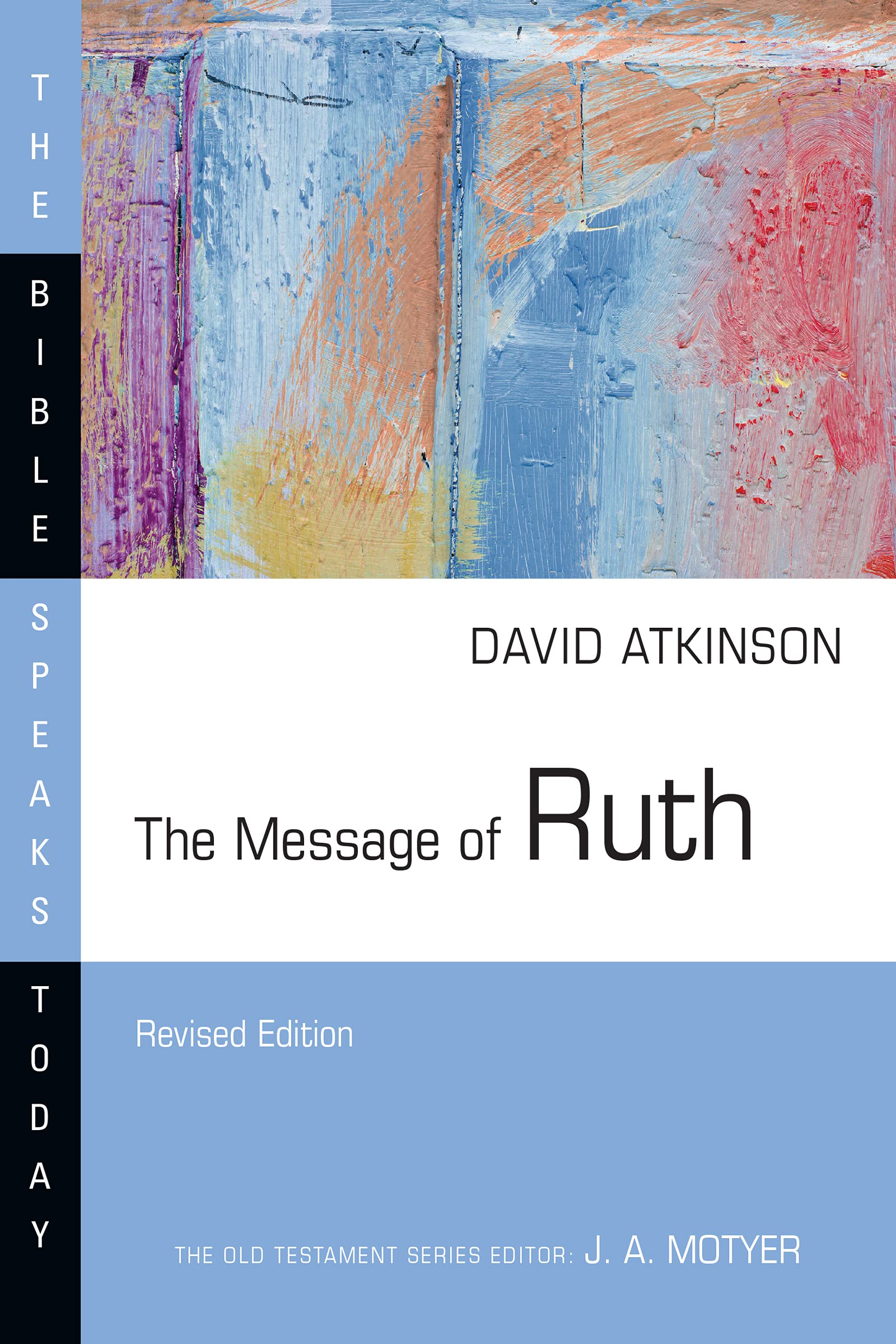
The book of Ruth tells the story of ordinary people facing ordinary events. We meet Naomi, who went through famine and bereavement but eventually won peace and security. We meet Ruth, a foreign woman from Moab who chose faithfulness to her mother-in-law, Naomi, and to Naomi's God. And we meet Boaz, who by marrying Ruth fitted into God's purposes for history. Both King David and Jesus are numbered among their descendants.
Theologically the story of Ruth is a story about God's providence, as David Atkinson demonstrates clearly in his passage-by-passage exposition. Part of the beloved Bible Speaks Today series, The Message of Ruth offers insightful, readable commentary on the biblical text and thought-provoking discussion of how its meaning relates to contemporary life.
Used by students and teachers around the world, The Bible Speaks Today commentaries are ideal for those studying or preaching the Bible and anyone who wants to delve deeper into the text. This beautifully redesigned edition has also been sensitively updated with more current references and the NRSV Bible text.
In the new New Testament volumes, the commentary on each section of the text is structured under three Context, Comment, and Theology. The goal is to explain the true meaning of the Bible and make its message plain.
King Lemuel once wrote “An excellent wife who can find? She is far more precious than jewels” (Proverbs 31:10). The same could be said of a Biblical commentary. I always have an idea of what I am looking for, but…who can find?
Atkinson’s commentary of Ruth is evangelical, devotional, non-technical (minimal Hebrew discussion) and offers loose summaries of verses. If this is what you are looking for great! If you want to hear multiple evangelical perspectives on a verse, technical discussion of Hebrew, or read extensive argumentation, this is not the book for you.
“Ruth certainly stands in marked contrast to the stern legalistic adherence to codes of law which takes the law of God outside the context of the covenant God and reduces a living faith to a cold moralism.”, p. 17