

What do you think?

The Experience of Samadhi: An In-depth Exploration of Buddhist Meditation
Dharma practice comprises a wide range of wise instructions and skillful means. As a result, meditators may be exposed to a diversity of approaches to the core teachings and the meditative path--and that can be confusing at times. In this clear and accessible exploration, Dharma teacher and longtime meditator Richard Shankman unravels the mix of differing, sometimes conflicting, views and traditional teachings on how samadhi (concentration) is understood and taught.
In part one, Richard Shankman explores the range of teachings and views about samadhi in the Theravada Pali tradition, examines different approaches, and considers how they can inform and enrich our meditation practice.
Part two consists of a series of interviews with prominent contemporary Theravada and Vipassana (Insight) Buddhist teachers. These discussions focus on the practical experience of samadhi, bringing the theoretical to life and offering a range of applications of the different meditation techniques.
In part one, Richard Shankman explores the range of teachings and views about samadhi in the Theravada Pali tradition, examines different approaches, and considers how they can inform and enrich our meditation practice.
Part two consists of a series of interviews with prominent contemporary Theravada and Vipassana (Insight) Buddhist teachers. These discussions focus on the practical experience of samadhi, bringing the theoretical to life and offering a range of applications of the different meditation techniques.
256 pages, Paperback
First published December 30, 2008
About the author
Richard Shankman
7 books27 followersRichard Shankman lives in Oakland, CA. He has been a meditator since 1970 and teaches classes and meditation retreats at dharma centers and groups nationally and internationally. Richard is the guiding teacher of the Metta Dharma Foundation , and co-founder of the Sati Center for Buddhist Studies and of Mindful Schools. He has sat many silent, intensive meditation retreats for periods up to eleven months long.
Richard has been active in bringing dharma and meditation practice into prisons, jails and drug rehabilitation programs in California.
Richard is the author of The Experience of Samadhi: An In-Depth Investigation of Buddhist Meditation and The Art and Skill of Buddhist Meditation: Mindfulness, Concentration and Insight.
Richard holds a BS degree in Electrical Engineering and an MA degree in Philosophy and Religion, with an emphasis in Buddhist Studies.
Richard has been active in bringing dharma and meditation practice into prisons, jails and drug rehabilitation programs in California.
Richard is the author of The Experience of Samadhi: An In-Depth Investigation of Buddhist Meditation and The Art and Skill of Buddhist Meditation: Mindfulness, Concentration and Insight.
Richard holds a BS degree in Electrical Engineering and an MA degree in Philosophy and Religion, with an emphasis in Buddhist Studies.
Ratings & Reviews
Friends & Following
Create a free account to discover what your friends think of this book!
Community Reviews
Displaying 1 - 18 of 18 reviews

March 29, 2010
This is a fabulous and much needed book! There is so much confusion regarding what samadhi is, how is it different from jhana, what level of concentration or jhana is required -- if at all -- for liberating insight etc. Shankman doesn't take sides here. He presents the teachings as found in the Pali Canon; then the teachings as found in the Visuddhimagga, the most famous and important commentary on Buddhist meditation. He compares their differences -- and there are many, and some are quite profound! For instance, the strict delineation between samatha and vipassana is not really to be found in the suttas; it's an 'innovation' of Buddhaghosa.
In the second part of the book, he interviews various well-known meditation teachers and again, without taking sides, allows them to present their views on samadhi and jhana. Suffice to say, there's much agreement, but also quite a LOT of disagreement! When read one after the other, it's like sitting in on a round-table and listening to each teacher pontificate on what they think the 'true' tradition is, while it become clear that what is more accurate is that there has been -- and will most certainly continue to be -- many traditions! You read, and decide for yourself what you think....
In the second part of the book, he interviews various well-known meditation teachers and again, without taking sides, allows them to present their views on samadhi and jhana. Suffice to say, there's much agreement, but also quite a LOT of disagreement! When read one after the other, it's like sitting in on a round-table and listening to each teacher pontificate on what they think the 'true' tradition is, while it become clear that what is more accurate is that there has been -- and will most certainly continue to be -- many traditions! You read, and decide for yourself what you think....

Read
April 14, 2015UPDATE. Quite recently, I encountered these lines, which, I believe, are of great import to the definition of the concept of samadhi.
"According to The Chronicle of Master Xuyun, the Master had three experiences of longdwelling
in samādhi—one for eighteen days, and two of nine days’ duration. Master Xuyun
has remarked that his eighteen-day samādhi experience on Zhungnan mountain (Dec. 1901-
Jan. 1902) at the age of 62 was not intentional, as one cannot enter samādhi with such an
intention; but neither was it unintentional. He used the Chan practice of ‘Observing the Head
Phrase’ to answer questions about how to enter samādhi, but he did not address the issue
of surviving long-dwelling experiences without sustenance"
in Abstract of "An Inquiry Into Master Xuyun’s Experiences of Long-dwelling in Samādhi"
by Huimin Bhikṣu
President, Dharma Drum Buddhist College
Professor, Taipei National University of the Arts

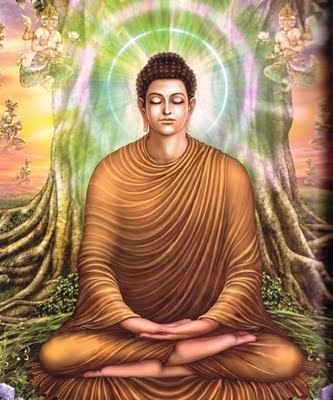
Gautama Buddha, after six years of seeking the truth and Jhana*, by fasting and meditation, found out he was feeble and emaciated. He concluded: that was not the right way (SELF-MORTIFICATION). He took compassion for his body and fed himself.
As to Jhana, he recalled he had had his first one--a blissful state-- while a child: near the rose-apple tree. Upon attaining Samadhi he endeavored to recollect past lives and destroy all sorts of taints.
The book offers a complete defining-approach to the concept of Samadhi (meaning: UNDISTRACTEDNESS), by recourse to the several texts of the various Buddhist traditions (18 distinct schools had appeared after Gautama's death) as well as a section of interviews the author had with some teachers of meditation.
Some of the meanings of samadhi discussed are "unification of mind" and "one pointedness of mind"; yet,somehow, as synonymous.
Of course, recourse is made to the scriptural writings of THERAVADA (meaning "School of the Elders") Buddhism, the preminent school that survived to our days. Those are the Pali Canon.
Jhāna (झान)
* from Wiki:"In Buddhism, it is a series of cultivated states of mind, which lead to "state of perfect equanimity and awareness (upekkhii-sati-piirisuddhl)."
"According to The Chronicle of Master Xuyun, the Master had three experiences of longdwelling
in samādhi—one for eighteen days, and two of nine days’ duration. Master Xuyun
has remarked that his eighteen-day samādhi experience on Zhungnan mountain (Dec. 1901-
Jan. 1902) at the age of 62 was not intentional, as one cannot enter samādhi with such an
intention; but neither was it unintentional. He used the Chan practice of ‘Observing the Head
Phrase’ to answer questions about how to enter samādhi, but he did not address the issue
of surviving long-dwelling experiences without sustenance"
in Abstract of "An Inquiry Into Master Xuyun’s Experiences of Long-dwelling in Samādhi"
by Huimin Bhikṣu
President, Dharma Drum Buddhist College
Professor, Taipei National University of the Arts
Gautama Buddha, after six years of seeking the truth and Jhana*, by fasting and meditation, found out he was feeble and emaciated. He concluded: that was not the right way (SELF-MORTIFICATION). He took compassion for his body and fed himself.
As to Jhana, he recalled he had had his first one--a blissful state-- while a child: near the rose-apple tree. Upon attaining Samadhi he endeavored to recollect past lives and destroy all sorts of taints.
The book offers a complete defining-approach to the concept of Samadhi (meaning: UNDISTRACTEDNESS), by recourse to the several texts of the various Buddhist traditions (18 distinct schools had appeared after Gautama's death) as well as a section of interviews the author had with some teachers of meditation.
Some of the meanings of samadhi discussed are "unification of mind" and "one pointedness of mind"; yet,somehow, as synonymous.
Of course, recourse is made to the scriptural writings of THERAVADA (meaning "School of the Elders") Buddhism, the preminent school that survived to our days. Those are the Pali Canon.
Jhāna (झान)
* from Wiki:"In Buddhism, it is a series of cultivated states of mind, which lead to "state of perfect equanimity and awareness (upekkhii-sati-piirisuddhl)."
November 25, 2022
Great book to contrast how people and American teacher are conceptualizing an ancient practice. I love a book well done like this. It also expose how American conceptualize the practice as a whole. The west shaping of buddhist practice will continue to be mainfested through the distoreted lens that they use. of course its not all the west, alot of the tradition in this book is an interaction of the east and pressure of mordernisation too.

June 1, 2015
A useful and insightful discussion on the practice of Jhana and concentration, chiefly in Theravada Buddhism, with contrasts between the Visuddhimagga (and commentarial approach to concentration cultivation) and the Pali Suttas. While this isn't a practical / how-to book, the discussion on some nuances around breath awareness, Jhana attainment, mindfulness and basic meditation practices is well worth the read. There are some interesting interview scripts with well known meditation (insight) teachers at the back, which bring out the wide range of approaches that can be taken in developing concentration and keen levels of directed awareness.

February 1, 2022
A wonderful book on Buddhist meditation.
Using the early recorded words of the Buddha, along with the Visuddhimagga, topics include:
-the difference between concentration and insight practice
-signs of progress in meditation
-detailed description of the jhanas
- basic Buddhist philosophy: four noble truths, the ten fetters, the four stages of enlightenment, etc.
-Can samadhi be reached with daily practice, or are long-retreats necessary for attainment?
Also at the end of the book, there is a Q&A with 8 current meditation teachers which I found very helpful. This is not a 'how-to' manual - the author has written another book with a more instructive nature for that (which I bought and plan on reading).
I enjoy reading the similarity and differences between Buddhist and Yogic meditation - and this book leads me to the belief that they are essentially talking about the same result reached in slightly different ways.
Using the early recorded words of the Buddha, along with the Visuddhimagga, topics include:
-the difference between concentration and insight practice
-signs of progress in meditation
-detailed description of the jhanas
- basic Buddhist philosophy: four noble truths, the ten fetters, the four stages of enlightenment, etc.
-Can samadhi be reached with daily practice, or are long-retreats necessary for attainment?
Also at the end of the book, there is a Q&A with 8 current meditation teachers which I found very helpful. This is not a 'how-to' manual - the author has written another book with a more instructive nature for that (which I bought and plan on reading).
I enjoy reading the similarity and differences between Buddhist and Yogic meditation - and this book leads me to the belief that they are essentially talking about the same result reached in slightly different ways.

May 18, 2021
In the loving memory of Bayezid Dastur, my beloved baba. Your books and words have always been with me and will continue to be.
"Even a single death can be an occasion for introspection," I recall the memory; I was just thirteen years old when baba began to instil such staunch beliefs in me. Which is now proving to be crucial. My first personal observation of nothingness was when my father died. It was like I was dying and then being reborn, and it's always like that presently.
The book is what the title says itself. A very depth annotation of buddhist perception of samādhi-concentration for the purpose of being ''one'' with ourselves. I think it's really realistic, and it's written in a basic English language that everyone can understand. You can also try meditating state of consciousness within yourself after reading some approaches from this book even if it is only for a few minutes.
April 15, 2015
Richard Shankman has done every sincere Buddhist meditator a huge and much appreciated service in researching and writing this book.
I have now read this book twice and cannot but thank Shankman for so clearly, and so without bias, outlining the various approaches to Samādhi and Jhāna.
Those who would like a clearer grasp on what Samādhi and Jhāna entails and how to realistically approach (and, hopefully achieve) them, should do themselves a huge favor and buy and read, and re-read, and re-read this book.
I have now read this book twice and cannot but thank Shankman for so clearly, and so without bias, outlining the various approaches to Samādhi and Jhāna.
Those who would like a clearer grasp on what Samādhi and Jhāna entails and how to realistically approach (and, hopefully achieve) them, should do themselves a huge favor and buy and read, and re-read, and re-read this book.

August 8, 2013
A roadmap to those who are interested in samatha meditation. Different beliefs, different textual sources.

October 21, 2022
Really good book for understanding the differences between jhanas as described in the suttas and those described in the Visuddhimagga, and the nuances of the jhana controversies. Instead of taking a side, Richard Shankman lays out the different perspectives for readers to understand and choose for themselves. This is not a meditation manual meant to teach you how to enter the jhanas, Brasington's book is much better suited for that. This comes off as more analytical and scholarly, for people who want a deep dive into samadhi, its source texts, and its importance in Buddhist meditation practice.
I really liked the second half of the book where he interviews well-known contemporary meditation teachers (Jack Kornfield, Sharon Salzberg, Bhante G, Leigh Brasington, Pa Auk Sayadaw, and others) about samadhi and the jhanas.
I really liked the second half of the book where he interviews well-known contemporary meditation teachers (Jack Kornfield, Sharon Salzberg, Bhante G, Leigh Brasington, Pa Auk Sayadaw, and others) about samadhi and the jhanas.
February 7, 2014
A unique book. The first half is devoted to the study of concentration meditation, samatha, jhana and samadhi, as described in the Pali suttas (sutras) and the commentarial work known as the Vissudhimagga (written in the 5th century).
This section of the book may come off as dry if one has only a passing familiarity with Buddhist concentration exercises, but really comes alive once one's practice begins to deepen. In short, the path is well known and has been since the time of the Buddha. These writings, commentaries and interpretations serve as useful guides and lend great insight to practice.
The second half of the book is composed of interviews with a number of modern meditation teachers, who almost universally (albeit tacitly) agree that there is some room for interpretation and personal preference in relating what the Buddha said and taught.
This section of the book may come off as dry if one has only a passing familiarity with Buddhist concentration exercises, but really comes alive once one's practice begins to deepen. In short, the path is well known and has been since the time of the Buddha. These writings, commentaries and interpretations serve as useful guides and lend great insight to practice.
The second half of the book is composed of interviews with a number of modern meditation teachers, who almost universally (albeit tacitly) agree that there is some room for interpretation and personal preference in relating what the Buddha said and taught.

April 15, 2009
Excellent book about Buddhist meditation. Here's my full review: http://www.elephantjournal.com/2009/0...
November 8, 2016
A very comprehensive book for general readers as well as enthusiastic meditators. The book is full of insights, particularly the second part interviews with contemporary leading teachers. Definitely worth to read again.

January 25, 2009
Boring.
March 14, 2010
struggled with the descriptions of the different levels of samadhi, but the practitioner stories at the end are great.

September 30, 2011
This book was very helpful in explaining a lot of words I've heard in dharma talks, but never quite understood. And I loved the interviews in the last half of the book.

August 4, 2013
An overview of different interpretations of what constitutes the concentration practice in Buddhism. I enjoyed the interviews section with teachers of concentration practices.

July 17, 2014
The book is definitely worth reading, but I'm not sure if it's worth owning. Part I is written in a dull style; Part II, however, is great.
December 11, 2014
So good I plan to read it again.
Displaying 1 - 18 of 18 reviews