

What do you think?

Armageddon: What the Bible Really Says about the End
A “humane, thoughtful, and intelligent” (The New York Times Book Review) bestselling Biblical scholar reveals why our popular understanding of the Apocalypse is all wrong—and why that matters.
You’ll find nearly everything the Bible says about the end in the Book of a mystifying prophecy filled with bizarre symbolism, violent imagery, mangled syntax, confounding contradictions, and very firm ideas about the horrors that await us all. But no matter what you think Revelation reveals—whether you read it as a literal description of what will soon come to pass, interpret it as a metaphorical expression of hope for those suffering now, or only recognize its highlights from pop culture—you’re almost certainly wrong.
In Armageddon, acclaimed New Testament authority Bart D. Ehrman delves into the most misunderstood—and possibly most dangerous—book of the Bible, on a “vigilantly persuasive” (The Washington Post) tour through three millennia of Judeo-Christian thinking about how our world will end. With wit and verve, he explores the alarming social and political consequences of expecting an imminent apocalypse, considers whether the message of Revelation may be at odds with the teachings of Jesus, and offers inspiring insight into how to live in the face of an uncertain future.
By turns hilarious, moving, troubling, and provocative, Armageddon is nothing short of revelatory in its account of what the Bible really says about the end.
You’ll find nearly everything the Bible says about the end in the Book of a mystifying prophecy filled with bizarre symbolism, violent imagery, mangled syntax, confounding contradictions, and very firm ideas about the horrors that await us all. But no matter what you think Revelation reveals—whether you read it as a literal description of what will soon come to pass, interpret it as a metaphorical expression of hope for those suffering now, or only recognize its highlights from pop culture—you’re almost certainly wrong.
In Armageddon, acclaimed New Testament authority Bart D. Ehrman delves into the most misunderstood—and possibly most dangerous—book of the Bible, on a “vigilantly persuasive” (The Washington Post) tour through three millennia of Judeo-Christian thinking about how our world will end. With wit and verve, he explores the alarming social and political consequences of expecting an imminent apocalypse, considers whether the message of Revelation may be at odds with the teachings of Jesus, and offers inspiring insight into how to live in the face of an uncertain future.
By turns hilarious, moving, troubling, and provocative, Armageddon is nothing short of revelatory in its account of what the Bible really says about the end.
266 pages, Kindle Edition
First published March 21, 2023
About the author
Bart D. Ehrman
69 books2,229 followersBart Denton Ehrman is an American New Testament scholar focusing on textual criticism of the New Testament, the historical Jesus, and the origins and development of early Christianity. He has written and edited 30 books, including three college textbooks. He has also authored six New York Times bestsellers. He is the James A. Gray Distinguished Professor of Religious Studies at the University of North Carolina at Chapel Hill.
Ratings & Reviews
Friends & Following
Create a free account to discover what your friends think of this book!
Community Reviews
Displaying 1 - 30 of 222 reviews

December 6, 2023
Apocalypse Now.

I think this would be a good one for anyone who has ever freaked out over the cryptic book of Revelation. Ehrman covers not only the book but also the history of The Rapture, and a lot of rather oddball cults that have sprung up due to misinterpretations of the passages (think: Branch Davidians) over the years.

I thought he made some great points about what an apocalyptic religious view of the world can do when mixed with politics concerning the environment. I have to say that the older I get, the more annoyed I get by this sort of thing. It's fine if you want to believe the world is coming to an end any day now so you think it makes it okay to just toss your trash into your front yard, but it's pushing my property value down.
Don't force the rest of us to drink your hillbilly toilet water.

However, I wasn't crazy about the way he seemed to use the gospels of the Bible as proof that "the real Jesus" wasn't bloodthirsty like John of Patmos. The Gospels were written decades later by whoknowswho, so it's not like we have the actual thoughts or teachings of a historical figure like Jesus. Perhaps I misunderstood what he was saying, and he meant that on the whole, the rest of the New Testament writings are more about forgiveness than crushing your enemies and giggling while they burn.

I thoroughly enjoyed his step-by-step deconstruction of a lot of the passages of Revelation using a historical lens. I think it would surprise most people to find that it really isn't all that spooky or complicated to get what the author is talking about if you stop taking it out of context.
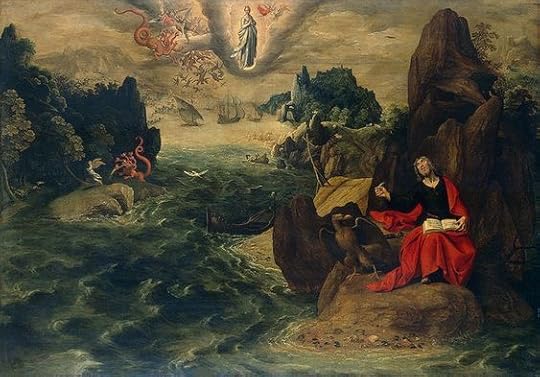
Bought it and re-listened to this in 2026.
Definitely worth a listen to, as it seems that a lot of people have been roped into this idea of "end times" en masse recently. I have personally had a disturbing number of acquaintances tell me how {insert terrible real or imagined issue here} has been predicted in Revelation as part of the trials and tribulations leading up to the End of Days.
It would be funny if I didn't know how frightened they truly are that some demonic antichrist is coming, and if they don't pay attention to the signs, they could end up stuck on Earth as the faithful are Raptured to the skies to sing songs to Jesus for all eternity.
I'm angry on their behalf.
They've been raised to believe this as a fact. Water is wet, fire is hot, Revelation is prophetic and true. And when people are afraid, they make bad decisions.
The fearmongers should be ashamed of themselves, profiting off of terrifying people and causing a trickle-down of chaos on a global scale due to political policies skewing wars, ecological & environmental issues made to seem unimportant, and halting scientific progress that doesn't agree with religious views.
I would say the answer is more education, but that also seems to be under attack in no small part due to a general populace that has this kind of nonsense as a baseline for truth, allowing the wild conspiracy theories out there to run amok.
Highly Recommended.
I think this would be a good one for anyone who has ever freaked out over the cryptic book of Revelation. Ehrman covers not only the book but also the history of The Rapture, and a lot of rather oddball cults that have sprung up due to misinterpretations of the passages (think: Branch Davidians) over the years.
I thought he made some great points about what an apocalyptic religious view of the world can do when mixed with politics concerning the environment. I have to say that the older I get, the more annoyed I get by this sort of thing. It's fine if you want to believe the world is coming to an end any day now so you think it makes it okay to just toss your trash into your front yard, but it's pushing my property value down.
Don't force the rest of us to drink your hillbilly toilet water.
However, I wasn't crazy about the way he seemed to use the gospels of the Bible as proof that "the real Jesus" wasn't bloodthirsty like John of Patmos. The Gospels were written decades later by whoknowswho, so it's not like we have the actual thoughts or teachings of a historical figure like Jesus. Perhaps I misunderstood what he was saying, and he meant that on the whole, the rest of the New Testament writings are more about forgiveness than crushing your enemies and giggling while they burn.
I thoroughly enjoyed his step-by-step deconstruction of a lot of the passages of Revelation using a historical lens. I think it would surprise most people to find that it really isn't all that spooky or complicated to get what the author is talking about if you stop taking it out of context.
Bought it and re-listened to this in 2026.
Definitely worth a listen to, as it seems that a lot of people have been roped into this idea of "end times" en masse recently. I have personally had a disturbing number of acquaintances tell me how {insert terrible real or imagined issue here} has been predicted in Revelation as part of the trials and tribulations leading up to the End of Days.
It would be funny if I didn't know how frightened they truly are that some demonic antichrist is coming, and if they don't pay attention to the signs, they could end up stuck on Earth as the faithful are Raptured to the skies to sing songs to Jesus for all eternity.
I'm angry on their behalf.
They've been raised to believe this as a fact. Water is wet, fire is hot, Revelation is prophetic and true. And when people are afraid, they make bad decisions.
The fearmongers should be ashamed of themselves, profiting off of terrifying people and causing a trickle-down of chaos on a global scale due to political policies skewing wars, ecological & environmental issues made to seem unimportant, and halting scientific progress that doesn't agree with religious views.
I would say the answer is more education, but that also seems to be under attack in no small part due to a general populace that has this kind of nonsense as a baseline for truth, allowing the wild conspiracy theories out there to run amok.
Highly Recommended.

March 25, 2023
This a highly accessible, erudite and relevant book, maybe my favorite of the author yet. When the audio finished just now, my first instinct was to re-listen to it immediately.
Bart D Ehrman takes on the last book of the bible, Revelation, and picks it apart. He shows how “the rapture” - followers ascending into heaven to meet Jesus upon his return - isn’t really in it. He explains how the murky symbolism would have been easily understood in the century it was written, and that it was written for that audience and not anyone in the future. He finishes by showing how unlike the wrathful, materialistic Jesus of Revelation bears little to no semblance to the Jesus of the gospels.
Ehrman also does a great job of showing how the book of “revelation” is affecting the world today. The state of Israel’s existence is vital for the end of days to come, and thus the American support for the state is largely evangelical rather than Jewish. He shows how a belief in Armageddon makes Christians less likely to take long term interest in preserving the earth and climate. Plus the havoc regularly created by various doomsday prophets.
I had an uncle who so fervently believed in the return of Christ that he would not marry- what was the point? I myself refused to accept my father’s view that animals had no souls. Many years after becoming an atheist, I am still trying to understand the indoctrination of my childhood and how millions upon millions still operate under it. Bart Ehrman is fantastic for this, I highly recommend him regardless of whether you have faith or not. He truly is a biblical scholar of the first order.
Bart D Ehrman takes on the last book of the bible, Revelation, and picks it apart. He shows how “the rapture” - followers ascending into heaven to meet Jesus upon his return - isn’t really in it. He explains how the murky symbolism would have been easily understood in the century it was written, and that it was written for that audience and not anyone in the future. He finishes by showing how unlike the wrathful, materialistic Jesus of Revelation bears little to no semblance to the Jesus of the gospels.
Ehrman also does a great job of showing how the book of “revelation” is affecting the world today. The state of Israel’s existence is vital for the end of days to come, and thus the American support for the state is largely evangelical rather than Jewish. He shows how a belief in Armageddon makes Christians less likely to take long term interest in preserving the earth and climate. Plus the havoc regularly created by various doomsday prophets.
I had an uncle who so fervently believed in the return of Christ that he would not marry- what was the point? I myself refused to accept my father’s view that animals had no souls. Many years after becoming an atheist, I am still trying to understand the indoctrination of my childhood and how millions upon millions still operate under it. Bart Ehrman is fantastic for this, I highly recommend him regardless of whether you have faith or not. He truly is a biblical scholar of the first order.

December 16, 2023
It will take me a few days, if not months, to finish this review., I want to add my own thoughts. Then I need to reread this book.
Bart ehrman claims that Jesus was a pacifist. Yet There are opposite views of what he taught in the bible. He claims that the gospels were tampered with. If not, I am going to make the claim that Jesus had a multiple personality disorder.
I used to not question the bible. But after leaving the Jehovah's witnesses, I questioned it a lot. It was then that I tried To reread the gospels, but I found them to be judgmental. Years later I found a book on Buddhism. This is when I learned that Buddha's life was much like Jesus's. Even the parables were the same. I talked to my professor of religious studies, and she said that Jesus had traveled to other lands. Then when I got into meditation, I read the book of John and realized that it was a mystical book. It was not the same as I had remembered it.
I finished the book Minnie of the early Christians did not accept the book of Revelation. They felt that the Jesus in revelations was violent, unlike the real Jesus. But eventually this book found its way into the bible. The only other important thing that I learned in this book, at least for me, is that the god of the old testament was raftful. There is almost no talk of his being a god of love. In the only place I ever remember reading that god is love was in the book of John and in the book of Jude
Bart ehrman claims that Jesus was a pacifist. Yet There are opposite views of what he taught in the bible. He claims that the gospels were tampered with. If not, I am going to make the claim that Jesus had a multiple personality disorder.
I used to not question the bible. But after leaving the Jehovah's witnesses, I questioned it a lot. It was then that I tried To reread the gospels, but I found them to be judgmental. Years later I found a book on Buddhism. This is when I learned that Buddha's life was much like Jesus's. Even the parables were the same. I talked to my professor of religious studies, and she said that Jesus had traveled to other lands. Then when I got into meditation, I read the book of John and realized that it was a mystical book. It was not the same as I had remembered it.
I finished the book Minnie of the early Christians did not accept the book of Revelation. They felt that the Jesus in revelations was violent, unlike the real Jesus. But eventually this book found its way into the bible. The only other important thing that I learned in this book, at least for me, is that the god of the old testament was raftful. There is almost no talk of his being a god of love. In the only place I ever remember reading that god is love was in the book of John and in the book of Jude

December 20, 2022
The Apocalypse of John (Revelation) is often interpreted as the herald of Armageddon and the second coming of the Christ. As such, it’s extensive symbolism has been plumbed and twisted into prophetic visions that The End is Coming and the Final Judgement is at hand … again. If only we could all agree on exactly what John is talking about, maybe we can get it right this time. So when I found a book by noted New Testament scholar Bart Ehrman that attempts to explain it all, I was very intrigued … and I was not disappointed. Ehrman was concise and clear in his well organized and very accessible study of the Book of Revelation. I should probably confess at this point that I am an avowed a-millennialist so Ehrman’s scholastic refutation of millennialism was pretty easy for me to accept.
What was new for me … and it probably should not have been … was the now obvious dichotomy between the Jesus of the Gospel and the Christ of the Final Judgement that was a lot starker than I was expecting. More over, I did not connect real-life consequences of a perpetual belief that the end was coming or even the psychological impact of the extremely materialistic and violent imagery in John’s vision. Thankfully Ehrman does an excellent job arguing that John was projecting many of his own hopes and dreams of his eternal reward for the great suffering he and his community endured at the hands of a very brutal Roman Empire when the “wrathful Lamb of the Apocalypse” sweeps it all away. I believe that I now have a much better understanding of this difficult scripture and as well as how to read it in the light of the Gospel.
1. The End is Near
2. The Most Mystifying Book of the Bible
3. A History of False Predictions
4. Real-Life Consequences of the Imminent Apocalypse
5. How to Read the Books of Revelation
6. The Lamb Becomes a Lion: Violence in the Book of Revelation
7. The Ideology of Dominance: Wealth and Power in Revelation
8. The Apocalypse of John and the Gospel of Jesus
I was given this free advance reader copy (ARC) ebook at my request and have voluntarily left this review.
#Armageddon #NetGalley.
What was new for me … and it probably should not have been … was the now obvious dichotomy between the Jesus of the Gospel and the Christ of the Final Judgement that was a lot starker than I was expecting. More over, I did not connect real-life consequences of a perpetual belief that the end was coming or even the psychological impact of the extremely materialistic and violent imagery in John’s vision. Thankfully Ehrman does an excellent job arguing that John was projecting many of his own hopes and dreams of his eternal reward for the great suffering he and his community endured at the hands of a very brutal Roman Empire when the “wrathful Lamb of the Apocalypse” sweeps it all away. I believe that I now have a much better understanding of this difficult scripture and as well as how to read it in the light of the Gospel.
1. The End is Near
2. The Most Mystifying Book of the Bible
3. A History of False Predictions
4. Real-Life Consequences of the Imminent Apocalypse
5. How to Read the Books of Revelation
6. The Lamb Becomes a Lion: Violence in the Book of Revelation
7. The Ideology of Dominance: Wealth and Power in Revelation
8. The Apocalypse of John and the Gospel of Jesus
I was given this free advance reader copy (ARC) ebook at my request and have voluntarily left this review.
#Armageddon #NetGalley.

April 10, 2023
I'm a big fan of Bart Ehrman's writing and always glad to see a new title come out. I'll acknowledge that the quality of his books can vary, but they're always interesting—and Armageddon is among the very best.
In Armageddon, Ehrman sets out to explore the New Testament book of Revelations from multiple perspectives—
• The time in which the book was written and how it would likely have been originally understood
• Ways the book has been understood in subsequent historical periods
• The ways in which Revelations is most often understood within fundamentalist communities today
• The values espoused in Revelations
• A comparison with Revelations' values and those expressed in the gospels
• The places where contemporary culture and politics have been affected by Revelations
This is absolutely fascinating material. Ehrman talks readers through it clearly, with plenty of documentation, and a voice that never drifts into a tedious scholasticism. He closes the book with a brief final chapter that challenges readers to acknowledge the differences between the gospels and Revelations and to ponder which version of Christianity (if any) they currently practice.
Whether or not you identify as Christian (I don't), Armageddon offers a powerful read about about the values of our faiths and the consequences of those values.
I received a free electronic review copy of this title from the publisher via NetGalley; the opinions are my own.
In Armageddon, Ehrman sets out to explore the New Testament book of Revelations from multiple perspectives—
• The time in which the book was written and how it would likely have been originally understood
• Ways the book has been understood in subsequent historical periods
• The ways in which Revelations is most often understood within fundamentalist communities today
• The values espoused in Revelations
• A comparison with Revelations' values and those expressed in the gospels
• The places where contemporary culture and politics have been affected by Revelations
This is absolutely fascinating material. Ehrman talks readers through it clearly, with plenty of documentation, and a voice that never drifts into a tedious scholasticism. He closes the book with a brief final chapter that challenges readers to acknowledge the differences between the gospels and Revelations and to ponder which version of Christianity (if any) they currently practice.
Whether or not you identify as Christian (I don't), Armageddon offers a powerful read about about the values of our faiths and the consequences of those values.
I received a free electronic review copy of this title from the publisher via NetGalley; the opinions are my own.

August 3, 2024
This book provides a history and discussion of interpretations and understandings of the last book in the New Testament, Revelation. There are two general approaches to the book; (1) It is predicting the future end of the earth, and (2) It is a historical book intended to offer comfort to persecuted Christians. Bart Ehrman has the following response to these two approaches:
I have held both these views at different times in my life, and I now think they are both wrong.Before explaining his current view regarding Revelation the book covers the history of apocalyptic literature, varied interpretations of Revelation, and failed predictions for the end of the world. He provides a summary passthrough of the book’s contents with special note being made of its emphasis on violence, retribution, and power. Then he contrast’s the book’s message with that of Jesus in the Sermon on the Mount and related teachings.
When you get to the Book of Revelation, there’s nothing about "giving and service." It’s about destroying the enemy. Forget "Turn the other cheek." Forget "Love your enemies." You hate your enemies and you hate what they do and you punish them.In essence Bart Ehrman is saying that the book of Revelation is written in direct contradiction to the essence of the Christian message and that its inclusion in the New Testament was a mistake. During the development of the consensus regarding what to include in the canon there were a number of theologians at the time who opposed its inclusion. As a matter of fact the book has never been widely accepted in the Eastern Orthodox Church—one reason is that they read it in the original Greek and the book's clumsy bad grammar is apparent to those fluent in Greek:
The author is not at all sophisticated in his use of the language. Quite the contrary, his Greek is the worst of the entire New Testament. That itself is a rather low bar: the New Testament writings as a whole were notorious among the literati in the Roman world for their stylistic deficiencies. ... He is often clumsy and many times simply makes grammatical mistakes.Ehrman goes on to note that interpretations of Revelation can partly explain the apparent apathy regarding global warming issues among conservative evangelical Christians. It can even lead to support of questionable international policies such as Jewish settlements in the West Bank and even suggestions that the New Jewish Temple must be built on the Temple Mount.

February 11, 2023
Armageddon is a book that provides insight into the Book of Revelation from a more theological historian perspective. I have always found Revelation quite confusing. After reading Bert Ehrman's book, I now understand that my confusion was warranted. It isn't clear to most people who read it which makes it easy for it to be twisted by those who exploit it as a tool of fear of the future. Ehrman does an excellent job of utilizing the historical social context at the time Revelation was written so the reader can gain a better understanding as to what purpose John's writing was meant to convey. I enjoyed this book and will be looking forward to reading more of Ehrman's work in the future.
I received an advanced copy of this book in exchange for an honest review
I received an advanced copy of this book in exchange for an honest review

March 25, 2023
There are several great nuggets of historical information in this book, and I appreciate Ehrman’s emphasis on the dangers of reading Revelation outside of its original context. That being said, I’m disappointed (albeit unsurprised) with Ehrman’s treatment of the actual book. His argument that the wrath and Justice of God in Revelation is contrary to the teachings of “the Jesus of the gospels” fails to take into consideration the number of times Jesus preached warnings, condemnations, judgment, and hell. It was Jesus Who declared He would be the Judge of humanity, and condemn those who have committed evil (John 5:25-30). Additionally, Ehrman’s survey on God’s wrath in the OT and NT was highly biased, ignoring the countless passages emphasizing God’s love, patience, compassion, and mercy. It also failed to take into consideration the historical background for why Israel was to drive out the Canaanites, as though the Canaanites were kind, neighborly people who were treated unjustly by the brutal Israelites. I was surprised by Ehrman’s selective reading of Hosea, a book which highlights God’s commitment and despair over His people’s faithlessness. Those who only have a cursory understanding of Scripture may be swayed by Ehrman’s selective style of reading and interpretation which is why I’d strongly caution anyone from reading this book

March 26, 2023
Really insightful book. I've long felt that the Revelation didn't really fit in the New Testament canon, not even a little bit, until I learned about how U.S. slaves frequently found a lot of hope in the image of the new Jerusalem presented therein.
Of course, if it hadn't been that, one hopes something else would have been equally resonant in such a horrid life of oppression and abuse. After all, Revelation is a book of violent vengeance and nothing less. Jesus willingly gave his life for the good of all, yes? Then why would Jesus have any use for vengeance? Nonsense. It doesn't belong, plain and simple. It was a deluded man's twisted vision and we are under no obligation to share in his terrifying fantasy.
This book has really helped me to solidify some of my thinking on this. Highly recommended if you're trying to reconcile belief in a merciful God with some of the uglier stories in the Bible.
Added thought: After reading some of the other reviews of this book, where people are trying to dissuade people from reading this, let me point out that this is more fear-based than anything else. If you read this, you may or may not have a change of heart or mind. But you won't know unless you actually read it.
Of course, if it hadn't been that, one hopes something else would have been equally resonant in such a horrid life of oppression and abuse. After all, Revelation is a book of violent vengeance and nothing less. Jesus willingly gave his life for the good of all, yes? Then why would Jesus have any use for vengeance? Nonsense. It doesn't belong, plain and simple. It was a deluded man's twisted vision and we are under no obligation to share in his terrifying fantasy.
This book has really helped me to solidify some of my thinking on this. Highly recommended if you're trying to reconcile belief in a merciful God with some of the uglier stories in the Bible.
Added thought: After reading some of the other reviews of this book, where people are trying to dissuade people from reading this, let me point out that this is more fear-based than anything else. If you read this, you may or may not have a change of heart or mind. But you won't know unless you actually read it.

September 24, 2024
Alternately fascinating and sloggy, this one took a while. My wife's Bible study group* is taking a nine-month deep dive into Revelation, and so I thought I'd read this one so that we had something to talk about, or so I could at least annoy her with conflicting interpretations 😃.
The book includes a general introduction to the writing and meaning of Revelation along with a lengthy history of its many false interpretations and their real-life consequences—from Zionism to Waco and the "Branch Davidians" on through current day climate denial, (or at least inaction, since "why bother, when we're all going to be raptured soon anyway?"). Ehrman is at his most convincing in explaining how Revelation was specifically written for Christians at the time (rather than as a prophetic book aimed at future generations of Christians 2,000 years later), and in his strong belief that the "John" of Revelation was NOT the same "John" of the eponymous Gospel. It was also interesting to learn more about how the actual Bible came to be from all those disparate writings, with books coming and going, and this final book not becoming part of "canon" for nearly 400 years.
That said, I found him less convincing when espousing his own interpretation of the book, and his admittedly well-argued (if likely blasphemous to today's Evangelicals) conclusion that it doesn't really belong in the Bible at all.
So...interesting read (3+ rounded up), but likely for a limited audience. Turns out Erhman is also the author of Misquoting Jesus: The Story Behind Who Changed the Bible and Why, which I at one point had on my TBR list but for whatever reason eventually removed, (probably falling victim to the "too many books, too little time" rule). Anyway—apparently this boy's a troublemaker!!
* The international, interdenominational Bible Study Fellowship—BSF—based out of San Antonio. Great organization, but requires too much homework, so have left that to my beloved where she serves as both a student and teacher, while I go out and make the money 😉
The book includes a general introduction to the writing and meaning of Revelation along with a lengthy history of its many false interpretations and their real-life consequences—from Zionism to Waco and the "Branch Davidians" on through current day climate denial, (or at least inaction, since "why bother, when we're all going to be raptured soon anyway?"). Ehrman is at his most convincing in explaining how Revelation was specifically written for Christians at the time (rather than as a prophetic book aimed at future generations of Christians 2,000 years later), and in his strong belief that the "John" of Revelation was NOT the same "John" of the eponymous Gospel. It was also interesting to learn more about how the actual Bible came to be from all those disparate writings, with books coming and going, and this final book not becoming part of "canon" for nearly 400 years.
That said, I found him less convincing when espousing his own interpretation of the book, and his admittedly well-argued (if likely blasphemous to today's Evangelicals) conclusion that it doesn't really belong in the Bible at all.
So...interesting read (3+ rounded up), but likely for a limited audience. Turns out Erhman is also the author of Misquoting Jesus: The Story Behind Who Changed the Bible and Why, which I at one point had on my TBR list but for whatever reason eventually removed, (probably falling victim to the "too many books, too little time" rule). Anyway—apparently this boy's a troublemaker!!
* The international, interdenominational Bible Study Fellowship—BSF—based out of San Antonio. Great organization, but requires too much homework, so have left that to my beloved where she serves as both a student and teacher, while I go out and make the money 😉

September 5, 2023
Solid reading. The final analysis is one we need to all take to heart: the vengeful Jesus, dripping in gold and blood, of the fever dream of John of Patmos, is not the Jesus we follow. Amen.

March 25, 2023
This was a pretty good book. I appreciate how in the last several books written by Ehrman, we simply have a historian and biblical scholar who is writing on topics that interest him, quite unlike “Jesus, Interrupted” which seemed to have an overt antichristian agenda. He is perfectly fine with acknowledging the good and positive things Christianity gave society, but he is also under no obligation to avoid pointing out the bad. I look forward to reading his particular perspective on things since it no longer seems he is someone who is simply bent on tearing down, nor is he biased like an evangelical whose faith mandates they use Procrustean scholarship.
As a Christian, I really wish this contested book of Revelation wasn’t accepted into the canon. Once history proved its prophetic message was wrong (John repeatedly stressed it was all then to occur), its unmoored imagery was readapted by every generation. It has caused far more harm than good. It truly is a dangerous book and if there is indeed a devil, it would be right to call it demonic—for it has inspired people to steal, kill and destroy and presents a Jesus who is arguably worse than the devil. Bert points out how the revelator's view of Jesus is the antithesis of Jesus as presented in the gospels. It really seems the revelator is like, you thought Jesus taught sacrificial love, service, love of enemies, conquering evil with good, etc… but you are wrong. Jesus will one-up Caesar in violence; the cruelty of the Roman empire will be like a candle in the face of the Sun (Jesus’ brutality). Those in the Old Testament were right, the kingdom of God only comes through violence, force, torture, and subjugation by a God who absolutely glories in gore, pointless suffering, and bloodshed.
If I have to teach the book to those who believe its content is divinely inspired, then it does seem that Craig R. Koester’s literary approach is best, as it tries to view the book as contrasting the non-violent and sacrificial lamb with the violent and dominant beast (The Roman Empire). Taking this lens, one can say that the gory and violent visions are given to show how ineffective they’d be, and thus, show why God won’t use the methods of Rome to bring forth the Kingdom of God. Possibly the author uses violent war imagery to speak of truth conquering lies and even the lake of fire represents the burning up of the old man, and afterward, there is universal salvation of all. Regardless of how strained these interpretations are, they are the only way to redeem what is otherwise a thoroughly horrific, unchristlike, evil, and violent book, that is rooted in murderous envy and hatred, revealing a lust for revenge, a longing to inflict suffering, torture, and death on men, women, and children; and gleeful anticipation of a worldwide genocide, in which aftermath, he and a few others would obtain power, wealth and dominion for themselves in the new Jerusalem.
Sadly, while I can make Koester’s approach “work” for the most part, I must agree with Bert, that ultimately it seems forced, too at odds with the continual tone of the book. Revelation is the story of a slaughtered lamb coming back for revenge and like a horror movie, trampling people like grapes until their blood rises so high that grown women would drown in the gore.
I suppose one upside is the book shows what subjugated people can long for. One effect of empires like Rome is that they sparked envy in those they had dominion over. Evil tends to beget evil. When wronged, as Revelation shows, people can justify and look forward to the worst conceivable evil. Because of all the Christians who embraced the book, it shows that in the name of “justice,” all injustice can be justified. For example, John the Revelator hated a woman who seemed to be in agreement with Paul on the eating meat offered to idols issue, so John claims Jesus would have this woman raped and then will murder her babies. This is the kind of thing that flows from a sick, twisted, and dark mind, yet Christians, in accepting this book as part of the canon must confess this is holy, right, and good. I’ve learned, Jesus’ message and life presented in other books of the bible, are undone, nullified, and voided by Revelation. None of his life means anything, because, ultimately, Revelation is the trump card. Revelation comes to the rescue since it shows Jesus is even worse than the most violent portraits of YHWH in the bible—while the God of the old is different than the God of the new, it’s not in being less violent but MORE violent. Marcion was wrong, glory be! Calvinists just long to think of the evilest tyrants conceivable, blow them up to divine proportions, and Revelation allows them to attribute absolute, amoral, arbitrary tyrannical brutality to Jesus! I mean what is not to like? Yeah, I actually can’t understand why this is so important for Calvinists and inerrantist to do. Why do they want and fight so hard for a repugnant, digesting, and demonic view of God? I just don’t get it.
As a Christian, I really wish this contested book of Revelation wasn’t accepted into the canon. Once history proved its prophetic message was wrong (John repeatedly stressed it was all then to occur), its unmoored imagery was readapted by every generation. It has caused far more harm than good. It truly is a dangerous book and if there is indeed a devil, it would be right to call it demonic—for it has inspired people to steal, kill and destroy and presents a Jesus who is arguably worse than the devil. Bert points out how the revelator's view of Jesus is the antithesis of Jesus as presented in the gospels. It really seems the revelator is like, you thought Jesus taught sacrificial love, service, love of enemies, conquering evil with good, etc… but you are wrong. Jesus will one-up Caesar in violence; the cruelty of the Roman empire will be like a candle in the face of the Sun (Jesus’ brutality). Those in the Old Testament were right, the kingdom of God only comes through violence, force, torture, and subjugation by a God who absolutely glories in gore, pointless suffering, and bloodshed.
If I have to teach the book to those who believe its content is divinely inspired, then it does seem that Craig R. Koester’s literary approach is best, as it tries to view the book as contrasting the non-violent and sacrificial lamb with the violent and dominant beast (The Roman Empire). Taking this lens, one can say that the gory and violent visions are given to show how ineffective they’d be, and thus, show why God won’t use the methods of Rome to bring forth the Kingdom of God. Possibly the author uses violent war imagery to speak of truth conquering lies and even the lake of fire represents the burning up of the old man, and afterward, there is universal salvation of all. Regardless of how strained these interpretations are, they are the only way to redeem what is otherwise a thoroughly horrific, unchristlike, evil, and violent book, that is rooted in murderous envy and hatred, revealing a lust for revenge, a longing to inflict suffering, torture, and death on men, women, and children; and gleeful anticipation of a worldwide genocide, in which aftermath, he and a few others would obtain power, wealth and dominion for themselves in the new Jerusalem.
Sadly, while I can make Koester’s approach “work” for the most part, I must agree with Bert, that ultimately it seems forced, too at odds with the continual tone of the book. Revelation is the story of a slaughtered lamb coming back for revenge and like a horror movie, trampling people like grapes until their blood rises so high that grown women would drown in the gore.
I suppose one upside is the book shows what subjugated people can long for. One effect of empires like Rome is that they sparked envy in those they had dominion over. Evil tends to beget evil. When wronged, as Revelation shows, people can justify and look forward to the worst conceivable evil. Because of all the Christians who embraced the book, it shows that in the name of “justice,” all injustice can be justified. For example, John the Revelator hated a woman who seemed to be in agreement with Paul on the eating meat offered to idols issue, so John claims Jesus would have this woman raped and then will murder her babies. This is the kind of thing that flows from a sick, twisted, and dark mind, yet Christians, in accepting this book as part of the canon must confess this is holy, right, and good. I’ve learned, Jesus’ message and life presented in other books of the bible, are undone, nullified, and voided by Revelation. None of his life means anything, because, ultimately, Revelation is the trump card. Revelation comes to the rescue since it shows Jesus is even worse than the most violent portraits of YHWH in the bible—while the God of the old is different than the God of the new, it’s not in being less violent but MORE violent. Marcion was wrong, glory be! Calvinists just long to think of the evilest tyrants conceivable, blow them up to divine proportions, and Revelation allows them to attribute absolute, amoral, arbitrary tyrannical brutality to Jesus! I mean what is not to like? Yeah, I actually can’t understand why this is so important for Calvinists and inerrantist to do. Why do they want and fight so hard for a repugnant, digesting, and demonic view of God? I just don’t get it.

April 22, 2023
7.57 hours on Audible. Second reading. Physically read two years ago. Excellent scholarship and thoroughly enjoyed.

December 7, 2023
So almost everything I’ve been lectured at—by good Christian friends—about the Apocalypse is not true. Excellent book about Armageddon by New Testament scholar, Bart Ehrman, Ph.D.

July 16, 2023
3.75 I really picked this book up because it was the closest I could find to what I really wanted: a book about why humans have been convinced we are living in the end times seemingly since we have had consciousness. This book is obviously focused on end time beliefs of Christianity specifically, whereas I ideally would like something that covers humanity more broadly. As a result my favorite parts were where it talks about how people reasoned that their time period was the prophesied end time (tons of funny numerology involved and interpretations), and the part I was least interested in was the minute breakdown of specific passages about what would happen. However, even those parts were pretty interesting and all the discussion around translation and interpretation were really interesting too.
December 2, 2023
As usual, Bart speaks with far more certainty about his interpretation of scripture than other believing and non-believing biblical critics. He approaches his critical interpretation with the same fundamentalist fervor as he did when he was a believing Christian.
A historical deconstruction of scripture can be interesting. And while I agree that the historicity of scripture is an open question, I view that as beside the point. The purpose of scripture is to facilitate revelation. Its power is in its ability to connect the reader to the divine.
A historical deconstruction of scripture can be interesting. And while I agree that the historicity of scripture is an open question, I view that as beside the point. The purpose of scripture is to facilitate revelation. Its power is in its ability to connect the reader to the divine.

May 22, 2023
The ending kinda confused me. I shouldn't have read this because this made me confused on what I believe and I don't think anyone can answer the questions that have come up.
April 25, 2024
Excellent dissection of the least read and most bewildering of all the New Testament books. Very insightful. The author does a very good job of explaining the text without overly inserting his own personal viewpoint.

January 25, 2024
4/5
"The invariable thesis of all fundamentalist books on Revelation - that the Bible was not written for its own time but for ours - encounters a rather obvious problem: it would mean that the biblical authors who address specific readers did not expect them to have any clue what they were talking about."
In this book, Ehrman picks apart the book of Revelation to show how fundamentalist interpretations of the book (i.e., the "rapture") aren't actually reflected in the book itself. He explains the wild symbolism throughout Revelation as it would have been understood by an early Christian audience, using this explanation to show that the author of Revelation, John of Patmos, wrote for people in a specific time and place and not to people in the future. Ehrman also discusses how John's message in Revelation doesn't mesh with the message of Jesus.
Ehrman takes time to show how people's belief in these apocalypse theories has a significant effect on the world we live in, discussing everything from historical "doomsday" groups like the Millerites to more modern, sometimes violent, movements like the Branch Davidians. He shows how, in the fundamentalist worldview, the existence of the state of Israel is vital for the "end of days" to come, explaining why the American support of the state is largely evangelical rather than Jewish. He also explains how a belief in a coming Armageddon makes fundamentalists less likely to take long-term interest in preserving the earth and climate.
"John of Patmos is certainly a committed Christian....But is he the kind of Christian that Jesus would recognize?"
The book closes with a discussion about how the view of the end times in Revelation doesn't line up with the teachings of Jesus, and how the book mainly reflects John of Patmos's desire for the divine punishment of Christian persecutors. Ehrman challenges the reader to acknowledge these differences and reflect on which version of Christianity (if any) they currently practice.
I found Ehrman's thoughts very interesting and, while his discussion could be repetitive at times, it never became tiresome. While this book won't satisfy anyone seeking a definitive, concrete interpretation of the end times, it serves as a great guide to the biblical scholarship and historical context surrounding apocalyptic thought.
"The invariable thesis of all fundamentalist books on Revelation - that the Bible was not written for its own time but for ours - encounters a rather obvious problem: it would mean that the biblical authors who address specific readers did not expect them to have any clue what they were talking about."
In this book, Ehrman picks apart the book of Revelation to show how fundamentalist interpretations of the book (i.e., the "rapture") aren't actually reflected in the book itself. He explains the wild symbolism throughout Revelation as it would have been understood by an early Christian audience, using this explanation to show that the author of Revelation, John of Patmos, wrote for people in a specific time and place and not to people in the future. Ehrman also discusses how John's message in Revelation doesn't mesh with the message of Jesus.
Ehrman takes time to show how people's belief in these apocalypse theories has a significant effect on the world we live in, discussing everything from historical "doomsday" groups like the Millerites to more modern, sometimes violent, movements like the Branch Davidians. He shows how, in the fundamentalist worldview, the existence of the state of Israel is vital for the "end of days" to come, explaining why the American support of the state is largely evangelical rather than Jewish. He also explains how a belief in a coming Armageddon makes fundamentalists less likely to take long-term interest in preserving the earth and climate.
"John of Patmos is certainly a committed Christian....But is he the kind of Christian that Jesus would recognize?"
The book closes with a discussion about how the view of the end times in Revelation doesn't line up with the teachings of Jesus, and how the book mainly reflects John of Patmos's desire for the divine punishment of Christian persecutors. Ehrman challenges the reader to acknowledge these differences and reflect on which version of Christianity (if any) they currently practice.
I found Ehrman's thoughts very interesting and, while his discussion could be repetitive at times, it never became tiresome. While this book won't satisfy anyone seeking a definitive, concrete interpretation of the end times, it serves as a great guide to the biblical scholarship and historical context surrounding apocalyptic thought.

June 11, 2024
I liked this book, but I was also sort of annoyed, as I shall explain below.
What I liked, I already knew a lot of what the Professor said, about Nero and the 666, the stupidity of most churches who teach that revelation is a map for the end of the world, the horns and so on.
I liked Ehrman totally quoting that pathetic, stupid moron John MacArthur on why we must continue, or can continue to destroy the environment. Unfortunately him and John Piper will leave damaging legacies behind through their sermons and books, but, even though I know it is wrong and I should not say so, the day I hear that John MacArthur has died, I shall hopefully be in circumstances where my mood will be made that much more happier, I shall go have a celebratory piece of cake.
Honestly, I once met an idiot who was old and mature enough to study Theology, but idiotic enough that his greatest ambition was, when he finished, to go to Northern Ireland to help his Protestant brothers in their fight against the evil Catholics.
And we are talking about 2006, so not even during the problems there.
That freak put MacArthur and his teachings just a bit below God.
Anyway back to Ehrman’s book.
I was happy that he also believes the Jesus of the Gospels is not exactly the Jesus of revelation.
I agree with him that the writer of revelation was obsessed with the eventual attainment of wealth and power and showing no mercy or any sort of feelings of charity, pity or forgiveness towards his enemies.
Now what I didn’t like.
The book should have been longer and deconstructed revelations. There are still so many totally weird and mad symbols and phenomena in that book that I have no idea what they mean and he probably could have explained.
Oh, just some advice for Christian parents out there, especially if you have sons,, especially if those sons are about 7 or 8.
You don’t give them an audio Bible that contains revelations and the Old Testament and then expect they’ll automatically grow up loving.
Help them not to become self-righteous, intolerant, and, especially subconsciously not sadistic or aggressive.
Teach them not to have a massive superiority complex.
What I liked, I already knew a lot of what the Professor said, about Nero and the 666, the stupidity of most churches who teach that revelation is a map for the end of the world, the horns and so on.
I liked Ehrman totally quoting that pathetic, stupid moron John MacArthur on why we must continue, or can continue to destroy the environment. Unfortunately him and John Piper will leave damaging legacies behind through their sermons and books, but, even though I know it is wrong and I should not say so, the day I hear that John MacArthur has died, I shall hopefully be in circumstances where my mood will be made that much more happier, I shall go have a celebratory piece of cake.
Honestly, I once met an idiot who was old and mature enough to study Theology, but idiotic enough that his greatest ambition was, when he finished, to go to Northern Ireland to help his Protestant brothers in their fight against the evil Catholics.
And we are talking about 2006, so not even during the problems there.
That freak put MacArthur and his teachings just a bit below God.
Anyway back to Ehrman’s book.
I was happy that he also believes the Jesus of the Gospels is not exactly the Jesus of revelation.
I agree with him that the writer of revelation was obsessed with the eventual attainment of wealth and power and showing no mercy or any sort of feelings of charity, pity or forgiveness towards his enemies.
Now what I didn’t like.
The book should have been longer and deconstructed revelations. There are still so many totally weird and mad symbols and phenomena in that book that I have no idea what they mean and he probably could have explained.
Oh, just some advice for Christian parents out there, especially if you have sons,, especially if those sons are about 7 or 8.
You don’t give them an audio Bible that contains revelations and the Old Testament and then expect they’ll automatically grow up loving.
Help them not to become self-righteous, intolerant, and, especially subconsciously not sadistic or aggressive.
Teach them not to have a massive superiority complex.

October 23, 2023
Well.
I can't stop thinking about this book.
As a more left-leaning Christian (yes, we do exist lol), this book hit me a certain way, because I've never been able to reconcile the violence of Revelation with what we know about Jesus and his whole vibe. (In fact, the existence of Jesus is strait up incompatible with what Revelations says...why accept him as our savior if we're all going to have to fight in the end anyway? And if Jesus forgives all, how can he just allow Revelation to happen, especially leaving those who arent raptured to fight literal hell on earth, with basically no second chance? Its just not what He's ABOUT.)
Don't worry, though; it's not at all a political book. It SHOULD, however, be required reading for every Christian out there. Maybe we if we didn't have the fear-mongering book of Revelation--as the author points out, so different from the tone of the rest of the New Testament and the promise of Jesus--maybe, just maybe, people will stop worrying about the end of days and their place in Heaven, and instead focus on being a good human on Earth as a precursor the afterlife.
Finally, a book to throw at people when they use the Bible as an excuse for all their bad behavior.
I can't stop thinking about this book.
As a more left-leaning Christian (yes, we do exist lol), this book hit me a certain way, because I've never been able to reconcile the violence of Revelation with what we know about Jesus and his whole vibe. (In fact, the existence of Jesus is strait up incompatible with what Revelations says...why accept him as our savior if we're all going to have to fight in the end anyway? And if Jesus forgives all, how can he just allow Revelation to happen, especially leaving those who arent raptured to fight literal hell on earth, with basically no second chance? Its just not what He's ABOUT.)
Don't worry, though; it's not at all a political book. It SHOULD, however, be required reading for every Christian out there. Maybe we if we didn't have the fear-mongering book of Revelation--as the author points out, so different from the tone of the rest of the New Testament and the promise of Jesus--maybe, just maybe, people will stop worrying about the end of days and their place in Heaven, and instead focus on being a good human on Earth as a precursor the afterlife.
Finally, a book to throw at people when they use the Bible as an excuse for all their bad behavior.

March 22, 2023
This isn't one of Ehrman's good ones, and it's full of quips and information you will already be familiar with if you've read his previous books, including oft returned to anecdotes about the believers who literally sold the farm thinking the end times were upon them in the 80s.
The imagined audience clearly lies on the believing side as Ehrman talks about interpretations of Revelation and the end times in general and the wrath of the NT God, with references to what believers should consider or how certain interpretations lead to (in his view) strange moral conclusions. Considering Ehrman is (no longer) a believer it's odd to read sentences like "for those of us who choose to follow Jesus".
There's a spectrum along the path of writing toward a secular audience interested in the Bible or theological and historical questions, and writing toward an audience of believing christians and trying to didactically challenge their assumptions - and this book definitely falls further into the latter than any of his previous books.
The imagined audience clearly lies on the believing side as Ehrman talks about interpretations of Revelation and the end times in general and the wrath of the NT God, with references to what believers should consider or how certain interpretations lead to (in his view) strange moral conclusions. Considering Ehrman is (no longer) a believer it's odd to read sentences like "for those of us who choose to follow Jesus".
There's a spectrum along the path of writing toward a secular audience interested in the Bible or theological and historical questions, and writing toward an audience of believing christians and trying to didactically challenge their assumptions - and this book definitely falls further into the latter than any of his previous books.

June 19, 2023
A good cursory overview of end-times prophecies and how the book of Revelations and other passages have been viewed by believers since the canon of the Christian Bible was agreed upon (voted for) in the late 4th and early 5th centuries.
There are nuggets of gold in what and how Dr. Ehrman presents the information. Regarding David Koresh and the FBI and ATF raid in Waco TX in 1983: "...the group of Davidians were following what they understood to be divine principles laid out in the book of Revelations. They saw the current situation as a fulfillment of the signs." (pg.86)
The author is somewhat generous toward believers, in that he expresses that a literal interpretation exists, while as the same time exposes the limited perspective of those who hold that view.
Recommended reading for both believers and non-believers.
There are nuggets of gold in what and how Dr. Ehrman presents the information. Regarding David Koresh and the FBI and ATF raid in Waco TX in 1983: "...the group of Davidians were following what they understood to be divine principles laid out in the book of Revelations. They saw the current situation as a fulfillment of the signs." (pg.86)
The author is somewhat generous toward believers, in that he expresses that a literal interpretation exists, while as the same time exposes the limited perspective of those who hold that view.
Recommended reading for both believers and non-believers.
February 12, 2023
Armageddon is a book that provides insight into the Book of Revelation from a more theological historian perspective. I have always found Revelation quite confusing. After reading Bert Ehrman's book, I now understand that my confusion was warranted. It isn't clear to most people who read it which makes it easy for it to be twisted by those who exploit it as a tool of fear of the future. Ehrman does an excellent job of utilizing the historical social context at the time Revelation was written so the reader can gain a better understanding as to what purpose John's writing was meant to convey. I enjoyed this book and will be looking forward to reading more of Ehrman's work in the future.

July 24, 2023
A compelling and thought-provoking exploration of prophetic themes within the Bible. Known for his expertise in early Christian history and textual criticism, Ehrman offers a refreshingly honest and accessible analysis of the biblical texts, debunking common misconceptions and shedding light on the diverse views of the end times. In this meticulously researched book, Ehrman dives into the apocalyptic literature found in both the Hebrew Bible and the New Testament. He presents a comprehensive examination of key passages that have traditionally been interpreted as prophetic predictions of the world's end, such as the Book of Daniel, the Olivet Discourse, and the Book of Revelation. Through his adept understanding of historical context and literary styles, Ehrman elucidates how these texts were influenced by the socio-political climate of their times and how their meanings may have evolved over centuries of interpretation. Ehrman takes an impartial approach to the subject matter. He dissects various interpretations and beliefs held by different religious groups and scholars, challenging readers to critically evaluate their own assumptions about the end times. Rather than advocating for a specific viewpoint, Ehrman encourages a more nuanced understanding of apocalyptic literature, urging readers to grasp the broader theological and cultural implications behind these texts. Furthermore, "Armageddon" skillfully dismantles popular misconceptions and contemporary misuses of biblical prophecy. By unpacking the original contexts of these writings, Ehrman exposes how modern apocalyptic predictions often miss the mark and highlights the dangers of cherry-picking verses to support ideological agendas. While the book may not satisfy readers seeking a definitive, concrete interpretation of the end times, it serves as an essential guide for those interested in biblical scholarship and the historical context of apocalyptic thought. Ehrman's engaging writing style, coupled with his vast knowledge of ancient texts, makes "Armageddon" a compelling and enlightening read for both scholars and general readers. Ehrman challenges readers to reconsider their assumptions about the end times and offers a more profound appreciation for the complexities of these ancient texts.
January 2, 2024
Ehrman's strength is in explaining the scholarly consensus on Biblical topics in a way that's easy to understand. This book is, as suggested, about the book of Revelation, a very controversial one throughout history, and the cornerstone of some American fundamentalism. The main theme here is that, like most apocalyptic works, it was meant for an audience of the time, not for people centuries later. It's about the future, but mostly the very near future as John of Patmos predicted it. While perhaps not all of it can be fully understood, a lot of it is pretty clearly symbolizing Rome and its empire, using references that would have been easy to grasp back when it was written. Ehrman also notes how violent the book is, how its view of Jesus is very different from the one in the Gospels, and how it revels in the potential death not only of persecuting pagans but of other Christians as well. I'd read a lot of this stuff before, but it was still a quite interesting read, and a pretty quick one at that.

June 10, 2025
Excellent, rigorously researched study of Revelation and its influence, historical context, and tradition of being wildly misinterpreted and misunderstood in the nearly two millennia since it was written. Despite the wealth of information on display and the huge number of endnotes, Armageddon remains eminently readable and accessible from start to finish, and like Ehrman's other works, fascinating to read.

August 11, 2025
Very intriguing book, left me with so many questions and things to ponder but this is an awesome starting point for deeper dives into the topic. I liked that Ehrman doesn’t tell you what to think but asks you to ponder the questions he presents and implications your beliefs have on the world. I definitely don’t agree with him on everything but he makes a pretty compelling case here. A downside is that he can sometimes come across as somewhat demeaning or rude but hey… he’s a scholar.
April 6, 2023
I am generally a fan of Ehrman and would recommend his works as readable summations of current scholarship. This book, however, cannot decide what is wants to be and is rather slapdash. The irony is that I found his previous book, Journeys to Heaven and Hell, a little too intellectual for my taste and still haven't finished it. Be careful what you wish for!
June 3, 2023
You could enjoy this one whether you are a christian or not. Ehrman excels at giving context to the bible (who wrote/why/time period, etc.) With more and more talk of the “End Times” coming from evangelicals, it is interesting to get an idea of what is actually in the bible regarding this topic.
Ehrman explains how some people/groups who have become enamored by the book of Revelation get their ideas. Furthermore the book covers some of the consequences of holding such beliefs.
Its short, well written, and clear.
Check it out, or burn in a lake of fire with me!
P.S. John of Patmos is a Hack Fraud.
Ehrman explains how some people/groups who have become enamored by the book of Revelation get their ideas. Furthermore the book covers some of the consequences of holding such beliefs.
Its short, well written, and clear.
Check it out, or burn in a lake of fire with me!
P.S. John of Patmos is a Hack Fraud.
Displaying 1 - 30 of 222 reviews