Jump to ratings and reviews
Rate this book

Six Armies in Normandy: From D-Day to the Liberation of Paris; June 6 - Aug. 5, 1944

Rate this book
Acclaimed military historian John Keegan’s investigation into World War II and the Normandy Invasion

The armies of six nations met on the battlefields of Normandy in what was to be the greatest Allied achievement of World War II. With dramatic, driving power, John Keegan describes the massed armies—American, Canadian, English, French, German, and Polish—at successive stages of the invasion. As he details the strategies of the military engagements, Keegan brilliantly shows how each of the armies reflected its own nation's values and traditions. In a new introduction written especially to commemorate the 50th anniversary of D-Day, he contemplates the ways the events at the battle of Normandy still reverberate today.
“The best military historian of our generation.” –Tom Clancy
 
“John Keegan writes about war better than almost anyone in our century.” –The Washington Post Book World
 
“Very dramatic… Very well done… a book which conjures romance from some very hard fighting.” –A. J. P. Taylor, The New York Review of Books
 
“The story of this vast, complex, and risky amphibious assault, and the campaign which followed, has been told many times, but never better than by John Keegan.” –The Wall Street Journal

365 pages, Paperback

First published January 1, 1982

32 people are currently reading
2017 people want to read

About the author

John Keegan

130 books786 followers
Sir John Desmond Patrick Keegan, OBE, FRSL was a British military historian, lecturer and journalist. He published many works on the nature of combat between the 14th and 21st centuries concerning land, air, maritime and intelligence warfare as well as the psychology of battle.

Ratings & Reviews

What do you think?
Rate this book

Friends & Following

Create a free account to discover what your friends think of this book!

Community Reviews

5 stars
1,115 (36%)
4 stars
1,219 (39%)
3 stars
619 (20%)
2 stars
114 (3%)
1 star
28 (<1%)
Displaying 1 - 30 of 105 reviews
Profile Image for Paul Haspel.
727 reviews217 followers
July 8, 2024
The six armies that clashed in the Normandy campaign of July and August 1944 included, on the Allied side, military forces of Great Britain, Canada, Free France, Poland, and the United States of America. They were arrayed against the German army of Hitler’s Nazi regime – an army that had had years of time to prepare its “Fortress Europa,” a supposedly invulnerable Atlantic Wall ready to repel any Allied attempt to open a second front against Hitler’s madness and tyranny. Against great odds, the Allies prevailed, on D-Day and in the weeks-long Battle of Normandy that followed – a story that John Keegan tells particularly well in his 1982 book Six Armies in Normandy.

The Oxford-educated Keegan lectured in military history at Sandhurst, and few if any historians knew military history better than he. If you wanted to talk about any war, from Marathon and Actium to Fallujah and Helmand Province, Keegan would be the person to talk to. Few people, therefore, would have been better suited to write this fast-moving and compelling history of the Allies’ movement From D-Day to the Liberation of Paris (the book’s subtitle).

Fans of the HBO miniseries Band of Brothers will appreciate Keegan’s inclusion of testimony from Lieutenant Richard Winters, leader of Easy Company in the 101st Airborne Division’s 506th Parachute Infantry, 2nd Battalion. Keegan records how Winters, whose leadership skills and concern for the welfare of his men are celebrated in the miniseries, “had found himself soon after take-off ‘making a last prayer. It was a long, hard and sincere prayer that never really did end for I just continued to think and pray during the rest of the ride’” (p. 82).

And there was good reason for Winters and the rest of the 101st Airborne, the “Screaming Eagles,” to pray as they prepared to be dropped into occupied Normandy. The entire division faced a very tough fight as soon as they were on the ground. The 3rd Battalion of the 506th, as Keegan relates,

…had fallen on to ground which the Germans of the 91st Division had identified as a likely dropping zone and where they were lying in wait. There had been instant carnage. The 3rd/506th had suffered particularly grievously. The battalion commander, Lieutenant-Colonel Robert Wolverton, his executive officer, and one of the rifle company commanders were killed on the drop zone. The headquarters company commander and the other two rifle company commanders were taken prisoner, and there were proportionate casualties among the junior officers and soldiers. Only 117 of the battalion’s 800 men were to appear at the objective… (p. 105)

The chapter “Yeomen of England,” which tells the story of combat between British and German armoured divisions near the strategically important city of Caen, emphasizes the particular horrors of tank warfare:

All crews, whatever sang-froid they cultivated, lived with the knowledge of their tanks’ dual nature – preserver and destroyer. Many in 3rd Royal Tank Regiment had had tanks shot underneath them: drivers had escaped from beneath a shambled turret, commanders had jumped clear of a flaming hull. Some whole crews could think with gratitude of an old friend which had lost its track to a winging round or absorbed a killer in the body and let them get safely away; but they were in the minority. So there was a flicker of apprehension in all the armoured regiments of the three divisions – 7th, Guards, and, leading, 11th – as they jostled their way down to the bridges of the [river] Orne. (p. 199)

The German defenders around Caen, meanwhile – for all of the formidable power of their Tiger tanks – were like “The German army in France” generally, in that they were “a make do and mend force, which had had to supplement the unsteady flow of equipment from the domestic arms factories with jury rigs of its own” (p. 209). It is fortunate for history that, as Keegan aptly points out, Hitler repeatedly made exceedingly poor tactical and strategic decisions that set at naught the organizational and fighting abilities of his armies in Normandy – a trend that became more pronounced after he survived the attempt by a group of German Army officers to assassinate him on 20 July 1944.

Readers from France may particularly enjoy Keegan’s description of the liberation of Paris, led by Free French forces, on 24 August 1944:

“Within a quarter of an hour, we were caught up in the atmosphere of a full-blooded Fourteenth of July,” recorded Captain de la Horie of the Chasseurs d’Afrique. Food and drink was passed, pressed, hurled into the vehicles of the division, which time and again were brought to a halt as the crowds burst across the roads, retreating to leave the youngest and prettiest cast by the tide on their armoured decks. An unbroken roar of cheers and greetings – "Vive la France, vive la division Leclerc" – carried the columns forward, rising to such a pitch that the tank crews, many of them Parisians frantic to see parents, wives, sweethearts again after years of parting, often without the passage of news from either side, grew hoarse with the effort of shouting messages and scribbled names and telephone numbers on scraps of paper, passing them into the throng in the hope that the recipients would find time from their rejoicing to dial news of the prodigal. (pp. 309-10)

I am posting this review from Paris, a city that I love. It hurts my heart to know that this city, a city of love and beauty and art and music and literature and the rights of humankind, was occupied by the Nazi regime for four grim years. It uplifts the heart to know that Paris, and all of France, was freed by brave soldiers and civilians who worked together for the survival of democracy. At a time when democracy remains under threat – not from hostile armies, but from apathy and ignorance – a book like Six Armies in Normandy becomes more important than ever.
Profile Image for Ted.
515 reviews737 followers
March 24, 2018
Read several years ago, he knew the bit he wanted to relate, the only thing really remembered, vividly. After a few minutes it was found.

memories of a nightmare

“At 0500”, wrote a [British] Grenadier waiting across the Orne, “a distant thunder in the air brought all the sleepy-eyed tank crews out of their blankets. A thousand Lancasters were flying in from the sea in groups of three or four at 3000 feet”.


times 300?

“The Germans’ anti-aircraft batteries were under devastating attack from the corps and divisional artilleries, about 400 guns … supported by the fire of two cruisers and the venerable monitor HMS Roberts, whose monstrous 15-inch pieces had last been in action in the battle of Jutland”, almost 30 years before. Keegan says that the Germans had learned to dread most a heavy bombardment from the sea. “But neither they nor any soldiers who had ever lived had stood in the way of the hurricane of high-explosive which now blew down from the Lancasters …”

A company of the 21st Panzer Division was located in the left-hand shoulder target area, directly under the heaviest of the bombing. The sight and sound – ‘a faint and steady hum – growing into an insistent throbbing roar until the whole northern sky was filled with aeroplanes as far as one could see – wave upon wave, stepped up one above the other and spreading out east and west’ – brought Germans out of their tanks staring in awed wonder. Soon they were back in, or under. Then, remembers a wireless operator, “began the most terrifying hours of our lives. It was a bomb carpet, regularly ploughing up the ground. Among the thunder of the explosions, we could hear the wounded scream and the insane howling of men who had been driven mad.”

In a neighboring Heavy Tank Battalion, “one man was driven insane and two more, unable to stand the tterrible apprehension of waiting for what seemed the inevitable, committed suicide during the course of the bombardment … one blast turned a Tiger tank (weighing 60 tons) upside down … when the storm had passed on surviving tanks had to be dug out by hand from the mounds of soil thrown up around them … it was worse yet for infantry who, when collected as POWs afterwards, were shaking uncontrollably, many unable to co-ordinate their limbs, and had to be allowed to sit by the roadside until sufficiently recovered to walk a straight line.”


from nightmare to idyll

He turned to the Prologue, to skim briefly, but was caught, no doubt for the second time, in the author’s remembrance of his boyhood in the war years, far too poignantly written to have been expected from the hand of a military historian, starting with
I had a good war … not a phrase to be written, still less spoken, with any complacency … But in my case it is accurate none the less: the good war not of a near-warrior at the safe end of one of the sunnier theaters of operation, but of a small boy [age 5] whisked from London at the first wail of the sirens to a green and remote corner of the west of England and kept there until the last shot fired was drowned in the sighs of the world’s relief in August 1945.
I was not, unlike so many other children swept from harm’s way in September 1939, an evacuee. On the contrary – and it was this which did so much to make my war good – I was transplanted in an intact family from one reassuring fireside to another … It was the evacuation programme, none the less, which took me to the West Country, for my father’s war work was to help administer it, as an Inspector of Schools.
And where in the West Country? He doesn’t say, but place names nearby (Buckland St Mary, Hatch Beauchamp, Curry Mallet et al) indicate South Somerset district.

This reader throws out seeds, widely separated word-snatches, to tempt other readers …
By [the first] Christmas my father’s daily round had slowed to the pace of our own, and there, for the next five years, our share of the war stopped …

Thus I began [with his father] my discovery of the secret world of the English countryside - in 1940 literally secret, resulting from a directive ordering the uprooting of all rural signposts …

As I grew and learnt to bicycle these expeditions became my own, no doubt of short range but in memory of immense extent, excitement and mystery …

But I wonder if any [other children of war-enwrapped Europe] retain, as I do, a memory of six years so consistently illuminated by sunlight, so deeply suffused by happiness, so utterly unmenaced by danger? Today conscience attacks memory with accusations of involuntary guilt at what I was spared …

yet in this unruffled pool of peace, the war entirely possessed me …
I knew, with an unshakeable moral and intellectual certainty, that Britain could not lose

in my class of eight-year-olds, the life of the empire was actually an immanent presence … The very scale of the empire was a guarantee to us of its unshakeable permanence …

[my father’s] regard for the Czechs took second place to what he felt for the Poles. They were peerless, and he sought out their company wherever he could find it …

[my mother] was tempted to listen to the shorthand of wartime English – ‘Gib’ and ‘Alex’ and ‘the Med’ …

I searched the horizons for the brilliant millinery [of the regimental colored side-caps, known from a small book – cherry red for the 11th Hussars; maroon and black for the East Yorkshires; blue and Lincoln green for the Sherwood Forresters], in vain, the only soldiers I saw wore khaki from top to toe, khaki so ill-cut, shapeless and hairy that I could find nothing in its wearers to admire …

And then, suddenly, there were the Americans …

the superiority of the American over the British [gum] and particularly the sumptuousness of the wrapper and the lustrous simplicity of its design, instantly and deeply impressed me; I devoted the evening to study its elements, struggling in an increasingly trancelike state to draw from its symbolism the message which I sensed the designer sought to convey. Thus my first encounter with semeiotics; but also with the bottomless riches of the American economy …

The look assumed by my mother, as Annie [the “pretty, black-ringleted Welsh nursemaid, coming to us from a convent”] swayed towards GI territory on her afternoons off, her pink, plump and rather wobbly legs covered for the outing in a bottled brown preparation called ‘liquid stockings’ which did wartime duty for the real thing, implied a nagging anxiety that she was flirting with another sisterhood, from which the convent had presumably been enlisted to rescue her; but, though silk stockings materialized to replace liquid ones, as did supplies of Hershey bars and Spearmint, Annie was apparently asked to give nothing in return or, if asked, not pressed. My mother’s alarm subsided …

There was something in particular about the American jeeps, and the way they were driven with one high-booted leg thrust casually outside the cab, which softened even the most chauvinist ten-year-old heart …

one evening the sky over our house began to fill with the sound of aircraft, which swelled until it overflowed the darkness; it seemed every aircraft in the world was in flight; the element of noise in which they swam became solid, blocking our ears, entering our lungs and beating the ground with the relentless surge of an ocean swell …

Next day we knew. The Americans had gone, the camps emptied overnight … The BBC news bulletin told us, ‘Early this morning units of the Allied armies began landing on the coast of France.’
for dramatic effect only

The Prologue not really ending like that. But after adding 200 more words he suddenly realizes that as usual he is not just going, but falling overboard, I must grab


shaken, a bit wet

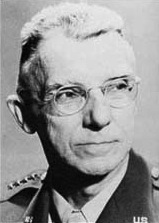
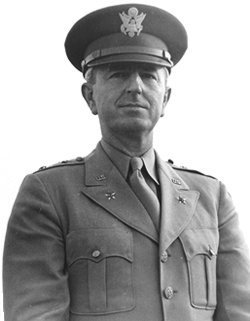
he must still add some things pertinent. For example, the first chapter, Journey to the Second Front, is remarkably interesting. How these eight men:


Joseph Stillwell


Albert Coady Wedemeyer
of them all, the one the reader had never heard of - who, a graduate of the German Staff College, class of 1936-8, had been taught to think of war as a life and death struggle
"The Kriegsakademie, by a stroke of supreme irony, had unwittingly planted in the machinery's control centre someone to whom it had taught a philosophy of war exactly complementary to its own ... [thus, from Wedemeyer's strategic plan] the coming struggle between Germany and the United States must inevitably take the form of a great land battle between their two armies on the land mass of Western Europe. Presciently, Wedemeyer's plan, transmitted to Roosevelt on September 21st, 1941 [over two months prior to Pearl Harbor], was presented under the title 'Victory Programme'. Its conception and delivery was to be one of the decisive acts of the Second World War."


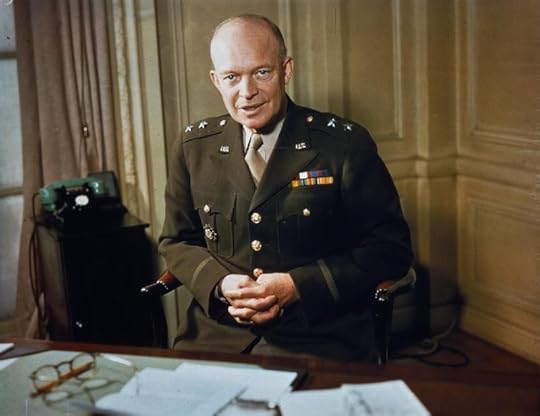
Dwight D. Eisenhower


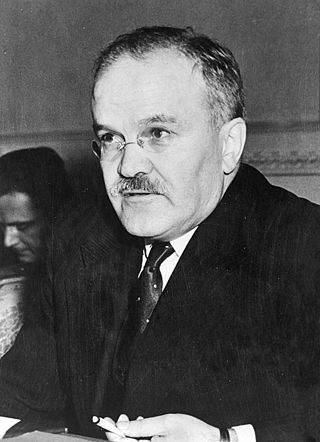
Vyacheslav Molotov


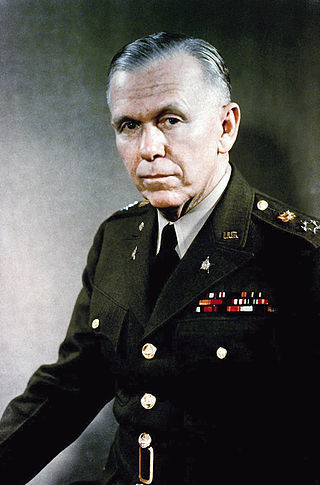
George Marshall


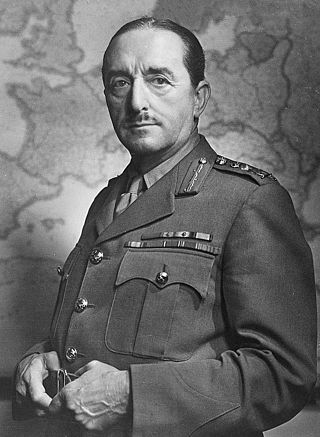
Alan Brooke, 1st Viscount Alanbrooke


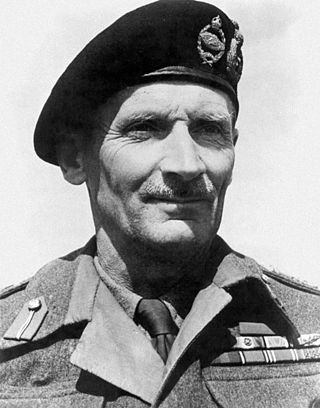
Bernard Law Montgomery


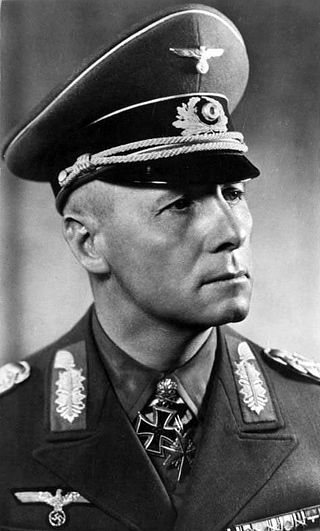
and Erwin Rommel

played their history defining/altering roles in selecting, opposing, overseeing, defending, demanding, acquiescing in, modifying, and attempting to crush, the Second Front that was the supreme subject of planning, strategic thinking, ambivalence, and procrastination among the Western Allies almost as soon as the U.S. entered the war. This chapter, almost fifty pages long, is one of the most incisive pieces of military history the reader has read, utterly fascinating. All to provide the reason as to why the word “Normandy” is now associated with the final defeat of Hitler (almost exclusively) in the memories of the non-Russian members of The Grand Alliance.

And those six armies? In the rest of the book Keegan explores the Normandy Campaign from D-Day up through the liberation of Paris, in seven chapters, dealing with the U.S., Canadian, U.K., German, Polish, and French armies: ”All-American Screaming Eagles”, “Canada: To the South Shore”, “Scottish Corridor”, “Yeomen of England”, “The Honour of the German Army”, “A Polish Battlefield”, and “Free France”. As he’s a Brit, he must be allowed the two chapters devoted to the U.K. forces.

And the review’s first section? That’s from the Yeoman of England chapter, on the armored breakout from the Caen area on July 18-20 1944. The nightmarish bombardment described occurred on the 18th, and was directed at the just barely rural area, probably today in the suburbs of Caen, at the NE corner of the city, just to the east of the river Orne.


nuts and bolts

Pretty detailed index, one map in each chapter which could be better (many place names in the text are not shown), 43 black and white photos (many very good, several not), an Index of Formations and Units for each army (supposedly – but I’m not able to locate Canadian units).

As for the book’s main narrative, Keegan writes very well, but is forced by his military historian specialty (even when trying to write for a more popular audience) to resort to what I find tedious mention of formations in his text: “almost as soon as the 10th Dragoons and 10th Mounted Rifles had begun to celebrate with the 359th Regiment their joyous meeting” for example. But it’s possible that to write a sentence without this signature type of reference would be more awkward than just doing what he does. So be it.

Highly recommended for those interested in the European theater. For others, a visit to the library would be rewarding, just for the Prologue, and possibly chapter 1 if grand strategy of the war seems interesting.


. . . . . . . . . . . . . . . . . . . .
Previous review: Symbiotic Planet
Next review: Communism, Fascism, Democracy
Older review: Ghosts of Belfast

Previous library review: The Second World War Keegan
Next library review: Churchill's Generals
Profile Image for Sherwood Smith.
Author 168 books37.5k followers
Read
July 25, 2018
From the dawn of time in western civilization, at least, the media best sellers have been sex, violence, and religion. In ancient times our Anglo-Saxon ancestors mixed their genealogical recounts with battle-bragging; at Agincourt and Crecy heralds of both sides stood with one another at the best vantage-point in order to watch the battle, with the mutual desire of get the details right for posterity. The earliest prints mass produced depicted Biblical scenes, wars, and and porn.

While I've been reading Rick Atkinson's three volume work on the war, sometimes I take a sidestep into other works for purposes of comparison. Keegan's accounts, like Atkinson's, are drawn not just from contemporary media, official military records, and regimental histories, but also from eye-witness accounts both military and civilian. He also supplies photos, and carefully drawn maps that are easy to comprehend.

I like reading Keegan's best work because he not only vividly depicts the heat of battle, he also gives plenty of air time to the logistical nightmare of mounting an operation of this magnitude--and also what its consequences were outside of the obvious success of the invasion.

First chapter, evolution of invasion plans, threading the back-and-forth of politics from London to Moscow to Washington through the introduction and discussion of eight men of influence: Stilwell, Wedemeyer, Eisenhower, Molotov, Marshall, Brooke, Montgomery, and Rommel. We learn a great deal about the hidden politics behind the invasion, and also just what a logistical nightmare it is to plan and execute something of this magnitude.

The next six chapters focus on each of the six armies involved: The Americans, the Canadians, the Scots, the English, the Germans, and the Poles. Keegan finished up with the weird political machinations of the French before, during, and after the freeing of France, and ends with an overview of the importance of the invasion at the time--and subsequently.

Without fictionalizing or indulging too much of the winners' political rah rah, Keegan is able to afford the reader glimpses into the minds and emotions of the human beings inside the various uniforms. Relying on veteran accounts, he painstakingly recounts what the weather was like on D-Day, the sounds and smells, the tension of anticipation--the physical costs of actual parachuting, tank warfare, and the profoundly shocking agony of enduring heavy bombing runs.

In the second chapter we get a glimpse of the tense anticipation of the parachutists June 5th, 1944, on the eve of the invasion. Keegan describes the flight--the sounds, the smells, various men's emotions as they left the plane--and how an unexpected patch of clouds threw the strict formations into chaos, depositing men all over the Normandy beach landscape. He talks about the terror of some of the landings, where men weighted down with so much equipment could not get free and drowned in a few feet of water.

He describes the unexpected psychological reactions some had--those who looked around, didn't find their companions, and so they curled up and slept.

In each subsequent chapter the invasion is widened--first by hours, then by days, then by weeks, as the Allies took hold of France and then faced eastward for the last drive.

In each chapter background material brings the individual army into foreground focus while keeping the narrative going. The third chapter, with the Canadians, includes a flashback to August 19, 1942, and the disastrous invasion attempt at Dieppe, beginning on page 121. A vivid description of this terrible failure makes it clear what kind of memory and emotion overlaid the Canadians' determination on D-Day.

During subsequent chapters Keegan characterizes the background and formation of the Scottish army, and the underlying class tensions of the British army (which translated over into cavalry versus mechanized army).

He explains the extraordinary efficiency and camaraderie of the German army as a background to the July 20th bomb attempt on Hitler--the results of which had repercussions that affected decision-making in Normandy. There is no discussion of ideology; one glimpses the German commanders as human beings, and therefore one can feel a twinge of sympathy as Kluge, the commander in chief in the west, sits in his French chateau and reads detective novels in order to escape the sense of impending disaster--and again when he has been relieved of duty and he takes poison, rather than go home to a Gestapo welcome. That echo is there in the Liberation of France, when the German commander, Choltitz, requires a miniature battle before he surrenders as a desperate attempt to save his family back home from Hitler's reprisals.

Keegan never loses sight of the civilians, and the cost of the war on them. We can see the picturesque towns being destroyed--and feel the loss when William the Conquerer's Caen is bombed flat. Also we can sense the eerie moments that war contrives, such as when a group of nuns brought a long line of insane refugees out of Caen--paying no attention whatever to military zones--forcing a kind of truce on both sides as they passed.

The last, terrible battle at the Falaise Pocket, held by the Poles, is augmented by an equally anguishing description of what was going on back in Poland as those people struggled between German and Russian aggressors for their freedom.One has to keep in mind how the West silently colluded with Stalin in his grab for eastern Europe.

His summation:

Other soldiers also came to make the return, serious students of the great amphibious, airborne and armored operations...In the immediate postwar years analysis took second place to something like self-congratulation...Later, attention would focus on the issue of leadership, particularly at the small-unit level, as veterans explained to officers unblooded by any postwar experience what a battle was like.

Keegan goes on to explain how the studying of what happened at Normandy metamorphosed yet again, this time in view of the anxious tensions between East and West. The idea of German being a "Central Front"--the probability that today's sophisticated communications and observance techniques make it improbable that so great a surprise invasion can ever take place again, are all examined.


Profile Image for Mike.
1,235 reviews176 followers
March 12, 2013
Six Armies in Normandy: From D-Day to the Liberation of Paris; June 6 - Aug. 5, 1944; Revised ranks between 3 and 4 Stars, an interesting collection of vignettes highlighting the experiences of the British, American, Canadian, Polish, German and French forces in and around Normandy from Jun 6, 1944 to the liberation of Paris at the end of August. This book, written for the 40th and revised for the 50th anniversary of D-Day, isn’t a chronological recap of the battle. Rather, it jumps from the American airborne landings to the Canadian assault on Juno beach to the Scottish corridor towards Caen to the British Op Goodwood attack to the German Army counterattacks and retreats to the Polish Corps role in the Falaise Gap battle and, finally, to that epic of modern armed conflict, the liberation of Paris by the French 2nd Division blindée.

Keegan starts out with a wonderful telling of his memories of the war as a young boy. I found his description of meeting the arriving Americans and then, their sudden departure for D-Day, very compelling. Beautiful writing. He then gives a background run up to the invasion through the actions and views of various players. Also very interesting. He begins the battle with the Americans jumping into Normandy and then skips around to the various participants. I found the fight of the Polish forces at Falais the most interesting while the French Paris excursion somewhat less so. All the forces come in for some muted criticism but mostly, Keegan provides more admirable episodes. Even the German forces, deservedly so, are admired for their tenacious fighting withdrawals. After all, this book was written to be read by the participants in those battles, 40 or 50 years later, when some reconciliation has taken place. No need to dwell on less heroic episodes of the fight. A worthwhile read.

Lately, the scale of the fight on the Eastern Front vs the Western Front has come under renewed scrutiny. Max Hastings in particular has stated almost 90% of German losses occurred in the East. Losses in the west pale in comparison to the eastern front. This book was written back when the fighting was thought to be comparable:


Profile Image for Kuszma.
2,850 reviews286 followers
September 21, 2019
Hadtörténet iránt érdeklődni és Keegant nem olvasni olyan, mint állatkertbe menni és nem nézni meg a rájasimogatót. Meg lehet csinálni, de akkor meg minek mentél el egyáltalán? Egyfelől az angolszász történészek körében alap, hogy olvasmányosan írnak: a történelmi tudás náluk nem elit klub, ahová csak az teheti be a lábát, aki tolerálja, ha 22 betűből álló latin kifejezésekkel csapják hókon. Ebben Keegan pedig igazi ász*. Másfelől még a szakmán belül is kiemelkedik tudásának mélységével, az amerikai és brit ejtőernyők kioldózsinórjának sajátosságaitól kezdve egészen Eisenhower eltitkolt gondolataiig tud mindent, amit tudni lehet, ráadásul ez a tudás nem pusztán elméleti, hanem egy nagyon erőteljes gyakorlati rálátással is meg van spékelve.

De leginkább azt becsülöm benne, hogy képességei nem pusztán az események szaftos leírására korlátozódnak, hanem mindig keres egy új szempontot, ahonnét még nem figyelték meg a történetet. A csata arca-ban azt vizsgálta, maga az ütközet belülről nézvést hogyan fest különböző korokban, a fegyverzettechnika különböző fejlettségi szintjein, A parancsnoklás álarca-ban pedig eltérő hadvezetési módszereket vázolt fel négy ikonikus hadvezér portréján keresztül. Itt pedig a már számtalanszor, jobbról-balról, alulról-felülről szételemzett, megcsócsált és megemésztett normandiai csatát helyezi új fénytörésbe azzal, hogy hét** különböző náció (amerikai, kanadai, skót, angol, német, lengyel és francia) kiemelkedő harci cselekményeinek bemutatására építi fel a kötetet. Ezzel a – ki merem mondani – zseniális szerkesztéstechnikai trükkel pedig két, de inkább hét, azaz nyolc legyet üt egy csapásra: bemutatja, hogyan képzelték el és tapasztalták meg az adott nemzeti csoportok a katonáskodást általában és a partraszállást specifikusan, és egyben egy többé-kevésbé lineáris leírását adja az egész konfliktusnak a partra szállás ötletének kiforrásától kezdve egészen Párizs bevételéig. Azt gondolom, ez a legjobb könyv, amit a partraszállásról és a normandiai csatáról valaha írtak. Slussz, passz.

Ja, és külön öröm, hogy Keegan ugyanúgy ezt az eseménysort tartja a második világháború igazi fordulópontjának, mint én. (Megengedve, hogy számos más igazi fordulópont is létezett – csak épp az igaziak közül ez a legigazibb.)

Ja kettő, amúgy meg ez a kötet nem csupán a legjobb partraszállásról írott könyv, de ebben található a legjobb személyes előszó, amit valaha történelmi munka elé passzintottak. Az, hogy szépirodalmi igényű, kevés. Maga a szépirodalom.

Ja három: kölcsön tudom adni.

* Többször tapasztalom, hogy visszarettennek az olvasók a hadtudományi munkák szükségszerű tartozékától, a csapattest-számok felsorolásától. Nekik csak annyit mondanék, hogy nyugodtan hagyják átsiklani rajtuk a szemüket, nem az a lényeg, és senki sem fogja utólag kikérdezni őket, hogy megjegyezték-e. Feltéve, ha épp nem szigorlatra készülnek.
** Tehát valójában nem hat, mint a cím sejteti. Még gondolkodnom kell, Keegan kit nem számolt bele.
Profile Image for Olethros.
2,724 reviews534 followers
May 10, 2013
-Más que sobre el desembarco de Normandía, de Overlord en general y del camino hacia la toma de París en particular.-

Género. Historia.

Lo que nos cuenta. Con un par de recuerdos y reflexiones muy personales del autor como prólogo y conclusión, narración desde el Día D hasta la entrada de la División Leclerc en la capital gala, con una mirada hacia atrás para conocer los antecedentes militares y políticos del difícil parto de Overlord y con la intención de relatar los acontecimientos agrupándolos desde el origen de los protagonistas.

¿Quiere saber más del libro, sin spoilers? Visite:

http://librosdeolethros.blogspot.com/...
Profile Image for Dj.
640 reviews29 followers
June 27, 2014
In general I am not a big fan of Keegan. It isn't that his stuff is bad, just that it doesn't usually lie in the direction of what it is that I want to read, or that when I do read his books they don't leap out with information that hasn't been presented elsewhere equally well. There are exceptions of course such as the Mask of Command. This book falls into the exception category.

It doesn't follow the Landings on the Normandy beaches in the normal fashion and moves off the beaches still following the unusual pattern of the rest of the book. In short what Keegan does is take units of a specific nationality and follow them at a certain phase of the battle. He does paint action in other places enough to make a coherent whole, but in general he takes a sample instead in an attempt to show national character and make up of various Armies involved. While he states he is attempting to show what that Nations Army is like in the general sense, there is at least one example where the Common Solders aren't quite that common. The very first example he uses is the US Airborne Divisions landing in front of the invasion beaches. It is usually not thought to use the elite units as a common example for a Nation's Army.

Instead of using broad strokes to move through the battle, he takes specific units. The US Airborne Divisions landings are the start. He goes into detail about specific actions and covers them in such a way as to make them both interesting, while showing their importance to the overall scheme of the invasion. Then he switches to the Canadian's landing on Juno. In this case he talks about the development of the Canadian Army, the problems it had in getting one built up, not just for WWII, but WWI as well. Making the background of Canadian military units much more comprehensive than might otherwise be the case. His coverage of the landings across Juno also includes the earlier landings at Dieppe.

While covering the US Airborne landings, almost nothing is mentioned in regards to the British 6th Airborne landings on the other side of the landings, other than they took place. As with the Airborne, so with the beach landings. Canadian's get full coverage, but Gold and Sword are only mentioned as beaches that are marked for landings, Utah, gets a nod in the Airborne landings when the hook up is mentioned and Omaha only gets mentioned as being a difficult beach that had commanders worried. This lack of detail in areas outside of what is being focused on does not diminish the book in any way. In fact if he had tried to cover all of the Normandy and later campaign in the same depth it would most likely made the book ponderous.

Keegan covers the US, Canadians, British, Scottish, Germans, Polish and French and does so with a very in depth view of their strengths, weaknesses and issues relating to command and equipment. Perhaps not the best possible book out there on the Normandy landings and the follow through to the liberation of Paris, it is a good addition to any Library.
Profile Image for Sara.
96 reviews1 follower
September 10, 2018
After visiting Normandy in August, I wanted to learn more about the Normandy invasion. This book is more like a text book than a non-fiction book. The author traces every detail and ties it all together. It provided an excellent overview. I am still in awe at the sacrifice that was made here.
Profile Image for John Nevola.
Author 4 books15 followers
September 10, 2012
John Keegan's reputation needs no embellishment from me. He is a first-rate military historian of the highest order. Six Armies in Normandy simply pads his resume.

Keegan takes a somewhat different slant on telling the story of Normandy. He takes the battle beyond the D-Day invasion right through the breakout and the Liberation of Paris. He also does not deal with the events chronologically but rather from the differing viewpoints of the six nationalities represented in the fighting. For this reason, I would not recommend that this be the first book a reader grabs when desiring to learn of the invasion of Normandy or D-Day. Most other books (like those of Ambrose and D' Este) present the events in a more sequential fashion and thus more understandable to the novice.

Six Armies in Normandy would embellish that basic understanding with perspectives and viewpoints, which make understanding the battles much more complete. Consider this book an "advanced course" in the liberation of France.

The book has adequate maps and photos, contains a complete order of battle, cites from a robust bibliography and is fully indexed.
80 reviews
September 9, 2024
Absolutely brilliant. It was written in the fifties and still has that "something" which makes it a pleasure to read.
Profile Image for Maxwell Thornton.
177 reviews8 followers
February 28, 2025
A dense, but illuminative work.

'Six Armies in Normandy' by John Keegan describes the conception, buildup, and execution of D-Day and the 1944 Normandy Campaign during Operation Overlord, featuring the views and aspects of the armies of the US, Canada, UK, Germany, and Poland and France-in-Exile, ending with reflection on the end of WWII and lessons from Normandy in a peacetime and Cold War context. The 1982 book has a varied bibliography of both primary and secondary sources, from regimental histories to general military histories in English and French.

Praise of the work—on one hand—includes its varied sources, maps, and sheer description of the buildup to the invasion of Normandy. I must say I was impressed with how comprehensive the conferences between allied leaders and strategists, the plans (conceived and not), and the situations were described. This goes for the general outlook of all six armies described in the book, recalling histories as far as the middle ages, their impacts on their country and others, and more. Criticism of the work—on the other hand albeit lesser—includes its occasional typos and lack of description of British commandos and Canadian parachutists.

In conclusion, Keegan's book (though aged) is a worthwhile resource for avid WWII learners.
21 reviews
June 17, 2018
Fantastisch hoe Keegan verbanden weet te leggen. Zijn Engels is niet heel toegankelijk voor iemand die het Engels niet heel goed machtig is, maar een vertaling is daar een goede oplossing voor. Hij steekt zijn mening over het presteren van top militairen niet onder stoelen of banken en hij weet dat goed te onderbouwen. Zeker over de Britse kopstukken is hij niet mals. Prachtig boek.
Profile Image for Leanna Solomin.
90 reviews
June 29, 2023
Keegan is one of my favorite military historians, but this particular account isn’t my favorite. It’s still a really good book, and I definitely recommend it, but if you want some of the more personal, on-the-ground accounts of Normandy, D-Day by Stephen Ambrose would be a better read for you.

All in all, good, but not my favorite!
Profile Image for Kevin Keating.
839 reviews19 followers
January 6, 2022
It was well written. Good historian. Just way too confusing for someone without a great grasp of the geography and without really good in-text maps to help. I'd have to read it three times to really get all the blow-by-blow, or at least have lots of 1940s maps of the French countryside. But there are lots of good gems.
Profile Image for Peter.
87 reviews
Read
November 20, 2024
First off.
There are a good number of fine Canadian military historians focused on the Second World War.
So when a noted British historian adds affirmation to the bravery and courage of Canada's infantry and tank units against a fascist motivated scourge, then you appreciate all sacrifices even more.
John Keegan's writing in this book is somewhat quirky but not completely out of the ordinary.
Keegan--as the book title implies--takes "patches" (American, Canadian, English, German, Polish and French) and weaves those patches into a solid quilt refered to as the battle for Normandy.
This is not a narrative of overall plans, strategic goals, overall execution and the dynamic between the Allied (or enemy) military leadership, although those elements are to a lesser degree present.
This is a tactical narrative.
And like most tactical narratives, the reader is at (infantry) ground level; where people in uniform are severely tested as witnesses to dismembered bodies, witnesses to dead bodies, and non functioning bodies which have been mentally disabled...the ultimate goal being survival.
And many, far too many, return home unable to adjust and find solace and sleep in a process that leads to their own early destruction.
Profile Image for Chris.
163 reviews1 follower
July 3, 2013
I know John Keegan by reputation, and I had high hopes for this book. It certainly isn’t a bad read, but I wouldn’t say it is a good one either. Keegan follows the six countries with armies in France at D-Day: The Americans, British, Canadian, German, Polish and French. He shows a part of the invasion of Normandy in relation to each, the landing of the Americans, or the liberation of Paris by the French, and essentially provides small vignettes of dozens of small encounters, troop movements and battles. He also provides a healthy dose of context both in terms of the history leading up to these clashes and the people and units involved. It moves along at a good clip and seldom seems to drag (so I’m really not sure where some reviewers said it was dry, I’ve read dry history, this isn’t it).

My problems with the work are threefold. First, Keegan begins with a long introduction that I think is more about him reliving his childhood during the war, than adding anything to the story. Yes, as a child he witnessed the Americans passing through the English countryside, and the reader doesn’t really care. Unfortunately it starts off an otherwise interesting story on a sour note. Second, while Keegan provides context to individuals (and units, and locations) he never provides wider context on what was going on in Normandy. A brief overview of the battle would have been nice, or more information about the progression of battle. You were with one unit in one location, and suddenly with another unit in another, with no context how the battle progressed to get you to that point. By far the largest problem I had was with the organization of the work. Keegan had the idea of skipping from country to country during a major campaign—but campaigns don’t work that way and Keegan certainly knows better. Just because the Americans land on the beaches doesn’t mean that their role is over. Just because the French liberate Paris doesn’t mean they appeared on the outskirts. Moreover, Keegan inserted items that felt out of place, including a long discussion about Hitler and the plot against him which, while interesting, was irrelevant and discussion on the Cold War occupation of Germany, as it stood when this book was published. There also seemed to be far too much reliance en mass of primary sources (which are excellent, but if you’re going to quote them at length, I’m better off reading them in the original context) and other people’s research.

In short—it is a decent read, but don’t expect anything groundbreaking or a comprehensive recount of the landings at Normandy to the liberation of Paris.
Profile Image for Coldsoup753.
14 reviews3 followers
September 16, 2009
I picked up this book because I was preparing to go on a trip to visit the D-Day beaches and my knowledge of the invasion was embarrassingly scant. I had only what I remembered from high school history (next to nothing) and what I gathered from watching Band of Brothers all the way through at least seven times (more than I realized). What drew me to this book was its length, I was going to be backpacking and couldn't afford the weight of most surveys of the subject, and its perspective. I wanted a broader view of the invasion and this book delivered. Keegan gives and overview of the commanders in allied high command as well as highlighting each of the 'armies' that fought in Normandy. I write 'armies' because two of the forces he described, the free French and the Polish soldiers, were hardly full armies but did their duty to its fullest.

I enjoyed Keegan's writing as well as his perspective. He was a child during the Second World War so he has some recollection of the war years, but not the harrowed memories of the soldier nor the removed historical perspective of the scholar. This is not a tight work of historical analysis, but an overview of how the armies functioned, the differences in their leadership, and how they worked together to achieve victory. This book begins with the formation of the allied high command and ends with the liberation of Paris. It also includes a chapter speculating on the future battlefields in Europe that will be created by the Cold War which in hindsight is an interesting, though thankfully incorrect, piece of speculation.
Profile Image for Mark.
189 reviews8 followers
June 12, 2014
I liked the approach that spread the story around the six armies (American, Canadian, British, German, Polish, and French), allowing the chronology to jump a bit. That was fine, and I also liked how it went beyond Normandy & Overlord, bringing in Goodwood, Cobra, and even more-than-an-epilogue-but-not-too-much about the end of the war from the westwall to the very end. Likewise the appropriate sprinkling in of eastern front information.

I didn't realize (but should've) that tanks required rail transport for strategic movement, as their own mobility systems would break down over that kind of distance (e.g. from southern France to Normandy). Was also struck with how significant the allied air superiority was to this campaign...and how that's heavily abstracted out of the games on my shelf.
Profile Image for Jeff.
56 reviews2 followers
March 29, 2009
Gives an enlightening view of the many experiences and contributions of the several nations involved in the effort to re-take Western Europe from the Germans.

A misconception-cleansing read for those of us who've been taught the oversimplified story that the Americans single-handedly liberated Europe.
278 reviews1 follower
March 29, 2023
Once more unto the breach of Normandy…Or should I say “once more unto the beaches of Normandy”? Whichever you prefer, John Keegan does a masterful and often quaint job of assembling literally thousands of events from June, 1944 into a coherent narrative picture of the involvement of six armies: Allied and German. I love Keegan’s frequent use of “thither” and his sly asides at various times that show he’s having a good time writing all this. Many interesting facts came to light for me or at least some facts were given new meaning by Keegan. I had no idea, even with all that I have read about Normandy, that there were so many thousands of tanks involved and destroyed. Sometimes 90% casualty rates were marked up on both sides, to go with the horrific personal toll the battles took. Everybody shares the spotlight at one chapter or another as the story unfolds and Keegan doesn’t stop with the escape from Normandy; he takes us all the way to the liberation of Paris and into the days that led to the winding down of the conflict. Like most histories of this ilk, the statistics and lists of participants slow down the story, but in order to be complete, Keegan had to list them all. Some units, such as the 101st Airborne on our side and the 2nd SS Panzer division on the Nazi side keep repeating, but they were very active in Normandy so they have to be mentioned numerous times. Another interesting fact that emerges from the text is that fact that, both with the Germans and some of the Allies, particularly the Canadians and the Scots, where the troops came from determined their effectiveness as a unit. Those that came from the same region and who knew of each other fought more fiercely than those units that were drafted into anonymous groups. It also becomes clear how many foreign nationals and conscripts were used by the Nazis as cannon fodder; those units tended to surrender very easily. For excellent military history, this is exemplary. For a beginner it is an excellent place to start understanding Normandy and its true place in military history.
35 reviews
March 17, 2019
Keegan gives the sagging shelf of volumes dedicated to the retelling, in whole or in part, of the Overlord assault on Festung Europa a fresh take that is informative, engaging, and an all-around good read of a tragic episode in European history. I read a used copy of the 1983 edition from Penguin. Keegan's approach differed in that each chapter is built around a national participant in a roughly chronological order up to the liberation of Paris. American paratroopers are covered first, followed by the Canadians, the Scots, then the English, the Germans, the Poles, and finally the French. Each chapter has a situation map of the time covered that is clear and easy to read. It is full of photographs both clear and poignant. This was a refreshing way to tackle such the huge literary undertaking of explaining Operation Overlord. Keegan is a learned scholar and imparts his intellectual prowess to the reader. He uses a quiver of erudite words, British idioms, and sprinkles French and German words and phrases gratuitously throughout the text. Reader, keep that dictionary close. Stylistically, Keegan tends to run long-winded in the run-up to action as he builds the characters, their national uniqueness, and the situation into a plot riddled with tension that trembles on the verge of explosion. Ultimately this work is a Cold War warning on the unpredictable gamble that warfare has always been and always will be. Reader, be warned.
149 reviews
October 22, 2024
Many years ago I started reading this book and after repeated attempts to get into it, I gave up. I just couldn’t do it. I felt it was time to try again. And while I managed to finish this time I could definitely see why I struggled the first time.

To me this was not the most readable book. So many times, like the prologue and chapter 1, I got bogged down in the author’s writing style. Just not my favorite. I also was not fond of the organization of the book. He focused on the six “armies” that fought the battle for Normandy in France. Two, the Polish and French, were not even armies, just divisions. This left much of the battle uncovered or under covered. Two important examples are the American landings on Omaha beach and the rapid breakout from the beachhead.

Lastly, as the book moves from army to army, you slow down to learn the history of each army. This does not allow for a smooth transition from one chapter to another. I would not so much recommend against this book as as much as making the reader aware of what they will be reading.
Profile Image for SR Bolton.
107 reviews8 followers
October 18, 2017
I bought this edition in late 1994 along with the pb edition of Keegan's A History of Warfare that had just come out. Having previously enjoyed other of his works, I recall being very interested in these two. I read History first, and also recall being so irritated with some of the arguments in that book that I left it half finished, and never picked up Six Armies. Over two decades it stood sentry on the shelf of WWII books, shifted about only by frequent moves across the country, available for some random but serendipitous day when the book would again draw my interest. Eco would approve.

I had in the gap forgotten how well Keegan narrates history. The stories of the plans and planners, the commanders and their battles, the play of chance and friction, all bring vividly to life the esprit of these forces thrown into the melee in Northern France. This is an exiting and enriching history of the men and nations who fought there.
Profile Image for Robert Hepple.
2,278 reviews8 followers
August 25, 2024
First published in 1982, 'Six Armies in Normandy' looks at the WW2 European campaign from D-Day until the liberation of Paris. The events are viewed through key parts played by the six main armies involved in the conflict. This makes it interesting in a different way to the many books on the battles that followed on from D-Day, but I also felt that it made for a disjointed narrative if you were trying to gauge the linear progression of the campaign. Not a problem for many readers who have already delved into the subject via other histories, but perhaps a little confusing for those not familiar with the progression of the campaign. The author does also try to put events into some sort of context by drawing the readers attention to the simultaneous events in the East, where the Red army was systematically destroying Army Group Centre and advancing up to the German border. Illuminating.
Profile Image for Christopher Dove.
136 reviews1 follower
March 15, 2022
First published in 1982 this is an excellent book on the Normandy campaign. The six armies referred to in the title are the armies of the United States, Canada, Great Britain, Germany, Poland and France. What makes this book different from other accounts of the invasion is that for each army it highlights one particular part of the campaign in which they played a key role. For instance the section on the U.S. forces looks in detail at the part played by the airborne forces in the first hours and days of the battle. For the Canadian army it highlights their beach landings. This was enlightening as most accounts of D-Day concentrate on the American landings on Omaha whereas we get to learn in some detail about the problems encountered by the Canadians on Juno beach. The book still gives a great overall account of the campaign and links together the part played by each army very well.
Profile Image for Thomas Nitroy.
7 reviews
March 7, 2020
Excellent book. I've read so many books about the Normandy invasion and the last year of the war in Europe so I was a bit hesitant to read another. However, when I found this in a charity shop I couldn't resist. I am glad I didn't. Six Armies is not "another book on D-Day". It is another perspective on the days from D-Day until the liberation of Paris. The author looks at 6 army outfits; gives them a historical run through and tells the story of their part in the battle for Normandy. It may sound a bit disjointed but it isn't. Keegan maintains the overall linear and geographical progress while fitting in the interesting history and D-Day contributions of the army units. I learned something new and that's why I read.
175 reviews
January 16, 2025
I admire the way Keegan looks for similarities and contrasts through the years or across the services of different countries. This book is a fascinating account of the liberation of France in 1944 told episodically through the eyes of the different armies involved. While the table of contents makes this book seem like a gimmick, the different armies are carefully delimited and their exploits examined in the time period investigated, and the parts fit together seamlessly. I greatly admire Keegan for his ability to step back and see things as a whole. For a more comprehensive look at D-Day itself, go to Ryan's Longest Day. For an interesting survey across the spectrum of nations involved and for a less detailed, longer-ranged investigation, I highly recommend this book.
220 reviews1 follower
October 27, 2021
I read this sometime in the 1980s, kept it on my bookshelf, but had no clear memory of content. Picked it up again yesterday and gave it a couple hours, but decided I would not finish and would not keep.

The writing just pops around too much, without context on the overall campaign. Lots of names, unit numbers, and locations. Sort of like a data dump, with memories thrown in, rather than an overview of the campaign activity and/or critical events. Also, primary source materials seem to be from post-war memoirs, which are always suspect.

Just not what I wanted to invest 15 hours of my life slogging through.
Profile Image for Andy Horton.
428 reviews5 followers
October 27, 2019
Excellent work on the D Day landings and the following campaign. Interestingly stats with a personal perspective on Keegan’s childhood and the assumptions and Anglo-centric myths of the war he had grown up with - which gently informs the reader that these myths still persist around the subject - before using the different national armies as lenses for his overview of the campaign from planning stages to the liberation of Paris. I learned a lot and gained some new perspectives from this always readable work.
Displaying 1 - 30 of 105 reviews

Can't find what you're looking for?

Get help and learn more about the design.