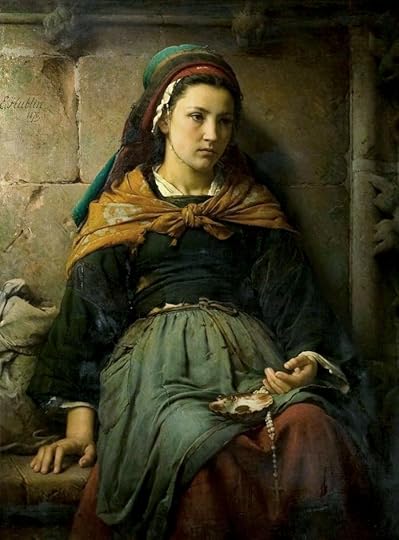
The reader is returned to the provincial town of Angoulême, where Lucien's sister Ève and her husband, Lucien's friend David, have been desperately struggling against clever competition to keep a their printing shop afloat. Their situation is complicated when Lucien's financial distress spills over into their lives.
French writer Honoré de Balzac (born Honoré Balzac), a founder of the realist school of fiction, portrayed the panorama of society in a body of works, known collectively as La comédie humaine.
Honoré de Balzac authored 19th-century novels and plays. After the fall of Napoléon in 1815, his magnum opus, a sequence of almost a hundred novels and plays, entitled, presents life in the years.
Due to keen observation of fine detail and unfiltered representation, European literature regards Balzac. He features renowned multifaceted, even complex, morally ambiguous, full lesser characters. Character well imbues inanimate objects; the city of Paris, a backdrop, takes on many qualities. He influenced many famous authors, including the novelists Marcel Proust, Émile Zola, Charles John Huffam Dickens, Gustave Flaubert, Henry James, and Jack Kerouac as well as important philosophers, such as Friedrich Engels. Many works of Balzac, made into films, continue to inspire.
An enthusiastic reader and independent thinker as a child, Balzac adapted with trouble to the teaching style of his grammar. His willful nature caused trouble throughout his life and frustrated his ambitions to succeed in the world of business. Balzac finished, and people then apprenticed him as a legal clerk, but after wearying of banal routine, he turned his back on law. He attempted a publisher, printer, businessman, critic, and politician before and during his career. He failed in these efforts From his own experience, he reflects life difficulties and includes scenes.
Possibly due to his intense schedule and from health problems, Balzac suffered throughout his life. Financial and personal drama often strained his relationship with his family, and he lost more than one friend over critical reviews. In 1850, he married Ewelina Hańska, his longtime paramour; five months later, he passed away.
An Opportunity to Contemplate the Law and the Process of Making Paper
Ève et David/Le Souffrances de l'inventeur [1843] (Ève and David/ An Inventor's Tribulations) [Herbert Hunt translation]
This is the third and final part of de Balzac's trilogy Illusions perdues (Lost Illusions). The novel is part of the La Comédie humaine and to some degree belongs to the Scenes from provincial life (Scènes de la vie de province). Overall the translation is very good overall (although awkward at times).
This was quite a different reading experience compared to the two previous volumes. The story has now returned to the countryside and focuses on the implications of Lucien's actions (previous novel) on his sister Ève and her husband David's life in provincial Angoulême. The bulk of the novel discusses the ins and outs of a lawsuit combined with some sinister plotting. One also gets the wonderful opportunity to know a great deal about paper making since David is an inventor struggling with an attempt to improve the process. However, for a general reader it can often feel more like a textbook even though it is interesting in many ways to partake of these aspects of French culture and history. Balzac, of course, does not miss the opportunity to criticize specific parts of the politics and society of these decades. On the brighter side there is an interesting discussion around Lucien's final fate that will once again return him to the dangerous life in Paris. To me this was the best part of the novel - the encounter with the Abbé Carlos Herrera. With this final twist Balzac certainly provides a strong temptation to continue one's journey in the realm of La Comédie humaine by searching out Splendeurs et Misères des courtisanes; A Harlot High and Low; (actually a tetralogy).
Needless to say this final novel of Illusion perdues does not match the power of the previous two volumes. A missed opportunity for Balzac in terms of ending his story with wonder, poetry and grace. However, the first two parts of the trilogy were excellent!
Nessa terceira parte (Os Sofrimentos do Inventor) Lucien termina seu aprendizado à força com a ajuda de um padre digno de Maquiavel, veremos os resultados em Esplendores e Misérias das Cortesãs... Gostei particularmente dessa edição da Abril cheia de notas de rodapé que nos salvam das citações mais obscuras e mantêm os poemas também no seu original em francês.
Probably my favorite of the trilogy; it felt a little less repetitive and a little more open ended. David is so clueless and yet I identify with him; Eve is so savvy and it was nice to have a more robustly competent female character. Monsiour Sechard is slightly more dimensional than other miserly father characters; Lucien slightly more interesting and multi dimensional than other rise-and-falls like Rastignac (but more of a fuckboi twerp). All in all though, when Vautrin enters on the scene…the entire narrative universe bends to accommodate him. Where did this guy come from? Honestly I was planning to stop my Balzac-arama here but now that Vautrin is in the picture again, I’m going to read The Splendors and Miseries of Courtesans now.
Impressionante como Balzac disseca a sociedade francesa do século XIX e mostra as consequências do espírito da Revolução, que prossegue até nossos dias. O antigo regime foi derrubado pelo povo, mas a nova elite burguesa não parece muito melhor e uma nova aristocracia se consolida, talvez ainda mais indiferente aos mais pobres pois esta não tem nem o dever moral de cuidar dos necessitados. Aliás, como ressalta o estranho cônego que surge no final do livro, a nova sociedade não tem norte moral e as ações são consideradas boas ou ruins pelo seu sucesso. Balzac antecipa com toda clareza o mundo moderno que estava apenas no nascedouro.
For the most part , it felt like reading a text book . There is always something to take away from old texts though .The fine detail of the paper and printing press and some French history was worthy of a read . I appreciated the last part on the story about Lucien meeting the Spanish priest while contemplating his demise . Great lessons to take away from this novel .
A great ending to this massive story, complex and still so familiar in the world where we live today. It's set 200 hundred years ago but its main conflict is still reflected in today's society, especially in our relationship with social media and the pursuit of "fame".
Parece que Balzac escreveu esta 'segunda parte' uns oito anos depois da primeira - tem já uns truques narrativos e até uma espécie de 'diabolus ex machina', que aparece do nada para salvar o personagem, comprando-lhe a alminha.
O amargor, o cinismo, o sarcasmo são o tom da história que não se chama como se chama à toa: se a restauração, se a revolução industrial, se a evolução dos meios de produção deram alguma esperança por algum tempo, logo se viu que, como sempre, homo homini lupis.
David sees his "Lost Illusions" too but this is not a melancholy ending in whole.
The last of Balzac's Lost Illusions trilogy with "Eve and David" and concluding "Scenes From Provincial Life" but not the end of Lucien Chardon's story which will continue at some point in the series. "Eve and David" is my favorite of the three but once again, as Balzac does in the previous two novels, tends to go into tangents which can be interesting but I found tedious. One example is when the Spanish gentleman tells his story to Lucien which made my head spin, I was looking forward to see what happens to David who is in jail. I think this is the first time since I started reading Balzac when the mention of going to jail for debts, usually the messieurs in his stories run up debt but escape jail with different manoeuvres. The jail is cold and hopeless, payment will give you better treatment, very reminiscent of a Charles Dickens feel but Balzac barely skims the surface.
After leaving Paris and traveling on foot to his hometown, Lucien seems to have learned his lesson or did he? After his return, he started to dream again but is he still able to help David from the grip of the law? David's father seems to be the tight fist, unchanging in his ways to help his son. The young Eve with more love for her brother starts to see David in another light, the greed of the Cointet brothers as well as others too.
I did not read this edition but from a Delphi collection of his work which included the below.
"The third and final part of Illusions Perdue was first published in 1843. In the novel’s narrative, Lucien uses cheap transportation to work his way back to Angoulême to escape the ruins of his career and his hopes in Paris. He sleeps on the straw in local stables to avoid having to pay for a room. At one point, he jumps up on the back of a carriage to get a ride to his next destination. Much to his surprise, the occupants of the carriage are his old enemies Count Sixte du Châtelet and his wife, Louis de Negrèpelisse. "
I love how Balzac brings his characters into different novels of this series and you get a taste of them again, the order is not always chronically done which makes it more interesting.
David and Eve are almost totally surrounded by grasping people, only Kolb and Marion are true to the couple. David had helped a young boy taking him into his home from the Parisian streets, who then turns spy with the help of the Cointet's so they can find out David's invention so the brothers can swindle the poor young man. Old Sechard, David's father has money but refuses to help his son, looking to gain wealth and thinking his son is idle. Eve is more alert to the vultures around them but after Lucien's suicide letters, she no longer sees things clear, a forgets to be wary. An agreement is finally made with David and the Cointets after freeing David from jail. A letter and money finally comes from Lucien but too late, the deal is already signed but the money is used to buy a farm near old Sechard where the poor couples will live, and David still works on his invention which works but to the Cointet's favor but the couple just wants to live a quite life. Old Sechard starts to mend his ways some and the family is together, until he dies which his estate is extensive but not as much as those thought it, David inherits all. Lucien has not died yet but what happens to him will be told in later stories, he tells his family that he is with the Spanish gentleman, his helper and the money has come from his job advancement.
"RUBEMPRE (Lucien-Chardon de), born in 1800 at Angouleme; son of Chardon, a surgeon in the armies of the Republic who became an apothecary in that town, and of Mademoiselle de Rubempre, his wife, the descendant of a very noble family. He was a journalist, poet, romance writer, author of “Les Marguerites,” a book of sonnets, and of the “Archer de Charles IX.,” a historical romance. He shone for a time in the salon of Madame de Bargeton, born Marie-Louise-Anais de Negrepelisse, who became enamored of him, enticed him to Paris, and there deserted him, at the instigation of her cousin, Madame d’Espard. He met the members of the Cenacle on rue des Quatre-Vents, and became well acquainted with D’Arthez. Etienne Lousteau, who revealed to him the shameful truth concerning literary life, introduced him to the well-known publisher, Dauriat, and escorted him to an opening night at the Panorama-Dramatique theatre, where the poet saw the charming Coralie. She loved him at first sight, and he remained true to her until her death in 1822. Started by Lousteau into undertaking Liberal journalism, Lucien de Rubempre passed over suddenly to the Royalist side, founding the “Reveil,” an extremely partisan organ, with the hope of obtaining from the King the right to adopt the name of his mother. At this time he frequented the social world and thus brought to poverty his mistress. He was wounded in a duel by Michel Chrestien, whom he had made angry by an article in the “Reveil,” which had severely criticised a very excellent book by Daniel d’Arthez. Coralie having died, he departed for Angouleme on foot, with no resources except twenty francs that Berenice, the cousin and servant of her mistress, had received from chance lovers. He came near dying of exhaustion and sorrow, very near the city of his birth. He found there Madame de Bargeton, then the wife of Comte Sixte du Chatelet, prefect of Charente and a state councilor. Despite the warm reception given him, first by a laudatory article in a local newspaper, and next by a serenade from his young fellow-citizens, he left Angouleme hastily, desperate at having been responsible for the ruin of his brother-in-law, David Sechard, and contemplating suicide. "
"SECHARD (David), only son of the preceding, school-mate and friend of Lucien de Rubempre, learned the art of printing from the Didots of Paris. On one occasion, upon his return to his native soil, he gave many evidences of his kindness and delicacy; having purchased his father’s printing shop, he allowed himself to be deliberately cheated and duped by him; employed as proof-reader Lucien de Rubempre, whose sister, Eve Chardon, he adored with a passion that was fully reciprocated; he married her in spite of the poverty of both parties, for his business was on the decline. The expense involved, the competition of the Cointets, and especially his experiments as inventor in the hope of finding the secret of a particular way of making paper, reduced him to very straitened circumstances. Indeed, everything combined to destroy Sechard; the cunning and power of the Cointet house, the spying of the ungrateful Cerizet, formerly his apprentice, the disorderly life of Lucien de Rubempre, and the jealous greed of his father. A victim of the wiles of Cointet, Sechard abandoned his discovery, resigned himself to his fate, inherited from his father, and cheered by the devotion of the Kolbs, dwelt in Marsac, where Derville, led by Corentin, hunted him out with a view to gaining information as to the origin of Lucien de Rubempre’s million. Lost Illusions. A Distinguished Provincial at Paris. Scenes from a Courtesan’s Life. SECHARD (Madame David), wife of the preceding, born Eve Chardon in 1804, daughter of a druggist of L’Houmeau (a suburb of Angouleme), and a member of the house of Rubempre; worked first at the house of Madame Prieur, a laundress, for the consideration of fifteen sous a day; manifested great devotion to her brother Lucien, and on marrying David Sechard, in 1821, transferred her devotion to him; having undertaken to manage the printing shop, she competed with Cerizet, Cointet, and Petit-Claud, and almost succeeded in softening Jerome-Nicolas Sechard. Madame Sechard shared with her husband the inheritance of old J.-N. Sechard, and was then the modest chatelaine of La Verberie, at Marsac. By her husband she had at least one child, named Lucien. Madame Sechard was tall and of dark complexion, with blue eyes. Lost Illusions. A Distinguished Provincial at Paris. Scenes from a Courtesan’s Life. "
Cerizet is a young worker that David took from Paris to help him. Marion is a helper that the newly discharged Kolb came to help and fall in love with Marion as well. David looks to make money on inventing cheaper paper and he lets his business go but finally Eve sees the troubles of the shop and turns it around but she will soon be a mother. Petit-Claud is doing his work in delaying and making old Sechard and young separate more so that the old man does not want to help him. David tells Eve about the notes and Lucien but not that Lucien forged David's name. The Cointet brothers look to ruin the young couple and spy on his invention. They see an old school mate of David named Petit Claud and look to enlist his helping in making David dependent on the Cointets. Cointet tells Petit-Claud about a marriage that he could have with money if he does something for the brothers. Petit-Claud is doing his work in delaying and making old Sechard and young separate more so that the old man does not want to help him. Old Sechard is only looking for himself and not thinking about anything else. Lucien is starving and traveling home and is helped by a farmer's home and hears of the bill and David's imprisonment and becomes ill. Petit-Claud still the scoundrel looks to gain by hurting David and making a good marriage. Lucien finally comes back home; he walked and later was on a carriage unknown of Nais and Chantel. He recovers at a farm and then goes to see his family. Lucien is less liked again especially if he tells where David is hiding which I think he will. Lucien sees the change in his mother and sister in their esteem of him. He is upset with them but when praise comes his way he shows his sister about the paper's adulations but Eve warns him but he is not understanding this as good. He is elated after Nais invites him to her house. What a conceited dandy. The game is on and Nais and that arrange to build Lucien up to bring him down and get David out to get his formula. Lucien knows where David is because of news of David after Basine's letters; David goes to see Lucien and Petit Claud hears. Petit-Claud has come to Eve and she tells of her despair of her brother's death but he tells her the note is too embellished and he would not have drown himself, which is the case because a Spanish man in a carriage talks him out of this. Why did not Lucien offer himself for jail since he was the one who forged David's name? He is too selfish. Cointet and Petit-Claud have control after Eve's grief. David came out to see Lucien because of a forgered note to meet him somewhere. David makes a deal with the Cointets and soon after money comes from Lucien who is now the secretary of the Spanish man he traveled with. Eve used Lucien's money to buy a farm near old Sechard who becomes friendly with the family before he dies and their inheritance makes them comfortable. David had to settle accounts with the Cointets making them short until his father's death. The Sechards are happy having each other, they decide that they do not need to be wealthy. Nais missed Lucien when he leaves right away because her life is hum drum.
‘Eve and David,’ the final novel of the trilogy ‘Lost Illusions,' is perhaps the least satisfactory of the three volumes. It has lost none of the sting of the first two, the observations are keen, the satire is both sharp and witty, the minutiae of a financial deal detailed as shrewdly as the literary and political worlds were in the first two books, but if anything can be held up as wanting, it is the characterisation.
Here, Eve and David, sweet, beautiful, idealistic, unworldly and impractical, are set off against a set of rogues and scoundrels each blacker than the next, each conniving to get the better of the other, and all arrayed against David Sechard, including his father. The major opponents are of course, the Cointet brothers, who wish to buy David's invention of a new and cheaper way of producing fine paper in bulk without sacrificing quality, get it patented and start their own paper mill as well as a newspaper to air monarchist, establishment, views. Cerizet, David's one-time apprentice, wants to buy David's printing works and press and set up his own printing shop. He has been promised that he would be given the contract for the Cointet brothers’ newspaper. The lawyer, Petit-Claud, plays both sides, but is always thinking of himself, and the heiress the Cointets have promised would marry him.
There are others: Lucien himself, intending well, but too selfish to sacrifice himself for anybody. The Comte de Chatelet who has married Louise de Bargeton, and occupies a senior magisterial office in the district, has no interest in a provincial tradesman. Both he and his wife have been cruelly raked over the coals in the Parisian press by Lucien's clever pen, and now prepare to take their revenge. There are people who have lent money to David, and he is now being sued for it. Finally, by means of a complicated manoeuvre concerted between Lucien, Cerizet, Petit-Claud and several of the principal creditors, David spends several months in prison.
Of the two great passages in the book, the first is undoubtedly the evolution of a promissory note into a bill of exchange, and how, under a sharp-practice lawyer, a few hundred francs can convert themselves into thousands of francs; how a transaction between two persons turns into sums owing to several different people and agencies, including interest, out-of-province charges, stamp paper, witness signature charges, court and lawyer fees and indeed, anything that can be thought of to inflate the costs. Balzac might be thinking of his own life in debt in this scene.
Lucien's role is comparatively muted in this section of the novel, though he wreaks quite as much damage to his sister's family as he had done in the first two sections. Here, after his failures in the course of a few weeks, when he finally puts David behind bars, and turns tail, his temptation by the Jesuit priest, the Abbé Herrera, is one of the finest descriptions of a seduction of the human soul. Incidentally, the note of homoeroticism here and throughout Balzac's writing reflects the author’s ambiguous attitude to his own sexual identity. Although he did marry, it was towards the end of his life, with a long-time sweetheart. In the main, he made no secret of his preferences. Lucien is forgiven his many selfishnesses largely on account of his good looks.
This black and white view of people is not characteristic of Balzac's usual work, since it suggests the idea of heroes and villains, rather than of ordinary men and women who, in similar circumstances, might act as they do, without being entirely angelic or entirely evil. Still, perhaps for the reader, it feels good to know that there is a happy ending to the book. Not that the scoundrels are punished - all of them go on to immense wealth, power and position. The senior Cointet becomes a minister, and later a peer. And in their prosperity, they leave David and Eve alone, and the couple retire to a small farm, and later become members of the leisured, landed gentry.
Lost illusions? Yes. Lucien has lost his dream of shining in Parisian society, become a literary lion, and recovering the noble title and arms that his mother's family bore; David of being a successful inventor and thereby providing a luxurious home for Eve. Eve herself and her mother have shed all their illusions about their adored Lucien, and perhaps that is just as well.
This three part novel was so well acclaimed, both by the public and the critics, that Lucien's story continues in ‘Scenes of Parisian Life.’
I'd have to tell anyone to put this on their must-read list. This is a fantastic story. I have since found out that it is the third novel installment of the Lost Illusion trilogy. However, this novel works as a stand alone; you do not need to know the details of the previous two novels. I have read synopsis of those and probably will not read them since I know the climatic ending already.
This is a deep dive into humanity's strengths and frailties. How people use and consume others. The quest for power, wealth, or celebrity, or all things.
You will be caught up in the struggles of Eve and David, made all the worse because you as the reader know everything about the people and machinations working against them.
Insatiable appetites is my response to anybody asking me what this story is about. These appetites take on many forms: money, power, clothes, muscles, collections, etc. Kept in check these appetites can bring much peace, joy, and comfort. But if we let them run amok, Hell on earth. Five stars, it is truly one of Balzac’s best.
Το τρίτο μέρος των Χαμένων Ψευδαισθήσεων όπως γράφτηκε αρχικά στα γαλλικά. Στα ελληνικά στις μεταφράσεις είναι μέρος του δεύτερου τόμου, είτε με τον τίτλο Χαμένα όνειρα ΙΙ, είτε Εταίρες του Παρισιού, Λαμπρότητες και αθλιότητες εταίρων, ή Μεγαλεία και δυστυχίες των Κουρτιζανών.
Για το επίπεδο του Μπαλζάκ είναι πολύ πρόχειρα και βιαστικά γραμμένο, αλλά ανδεικνύει την αξία της Εύας, τη μαχήτρια που υπερέχει και δίνει μια κλωτσιά στο κατεστημένο που ήθελε τη γυναίκα υποδεέστερη του άντρα.
The final book of the trilogy Illusions perdues, originally called Eve et David, returns to Angoulème, where it describes the persecution of David Séchard for debt and the cheating of him out of his invention of a cheaper way to make paper. After reading all three books, I'd have to say this is definitely one of Balzac's best works. Now I need to make a decision, whether to read the long, four part sequel, or move on to the next division.
Balzac is a weird genius, but the third part of "Illusions perdues" is not as good as the other two, not bad though....Read it in French so I have no idea if the translation is good or bad...