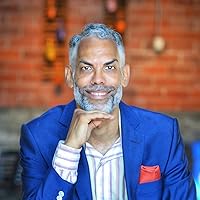
Social psychologist and Stanford professor Brian Lowery presents a provocative, powerful theory of identity, arguing that there is no essential "self"—our selves are social creations of those with whom we interact —exploring what that means for who we can be and who we allow others to be.
There’s nothing we spend more time with, but understand less, than ourselves. You’ve been with yourself every waking moment of your life. But who—or, rather, what—are you? In Selfless, Brian Lowery argues for the radical idea that the “self” as we know it—that “voice in your head”—is a social construct, created in our relationships and social interactions. We are unique because our individual pattern of relationships is unique. We change because our relationships change. Your self isn’t just you, it’s all around you.
Lowery uses this research-driven perspective of selfhood to explore questions of inequity, race, gender, politics, and power structures, transforming our perceptions of how the world is and how it could be. His theory offers insight into how powerful people manage their environment in sophisticated, often unconscious, ways to maintain the status quo; explains our competing drives for deep social connection and personal freedom; and answers profound, personal questions such Why has my sense of self evolved over time? Why do I sometimes stop short of changes that I want to make in life?
In Selfless, Lowery persuasively breaks down common assumptions and beliefs; his insights are humbling. Despite what many may think, we aren’t islands unto ourselves; we are the creation of the many hands that touch us. We don’t just exist in communities, we are created and shaped by them. Our highs and lows are not only our own but belong to others as well. By recognizing that we are products of relationships—from fleeting transactions to deep associations—we shatter the myth of individualism and free ourselves to make our lives and the world accordingly.
This book is a great introduction to the concepts of essentialism and social construction; it’s too elementary for anyone who has read even a little on these topics.
This was the book I've been looking for, all this time. Most books about the self, personality, and our immediate interactions with others tend to rely heavily on neuroscience, which is something I understand. It's all the brain! But Brian Lowery took the angle that I've been aching to read for years. What is self, and how is it constructed? He moves away from the cranioquestion that is nature vs nurture, and more towards sociology and interpersonal relationships. Take this example: you know how your best friend acts when it's just you two. But put their mother in front of them, and suddenly, it might seem as though they're a different person. Are they a different person? No, they're the same, Lowery argues, it's just that they are fulfilling a different role and acting based on a long line of history within that particular relationship.
Self, he argues, is never static. Self always shifts based on a huge amount of variables, though there is consistency on the day-to-day for the most part. But you can't have a self--an individual sense of consciousness--without boundaries or identities telling you how to act or fit into a group. Because our self is defined by our relationships with others, Lowery analyzes group boundaries and their importance.
His biggest example is that of Rachel Dolezal. He takes a look at different theories--the one drop theory, for instance--and how they might affect Rachel Dolezal's understanding of herself and the black community's understanding of her. For many of the black community, parentage and heritage is what makes you black, and this is further reinforced by Rachel Dolezal's whiteness. It's not enough to listen to the music, to tan yourself, or to thrust yourself into the literature and community organizations. But...before we found out Dolezal was white, quite a lot of people thought she was black. So to them, for a good long while, she really was black. Lowery insists that assuming Rachel Dolezal is acting in good faith, she is white so long as we define her as such, and she is black so long as the black community defines her as such. For him, it is not set in stone.
The following chapter, he discusses JK Rowling. He is consistent in his argument--that a trans woman may be regarded as a man in some circles, much to their dismay, and that in others, he completely passes. If nobody knows that this person is trans, then who are we to say that this person isn't a woman? How this person is defined by society, social groups, friends, family--it all depends on those relationships. However, Lowery does not offer an opinion regarding Dolezal (he does not say firmly whether he thinks she is white or black, instead referring to social constructions of time, group, and place to define her), but he DOES offer an opinion on the gender debacle. While he does similarly argue for the constructions of time, group, and place, he also thinks that self-definition in this case is enough. Still, he presents JKR's argument in a truly non-judgemental light, because he understands that it a defense of a boundary that is being challenged. It's normal to push back. After all, without those boundaries, we wouldn't have anything to fit into ourselves.
He does state, "Why did people care [about Dolezal] and what does it tell us about group boundaries? One answer is that people thought Rachel lied about her race. For many in this camp, being Black requires having Black ancestry. Often this way of thinking defines race genetically; your racial identity is simply a matter of your genetic makeup. Race is not about the way you look; genes confer the essence of Blackness. Physical features are mere manifestations of Blackness, not the thing itself. Even if you don't adopt a genetic view of race, you might also be angry because you see a deeply problematic asymmetry in someone like Rachel trying to claim Blackness whereas those seen as Black can't legitimately claim Whiteness."
I 100% agree with him here. And perhaps it is because he feels closer to this conversation than to that of the gender conversation, that he offers reasoning for the distrust and dismay regarding Dolezal's actions. This, to me, is the essence of the gender conversation, too. It is difficult for me to watch men wanting to be a part of women's culture when it is their construction in the first place. It is also difficult for me to know that women are still unable to access the privileges and benefits that men have. As Lowery says, it is a deeply problematic asymmetry.
Beyond these hotly debated topics, Lowery also ponders death and dying. If our self is located in our consciousness, when does a person die? Is being braindead enough? Or is it the heart? What does it mean if you die and are revived? Did you really die, then? Lowery argues that you die twice: once in a physical sense, and again when you are no longer remembered. This echoes long-standing beliefs in various communities across the world. But if our self is constructed through others and what we leave in the world, then it would make sense that when our legacy is gone, so are we.
This book really made me think. He asks a lot of questions that I've had on my mind for such a long time. While I may not have always agreed, I found the sentiment and core of his book to be totally compelling and consistent. Definitely worth the read!
The final chapters really sang to me. What a beautiful way to think about death. I wouldn’t say the concepts were completely revolutionary for me otherwise, but it’s so easy to read and so engaging. (Can I go take this guy’s class?!)
We are but mirrors of our relationships, interactions, and society. Duh. Maybe it’s bc I’ve already read on Buddhism’s “not-self” philosophy, but to me Bryan’s points were simple and mundane. I already believe in what he is saying, so I only got a slightly deeper level of insights.
I did like the part about cultures and group membership - esp how we get defensive of people redefining the boundaries bc it questions our sense of self.
But otherwise… I didn’t get much out of it. His arguments didn’t feel thorough. The free will stuff was thin. The “so what” felt half baked: sure, meaning in knowing our inter-connectedness. But I already felt that without this argument. And that I’m socially motivated? Duhhh.
Lastly, a big miss to me was not addressing the idea of the self as the conscious observer. The one who *is conscious of* the social impact. How are you gonna denounce the self and not talk about that?
I had a difficult time connecting with this book. Lowery is obviously a brilliant man but this book reminded me of many professors I had at university who spoke over my head--overly verbose. It's more philosophical than anything but without strong underpinning arguments. [Learn from the Epic of Gilgamesh.]
Yes, we create and shape one another. The book is about influence. We have the power, possibility, and responsibility to impact change within and out in the world. This book is about identifying your self and seeks answers to many questions. What is self? What is life? What is living a meaningful life filled with significance? How does one live a meaningful life? What really is death?
But, why can't we both look inward AND consider our relationships at the same time? I'm not sold that we are primarily created by others. But who we are around does change and influence us. I always say - Choose your friends wisely and spend significant time only with a solid inner circle. There is no such thing as a "self-made" millionaire or billionaire, for example. People do help make us who we are - good and bad. Selves are as complex as the relationships that constitute them. I am sold that where we come from is a huge factor in who we become. It's a debate about fate vs. destiny. How much do we really control in our lives? What's the impact of nature vs. nurture?
I conclude with this take-away: "I am because we are." Our environments shape us. Live with more kindness, patience and generosity. Forgive. Every interaction offers you a chance to "see" your self. Don't waste the everyday interactions that may dramatically touch someones' life! Write yourself a beautiful story people will want to remember!
Selfless: The Social Creation of You invites you to explore the meaning of selfhood. In today’s world, the way we view the concept of ‘self’ is often shaped by our social environment and the expectations of others. This book will encourage you to reflect on how society’s expectations can shape, challenge, and redefine the boundaries of our understanding of selfhood.
The book explores questions such as: How do we create a sense of self within a social context? How do we define our individual identity when surrounded by a sea of influences? It provides an in-depth exploration of how each of us can navigate the social landscape while still remaining true to ourselves and our individual identity.
Selfless: The Social Creation of You is a thought-provoking read that will help readers to develop a better understanding of what it means to ‘be you’ in a vibrant and constantly changing world. It provides a platform for meaningful dialog and thought-provoking exploration of what it means for each individual to remain true to themselves when faced with a variety of social pressures.
This book will allow readers to identify, articulate and understand their individual identity within the context of modern society. It’s a must-read for anyone seeking to grow their knowledge on the subject of selfhood, and how to create a sense of self. It’s a powerful book that will bring readers closer to a greater understanding of their true self.
Self Less is a thought provoking book that presents the idea that our sense of self -- who we are-- isn’t some invariant internal thing, but rather something that is influenced by external forces. Lowery explains why we have many selves - depending on context.
The idea of our selves being a reflection of others and our context seems to fly in the face of much you might read about “authentic” or “true” selves. Lowery explains how Self is connected to our need for belonging and hour our desire to belong leads us to conform to group norms. This book should get you thinking about how identity is defined and by who, drawing on examples involving race, gender, national identity, and politics, among other things. The book ends with a discussion of how our identity related to our sense of purpose in life, and issues like legacy and people’s quest for immortality.
Self Less provides a useful frame for thinking about about a variety of issues, ranging from the role of identity, bias, and how we can grow and change over time. In some sense, the book doesn’t offer many concrete answers, but does provide context for thinking about what questions to ask.
How people treat us affect our view of self and the lessons in this book will have you thinking about the impact others have your you, and the impact you have on those around you.
I hover between three and four stars because overall this is really great and a delightful attempt at undermining the felt sense of a continual central self divorced from social influence. In large part it succeeds, but the critical theory elements, notably the avoidance of fully dealing with the notion that self is derived from body of which itself is embedded in physiological proximity and connection to others, with an innate need to predictively determine a future and thus allocate resources, ultimately makes for some peculiar and contradictory statements. A great deal of focus is made on positional power, which is great, but then this leads to dismissal of concerns people have who are supposedly ignoring their position. One can disagree with whether those concerns are valid, but people aren't defining social constructs for the hell of it, they're doing so out of yes, a desire to make sense of their world, but that sense comes with real world consequences, not all of which can or should be dismissed merely by hand-waving social constructivism around. Despite the concerns, I'd recommend this book to anyone who wants to shatter their adherence to a unitary, and therefore limited, notion of self.
I’ve been so excited for this book and binged it as soon as it came out. My expectations were high, and Brian Lowery nailed it. It’s still early in the year, but I know this is for sure going to be one of my favorite books of the year.
Conversations of the self usually get a bit too complex and philosophical, but Lowery did such an excellent job making this book digestible for the reader. Although Lowery is a social psychologist, this book was surprisingly philosophical, and I loved every second of it.
Lowery’s theory is that our self isn’t this one thing about us, but it’s something that changes depending on social contexts. Who we are is dependent on how we were raised, what groups we’re a part of, our experiences with others and more. This is something I’ve thought about for years, and Lowery does a great job breaking it down and making strong arguments for this theory.
I really hope this book gets the recognition it deserves. It’s an important book because it lets us know that we can change, but more importantly how we change based on who we hang out with for better or for worse.
We influence each other through our relationships. It’s a simple concept, it’s not new, and it’s not really up for debate. But have we really considered the implications of this fact? What does this mean for individual freedom, purpose, and — most profoundly — our innate sense of identity? Lowery manages to tackle these complex topics in simple language with fascinating examples. He is both confronting and comforting, challenging some of our fundamental beliefs about freedom and individuality while revealing, on the other hand, the power and purpose that comes with collectively creating our selves and our world.
”When we need to make sense of the world we tell a story about our selves.”
I couldn’t imagine a more approachable or revealing look at our subjective experience of self. Lowery treads through dangerous territory when he threatens our unexamined beliefs about essential identity and individual freedom, but he does so tenderly, he offers a nonetheless hopeful outlook, and his view opens a path to true empathy.
We’re all in this together, and Lowery will show you just how deep that truth goes. Everyone should read this book.
Buddhist philosophy posits that the "self" is an illusion.
This book does a deep dive into one of the major factors that shape our sense of self: relationships. This social construction of self creates a trade off in our sense of freedom and autonomy.
In the first part, the author explores ideas of self. He argues that the biggest determinant of who we are is probably where we are. I appreciate the discussion about the tension between freedom and the need for structure to define our self.
The second part of the book explores the social fabrication of self from various angles. There are some very interesting discussions about race and gender and how technology and nation-states constrain and define us.
The final part explores some of life’s biggest questions like how to live a meaningful life and how our self persists after death.
The understanding that our "self" is inextricably intertwined with all our relationships, individual and communal, would change the way we live.
Excellent Insightful; Book Discussion Social MIRRORING (Without Reference Psychologist Eric Fromm). Overall, Awesome Book 5-Star Book Skipping Psychologist Eric Fromm “MIRROR” Per Social Others (TOXIC) Results “Unhealthily IDENTITY” Psychologist Erich Fromm The messages we receive from friends, family, colleagues, and society at large, whether in words, actions, or gestures, serve as a 🟢🟩🟢🟩MIRROR reflecting 🟢🟩aspects of ourselves that we cannot always see. These external impressions, whether positive or negative, help shape our self-image and influence how we navigate the world around us. MIRRORING PEOPLE Becomes “INTERNALIZED Belief” By Negative Toxic People. We “HEAL” By “Breaking The MIRROR” Or “Change Identity Into Positive Image Of Self” Sort Of CBT “Changed Thinking “ Broke The Mirror” View Self Positive Takes A Lot Thought & Work. Brian Lowery Does Add Plenty Insights Into “Identity” & “SELF. Read It.
Am citit varianta în română și, din păcate, traducerea lasă de dorit – așa că, pentru o experiență mai lină, recomand lectura în limba engleză.
Trecând peste acest aspect, cartea nu aduce idei revoluționare, dar propune o abordare diferită: mai caldă, mai umană și mai puțin individualistă asupra a ceea ce înseamnă „sinele”. Într-o lume în care totul este despre individ – ce vrea, ce simte, ce alege – ideea că suntem și o construcție socială aduce o perspectivă surprinzător de reconfortantă.
Pentru că dacă sinele meu e modelat și de ceilalți, atunci poate că suntem cu toții, într-un fel, responsabili unii pentru alții. Și dacă eu (prin cine sunt, ce idei susțin, ce valori exprim, ce conținut consum și propag) te-am influențat pe tine și cineva m-a influențat pe mine, cum aș mai putea să te mai judec?
Această idee face viața „la comun cu ceilalți” mai ușor de acceptat. Și dintr-o dată, oamenii nu mai sunt atât de greu de înțeles.
Brian Lowrey, in his compelling work "Selfless," navigates the profound themes of self-identity, liberty, existential significance, and the notion of life beyond death, topics that have long intrigued philosophers and spiritual scholars. Lowrey ventures through these subjects with a fresh perspective, utilizing the prism of social psychology. Contrary to traditional spiritual discourses that advocate for detachment, he posits that it is through social attachment that one delineates the self, derives meaning, experiences a sense of freedom, and perhaps even perceives a semblance of life post-mortem. "Selfless" is a catalyst for introspection, urging readers to approach each interaction and relationship with mindfulness and deliberation. His arguments are both intellectually stimulating and motivational, encouraging a conscious reflection on the interconnectedness of self and society.
This is a question that everybody has asked themseves, how much of the influencer of that event came from myself. The book takes vage conversations into a broad spectrum of further pointing questions, which is a inmense advantage to grasp a better idea of own believes. The readers Journey is not smooth, but the trust built during the argumentation process is great. Specially since the introduction is a very forced polarization that may have not been critical. It really leaves you wondering, overtime, how much you can build and trust the essence of who you are as a person and the roles you take. It gives you a different perspective on oportunity and shared sights. Also freedom of choice is a nearby subject there is a significant progress on.
Lowery presents the 'self' as the summary of environmental factors, with a focus on social influences. He then goes on to describe some of the most important factors, explains how they are social constructs and/or influence society's and/or one's own self-perception, and concludes with some suggestions for a -for lack of a better word - 'karmacentric' ethical model.
A very accessible and maybe even an important book for these turbulent times. Adepts of sociology, psychology, behavioral economics and Marshall McLuhan will definitely recognize some topics in the book... as will those who are fascinated by the determinism vs free will debate.
Très intéressant ! Bien que l'auteur nie totalement l'influence de la biologie sur la construction de soi et soit parfois un peu redondant, même à quelques pages d'intervalle, il offre une perspective intellectuellement stimulante sur la question de l'identité. ______
Very interesting! Although the author completely denies the influence of biology on the construction of the self and is sometimes a bit repetitive—even just a few pages apart—he offers an intellectually stimulating perspective on the question of identity.
I feel like my favorite books read me more than I read them and "Selfless" did just that!
It gave language to things I've felt but haven't been able to articulate before, like how some parts of my past literally feel like they were lifetimes ago and why I struggle the most in my relationships when I'm struggling with myself.
Must read for anyone who wants to connect more with themselves and by extension, the world around them!
Взагалі здивована як таке могли видати в наші часи. Ця ж ідея дуже стара і вже багато разів спростована. Це ж вже було (с). Головна думка в тому, що наше Я спричинене соціумом, середовищем, стосунками. Я слухала і весь час чекала "ну от от і настане цікаве", "нарешті почую what's the point" (я слухала її в форматі аудіокниги на Storytel), але цей момент так і не настав. Розчарована і застерігаю вас від читання.
You and I are unreal unless we are connected to others.
Connections are us! This is professor Lowery's thesis. He takes us on a leasure journey from psychology and sociology to metaphysics. And I'm the challenges us to see each other as a product of our interactions and in so doing be kind to each other. Kind! It's in humankind. It's human. And we can be both!!
This is why I tried to get better about reviewing books right when I finished... I marked this in my own spreadsheet as 2 stars, but I have NO idea why - I remember enjoying parts of it. Using some of the reviews to jog my memory, I think there were parts that felt very surface level/common sense and overall it was mediocre?
Were I 20 years younger, and the ideas Prof. Lowery presented hadn't been percolating within me for almost a decade, maybe I would've found this to have been incisive, and more profound?
Those adults who struggle to accept they aren't the sole authors of their self-concepts might struggle to accept what the author asserts.
Nothing really wrong with the book but nothing very great about it either. Emphasizes the social nature of the self, which is fine, but nothing really new I think? Didn’t at all touch on Buddhist philosophies that deny the reality of at least some conceptions of the self. Not poorly written but no real sparkle there, at least for me.
Selfless is an excellent book that challenges the way you think about yourself and what the concept of “self” truly means. It reads almost like an introduction to philosophy, accessible yet thought provoking. I thoroughly enjoyed it.
Books like this make me want to go back to school. I would love to take Lowery's course.
Thought provoking work with some ideas that might not be groundbreaking or original but that Professor Lowery PhD uses to look at recent affairs through the lens of social construct.
Expect a mix of psychology and philosophy to make you reflect about who you are and the relationships that impact your sense of self.
As a philosophy minor I enjoyed the clear way Dr. Lowery laid out his research with connective narratives to support his key points. The lens of relationship is how we see EVERYTHING, and especially ourselves.