What do you think?
Rate this book


297 pages, Kindle Edition
Published July 5, 2022
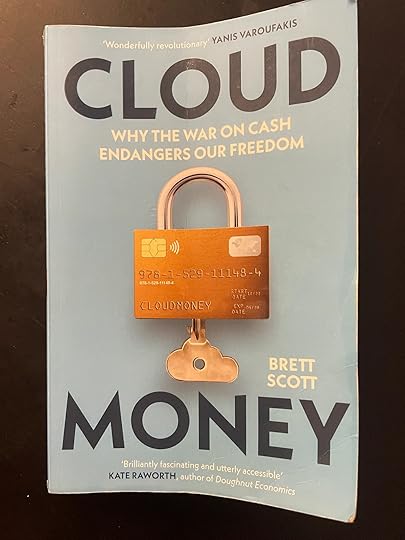
“Partisans with anti-cash agenda paint cash as impendiment — blocking the road for the fast cars seeking to overtake it. Yet there is no conflict in maintaining both systems. The closest transport analogy for cash is the bicycle, and ‘going cashless’ is like closing down bike lanes that run parallel in a city of cars.”
“Overall cash usage has grown, but cash usage for transaction has, in relative terms, declined in almost all countries, sometimes drastically. People still want cash but — often — as a way of keeping their money outside the banking sector.”
Almost all financial inclusion initiatives present digital technology as a great leap forward, that will enable unbanked to get banked. Not mentioned, however, is that the economic risk-return equation is only half of a bigger equation: while banks may not like poor people unless they can dealing with them profitable, poor people had no practical reason to like banks either.
One part of the reason is practical: Historically, the average size of their transaction was so small as to make writing a cheque or requesting bank transfers an unnecessary or even embarrassing process, especially in situations where they might only buy essential goods within a small radius from where they live.
Another part is political: I was a boy at the tail end of the apartheid regime in South Africa, notorious for its discrimination. At this time, my parents opened a special children's account for me at the "Standard Bank", one of the country's most prominent financial institutions. I remember the branches full of white people, while the black people stood outside. Gradually, as South Africa moved into its post-Apartheid phase, the number of black customers increased. But those who were illiterate were treated with condescension. For an elderly Zulu man, who had spent his formative years as a laborer for a South African mining corporation, there was no reason to feel trusting towards financial institutions. This same pattern is found the world over.