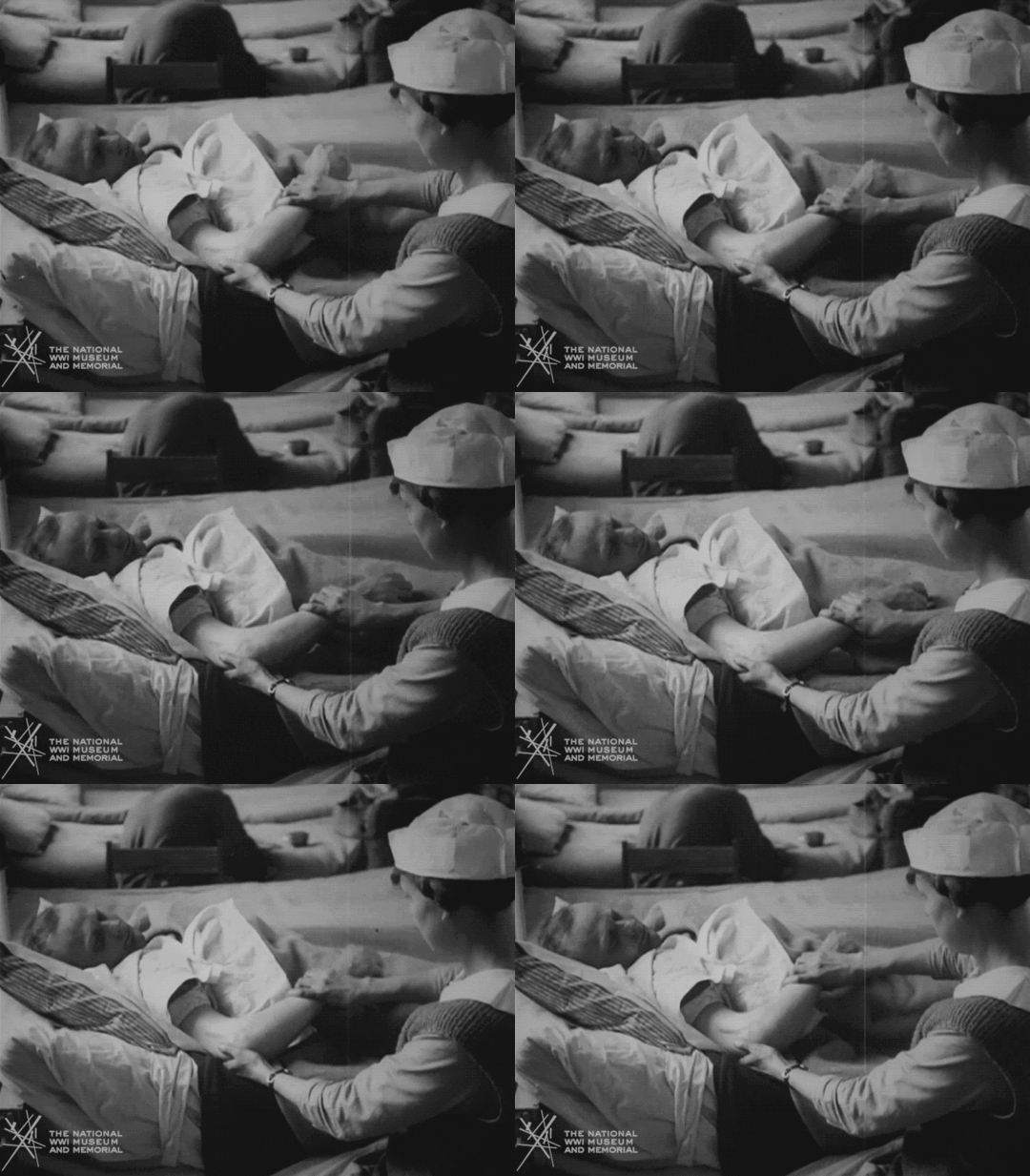
It's become complicated for Squire Wendover, and he turns to Sir Clinton Driffield, the local Chief Constable, for advice.
Wendover is actually right. It is complicated. He's the sole executer of the estate of John Ashby who died 15 years earlier. Due to sad circumstances which became even sadder, the only heir was Ashby's grandson Robin Ashby who, on the day of his majority, his 21st birthday, died of diabetes. Insulin had not yet been discovered. Then a will in favour of his nurse showed up. Wendover's question to Driffield? Is the will valid?
Librarian's note #1: this is Connington's only Driffield short story. He wrote 17 novels featuring him between 1927 and 1947.
Librarian's note #2: the short story is one of 16 in the collection, Bodies from the Library published in 2018 by Collins Crime Club.
This was a mystery about an inheritance, not so much a murder. A young man was the only heir to a fortune that he couldn't touch (or will away) until he came of age. He was diabetic and so under the care of a nurse who showed up at his attorney's office with a will dated the day he was old enough to write one, leaving his fortune to her. He was a bit younger than she, but she was beautiful and he had fallen in love with her in the way a bedridden young man might do. And of course, he knew they could never marry and he wasn't long for this world, but he wanted her to have a good life when he was gone.
The executor of the estate thinks something is off, though. So he enlists his old pal, Sir Clinton Driffield, to look into the matter for him. I have to say, I had a hard time following all of what Driffield was saying about the letter at the end. It seemed a bit convoluted to me. However, it made me want to find more of the stories that Connington wrote. And really, isn't that the point of these short stories?
From what I can find, this was first published in The London Evening Standard in 1936. Feel free to correct me if I'm wrong. This was read as part of the short story detective anthology Bodies from the Library.
This was a mystery about an inheritance, not so much a murder. A young man was the only heir to a fortune that he couldn't touch (or will away) until he came of age. He was diabetic and so under the care of a nurse who showed up at his attorney's office with a will dated the day he was old enough to write one, leaving his fortune to her. He was a bit younger than she, but she was beautiful and he had fallen in love with her in the way a bedridden young man might do. And of course, he knew they could never marry and he wasn't long for this world, but he wanted her to have a good life when he was gone.
The executor of the estate thinks something is off, though. So he enlists his old pal, Sir Clinton Driffield, to look into the matter for him. I have to say, I had a hard time following all of what Driffield was saying about the letter at the end. It seemed a bit convoluted to me. However, it made me want to find more of the stories that Connington wrote. And really, isn't that the point of these short stories?
From what I can find, this was first published in The London Evening Standard in 1936. Feel free to correct me if I'm wrong. This was read as part of the short story detective anthology Bodies from the Library.
3 Stars. A touch simplistic. But be careful, following Sir Clinton Driffield's explanation at the end may tax your faculties. It did mine. The author, Alfred Walter Stewart writing as J.J. Connington penned 17 novels featuring a smart rural Chief Constable, Driffield, but only one short story about him - this one. Driffield is approached by his friend Wendover with a puzzle he needs to resolve. He is executor of the estate of elderly John Ashby who died 15 years ago leaving 53,000 pounds to his offspring. His son and wife died in a rail accident; Wendover is the administrator of this large sum for young Robin Ashby, the only grandchild. Robin's 21st birthday is approaching but will the lad make it? He has diabetes and is withering away at a clinic in France. Insulin would have saved him but, if you recall, it was only discovered by Frederick Banting and Charles Best at the University of Toronto in Canada in 1921. Thus, the title. Unfortunately, Robin dies and his nurse, Sydney Eastcote, claims Robin made a will on the day of his death, his 21st birthday, leaving it all to Sydney. What a coincidence. Or, asks Wendover of Driffield, is this a theft in progress? (Jul2022/Oc2025)
A classic and forefather to today's modern murder mysteries. Not sure what a previous reviewer expected from an 11-page novella when they called this one "a touch simplistic".