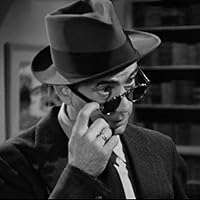
The world seems never to tire of these two stars.
"Ten years on, it’s time to turn a fresh eye on their story—not to tear their legend down, as people always fear about reassessments of their favorites’ lives, but to understand how Bogie and Bacall happened, what their story meant, and in how many ways it’s still relevant and reflective for today. Bogart and Bacall were among the first celebrities to become political activists, speaking out in the late 1940s when they believed American democracy was under assault. Moreover, many of our ideas about masculinity, femininity, and the expectations for men and women were encoded by Hollywood in the middle part of the twentieth century, with Humphrey Bogart and Lauren Bacall being held up as exemplars."
Author Mann has set himself a challenging undertaking (and some might term it “thankless”).
There are several challenges that the reader may encounter:
The book is massive;
Almost every detail has multiple facets due to newspaper articles, other books and interviews.
The imagery (and, yes, mythology) involving this couple is what most readers have accepted.
The author must convince most of us, early on, that this isn’t going to be a “hatchet job.”
Here is an example of how Mann negotiates those perils:
"Yet although he brilliantly created Spade and Rick—and Duke Mantee and Philip Marlowe and Mad Dog Earle and Charlie Allnut—from parts of himself, the characters and the man were very much not one and the same. The real Humphrey Bogart, whom I hope I am revealing here, was gentler, more romantic, more yearning than the legend admits. In his youth, he was a Broadway cavalier, a speakeasy dandy, who wanted very much to become a romantic matinee idol. He loved the theater, he loved his craft, and he cared about becoming a better actor, pushing himself to take chances. But the wounded child within him made regular and devastating appearances over the course of his career, and his alcoholism constantly threatened everything he had achieved. The legend holds that Bacall saved him, that with her Bogart finally found true love and contentment. There’s truth in that, but as always, the truth is complicated."
"The Bogart legend, first promulgated in the late 1930s and early 1940s and nourished by chroniclers for the next seventy-plus years, simply could not reconcile the Broadway boulevardier of the Roaring Twenties with the cynical tough guy of midcentury. Humphrey’s decision to enter the dandified world of the theater needed to be somehow explained away. It was just for the money; it was only because he “loved sleeping late in the morning.” Even a more recent biographer wrote that Hump had agreed to take the job as stage manager only after both Alice Brady and Grace George had clamored for him to do so, leaving him “beset from two sides.” But in fact, Humphrey had required no prodding to take Brady’s offer; it was the fulfillment of a boyhood dream."
And from this start, working for Brady, Bogart found his metier. It was a decade’s journey from stage to screen and from minor roles to success, but he got there.
Yet,, first the studios and then the writers and finally his last wife found it necessary to excise and recast much of the first several decades to match the on-screen and life image that they were promoting. Who would want to spend their money to see the person who has been since his teens and alcoholic with anger management issues? How much credence could fans put into Bogart’s “idyllic” fourth marriage if they knew how much of the previous failures were due to his shortcomings?
The narrative is not strictly chronological, but it follows certain threads from beginning to end. Mann is meticulous in his research, and he builds his case with care. It is certainly a beacon for cinema scholars. It is hard to conceive of a more detailed Bogart biography. In some ways, it reminds me of the effort that Robert Caro put into his analysis of Lyndon Johnson’s life.
Very impressive.