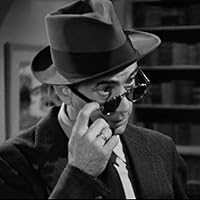
From the noted Hollywood biographer and author of The Contender comes this celebration of the great American love story—the romance between Lauren Bacall and Humphrey Bogart—capturing its complexity, contradictions, and challenges as never before. In Bogie & Bacall, William Mann offers a deep and comprehensive look at Lauren Bacall, Humphrey Bogart, and the unlikely love they shared. Mann details their early years—Bogart’s effete upbringing in New York City; Bacall’s rise as a model and actress. He paints a vivid portrait of their courtship and twelve-year the fights, the reconciliations, the children, the affairs, Bogie’s illness and Bacall’s steadfastness until his death. He offers a sympathetic yet clear-eyed portrait of Bacall’s life after Bogie, exploring her relationships with Frank Sinatra and Jason Robards, who would become her second husband, and the identity crisis she faced. Surpassing previous biographies, Mann digs deep into the celebrities’ personal lives and considers their relationship from surprising angles. Bacall was just nineteen when she started dating the thrice-married forty-five-year-old Bogart. How might that age gap have influenced their relationship? In addition to what she gained, what might Bacall have lost by marrying a Hollywood superstar more than twice her age? How did Bogart, a man of average looks, become one of the greatest movie stars of all time? Throughout, Mann explains the unparalleled successes of their individual careers as well as the extraordinary love between them and the legend that has endured. Filled with entertaining details and thoughtful insights based on newly available records and correspondence, and illustrated with 30-40 photographs, Bogie & Bacall offers a fresh look at this famous couple, their remarkable relationship, and their legacy.
William J. Mann is a New York Times bestselling author of The Contender: The Story of Marlon Brando, for which he was granted access to Brando’s private estate archive, as well as Kate: The Woman Who Was Hepburn (named a Notable Book of the Year by the Times); Hello Gorgeous: Becoming Barbra Streisand (praised by USA Today for its “meticulous research and insightful analysis”); Edge of Midnight: The Life of John Schlesinger, for which he worked closely with the Oscar-winning director; and The Black Dahlia: Murder, Monsters, and Madness in Midcentury America. His book Tinseltown: Murder, Morphine and Madness at the Dawn of Hollywood won the Edgar Allan Poe Award. Mann is a professor of film and popular culture at Central Connecticut State University.
"Ten years on, it’s time to turn a fresh eye on their story—not to tear their legend down, as people always fear about reassessments of their favorites’ lives, but to understand how Bogie and Bacall happened, what their story meant, and in how many ways it’s still relevant and reflective for today. Bogart and Bacall were among the first celebrities to become political activists, speaking out in the late 1940s when they believed American democracy was under assault. Moreover, many of our ideas about masculinity, femininity, and the expectations for men and women were encoded by Hollywood in the middle part of the twentieth century, with Humphrey Bogart and Lauren Bacall being held up as exemplars."
Author Mann has set himself a challenging undertaking (and some might term it “thankless”).
There are several challenges that the reader may encounter: The book is massive; Almost every detail has multiple facets due to newspaper articles, other books and interviews. The imagery (and, yes, mythology) involving this couple is what most readers have accepted. The author must convince most of us, early on, that this isn’t going to be a “hatchet job.”
Here is an example of how Mann negotiates those perils: "Yet although he brilliantly created Spade and Rick—and Duke Mantee and Philip Marlowe and Mad Dog Earle and Charlie Allnut—from parts of himself, the characters and the man were very much not one and the same. The real Humphrey Bogart, whom I hope I am revealing here, was gentler, more romantic, more yearning than the legend admits. In his youth, he was a Broadway cavalier, a speakeasy dandy, who wanted very much to become a romantic matinee idol. He loved the theater, he loved his craft, and he cared about becoming a better actor, pushing himself to take chances. But the wounded child within him made regular and devastating appearances over the course of his career, and his alcoholism constantly threatened everything he had achieved. The legend holds that Bacall saved him, that with her Bogart finally found true love and contentment. There’s truth in that, but as always, the truth is complicated."
"The Bogart legend, first promulgated in the late 1930s and early 1940s and nourished by chroniclers for the next seventy-plus years, simply could not reconcile the Broadway boulevardier of the Roaring Twenties with the cynical tough guy of midcentury. Humphrey’s decision to enter the dandified world of the theater needed to be somehow explained away. It was just for the money; it was only because he “loved sleeping late in the morning.” Even a more recent biographer wrote that Hump had agreed to take the job as stage manager only after both Alice Brady and Grace George had clamored for him to do so, leaving him “beset from two sides.” But in fact, Humphrey had required no prodding to take Brady’s offer; it was the fulfillment of a boyhood dream."
And from this start, working for Brady, Bogart found his metier. It was a decade’s journey from stage to screen and from minor roles to success, but he got there.
Yet,, first the studios and then the writers and finally his last wife found it necessary to excise and recast much of the first several decades to match the on-screen and life image that they were promoting. Who would want to spend their money to see the person who has been since his teens and alcoholic with anger management issues? How much credence could fans put into Bogart’s “idyllic” fourth marriage if they knew how much of the previous failures were due to his shortcomings?
The narrative is not strictly chronological, but it follows certain threads from beginning to end. Mann is meticulous in his research, and he builds his case with care. It is certainly a beacon for cinema scholars. It is hard to conceive of a more detailed Bogart biography. In some ways, it reminds me of the effort that Robert Caro put into his analysis of Lyndon Johnson’s life.
I love being transported to the golden age of Hollywood. The black & white noir movies of yesteryear. When the elegant actors would take each other’s hand and walk into the bedroom and close the door. I appreciated that as viewers we were allowed to have our imaginations do the work for us.
And if it was a mobster film, and someone was shot, we wouldn’t have to see the guts and gore, we would just know that something "bad" happened.
The storytelling was beautifully magical in so many different ways – the musical background gave us hints of what was to come, and we would just go with it.
Humphrey Bogart and Lauren Bacall were part of that magical era.
“You know how to whistle, don’t you Steve?”
That was one of the most famous lines uttered by Bacall in the movie, “To Have and Have Hot” where they met and began their infamous love affair while he was still married to his previous wife, Mayo Methot.
But that wouldn’t stop them from eventually ending up together. Bacall eventually married him – she was just 20, where Bogart was 25 years her senior.
This book is the story of their relationship. In many ways a celebration of what was considered a great American love story of this romance – capturing the complexity, contradictions and challenges.
The author attempts to offer a deep and comprehensive look at both, as well as break down the unlikely love that they shared.
But before we get the together…
He does spend lots of time first on detailing their early years separately – Bogart’s upbringing in New York City, as well as Bacall’s rise as a model and actress.
And then…
He takes time to share a portrait of their courtship, as well as their 12-year marriage; including their fights, reconciliations, the children, the affairs, Bogart’s illness and Bacall’s steadfastness until his death.
He also goes beyond Bogie & Bacall by exploring her relationships with Frank Sinatra and Jason Robards, who would become her second husband, and her identity crisis she faced.
What is interesting and different about this book, is that it seems to address issues not talked about in other biographies of this same couple.
For example, Bacall was just 19 when she started dating Bogart, who was so much older, still married, and even married twice before with children. (So thrice married before he met Bacall.)
How did that age gap influence their relationship?
Did she lose anything by marrying a Hollywood superstar more than twice her age?
And probably, one of the most asked questions, how did Bogart, a man of average looks, become one of the greatest movie stars of all time – one that women swooned over?
Mann answers all those questions. As well as explains their unparalleled successes – including their individual successes – and the extraordinary love they held for each other that lasted, despite the conflicts they endured within their marriage.
For those who love old Hollywood – and especially these two, this will be an interesting book.
For those who have not yet been introduced to Bogie & Bacall, this will make you want to go stream or rent some old movies. (Come to think of it, maybe I will, too!)
The book has some pictures, lots of sources and notes, and a complete index. It is filled with entertaining details and thoughtful insights.
Take a step back in time.
I will leave it with the author’s words…
“…Hollywood’s greatest love story, complicated, devoted, passionate, contradictory, genuine, and everlasting.”
A real bait and switch, as Bogie and Bacall's lives together make up a smaller part of the book than you might imagine. It would be more honest to call this a dual biography of both Humphrey Bogart and Laruen Bacall, with a little extra detail given to their lives intersecting.
The entire first half of the book is a biography of Humphrey Bogart, from childhood up to when he meets Lauren Bacall. We then get the same treatment of Bacall (she was much younger than Bogie when they met, so her biography is quite a bit shorter). Then we finally get a look at their lives together before the last big chunk of the book is just about Lauren Bacall's life after Bogart died.
If you put these people on a pedistal then you might want to skip this one. Bogie is portrayed as a drunk and a bit of an asshole and Bacall is shown to be a woman who barely cared about her children and was almost chomping at the bit to cheat on Bogie with various men that she became enthralled with. While Mann apologizes for Bogie often ("yeah he cheated on his wives, but he felt really bad about it you guys!") he doesn't give Bacall the same treatment, going so far as to regularly refuting things she said in her autobiography. In fact, for a book supposedly about Bogie and Bacall's relationship, it felt like Mann made the entire ending about Bacall just to crap on her some more because it felt very unnecessary. I feel it should have stuck to the subject of the title and ended soon after Bogie's death with maybe a bit about Bacall's post-Bogie life. As it is, the book feels overly bloated and unfocused.
Also, there is a huge focus on the Hollywood blacklist and the House Un-American Activities Committee. While this certainly did affect Bogie and Bacall, Mann focuses on it almost more than any other single topic in the book.
In the end, this book was informative but not a very "fun" read. I didn't get the feeling that Mann really liked his subjects as people very much and his writing always felt like he was keeping a cold distance from them.
Lauren Bacall and Humphrey Bogart are the definition of an Old Hollywood Power Couple. Bogie & Bacall is an in-depth look at their lives and love. I didn't really know anything about them before reading this book. I knew some basics and I had seen To Have and Have Not the film in which they met and began their affair and I knew that their was a major age gap. Lauren Bacall or Betty as the people who knew her called her was 19 years old when she started dating 45 year old Bogie who was married to his 3rd wife. She was a child who was very new to Hollywood and Bogie was one of the biggest male movie stars in the world....basically Hollywood men have always been creepy pedophiles.
The author of this book seems to be a big Bogart fan and he really isn't a fan of Bacall. If I had to describe this authors views in 2 words it would be Double Standards. Multiple times the author says that Bogie wasn't a cheater that he was a monogamous guy....but Bogie cheated on all 4 of his wives. Wives 2- 4 were his side chicks before becoming his wife. He was cheating on Lauren Bacall until basically the week before he died.
Meanwhile he has lots of smoke for Lauren's affairs with Adlai Stevenson and Frank Sinatra. She's basically described as being a man hungry stalker, while Bogie is just an sick old man who just wants his wife to spend time with him ( when his sidechick is unavailable). Either cheating is wrong or it's fine I just want the author to keep the same energy.
Lauren Bacall is described as being "difficult" and "rude" but as a woman I know that woman who assert themselves and who don't put up with bullshit are often described that way. Was Lauren Bacall hell on heels.. possibly but she just seemed blunt and straight forward to me.
Overall despite the Double Standards I did mostly enjoy this book. I want to watch more movies by them...no before you ask I've never seen Casablanca but I'm hopeful that I will one day.
I would still recommend this book just watch out for the pro Bogart tilt of the book.
As everyone knows, Casablanca is my favorite movie of all time. Everyone knows this because I will not shut my pie hole about the wonder of this magnificent work of art, or quoting from this motion picture even if the quotes I use are misremembered and often incorrect. Why just the other day I said to my supervisor, " Here's looking at you Ken."( Though,in my defense Ken was standing in front of me, blocking all access to the men's room).Or the time I said, "We will always haveHarriss." ( and at the time I said this, Harris, my administrative assistant had just successfully processed several outstanding expense reports of mine.). Bogie& Bacall: The Surprising True Story of Hollywood's Greatest Love Affair by William J Mann is a fascinating (if a little overstuffed telling of the lives of these two golden age movie stars).Mann, not unlike me on Thanksgiving,seems to have limited self-control, jamming everything he can get his hands on into the story as I do with the pumpkin pie and stuffing. John Lennon's murder, the 9/11 terrorist attack and other events that are only peripherally related to the lives of these actors are forced into this story in a manner not seen since I thought it would be a good idea to force myself into the slacks I wore back in high school after one of my classic Thanksgiving binges.Other details are surprising and often sad. For instance in the 1950's doctors would not tell dying patients the truth about their diagnosis And so Bogie and Bacall never knew he was on his last legs. Or that Bogart was still allowed to smoke (but only unfiltered cigarettes) while his coughing and ultimately cancer diagnosis was being looked at. Bogart's alcoholism and Bacall's bitterness and mean spiritedness to the help in her later years were also interesting yet really sad too. There is a reason why they say you should never meet your heroes. Still overall this book was engaging, especially if you are a fan of the movies.
Clear your schedules for this one, it will keep you occupied for a while! That is because this biography introduces us to Humphrey Bogart, the man, not the myth and legend that we all know and love. We get an in-depth look at his childhood and early career in the theater; his move to Hollywood and the difficulties that he faced in being cast (due in large part to his personal life... and George Raft); and then how the most significant change in his career took place when he met his most important film collaborator (hint: it wasn't Betty, but a man whose children are still active in Hollywood today).
It isn't until a little over 1/3 of the bio that Betty Bacall makes her appearance, and we finally see the start of one of Hollywood's greatest love stories. The author dives into their marriage, and we are able to see how they made it work, despite the fact that he was twice her age when they got married. After Bogie's death, Betty learned the hard way that her career in Hollywood was dependent on the fact that she was "Humphrey Bogart's wife," so she retreated to New York and began a successful (by most people's standards, anyway) run in the theater. The rest of her life is covered, shuttling between New York and Hollywood for acting jobs. The author also covers the unpleasant fact that, as she aged, she could be very difficult to work with. But he handled the criticism very delicately, almost as if he was afraid that the ghost of Betty Bacall herself would come down and haunt him for the rest of his days if he was TOO critical. Which, honestly, there's a good chance that she would.
To sum it all up, I really enjoyed the biography, and would recommend it to any fans of Bogie, Bacall, or the Golden Age of Hollywood in general.
**I received an ARC of this book through Edelweiss in exchange for a fair and honest review**
My father the professor once told me that it's harder to write a short paper than a long one, because you have to figure out what's really important and what you can leave out. This book is a great example of what happens when you think ALL your research is important. It's looooong. Twenty-eight hours, this audiobook is. Was he narrating? It's not clear. The narrator is great at the men. Sounds just like Bogart. All the women sound like drag queens. First half: Bogie alone: a miserable, albeit privileged childhood, a stage career as a leading man, 3 wives he physically abused while really drunk, a lot of alcohol binges. It's so repetitive that it all starts to blur together like a drunk's speech. Enter Betty (Lauren). (Finally. Phew!) Flirts with a lot of older actors to get ahead. Meets Bogie. Fireworks! (Just watch that Whistle scene to To Have and Have Not.) Out goes Wife #3. She's 19, he's 45. Not a well preserved 45. Too many unfiltered cigarettes and cocktails. Unless you mean pickled. Maybe it's a passionate love affair, for a little while, but the "greatest"? Hardly. Toward the end of his life (death from lung cancer at 57), Bacall has crushes on other men (Adlai Stevenson, Frank Sinatra). (Does she have actual affairs? It appears not.) But she stays by Bogie's bedside at the end, so that's good. Their two children don't get much of their time, and the son later blasts them both in his memoir. Bogie also becomes re-involved with his hairdresser/wigmaker, who later writes a "tell-all." Exit Bogie. Frankie dumps Betty, and she marries another alcoholic actor who looks much like Bogie. Has another son, who she seems to prefer to her first one. Divorces Jason Robards Jr after one too many binges. Her second career as a stage actress is a success, mostly because of her star presence. She can't dance and isn't much of a singer. She sometimes gets her understudies or co-stars (if they're women) axed. She is awful to the "little people"--waitstaff, etc. She writes 2 memoirs, one mostly a repeat of the first. She dies at the age of almost 90, alone in the Dakota. There! I saved you 28 hours. Okay, sorry about the snarky tone. I did finish it. Parts were fascinating. We all forget how bad McCarthyism was for our country. How it ruined lives. Bogie came out pretty well in that. He didn't name any names. They both had good intentions and initially fought back. (Until it threatened their careers, anyway. Can't blame them for that.) Mostly I feel bad that I can never look at either of these fine actors the same way again. And wishing the author hadn't tried to psychoanalyze them both to excuse their occasionally horrid behavior.
This was a deep dive into the relationship of Humphrey Bogart and Lauren Bacall. I wouldn't recommend this to anyone who wasn't already a fan of the two because you get a LOT of information on both.
The author has meticulously researched their individual lives as well as their marriage. While alive, Lauren Bacall created a mythology around Bogie and their marriage. This isn't to say that she lied but she often closed her eyes to the reality of Bogie's alcoholism and often tried to make it look as though his previous marriages were relationships he was more or less forced into. The author gently peels back the veil and exposes the very human foibles of Bogie and Bacall.
If you are looking for salacious gossip, you won't find it here. The author is respectful but honest. The only reason I didn't give it a full 10 was that it was a little TOO detailed. Sometimes it got a little boring, which is why I think only true fans of that period in Hollywood would appreciate it.
This book was a slog and a half. I began just sifting through the book just looking for something that wasn’t extremely detailed accounts of every play, movie, review and business deal. I’m bored by celebrity biographies that consist almost entirely of “shop talk”. The author just drones on and on, then will suddenly dump something like “and then Bogart and Mayo Methot had an affair while his wife was in New York”. So I wake up from stupefied boredom only to find that thread is dropped and its back to monotony as usual. 654 pages. If you like challenges -
This revelatory dual chronicle of the lives of Humphrey Bogart and Lauren Bacall is the definitive biography fans have been waiting for and deserve.
By stripping away the barnacles of fake Bogart lore that vintage publicity agents created to carefully manufacture a he-man image, Mann (“Kate: The Woman Who Was Hepburn” and “How to Be a Movie Star: Elizabeth Taylor in Hollywood”) unveils a fresh, complex, and empathetic portrait. Readers learn about Bogart’s affluent but rocky childhood, raised by a drug-addicted physician father and an affection-withholding mother.
Mann also sorts through decades of erroneous mythmaking that cast Bogart’s first three wives as villains and alcoholics to better serve the propaganda of his loving but idealized fourth marriage to Bacall, who was 25 years his junior.
Mann treats Bogart’s high-functioning alcohol addiction with sympathy and nuance but illustrates how it controlled his life.
This sweeping biography tilts its focus a little more toward Bogart (1899–1957), but Bacall (1924–2014) is an integral half of this dual biography, including her affair with Frank Sinatra and her second marriage to Jason Robards.
This magnificent biography is splendidly written, reads fast, and is impossible to put down.
extensively researched. 556 pages. The first 300 pages are interesting, but after page 400 I was simply tired of reading this author’s prose. It was a bit like reading someone’s term paper. While the part about Bogart was compelling, it is clear from the very beginning of the book that this author has a pronounced distaste for Lauren Bacall. He gives lip service to the concept of misogyny in several contexts over the course of the book, yet he slams her repeatedly for using her looks to get what she wants, and characterizes her essentially as a schemer. When he discusses her deficits as a parent, it is with heavy judgment, while Bogart’s deficiencies are somehow simply part of his peculiar character, understandable and forgivable. after page 400 he simply comes across as catty, about Bacall. He sees her as a manipulator in her youth and a crabby old woman in her age. One cannot escape the awareness that his personal unresolved issues with his mother, his sexual orientation or with women have colored his perspective on her to the point where he is not a trustworthy narrator.
Comprehensive biography of two iconic movie stars, yet the best part of Mann's book is he dives deeper to reveal two fallible humans. Highly recommend.
I have enjoyed this author's biographies before, but it seems like his only purpose in writing this "dual" biography is to trash Lauren Bacall's character, her integrity and her acting ability. I was so glad that I borrowed this book from my local library and did not pay money for it.
An exhaustive and sometimes exhausting dual biography of the iconic film stars. Mann leaves no stone unturned, no rumor unexplored, as he aspires to strip the legends and lies of the studio system from their lives. I would say the majority of the book is Bogart, sometimes too much so, but you do get good insight into a man whose personal devils of childhood emotional deprivation and his adult reliance on alcohol did not prevent his skill as an actor from filling the screen. While I think he attempts to provide the same balance for Lauren Bacall, even though this is the more interesting part of the book for me, he often seems to put her down for characteristics that in men are so admired-persistence, drive, focus & more-in a woman is not admired and goes back to the tried and true criticism of not being there for the children where Bogart is given a pass on this. Despite this he does give a clear look at the years after Bogart, her triumphs and failures, and her attempt to ensure that the story of Bogie & Bacall we remember is hers.
A long and exhaustingly thorough examination of the lives of Humphrey Bogart and Lauren Bacall. They were both talented and tenacious, and weren’t very easy people to deal with in their personal lives. I hadn’t realized that Bogie got involved in so many drunken brawls, and somehow I had never learned that “Lauren” (Betty) Bacall was Jewish (it was covered up by the movie studios) and had to learn to lower the timbre of her voice and lose the nasal NY accent in order to get hired for “To Have and Have Not.” This book would mostly interest devotees of old classic films.
This is a tough one to review because while I found it engrossing, fascinating and fair, I also came away liking Bogart and Bacall less than I did when I picked it up.
It's a dual biography, and Bogart fares better. I think it's inarguable that he was the more talented of the two, and I was happy to learn how much he cared about acting. He was proud to be an actor and yearned for the creativity and camaraderie that came from being a cast member. Not exactly in keeping with his tough guy image, but it makes sense when you watch him work. As an actor he had authenticity and integrity. As a man, however, he could be cruel and misogynistic. Perhaps this was because of his time (born at the end of the 19th century) or his alcoholism. I found his third marriage to Mayo Methot fascinating. She was his biggest cheerleader and perfect playmate, on land and at sea and at the bar. But she was not the high-functioning alcoholic he was. Her end was sad, indeed.
Because Bacall lived nearly 60 years after losing him, her story is longer and in its way, sadder. I think she turned out to be one of the pretentious phonies Bogie despised. But that brittle bitchiness seems to be a defense against imposter syndrome. Just out of her teens when she married her much older, much better established first husband, she was exposed to a world that included such giant talents as John Huston, Katharine Hepburn and Spencer Tracy, and Judy Garland. It would be easy to be insecure in that company. Her second husband would be Jason Robards, one of America's most acclaimed stage actors. So her imperiousness and grande dame antics may have been her greatest sustained performances.
Am I glad I read this book? Yes. Would I ever read it again? No. Do I recommend it? If you're a bigger fan of Bogie and Bacall than I am, yes.
I have always been a huge fan of Humphrey Bogart and enthralled by the love story of Bogie and Bacall. This book was interesting and mapped out Bogie’s life very thoroughly, as well as Bacall’s. Too much random detail at times but overall a really engaging listen.
Lengthy but seemingly thorough biography of Humphrey Bogart and Lauren Bacall. About 85% of the book is mostly about Bogie (and of course, his marriage to Bacall). The remaining portion is of Bacall's life after Bogie's death. Very interesting.
Amazing how two drunken, egotistical, psychologically unbalanced, philandering, narcissistic, manipulative, abusive, worst examples of parents, can become; and continue to be, national icons and heroes to millions and millions of celluloid fans. And, regardless of that , I’ll never, ever miss a Bogie/Bacall movie on TMC.
Reading this you get the sense that the author just, simply, doesn’t like Bogart or Bacall. At every turn he questions what Bacall said or wrote, using words like ‘claimed’ or ‘reportedly’ - but doesn’t have any problem presenting what Bogie’s alleged mistress says as the actual truth. After all, she decided to write decades after his passing, so we can’t ever know his version. The author frequently points out that Bacall tries over and over to construct this ‘Bogie and Baby’ narrative to control it and to serve her, but, once again, never dares to question Verita’s story, and the fact that in her final years she opened a bar called ‘Bogie and Me’. For the author, one woman creates and control the ‘Bogie and Baby’ narrative for her gain and status, and the other is just ‘telling her story’. I’ll stay with Lauren Bacall’s side of the story. On the other hand it was very interesting to read about our protagonists respective childhoods, especially Bogart’s. You see that the author clearly did his research. That doesn’t stop him from getting a few facts wrong, like the fact that their first dog Harvey, was just a wedding present and Bogie doesn’t actually get the dog because Betty’s dog died. Any Bogart and Bacall fan knows that. He also writes about the ‘Pandagate’ which again, every Bogie and Bacall fan knows about. The author just spends way too much time defending the model against the misogynistic press and Bogart and Bacall comments, saying she just didn’t deserve it and it ruined her career. It’s hard to feel pity for her when she also enjoyed the attention she got for the case and didn’t have any problem posing for the cameras. Cry me a river. The author tries to hard to defend certain women on this book, too bad that doesn’t extend to Miss Bacall. Interesting in some parts but overall disappointing book for Bogart and Bacall fans.
This book was wonderfully written and an enjoyable read. However, there were several statements made by the author that were so off-putting I cannot give this more than three stars.
The first is in the middle of the chapter following Bogie’s death. The author writes, “Bogie’s death had been bad enough, but far worse had awaited her just a few months down the road,” referring to her humiliating experience being entangled with Frank Sinatra. The embarrassment from her relationship with Frank Sinatra was worse than Bogie’s death? What a strange, and patently false, combination of words.
The second is the pointed statement that “Kate Hepburn, who’d spent the years after Spencer Tracy’s death in 1968 transforming their twenty-seven year friendship into a romantic, star-crossed love story… by implying that she had romantic intimacy with Tracy, she could divert suspicion from her long and close association with other unmarried women.” The implication that literally everyone in Hollywood who knew Katharine Hepburn and Spencer Tracy, including Katharine herself, all made up their romantic relationship is appalling. Nobody is going to deny that Katharine Hepburn was most likely queer, but to throw out there that this decades-long relationship, backed up by the statements of their closest friends, is completely fabricated? Why was this necessary?
I expected better from a scholar of Old Hollywood. Mann’s book about Katharine Hepburn was on my to-read list, but I have since removed it after finishing this. How disappointing.
This entire review has been hidden because of spoilers.
Guess you have to be deeply in love with Bogart and Bacall to care for all the details the author provides about them. I did the audio book and plodded through 22 discs! The author engages in a lot of arm chair psychiatry in postulating about their motives or deep thoughts. To me this is a book that can be skimmed to get the salient points.
I have not finished this book; clearly the author has put in a lot of time and effort . But , does he have a degree in psychology? He analyzes these two continuously. It’s his book, he can do what he wants, but after a while I do not know what is fact and what is just author’s opinion. And there are numerous historical inaccuracies: a minor one, but annoying: page 245: 1940 was not the “height of the depression”; Author makes bacall’s mother getting a job “a small miracle”. Depression was already winding down due to employment in equipment to help the British . So, not “ a small miracle”, but the author’s misinterpretation of the situation . One can only wonder at over all accuracy.
This entire review has been hidden because of spoilers.
William Mann certainly did his homework before writing this mega bio. Here's looking at 27 hours on the well narrated audiobook, or 656 pages hardcover. It's in-depth, thorough. A good winter project, that's how I viewed it. I liked the audiobook. Solid three star.
We all know a little of this star couple. They lived fascinating lives. The golden era of Hollywood comes shining through and adds to the impact.
One does not have to be a film buff to enjoy this artfully arranged work.
The title is a little misleading. This is a biography of both Bogart and Bacall from their birth to when they met each other. The portion that dealt with the "Greatest Love Affair" didn't provide any new information.
I love classic movies. Bogart made so many. Casablanca might be my favorite movie of all time. Last year I watched To Have and Have Not and The Big Sleep back to back. It was glorious. Key Largo, The African Queen and this just scratches the service. There is every reason to dig deeper, as deep as one can into his films. Three of those movies listed above featured Lauren Bacall.
Bogart was more than twice her age when they married. Thrice divorced already Bogart may have been by the legend built up around this couple, first by the studio, and later by Bacall herself, would have one believe none of those relationships mattered and that their ending had little to do with any failures in his part.
The author makes clear this was not the case. Bogart was not a loved child, without getting on the couch with him it’s fairly easy to draw a line from his childhood to his emotional failures in his life. We learn a great deal about his movies, his beginnings in the New York theater scene, his battles with his studio chief Jack Warner but most of the new information ends up breaking some of the myth created in the half century plus since his death.
Bogart was an alcoholic. A raging alcoholic. A functioning one for the most part. He made his calls on the set each morning. He was a mean drunk. Goading, fighting, brawling. And not just in his youth. It’s not a pretty story.
I had read that Bogart was a strong liberal, speaking out especially against prejudice and in favor of equal rights for those of color. Mann does not touch on this much. He does address his support of labor as early as the late thirties. He and Bacall actually led a group of Hollywood folks to Washington to support the Hollywood Ten in the early days of the Red Scare. Unfortunately as principled as he may have wanted to be Bogart made a habit of stepping back. Politically this hurt him. His pride must have been hurt. He never could say enough to please the right wingers that attacked him. Those he supported, his friends on the left, ended up feeling betrayed by him. It was a difficult time for all but it would have been more in line with the myth making if he had stood firm.
The studio system shows through in all of Bogie’s years in Hollywood. It was a wretched system. It reminds me of the early days of baseball. When challenged the studio heads such as Jack Warner, much like the owners of baseball teams, would leak stories about the greed and pretentiousness of these greedy actors and the public would inevitably turn against them.
One could write a dissertation about what it is in the American public’s psyche that for as long as one can remember will get them to side with oligarchs and billionaires against their employees who want a bigger share of the profits they are earning for them.
Now Lauren Bacall. How can one come away from this book thinking positively about her. It is very difficult. What one has to do is examine themselves to see if they have the same feelings about Bogie. Can you talk about Bacall without being sexist. Well, let’s try.
Lauren Bacall asked Bogart if he knew how to whistle and movie history changed. She filled the screen. She was ambitious beyond belief. She won two Tony awards, she was nominated for an Oscar. None of it was easy for her. Opportunities came for her as a result of her relationship with Bogart but it must be remembered she did not know Bogart when she landed the role in “To Have and Have Not.”
This gets into her relationships with older male mentors. Mann does a good job here being circumspect. Many of these directors and producers that Bacall met gave her opportunities that seemed beyond her experience and talent. Why? One could make conjecture but he does not. Bacall insisted that she did not perform on the casting couch and no one spoke of it after.
If she did or not does not really matter. She would not have been the first or last to have been used in that way. And she did accomplish her goals. A better examination might be what possessed this 17,18 year old girl to believe simply by asking, by presenting herself, that fate would launch her.
It all seems so unlikely. But, one guesses for any star that it is most often a succession of unlikely events.
Bacall though, outside of this, and this is where it is difficult, seems to have been a very not nice person. As entitled as a success as she was as a teenager she was one who punched down. Waiters, staffers, anyone tasked with helping her, she was rarely gracious, often mean.
Both Bogarts left much in the way of parenting. For Bogie becoming a father later in life left him befuddled. He was not one to improve and bestow what he missed in his old childhood.
Bacall left a young widow with two young children had neither maternal instinct or a desire to put her children first. This is where one treads lightly. On the one hand a man who chases his career to the detriment of parenting is not looked at the same way as Bacall.
Yet as she candidly admitted often she needed more than her children and struggled to ever put them first. I will leave it at that.
Love the movies. Like most of us though, remember these were flawed people.
In BOGIE & BACALL, William J. Mann has mined the legend, lore and lasting, well-established facts concerning two storied icons of the big screen.
Humphrey Bogart and Lauren Bacall had careers that seemed shaky, even improbable, at the outset. Bogart, the product of aristocratic parents who endowed him with privilege but little love, was not the typical big handsome hero --- not, as Mann points out, the actor of choice for Westerns. But after a brief stint on Broadway and a few failed attempts, he proved himself in his portrayal of a creepy killer in The Petrified Forest. So his movie career escalated, seen as a guy who looks ordinary but has qualities good or evil that surprise and engage the watcher. Bacall was the child of Jewish parents who separated when she was five. Her striking looks landed her work as a clothes model in her teens and fostered her desire to become an actress.
Mann’s two protagonists met during the filming of To Have and Have Not, and their romantic affair came into full bloom before their work was done. Bogie, at 45, was married to a third wife and had developed a need to consume alcohol on a regular, sometimes self-destructive basis. Bacall was 18 and possibly secretly wanted the attention from an older man that she had missed out on in childhood. Whatever the motives, they were married, appeared in three more films together, and for 13 years maintained their attachment. They had a son and a daughter, and were still capable of tenderness despite the strife --- later recorded in Bacall’s memoir --- of Bogie’s alcohol problems and their individual cravings for stardom.
Bogart passed away in 1957. The scenes of his final days in the hospital, suffering from and yielding to cancer, indicate that Bacall rewarded him with the care and comfort he so lacked as a child, revealing her to be someone quite capable of bestowing unselfish love.
Mann has written about other greats of the screen realm --- Marlon Brando, Katherine Hepburn, Elizabeth Taylor, Barbra Streisand --- and here tackles the separate and paired reputations and realities of two more cinematic legends. Their saga comprises a dual biography of remarkable range, a broad tapestry that shows the couple from seemingly all angles, and establishing Mann once again as a highly skilled literary cameraman. The book is big and bursting with engaging fact, much of it centered on Bacall’s lengthy career, second marriage, and awards and recognition as she lived to near 90.
Mann avers in the Preface that he was fortunate to have access to newly released files about the couple, along with Bacall’s books about the stellar relationship that he insists --- and here seeks to prove --- was “Hollywood’s greatest love story.”