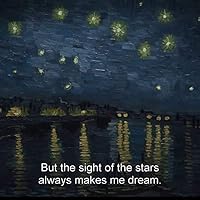
Sonnet 18 by William Shakespeare set beside the classic impressionist paintings of Claude Monet.
Art and Lit for Small Humans was started by a dad tired of reading bad, boring books to his kids at bedtime. Created to counter the cheap, ugly, over-saturated media that children consume today, it is a collection of classic poems, stories, psalms, and tales set to real art for the enrichment of kids and the adults who read to them. Other works in series
The Iliad (TBD) The Odyssey ( Holy Sonnets and Icons ( To Autumn (
William Shakespeare was an English playwright, poet, and actor. He is widely regarded as the greatest writer in the English language and one of the world's pre-eminent dramatists. Often called England's national poet and the "Bard of Avon" (or simply "the Bard"), he remains one of the most influential literary figures in history. His surviving works, including collaborations, comprise approximately 39 plays, 154 sonnets, three long narrative poems, and several other verses, some of uncertain authorship. His plays have been translated into every major living language and are performed more frequently than those of any other playwright. His works continue to be studied, performed, and reinterpreted around the world.
Shakespeare was born and raised in Stratford-upon-Avon, Warwickshire. At the age of 18, he married Anne Hathaway, with whom he had three children: Susanna and twins Hamnet and Judith. Sometime between 1585 and 1592, he established a successful career in London as an actor, playwright, and shareholder in a theatrical company known as the Lord Chamberlain's Men. Following the accession of King James VI and I to the English throne in 1603, the company became known as the King's Men. Around 1613, at approximately 49 years of age, Shakespeare appears to have retired to Stratford-upon-Avon, where he died three years later. Relatively few records of his private life survive, giving rise to considerable speculation about his appearance, sexuality, religious beliefs, and other aspects of his personal life. Various theories have also questioned whether he was the actual author of the works attributed to him, although these claims are not accepted by mainstream Shakespeare scholarship.
Shakespeare produced most of his known works between approximately 1589 and 1613. His early plays consisted primarily of comedies and histories, and are widely regarded as among the finest examples of their respective genres. He subsequently concentrated largely on tragedies, particularly between 1600 and 1608. These included Hamlet, Romeo and Juliet, Othello, King Lear, and Macbeth, all considered masterpieces of English literature. During the final phase of his career, he turned increasingly towards tragicomedies, also known as romances, and collaborated with other playwrights.
Many of Shakespeare's plays were published during his lifetime in editions of varying quality and accuracy. A major milestone in preserving his dramatic works came in 1623, when John Heminges and Henry Condell, two of his fellow actors and close associates, published the First Folio. Officially titled Mr. William Shakespeare's Comedies, Histories, & Tragedies, this posthumous collection contains 36 plays and remains one of the most important sources for the texts of his works. Its preface includes a commemorative poem by Ben Jonson, a fellow playwright and former rival, who famously praised Shakespeare as one "not of an age, but for all time".
شعر رو قبلا خونده بودم و بنظرم زیبا بود ولی نه در حدی که بخوام چند باره بخونمش یا حفظش کنم، دیروز وقتی برای بار چندم داشتم نومدلند رو میدیدم، توی سکانسی که فِرن داشت این شعرو میخوند احساس کردم عمیقتر از همیشه حسش کردم، یچیزی رو توی قلبم لرزوند...
Shakespeare's dead. Shakespeare's beloved's dead. And "THIS" is the "Eternal" living oath of them! Now I knew why it is the most famous one out of 154 sonnet! How gorgeously magical that hit hard to the core meaning of love, the worth of writing, How words lives! I'm obsessed of this sonnet!
But thy eternal summer shall not fade,
The way he had compared his beloved to the summer days, explaining how blessed those days are, where to remark she is more beautiful that it itself! Then resolute that comparing his beloved to nature is no use, it will end someday, it will die one day. He realised that his beloved must be compared to something immortal. His words! William Shakespeare's words are immortal.
So technically speaking, I knew about this sonnet a long time ago (and even had the first two lines memorized from seeing/hearing them everywhere), but I never actually read the whole thing through until today. I rather liked it, to be honest. This from the person who isn't much fond of either Shakepeare or poetry in general, by the way.
It's a poem that raises the flaws of a dazzling entity loved by all (a summer's day) in order to better prove to its audience the superiority of the main human subject.
Metaphorically, it is simplistic. The underlying theme itself is simplistic. I have nothing further to say about it.
“Shall I compare thee to a summer’s day? (a) Thou art more lovely and more temperate: (b) Rough winds do shake the darling buds of May, (a) And summer’s lease hath all too short a date; (b) Sometime too hot the eye of heaven shines, (c) And often is his gold complexion dimm’d; (d) And every fair from fair sometime declines, (c) By chance or nature’s changing course untrimm’d; (d) But thy eternal summer shall not fade, (e) Nor lose possession of that fair thou ow’st; (f) Nor shall death brag thou wander’st in his shade, (e) When in eternal lines to time thou grow’st: (f) So long as men can breathe or eyes can see, (g) So long lives this, and this gives life to thee. (g)”
This entire review has been hidden because of spoilers.
This is a lovely poem, but I found that that it fell a bit in my esteem after reading through all of William Shakespeare's sonnets and seeing where it fits in the context of the narrator urging a young person who does not want kids to suck it up and have them for the sake of sharing his or her fine looks with all of humanity. "When eternal lines to time thou grow'st" has different connotations in light of the earlier seventeen sonnets, sadly.
I have arranged my takeaway thoughts into a haiku:
"The lines that please most, I find dwell on your pages, 'Til time else moves me."
And every fair from fair sometimes declines By chance or nature's changing course untrimmed But thy eternal summer shall not fade Nor lose possession of that fair thou owest
وما من جميل يظل جميلا فشيمة كل البرايا الفناء ولكن صيفك ذا لن يغيب ولن تفقدي فيه نور الجمال
Sonnet 18: Shall I compare thee to a summer’s day? BY WILLIAM SHAKESPEARE
Shall I compare thee to a summer’s day? Thou art more lovely and more temperate: Rough winds do shake the darling buds of May, And summer’s lease hath all too short a date; Sometime too hot the eye of heaven shines, And often is his gold complexion dimm'd; And every fair from fair sometime declines, By chance or nature’s changing course untrimm'd; But thy eternal summer shall not fade, Nor lose possession of that fair thou ow’st; Nor shall death brag thou wander’st in his shade, When in eternal lines to time thou grow’st: So long as men can breathe or eyes can see, So long lives this, and this gives life to thee.
Possibly Shakespeare's most well-known Sonnnet, what scholars number as the 18th, is a romantic one that is perplexing in its fame due to Shakespeare's subject being another man. 154 sonnets are known to be written by the bard, of which 126 belong to the saga of 'Fair Youth' which is characterized by the subject being an attractive young man whom Shakespeare develops a deep affection for, but this relationship becomes strained and complicated with the introduction of another character in later sonnets. I hope to read all of Shakespeare's sonnets, but having read this one independently, as well as its fame, I wanted to review this sonnet on it own. It's certainly a beautiful sonnet and one that I appreciate for its sincere expression of queer love.
"So long lives this, and this gives life to thee."
There is no metaphor thorough enough to capture the essence of this person, because his essense is too strong, too beautiful to be finite, and so he must be immortalized through art, and I find that beautiful. Art truly does have a way of immortalizaing those lost. The person whom this poem is written about, is long since dead, and yet, never forgotten. At least, so says Shakespheare, because for as long as this is one of his most famous poem, this mysterisous person whom this was written about, who we will never konw either, will live forever through this poem. I suppose there is beautiful irony in the fact that this was written to immortalize the person he wrote this about, and so it became his most famous sonnet.
one of the greatest English poems I have ever read; I could have felt the summer in the bottom of my heart.
This part was the most beautiful part of Sonnet in my opinion.
Nor shall death brag thou wand’rest in his shade, When in eternal lines to time thou grow’st, So long as men can breathe or eyes can see, So long lives this, and this gives life to thee.
The use of Irony metaphor an Imagery Shakespeare has done in his sonnet number 18 is magnificent for a reader, how he starts the sonnet by using a metaphor and then ends the couplets with an anaphora . Honestly my favourite part in the Irony of this poem is how Shakespeare isn't describing the young man's beauty eternal but his description in the sonnet as eternal.
Can we normalise using this poem instead of roses are red, please and thank you? I mean that would probably make this one overused but it would be sweet. I love a good poem. A well wrote sonnet. But this would've been nicer to that tale as old as time:
Fellas, sod your roses are red: Shall I compare thee to a summer’s day?