

What do you think?

The Teapot Dome Scandal: How Big Oil Bought the Harding White House and Tried to Steal the Country
In this amazing and at times ribald story, Laton McCartney tells how Big Oil handpicked Warren G. Harding, an obscure Ohio senator, to serve as our twenty-third president. Harding and his “oil cabinet” made it possible for cronies to secure vast fuel reserves that had been set aside for use by the U.S. Navy. In exchange, the oilmen paid off senior government officials, bribed newspaper publishers, and covered the GOP campaign debt. When news of the scandal finally emerged, the consequences were disastrous. Drawing on contemporary records newly made available to McCartney, The Teapot Dome Scandal reveals a shocking, revelatory picture of just how far-reaching the affair was, how high the stakes, and how powerful the conspirators–all told in a dazzling narrative style.
384 pages, Paperback
First published January 1, 2008
Ratings & Reviews
Friends & Following
Create a free account to discover what your friends think of this book!
Community Reviews
Displaying 1 - 30 of 142 reviews

May 12, 2012
”Warren Harding seemingly exemplified the Middle American values held near and dear. It is not simply a coincidence that seven U.S. presidents before Harding had hailed from Ohio. He was also strikingly handsome, usually impeccably tailored, had a vibrant speaking voice that reached the rear seats of the biggest auditoriums, and was as amiable as a Labrador retriever. But Harding had a long history of pursuing every comely female who came his way. And unlike some of similarly inclined successors in the White House, Harding didn’t view these liaisons simply as “slam, bam, thank you, ma’am” affairs. Harding would assiduously court each of his mistresses, write them gushing love letters, leaving a paper trail, and juggle multiple affairs concurrently.”
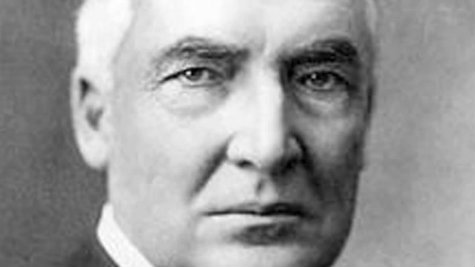
Warren G. Harding
Warren G. Harding was content to be a senator from Ohio, chasing women, drinking too much, and playing poker into the wee hours of the morning, but a man by the name of Harry Micajah Daugherty decided that Harding would make the perfect Republican president. He fit the profile perfectly. He looked presidential, and he was weak and easily controlled. If this sounds similar to a recent Republican president that is because the Daugherty play book very likely was handed down to Karl Rove.
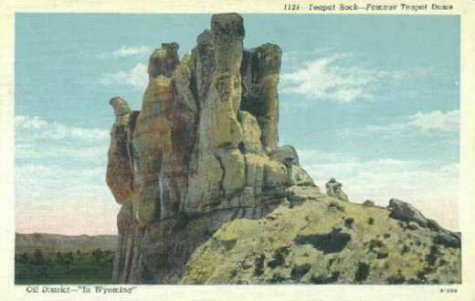
Vintage Teapot Dome Postcard
The idea for exploiting the Navy oil reserves in Wyoming called the Teapot Dome Reserve originated with an Oklahoma oilman by the name of Jake Hamon. He borrowed a million dollars against assets and paid for Harding’s election campaign including all the numerous bribes that has to grease the wheel of any successful presidential campaign. All he wanted was a cabinet position the department of the interior. Unfortunately for Hamon fate threw a monkey wrench into his plans. Ten years earlier he’d left his wife for a nineteen year old shop girl named Clara. He’d paid his nephew $10,000 to marry Clara so that he could check into hotels with her without questions being asked. The problem was that his estranged wife was related to Florence Harding, wife of the soon to be inaugurated president. She insisted that for Hamon to hold a cabinet position he must reunite with his wife and leave that floozy in Oklahoma.
I had a good laugh over this.
Florence was well aware of her own husband’s philandering ways. His long-term twenty-three year old mistress, Nan Britton, and her baby daughter Elizabeth Ann whom Harding had fathered was one of the worst kept secrets in politics. An angry husband, the first of many, showed up at his campaign headquarters demanding compensation for Warren’s affair with his wife the first day Harding received the nomination. Hamon’s slush fund of money came in handy.
Well when Clara found out that Hamon was jilting her to go to Washington she shot him. Hamon died, but the idea of Teapot Dome did not die with him. Senator Albert Fall from New Mexico had money concerns, in fact he was on the verge of bankruptcy, which was especially galling after a life of public service. When he was tapped for the Interior position it wasn’t so much an issue of whether he would support the Hamon idea, but more about how much money he could gain from helping to swing the deal. Control of Teapot Dome still rested with the Navy and as it turned out after some persuasion Secretary of the Navy Edwin C. Denby transferred control of the reserves over to the Interior. Fall leased the reserves to Harry F. Sinclair of Mammoth Oil. It wasn’t illegal, maybe immoral, for Fall to give those no bid leases over to Sinclair, but the accompanying bribes were decidedly against the law. Harding, as expected, went along with the scheme. His part of the deal was the sale of his newspaper for five times what it was worth.
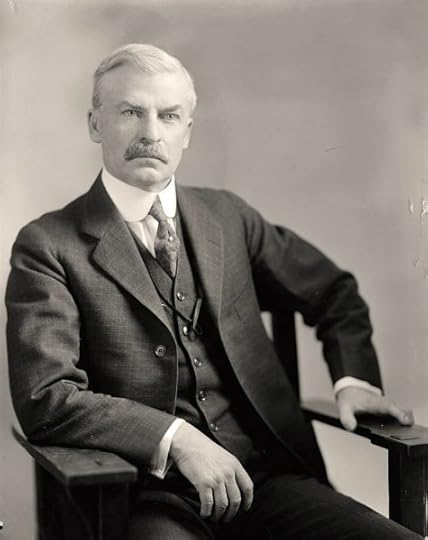
Senator Thomas J. Walsh
Fall’s expanded lifestyle tipped investigators and Senator Thomas J. Walsh from Montana, a Democrat, was tapped to investigate. Fall was in the pool with sharks and as one example of how rich people become really, really rich let me relate a bit of testimony from A. E. Humphreys.
Humphreys related the details of the transaction nearly three years early at the Vanderbilt Hotel in New York. Humphreys had sold 33,333,333 barrels of oil to Continental. At the meeting were Continental’s four owner-partners, Harry M. Blackmer, chairman of the board of Midwest Refining Company; James O’Neil, president of Prairie Oil and Gas Company; Colonel Robert W. Stewart, chairman of Standard Oil of Indiana; and Harry Sinclair. These men purchased Humphreys’s oil at $1.50 a barrel, then promptly resold it to their own oil companies at $1.75 per barrel, creating a one-day profit of just over $8 million. A little more than $3 million of this sum had been converted into Liberty bonds and divided among the four Continental partners: Sinclair, Blackmer, O’Neil and Stewart.
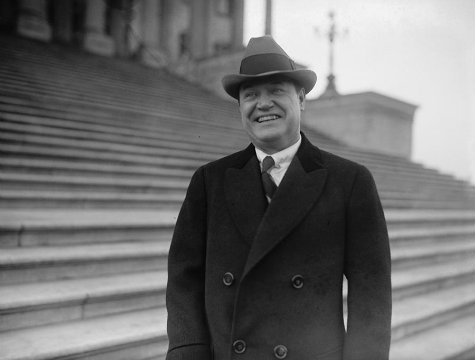
Harry F. Sinclair who started out a soda jerk in his father's store and ended up a rich oilman jerk.
So in other words four of the top leading oilmen in the United States had used a dummy company to defraud their own shareholders out of millions of dollars. Any questions about why we need regulations in this country?
Let the lying begin.
Several witnesses come down with Harding of the arteries referring to the suspicious suicides and deaths including Warren G. Harding who suddenly died at age 57 from a stroke on vacation in San Francisco. Of course that might have just been one too many dips in the pool with a nubile female. There was serious speculation that he may have been murdered by his wife or by a member of the Teapot Dome investigation. His wife spent a week burning what can only be speculated were compromising papers before she would allow the new president Calvin Coolidge to take up residence in the White House. Other witnesses take extended vacations in Europe and go on safari in Africa. It doesn’t take Walsh long to realize that he is onto something now it was only a matter of pulling the right threads.

Secretary of Interior Albert Fall, the perfect fall guy.
The hapless, unhealthy Albert Fall turns out to be...well...the fall guy. He becomes the first presidential cabinet member to go to jail for his actions while in office. Other members of the scandal receive short sentences and slaps on the wrist. Laton McCartney lays out all the evidence, gives us background on all the characters, and paints a picture of a corruption that starts with a premeditated presidential election of an Ohio senator that was not only compromised, but willingly complicit in whatever dirty dealings his supporters were intent on perpetrating. I'll end with a blurb from Jon Meacham, author of Franklin and Winston.
"A terrific tale about a scandal that resonates nearly a century on, at a time when many people are still wondering about the connections between Big Oil and politicians at the highest levels."
If you wish to see more of my most recent book and movie reviews, visit http://www.jeffreykeeten.com
I also have a Facebook blogger page at:https://www.facebook.com/JeffreyKeeten

Warren G. Harding
Warren G. Harding was content to be a senator from Ohio, chasing women, drinking too much, and playing poker into the wee hours of the morning, but a man by the name of Harry Micajah Daugherty decided that Harding would make the perfect Republican president. He fit the profile perfectly. He looked presidential, and he was weak and easily controlled. If this sounds similar to a recent Republican president that is because the Daugherty play book very likely was handed down to Karl Rove.

Vintage Teapot Dome Postcard
The idea for exploiting the Navy oil reserves in Wyoming called the Teapot Dome Reserve originated with an Oklahoma oilman by the name of Jake Hamon. He borrowed a million dollars against assets and paid for Harding’s election campaign including all the numerous bribes that has to grease the wheel of any successful presidential campaign. All he wanted was a cabinet position the department of the interior. Unfortunately for Hamon fate threw a monkey wrench into his plans. Ten years earlier he’d left his wife for a nineteen year old shop girl named Clara. He’d paid his nephew $10,000 to marry Clara so that he could check into hotels with her without questions being asked. The problem was that his estranged wife was related to Florence Harding, wife of the soon to be inaugurated president. She insisted that for Hamon to hold a cabinet position he must reunite with his wife and leave that floozy in Oklahoma.
I had a good laugh over this.
Florence was well aware of her own husband’s philandering ways. His long-term twenty-three year old mistress, Nan Britton, and her baby daughter Elizabeth Ann whom Harding had fathered was one of the worst kept secrets in politics. An angry husband, the first of many, showed up at his campaign headquarters demanding compensation for Warren’s affair with his wife the first day Harding received the nomination. Hamon’s slush fund of money came in handy.
Well when Clara found out that Hamon was jilting her to go to Washington she shot him. Hamon died, but the idea of Teapot Dome did not die with him. Senator Albert Fall from New Mexico had money concerns, in fact he was on the verge of bankruptcy, which was especially galling after a life of public service. When he was tapped for the Interior position it wasn’t so much an issue of whether he would support the Hamon idea, but more about how much money he could gain from helping to swing the deal. Control of Teapot Dome still rested with the Navy and as it turned out after some persuasion Secretary of the Navy Edwin C. Denby transferred control of the reserves over to the Interior. Fall leased the reserves to Harry F. Sinclair of Mammoth Oil. It wasn’t illegal, maybe immoral, for Fall to give those no bid leases over to Sinclair, but the accompanying bribes were decidedly against the law. Harding, as expected, went along with the scheme. His part of the deal was the sale of his newspaper for five times what it was worth.

Senator Thomas J. Walsh
Fall’s expanded lifestyle tipped investigators and Senator Thomas J. Walsh from Montana, a Democrat, was tapped to investigate. Fall was in the pool with sharks and as one example of how rich people become really, really rich let me relate a bit of testimony from A. E. Humphreys.
Humphreys related the details of the transaction nearly three years early at the Vanderbilt Hotel in New York. Humphreys had sold 33,333,333 barrels of oil to Continental. At the meeting were Continental’s four owner-partners, Harry M. Blackmer, chairman of the board of Midwest Refining Company; James O’Neil, president of Prairie Oil and Gas Company; Colonel Robert W. Stewart, chairman of Standard Oil of Indiana; and Harry Sinclair. These men purchased Humphreys’s oil at $1.50 a barrel, then promptly resold it to their own oil companies at $1.75 per barrel, creating a one-day profit of just over $8 million. A little more than $3 million of this sum had been converted into Liberty bonds and divided among the four Continental partners: Sinclair, Blackmer, O’Neil and Stewart.

Harry F. Sinclair who started out a soda jerk in his father's store and ended up a rich oilman jerk.
So in other words four of the top leading oilmen in the United States had used a dummy company to defraud their own shareholders out of millions of dollars. Any questions about why we need regulations in this country?
Let the lying begin.
Several witnesses come down with Harding of the arteries referring to the suspicious suicides and deaths including Warren G. Harding who suddenly died at age 57 from a stroke on vacation in San Francisco. Of course that might have just been one too many dips in the pool with a nubile female. There was serious speculation that he may have been murdered by his wife or by a member of the Teapot Dome investigation. His wife spent a week burning what can only be speculated were compromising papers before she would allow the new president Calvin Coolidge to take up residence in the White House. Other witnesses take extended vacations in Europe and go on safari in Africa. It doesn’t take Walsh long to realize that he is onto something now it was only a matter of pulling the right threads.

Secretary of Interior Albert Fall, the perfect fall guy.
The hapless, unhealthy Albert Fall turns out to be...well...the fall guy. He becomes the first presidential cabinet member to go to jail for his actions while in office. Other members of the scandal receive short sentences and slaps on the wrist. Laton McCartney lays out all the evidence, gives us background on all the characters, and paints a picture of a corruption that starts with a premeditated presidential election of an Ohio senator that was not only compromised, but willingly complicit in whatever dirty dealings his supporters were intent on perpetrating. I'll end with a blurb from Jon Meacham, author of Franklin and Winston.
"A terrific tale about a scandal that resonates nearly a century on, at a time when many people are still wondering about the connections between Big Oil and politicians at the highest levels."
If you wish to see more of my most recent book and movie reviews, visit http://www.jeffreykeeten.com
I also have a Facebook blogger page at:https://www.facebook.com/JeffreyKeeten

May 12, 2012
Real Rating: 4.5* of five, rounded down for small amounts of repetitious formulaic phrase-using.
***NOTE 7/11/18 I'm amazed I wrote this review in 2012. Coulda been written today.
My Review: This book was published in 2008, an election year. I do not think this was an accident. The GOP, a sink of depravity and greed since the Taft Administration, did not need any help losing that election...the fact that the sitting vice-president didn't run as the candidate tells you all you need to know there, the GOP knew what was coming and wanted someone else to take the blame for it...but this book, about a conspiracy of evil, greedy GOP pols, their money-men, and the full intent to defraud We-the-People for private wealth, was still well-timed.
Lest any stupid damnfool conservative start mooing about bias, I rush to report that the author does not say the words I've said. The author reports the facts as history has them. The Committee reports, the papers of all parties concerned, all extant documentary evidence, was used in a careful reconstruction of the actual events that led to the Teapot Dome Scandal, as we've come to call it.
The fact that the documentary evidence makes the conservatives look like evil, greedy bastard mo-fos is just a bonus. Embrace the demon within, GOP/Tea Party supporters! Align yourselves with those who think nothing of splashing out millions to buy the votes and influence the course of the river of money that flows from any government into their own pockets, with the minimum of trickle-down into the Public Good.
Do it openly, and in full knowledge of what kind of rotten sleazebags you're supporting...they've never been any different. Read this book and see why.
2022 ADDENDUM Lest my ire seem more partisan than it is, I rush to assure all readers that Senator Joe Manchin ("D"—Corporate America) has demonstrated the continuing susceptibility of our representative government to overt, money-based rigging in favor of those whose greed exceeds their common sense.
***NOTE 7/11/18 I'm amazed I wrote this review in 2012. Coulda been written today.
My Review: This book was published in 2008, an election year. I do not think this was an accident. The GOP, a sink of depravity and greed since the Taft Administration, did not need any help losing that election...the fact that the sitting vice-president didn't run as the candidate tells you all you need to know there, the GOP knew what was coming and wanted someone else to take the blame for it...but this book, about a conspiracy of evil, greedy GOP pols, their money-men, and the full intent to defraud We-the-People for private wealth, was still well-timed.
Lest any stupid damnfool conservative start mooing about bias, I rush to report that the author does not say the words I've said. The author reports the facts as history has them. The Committee reports, the papers of all parties concerned, all extant documentary evidence, was used in a careful reconstruction of the actual events that led to the Teapot Dome Scandal, as we've come to call it.
The fact that the documentary evidence makes the conservatives look like evil, greedy bastard mo-fos is just a bonus. Embrace the demon within, GOP/Tea Party supporters! Align yourselves with those who think nothing of splashing out millions to buy the votes and influence the course of the river of money that flows from any government into their own pockets, with the minimum of trickle-down into the Public Good.
Do it openly, and in full knowledge of what kind of rotten sleazebags you're supporting...they've never been any different. Read this book and see why.
2022 ADDENDUM Lest my ire seem more partisan than it is, I rush to assure all readers that Senator Joe Manchin ("D"—Corporate America) has demonstrated the continuing susceptibility of our representative government to overt, money-based rigging in favor of those whose greed exceeds their common sense.

March 7, 2014
Reading the Presidents: Warren Harding (scandalous)
Another Update as of January 30, 2015 (Teapot Dome—the scandal that keeps on giving*) Government sells Teapot Dome — on the level, this time.
Update Giving this a well-deserved bump in honor of the recent release of the love letters between Harding and his mistress!

For a nice sampling of the "sexy pen pal" action, check out The Letters That Warren G. Harding’s Family Didn’t Want You to See
Original Review:
In an era that has featured a crack-smoking mayor, a Senator cruising for sex in an airport bathroom, and congressmen attempting to hide their infidelities behind ridiculous aliases and/or claims of "hiking the Appalachian Trail," it's hard to imagine that one could be shocked by the sheer hubris underlying a political scandal from nearly a century ago. And yet, here I stand, jaw still slightly agape, after finishing Laton McCartney's account of The Teapot Dome Scandal.
Elements of the story are all too familiar for a modern-day reader. Big oil men in the White House, "no bid contracts," a presidential candidate who stumbles over his words (in Harding's case, often mixing up Nebraska and Alaska), and opponents questioning the genealogy of the big man in the White House.
There are far too many pieces for me to recount them all. As McCartney points out, it's a bit like following a round of three card monte. However, the bit with which McCartney opens has many of the pieces that make the entire story so sinfully fun to follow: greed, philandering, betrayal, blackmail, murder and a trial that would have Court TV's ratings through the roof.
Big oilman, Jake Hamon (pronounced like the Purim villain), had a good thing going. Having ditched the wife and kids, he was traveling around the country bribing politicians, gambling, and prospecting for contracts with his mistress/business partner Clara. To make checking into hotels and such easier, Jake had his nephew marry and ditch Clara so they'd have the same last name.

Jake paid off a political boss to get Harding into the White House with the agreement that Harding would make Jake Secretary of the Interior, and, thus, put him in charge of a pretty piece of Naval Reserve oil property in Wyoming known as Teapot Dome. Lucky for Jake, Harding was part of the Ohio Gang, which was basically an entourage of gamblers and crooks, so Jake pretty much felt right at home.

Fast-forward to Harding's being elected and getting ready to make good on his deal. The bump in the road was Harding's wife, AKA "the Duchess" (above), who must have been in a bad mood because she wouldn't even let poor Warren visit his mistress (Nan Britton) and love child (below) on their way to D.C.

Even though she really should have been used to this kind of behavior as Warren was apt to "chase anything in a skirt," the Duchess was cousins(?) with Jake Hamon's actual wife and insisted that if Jake were to come to D.C., he'd have to bring her along rather than Clara (I know, it seems outrageous to me too).
Off in some hotel with Clara, Jake decides to suck it up (money's more important than broads, obviously) and tells Clara that they'll have to part ways. Whether palimony was a term in use back then is anyone's guess, but I guess he tried to be a good guy about it and offer her a few bucks for her travel back to nowhere.
Clara seemed to be taking it well when Jake walked in on her "packing." But, failing to realize the double entendre, Jake wasn't aware that little ol' Clara Hamon had gone out and purchased a 25-caliber Colt that afternoon, until, that is, she shot him.

The story gets ever more complicated from there with plenty of new, equally corrupt characters stepping in, and I'll leave you with a couple of paper clippings to give you a taste. However, I highly recommend you read (or listen, as I did) to the story yourself. It's equal parts appalling, humorous and ridiculous and chock full of " convenient bullets in the head ." And, well, at the very least, I take some solace in the thought that it's not just something in the water these days that has made our political news cycle so crazy.

* Citation: my dad
Another Update as of January 30, 2015 (Teapot Dome—the scandal that keeps on giving*) Government sells Teapot Dome — on the level, this time.
Update Giving this a well-deserved bump in honor of the recent release of the love letters between Harding and his mistress!
For a nice sampling of the "sexy pen pal" action, check out The Letters That Warren G. Harding’s Family Didn’t Want You to See
Original Review:
In an era that has featured a crack-smoking mayor, a Senator cruising for sex in an airport bathroom, and congressmen attempting to hide their infidelities behind ridiculous aliases and/or claims of "hiking the Appalachian Trail," it's hard to imagine that one could be shocked by the sheer hubris underlying a political scandal from nearly a century ago. And yet, here I stand, jaw still slightly agape, after finishing Laton McCartney's account of The Teapot Dome Scandal.
Elements of the story are all too familiar for a modern-day reader. Big oil men in the White House, "no bid contracts," a presidential candidate who stumbles over his words (in Harding's case, often mixing up Nebraska and Alaska), and opponents questioning the genealogy of the big man in the White House.
There are far too many pieces for me to recount them all. As McCartney points out, it's a bit like following a round of three card monte. However, the bit with which McCartney opens has many of the pieces that make the entire story so sinfully fun to follow: greed, philandering, betrayal, blackmail, murder and a trial that would have Court TV's ratings through the roof.
Big oilman, Jake Hamon (pronounced like the Purim villain), had a good thing going. Having ditched the wife and kids, he was traveling around the country bribing politicians, gambling, and prospecting for contracts with his mistress/business partner Clara. To make checking into hotels and such easier, Jake had his nephew marry and ditch Clara so they'd have the same last name.
Jake paid off a political boss to get Harding into the White House with the agreement that Harding would make Jake Secretary of the Interior, and, thus, put him in charge of a pretty piece of Naval Reserve oil property in Wyoming known as Teapot Dome. Lucky for Jake, Harding was part of the Ohio Gang, which was basically an entourage of gamblers and crooks, so Jake pretty much felt right at home.
Fast-forward to Harding's being elected and getting ready to make good on his deal. The bump in the road was Harding's wife, AKA "the Duchess" (above), who must have been in a bad mood because she wouldn't even let poor Warren visit his mistress (Nan Britton) and love child (below) on their way to D.C.
Even though she really should have been used to this kind of behavior as Warren was apt to "chase anything in a skirt," the Duchess was cousins(?) with Jake Hamon's actual wife and insisted that if Jake were to come to D.C., he'd have to bring her along rather than Clara (I know, it seems outrageous to me too).
Off in some hotel with Clara, Jake decides to suck it up (money's more important than broads, obviously) and tells Clara that they'll have to part ways. Whether palimony was a term in use back then is anyone's guess, but I guess he tried to be a good guy about it and offer her a few bucks for her travel back to nowhere.
Clara seemed to be taking it well when Jake walked in on her "packing." But, failing to realize the double entendre, Jake wasn't aware that little ol' Clara Hamon had gone out and purchased a 25-caliber Colt that afternoon, until, that is, she shot him.
The story gets ever more complicated from there with plenty of new, equally corrupt characters stepping in, and I'll leave you with a couple of paper clippings to give you a taste. However, I highly recommend you read (or listen, as I did) to the story yourself. It's equal parts appalling, humorous and ridiculous and chock full of " convenient bullets in the head ." And, well, at the very least, I take some solace in the thought that it's not just something in the water these days that has made our political news cycle so crazy.
* Citation: my dad

February 4, 2022
Laton McCartney’s The Teapot Dome Scandal colorfully chronicles the corruption of the Harding Administration, which until Watergate exemplified American political scandals. Even after Nixon and other Oval Office malefactors, Warren G. Harding’s reign of error remains mind-boggling in its mixture of incompetence, graft and all-around sleaze. Elected on a pledge to return America to “normalcy” after World War I, Harding instead brought his “Ohio Gang” to Washington, a mixture of businessmen, cronies and politicos who bought and sold the nation’s resources over poker hands in smoke-filled rooms, an image a political cartoonist could only dream about. But then Teapot Dome itself is redolent of an overplotted potboiler, with so many improbable twists it’s hard to believe it really happened.
Harding himself comes off (per usual) as an amiable dunce with no business in the White House, albeit one with a sex drive that Kennedy or Clinton might envy. He copulated with his twentysomething mistress Nan Britton in the Oval Office, was blackmailed by another woman working as a German spy and was even caught in flagrante with yet another paramour by police! His rogues gallery included Harry Daugherty, the unofficial head of the Ohio Gang whom Harding appointed Attorney General, abusing his position for graft, obstructing anti-trust actions and crushing labor unions; Jesse Smith, Daugherty’s glad-handing assistant who committed suicide rather than face a Senate investigation into his finances; Gaston Means, the detective-conman who used his position at the Bureau of Investigation to shield bootlegger friends; and Charles Forbes, the Veterans’ Bureau official caught red-handed selling medical supplies meant for disabled veterans. This drove the President, too honest to involve himself in his friends’ graft but too loyal to dismiss them, to apoplexy; he once assaulted Forbes in an angry confrontation viewed by shocked reporters. “I have no trouble with my enemies,” Harding sputtered in a famous lament, “but my friends...they’re the ones who keep me walking floors nights.”
But the era’s biggest villain was Albert Fall, an ornery, pistol-packing wheeler dealer from New Mexico who became Harding’s Secretary of the Interior. A successful lawyer, businessman and politician, he’d already been accused of masterminding the murder of a political rival and helping to overthrow the Mexican government before Harding appointed him Interior Secretary (after his initial pick was murdered by his mistress!). Encouraged to “make as much money as you can” by the President, Fall wasted no time privatizing public lands and selling government reserves to oil tycoon Harry Sinclair for millions of dollars. Fall had stacks of bills delivered to his home, while other investments were reaped in untraceable Liberty Bonds. In a particularly high-handed moment, Fall even dispatched armed Marines to protect Sinclair’s oil fields from business rivals. A century removed, the scale and brazenness of Fall’s corruption still astonishes; he could give Donald Trump and friends a lesson in how to successfully profit from government service.
Well, not quite successfully. Although Harding died before most of these scandals came to light, years of Senate investigations (spearheaded by pugnacious Montana Senator Thomas Walsh) led to prosecutions of Fall, Daugherty and others in Harding’s circle. (Harding’s successor, Calvin Coolidge, escaped taint despite meeting with Fall and other conspirators to plot their defense.) Some spent time in prison, others committed suicide; all finished their lives indelibly disgraced. There’s something of a happy ending, even if corporate crooks like Sinclair escaped justice. But modern readers don’t need reminded that connections between Big Business and Government haven’t vanished, and if anything have become far more entrenched in Washington. McCartney’s book is a lively account of the most crooked administration in American history.
Harding himself comes off (per usual) as an amiable dunce with no business in the White House, albeit one with a sex drive that Kennedy or Clinton might envy. He copulated with his twentysomething mistress Nan Britton in the Oval Office, was blackmailed by another woman working as a German spy and was even caught in flagrante with yet another paramour by police! His rogues gallery included Harry Daugherty, the unofficial head of the Ohio Gang whom Harding appointed Attorney General, abusing his position for graft, obstructing anti-trust actions and crushing labor unions; Jesse Smith, Daugherty’s glad-handing assistant who committed suicide rather than face a Senate investigation into his finances; Gaston Means, the detective-conman who used his position at the Bureau of Investigation to shield bootlegger friends; and Charles Forbes, the Veterans’ Bureau official caught red-handed selling medical supplies meant for disabled veterans. This drove the President, too honest to involve himself in his friends’ graft but too loyal to dismiss them, to apoplexy; he once assaulted Forbes in an angry confrontation viewed by shocked reporters. “I have no trouble with my enemies,” Harding sputtered in a famous lament, “but my friends...they’re the ones who keep me walking floors nights.”
But the era’s biggest villain was Albert Fall, an ornery, pistol-packing wheeler dealer from New Mexico who became Harding’s Secretary of the Interior. A successful lawyer, businessman and politician, he’d already been accused of masterminding the murder of a political rival and helping to overthrow the Mexican government before Harding appointed him Interior Secretary (after his initial pick was murdered by his mistress!). Encouraged to “make as much money as you can” by the President, Fall wasted no time privatizing public lands and selling government reserves to oil tycoon Harry Sinclair for millions of dollars. Fall had stacks of bills delivered to his home, while other investments were reaped in untraceable Liberty Bonds. In a particularly high-handed moment, Fall even dispatched armed Marines to protect Sinclair’s oil fields from business rivals. A century removed, the scale and brazenness of Fall’s corruption still astonishes; he could give Donald Trump and friends a lesson in how to successfully profit from government service.
Well, not quite successfully. Although Harding died before most of these scandals came to light, years of Senate investigations (spearheaded by pugnacious Montana Senator Thomas Walsh) led to prosecutions of Fall, Daugherty and others in Harding’s circle. (Harding’s successor, Calvin Coolidge, escaped taint despite meeting with Fall and other conspirators to plot their defense.) Some spent time in prison, others committed suicide; all finished their lives indelibly disgraced. There’s something of a happy ending, even if corporate crooks like Sinclair escaped justice. But modern readers don’t need reminded that connections between Big Business and Government haven’t vanished, and if anything have become far more entrenched in Washington. McCartney’s book is a lively account of the most crooked administration in American history.

November 10, 2010
The Hollywood Babylon of political skullduggery. Murder (chapter 1!), several questionable (and convenient) suicides, sex, payoffs, dirty judges, dirty politicians, dirty oil, illegal booze, one poor dancing girl who gets hit in the head by a flying bottle (and who eventually dies) at a poker party the president is attending, destruction of evidence, witness intimidation, it's pretty much all here. I turned to this book after a scene from episode 8 of Boardwalk Empire, involving the nomination of Harding at the 1920 Republican convention. Boardwalk Empire is a wonderful series, but after reading this book, I'm thinking Teapot Dome deserves its own HBO miniseries. Watergate is for pussies. This is SLEAZE at epic levels, and it really is a story that Americans should all know. An absolutely riveting read from cover to cover.

April 1, 2008
Plenty to understand and relate to what has been going on in recent years. McCartney retells the story well with new material not in other versions.
June 26, 2008
I had to stop reading this after reading about 30 pages. I was skeptical about some of the stuff he presents as facts, and when I checked them out, turns out some of the "facts" are hotly disputed.
For example: the author presents as FACT that Harding was the father of Nan Britton's child. Turns out this was Nan Britton's assertion and has never been proven; it is still disputed to this day.
In fact, turns out the entire affair with Nan Britton is alleged, but has never been proven.
Yet, you would never know these points are disputed by historians from reading this book.
That to me is very disappointing and was reason enough for me to stop reading and give this book a 1 rating.
For example: the author presents as FACT that Harding was the father of Nan Britton's child. Turns out this was Nan Britton's assertion and has never been proven; it is still disputed to this day.
In fact, turns out the entire affair with Nan Britton is alleged, but has never been proven.
Yet, you would never know these points are disputed by historians from reading this book.
That to me is very disappointing and was reason enough for me to stop reading and give this book a 1 rating.

October 19, 2012
Rich man's justice, secret campaign contributions, disregard for conservation of natural resources, and Republican Party arrogance, it seemed like deja vu all over again. But this book is not about today's news, it's about the 1920s. Some say it's the biggest scandal in U.S. history, but others say that honor now belongs to the Watergate scandal, which is also owned by a Republican administration.
The actual bribery incident that was the heart of the Teapot Dome scandal occurred in 1922-1923 during the administration of President Warren G. Harding. But coverup efforts, investigations and prosecutions stretched out over the rest of the decade of the 1920s. Secretary of the Interior Albert B. Fall leased Navy petroleum reserves in Wyoming to private oil companies at low rates without competitive bidding. In 1922 and 1923, the leases became the subject of a sensational investigation by Senator Thomas J. Walsh. Fall was later convicted of accepting bribes from the oil companies. Interestingly, the rich men who paid the bribe money to Secretary Fall were also tired but thanks to their high priced lawyers they were acquitted.
If the reader of this book really wants to understand the story explained by this book it will be necessary to draw a chart with lines connecting the various names and actions. We're talking about a fairly complicated series of actions and lots of things to keep track of. The timing of various actions and investigative discoveries are also factors to keep track of. Thus some readers may find this book a bit tedious to follow. But I have a special interest in this era because my father was working in southern California at the time, and he was planning to attend a public appearance of President Harding in August 1923. But Harding died in San Francisco prior to his scheduled travel to southern California. That's the closest anybody in my family ever came to seeing a U.S. president in person.
The following review is from PageADay's 2012 Calendar:
LIVING HISTORY
The rollicking tale of a fun-loving president put in place by big-oil cronies and the enormous scandal that erupted when all was finally revealed. Warren G. Harding proved that presidential dustups are evergreen, and Laton McCartney’s prose is ebullient. This is better-than-fiction history: “titillating, tantalizing” (The Baltimore Sun), it “reads like a novel” (Houston Chronicle).
THE TEAPOT DOME SCANDAL: HOW BIG OIL BOUGHT THE HARDING WHITE HOUSE AND TRIED TO STEAL THE COUNTRY , by Laton McCartney (Random House, 2009)
The actual bribery incident that was the heart of the Teapot Dome scandal occurred in 1922-1923 during the administration of President Warren G. Harding. But coverup efforts, investigations and prosecutions stretched out over the rest of the decade of the 1920s. Secretary of the Interior Albert B. Fall leased Navy petroleum reserves in Wyoming to private oil companies at low rates without competitive bidding. In 1922 and 1923, the leases became the subject of a sensational investigation by Senator Thomas J. Walsh. Fall was later convicted of accepting bribes from the oil companies. Interestingly, the rich men who paid the bribe money to Secretary Fall were also tired but thanks to their high priced lawyers they were acquitted.
If the reader of this book really wants to understand the story explained by this book it will be necessary to draw a chart with lines connecting the various names and actions. We're talking about a fairly complicated series of actions and lots of things to keep track of. The timing of various actions and investigative discoveries are also factors to keep track of. Thus some readers may find this book a bit tedious to follow. But I have a special interest in this era because my father was working in southern California at the time, and he was planning to attend a public appearance of President Harding in August 1923. But Harding died in San Francisco prior to his scheduled travel to southern California. That's the closest anybody in my family ever came to seeing a U.S. president in person.
The following review is from PageADay's 2012 Calendar:
LIVING HISTORY
The rollicking tale of a fun-loving president put in place by big-oil cronies and the enormous scandal that erupted when all was finally revealed. Warren G. Harding proved that presidential dustups are evergreen, and Laton McCartney’s prose is ebullient. This is better-than-fiction history: “titillating, tantalizing” (The Baltimore Sun), it “reads like a novel” (Houston Chronicle).
THE TEAPOT DOME SCANDAL: HOW BIG OIL BOUGHT THE HARDING WHITE HOUSE AND TRIED TO STEAL THE COUNTRY , by Laton McCartney (Random House, 2009)

March 10, 2008
Wow...great book. But this will make you very, very cynical.
All the stuff people accuse Presidents Clinton and Bush Jr. of are combined and documented in Harding's presidency. Flagrant womanizing, drunken parties, dumb guy with pretty face put into office by oil interests (I'm not saying Bush is pretty. This one is a combo of Bush and Clinton), political appointments to loyal money men and flunkies, misuse of power by those political appointees for profit, environmental attacks, encouragement of a foreign war over oil interests (in Mexico), jury tampering, murder of witnesses, biased media, bribes, bribes, bribes, money, money, money.
Fascinating and sad.
All the stuff people accuse Presidents Clinton and Bush Jr. of are combined and documented in Harding's presidency. Flagrant womanizing, drunken parties, dumb guy with pretty face put into office by oil interests (I'm not saying Bush is pretty. This one is a combo of Bush and Clinton), political appointments to loyal money men and flunkies, misuse of power by those political appointees for profit, environmental attacks, encouragement of a foreign war over oil interests (in Mexico), jury tampering, murder of witnesses, biased media, bribes, bribes, bribes, money, money, money.
Fascinating and sad.
April 10, 2019
Easy to read summary of “how big oil bought the Harding White House and tried to steal the country,” and how a lawmaker from Montana busted it all up. A story full of simple bribery, mendacious politicians on the take, a big audacious scheme to privatize public lands, and a murder or two. It’d make a good fiction, except the villains are all pretty straightforward in their villainy. The banality of wealth, power and sleaze is in full display.

January 18, 2022
Ohh that Teapot Dome scandal was a juicy one! The first part of the book lays out the events in a narrative that keeps you turning pages that ooze with corruption, bribery, intimidation, murder and suicide. It also lays down many of the bread crumbs that the senate investigations and special councils will use to unwrap it in the second part.
The rest of the book centers on Tom Walsh, a good Wisconsin boy (born in Two Rivers but actually a Senator from Montana), who stubbornly continues to pull at threads in the face of tremendous pressure and eventually exposing rot down to the core of the RNC.
The book is packed with great characters and exciting twists and turns, it's hard to put down and all I can think now is what a great movie or TV series this would make.
The ending is a little bit of a let down given how few of the culprits are brought to justice, but I guess that's how things play out in the real world.
The rest of the book centers on Tom Walsh, a good Wisconsin boy (born in Two Rivers but actually a Senator from Montana), who stubbornly continues to pull at threads in the face of tremendous pressure and eventually exposing rot down to the core of the RNC.
The book is packed with great characters and exciting twists and turns, it's hard to put down and all I can think now is what a great movie or TV series this would make.
The ending is a little bit of a let down given how few of the culprits are brought to justice, but I guess that's how things play out in the real world.

September 3, 2025
McCartney’s look at the corruption of the Harding administration is an inelegant collection of facts that lacks presiding guidance, deeper analysis, and historical connection. The result is something that reads like an extended Wikipedia synopsis, a disappointment given the significance of the government trying to further enrich the 1%.

May 27, 2023
Really good and a real page turner. It's also utterly enraging and so much will remind you of the modern era.
The biggest takeaway? Never elect a president from Ohio. Nothing good can come of it. (Says this Ohioan.)
The biggest takeaway? Never elect a president from Ohio. Nothing good can come of it. (Says this Ohioan.)
May 29, 2017
I did very much like the book, and it covered a topic I was interested in and learned a good deal about. The writing was accessible and engaging, it was an easy pager turner and enjoyable.
The loss of stars from me was the manner in which the research notes were presented - they were pretty thin. I have conflicted feelings about that. I would have received harsh grades on this if I'd handed it in as a history major, so I acknowledge I may be hypersensitive to the idea, but it really was drilled on us. There were no notations within the chapters themselves, but that's pretty common in "pop history" books. Vague, loosely referenced citations (broad general chapter comments in this instance - sometimes only one brief sentence long) tend to suggest that there may be deeper issues in either the research or the writing. I'm always left with the feeling that the author has perhaps taken liberties to fill in the blanks where needed, or, at the other end of the spectrum, lifted too heavily from a single (secondary) source too much. I didn't get that explicit impression here from reading, but that's another downside of presenting relatively weak notes in your work - even if that is *not* the case, it strongly invites the concern.
But the author is providing broad coverage. The book is an overview, not a daring new take on the subject or a controversial thesis requiring an ironclad defense. I didn't get any strong sense that I was being led to a conclusion which was not supported by research. Conclusions regarding exchanges between parties which the author arrived at by induction or inference were generally openly presented as such, so I didn't pick up any of the red flags that sometimes accompany other loosely cited history. There were instances of personal emotions and motives on the part of the principal actors presented which may have been filled in as "color", but I didn't get the impression that any attempt was being made to create a bias (for or against) any of the major players in those instances. If anything the added color simply humanized (good and bad) the parties involved.
In instances such as this, I am reading the book as an introduction to a specific subject, and it succeeds quite well. There are similar books I've read of late where I could give a nearly identical review in regards to the vagueness of research citations, and still other books I've read where I feel the manner of citation (even when better than it was here) covered up a much more concerning bias in the presentation of controversial ideas. And I wasn't ever really worried about that while reading this book. So take my concerns about citations with that in mind here.
Accessibility and presenting information is what I'm looking for the most with a book like this. I was looking for an overview of the subject, and found a nice one here. And the writing was very enjoyable and I know more now than I did previously. McCartney has introduced me to a subject and invited me to do more research, and so I am very happy that I read the book.
The loss of stars from me was the manner in which the research notes were presented - they were pretty thin. I have conflicted feelings about that. I would have received harsh grades on this if I'd handed it in as a history major, so I acknowledge I may be hypersensitive to the idea, but it really was drilled on us. There were no notations within the chapters themselves, but that's pretty common in "pop history" books. Vague, loosely referenced citations (broad general chapter comments in this instance - sometimes only one brief sentence long) tend to suggest that there may be deeper issues in either the research or the writing. I'm always left with the feeling that the author has perhaps taken liberties to fill in the blanks where needed, or, at the other end of the spectrum, lifted too heavily from a single (secondary) source too much. I didn't get that explicit impression here from reading, but that's another downside of presenting relatively weak notes in your work - even if that is *not* the case, it strongly invites the concern.
But the author is providing broad coverage. The book is an overview, not a daring new take on the subject or a controversial thesis requiring an ironclad defense. I didn't get any strong sense that I was being led to a conclusion which was not supported by research. Conclusions regarding exchanges between parties which the author arrived at by induction or inference were generally openly presented as such, so I didn't pick up any of the red flags that sometimes accompany other loosely cited history. There were instances of personal emotions and motives on the part of the principal actors presented which may have been filled in as "color", but I didn't get the impression that any attempt was being made to create a bias (for or against) any of the major players in those instances. If anything the added color simply humanized (good and bad) the parties involved.
In instances such as this, I am reading the book as an introduction to a specific subject, and it succeeds quite well. There are similar books I've read of late where I could give a nearly identical review in regards to the vagueness of research citations, and still other books I've read where I feel the manner of citation (even when better than it was here) covered up a much more concerning bias in the presentation of controversial ideas. And I wasn't ever really worried about that while reading this book. So take my concerns about citations with that in mind here.
Accessibility and presenting information is what I'm looking for the most with a book like this. I was looking for an overview of the subject, and found a nice one here. And the writing was very enjoyable and I know more now than I did previously. McCartney has introduced me to a subject and invited me to do more research, and so I am very happy that I read the book.

June 11, 2014
Almost everything I learned about 20th-century history until I was 20, I learned from Lillian Rogers Parks and J.B. West, so though I was fascinated by the stories of Teapot Dome scandal and the poker-playing, cigar smoking cabinet-cabal that was said to have run the Harding White House around, not through, Warren Gamaliel Harding.
What I found out from McCartney was that it was worse than I imagined. Allegedly, oilman Jake Hamon set out to buy the right candidate for President of the US so that he would be named secretary of the Interior. Thus he and several oil magnate friends could get leases for the Naval Oil Reserves (at Teapot Dome and in California)-- those friends were Edward L. Doheny and Harry Sinclair. They hooked up with Harry Daugherty, Ohio politico, who had decided to make his candidate, Harding, the Republican nominee, and would pair up with anyone to achieve it.
With the oil money, Daugherty's political machinations, and a certain amount of pushing from Mrs. Florence Harding, he succeeded. Unfortunately, Harding, at Mrs. Harding's insistence, told Hamon he had to dump his mistress and go back to his wife to get the job of secretary. Given the news, Hamon's mistress appears to have shot him (though at first Hamon said he did it himself). So rancher Albert Fall ended up with the job. Daugherty and his Ohio Gang ran the Attorney General's office allegedly like a protection racket; Sinclair and Doheny got their oil leases and Harding bumbled on until his death in his third year in office.
And that's when things got complicated.
A lot of this book is devoted to the set-up I just covered; the rest is the unravelling, both of Fall and of the various conspiracies, including a really crooked oil deal that seems to be only relevant because the Liberty bonds involved provided a chain of evidence from the oil magnates to fall.
Drunken parties, cigar smoke, political corruption, a veritable Follies of mistresses or alleged mistresses, a huge congressional investigation... this book has it all. The scandals of the last 30 years of the presidential politics are pre-writ here.
The main characters of this account are Albert Fall and Thomas Walsh, the Senator who chaired the investigations of the oil leases (after other oilmen raised a stink about the no-bid contracts). Ed Doheny and Harry Sinclair are vividly depicted, as is Daugherty and his roomate Jess Smith (who our author treats as a sort of nebbishy sidekick though others have claimed worse). Harding is a vivid cameo, as is RNC chairman Hayes.
Is this a completely accurate account? Oh, I'd have to read historian reviews to know that. Is it interesting and covers a great deal of ground, letting us know where there is disagreement on the stories? Yes.
What I found out from McCartney was that it was worse than I imagined. Allegedly, oilman Jake Hamon set out to buy the right candidate for President of the US so that he would be named secretary of the Interior. Thus he and several oil magnate friends could get leases for the Naval Oil Reserves (at Teapot Dome and in California)-- those friends were Edward L. Doheny and Harry Sinclair. They hooked up with Harry Daugherty, Ohio politico, who had decided to make his candidate, Harding, the Republican nominee, and would pair up with anyone to achieve it.
With the oil money, Daugherty's political machinations, and a certain amount of pushing from Mrs. Florence Harding, he succeeded. Unfortunately, Harding, at Mrs. Harding's insistence, told Hamon he had to dump his mistress and go back to his wife to get the job of secretary. Given the news, Hamon's mistress appears to have shot him (though at first Hamon said he did it himself). So rancher Albert Fall ended up with the job. Daugherty and his Ohio Gang ran the Attorney General's office allegedly like a protection racket; Sinclair and Doheny got their oil leases and Harding bumbled on until his death in his third year in office.
And that's when things got complicated.
A lot of this book is devoted to the set-up I just covered; the rest is the unravelling, both of Fall and of the various conspiracies, including a really crooked oil deal that seems to be only relevant because the Liberty bonds involved provided a chain of evidence from the oil magnates to fall.
Drunken parties, cigar smoke, political corruption, a veritable Follies of mistresses or alleged mistresses, a huge congressional investigation... this book has it all. The scandals of the last 30 years of the presidential politics are pre-writ here.
The main characters of this account are Albert Fall and Thomas Walsh, the Senator who chaired the investigations of the oil leases (after other oilmen raised a stink about the no-bid contracts). Ed Doheny and Harry Sinclair are vividly depicted, as is Daugherty and his roomate Jess Smith (who our author treats as a sort of nebbishy sidekick though others have claimed worse). Harding is a vivid cameo, as is RNC chairman Hayes.
Is this a completely accurate account? Oh, I'd have to read historian reviews to know that. Is it interesting and covers a great deal of ground, letting us know where there is disagreement on the stories? Yes.

December 30, 2019
Very readable and almost-but-not quite narrative history of not only of the Teapot Dome Scandal but also of the rise and course of much of the administration of Warren G. Harding, a man whose nomination, election, and tenure had a lot to do with the goings on related to Big Oil and the Teapot Dome Scandal. The book covered the origins of the scandal, how it affected the Harding and later the Coolidge administrations, how the country viewed it, and the Senate investigations of the scandal, closing with mini biographies of some of the principal actors (a few of which ended up murdered or committed “suicide”).
The Teapot Dome Scandal was a scheme to develop Naval petroleum reserves in two locations, most famously in Teapot Dome in Wyoming but also two sites in California (Elk Hills and Buena Vista) and later on another site in Wyoming (the Salt Creek fields, adjacent to Teapot, and though not a naval reserve were owned by the federal government and at the time “was the richest oil field in the world”), not for the profit or the use of the Navy, but purely to benefit a group of Big Oil friends and colleagues. This scandal involved a number of things, from helping getting Harding nominated and then elected president (with the understanding that Harding would appoint a particular person as Secretary of the Interior so that they could enact the transaction, first Jake Hamon, who was murdered by his mistress before he could take the position, and later by Albert Bacon Fall, a major character in the book) and later Harding looking the other way as the properties were leased at very low rates and without competitive bidding, with Secretary Fall accepting oil company bribes to boot.
Prior to Watergate, this was far and away the biggest scandal ever in American politics, severely damaging the reputation of the Harding administration (who didn’t come off well in the book in any event, with the Teapot Dome Scandal aside was at the very least a womanizing, boozing, gambling commander in chief who appointed not a few crooks to the federal government).
The author follows a lot of people in the book, not too many in my opinion, the main ones being Fall as Secretary of the Interior, prior to his death Jake Hamon (who was instrumental in the origins of the scheme and getting Harding elected, as Hamon using his oil empire as collateral “borrowed nearly $1 million from the National City Bank of New York (today’s Citibank)…and spread his money around where it counted, buying delegates and influencing the people who needed influencing…on the condition that if he was nominated – and made it to the White House – Harding would appoint Hamon secretary of the Interior”), Harding himself (who the reader learns again and again didn’t particularly want to be president but liked to be a more or less nondescript Senator from Ohio where he could spend time with apparently several mistresses), and Senator Thomas J. Walsh of Montana, who headed up the Senate investigation of the Teapot Dome Scandal and achieved nationwide fame in doing so. Among other things, Walsh helped make Fall the first cabinet officer to ever serve time in prison as a result of misconduct in office (namely taking a bribe).
The author Laton McCartney had an interesting writing style, sometimes a little academic, sometimes novelistic, sometimes a bit folksy and talking directly to the reader in an almost conversational tone. He made some really interesting claims, but looking at the notes at the end, some either had only one source or he was vague about their sourcing, just pointing in general to books he had read or places he had researched for a particular chapter. One chapter, in the space of a paragraph, described how Fall was thought by some to be guilty of the disappearance of two political adversaries in New Mexico (rancher Albert Fountain and his young son), two people never seen again, but there was never any proof of Fall’s involvement (the notes for this chapter, chapter 7, make no mention of a source). In another chapter (chapter 10), some of the oil men cronies had a wild party involving drunken revelry and a number of New York chorus girls that came down to their H Street club house in D.C., with one of the chorus girls struck on the head by a bottle, eventually dying from her injuries, with the entire matter hushed up by not only the oil men but by Bureau of Investigation chief William “Billy” Burns (the forerunner of the FBI), but in the notes, the author wrote “Gaston Means is the sole source of the dead showgirl story, which he relates in _The Strange Death of President Harding_”). These both seem like major things to discuss – murder, a covered up accidental death – but neither were the focus of more than a paragraph or two.
The Big Oil people in the book really, really wanted their oil. Though not dwelled on to a great extent, they did other shady things to get oil where there was a lot of it. There was some coverage of efforts to secure oil fields in Mexico (always at risk of being nationalized by the Mexican government), with at one point in history (by 1918) one oil man, Ed Doheny, had established “a private six-thousand-man army to protect his extensive petroleum interests in the state of Tampico.” Both Hamon and another oil person, Harry Sinclar, sought to lift any leasing restrictions on the Osage and Navajo Reservations (of course completely denying either peoples one penny of oil money). Engaging in a little bribery so to speak seemed well within their wheelhouse.
Going back to the subject of armies, at one point in the story actual U.S. Marines were used, with a Captain and four marines sent to evict what were deemed by the oil cronies as squatters (“Colonel James G. Darden, who held claims on part of the Teapot field that predated the Sinclair lease”). Fall was apparently ultimately behind this, with the author noting that this fact came out in the Senate hearings.
Harding, though not a primary topic of the book, did get some coverage, the first I have really ever read about him. He had several mistresses, most notably Nan Britton (“wasn’t perceived as an immediate concern because she wasn’t making blackmail threats,” at least during the nomination process) but also Carrie Phillips (who along with her husband very much did successfully blackmail Harding’s people), and in addition there was in Harding’s past “a pesky call girl in New York,” a woman whom he had “a violent quarrel” with while he was in the Senate, and a former secretary who held on to a lot of Harding’s love letters.
Strangely some of the biggest concerns for those who wanted Harding to be elected and then when President scandal free weren’t about his cheating and womanizing, but about accusations he wasn’t entirely white in terms of his family history (the author points out that the KKK was active and visible in American politics at the time). At one point Harding was bedeviled by “an apparently unhinged political science professor named William Eastbrook Chancellor, who shadowed Harding’s campaign, handing out flyers claiming that Harding’s great-grandmother was a Negro and his father a mulatto.” Later on, when Chancellor managed to bring to print “_The Illustrated Life of President Warren G. Harding_, a book that promised to reveal everything from Harding’s affair with Carrie Phillips to what the author claimed was the president’s Negro ancestry,” Chief Billy Burns (again a fixer) sent out agents to try to stop the print run and failing that, confiscate the books and the printing plates, all of which were destroyed in a fire on a private estate in Virginia.
There is a section of notes, a bibliography, an extensive index, and a number of black and white photographs.
The Teapot Dome Scandal was a scheme to develop Naval petroleum reserves in two locations, most famously in Teapot Dome in Wyoming but also two sites in California (Elk Hills and Buena Vista) and later on another site in Wyoming (the Salt Creek fields, adjacent to Teapot, and though not a naval reserve were owned by the federal government and at the time “was the richest oil field in the world”), not for the profit or the use of the Navy, but purely to benefit a group of Big Oil friends and colleagues. This scandal involved a number of things, from helping getting Harding nominated and then elected president (with the understanding that Harding would appoint a particular person as Secretary of the Interior so that they could enact the transaction, first Jake Hamon, who was murdered by his mistress before he could take the position, and later by Albert Bacon Fall, a major character in the book) and later Harding looking the other way as the properties were leased at very low rates and without competitive bidding, with Secretary Fall accepting oil company bribes to boot.
Prior to Watergate, this was far and away the biggest scandal ever in American politics, severely damaging the reputation of the Harding administration (who didn’t come off well in the book in any event, with the Teapot Dome Scandal aside was at the very least a womanizing, boozing, gambling commander in chief who appointed not a few crooks to the federal government).
The author follows a lot of people in the book, not too many in my opinion, the main ones being Fall as Secretary of the Interior, prior to his death Jake Hamon (who was instrumental in the origins of the scheme and getting Harding elected, as Hamon using his oil empire as collateral “borrowed nearly $1 million from the National City Bank of New York (today’s Citibank)…and spread his money around where it counted, buying delegates and influencing the people who needed influencing…on the condition that if he was nominated – and made it to the White House – Harding would appoint Hamon secretary of the Interior”), Harding himself (who the reader learns again and again didn’t particularly want to be president but liked to be a more or less nondescript Senator from Ohio where he could spend time with apparently several mistresses), and Senator Thomas J. Walsh of Montana, who headed up the Senate investigation of the Teapot Dome Scandal and achieved nationwide fame in doing so. Among other things, Walsh helped make Fall the first cabinet officer to ever serve time in prison as a result of misconduct in office (namely taking a bribe).
The author Laton McCartney had an interesting writing style, sometimes a little academic, sometimes novelistic, sometimes a bit folksy and talking directly to the reader in an almost conversational tone. He made some really interesting claims, but looking at the notes at the end, some either had only one source or he was vague about their sourcing, just pointing in general to books he had read or places he had researched for a particular chapter. One chapter, in the space of a paragraph, described how Fall was thought by some to be guilty of the disappearance of two political adversaries in New Mexico (rancher Albert Fountain and his young son), two people never seen again, but there was never any proof of Fall’s involvement (the notes for this chapter, chapter 7, make no mention of a source). In another chapter (chapter 10), some of the oil men cronies had a wild party involving drunken revelry and a number of New York chorus girls that came down to their H Street club house in D.C., with one of the chorus girls struck on the head by a bottle, eventually dying from her injuries, with the entire matter hushed up by not only the oil men but by Bureau of Investigation chief William “Billy” Burns (the forerunner of the FBI), but in the notes, the author wrote “Gaston Means is the sole source of the dead showgirl story, which he relates in _The Strange Death of President Harding_”). These both seem like major things to discuss – murder, a covered up accidental death – but neither were the focus of more than a paragraph or two.
The Big Oil people in the book really, really wanted their oil. Though not dwelled on to a great extent, they did other shady things to get oil where there was a lot of it. There was some coverage of efforts to secure oil fields in Mexico (always at risk of being nationalized by the Mexican government), with at one point in history (by 1918) one oil man, Ed Doheny, had established “a private six-thousand-man army to protect his extensive petroleum interests in the state of Tampico.” Both Hamon and another oil person, Harry Sinclar, sought to lift any leasing restrictions on the Osage and Navajo Reservations (of course completely denying either peoples one penny of oil money). Engaging in a little bribery so to speak seemed well within their wheelhouse.
Going back to the subject of armies, at one point in the story actual U.S. Marines were used, with a Captain and four marines sent to evict what were deemed by the oil cronies as squatters (“Colonel James G. Darden, who held claims on part of the Teapot field that predated the Sinclair lease”). Fall was apparently ultimately behind this, with the author noting that this fact came out in the Senate hearings.
Harding, though not a primary topic of the book, did get some coverage, the first I have really ever read about him. He had several mistresses, most notably Nan Britton (“wasn’t perceived as an immediate concern because she wasn’t making blackmail threats,” at least during the nomination process) but also Carrie Phillips (who along with her husband very much did successfully blackmail Harding’s people), and in addition there was in Harding’s past “a pesky call girl in New York,” a woman whom he had “a violent quarrel” with while he was in the Senate, and a former secretary who held on to a lot of Harding’s love letters.
Strangely some of the biggest concerns for those who wanted Harding to be elected and then when President scandal free weren’t about his cheating and womanizing, but about accusations he wasn’t entirely white in terms of his family history (the author points out that the KKK was active and visible in American politics at the time). At one point Harding was bedeviled by “an apparently unhinged political science professor named William Eastbrook Chancellor, who shadowed Harding’s campaign, handing out flyers claiming that Harding’s great-grandmother was a Negro and his father a mulatto.” Later on, when Chancellor managed to bring to print “_The Illustrated Life of President Warren G. Harding_, a book that promised to reveal everything from Harding’s affair with Carrie Phillips to what the author claimed was the president’s Negro ancestry,” Chief Billy Burns (again a fixer) sent out agents to try to stop the print run and failing that, confiscate the books and the printing plates, all of which were destroyed in a fire on a private estate in Virginia.
There is a section of notes, a bibliography, an extensive index, and a number of black and white photographs.

May 31, 2017
It is commonplace in 2013 for American's to state that all politicians are corrupt. It seems a safe way to use cynicism to protect yourself. All too often some politician proves to be more error prone than a simple defense of being human allows. This happens enough that to plead that all politicians are not corrupt is to label yourself as too naive or too partisan to be credible.
What interests me is that the most vocal in preemptive condemnation of politicians seem to be blind or at least less cynical on the subject of corporate greed and corruption. Either big money corruption is so endemic or so exceptional, that there is no need to make any sweeping statements in condemnation of big money.
Laton McCartney's The Teapot Dome Scandal is a reminder that absent the willingness of major corporations to act against the public good, many political scandals would fail a birthing for lack of funds or motivation. Long before 2013, a single non-rich or influential person has minimal ability to illegally change the allocation of public resources. ("the allocation of public resources" is a fair definition of the term `Politics')
Beginning in 1920, an effort redirect the US Navy's Teapot Dome Petroleum Reserves into the hands of private corporations would unravel. In the investigations there would be mistresses, murders, campaign donations and all the best and worst of this kind of bribery scheme. It would be termed the "Scandal of the Century "although it may have a better claim as the first scandal of modern American national politics.
Laton McCartney is a journalist. His book represents a well-documented version of this history. It is a journalist's version. The emphasis is on readability and on creating and maintaining reader interest. In general these are good things. Even a bare recitation of events makes this case something of a page turner. Allowing for McCartney's substantial skills with journalistic license this is page turner reading. Mr. McCartney may not have the best legal case for some of his linkages and he may not be perfect in reproducing the record. Given that even the best academic historians can disagree on the facts, it is for the best academic historians to define McCartney's errors and rule on the relative fatal effects of these errors against the totality of the book.
The Teapot Dome Scandal is a good, general reference and even better story telling. It is an important reminder that the good old days looked a lot like today. It is also a reminder that as Adam Smith tried to warn: When private interests attempt to influence public policy, private interests are at best lying and at worst working against the public good.
What interests me is that the most vocal in preemptive condemnation of politicians seem to be blind or at least less cynical on the subject of corporate greed and corruption. Either big money corruption is so endemic or so exceptional, that there is no need to make any sweeping statements in condemnation of big money.
Laton McCartney's The Teapot Dome Scandal is a reminder that absent the willingness of major corporations to act against the public good, many political scandals would fail a birthing for lack of funds or motivation. Long before 2013, a single non-rich or influential person has minimal ability to illegally change the allocation of public resources. ("the allocation of public resources" is a fair definition of the term `Politics')
Beginning in 1920, an effort redirect the US Navy's Teapot Dome Petroleum Reserves into the hands of private corporations would unravel. In the investigations there would be mistresses, murders, campaign donations and all the best and worst of this kind of bribery scheme. It would be termed the "Scandal of the Century "although it may have a better claim as the first scandal of modern American national politics.
Laton McCartney is a journalist. His book represents a well-documented version of this history. It is a journalist's version. The emphasis is on readability and on creating and maintaining reader interest. In general these are good things. Even a bare recitation of events makes this case something of a page turner. Allowing for McCartney's substantial skills with journalistic license this is page turner reading. Mr. McCartney may not have the best legal case for some of his linkages and he may not be perfect in reproducing the record. Given that even the best academic historians can disagree on the facts, it is for the best academic historians to define McCartney's errors and rule on the relative fatal effects of these errors against the totality of the book.
The Teapot Dome Scandal is a good, general reference and even better story telling. It is an important reminder that the good old days looked a lot like today. It is also a reminder that as Adam Smith tried to warn: When private interests attempt to influence public policy, private interests are at best lying and at worst working against the public good.

February 5, 2013
Great chronicle of the inner workings and sordid dealings behind the Teapot Dome oil scandals during Warren Harding's administration. Big oil basically bought the 1920 Republican nomination for Harding, and once he got in office, his Secretary of the Interior, Albert Fall, and Attorney General, Harry Daugherty, thought they were invincible. The corruption was rampant, and the actions and motives behind almost everyone in this gigantic mess left a lot to be desired.
One thing that I did notice from reading through the Notes section, is that there seem to be many different interpretations of some of the things that happened. I don't say this to think that McCartney is making things up, but rather to point out how difficult a task it must be to try to put together what exactly happened, who was involved, and when.
McCartney does a good job of interweaving all of the various corrupt schemes and individuals and the connections between each. I would have liked to have seen more about Harding's possible knowledge of what was going on, and also of what happened to Daugherty afterwards. Also, the murder or suicide, or double murder, of Ned Donheny and Hugh Plunkett needs more attention from him. It left me intrigued as to what happened, but McCartney didn't really come down on a solid opinion concerning what really happened.
One thing that I did notice from reading through the Notes section, is that there seem to be many different interpretations of some of the things that happened. I don't say this to think that McCartney is making things up, but rather to point out how difficult a task it must be to try to put together what exactly happened, who was involved, and when.
McCartney does a good job of interweaving all of the various corrupt schemes and individuals and the connections between each. I would have liked to have seen more about Harding's possible knowledge of what was going on, and also of what happened to Daugherty afterwards. Also, the murder or suicide, or double murder, of Ned Donheny and Hugh Plunkett needs more attention from him. It left me intrigued as to what happened, but McCartney didn't really come down on a solid opinion concerning what really happened.

December 26, 2019
Since the United States came into being after declaring independence from Britain, We have had our share of scandals, financial and political. I've always wondered how a member of congress getting a salary of under $200,000 per year amasses hundreds of millions of dollars after five to ten years in congress. The Teapot Dome Scandal: How Big Oil Bought the Harding White House and Tried to Steal the Country by Laton McCartney may provide us with some clues. The Teapot Dome Scandal was intriguing partly because of the name that refers to a dome shaped area rich in oil reserves, and that it was at the center of a money grab by oil barons who spotted an opportunity to make a vast amount of money by helping to install a pliable administration under Warren Harding. Next they worked to get people from the oil industry or friendly to the industry appointed to key cabinet positions to push through legislation and executive orders to make public lands rich in oil reserves available for private development instead of the intended development for the US military. This story has it all: money-hungry oil barons, crooked politicians,under-the-table payoffs, murder, suicides, blackmail, cronyism, and all sorts of excesses! It almost sounds like the escapades of a recent previous administration! If you really want to see how the sausage is made, read this book!

February 6, 2014
Although the author adopts a sardonic tone of wry amusement, this appalling tale of blatant corruption and criminal behavior during the Harding administration is not a fun read. Worse than the crimes themselves, which include murders and theft as well as graft and bribery, is the casual acceptance of this looting of public resources as perfectly acceptable by the wealthy Republican perpetrators, today's 1%.
I found the first third of the book, which describes the various schemes and details who was paying off whom and how, slow going. The pace picks up in the middle third when the "hero" of the book, Dem. Sen. Walsh of Montana begins investigating how certain oil tycoons got the incompetent buffoon Warren Harding elected in exchange for placing their nominees in key cabinet positions which enabled them extract oil and sell reserved for the wartime use of the US Navy. The pace is fastest in the final third as some of the villains are prosecuted while others are conveniently killed.
My major disappointment was the lack of adequate documentation of events. Chapter notes typically consist of brief paragraphs referencing secondary sources such as biographies and contemporary newspaper accounts without providing any specific citations.
I found the first third of the book, which describes the various schemes and details who was paying off whom and how, slow going. The pace picks up in the middle third when the "hero" of the book, Dem. Sen. Walsh of Montana begins investigating how certain oil tycoons got the incompetent buffoon Warren Harding elected in exchange for placing their nominees in key cabinet positions which enabled them extract oil and sell reserved for the wartime use of the US Navy. The pace is fastest in the final third as some of the villains are prosecuted while others are conveniently killed.
My major disappointment was the lack of adequate documentation of events. Chapter notes typically consist of brief paragraphs referencing secondary sources such as biographies and contemporary newspaper accounts without providing any specific citations.

March 26, 2021
I technically did learn about the Teapot Dome scandal in school. There was exactly one paragraph about it, and basically said "uh, it was terribly complicated and involved some arcane legal stuff, so just take our word for it that there was a terrible scandal and move on."
It's actually not complicated at all. Some rich oil tycoons bought Warren Harding the Republican presidential nomination in exchange for a few Cabinet seats, and then used those to get no-bid leases on three extremely valuable oil fields controlled by the Navy. However, some slightly less rich oil tycoons were not happy about not being given a chance to bid or having their claims jumped, and eventually it all came out. (Pro tip: don't pay your bribes with easily traceable serialized war bonds.)
It's shocking how modern the whole thing seems. You can easily see this having happened under a recent administration.
That said, the author uses all his best material in the opening chapter, and it gets a bit dull as the book goes on. I also just don't care for his writing style. Most of the time it's a fairly standard journalistic style, but then he'll drop in a very casual joking statement that doesn't fit and is actually quite jarring.
It's actually not complicated at all. Some rich oil tycoons bought Warren Harding the Republican presidential nomination in exchange for a few Cabinet seats, and then used those to get no-bid leases on three extremely valuable oil fields controlled by the Navy. However, some slightly less rich oil tycoons were not happy about not being given a chance to bid or having their claims jumped, and eventually it all came out. (Pro tip: don't pay your bribes with easily traceable serialized war bonds.)
It's shocking how modern the whole thing seems. You can easily see this having happened under a recent administration.
That said, the author uses all his best material in the opening chapter, and it gets a bit dull as the book goes on. I also just don't care for his writing style. Most of the time it's a fairly standard journalistic style, but then he'll drop in a very casual joking statement that doesn't fit and is actually quite jarring.
June 2, 2014
The Harding presidency was conceived in corruption, and this is a fine account of the largeness and complexity of that corruption. Harding was brought out of near obscurity for the purpose winning the presidency and immediately appointing a Secretary of the Interior, Albert Fall, who resided deep in the pockets of Big Oil. Fall shifted control of large naval oil reserves to his department and all but gave them to his buddies. Other areas of the Harding adminstration were equally corrupt, i.e the Department of Justice. It was a massive effort of honest men to investigate the corruption, return the oil fields to government control and bring the perpetrators to justice.
McCartney does a fine job unravelling the complexities of the scandal and illuminating the men and women involved. The Teapot Dome scandal made America more cynical concerning the rich and powerful. Lost jobs, fines and short prison sentences were the results of hundreds of millions of dollars illegally flowing into the pockets of corrupt individuals. But, it was stopped. This is a good story.
McCartney does a fine job unravelling the complexities of the scandal and illuminating the men and women involved. The Teapot Dome scandal made America more cynical concerning the rich and powerful. Lost jobs, fines and short prison sentences were the results of hundreds of millions of dollars illegally flowing into the pockets of corrupt individuals. But, it was stopped. This is a good story.

September 25, 2011
This came close to a five-star rating, as McCartney assembled a wealth of direct and peripheral information on the various scandals of the Harding administration, and wove them into an aw-shucks good-ol'-boy tale of blatant corruption that challenges even the worst days of Watergate and Iran-contra. What makes the book simultaneously sinister and hilarious is McCartney's matter-of-fact, almost droll way of relating unbelievable details of an oil scandal that involved not just huge payoffs, but little murders at several turns. And, of course, McCartney points out that the saddest aspect of Teapot Dome was that, by the later years of the Calvin Coolidge administration, in those pre-crash days when everyone just wanted to make money and have a good time, the biggest barrier to learning the truth about Teapot Dome was not a recalcitrant Congress. It was a public that didn't care at all, even as the dead bodies piled up.

May 15, 2012
Wow, it's been 90 years since the beginning of this scandal took shape, and after reading it I am sickened by the lack of integrity, greed, and complete indifference that took place. I don't even want to buy Sinclair gas after this book. Sadly this really was just a precursor to the scandal and shame of wall street and those companies that stole, lied, cheated and did whatever it took to make more money and take it from those who deserve it.
I am amazed that Coolidge was elected president in 1924. Good read, very enlightening. Good to know 90 years ago I wouldn't have liked the Republicans for the same reason I don't like them today.
I am amazed that Coolidge was elected president in 1924. Good read, very enlightening. Good to know 90 years ago I wouldn't have liked the Republicans for the same reason I don't like them today.

May 18, 2016
The more things change, the more things stay the same. Isn’t that the truth, as this book so aptly demonstrates.
The book is ultimately interesting, but it took awhile to get to the meat of the issue, as there are many threads to follow, a veritable who’s who of corrupt Oilmen of the Gilded Age. And a cautionary tale, since I often felt like I was reading about today’s issues. And though Fall was convicted, the vast majority of the conspirators got off scott free.
The book often reads like a novel, especially since the footnotes are all collected as “notes,” and aren’t very comprehensive. Nevertheless, it’s a fascinating look at a time very much like our own.
The book is ultimately interesting, but it took awhile to get to the meat of the issue, as there are many threads to follow, a veritable who’s who of corrupt Oilmen of the Gilded Age. And a cautionary tale, since I often felt like I was reading about today’s issues. And though Fall was convicted, the vast majority of the conspirators got off scott free.
The book often reads like a novel, especially since the footnotes are all collected as “notes,” and aren’t very comprehensive. Nevertheless, it’s a fascinating look at a time very much like our own.

June 22, 2014
I'd long wanted to find a book that would give me an in-depth history of the Teapot Dome scandal, and this fits the bill nicely. I'm much better-informed, thanks to McCartney's lucidly written book.

April 15, 2018
Back in high school history class (in the early 1970s) I learned there was something called the Teapot Dome Scandal and that it was a good example of government gone bad -- the worst government scandal in American history up until then. So when I saw this book in a small independent bookstore in Oregon, I thought of the current scandals in government and wondered if the Teapot Dome Scandal might still be considered the worst ever.
Well, it was bad. Men made rich by oil donated millions of dollars to back Warren G. Harding for the 1920 election, tossing a hundred grand here, a hundred grand there (can you imagine how much money that would be in today's dollars?). Money talks, and Ohioan Harding landed at 1600 Pennsylvania Avenue.
Of course he owed people. Promises had been made. Promises to big oilmen. The story is complicated, but basically it went like this, as the back cover blurb summarizes things: "Harding and his 'oil cabinet' made it possible for cronies to secure vast fuel reserves that had been set aside for use by the US Navy. In exchange, the oilmen paid off senior government officials, bribed newspaper publishers, and covered the GOP campaign debt."
An intricate, foresighted plan was put into play that allowed certain men and companies (notably Sinclair oil) to rape our country of its oil reserves. And they got away with it -- for awhile.
Enter a Robert Mueller-type figure, Thomas James Walsh, Democratic Senator from Montana, who was pressed into service as a member of the Committee on Public Lands and Surveys, to lead the investigation into the who affair. Walsh's tenacity, intelligence, and integrity in the face of overwhelming odds ("The whole thing was a dog's breakfast, an unsavory mess," writes McCartney) is inspirational, especially today.
Walsh was often discouraged from continuing his investigation, often by his own party, for political reasons -- voters didn't want the government's time and money invested in a witch hunt. Meanwhile, millions of dollars in American resources were being re-allocated from government use to private profit.
Sound familiar?
Forget history and you'll repeat it. Today the Teapot Dome Scandal remains a pointed cautionary tale about what goes on when we choose to look the other way, when we decide following a complicated trail of duplicity to its source is too time-consuming.
What's very scary is that today's scandals are far worse: the involvement of a foreign enemy in our democratic process and the willingness of our political leadership to look the other way. Teapot Dome might have been the worst scandal our nation had ever seen -- until now.
If you want a break from today's craziness, yet you can't get yourself to look entirely away from it, read this book. It's an eye-opening, page-turner (yep, an unsolved murder and illicit affairs fatten up the plot) that will leave you hopeful that with the right special counsel and enough time for a complete investigation, justice will be served.
Well, it was bad. Men made rich by oil donated millions of dollars to back Warren G. Harding for the 1920 election, tossing a hundred grand here, a hundred grand there (can you imagine how much money that would be in today's dollars?). Money talks, and Ohioan Harding landed at 1600 Pennsylvania Avenue.
Of course he owed people. Promises had been made. Promises to big oilmen. The story is complicated, but basically it went like this, as the back cover blurb summarizes things: "Harding and his 'oil cabinet' made it possible for cronies to secure vast fuel reserves that had been set aside for use by the US Navy. In exchange, the oilmen paid off senior government officials, bribed newspaper publishers, and covered the GOP campaign debt."
An intricate, foresighted plan was put into play that allowed certain men and companies (notably Sinclair oil) to rape our country of its oil reserves. And they got away with it -- for awhile.
Enter a Robert Mueller-type figure, Thomas James Walsh, Democratic Senator from Montana, who was pressed into service as a member of the Committee on Public Lands and Surveys, to lead the investigation into the who affair. Walsh's tenacity, intelligence, and integrity in the face of overwhelming odds ("The whole thing was a dog's breakfast, an unsavory mess," writes McCartney) is inspirational, especially today.
Walsh was often discouraged from continuing his investigation, often by his own party, for political reasons -- voters didn't want the government's time and money invested in a witch hunt. Meanwhile, millions of dollars in American resources were being re-allocated from government use to private profit.
Sound familiar?
Forget history and you'll repeat it. Today the Teapot Dome Scandal remains a pointed cautionary tale about what goes on when we choose to look the other way, when we decide following a complicated trail of duplicity to its source is too time-consuming.
What's very scary is that today's scandals are far worse: the involvement of a foreign enemy in our democratic process and the willingness of our political leadership to look the other way. Teapot Dome might have been the worst scandal our nation had ever seen -- until now.
If you want a break from today's craziness, yet you can't get yourself to look entirely away from it, read this book. It's an eye-opening, page-turner (yep, an unsolved murder and illicit affairs fatten up the plot) that will leave you hopeful that with the right special counsel and enough time for a complete investigation, justice will be served.

April 18, 2022
I was a kid during Watergate. I knew that the previous big scandal had been Teapot Dome and I got a book about it from the library in the hopes of getting some historical perspective. I was 11 or 12, the book was very dry with many notes, and I wasn't really able to understand the financial complexities anyway. Having just listened to Watergate: A New History, I thought I might revisit Teapot Dome.
This book is more of a "popular history" style. In the early 1900s, oil was becoming economically important. Oil men were becoming wealthy and looking to exploit the US government to get wealthier. The scandal took place in the "roaring twenties", with all that entails. Oil tycoons backed Warren Harding, a pro-business Senator from small town Ohio, for President, thinking he'd be easy to manipulate. Harding was a handsome ladies man who also loved to drink and play cards with the boys, but people were more concerned about rumors he might be part Black than about his mistresses and illegitimate children. Oil man Jake Hayman, distantly related to Mrs. Harding by marriage, was hoping to be Secretary of the Interior, but was killed by his mistress before that could happen, opening the door for Albert Fall to take the position. Fall had been hoping to be Secretary of State, but he embraced the Interior position, arranging for friends to get deals on oil leases at Teapot Dome and Elk Hills. Kickbacks and bribery ensued, some involving Liberty Bonds that the participants apparently forgot were numbered and traceable.
Gradually, scandalous facts were revealed by tabloid scandal sheets. Papers were burned in bonfires at Harding friend Ned McLean's estate (across the street from where I went to school). As reports of the scandal were heating up, Harding took off on a train tour to the west coast, including a visit to Alaska. He had decided not to run for re-election and was planning a long post-presidency cruise on an oil baron's yacht with a windfall he got by selling his smalltown newspaper for way more that it was worth. On the way back from Alaska, he died in San Francisco, probably from a heart attack or stroke in August, 1923.
Shortly after Harding's death, the Senate held hearings led by Democratic Sen Thomas Walsh of Montana. More shenanigans were revealed. Fall went to prison for accepting bribes (because Liberty Bonds are numbered), although no one was convicted of paying the bribes. The Attorney General resigned in disgrace. There were rumors that Harding had actually been poisoned.
So, there is no reason for a book about this to be boring, and this one isn't. I enjoyed listening to it and I have a much better understanding of that the scandal was all about. As it turns out, although they both ran afoul of the law, Harding and Nixon didn't have much else in common. Walsh and Sen Ervin of the Watergate investigation were the ones who shared a need to get to the bottom of things and prevent future criminal behavior and corruption. In both cases, it worked for about 50 years.
This book is more of a "popular history" style. In the early 1900s, oil was becoming economically important. Oil men were becoming wealthy and looking to exploit the US government to get wealthier. The scandal took place in the "roaring twenties", with all that entails. Oil tycoons backed Warren Harding, a pro-business Senator from small town Ohio, for President, thinking he'd be easy to manipulate. Harding was a handsome ladies man who also loved to drink and play cards with the boys, but people were more concerned about rumors he might be part Black than about his mistresses and illegitimate children. Oil man Jake Hayman, distantly related to Mrs. Harding by marriage, was hoping to be Secretary of the Interior, but was killed by his mistress before that could happen, opening the door for Albert Fall to take the position. Fall had been hoping to be Secretary of State, but he embraced the Interior position, arranging for friends to get deals on oil leases at Teapot Dome and Elk Hills. Kickbacks and bribery ensued, some involving Liberty Bonds that the participants apparently forgot were numbered and traceable.
Gradually, scandalous facts were revealed by tabloid scandal sheets. Papers were burned in bonfires at Harding friend Ned McLean's estate (across the street from where I went to school). As reports of the scandal were heating up, Harding took off on a train tour to the west coast, including a visit to Alaska. He had decided not to run for re-election and was planning a long post-presidency cruise on an oil baron's yacht with a windfall he got by selling his smalltown newspaper for way more that it was worth. On the way back from Alaska, he died in San Francisco, probably from a heart attack or stroke in August, 1923.
Shortly after Harding's death, the Senate held hearings led by Democratic Sen Thomas Walsh of Montana. More shenanigans were revealed. Fall went to prison for accepting bribes (because Liberty Bonds are numbered), although no one was convicted of paying the bribes. The Attorney General resigned in disgrace. There were rumors that Harding had actually been poisoned.
So, there is no reason for a book about this to be boring, and this one isn't. I enjoyed listening to it and I have a much better understanding of that the scandal was all about. As it turns out, although they both ran afoul of the law, Harding and Nixon didn't have much else in common. Walsh and Sen Ervin of the Watergate investigation were the ones who shared a need to get to the bottom of things and prevent future criminal behavior and corruption. In both cases, it worked for about 50 years.

May 25, 2020
I first encountered the Teapot Dome Scandal when I was in high school. I did a report on President Warren G. Harding. It intrigued me, but I didn't know much about it. When I found this book at a book fair I picked it up in order to learn more these many years later. I was not disappointed. McCartney's well-researched and well-written book provided the details I'd missed. This was a huge scandal that engulfed politics and the public for several years. Oil was big business and getting a lease to oil on government-owned property meant the owners would be very wealthy indeed. There was a move afoot to nominate and elect Harding so he could help big oil take control of oil on public land. Jake Hamon was to be the one to make it happen as Harding's Secretary of the Interior. However, a jealous lover killed Hamon before he could claim his prize. Enter Albert Fall, he was the one who sold the leases and made money in the process. Thomas Walsh, a relentless force in the US Senate was the driving force to see justice was done. Harry Sinclair, the Rockefellers, and more have a part in this very well-told story about the scandal that could be bigger than Watergate. If you like history that includes murder, sex, and high rollers brought low you will enjoy this book.
Read
January 4, 2025The little green house on K street.
I was perplexed by the randomness of it all. How the unassuming Ohio Senator Harding was catapulted to the presidency on the account of oil tycoons. How Jake Hamon was merked by his mistress (??) before Harding's inauguration. How Fall, interested in Sec State became Sec Interior. How a Roosevelt son ended up caught in this mess. Denby signing over the naval reserves. Doheny killing his son (maybe?). The black bag? How bipartisan the calls to stop the hearings were. How little everyone cared about it. How at long last it came unraveled. Senator Thomas Walsh. Doheny and Sinclair walking free. Standard Oil Indiana. Upgrades to the Three Rivers ranch in New Mexico. Nosy investigative newspaper journalists. Stackelbeck, Bonfils, and John Leo Stack. How no one was down to help out Albert Fall after they concluded he was screwed.
And how a 100 years later, scandal is so frequent that no. one. cares.
I was perplexed by the randomness of it all. How the unassuming Ohio Senator Harding was catapulted to the presidency on the account of oil tycoons. How Jake Hamon was merked by his mistress (??) before Harding's inauguration. How Fall, interested in Sec State became Sec Interior. How a Roosevelt son ended up caught in this mess. Denby signing over the naval reserves. Doheny killing his son (maybe?). The black bag? How bipartisan the calls to stop the hearings were. How little everyone cared about it. How at long last it came unraveled. Senator Thomas Walsh. Doheny and Sinclair walking free. Standard Oil Indiana. Upgrades to the Three Rivers ranch in New Mexico. Nosy investigative newspaper journalists. Stackelbeck, Bonfils, and John Leo Stack. How no one was down to help out Albert Fall after they concluded he was screwed.
And how a 100 years later, scandal is so frequent that no. one. cares.
Displaying 1 - 30 of 142 reviews