

What do you think?

THE HERESY OF JACOB FRANK
"Jacob Frank, one of the most unexpected, shocking, original, and misunderstood figures in Jewish history, stirred up the Jewish world from the margins of heresy to the center of broad messianic movement that engaged thousands of followers in the mid-eighteen century, by crossing every traditional border of the Jewish community. Now, for the first time, The Heresy of Jacob Frank provides a groundbreaking book-length analysis of Frank's outrageous and innovative religious ideas, based on close readings of his recorded oral teachings. Dr. Michaelson's brilliant work is a major achievement in the scholarship of Frankism, Sabbateanism and Jewish mysticism, as well as an engaging and surprising tale of a man who transgressed every boundary he came across. Highly recommended."
-- Rachel Elior, John and Golda Cohen Professor Emerita of Jewish Philosophy, The Hebrew University of Jerusalem
-- Rachel Elior, John and Golda Cohen Professor Emerita of Jewish Philosophy, The Hebrew University of Jerusalem
272 pages, Paperback
Published September 9, 2022
About the author
Jay Michaelson
28 books58 followersRabbi Dr. Jay Michaelson is the author of ten books, most recently "The Heresy of Jacob Frank: From Jewish Messianism to Esoteric Myth." He is an affiliated assistant professor at Chicago Theological Seminary and holds a Ph.D in Jewish Thought from Hebrew University and a J.D. from Yale Law School.
Dr. Michaelson is also a regular contributor to New York, Rolling Stone, The Daily Beast, and other publications. His journalistic work primarily focuses on the Supreme Court, religion, law, and sexuality. And he is a senior editor and podcast host at Ten Percent Happier, a meditation startup.
Dr. Michaelson is also a regular contributor to New York, Rolling Stone, The Daily Beast, and other publications. His journalistic work primarily focuses on the Supreme Court, religion, law, and sexuality. And he is a senior editor and podcast host at Ten Percent Happier, a meditation startup.
Ratings & Reviews
Friends & Following
Create a free account to discover what your friends think of this book!
Community Reviews
Displaying 1 - 2 of 2 reviews
May 9, 2026
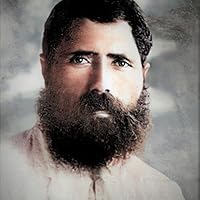
Jacob Frank, born Yankiev Leibowicz in Podolia in 1726 to a family of Sabbatean believers, had a spectacularly self-defeating career in Jewish heresy, a competitive field.
His name broadcast outsider status. In the Ottoman Empire "Frank" meant a European, in Poland it marked a Sephardic foreigner, so he was a stranger wherever he planted his Turkish slippers. A trader in the rowdy interzone cities of Romania and Bulgaria, he reached Salonica in 1753, hotbed of the doenmeh, Sabbatean crypto-Jews who followed their failed messiah Sabbetai Zevi into Islam, where he entered a trance and declared the soul of the sect's second leader, Baruchiah Russo, had entered his body.
Back in Poland in 1755, Frank gathered a following of outcasts, until his sect was caught at midnight rituals in Lanckoronie. The rabbis, in a catastrophic miscalculation, reported their own heretics to Christian authorities. This activated the antisemitic Bishop Dembowski, who turned Frank's followers into "Contra-Talmudists," had Talmud copies burned across Poland, then dropped dead of a stroke, widely interpreted as divine commentary.
Frank converted to Islam, buried the evidence, returned to Poland, allied with antisemites, confirmed the blood libel against his fellow Jews, and in 1759 led the largest mass apostasy in Jewish history, with King Augustus III as godfather.
Promptly arrested and imprisoned twelve years in Czestochowa, home of Poland's Black Madonna, whose cult seeped into his theology.
Released in 1772, he set up a faux-noble court at a borrowed Moravian castle, running alchemical experiments and Masonic networks while dictating his "Words of the Lord," preaching that religion is nonsense, that immortality awaits those bold enough to seek the "Big Brother," a demigod behind a cosmic curtain, via a messianic Maiden fusing Shechinah, Black Virgin, and his daughter Eve.
Follower Moses Dobruschka ran guns for the French Revolution and died on the guillotine. A century later, Brandeis kept Eve Frank's portrait on his Supreme Court desk.
Jay Michaelson, rabbi, legal scholar, journalist, gay rights advocate, and professional boundary-crosser (Frank would have approved of all five), brings to this book a genuinely unusual set of tools: Talmudic close reading, queer theory, Western esotericism, and a reporter's instinct to ask whether the official story is mostly slander. The result is a rehabilitation of a charlatan whom centuries of scholars filed under "degenerate lunatic," and Michaelson makes a persuasive case that they were both right and catastrophically wrong.
Frank invented a theology entirely his own: radical materialism fused with occult myth, a proto-secular critique of religion wrapped in outrageous theatrical costume. Frank's heresy is that he took the Jewish idea of a this-worldly God and ran with it, all the way to a borrowed Moravian castle, alchemical experiments, and a demigod behind a cosmic curtain. Michaelson freely concedes the theology also served as a vehicle for manipulation and abuse. Credibility here comes from choosing to indict the subject alongside praising him.
An excellent companion to readers of The Books of Jacob.
❤️ 🇮🇱
His name broadcast outsider status. In the Ottoman Empire "Frank" meant a European, in Poland it marked a Sephardic foreigner, so he was a stranger wherever he planted his Turkish slippers. A trader in the rowdy interzone cities of Romania and Bulgaria, he reached Salonica in 1753, hotbed of the doenmeh, Sabbatean crypto-Jews who followed their failed messiah Sabbetai Zevi into Islam, where he entered a trance and declared the soul of the sect's second leader, Baruchiah Russo, had entered his body.
Back in Poland in 1755, Frank gathered a following of outcasts, until his sect was caught at midnight rituals in Lanckoronie. The rabbis, in a catastrophic miscalculation, reported their own heretics to Christian authorities. This activated the antisemitic Bishop Dembowski, who turned Frank's followers into "Contra-Talmudists," had Talmud copies burned across Poland, then dropped dead of a stroke, widely interpreted as divine commentary.
Frank converted to Islam, buried the evidence, returned to Poland, allied with antisemites, confirmed the blood libel against his fellow Jews, and in 1759 led the largest mass apostasy in Jewish history, with King Augustus III as godfather.
Promptly arrested and imprisoned twelve years in Czestochowa, home of Poland's Black Madonna, whose cult seeped into his theology.
Released in 1772, he set up a faux-noble court at a borrowed Moravian castle, running alchemical experiments and Masonic networks while dictating his "Words of the Lord," preaching that religion is nonsense, that immortality awaits those bold enough to seek the "Big Brother," a demigod behind a cosmic curtain, via a messianic Maiden fusing Shechinah, Black Virgin, and his daughter Eve.
Follower Moses Dobruschka ran guns for the French Revolution and died on the guillotine. A century later, Brandeis kept Eve Frank's portrait on his Supreme Court desk.
Jay Michaelson, rabbi, legal scholar, journalist, gay rights advocate, and professional boundary-crosser (Frank would have approved of all five), brings to this book a genuinely unusual set of tools: Talmudic close reading, queer theory, Western esotericism, and a reporter's instinct to ask whether the official story is mostly slander. The result is a rehabilitation of a charlatan whom centuries of scholars filed under "degenerate lunatic," and Michaelson makes a persuasive case that they were both right and catastrophically wrong.
Frank invented a theology entirely his own: radical materialism fused with occult myth, a proto-secular critique of religion wrapped in outrageous theatrical costume. Frank's heresy is that he took the Jewish idea of a this-worldly God and ran with it, all the way to a borrowed Moravian castle, alchemical experiments, and a demigod behind a cosmic curtain. Michaelson freely concedes the theology also served as a vehicle for manipulation and abuse. Credibility here comes from choosing to indict the subject alongside praising him.
An excellent companion to readers of The Books of Jacob.
❤️ 🇮🇱

July 22, 2024
This book focuses on excerpts from Jacob Frank's "The Words of the Lord." It's a very thorough presentation of his ideas and teachings. If you're interesting in Frank's mindset and fine points of his credo, you'll find it here.
But if you are looking for a biography, this isn't that. I've read Olga Tokarczuk's massive novel "The Books of Jacob" yet still was left wondering why exactly did he attract so many followers? what was his appeal? After reading this work, I'm still left with the same question, so I'll just keep looking.
But if you are looking for a biography, this isn't that. I've read Olga Tokarczuk's massive novel "The Books of Jacob" yet still was left wondering why exactly did he attract so many followers? what was his appeal? After reading this work, I'm still left with the same question, so I'll just keep looking.
Displaying 1 - 2 of 2 reviews