Jump to ratings and reviews
Rate this book

The Shadow Pulp #1

The Living Shadow

Rate this book
Vintage paperback

224 pages, Paperback

First published April 1, 1931

27 people are currently reading
757 people want to read

About the author

Walter B. Gibson

636 books85 followers
Walter Brown Gibson (September 12, 1897-December 6, 1985) was an American author and professional magician best known for his work on the pulp fiction character The Shadow. Gibson, under the pen-name Maxwell Grant, wrote "more than 300 novel-length" Shadow stories, writing up to "10,000 words a day" to satisfy public demand during the character's golden age in the 1930s and 1940s.

Ratings & Reviews

What do you think?
Rate this book

Friends & Following

Create a free account to discover what your friends think of this book!

Community Reviews

5 stars
205 (28%)
4 stars
277 (37%)
3 stars
203 (27%)
2 stars
36 (4%)
1 star
8 (1%)
Displaying 1 - 30 of 84 reviews
Profile Image for Benjamin Thomas.
2,002 reviews372 followers
January 6, 2020
I’ve read a number of pulp adventures with a wide variety of main characters but have never sampled one of the greatest of all time. The Shadow. High time I corrected that.

First published in 1931, “The Living Shadow” is the very first pulp novel in The Shadow series. It was written by Walter B. Gibson, the creator and main writer of the series under the name "Maxwell Grant." The character would evolve considerably over the years, branching out into all forms of media entertainment but many of the character’s traits are already found in this first story, including the red-lined black cloak and slouch hat, and of course his uncanny ability to hide by blending into shadows.

Throughout the book The Shadow remains an extremely nebulous character. We tend to learn about him through other characters and their reactions to what they encounter but never The Shadow himself. Certainly not his name or who he actually is. Instead, the story’s main character is Harry Vincent, a man down on his luck who has decided to commit suicide by jumping off a bridge in New York. A mysterious man prevents this and extracts a loyal promise that Harry will work for him from now on. The Shadow, of course.

Harry becomes the foil for the reader, accepting circumstances as they are no matter how strange. We follow along in his shoes as he assists his mysterious benefactor in solving a case involving a Chinatown mastermind, a murdered millionaire, and missing jewels. Harry knows no more about The Shadow than we do.

There are a number of “firsts” in this book; characteristics that would become hallmarks of the series. These include The Shadow as a master of disguise, messages written in disappearing blue ink, verbal messages with emphasized words, and The Shadow’s Fritz the janitor identity. Harry is the first of an entire network of recruited agents that work for The Shadow and we also meet Claude Fellows who is more of an administrative desk man.

All in all, I was fairly well impressed with the quality of the writing and the complexity of the mystery tale that unfolded. I’ll be reading many more of these books to be sure.
Profile Image for Mark.
1,660 reviews238 followers
September 11, 2016
The first Shadow novel as written by Walter Gibson under the alias of Maxwell Grant, he adopted the pen name Maxwell Grant, taking the name from two magic dealers he knew, Maxwell Holden and U.F. Grant.

The Shadow was first heard on July 31, 1930, as the mysterious narrator of the Street and Smith radio program Detective Story Hour developed in an effort to boost sales of Detective Story Magazine. When listeners of the program began asking at newsstands for copies of the Shadow detective magazine, Street & Smith decided to create a magazine based around The Shadow and hired Gibson to create a character concept to fit the name and voice and write a story featuring him. Gibson wrote 282 out of 325 tales over the next 20 years: a novel-length story twice a month (1st and 15th). The first story produced was "The Living Shadow", published April 1, 1931.

Gibson's characterization of The Shadow laid the foundations for the archetype of the superhero, including stylized imagery and title, sidekicks, supervillains, and a secret identity. Clad in black, The Shadow operated mainly after dark as a vigilante in the name of justice, and terrifying criminals into vulnerability.

In this first story about the Shadow the main character is not the Shadow but his faithful and probably best know agent Harry Vincent. Through the eyes of Vincent we get to know the Shadow as a mysterious crime fighter that is fed information by his agents. As of yet the Shadow remains a shadowy presence.
He saves Vincent from suicide and Vincent helps his benefactor in solving a murder and a robbery gone wrong while at the same time cracking the mystery of the mysterious buyer of stolen goods.

Reading this version that is the original version as was released in 1931 I found some of the characterizations racist and limited. But taken in account that this book is a reflection of the times it was released in, which does not make it more innocent but I prefer the original versions over sanitized editions to keep the more sensitive reader from getting his emotions all tied up in knots about in essence a preference of censorship of older texts. (please do not read any older copies of the Tarzan novels, your feeling might get hurt),

I had never read some of the earlier Shadow novels and decided that the time has come. This pulp novel was a shadow of what was to become a long series of successful novels. And I must admit to really enjoying this story and not recognizing the later version of the Shadow as Gibson was yet to create.
Profile Image for Benji's Books.
519 reviews6 followers
November 19, 2023
This was a great introduction to the world of the Shadow. No, the Shadow isn't the main character in this story, but honestly? That's okay.

You see, the reader knows there are probably a hundred Shadow stories out there and since you know the Shadow lives on after each adventure, the stakes aren't very high for our mysterious, titular character.

But the fact this story focuses on some random dude saved by the Shadow in the beginning of the novel is great! The books aren't called "Henry Vincent", so whenever our main character finds himself in a sticky situation, you never know what's going to happen.

Don't worry, the Shadow appears when he needs to, but you can't have him be mysterious, without actually showing him be...well, mysterious. Having him lurk in the shadows and not give away a whole lot about him was a great thing to do and allowed us to see how he works through Henry Vincent's eyes.

This was my first time diving into the original Shadow stories. Besides the 90's film, I have no other knowledge of the character. I enjoyed the film, for what it was. It was cheesy, yes, but it wouldn't be a pulp hero film if it wasn't.

That's not to say the pulps aren't good. But the fact of the matter is that most pulp stories were put out by people just looking for a quick buck. They knew what the people wanted and put it to paper. Inexpensive paper, mind you, so they could print a whole lot of them.

Oftentimes, they're the kinds of stories that make you go, "of course that just happened," but isn't that the whole point?

Would recommend.

Who knows what evil lurks in the hearts of men?

THE SHADOW KNOWS!
Profile Image for Tosh.
Author 14 books777 followers
March 5, 2008
When you get down to it characters like Fantomas, Arsene Lupin, and America's pulp creation The Shadow are terrorists. They all work in the shadows and their actual identities are consistently being changed on a regular basis.

This is the first book of the Shadow serires and I think it's quite a remarkable contribution to pulp literature.

The Shadow has no fixed identity at this time. Lamont Cranston (I may have the spelling wrong, sorry!) is introduced being part of one of the Shadow's identities, but alas it keeps moving whenever the situation calls for another identity.

Also he works with a group of thurgs that are pretty much blackmailed by The Shadow to work for him. It's a fascinating subculture of the criminal world and I strongly recommend this particular book.
Profile Image for Jeff.
666 reviews12 followers
February 12, 2018
The Shadow seems more like a subtle force of nature than man, seemingly appearing out of actual shadows and taking on many disguises. As pulp fiction, this is great stuff. Remember, though, that this was written in the early 1930s, so be prepared for some racial stereotypes of certain Chinese, and one African American, characters. But, if you can put that aside and chalk it up to the mindset of the times, this is a great, engaging and faced-paced story that will sweep you along.
Profile Image for Piotr.
75 reviews6 followers
September 12, 2012
Not bad, I guess. Frankly, I'm just trying to get through the first few books until The Shadow takes over. At this point in the series, a relative everyman Harry Vincent is the narrator and protagonist, with The Shadow stepping in as a plot driver and occasional deus ex machina. Apparently the series becomes more about The Shadow later.

This was written in 1931 and frankly, it shows. Occasional references to technology, like a wireless radio and self-starting cars, are actually kind of cool. The author takes for granted that you'd know that elevators have operators and so on. But along with that comes a certain level of period prejudice as well:
But the Chinaman, although his eyes seem to peer straight ahead, can see more from out their sides than one would suppose.
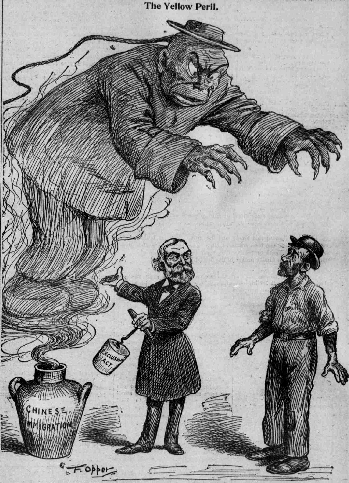
Yup, that's right kids, lesson for today: just 'cause Asians have slanty eyes doesn't mean they can't possess adequate peripheral vision.

It wasn't too racist; the cops (one of Italian descent, the other Irish I believe) don't conform to any particular stereotype of race or profession. But it upset me to get to the big reveal near the end and discover that . And don't get me started on the "sho' 'nuff" driver, the only black man to appear in the book. I guess I shouldn't be too hard on the author; nobody's actually painted as lazy, shiftless, stupid, inscrutable or whatever else solely due to their race. Still it's kind of jarring.

Complaint aside, it wasn't bad; the bad guys ranged from street toughs to quite intelligent, and the good guys had to employ some sleuthing, social engineering, induction and efficient organization as well as the more-or-less mandatory fisticuffs to solve this particular crime. And The Shadow, agent of good though he is, is also effectively portrayed as a mysterious, slightly uncanny figure. A good start, and I'm looking forward to more.

I no rike Shadow!
Profile Image for Juho Pohjalainen.
Author 5 books348 followers
June 3, 2019
I watched the 1994 movie of The Shadow the other day. It was fun enough, I suppose (Tim Curry is always a treat), but did not do much justice for the lead character. This book - his first appearance in written form, I believe - does, perhaps because it takes just about the exact opposite approach with him.

The movie has The Shadow himself as the main hero and point-of-view, telling us everything there is to know about him and his background and showing mostly everything of him as he does it. In this book he's rarely shown, pretty much never identified until much after the fact, fully maintaining his mysterious reputation and grim aura. A lot of times you suspect he might be around in a given scene, in disguise or hiding in shadows, but most of the time you're never given any answer one way or the other. It's spooky and pretty great, and I'm taking notes for my personal use later, maybe.

The actual main character is Harry Vincent, whom The Shadow pulls off the suicide bridge and immediately recruits. I thought that he accepted his new lot in life pretty quickly, but then, if I were to ever contemplate suicide as the other option, perhaps I would too. I thought he was fairly bland and also ended up relying on good luck, or caught up by bad, a time too often. I had a lot more fun with the crooks, their stupid schemes, and trying to spot The Shadow among them spying on them and foiling them before they even know of it.

On the other hand, the prose was unremarkable and uninteresting, even bland. There was a fair amount of good description about light and shadow in any given scene, which was rather necessary given the name character's gimmick and powers, but outside of that it mostly focused on describing things and events and thoughts as they happened, without trying anything fancy. It's usually not one of my main priorities or gripes, but I do think that the story and the world as a whole ended up rather suffering for it. Perhaps later books improve this, perhaps not: I'll find out.

It's a pretty decent beginning, on the whole. Nothing special, but nothing so terrible that I would not drop the series entirely with just this one book under the belt.
Profile Image for Leothefox.
314 reviews16 followers
April 10, 2017
The first The Shadow tale is not a typical hero or superhero story. The Shadow himself is rarely seen and no hint of his identity is given, he's a mastermind, a mystery lurking in... the shadows. Instead, the story follows Harry Vincent, a man The Shadow saves from suicide and recruits as his agent. Focus shifts also to various participants in the murder/theft mystery and to various intervening subjects who prove to be The Shadow in disguise.

The Shadow is very much like Fantomas here, a mystery to all and a master of disguise, working through agents or acting in person. The difference being that Fantomas was a villain of mysterious purpose and surreal method whereas The Shadow is a nearly supernatural enigma for justice. Objectively, Fantomas may be superior, but it's also an often incoherent branch of the mystery tree, bearing a mystery so large that no one but the villain can see it all. Here, Walter B. Gibson gives us many curious pieces that are eventually wrapped up in a neat little package.

Harry Vincent and friends never learn who The Shadow really is, so of course I'm itching to read book 2, “The Black Master”, and find out myself (wealthy-young man-about-town, Lamont Cranston?). The Shadow's power to cloud men's minds are eluded to right off the bat, it's also suggested that he makes radio broadcasts, which makes sense since The Shadow started as a kind of radio host.

There is what might be termed a plot-hole in that the police concerned with the principal crime, the murder of a wealthy man by a thief, never seem to examine the potential suspects. I say it might be a plot hole because I can just as easily imagine a 1931 police detective ignoring inconvenient options to pursue a lone thief. There's also a dose of expected period racial attitudes, but frankly that's something what I came in expecting.

Right now I'm delighted as hell to have another series to dip into since this first entry is considerably more encouraging than some of the later ones I read in a pulp double earlier.
Profile Image for Sean O.
880 reviews33 followers
December 6, 2018
For a short book, it took forever to read. This is the first Shadow story, and unlike the first Tarzan story, or the first Zorro story, it’s crap. There are some good bits, but the juice is not worth the squeeze.

Recommended to Shadow enthusiasts only.
Profile Image for Kent Clark.
282 reviews1 follower
December 14, 2021
These types of stories are great when you want some plain old no-frills adventures with a spooky, cloaked detective. No damsels to rescue. No inner turmoil. Just bad guys and good guys under the direction of the scariest good guy ever. I'd have done 4 stars except the Shadow himself didn't play a huge part in the story except from behind the scenes. This seemed to be more of an introduction for Harry Vincent. Possibly because it was the first published story so the author felt more of an obligation to introduce some more 'normal' characters for the reader to identify with. Either way, still a good read.
Profile Image for Trevor Williamson.
571 reviews22 followers
November 7, 2018
First published in April 1931, The Living Shadow details the first literary production of The Shadow, heroic archetype for numerous pulp- and super-hero characters to come throughout the next century.

The story, though, centers not explicitly on The Shadow's exploits so much as it does on the involvement of Harry Vincent with The Shadow's affairs. Harry, a down-on-his-luck young man living in New York, attempts suicide before his life is saved by a mysterious stranger. Given new purpose, and tremendous resources, Harry becomes one of The Shadow's principle agents in the discovery of a jewel fence involved in moving goods beneath the noses of the police of New York.

Police are baffled by the affairs, which come to a head in the murder of a millionaire from Long Island, whose death goes unsolved. Vincent becomes embroiled with the investigation of the murder, eventually discovering that the murder is tied to a scheme to move a payload of jewels across the country as a means to fence the items. Harry faces off against Wang Foo, a Chinese tea shop owner whose secret business is the fencing of expensive jewels; English Johnny, a lunch-wagon crook who uses his business as a front to criminal dealings and shipments; Steve Cronin, assassin; and Ezekial Bingham, criminal defense lawyer moonlighting as crime boss.

What makes the story most interesting, though, are its strange politics and novel approach to storytelling. The Shadow is rarely seen throughout the novel, and while he does act occasionally as the deus-ex-machina to save Harry Vincent from any number of troubles--including a few fist fights and one scene with a swinging guillotine--The Shadow is hardly the focus of the narrative's action. Indeed, much of the tension is plot-driven, and interpreted through the narrative lens of Harry Vincent's experiences.

Nevertheless, the surprising finale, involving an unmasking of the criminal Wang Foo and revelation that he is not a Chinese businessman, but instead a white criminal mastermind dressing in yellowface to avoid police suspicion, opens up some interesting conversations about the treatment of race in similar stories, and even about the genre of literature The Shadow seemed to have a hand in creating.

All in all, while the novel may not hold up to the standards of good prose, it still seems to work as a blend of hard-boiled pulp detection and newly-minted (super)heroics, and lays down a lot of the groundwork for genre expansion in the later decade.

This entire review has been hidden because of spoilers.
Profile Image for James.
147 reviews1 follower
November 2, 2017
It's hard to judge a book written nearly a century ago. As other reviews here have noted, this was derived from a radio show and the overlap shows in the announced fashion of the prose. It's quite predictable, often ridiculous and loaded with ex machina. But if you can get past that - and some unfortunate artifacts from the time - it's an interesting chunk of history that would help inspire the likes of Batman.

So for what it is, I can't score it badly. But this is by no means what many current readers would regard a good book. It's also not as good as Doc Savage's debut and a far cry from the excellent original Conan stories. But given its origins, those comparisons are not fair.
Profile Image for Christopher Ryan.
Author 8 books13 followers
July 13, 2013
The blew me away as a kid and still stands up today. Definitely pulp, but Grant has a fluid style that holds up. additionally, the character is among the most intriguing in the super hero genre. one of the earliest anti-heroes. predates comic book superheroes. this even predates the acclaimed radio show. it all starts here. And the cover art by Jim Steranko absolutely kills.
Profile Image for Little Timmy.
7,390 reviews59 followers
February 2, 2016
When it comes to pulp heroes there are 2 or 3 great standouts and the Shadow is one of those. The stories are fast paced and action filled. The mystery just adds to the excitement. With his army of agents to help the Shadow never lets you down for a great read. Highly recommended
Profile Image for Charles.
Author 41 books287 followers
June 26, 2009
I don't know. Didn't care that much for it. I've never had the faintest urge to read another in the series. I much prefer the "Spider" books by Norvell Page.
25 reviews
June 24, 2020
The surprisingly entertaining debut of the hugely influential, but widely forgotten pulp hero: The Shadow.

It is worth noting in this case, that I read that Sanctum Books reprint, released as a pulp facsimile double novel with The Black Hush. This is an interesting because, as is noted in the introduction to this version, other reprints of this story are based not on the original story as it was published in The Shadow Magazine #1, but a later revision.

Based on my own comparison to a PDF version of the novel which I assume to be that newer version, these changes are actually pretty significant and tend to undermine one of the aspects of this story that I most enjoyed: the fact that The Shadow's exploits are largely implied or described from the perspective of other characters. The protagonist and primary viewpoint is Harry Vincent, who is recruited into the Shadow's network of agents in the opening chapter. Later stories, such as the Black Hush (in truth, the only other Shadow story I have read so far), shifted to blunt style that seems more in-line with the style of the radio. As an example, at the end of Chapter XVII:

"Bah!" snorted Bingham. "Just the scurrying feet of rats."

Satisfied that his plans were secrets known only to himself, Ezekiel Bingham fell asleep untroubled. Not for one moment did he suspect that the night just past had brought him an unseen visitor.

Only The Shadow knew that fact. Silently The Shadow had arrived; his mission accomplished, the weird intruder had faded with the end of night.


The original chapter (and Sanctum reprint) ends after the quotation. Many similar summations, almost reminiscent of a transition to a commercial break in a vintage serial, seem to have been added to make absolutely clear what was already clearly implied in the chapter. Moving or oddly shaped shadows, disembodied hands, and the Shadow's iconic laugh signal his presence. In the original, Gibson seemed content to let the reader fill in the gaps (however small) and conclude themselves that the events just described were The Shadow lurking in darkness or wearing a convincing disguise.
Profile Image for Brad McKenna.
1,324 reviews3 followers
May 27, 2024
This book at a stronger plot than I thought it would. It also had the historical significance of clearly being the model for Batman. We never really get to see The Shadow. He's either in some disguise or another, or in, wait for it, the shadows. That's Batman all the way. Though, the trademark laughter is more The Joker. That said, there were couple of major issues that prevents me from ranking this any higher.

First, the treatment of Chinese Americans is really tough to read. Apart from causal slurs, they are not treated as humans.

Second, The Shadow's agent, Harry, stumbles upon the answer he needs. He very rarely figures it out on his own. The coincidences were too much for me.


The kid hitching a ride to on his spare tire is the break he needed to find out where the lawyer went.

The stream he goes down to in order to get get water for his car's overheating radiator is how he notices the tire marks that lead him to the bad guys.

The casually mentioned Diamond Bert is unmasked, literally. That would have been a good twist if it weren't for his disguise being Wang Foo. Maybe that would excuse the horrid treatment of Wang and the other Chinese characters but it insults Wang's henchmen. They couldn't tell their fellow countryman was a fake? Oof.

I know that the racism is simply a product of its time and if I were to ignore all the titles with overt racism, I'd miss out on a lot of good stories. But this one I found particularly uncomfortable.
Profile Image for Blake.
1,307 reviews44 followers
February 19, 2025
(FYI I tend to only review one book per series, unless I want to change my scoring by 0.50 or more of a star. -- I tend not to read reviews until after I read a book, so I go in with an open mind.)

I'm finally going through my physical library owned book list, to add more older basic reviews. If I liked a book enough to keep then they are at the least a 3 star.

I'm only adding one book per author and I'm not going to re-read every book to be more accurate, not when I have 1000s of new to me authors to try (I can't say no to free books....)


First time read the author's work?: Yes

Will you be reading more?: Yes

Would you recommend?: Yes


------------
How I rate Stars: 5* = I loved (must read all I can find by the author)
4* = I really enjoyed (got to read all the series and try other books by the author).
3* = I enjoyed (I will continue to read the series)
or
3* = Good book just not my thing (I realised I don't like the genre or picked up a kids book to review in error.)

All of the above scores means I would recommend them!
-
2* = it was okay (I might give the next book in the series a try, to see if that was better IMHO.)
1* = Disliked

Note: adding these basic 'reviews' after finding out that some people see the stars differently than I do - hoping this clarifies how I feel about the book. :-)
Profile Image for Artur Coelho.
2,601 reviews74 followers
August 15, 2020
Quando o jovem Harry Vincent, desiludido de amores e da vida na grande cidade de Nova Iorque, está quase a atirar-se de uma ponte para meter um ponto final a tudo, é salvo no último momento por um homem que lhe propõe um emprego. Uma figura misteriosa e sombria, que pede a Vincent que execute diversas missões de vigilância. E é assim que o jovem desencantado com a vida na grande cidade se torna um dos ajudantes de The Shadow, o elusivo e implacável combatente do crime.

Nesta primeira aventura daquele que é um clássico das personagens pulp, o crime envolve o roubo fraudulento de jóias e uma rede de criminosos e receptadores no bairro chinês de Nova Iorque. Seguimos os passos de Vincent, à medida que se vai adensando na trama. Cruza-se com criminosos violentos, e nas suas missões parece estar sempre um elemento de predição, com algum elemento previsto pelo Sombra.

O livro é notável pela ausência da sua principal personagem. Seguimos Vincent, um dos colaboradores da rede de combatentes do crime que auxilia O Sombra, mas raramente nos é dado mais do que vislumbres do grande personagem pulp. Sublinha que vive nas sombras, conhecedor da escuridão que se oculta no coração dos homens,
Profile Image for Steve.
Author 6 books2 followers
December 2, 2024
This is at least my third time through reading The Living Shadow, the first story featuring the pulp antihero penned by Walter B. Gibson. This time was even better than the earlier reads where my internal voice mimicked how a radio show would perform the tale. I'm so familiar with how Gibson using proxy heroes by now that I'm able to see how his writing bears so much more nuance than I found in my initial reads.

The cover used for this Sanctum reprint is actually from The Black Hush, which is going to be the next book, so you'll get to see that if you're following my challenge. I've bested my annual 52 books, and since I had a six-week pause in late summer, I'm nowhere near the 100 books I recorded last year -- though more than 70 books is still a good number. If I'd had the time, I'd have read more pulps and be within range, but I'm still happy with my effort. The Shadow (and Doc Savage) were two of my early exposures to entertaining reading, and it's good to know they were well-written books as well.
Profile Image for jcw3-john.
134 reviews
December 12, 2025
I read this because of the Shadow's long influence on media decades after his premiere, and because I'm a fan of dozens of things that owe their existences to him and his pulps and radio shows. This was a poor introduction to the character - the Shadow himself does not receive the bulk of this novella's attention - we instead focus on an author surrogate named Harry Vincent who doesn't have much in the way of distinguishing character traits, and whose adventures are frequently mired in tedium.

The Shadow himself does not appear that frequently in this book, and the book is prone to monotony, tedium, not quite as much repetition as the Doc Savage book I read a few weeks ago, but close. It also has period-typical racism and a that comes out of nowhere if you have the perspective of a modern reader.

I was on board with its atmosphere at first, but I didn't find the book's mystery too compelling, nor did I enjoy its POV. I'll give other Shadow novels and works a chance in the future, but I found the first entry a letdown. 6/10, D-.
Profile Image for Rubén Lorenzo.
Author 10 books14 followers
October 22, 2017
La Sombra es un personaje peculiar que combate el crimen con la ayuda indispensable de un grupo inagotable de aliados. De hecho, el protagonista en sí apenas aparece en la novela, poco sabemos de él si exceptuamos su inquietante silueta y su desquiciante carcajada.

Esta es la primera novela de una larga serie donde el misterio y el espionaje son cada vez más exagerados y sorprendentes. Notas codificadas, persecuciones silenciosas, robos y muertes sin resolver... todo servido con un estilo directo de capítulos cortos centrados en algún personaje de la saga.

Quizá demasiado artificioso para los fans de las novelas de crimen más sesudas, pero un soplo de aire fresco para quien quiere una lectura fácil y satisfactoria.
Profile Image for Ian.
70 reviews3 followers
December 13, 2017
It’s a good introduction to the legendary pulp character. Harry Vincent, The Shadow’s newest agent, is the main character here, leaving The Shadow himself to be a cypher. He’s kept in the dark (literally, most of the time) as this mysterious figure beyond comprehension, which is how he must seem to his agents and the criminals he destroys. Through Harry we get hints about how he operates and what kind of adventures he gets into.

The story itself is fairly standard- a murder and some missing jewels. It’s not nearly as thrilling as some of Norvell Page’s The Spider stories, but this was something new and unique in its time. It’s an enjoyable read and leaves you wanting more.
Profile Image for Michael Ritchie.
679 reviews17 followers
April 10, 2025
(2.75 stars) The very first Shadow story, from 1931, and nothing like the Shadow reputation. For starters, there is no Lamont Cranston--in fact, it's implied that The Shadow may be a supernatural being. The "hero" is Harry Franklin, a man who was about to commit suicide until The Shadow saved him and essentially hired him to be an assistant investigating a crime ring. The funny thing is Harry is somewhat inept at this job and constantly messes up and has to be saved by The Shadow. If you're used to pulp magazine writing from the 30s, the style won't bother you, but if not, you may want to skip this.
1,100 reviews
October 27, 2023
This was kind of an odd read. I mean, I'm certainly familiar with the concept of the Shadow, but the implementation in the book is a little different than I'm used to. It's like... it seems like the Shadow himself (no other name in this first book), is more supernatural than mystic. Almost like he may not be human. Just a bit of an odd vibe. Also, given the age of the book, full of "clews" that have to be followed up on "to-day" not "to-morrow". :-)
16 reviews
January 1, 2024
Its rare that someone introduces a character in such a way that they are both omnipresent and not in any particular scenes. You feel the presence of the shadow, but this book introduces The Shadow as an institution that the main character has joined. He learns how to be an agent for The Shadow and in passing meets him a couple times in different disguises. Very clever. The mystery he solves isnt that amazing, but the mystery of The Shadow has a sort of primacy.
Profile Image for Lucas.
53 reviews
February 10, 2024
Pulp en estado puro. Me ha encantado. Se lee muy rápido y es muy disfrutable.
La Sombra no es el protagonista, sino Harry Vincent, un hombre que una noche está a punto de suicidarse hasta que un extraño enmascarado se lo impide.
Tiene todos los elementos que esperas encontrar en este tipo de obra, incluyendo trampas mortales, criminales carismáticos, suspense a raudales y un héroe fascinante. Una delicia.
Profile Image for Logan.
1,668 reviews57 followers
March 17, 2024
I read this about twenty years ago and recently was interested in it again as I worked on editing the entire collection of Shadow stories. As I re-read it I was struck by how many specific points of the story I remembered. It's not great literature, it's from a pulp magazine and the author amazingly pumped out two of these short novels a month, but it's still surprisingly entertaining and "thrilling". Definitely good ol' straight "good guys" vs "bad guys" stuff.
1,867 reviews8 followers
November 4, 2017
A great little dash back to the old pulp days. Like Doc Savage and other bigger than life characters that for 10 cents could keep you month after month part of strange and exotic adventures, the Shadow fought crime with a vengeance. Unlike some he would often shoot first and let the bad guys pay the full price for their crimes.
Displaying 1 - 30 of 84 reviews

Can't find what you're looking for?

Get help and learn more about the design.