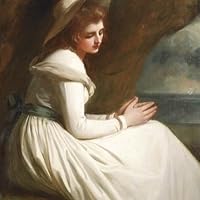
Dame Agatha Mary Clarissa Christie, Lady Mallowan, DBE (née Miller) was an English writer known for her 66 detective novels and 14 short story collections, particularly those revolving around fictional detectives Hercule Poirot and Miss Marple. She also wrote the world's longest-running play, the murder mystery The Mousetrap, which has been performed in the West End of London since 1952. A writer during the "Golden Age of Detective Fiction", Christie has been called the "Queen of Crime". She also wrote six novels under the pseudonym Mary Westmacott. In 1971, she was made a Dame (DBE) by Queen Elizabeth II for her contributions to literature. Guinness World Records lists Christie as the best-selling fiction writer of all time, her novels having sold more than two billion copies.
This best-selling author of all time wrote 66 crime novels and story collections, fourteen plays, and six novels under a pseudonym in romance. Her books sold more than a billion copies in the English language and a billion in translation. According to Index Translationum, people translated her works into 103 languages at least, the most for an individual author. Of the most enduring figures in crime literature, she created Hercule Poirot and Miss Jane Marple. She atuhored The Mousetrap, the longest-running play in the history of modern theater.
Reading an Agatha Christie novel from time to time is undeniably enjoyable. I love revisiting these books for their slightly old-fashioned charm, and the quality of their plots demonstrates that the author truly deserves her nickname, "Queen of Crime." Here, the premise is particularly interesting. A scientist in Calgary, returning from a mission to Antarctica, suddenly becomes a key witness in a murder case that took place two years prior. The catch—and there is a catch—is that the presumed culprit died in prison, and Calgary happens to have proof of his innocence. This revelation doesn't seem to bring much joy to the victim's family. In fact, the Argyles seem eager to move on. The widower is about to start a new life with his secretary; Her four children don't seem particularly affected, while one question remains: who killed Mrs. Argyle two years ago? There are many suspects, and their motives are numerous. I confess I read this book almost casually, convinced, halfway through, that I'd figured out the culprit, because I truly thought I'd outsmarted Agatha Christie. And then, disaster struck! The final revelation made it abundantly clear that I'm not about to tire of this author's books anytime soon, and, above all, that I'm not about to figure out who's the culprit before everyone else...
Original title: Cat Among the Pigeons
Continuing my leisurely exploration of the work of the author who so richly deserves her nickname, the Queen of Crime, I embarked on reading "The Cat and the Pigeons." I must admit I was quite surprised by how the story unfolded, as I had chosen it, among other reasons, because it's one of the books featuring the celebrated and rather immodest Belgian detective, Hercule Poirot. And while yes, Hercule Poirot does indeed conduct his investigation in this book, he only appears (finally!) in the last seventy pages… So, a slight disappointment on my part; I admit it. What? Even though I know he's very talented, our mustachioed detective solves this case in the blink of an eye. His little grey cells, even if they had to be working overtime, quickly solved the mystery of the cat and the pigeons. The story takes place primarily in an English girls' boarding school, Meadowbank. I would add that it's a very selective school, and the students are chosen according to the criteria you're familiar with… For a story set in an all-girls school, it's safe to assume that almost all the characters are female, except a young gardener… The events unfolding in this environment seem linked to those that took place a few weeks earlier in a Middle Eastern country. Against the backdrop of a revolution, Prince Ali Youssouf appears to have done everything he could to leave his country in possession of a mysterious object that seems to be extremely valuable… But when the prince dies in an accident, suspicion vanishes: what truly became of this object? The story seems to mix murder and espionage gleefully, and I confess I had trouble fully enjoying it, especially since I quickly guessed where the treasure was hidden… However, as for guessing the culprit's identity, well, obviously, there was no way around it: as usual, I was way off…
Gostei imenso do Cabo da víbora, mas o segundo foi muito aquém do que estou habituada. Começa muito bem, estilo intriga internacional mas depois quando chegamos ao desenrolar dos acontecimentos na escola, fica confuso (e não no bom sentido) e o final é no mínimo desinteressante 😐
O Cabo da Víbora é um romance sem nenhum dos grandes detectives, mas que contém algumas das questões recorrentes em Agatha Christie, como o poder da família de sangue, o mote do caso aparentemente congelado mas que que pode ser resolvido e o tema do progenitor sufocante. Ainda não tinha lido. O segundo já tinha lido com um título bem mais próximo do original (Gato entre os Pombos), e foi bom encontrar de novo a intrépida Julia Upjohn.