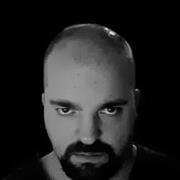
Michael John Moorcock is an English writer primarily of science fiction and fantasy who has also published a number of literary novels.
Moorcock has mentioned The Gods of Mars by Edgar Rice Burroughs, The Apple Cart by George Bernard Shaw and The Constable of St. Nicholas by Edward Lester Arnold as the first three books which captured his imagination. He became editor of Tarzan Adventures in 1956, at the age of sixteen, and later moved on to edit Sexton Blake Library. As editor of the controversial British science fiction magazine New Worlds, from May 1964 until March 1971 and then again from 1976 to 1996, Moorcock fostered the development of the science fiction "New Wave" in the UK and indirectly in the United States. His serialization of Norman Spinrad's Bug Jack Barron was notorious for causing British MPs to condemn in Parliament the Arts Council's funding of the magazine.
During this time, he occasionally wrote under the pseudonym of "James Colvin," a "house pseudonym" used by other critics on New Worlds. A spoof obituary of Colvin appeared in New Worlds #197 (January 1970), written by "William Barclay" (another Moorcock pseudonym). Moorcock, indeed, makes much use of the initials "JC", and not entirely coincidentally these are also the initials of Jesus Christ, the subject of his 1967 Nebula award-winning novella Behold the Man, which tells the story of Karl Glogauer, a time-traveller who takes on the role of Christ. They are also the initials of various "Eternal Champion" Moorcock characters such as Jerry Cornelius, Jerry Cornell and Jherek Carnelian. In more recent years, Moorcock has taken to using "Warwick Colvin, Jr." as yet another pseudonym, particularly in his Second Ether fiction.
This is the third and final volume in Avon's omnibus editions of Moorcock's Cornelius stories. It contains two novels, The Adventures of Una Persson & Catherine Cornelius in the 20th Century and The Alchemist's Question. Adventures starts out with Una and Catherine enjoying some well-earned R&R during the Great Depression, and then switches to alternating chapters of their individual exploits up and down the time streams before they're re-united at the end. Una is always involved in some form of political intrigue or military maneuver, whereas Catherine's times are of a more personal nature, though Catherine Cornelius and her All Girl Guerrillas is a treat. Una and Catherine are among the first lesbian protagonists in speculative fiction, and, as with almost all of Moorcock's best work, the characters over-shadow the plot. Many of his other characters appear in the novel, though the focus remains tightly on the two. I was a bit surprised at the graphic sexual content and drug use at times, but it's one of those books you can that it's all about the quest and the journey and the stops all the way more than a final destination. As Mrs. Cornelius observes at the end: "Well," she said, "you got 'ome all right, then." I recently read The Alchemist's Question (which is subtitled "Being the Final Episode in the Career of The English Assassin") in The Opium General and Other Stories and said: "The Alchemist's Question is a good novel in Moorcock's Multiverse/Eternal Champion sequence, though seeing it as the final J.C. piece is a little sad. It's set in a 1980s (what with time-travelling and alternate universes abounding I think it's safer to say "a" 1980s instead of "the" 1980s), and Jerry is older, softer, and less confident or competent that we've seen him before. In one telling scene he laments: "I'm in danger of turning into a second-rate Doctor Who." His primary foe Miss Brunner, perhaps a Thatcher analog, tells him: "The future has not only been abolished. By six o'clock tonight it will be completely illegal. We have declared the Eternal Present." The story sees her and her allies Bishop and Mitzi Beesley storming the Time Center, where Jerry, his sister Catherine, Una Persson, Shaky Mo Collier, and the last surviving free-thinkers are making their last stand. In his introduction Moorcock says the work is his ultimate statement on feminism, and his conclusion seems to be that equality isn't sufficient and that a matriarchy is the only hope for civilization to continue. The outlook of the '80s is quite a bit darker than the hopeful attitude of the '60s, but but he does give the surviving Cornelius family siblings a fitting and interesting farewell. Jerry remains one of the most iconic characters of the genre (right up there with Heinlein's Lazarus Long, he said, poking at bears), and this one should definitely be read, preferably after the original quartet."
Including the Adventures of Una Persson and Catherine Cornelius in the 20th Century (or the other way round), the Cornelius Chronicles finish with "The Alchemist's Question" in 80s Thatcher's UK. So, it's time for a Revival or the Final Program again. If the Cornelius Chronicles is a Sonata, this must be the Coda.