Jump to ratings and reviews
Rate this book

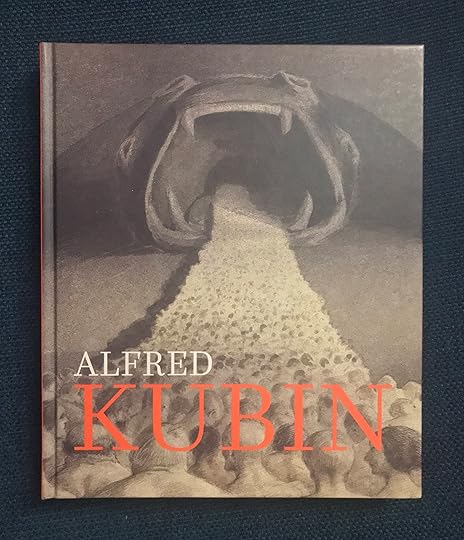
Alfred Kubin: Confessions of a Tortured Soul

Rate this book
The first overview in a decade on Kubin’s gothic pageant of dreamworld menace The art of the great Austrian draftsman, illustrator and author Alfred Kubin (1877–1959) appears more current today than ever before; wartime destruction, pandemics, natural disasters and the manipulation of the masses pervade his highly narrative works. Kubin’s nightmarish oeuvre extends Symbolism and the fantastical art of the 19th century and may be considered a precursor to French Surrealism, with its syntheses of actual and imaginary reality, its bleak realms that Kubin often seasoned with humor, irony and exaggeration.
Published for an exhibition at the Leopold Museum in Vienna, Alfred Confessions of a Tortured Soul offers an exploration of Kubin’s oneiric worlds in terms of their relation to the unconscious. Through this lens, psychoanalyst and psychiatrist August Ruhs addresses pieces by Kubin selected by curator Hans-Peter Wipplinger. In addition, Kubin’s works are placed into a dialogue with works by artists of the 19th century and of the classical modernism from which Kubin derived inspiration.

288 pages, Hardcover

Published September 13, 2022

1 person is currently reading
46 people want to read

About the author

August Ruhs

9 books2 followers

Ratings & Reviews

What do you think?
Rate this book

Friends & Following

Create a free account to discover what your friends think of this book!

Community Reviews

5 stars
5 (62%)
4 stars
2 (25%)
3 stars
1 (12%)
2 stars
0 (0%)
1 star
0 (0%)
Displaying 1 - 2 of 2 reviews
Profile Image for Michael.
28 reviews32 followers
Read
January 2, 2024
Death, nothingness is the fate of the world,
and hence of what is in it, the individual
forces that together constitute the world.
Each and every one runs down a predestined
path, unconditionally like a machine.


One of the last books I wrote about back in 2019 was The Other Side by Alfred Kubin -- better known as an illustrator and fine artist in Austria in the early part of the 20th century. The book was richly illustrated by the author, and I became interested to find a book focused on his art. However, in all of Prague’s bookstores, I could not find a single work dedicated to Kubin.

About a month ago, I found myself with an afternoon at my leisure in the beautiful old town of Maastricht in Neherlands. It happened to be a freezing cold afternoon, and after a couple of hours of drifting around in the old town center, I was happy to find myself in front of the Dominican Church, which these days is the home of a large bookstore and café. I sipped a nice cup of hot coffee and then set out to look at the books. Unfortunately, there was nothing really to tempt me amongst the stacks of English language literature, so I made my way to the section for photography and arts books. Placed in the center of the wall of arts books, the cover facing out, KUBIN in large letters practically screamed at me. What book could be more appropriate for me to write my first piece about here on Goodreads this year?


My edition of the book is one published by Verlag der Buchhandlung Walther und Franz König, Köln and the cover differs from the one featured here on Goodreads. The page count also differs slightly, but the main contents seem to be identical.

The book opens with a series of essays. The first one is by the curator and editor of the book, Hans-Peter Wipplinger, and it amounts to a psycho-analysis of Kubin with much emphasis on his depiction of women, and what can be deduced about the artist’s sexuality when cross-referencing his artistic output with what is known about his personal life. The second essay by August Ruhs gives a more straightforward biographical background to Alfred Kubin. It is not very long or detailed, but it did add detail to what I already knew (and talked about in my review of The Other Side.) Most interesting was the mention of the friendships Kubin forged throughout his life. Before the Great War, he met and had a very fruitful communication over several years with Paul Klee, who introduced him to the Blaue Reiter group. He never became a core member, but his works were featured at some of the groups exhibitions. Ruhs also mentions a more than twenty year correspondence that Kubin maintained with Ernst Jünger from the end of the ‘20s until the end of the ‘40s. The final essay (by Burghardt Schmidt) is also brief and serves to contextualize Kubin and his work within the times and movements of the first half of the twentieth century.

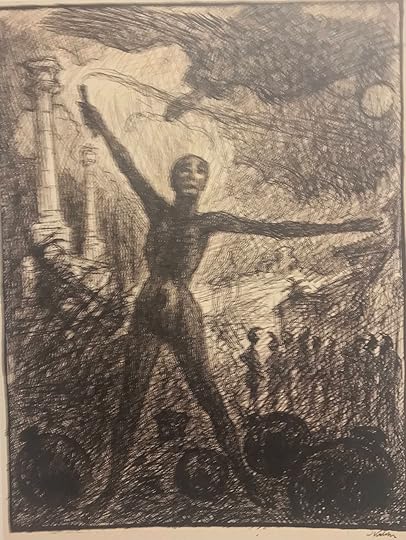
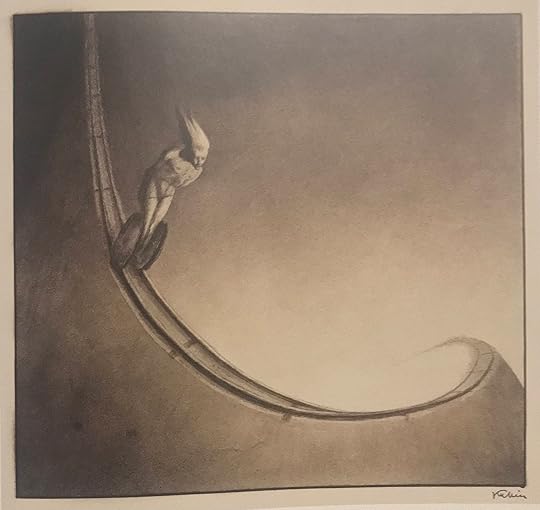
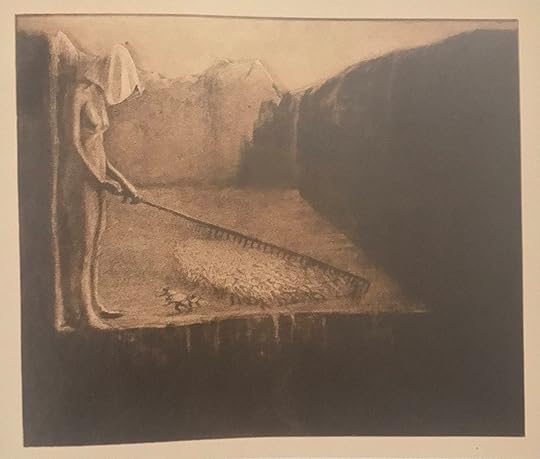
The body of the book is structured as a gallery of Kubin’s works, often alongside those of a number of his contemporaries, whose work either inspired Kubin or captures similar themes (Max Klinger, James Ensor, Goya, Odiolon Redon, Edvard Munch, Sascha Schneider, etc.) The works are grouped thematically with brief introductions by Annegret Hoberg, with the individual reproductions generally centered on the pages with a wide border of white margin.

[image error]

[image error]


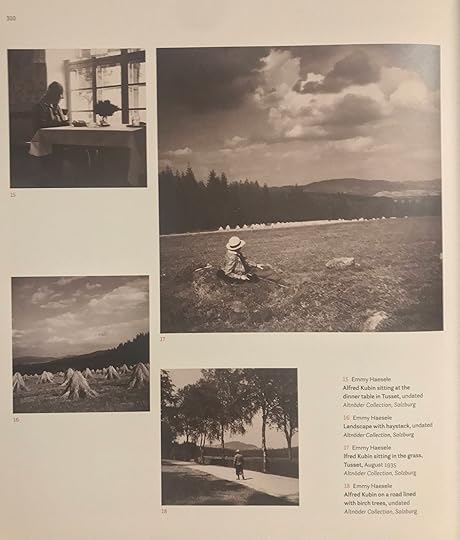
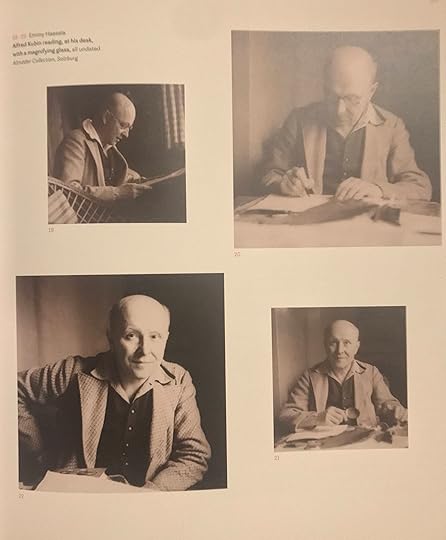
The book closes with a chronology of Kubin’s life illustrated with personal photographs.


All in all this is a very good introductory overview of Alfred Kubin’s life and work. It could be argued that too much space is taken up by the essays, or that the works of other artists are too richly represented, but as it is, all the illustrations are interesting and serve their purpose, and personally I enjoyed being reminded of the works of some of the other artists, as well as introduced to some that I had never heard of before.
549 reviews3 followers
September 8, 2023
It's a beautiful book that concentrates on reproductions.

It has three essays in the front, of no great length and of average utility, as well as some sporadic text throughout and a short capable biography in the back. One of the essays is about as hardcore classic Freud as you're ever going to see published in 2022, but it's not as obnoxious or as questionable as you might think, even if you're a deep Freud skeptic.

Probably a third or more of the pictures are not Kubin's, but rather from artists who influenced him or paralleled him. Sometimes the connections are obvious, sometimes not, and many of these are not explained, but there's something to be said for mysteries to ponder.

At first I was disappointed that it wasn't wall-to-wall Kubin, but most of the interlopers are quite worth seeing, and Max Klinger, who has by far the most of anyone other than Kubin, damn well comes close to stealing the whole show.

The only real crime here, and it's quite annoying, is that the medium used and the size are not listed with the work but rather placed in an index in the back (ordered by artist and then by date of the work). I suppose they wanted plenty of white space to make the pictures pop, but they are unforgiven.

What saves the affair is the quality of the reproductions and the paper, and the fantastic nature of the art itself.
Displaying 1 - 2 of 2 reviews

Can't find what you're looking for?

Get help and learn more about the design.