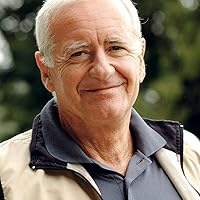
Following her husband’s massive heart attack, Cynthia Hogue began writing poems based on dreams and memories that he, born during WWII in occupied France, had as a child growing up in a time of vast postwar food shortages. Hogue embarked on a quest to discover if there were more such memories in her extended family in France. When asked, family members told her never-before-shared tales of parents who were POWs, collaborators, Resistance fighters, and one most vulnerable―of a hidden child. Hogue spent years researching the lives of civilians during war, work crystallized in her tenth collection of poetry, instead, it is dark. The personal is alchemized as Hogue weaves history and present day in poems that explore how there, here, an individual voice in the stark language of lyric poetry, speaks a complex truth and casts a laser light on violence, resilience, survival, and―the heart of this collection―love.
Cynthia Hogue (born 1951) is an American poet, translator, critic and professor. She specializes in the study of feminist poetics, and has written in the areas of ecopoetics and the poetics of witness. Hogue was born on in the Midwestern United States and raised in the Adirondack Mountains of upstate New York. In 2014 she held the Maxine and Jonathan Marshall Chair in Modern and Contemporary Poetry in the Department of English at Arizona State University.
Cynthia Hogue’s instead, it is dark is one of the most haunting poetry collections I’ve ever read. It opens in the ashes of World War II and ends in the tender, trembling light of love and survival. Each section feels like a descent into and then a rising from the ruins. Hogue’s “war’s chorus” could easily have been written from a witness stand. She speaks in plural voices: the child who hides, the mother who washes frozen sheets, the father who returns a changed man. These are not fictional creations; they feel inherited, as if language itself remembers. I read it slowly, like prayer. By the time I reached “The Open,” the poem about her husband’s near-death experience, I was weeping. It’s a book that moves through war and ends in love without sentimentality. The precision is surgical, the empathy infinite. This is what poetry is for to remind us what being human means when the world has forgotten.
I bought this after seeing the blurbs by Joan Larkin and Ilya Kaminsky, and they weren’t exaggerating. instead, it is dark is a meditation on what happens when history leaves its mark not just on nations but on bodies, language, and love. Hogue’s attention to silence what cannot be said is extraordinary. Her line breaks mimic trauma’s fragmentation, and her diction glows even in the bleakest imagery. The poem “instead, it is dark,” set in occupied France, captures the moment of annihilation with terrifying simplicity. Then, decades later, “The Open” echoes that darkness in a hospital room. History repeats itself, not as politics, but as pulse. This collection should be required reading for anyone who thinks poetry can’t speak to real suffering. It can and it must.
As someone who grew up in France hearing my grandmother’s stories about the Occupation, I felt this book in my bones. Cynthia Hogue captures the texture of memory the stammering, the gaps, the way people forget to protect themselves. “To Hide a Child” and “The Girl on the Bridge” brought tears to my eyes. She understands the quiet heroism of ordinary people and the cost of survival. But what moved me most was how she ties those histories to our present. The section “responsibility” speaks to the violence of our own century mass shootings, gendered power, numbness. It’s not a comfortable book, but it’s deeply human. It says: we must feel if we’re to remain alive. I’m grateful this book exists.
I’m a survivor of domestic violence, and “gift” hit me harder than I expected. Hogue writes about abuse not as spectacle, but as survival. The way she moves from that personal trauma to the collective school shootings, the violence of neglect is profound. She’s teaching us that pain connects us, that compassion is the only cure. Her language is elliptical but clear. Every pause feels deliberate. I could almost feel the breath behind her lines. This is a book that teaches you how to breathe again after sorrow.
If you think poetry can’t matter anymore, read instead, it is dark. It’s about World War II, yes, but it’s really about the ongoing human condition how cruelty, love, and survival intertwine. Hogue bridges history and present seamlessly. One moment we’re in a French village, the next in modern America watching another tragedy unfold on the news. She makes you realize it’s the same wound, still open. It’s not an easy read, but it’s essential. Few books remind us that art is a moral act. This one does.
Some poetry collections are like storms they pass and leave debris. instead, it is dark is like the slow weathering of a monument. It stays. Hogue’s command of history and voice is astonishing. The “Author’s Note” could stand alone as prose poetry it’s that beautiful. But it’s the poems themselves that haunt you: “The Father,” “Bullets Pock the Limestone Walls,” “After the War There Was Another War.” These aren’t just about the past. They’re about the violence we inherit when we refuse to remember. If you care about art that matters, this book deserves your time.
This book demands you slow down. The rhythm, the spacing, the white space it’s all part of the story. I found myself reading aloud, almost whispering, just to feel the sound of the words. Hogue’s empathy is astonishing. Her poems are like open hands. The section “a love story” is particularly powerful it begins in grief but ends with grace. She makes love itself a form of resistance. It’s not “feel-good” poetry, but it’s healing in the deepest sense. This is the kind of book you don’t finish you absorb it.
Cynthia Hogue has written a woman’s epic not in length, but in scope. She centers the daughters, mothers, and wives whose lives history usually erases. “The Mother,” “The Daughter,” “To Hide a Child,” and “The Girl on the Bridge” are connected like a lineage of courage. What I loved most was how she reclaims tenderness as strength. These women endure, but not passively they resist through care, through remembering. The final love poems are a continuation of that lineage: care as defiance, love as survival.
What makes instead, it is dark remarkable is how rigorously researched and emotionally intelligent it is. You can tell Hogue has lived inside these histories there’s accuracy, but also imagination. She blends historical record, philosophical reflection, and personal testimony with extraordinary finesse. Her epigraphs from H.D. and Duncan, her references to the chora, even her structure all serve a purpose. This is not just poetry; it’s an ethical inquiry into how language bears memory. One of the finest books of poetry I’ve read this decade.
It feels wrong to call a book about such suffering “beautiful,” but there’s no other word. Hogue’s writing glows even when it breaks your heart. She has that rare gift of making devastation luminous. “The Underground Village” and “Witness Triptych” could be read alongside Primo Levi. But the final section about her husband’s heart attack the merging of historical and personal catastrophe is something else entirely. It’s where the book transcends history and becomes mythic. A quiet masterpiece.
I finished this book two weeks ago, and it still hasn’t left me. I keep it on my nightstand and reread random pages. The poems feel alive they speak differently each time. I admire Hogue’s empathy most. She can inhabit anyone: the frightened child, the grieving wife, the pacifist, even the bystander. Every poem feels ethically alive, asking what it means to be human when faced with cruelty. It’s dark, yes. But by the end, it isn’t despair it’s endurance, and it’s love. I can’t think of higher praise.
A moving and inventive take on poetry of witness, "instead, it is dark" relies both on interviews and more mysterious sources, reimagining the burned villages of World War II France through dreams and intuition. A terrible past parallels a brutal present, public history resonates with private crisis, but Hogue's book testifies to humanity beautifully: her concentrated lyric poems conjure the persistence of the sacred.
What struck me most was how Hogue uses silence. Her poems are full of pauses, ellipses, absences. You feel the weight of what’s been erased the voices that couldn’t speak. “Witness Triptych” is a perfect example: a child’s point of view rendered with such eerie calm it gave me chills. And yet, by the end, the book opens toward tenderness. Love becomes the only possible answer. I closed the book and felt quieter, sadder, but also strangely cleansed. This is the kind of poetry that humbles you.
Some books want to impress you. This one wants you to listen. The stories of the French women are handled with such compassion. The contemporary poems act almost like echoes or mirrors, giving the book a sense of time folding in on itself. Truly masterful.