

What do you think?

The Art of Living a Meaningless Existence: Ideas from Philosophy That Change the Way You Think
A collection of essays that journey through philosophy and grapple with the increasingly relevant problem of finding meaning in what appears, for many of us, to be an inherently meaningless existence.
Without any of the sugarcoating often found in the modern hyper-positive self-help genres, Robert Pantano attempts to provide the value of motivation and personal development through unwavering philosophical honesty. Studying and pulling from ideas in Stoicism, Existentialism, Nihilism, Absurdism, Buddhism, Taoism, and more, he combines his own thoughts with concepts from philosophy to create accessible, thought-provoking, and beautiful takeaways that will change the way you think about yourself, existence, and how to appreciate the absurdity of it all.
Most of the essays contained in this book were originally published as videos seen by tens of millions of people on Pantano's popular YouTube channel, Pursuit of Wonder. Because of their popularity, he has created an organized collection of revised essays gathered in the form of this book. Not only have the essays been improved and revised, but Pantano has also added additional essays containing deeper insights about the overarching subjects covered and why he has personally found them valuable.
Driven by a sense of doubt, skepticism, fascination, and a yearning for awe, The Art of Living a Meaningless Existence inspires readers to embark on their own pursuit of wonder.
Without any of the sugarcoating often found in the modern hyper-positive self-help genres, Robert Pantano attempts to provide the value of motivation and personal development through unwavering philosophical honesty. Studying and pulling from ideas in Stoicism, Existentialism, Nihilism, Absurdism, Buddhism, Taoism, and more, he combines his own thoughts with concepts from philosophy to create accessible, thought-provoking, and beautiful takeaways that will change the way you think about yourself, existence, and how to appreciate the absurdity of it all.
Most of the essays contained in this book were originally published as videos seen by tens of millions of people on Pantano's popular YouTube channel, Pursuit of Wonder. Because of their popularity, he has created an organized collection of revised essays gathered in the form of this book. Not only have the essays been improved and revised, but Pantano has also added additional essays containing deeper insights about the overarching subjects covered and why he has personally found them valuable.
Driven by a sense of doubt, skepticism, fascination, and a yearning for awe, The Art of Living a Meaningless Existence inspires readers to embark on their own pursuit of wonder.
236 pages, Paperback
First published July 1, 2022
Ratings & Reviews
Friends & Following
Create a free account to discover what your friends think of this book!
Community Reviews
Displaying 1 - 30 of 169 reviews

July 28, 2022
“The mass of despairing individuals are not disillusioned because life is inherently meaningless, but because they willingly let themselves be pulled from their own individual meaning, distracted and tempted by the idea that somehow, through enough achievements according to other people's constructions, life could be made completely happy and perfect and certain.
The acceptance and realization of one's self and the creation of personal meaning is unfathomably difficult to process and understand, let alone do. It is perhaps the true challenge of human existence. However, it is a worthy and possible one-an arduous process one must work on and fight for until the lights go out.”
The acceptance and realization of one's self and the creation of personal meaning is unfathomably difficult to process and understand, let alone do. It is perhaps the true challenge of human existence. However, it is a worthy and possible one-an arduous process one must work on and fight for until the lights go out.”

August 22, 2022
Like many philosophy books, this one seems to ask more questions than it answers but I suppose that's basically the point. Try to get more comfortable with the arbitrary and absurd nature of existence and the illogical and unexplainable behavior of man. Everything is temporary and knowledge is only useful for a very brief blip compared to the wide expanse of space and time we can perceive in all directions. This book has helped me somewhat come to terms with my lack of self understanding and understanding of others. Maybe there's no real method to the madness and we're all just trying our best or deluding ourselves into thinking we are consistent and behaving soundly.

October 22, 2023
THE ART OF LIVING A MEANINGLESS EXISTENCE. Isn’t that a cool title? I don’t know, to me it is. It feels like such a provocative statement. For me, it kind of calls to mind another one that I read recently: THE CASE AGAINST FREE SPEECH. It’s bold—at first shocking, but then, upon further reflection, merely forthright. Existence is meaningless, in the traditional sense of the word. Frankly, I can’t imagine what kind of “purpose” would be remotely satisfying anyway. Wouldn’t finding out that humankind has a specific function make you feel more pointless—like merely a cog in some larger machine? I know most people don’t think that way, though. They see meaninglessness and their mind goes straight to nihilism. If the universe is cold and empty, what’s the point of any of it? The title seems like a counterargument to that line of thinking. Yes, life is meaningless… but there’s an Art to living this way. It romanticizes the void. Again: I find that very cool.
I asked my county library to buy a copy because of my feeling that I would connect with the book’s point of view. That it would put some of my own intuitions into words and make a case for having a zeal for life in the face of the universe’s indifference. In fact, Robert Pantano’s book is more a razor-thin survey of several different prominent philosophers’ theories about ethics, motivation, self-identity, and the like. It’s Philosophy 101, with remedial lessons on who Socrates and Plato are, and the major ideas advanced by Sartre and Nietzsche. Nearly every chapter begins like the one on Arthur Shopenhauer, who the book says “was born in 1788 in what is now Gdansk, Poland, but spent the majority of his childhood in Hamburg, Germany, after his family moved there when he was five.” This template of dry recitation of facts about a philosopher’s life followed by brief overview of their famous thought experiment feels like… like… like a term paper written by an 11th-grader for a high school philosophy class. It feels so amateurish. But more than that, really, it feels so unnecessary. I’ll grant you, although I knew all the names I didn’t fully comprehend the philosophies of all of the thinkers featured, but (1) I came to the book hoping for something more substantial—I could get a history lesson elsewhere if that were what I was seeking, and (2) even if there is some worth in Pantano rehashing what existentialism means, for instance, he doesn’t really do a good job of presenting the rhetorical arguments that help explain the concept.
Again, I’ll grant you that philosophical writing can often be dense to the point that it may require re-reading passages to follow the argument fully. I don’t think that’s the problem with Pantano’s writing, though; I think it’s just convoluted to the point of confusion. Take, for example, these sentences which conclude the chapter on Taoism: “There is no question that our conscious observations and seemingly logical conclusions do often fool us, and we are, in many cases, clearly deviating from what’s best when we force or strive for what we think is. Perhaps the remaining questions are: when should we and when shouldn’t we? And how does one find out without screwing the whole thing up? Perhaps these questions miss the point. Perhaps the point ignores these questions.” This reads like such a self-satisfied argument, but in actuality it’s gibberish.
I also referred to his touching on the history and theories behind these famous philosophies as “razor-thin” above, and that’s because of how lightly he touches on much of his topics. Most notably, in his chapter on Nietzsche, Pantano observes that his idea gained popularity after his death, “some of which, unfortunately, would lead to horrible, misguided, and ill-conceived applications.” And that’s the totality of the discussion about that! He does not explain how Nietzsche’s concept of the “Übermensch” was taken up by Adolf Hitler. In a later chapter on Ralph Waldo Emerson, Pantano writes: “Of course, like all philosophies and philosophers, Emerson’s ideas in general aren’t without flaws or counterarguments.” The end! Nothing further on that point, thank you very much! It all leads to a feeling that this isn’t a very serious endeavor. It feels like something repackaged which I could no doubt get in a much more nutritious form elsewhere.
With all that said, there are occasional moments in here where interesting ideas are being discussed. Not Pantano’s ideas, mind you, but the ideas nevertheless appear in his book. For example, he describes Albert Camus’ theories on the absurdity of life in the context of the parable of Sisyphus, whose life of rolling a rock up a hill and down again for eternity seems pointless and difficult to endure. He writes that Camus sees “plenty of tremendous reasons to endure . . . All of the things that exist around the rock that tend to seem as though they are less important than getting the rock to the top of the hill—the sun, the trees, the refreshing breeze, the friends, the relationships, the family, the art, the self-exploration, and anything else we can find interesting and wonders—are, for Camus, all there is, and all there needs to be. These things are not the background, but rather, they are the foreground.” This! This is of the sort of musings on meaninglessness I had come in hoping for. It’s lovely, it’s inspirational, it’s assuring. In the chapter on Schopenhauer he states that though some might find his work bleak or disconcerting, others find his “dark, melancholic honesty . . . comforting, relieving, and legitimizing. It reminds us that we are not crazy, and that our sadness and suffering are not unfounded.” Again, this type of writing, adding context—making the vastness bearable for small creatures such as we—is exactly what I wanted and anticipated from this book. It falls so far short of that, but manages to get there in brief moments.
But then, his final chapter, which is one of the few he wrote himself without a famous philosopher to summarize, suggests that our lives are in fact meaningful because of the butterfly effect: the idea that if you time-travel to the past and so much as step on a butterfly, it could reverberate in billions of unknown ways into the present such that you would return to a foreign world. He argues that we each of us are engaging in a similar butterfly effect daily, though we don’t know it. He gives a long example of a person deciding to eat a salad for lunch, thereby causing their doctor roommate to have to go out to the store to buy tomatoes and running across a person in an automobile accident—the roommate saves that person’s life, and that person goes on to make an impact on other’s lives, and all of those people have children, and all of those children have children, so that the decision whether or not to eat a salad for lunch is effectively affecting generations yet to come. It’s a nice idea, but it’s also incredibly basic. It’s the sort of thing you find profound smoking pot in a dorm room at college. And then, in the final one-page conclusion, Pantano meekly says, “I hope, even if just a little, my work has been of some value to you.” It’s hard not to think of Prospero begging the audience to please clap at the end of THE TEMPEST. It reads as so pitiable.
THE ART OF LIVING A MEANINGLESS EXISTENCE was just 227 pages—that’s not much, in my view, and it’s less than that, really, because of how short the chapters are. Chapter title pages and end-pages have a lot of white space which shortens the book. There are also different sections or “parts” to the book, each of which is set off with a blank page, a title page, and another blank page following. There are five “parts” to the book, so that’s another 15 blank pages right there. My point is, it’s not a lengthy book and yet it took me nearly a month to finish it. I kept opting to read other things instead and had almost finished three other books in the time it took me to complete this one because so often I found that I wasn’t motivated to read this in spite of how quickly I expected I could finish it. I didn’t hate the book because there were the occasional moments where a meaningful thought snuck through (“Wasted time and time well-spent is all the same when viewed from a sufficient distance”), but I would absolutely say I disliked the book. I might have been tempted to DNF it, honestly, except that I felt obligated to read it to the end both because I write these reviews and because I was the one who made my library purchase it in the first place.
Mostly, though, and to reiterate: the same ideas contained within this book are without a doubt accessible somewhere else, and almost certainly presented in a much more compelling way.
ETA: I've since discovered a book which betters matches the expectations I had when I picked this one up. That book is THE SIGNIFICANCE IMPULSE: ON THE UNIMPORTANCE OF OUR COSMIC UNIMPORTANCE by Joshua Glasgow. (He and I share the same name, which is why I sought out his books to begin with, but I am not the author.) If you, like me, were seeking something that makes a case for finding meaning in meaninglessness, I highly recommend Glasgow's book.
I asked my county library to buy a copy because of my feeling that I would connect with the book’s point of view. That it would put some of my own intuitions into words and make a case for having a zeal for life in the face of the universe’s indifference. In fact, Robert Pantano’s book is more a razor-thin survey of several different prominent philosophers’ theories about ethics, motivation, self-identity, and the like. It’s Philosophy 101, with remedial lessons on who Socrates and Plato are, and the major ideas advanced by Sartre and Nietzsche. Nearly every chapter begins like the one on Arthur Shopenhauer, who the book says “was born in 1788 in what is now Gdansk, Poland, but spent the majority of his childhood in Hamburg, Germany, after his family moved there when he was five.” This template of dry recitation of facts about a philosopher’s life followed by brief overview of their famous thought experiment feels like… like… like a term paper written by an 11th-grader for a high school philosophy class. It feels so amateurish. But more than that, really, it feels so unnecessary. I’ll grant you, although I knew all the names I didn’t fully comprehend the philosophies of all of the thinkers featured, but (1) I came to the book hoping for something more substantial—I could get a history lesson elsewhere if that were what I was seeking, and (2) even if there is some worth in Pantano rehashing what existentialism means, for instance, he doesn’t really do a good job of presenting the rhetorical arguments that help explain the concept.
Again, I’ll grant you that philosophical writing can often be dense to the point that it may require re-reading passages to follow the argument fully. I don’t think that’s the problem with Pantano’s writing, though; I think it’s just convoluted to the point of confusion. Take, for example, these sentences which conclude the chapter on Taoism: “There is no question that our conscious observations and seemingly logical conclusions do often fool us, and we are, in many cases, clearly deviating from what’s best when we force or strive for what we think is. Perhaps the remaining questions are: when should we and when shouldn’t we? And how does one find out without screwing the whole thing up? Perhaps these questions miss the point. Perhaps the point ignores these questions.” This reads like such a self-satisfied argument, but in actuality it’s gibberish.
I also referred to his touching on the history and theories behind these famous philosophies as “razor-thin” above, and that’s because of how lightly he touches on much of his topics. Most notably, in his chapter on Nietzsche, Pantano observes that his idea gained popularity after his death, “some of which, unfortunately, would lead to horrible, misguided, and ill-conceived applications.” And that’s the totality of the discussion about that! He does not explain how Nietzsche’s concept of the “Übermensch” was taken up by Adolf Hitler. In a later chapter on Ralph Waldo Emerson, Pantano writes: “Of course, like all philosophies and philosophers, Emerson’s ideas in general aren’t without flaws or counterarguments.” The end! Nothing further on that point, thank you very much! It all leads to a feeling that this isn’t a very serious endeavor. It feels like something repackaged which I could no doubt get in a much more nutritious form elsewhere.
With all that said, there are occasional moments in here where interesting ideas are being discussed. Not Pantano’s ideas, mind you, but the ideas nevertheless appear in his book. For example, he describes Albert Camus’ theories on the absurdity of life in the context of the parable of Sisyphus, whose life of rolling a rock up a hill and down again for eternity seems pointless and difficult to endure. He writes that Camus sees “plenty of tremendous reasons to endure . . . All of the things that exist around the rock that tend to seem as though they are less important than getting the rock to the top of the hill—the sun, the trees, the refreshing breeze, the friends, the relationships, the family, the art, the self-exploration, and anything else we can find interesting and wonders—are, for Camus, all there is, and all there needs to be. These things are not the background, but rather, they are the foreground.” This! This is of the sort of musings on meaninglessness I had come in hoping for. It’s lovely, it’s inspirational, it’s assuring. In the chapter on Schopenhauer he states that though some might find his work bleak or disconcerting, others find his “dark, melancholic honesty . . . comforting, relieving, and legitimizing. It reminds us that we are not crazy, and that our sadness and suffering are not unfounded.” Again, this type of writing, adding context—making the vastness bearable for small creatures such as we—is exactly what I wanted and anticipated from this book. It falls so far short of that, but manages to get there in brief moments.
But then, his final chapter, which is one of the few he wrote himself without a famous philosopher to summarize, suggests that our lives are in fact meaningful because of the butterfly effect: the idea that if you time-travel to the past and so much as step on a butterfly, it could reverberate in billions of unknown ways into the present such that you would return to a foreign world. He argues that we each of us are engaging in a similar butterfly effect daily, though we don’t know it. He gives a long example of a person deciding to eat a salad for lunch, thereby causing their doctor roommate to have to go out to the store to buy tomatoes and running across a person in an automobile accident—the roommate saves that person’s life, and that person goes on to make an impact on other’s lives, and all of those people have children, and all of those children have children, so that the decision whether or not to eat a salad for lunch is effectively affecting generations yet to come. It’s a nice idea, but it’s also incredibly basic. It’s the sort of thing you find profound smoking pot in a dorm room at college. And then, in the final one-page conclusion, Pantano meekly says, “I hope, even if just a little, my work has been of some value to you.” It’s hard not to think of Prospero begging the audience to please clap at the end of THE TEMPEST. It reads as so pitiable.
THE ART OF LIVING A MEANINGLESS EXISTENCE was just 227 pages—that’s not much, in my view, and it’s less than that, really, because of how short the chapters are. Chapter title pages and end-pages have a lot of white space which shortens the book. There are also different sections or “parts” to the book, each of which is set off with a blank page, a title page, and another blank page following. There are five “parts” to the book, so that’s another 15 blank pages right there. My point is, it’s not a lengthy book and yet it took me nearly a month to finish it. I kept opting to read other things instead and had almost finished three other books in the time it took me to complete this one because so often I found that I wasn’t motivated to read this in spite of how quickly I expected I could finish it. I didn’t hate the book because there were the occasional moments where a meaningful thought snuck through (“Wasted time and time well-spent is all the same when viewed from a sufficient distance”), but I would absolutely say I disliked the book. I might have been tempted to DNF it, honestly, except that I felt obligated to read it to the end both because I write these reviews and because I was the one who made my library purchase it in the first place.
Mostly, though, and to reiterate: the same ideas contained within this book are without a doubt accessible somewhere else, and almost certainly presented in a much more compelling way.
ETA: I've since discovered a book which betters matches the expectations I had when I picked this one up. That book is THE SIGNIFICANCE IMPULSE: ON THE UNIMPORTANCE OF OUR COSMIC UNIMPORTANCE by Joshua Glasgow. (He and I share the same name, which is why I sought out his books to begin with, but I am not the author.) If you, like me, were seeking something that makes a case for finding meaning in meaninglessness, I highly recommend Glasgow's book.

June 4, 2023
Last quick read before another free 3 months of Kindle Unlimited ended.
Don't know anything about the author or his web-presence, but the title hooked me in.
The book is at it's best as a primer for various philosophers and traditions. The brevity and fair bit of accuracy considering makes it valuable for anyone who's about to take a survey or intro class.
The book is weakest when the author injects himself or his own thoughts into the process, particularly toward the end when he tries to finish on a positive note with a ridiculous observation about how our existence actually matters because of the butterfly effect and some other really insipid writing.
...which leads me... Our society glorifies living, even in deep pain or pointlessness. We have a cultural understanding to exchange grim sad nods as indicators to each other about how terrible suicide is, but whatever - in our 'free' world, the freedom you don't get is choosing when to die, but only how to consume. At least we don't put the corpses on trial anymore for having the audacity to choose. Pantano socially performing the ritual in this particular book was a bit annoying to me. His own personal philosophy seems more Disney than I'd have expected.
He's a nice summarizer, but not-so original thinker.
+1 for covering Cioran.
WTR-526
Don't know anything about the author or his web-presence, but the title hooked me in.
The book is at it's best as a primer for various philosophers and traditions. The brevity and fair bit of accuracy considering makes it valuable for anyone who's about to take a survey or intro class.
The book is weakest when the author injects himself or his own thoughts into the process, particularly toward the end when he tries to finish on a positive note with a ridiculous observation about how our existence actually matters because of the butterfly effect and some other really insipid writing.
...which leads me... Our society glorifies living, even in deep pain or pointlessness. We have a cultural understanding to exchange grim sad nods as indicators to each other about how terrible suicide is, but whatever - in our 'free' world, the freedom you don't get is choosing when to die, but only how to consume. At least we don't put the corpses on trial anymore for having the audacity to choose. Pantano socially performing the ritual in this particular book was a bit annoying to me. His own personal philosophy seems more Disney than I'd have expected.
He's a nice summarizer, but not-so original thinker.
+1 for covering Cioran.
WTR-526

August 8, 2022
في الحقيقة ، بغض النظر عما نعتقد أننا نعرفه ، ربما نكون مخطئين ، وبغض النظر عما يعتقد أي شخص آخر أنه يعرفه ، فمن المحتمل أنه مخطئ . لا أحد يعرف ما يحدث بشكل كلّي . لا شيء في هذه الحياة بسيط أو واضح ، ومن منظور النجوم ، لا يوجد شيء هنا على الأرض - بما في ذلك نحن - مهم للغاية لأي شيء يتجاوز نفسه. وللمفارقة ، نجد في هذا فرصة عظيمة للحكمة والتواضع والاستكشاف والتجربة العميقة في حياتنا. قال عالم الفيزياء النظرية الشهير ريتشارد فاينمان : "لا أحد يعرف أبدًا ما هي الحياة ، ولا يهم. اكتشف العالم. كل شيء تقريبًا مثير للاهتمام حقًا إذا تعمقت فيه بما يكفي".
.
Robert Pantano
The Art Of Living
Translated By #Maher_Razouk
.
Robert Pantano
The Art Of Living
Translated By #Maher_Razouk

August 3, 2025
The book is for people who don't know anything about philosophy, who don't even know who Socrates is. And sure, you could read it if you don't. But I suppose you could read something more fun and unlike the waste of time that was as your starting point in philosophy – such as Socrates himself!
SMH.
2 generous stars ★★.
SMH.
2 generous stars ★★.
April 20, 2024
It's pretty good if you want a general idea of different types of philosophy. Disagree fundamentally with the author. But I learned more about different philosopher's lives, so that was nice too.

March 26, 2026
I absolutely love reading philosophy. It's cathartic, and provides a medium through which I feel understood and less insane for being as existential as I am. I loved this book because of it's an analysis of so many different philosophers and ideologies. While reading through them all, I noticed some common threads, such as: A main part of the human condition is suffering, we cannot fully comprehend the nature of humanity and reality and simultaneously exist as a human, we inevitably affect more than we can ever truly know, there is no such thing as capital T Truth, we don't need to come to a universal Truth or full understanding of the nature of existence to make our own meaning in life. Basically, once we accept that we do not know and cannot know, we can choose how we want to spend our "metaphysical exile" (as Cioran would say). Ultimately, I found this book to be super comforting and insightful. I will probably reread it after I read more of the individual philosophers' work.

October 25, 2024
Honestly so good

August 26, 2024
Easily digestible introduction to philosophy and a great way to kick off my “what is the point of all this?” journey.

August 31, 2024
Some quotes:
1. “perhaps by considering the lesson of the kōans, the more practical point is to help remind us of the playfulness of most things, see through the contrived, take ourselves a little less seriously, and open ourselves up to the likely paradox of all the ideas, experiences, and people we encounter. Just like how the center of a tornado is calm with little to no motion, despite it being surrounded by a coil of rapid, violent wind, we can live in the center of the tornado of knowing and unknowing and still remain
calm and at ease.”
2. “Can you love people and lead them without imposing your will? ”
3. “Zen and the lesson of the kōans suggest that we should flow with life, ask questions, contemplate them, but not become tricked by any singular idea or answer that might tempt us into a final resolution.”
4. “ It is perhaps in our constant expectation that something outside of ourselves or in the future is needed for a worthwhile experience in life that causes our inability to ever find worthwhile experience in life in the first place.”
5. “We don’t have much, if any, control over what happens to us, how people see and treat us, or what happens because of what we do, and in the big picture, none of it really matters all that much anyway. And so, we must define our happiness not by what we own or achieve, not by how others see us, not by some bigger picture of life, but by how we think and see our self and live our own life through what we deem virtuous and relevant.”
6. “We are more often frightened than hurt; and we suffer more from imagination than from reality.”
7. “ What one can seem to do, however, is follow, discover, and create a personal meaningfulness that endures the fact that life can never be completely happy, perfect, or certain.”
8. “the average person should simply make their best efforts to let go of ideals of happiness and pleasure, and instead, focus on the minimization of pain. Happiness in life, for Schopenhauer, is not a matter of joys and pleasures, but rather, the reduction of and freedom from pain as much as possible. “The safest way of not being very miserable is not to expect to be very happy,” he wrote.”
9. “If we have our own why in life, we shall get along with almost any how”
10. “The true challenge and task of life, for Nietzsche, is to fall in love with what you are actually experiencing right now, as it is, in all the ways it is”
11. “Don’t bend; don’t water it down; don’t try to make it logical; don’t edit your own soul according to the fashion. Rather, follow your most intense obsessions mercilessly”
12. “through the choices we make and the actions we take in life, we create who we are and what life means. “Man,” Sartre said, “is nothing else but what he purposes, he exists only in so far as he realises himself, he is therefore nothing else but the sum of his actions, nothing else but what his life is.”
13. “even in the ordinary, repetitive, absurd, and futile experiences of our life, we can and should still find worthy experience and happiness. “
14. “For most, if not all of us, this compassion is an ember that is perpetually on the brink of burning out. But most, if not all of us, are constantly teetering in and out of being the one that is in need of compassion and understanding. And with every insight and consideration, with every moment of self-reflection and temperance, there is an opportunity to influence a slight change in the cycle, even if it’s just in us. It is a profound, noble act of humanity to use our awareness of our unawareness as a source of compassion and understanding for others and ourselves, as opposed to a source of disdain and bitterness—to use our unique conscious position to know how hard it is to be in a conscious position, and to acknowledge that everyone else is, in fact, also in one.”
15. “an alternative kind of heroism characterized by a sort of honesty about one’s condition: living with an intense humility and positive resignation to the awe, mystery, and chaos of the universe and our insignificant position within it. This position—the absurdity of life and being made victim by our own death—can be framed in way that does not deny it, but rather, provides perspective— honest perspective that can reduce one’s concerns over the petty and trivial.”
16. “To fully enjoy the present moment as often as you can and in as many ways as you can, to fall in love with a person, a thing, a moment, yourself, to make the most of everything despite knowing that you will lose it all to nothing, is more than enough heroism. What’s worse than living a life knowing that one will die is living a life knowing that one will die without having lived as many moments as one can properly relishing in the fact that they have not yet died.”
17. “One must be careful to not make the singularness of their shot at existence a pressure to get it all right—to do all the right things and think all the right thoughts and feel all the right feelings. The point is quite the opposite; you will mostly do a lot of the wrong things, think a lot of the wrong thoughts, and feel a lot of the wrong feelings. But precisely because this is your one shot at life, this must be ok.”
18. “If you worship money and things. If they are where you tap real meaning in life, then you will never have enough .
. . Worship your own body, and beauty, and sexual allure, and you will always feel ugly . . . Worship power and you will end up feeling week and afraid . . . Worship your intellect. Being seen as smart. You will end up feeling stupid. A fraud. Always on the verge of being found out. This same principle seems to also apply to happiness itself. If we worship happiness or pleasure, we will never feel good enough. ”
19. “We each have our little flickers of time here. No one else will ever know much, if anything, of what it’s like to be who we are. And for the most part, no one will ever really care. Our life is ultimately our life, and so long as we are not harming others in the process, we must create a life of our own meaning, determining our own objects of importance, committing to their pursuit, and reaping the significance and wonder of life along the way. ”
20. “We may live strange, absurd lives in an indifferent universe, but rather than hopelessness, despair, or worst of all, suicide, we should accept life’s absurdity, make it our own, and overcome it.”
21. “ the point is not to eliminate absurdity or find and defend some ultimate truth, but rather, it is to be conscious and appreciative of the things within the absurdity—to look for, find, and create things that are interesting and personally meaningful. ”
22. “it is perhaps worth approaching every instance, as often as we can, with the awareness that the ignorance and annoyance and sometimes cruelty that we find in others is sometimes found by others in us, sometimes at the same time and with equally valid reasons.”
23. “one is exhibiting a conceit and smugness over others by thinking that they have understood the foolishness of being conceited and smug.”
24. “It doesn’t hurt me unless I interpret it’s happening as harmful to me. I can choose not to”
25. “If we hide or hinder ourselves out of the fear of rejection from others, are we not, in essence, rejecting our own self first; the only person we truly and inescapably have to live with?”
26. “To truly and honestly accept your weaknesses, potential evils, and shameful or unpopular interests and qualities, to admit that what you see, fear, or hate in others is or could be inside of you, to admit to yourself that you are not and will never be completely who you think you are and want to be, that you are not as virtuous as you had hoped, and to confront what your mind has worked a lifetime to keep from itself, is a task that shakes the very core of the psyche.”
27. “The hope for this, however, is not in the future. It is in this moment—the only moment—the moment in which there exists the chance to face and accept the gift of negativity and reduce the pressure on the soul’s need to rid itself of it.”
28. “we often perform at our best when we are ourselves, natural and honest, attending to who we really are and what we really want to say or do, without the addition of ulterior motives, without forcing it or overthinking.”
1. “perhaps by considering the lesson of the kōans, the more practical point is to help remind us of the playfulness of most things, see through the contrived, take ourselves a little less seriously, and open ourselves up to the likely paradox of all the ideas, experiences, and people we encounter. Just like how the center of a tornado is calm with little to no motion, despite it being surrounded by a coil of rapid, violent wind, we can live in the center of the tornado of knowing and unknowing and still remain
calm and at ease.”
2. “Can you love people and lead them without imposing your will? ”
3. “Zen and the lesson of the kōans suggest that we should flow with life, ask questions, contemplate them, but not become tricked by any singular idea or answer that might tempt us into a final resolution.”
4. “ It is perhaps in our constant expectation that something outside of ourselves or in the future is needed for a worthwhile experience in life that causes our inability to ever find worthwhile experience in life in the first place.”
5. “We don’t have much, if any, control over what happens to us, how people see and treat us, or what happens because of what we do, and in the big picture, none of it really matters all that much anyway. And so, we must define our happiness not by what we own or achieve, not by how others see us, not by some bigger picture of life, but by how we think and see our self and live our own life through what we deem virtuous and relevant.”
6. “We are more often frightened than hurt; and we suffer more from imagination than from reality.”
7. “ What one can seem to do, however, is follow, discover, and create a personal meaningfulness that endures the fact that life can never be completely happy, perfect, or certain.”
8. “the average person should simply make their best efforts to let go of ideals of happiness and pleasure, and instead, focus on the minimization of pain. Happiness in life, for Schopenhauer, is not a matter of joys and pleasures, but rather, the reduction of and freedom from pain as much as possible. “The safest way of not being very miserable is not to expect to be very happy,” he wrote.”
9. “If we have our own why in life, we shall get along with almost any how”
10. “The true challenge and task of life, for Nietzsche, is to fall in love with what you are actually experiencing right now, as it is, in all the ways it is”
11. “Don’t bend; don’t water it down; don’t try to make it logical; don’t edit your own soul according to the fashion. Rather, follow your most intense obsessions mercilessly”
12. “through the choices we make and the actions we take in life, we create who we are and what life means. “Man,” Sartre said, “is nothing else but what he purposes, he exists only in so far as he realises himself, he is therefore nothing else but the sum of his actions, nothing else but what his life is.”
13. “even in the ordinary, repetitive, absurd, and futile experiences of our life, we can and should still find worthy experience and happiness. “
14. “For most, if not all of us, this compassion is an ember that is perpetually on the brink of burning out. But most, if not all of us, are constantly teetering in and out of being the one that is in need of compassion and understanding. And with every insight and consideration, with every moment of self-reflection and temperance, there is an opportunity to influence a slight change in the cycle, even if it’s just in us. It is a profound, noble act of humanity to use our awareness of our unawareness as a source of compassion and understanding for others and ourselves, as opposed to a source of disdain and bitterness—to use our unique conscious position to know how hard it is to be in a conscious position, and to acknowledge that everyone else is, in fact, also in one.”
15. “an alternative kind of heroism characterized by a sort of honesty about one’s condition: living with an intense humility and positive resignation to the awe, mystery, and chaos of the universe and our insignificant position within it. This position—the absurdity of life and being made victim by our own death—can be framed in way that does not deny it, but rather, provides perspective— honest perspective that can reduce one’s concerns over the petty and trivial.”
16. “To fully enjoy the present moment as often as you can and in as many ways as you can, to fall in love with a person, a thing, a moment, yourself, to make the most of everything despite knowing that you will lose it all to nothing, is more than enough heroism. What’s worse than living a life knowing that one will die is living a life knowing that one will die without having lived as many moments as one can properly relishing in the fact that they have not yet died.”
17. “One must be careful to not make the singularness of their shot at existence a pressure to get it all right—to do all the right things and think all the right thoughts and feel all the right feelings. The point is quite the opposite; you will mostly do a lot of the wrong things, think a lot of the wrong thoughts, and feel a lot of the wrong feelings. But precisely because this is your one shot at life, this must be ok.”
18. “If you worship money and things. If they are where you tap real meaning in life, then you will never have enough .
. . Worship your own body, and beauty, and sexual allure, and you will always feel ugly . . . Worship power and you will end up feeling week and afraid . . . Worship your intellect. Being seen as smart. You will end up feeling stupid. A fraud. Always on the verge of being found out. This same principle seems to also apply to happiness itself. If we worship happiness or pleasure, we will never feel good enough. ”
19. “We each have our little flickers of time here. No one else will ever know much, if anything, of what it’s like to be who we are. And for the most part, no one will ever really care. Our life is ultimately our life, and so long as we are not harming others in the process, we must create a life of our own meaning, determining our own objects of importance, committing to their pursuit, and reaping the significance and wonder of life along the way. ”
20. “We may live strange, absurd lives in an indifferent universe, but rather than hopelessness, despair, or worst of all, suicide, we should accept life’s absurdity, make it our own, and overcome it.”
21. “ the point is not to eliminate absurdity or find and defend some ultimate truth, but rather, it is to be conscious and appreciative of the things within the absurdity—to look for, find, and create things that are interesting and personally meaningful. ”
22. “it is perhaps worth approaching every instance, as often as we can, with the awareness that the ignorance and annoyance and sometimes cruelty that we find in others is sometimes found by others in us, sometimes at the same time and with equally valid reasons.”
23. “one is exhibiting a conceit and smugness over others by thinking that they have understood the foolishness of being conceited and smug.”
24. “It doesn’t hurt me unless I interpret it’s happening as harmful to me. I can choose not to”
25. “If we hide or hinder ourselves out of the fear of rejection from others, are we not, in essence, rejecting our own self first; the only person we truly and inescapably have to live with?”
26. “To truly and honestly accept your weaknesses, potential evils, and shameful or unpopular interests and qualities, to admit that what you see, fear, or hate in others is or could be inside of you, to admit to yourself that you are not and will never be completely who you think you are and want to be, that you are not as virtuous as you had hoped, and to confront what your mind has worked a lifetime to keep from itself, is a task that shakes the very core of the psyche.”
27. “The hope for this, however, is not in the future. It is in this moment—the only moment—the moment in which there exists the chance to face and accept the gift of negativity and reduce the pressure on the soul’s need to rid itself of it.”
28. “we often perform at our best when we are ourselves, natural and honest, attending to who we really are and what we really want to say or do, without the addition of ulterior motives, without forcing it or overthinking.”
This entire review has been hidden because of spoilers.
February 9, 2025
“As conscious, rational beings, we fight against the absurdity, trying to resolve the discrepancy between us and the universe. But ironically, we only serve to perpetuate the very struggle we are trying to resolve by trying to resolve the unresolvable. And in this sense, on some level, we almost want the struggle.”
October 23, 2022
Love this book very much
Rarely I found a book that keeps talking to me like this one. Actually I cannot stop reading it. I can really feel that this book is changing my life even as I am reading it
Rarely I found a book that keeps talking to me like this one. Actually I cannot stop reading it. I can really feel that this book is changing my life even as I am reading it
October 12, 2022
An objective view of reality
I found so much wisdom in the author’s thoughts about life. For me it was a wonderful book that I could relate to. I’ll definitely reread it again.
I found so much wisdom in the author’s thoughts about life. For me it was a wonderful book that I could relate to. I’ll definitely reread it again.

July 29, 2024
Oppervlakkige herhaling

July 26, 2024
My initial introduction to the author was through his youtube channel 'Pursuit of wonder' in which he imparts a spectrum of different philosophical ideas learned from the corpus of different schools of thoughts through unique and simplified video essays which i always found appealing to my existential queries. I discovered a similar philosophical sanctuary in his writings as well. I can only surmise the catharsis that i derived from reading this book as a perfect retreat from the perpetual mundanity and existential crisis of my everyday existence, which momentarily alleviated the persisting awareness of the inherent meaninglessness of my existence. The panorama of different schools of philosophical thoughts along with the respective propounding philosophers discussed in this book was personalised and customized for my unique and special demands of philosophical exploration. The book also aided as an effective alternative to balance between my apathy towards reading and the desire to read more, as its fewer pages were equipped with dense concepts that required a good amount of reflection and pondering over to unravel. It also serves as a wonderful choice to any beginners looking forward to acquaint themselves with the fundamentals of philosophy.

January 22, 2025
It is a refreshing and honest exploration of what it means to live a good life in a world without inherent meaning. Robert Pantano does not shy away from the difficult questions, but instead embraces them with a sense of curiosity and wonder.
Pantano's writing is clear and concise, making complex philosophical ideas accessible to the general reader. He draws on a wide range of sources, from ancient philosophers to contemporary thinkers, to support his arguments.
What I appreciate most about this book is that it does not offer easy answers. Instead, it encourages readers to think for themselves and to develop their own understanding of what it means to live a meaningful life.
If you are looking for a book that will challenge your assumptions and inspire you to think differently about the world, then I highly recommend The Art of Living a Meaningless Existence.
Additional points:
* Pantano's personal anecdotes add a touch of levity to the book.
* The book is well-organized and easy to navigate.
* The conclusion provides a helpful summary of the main points.
I would recommend this book to anyone who is interested in philosophy, self-help, or personal growth. It is a thought-provoking and ultimately hopeful book that will leave you feeling inspired to live your life to the fullest.
There's a yt channel by the author - pursuit of wonder, which always amazes me with it's content.
Pantano's writing is clear and concise, making complex philosophical ideas accessible to the general reader. He draws on a wide range of sources, from ancient philosophers to contemporary thinkers, to support his arguments.
What I appreciate most about this book is that it does not offer easy answers. Instead, it encourages readers to think for themselves and to develop their own understanding of what it means to live a meaningful life.
If you are looking for a book that will challenge your assumptions and inspire you to think differently about the world, then I highly recommend The Art of Living a Meaningless Existence.
Additional points:
* Pantano's personal anecdotes add a touch of levity to the book.
* The book is well-organized and easy to navigate.
* The conclusion provides a helpful summary of the main points.
I would recommend this book to anyone who is interested in philosophy, self-help, or personal growth. It is a thought-provoking and ultimately hopeful book that will leave you feeling inspired to live your life to the fullest.
There's a yt channel by the author - pursuit of wonder, which always amazes me with it's content.
September 24, 2024
This book serves as a great introduction to various ideas and philosophies.
Some of the chapters were already familiar to me because of the writer's YouTube channel; Pursuit of Wonder, which I recommend if you like thought experiments in the form of a story.
Some of the chapters were already familiar to me because of the writer's YouTube channel; Pursuit of Wonder, which I recommend if you like thought experiments in the form of a story.
February 22, 2025
Really makes you think. I can’t write myself, so I will never give anyone less than a 5 star as I don’t think it’s my place to critique something I’m so incapable of doing. Having said all that - truly a 5 star.

February 10, 2026
Awesome summary of both Eastern and Western philosophy and how you can apply them to your life.
Great methods for finding meaning, growth, and happiness in a world filled with pain and greed where the answers aren't always clear.
Great methods for finding meaning, growth, and happiness in a world filled with pain and greed where the answers aren't always clear.
December 24, 2024
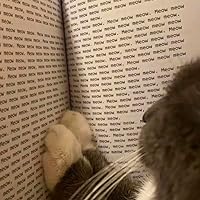
"you will do anything for the last time; you will be you for the last time. If there is nothing specific to be done, the only thing that truly matters is that we do what matters to us while we can."
August 11, 2024
A nice and very readable introduction to philosophical theories that provided me with some perspective while in the throng of an existential crisis.
Took some pressure off.
Took some pressure off.

March 24, 2023
Inspired by feedback from his YouTube channel, this is a collection of short essays about people and themes, orientated broadly around issues of meaning. Following the direction indicated by the title, many of the pieces seem to be from, or related to, what is often known as Philosophical Pessimism.
The book makes a nod at inclusion and breadth with some Eastern material (Buddhism, Daoism), but its mainly a Western book. And although it covers some ancient philosophers, the majority of its focus was modern writers.
That is a shame. Leaping over the medieval era it risks perpetuating the myth that nothing happened for a thousand years, whereas there are many thoughtful figures struggling within, and condemned by, mainstream religions of the era.
The book becomes more comprehensive in its coverage of twentieth century figures, even including material from Eastern European figures like Emil Cioran (d.1995), whose voice is not as often included in anthologies and collections.
The material was interesting, but its disparate nature wasn’t pulled together into an overall thesis or argument. Maybe that is part of what it means to write a book about Meaningless Existence, but I expected some engagement with alternative philosophies that ascribe meaning to existence. Or perhaps some engagement with the Positive Psychology movement which is trying to ground discussions of meaningful lives into experiments and research. The Harvard Longevity study has tracked a cohort for around 75 years, asking questions about meaning and happiness at various points in their lives. Surely information like that is relevant?
Its great to read armchair philosophers musings on meaning, but it would be even better to evaluate those musings, using material like that from the Psychology studies. Without that, all we had was a set of opinions, and opinions that didn’t seem to really drive to a conclusion.
In places I thought the author ‘s generalisations were a little harsh. For example he seemed to say that ‘all ideals of philosophy or religion…’ have ‘some level of contradiction of general incompleteness.’ (13%). Really? So every single philosophy and religion in the world is contradictory or incomplete?
But the author also included some great examples. Taking one from Kurt Vonnegut he asks us to imagine two yeast cells discussing the meaning of life. But due to the limitations of their perspective, they could have no conception that they were making champagne (31%). Could our own limitations also mean that we are completely incapable of seeing the bigger picture of our lives?
Overall, a very readable book, with short easily digestible sections. The range of authors is informative, but I got to the end of a book on meaningless existence and then wondered why I had bothered reading it. That feels like a failure, but maybe that is precisely what the book was aiming to do?
The book makes a nod at inclusion and breadth with some Eastern material (Buddhism, Daoism), but its mainly a Western book. And although it covers some ancient philosophers, the majority of its focus was modern writers.
That is a shame. Leaping over the medieval era it risks perpetuating the myth that nothing happened for a thousand years, whereas there are many thoughtful figures struggling within, and condemned by, mainstream religions of the era.
The book becomes more comprehensive in its coverage of twentieth century figures, even including material from Eastern European figures like Emil Cioran (d.1995), whose voice is not as often included in anthologies and collections.
The material was interesting, but its disparate nature wasn’t pulled together into an overall thesis or argument. Maybe that is part of what it means to write a book about Meaningless Existence, but I expected some engagement with alternative philosophies that ascribe meaning to existence. Or perhaps some engagement with the Positive Psychology movement which is trying to ground discussions of meaningful lives into experiments and research. The Harvard Longevity study has tracked a cohort for around 75 years, asking questions about meaning and happiness at various points in their lives. Surely information like that is relevant?
Its great to read armchair philosophers musings on meaning, but it would be even better to evaluate those musings, using material like that from the Psychology studies. Without that, all we had was a set of opinions, and opinions that didn’t seem to really drive to a conclusion.
In places I thought the author ‘s generalisations were a little harsh. For example he seemed to say that ‘all ideals of philosophy or religion…’ have ‘some level of contradiction of general incompleteness.’ (13%). Really? So every single philosophy and religion in the world is contradictory or incomplete?
But the author also included some great examples. Taking one from Kurt Vonnegut he asks us to imagine two yeast cells discussing the meaning of life. But due to the limitations of their perspective, they could have no conception that they were making champagne (31%). Could our own limitations also mean that we are completely incapable of seeing the bigger picture of our lives?
Overall, a very readable book, with short easily digestible sections. The range of authors is informative, but I got to the end of a book on meaningless existence and then wondered why I had bothered reading it. That feels like a failure, but maybe that is precisely what the book was aiming to do?
November 21, 2023
Author's take: "The first selection of essays begins where philosophy both began in time and begins for the individual—at the intersection of wonder and meaninglessness; the point at which our curiosity meets its match in a futile, indifferent, chaotic, and absurd universe."
My take: This book is futile, indifferent, chaotic, and absurd. A couple of interesting ideas and some interesting history but a futile, indifferent, chaotic, and absurd take on consciousness and the meaning of life; but what would you expect from a materialist: the ramblings of a stone.
My take: This book is futile, indifferent, chaotic, and absurd. A couple of interesting ideas and some interesting history but a futile, indifferent, chaotic, and absurd take on consciousness and the meaning of life; but what would you expect from a materialist: the ramblings of a stone.
May 17, 2023
A Philosophy 101 Primer/Brush-up
This is a bit like a philosophy Cliff Notes covering a lot of schools of thought, but presented in a style that reminds one, clearly, that there are lots of different paradigms that thinkers have constructed through the ages of grappling with the eternal mysteries of Self, suffering, death and meaning. Timely, in that we seem to live in a world where so many people are so stridently convinced of the virtue of their own opinion without ever seeming to dig deep enough to realize that the most fundamental questions are unanswerable. There are no one-size-fits-all doctrines; obviously. The greatest minds of all time have failed to reached a consensus, leaving us all alone to answer the questions for ourselves.
The author, at times, interjected a lot of his own conclusions, and, as appropriate to the subjects, his conclusions ranged from insightful to dubious. I felt the writing was at times uneven, but often inspired, and so appreciated the intent and scope of this undertaking.
This is a book for people who are already comfortable with heavy topics, or at least willing to be uncomfortable. Being human is both impossible and miraculous.
This is a bit like a philosophy Cliff Notes covering a lot of schools of thought, but presented in a style that reminds one, clearly, that there are lots of different paradigms that thinkers have constructed through the ages of grappling with the eternal mysteries of Self, suffering, death and meaning. Timely, in that we seem to live in a world where so many people are so stridently convinced of the virtue of their own opinion without ever seeming to dig deep enough to realize that the most fundamental questions are unanswerable. There are no one-size-fits-all doctrines; obviously. The greatest minds of all time have failed to reached a consensus, leaving us all alone to answer the questions for ourselves.
The author, at times, interjected a lot of his own conclusions, and, as appropriate to the subjects, his conclusions ranged from insightful to dubious. I felt the writing was at times uneven, but often inspired, and so appreciated the intent and scope of this undertaking.
This is a book for people who are already comfortable with heavy topics, or at least willing to be uncomfortable. Being human is both impossible and miraculous.
January 31, 2023
Mind blowing
This is a book that will change your life AND your perception of life. Pantano writes deeply, beautifully, and plainly about this great chaotic theme park ride called Life. An amazing effort by a truly gifted philosopher and writer.
This is a book that will change your life AND your perception of life. Pantano writes deeply, beautifully, and plainly about this great chaotic theme park ride called Life. An amazing effort by a truly gifted philosopher and writer.
January 5, 2024
This book is useful for someone who is trying to let things roll off their shoulders without becoming a nihilist. The concepts are easy to understand, and allow someone prone to anxiety and self-doubt to take a deep breath and put things in perspective.

November 22, 2023
A perfect book for a novice experiencing existential crisis,doesn’t find much exciting for a veteran.
June 28, 2025
This... was certainly a read. It took me about a month and a half to fully get through and a lot of that was begrudgingly. Although it does house some little nuggets of wisdom and interesting thoughts, the vast majority of this book is a "This person lived here at this time and then died. They wrote about and that's pretty neat." On top of the rather predictable, boring and repetitive structure, it seems as though Robert never really learnt when to end a sentence. Each sentence contained almost as many commas as it did letters and would stretch on and on and on. A few sentences even took over half of a page (when reading on my kobo, I'm not sure how long they would be in the physical book). I think that if someone stole his thesaurus during writing, this book probably would have been half the length thanks to all the fluff that would go missing. If I were to guess, I'd say the Robert's favorite pass time (outside of philosophy) is finding how many different ways he can say the same thing and fitting them all into the same sentence.
Are some of the summaries well written? Possibly, but I don't have many to compare them with.
Are any of the ideas new or life altering in any way? If looking at the 'original' ideas presented by Robert, then no. If your looking at the philosophies he writes about otherwise? Maybe a small handful to the write people.
Has this book changed the way I think or given me meaning in a meaningless existence? Well... maybe. About five pages of this book stuck with me in this way. The chapter on Charles Bukowski to be specific. It starts off the same as all the others, giving the live story of Charles, a German immigrant to the USA who has abused by his father and bullied by his peers. Charles spent his entire life relentlessly pursuing writing, even as he worked his main job at a post office. Eventually this work paid off and he became an incredible influential writer at the ripe old age of 50. And yet, on his grave stone is simply the phrase "Don't Try". Robert surmises the reason for this as perhaps Charles's final message,
"... if you have to try to try, if you have to try to care about something, or have to try to want something, perhaps you don't care about it... we often perform at our best when we are ourselves, natural and honest, attending to who we really are and what we really want to say or do..."
Is this idea fairly mundane in itself? Probably. But as someone who has spent an ungodly amount of time trying their best to care about things that they don't, seeing it so plainly written out made it finally click. And to me, those 5 pages have made the book worth reading.
Still wouldn't recommend it though, 2.5/5.
Are some of the summaries well written? Possibly, but I don't have many to compare them with.
Are any of the ideas new or life altering in any way? If looking at the 'original' ideas presented by Robert, then no. If your looking at the philosophies he writes about otherwise? Maybe a small handful to the write people.
Has this book changed the way I think or given me meaning in a meaningless existence? Well... maybe. About five pages of this book stuck with me in this way. The chapter on Charles Bukowski to be specific. It starts off the same as all the others, giving the live story of Charles, a German immigrant to the USA who has abused by his father and bullied by his peers. Charles spent his entire life relentlessly pursuing writing, even as he worked his main job at a post office. Eventually this work paid off and he became an incredible influential writer at the ripe old age of 50. And yet, on his grave stone is simply the phrase "Don't Try". Robert surmises the reason for this as perhaps Charles's final message,
"... if you have to try to try, if you have to try to care about something, or have to try to want something, perhaps you don't care about it... we often perform at our best when we are ourselves, natural and honest, attending to who we really are and what we really want to say or do..."
Is this idea fairly mundane in itself? Probably. But as someone who has spent an ungodly amount of time trying their best to care about things that they don't, seeing it so plainly written out made it finally click. And to me, those 5 pages have made the book worth reading.
Still wouldn't recommend it though, 2.5/5.
December 18, 2025
I have been a casual student of philosophy for about 5 years now, and I have gradually made my way through many of the ordinary starting points: Camus, Jung, Watts, etc. So many of the ideas in this book are familiar to me.
So as someone (somewhat) familiar with a good amount of the original source material this draws upon I can say this book is a good introduction to existentialist philosophy, that is accessible to a complete beginner.
You get a short introduction to many major thinkers throughout history, who tackle similar issues of existence in unique ways. Pantano gives a succinct summary of their ideas, with enough commentary to function as a standalone work as well. That is, you don't have to necessarily read Schopenhauer after this in order to get something from the book, but the essays serve as a great preview to the works of these thinkers, giving you enough background to desire and feel competent to explore their ideas further. Pantano relieves the pressure of reading philosophy by writing with relatable prose that is felt as being directed to a common reader, a real person experiencing the absurdity of life. And the essays are brief enough that someone that is hesitant to committing to a philosophical text can still derive a bit of wisdom or food for thought from them.
But don't let this fact stop you, early explorer of philosophy, from exploring these ideas further. It is easy to feel like you got the point of something after reading a summary of it. See these as introductions and explore further the thinkers that resonated with you.
Or don't. Because after all, we are all just precursory worm food that happens to experience consciousness for an unknown reason, through which we will inevitably suffer for no apparent reason, living out our absurd existence on a spinning ball in an eternal sea of matter, most of which we know nothing about, born from nothing just to return to nothing, doing things because it was the best alternative.
This is not bleak - this is blissful, freeing, affirming, inspiring. Don't believe me? Consult the book. But really? Consult the thinkers mentioned here. Because here you will only get a cursory reading, a surface level understanding of any of these philosophers. The seas are deep, friends. The shallow water can get boring, but there's more out there.
So as someone (somewhat) familiar with a good amount of the original source material this draws upon I can say this book is a good introduction to existentialist philosophy, that is accessible to a complete beginner.
You get a short introduction to many major thinkers throughout history, who tackle similar issues of existence in unique ways. Pantano gives a succinct summary of their ideas, with enough commentary to function as a standalone work as well. That is, you don't have to necessarily read Schopenhauer after this in order to get something from the book, but the essays serve as a great preview to the works of these thinkers, giving you enough background to desire and feel competent to explore their ideas further. Pantano relieves the pressure of reading philosophy by writing with relatable prose that is felt as being directed to a common reader, a real person experiencing the absurdity of life. And the essays are brief enough that someone that is hesitant to committing to a philosophical text can still derive a bit of wisdom or food for thought from them.
But don't let this fact stop you, early explorer of philosophy, from exploring these ideas further. It is easy to feel like you got the point of something after reading a summary of it. See these as introductions and explore further the thinkers that resonated with you.
Or don't. Because after all, we are all just precursory worm food that happens to experience consciousness for an unknown reason, through which we will inevitably suffer for no apparent reason, living out our absurd existence on a spinning ball in an eternal sea of matter, most of which we know nothing about, born from nothing just to return to nothing, doing things because it was the best alternative.
This is not bleak - this is blissful, freeing, affirming, inspiring. Don't believe me? Consult the book. But really? Consult the thinkers mentioned here. Because here you will only get a cursory reading, a surface level understanding of any of these philosophers. The seas are deep, friends. The shallow water can get boring, but there's more out there.
Displaying 1 - 30 of 169 reviews