

What do you think?

The Liberation of the Camps: The End of the Holocaust and Its Aftermath
A moving, deeply researched account of survivors’ experiences of liberation from Nazi death camps and the long, difficult years that followed
When tortured inmates of Hitler’s concentration and extermination camps were liberated in 1944 and 1945, the horror of the atrocities came fully to light. It was easy for others to imagine the joyful relief of freed prisoners, yet for those who had survived the unimaginable, the experience of liberation was a slow, grueling journey back to life. In this unprecedented inquiry into the days, months, and years following the arrival of Allied forces at the Nazi camps, a foremost historian of the Holocaust draws on archival sources and especially on eyewitness testimonies to reveal the complex challenges liberated victims faced and the daunting tasks their liberators undertook to help them reclaim their shattered lives.
Historian Dan Stone focuses on the survivors—their feelings of guilt, exhaustion, fear, shame for having survived, and devastating grief for lost family members; their immense medical problems; and their later demands to be released from Displaced Persons camps and resettled in countries of their own choosing. Stone also tracks the efforts of British, American, Canadian, and Russian liberators as they contended with survivors’ immediate needs, then grappled with longer-term issues that shaped the postwar world and ushered in the first chill of the Cold War years ahead.
When tortured inmates of Hitler’s concentration and extermination camps were liberated in 1944 and 1945, the horror of the atrocities came fully to light. It was easy for others to imagine the joyful relief of freed prisoners, yet for those who had survived the unimaginable, the experience of liberation was a slow, grueling journey back to life. In this unprecedented inquiry into the days, months, and years following the arrival of Allied forces at the Nazi camps, a foremost historian of the Holocaust draws on archival sources and especially on eyewitness testimonies to reveal the complex challenges liberated victims faced and the daunting tasks their liberators undertook to help them reclaim their shattered lives.
Historian Dan Stone focuses on the survivors—their feelings of guilt, exhaustion, fear, shame for having survived, and devastating grief for lost family members; their immense medical problems; and their later demands to be released from Displaced Persons camps and resettled in countries of their own choosing. Stone also tracks the efforts of British, American, Canadian, and Russian liberators as they contended with survivors’ immediate needs, then grappled with longer-term issues that shaped the postwar world and ushered in the first chill of the Cold War years ahead.
304 pages, Paperback
First published April 21, 2015
About the author
Dan Stone
64 books64 followersDan Stone was born in Lincoln and brought up in Birmingham. He studied at the University of Oxford and since 1999 has taught at Royal Holloway, University of London. Dan is a historian of modern Europe with particular interests in the Holocaust, comparative genocide, fascism, race theory, and the history of anthropology.
Ratings & Reviews
Friends & Following
Create a free account to discover what your friends think of this book!
Community Reviews
Displaying 1 - 30 of 30 reviews

February 10, 2023
Almost a hundred pages into this book, I wasn't too sure what the author was trying to achieve. All the quotes and interviews are taken from other books. The author doesn't seem to have carried out any new research of his own. And this gives the book a text book feel. But then I read this quote from an UNRRA nurse at Belsen - Muriel Knox Doherty:
'You may shudder at these descriptions - perhaps you will say it is sordid and unnecessary. Read on, my friends! The world should know what suffering and degradation this New Order in Europe brought to millions, lest it be quickly forgotten and rise again in another guise. It concerns us all - we must not forget - whether you can forgive, only you must decide.
Well, parts of the world - even in Europe and America - are already beginning to forget. Some claim none of it was true to begin with. Which is why a book like this - even if it 'only' restates what has gone before - is so important. It isn't just victims of the Holocaust who bear witness to those terrible events. It's the perpetrators and the liberators, too. And what they tell is the horror and truth of these too-horrific-to-be-true events. By reminding us of those horrors and truths, Stone performs a very important duty. Hopefully, this will help us not to forget. And not to allow it to rise under another guise. What, we're too knowledgable now? Too cultured? Too civilised? Read Zalman Gradowski's words. A member of the sonderkommando at Auschwitz before he too became a victim of the industrialised slaughter, he managed to write down his experiences and bury it next to the gas chamber. 'The more highly developed a culture, the more cruel its murderers, the more civilised a society, the greater its barbarians; as development increases, its deeds become more terrible'. A ghastly epitaph, not just for him personally, but for the whole of humanity.
'You may shudder at these descriptions - perhaps you will say it is sordid and unnecessary. Read on, my friends! The world should know what suffering and degradation this New Order in Europe brought to millions, lest it be quickly forgotten and rise again in another guise. It concerns us all - we must not forget - whether you can forgive, only you must decide.
Well, parts of the world - even in Europe and America - are already beginning to forget. Some claim none of it was true to begin with. Which is why a book like this - even if it 'only' restates what has gone before - is so important. It isn't just victims of the Holocaust who bear witness to those terrible events. It's the perpetrators and the liberators, too. And what they tell is the horror and truth of these too-horrific-to-be-true events. By reminding us of those horrors and truths, Stone performs a very important duty. Hopefully, this will help us not to forget. And not to allow it to rise under another guise. What, we're too knowledgable now? Too cultured? Too civilised? Read Zalman Gradowski's words. A member of the sonderkommando at Auschwitz before he too became a victim of the industrialised slaughter, he managed to write down his experiences and bury it next to the gas chamber. 'The more highly developed a culture, the more cruel its murderers, the more civilised a society, the greater its barbarians; as development increases, its deeds become more terrible'. A ghastly epitaph, not just for him personally, but for the whole of humanity.

February 10, 2025
Wiele jest książek opisujących potworności obozów koncentracyjnych, Holocaust, wojenne przeżycia, tę apokalipsę spełnioną. Dan Stone skupia się na aspekcie, który nie jest poruszany zbyt często - na tym, co wydarzyło się, gdy otwarto bramy obozów Auschwitz, Buchenwaldu, Gross-Rosen i wielu innych.
Wyzwolenia doczekali nieliczni. Pozostałych albo pospiesznie zabito, albo pędzono w marszach śmierci, które - jak sama nazwa wskazuje - zebrały potworne żniwo.
Ci, którzy wyzwalali, Sowieci czy Amerykanie, mierzyli się później z traumą, bo to, co zobaczyli, wypaliło się w ich pamięci. Stosy martwych i oszalałe z głodu szkielety, które trzymały się życia chyba siłą woli.
Percy Knauth, amerykański dziennikarz, napisał: "Szanowałem gatunek ludzki aż do dnia, kiedy ujrzałem Buchenwald". Wielu z ocalałych zmarło tuż po wyzwoleniu, wcześniej budząc wstręt w tych, którzy mieli się nimi opiekować. Żołnierze, pielęgniarki - wszyscy mieli dobre chęci, ale często brakowało cierpliwości i umiejętności, a tu każdy gest czy każdy kęs jedzenia był istotny. Choroby, smród, otępienie, rozpacz - z tym wszystkim mierzyli się byli już więźniowie.
"Zostaliśmy uwolnieni od śmierci i od strachu przed śmiercią, teraz jednak nadszedł strach przed życiem". Potracili rodziny, nie mieli dokąd wracać, świat nie miał na nich pomysłu. Obozy dipisów, wprawdzie bez tortur i głodzenia, nadal były obozami. Autor sporo miejsca poświęca tym politycznym przepychankom, a one rzucają przygnębiające światło na "pomoc" byłym więźniom.
Podczas lektury miałam cały czas z tyłu głowy wiersz "Ocalony" Tadeusza Różewicza. Tam - świetna klamra poetycka, bo początek: "Mam 24 lata/ocalałem/prowadzony na rzeź" brzmi niemal optymistycznie, ale powtórzenie tego na końcu wcale nie jest już takie radosne. Bo czasem przetrwanie nie jest zapowiedzią czegoś dobrego...
Bardzo ważna książka.
Wyzwolenia doczekali nieliczni. Pozostałych albo pospiesznie zabito, albo pędzono w marszach śmierci, które - jak sama nazwa wskazuje - zebrały potworne żniwo.
Ci, którzy wyzwalali, Sowieci czy Amerykanie, mierzyli się później z traumą, bo to, co zobaczyli, wypaliło się w ich pamięci. Stosy martwych i oszalałe z głodu szkielety, które trzymały się życia chyba siłą woli.
Percy Knauth, amerykański dziennikarz, napisał: "Szanowałem gatunek ludzki aż do dnia, kiedy ujrzałem Buchenwald". Wielu z ocalałych zmarło tuż po wyzwoleniu, wcześniej budząc wstręt w tych, którzy mieli się nimi opiekować. Żołnierze, pielęgniarki - wszyscy mieli dobre chęci, ale często brakowało cierpliwości i umiejętności, a tu każdy gest czy każdy kęs jedzenia był istotny. Choroby, smród, otępienie, rozpacz - z tym wszystkim mierzyli się byli już więźniowie.
"Zostaliśmy uwolnieni od śmierci i od strachu przed śmiercią, teraz jednak nadszedł strach przed życiem". Potracili rodziny, nie mieli dokąd wracać, świat nie miał na nich pomysłu. Obozy dipisów, wprawdzie bez tortur i głodzenia, nadal były obozami. Autor sporo miejsca poświęca tym politycznym przepychankom, a one rzucają przygnębiające światło na "pomoc" byłym więźniom.
Podczas lektury miałam cały czas z tyłu głowy wiersz "Ocalony" Tadeusza Różewicza. Tam - świetna klamra poetycka, bo początek: "Mam 24 lata/ocalałem/prowadzony na rzeź" brzmi niemal optymistycznie, ale powtórzenie tego na końcu wcale nie jest już takie radosne. Bo czasem przetrwanie nie jest zapowiedzią czegoś dobrego...
Bardzo ważna książka.

March 19, 2015
An excellent account of the bittersweet road from camp inmate to survivor and the reclamation of shattered lives.
Dan Stone is professor of modern history, Royal Holloway, University of London. He has published fifteen books on the Holocaust, genocide, and twentieth-century European history.
In a highly readable style Dan Stone describes the moment of liberation by Allied armies which sadly came too late to the many thousands who died in the following weeks as the Allies struggled to get the necessary expertise and supplies in place to support these poor ravaged souls.
What makes the book is the detail on the aftermath which echoes continue to this day. Using powerful and moving eyewitness accounts Stone portrays a story littered with misunderstanding, prejudice and in some cases downright cruelty to the survivors.
Despite helping inmates initially, over the months and years these DPs (Displaced Persons) became a headache that the Allies couldn’t easily resolve forcing many into illegal immigration, conflict with the local population, as well as conflict with the military and civilian authorities.
This is highlighted by details of a 1949 demo in Munich against an anti-Semitic letter published in a local paper. German police violently broke up the demonstration by camp inmates and attacked Jewish DPs whilst US soldiers looked on.
Some may think this is old history of over 70 years ago but Israel’s declaration of independence in 1948 created a new group of DPs – the Palestinians – whose displacement continues to this day.
An excellent account of the bittersweet road from camp inmate to survivor and the reclamation of shattered lives.
Dan Stone is professor of modern history, Royal Holloway, University of London. He has published fifteen books on the Holocaust, genocide, and twentieth-century European history.
In a highly readable style Dan Stone describes the moment of liberation by Allied armies which sadly came too late to the many thousands who died in the following weeks as the Allies struggled to get the necessary expertise and supplies in place to support these poor ravaged souls.
What makes the book is the detail on the aftermath which echoes continue to this day. Using powerful and moving eyewitness accounts Stone portrays a story littered with misunderstanding, prejudice and in some cases downright cruelty to the survivors.
Despite helping inmates initially, over the months and years these DPs (Displaced Persons) became a headache that the Allies couldn’t easily resolve forcing many into illegal immigration, conflict with the local population, as well as conflict with the military and civilian authorities.
This is highlighted by details of a 1949 demo in Munich against an anti-Semitic letter published in a local paper. German police violently broke up the demonstration by camp inmates and attacked Jewish DPs whilst US soldiers looked on.
Some may think this is old history of over 70 years ago but Israel’s declaration of independence in 1948 created a new group of DPs – the Palestinians – whose displacement continues to this day.
An excellent account of the bittersweet road from camp inmate to survivor and the reclamation of shattered lives.

April 16, 2015
“The Liberation of the Camps” is a book that manages to make itself unique in a history genre that can feel a bit crowded at times.
What sets the book apart is the liberal use of primary sources from a variety of different situations that occurred after liberation. Many of them, including the fact that many Survivors were kept in the camp for a long period after the actual liberation, are unknown to many people. It’s a very comprehensive resource for those with an interest in Holocaust history.
The one major flaw is that it can be dry at times. It’s definitely by an academic and meant for those with a scholarly interest in the Holocaust, but even by those standards it can be dry. I have a degree in history, so feel like I have seen both sides of the “dry history” spectrum. This one is not awful, simply dry in the medium range on the spectrum. Not enough to be boring, but not something to be consumed in large doses.
Overall, the content and primary sources make “The Liberation of the Camps” worth the time for those with an academic interest in the Holocaust. However, for anyone else it would probably be a bit of a bore. Four stars are given for the wealth of information provided, not the writing itself.
This review is based upon a complimentary copy provided by the publisher in exchange for an honest review.
What sets the book apart is the liberal use of primary sources from a variety of different situations that occurred after liberation. Many of them, including the fact that many Survivors were kept in the camp for a long period after the actual liberation, are unknown to many people. It’s a very comprehensive resource for those with an interest in Holocaust history.
The one major flaw is that it can be dry at times. It’s definitely by an academic and meant for those with a scholarly interest in the Holocaust, but even by those standards it can be dry. I have a degree in history, so feel like I have seen both sides of the “dry history” spectrum. This one is not awful, simply dry in the medium range on the spectrum. Not enough to be boring, but not something to be consumed in large doses.
Overall, the content and primary sources make “The Liberation of the Camps” worth the time for those with an academic interest in the Holocaust. However, for anyone else it would probably be a bit of a bore. Four stars are given for the wealth of information provided, not the writing itself.
This review is based upon a complimentary copy provided by the publisher in exchange for an honest review.

October 1, 2017
Not quite what I was looking for as I want to hear how people personally dealt with leaving the camps and trying to reenter life. Stone's book is a scholarly text and it examines much of what happened with the camps so we leave with an understanding of how "liberation" was not what we would normally think of for camp survivors. He does get some first-person voices in the mix, which is good to hear, but most of it is his analysis of how the Allies handled/mishandled what they found.
![Profile Image for magdalena [pani nostalgia].](https://i.gr-assets.com/images/S/compressed.photo.goodreads.com/users/1700332362i/127359732._UX200_CR0,33,200,200_.jpg)
February 15, 2025
dla mnie takie 3,5 - ogólnie dobrze zbudowane podsumowanie tego, co wydarzyło się po wyzwoleniu obozów, ale chyba wolałam pierwszą część - wspomnienia zawsze działają na mnie bardziej i chciałabym poznać więcej faktycznych osób, niż ogólnikowych stwierdzeń, jak wyglądało to dalej

August 10, 2023
Disappointing and poorly researched for such an important and rarely spoken about topic. Sloppily done in many ways, but really beat the dead horse of the Evils of Communism by bringing it up every time the Soviets were mentioned and threw first hand accounts from them on the pile of propaganda while very similar excerpts from the British and Americans were looked at without criticism.
For example, Stone uses a single American report to falsely claim that the uprising at Buchenwald (which was mainly organized by communist and socialist prisoners) was violent and hierarchical and could barely be considered a good thing, despite their being plenty of sources that prove otherwise. He comes up with many other bizarre conclusions that are clearly based on English and American propaganda that he's taken at face value.
To be clear, I'm not defending the post-war Soviet state. Stone just fails to look at both sides with the same amount of discrimination and ignores sources that don't align with his own anti-communist stance, thereby discrediting his entire book. I could go on, but it's not worth my time. A book with such sloppy research shouldn't have gotten past the review board.
For example, Stone uses a single American report to falsely claim that the uprising at Buchenwald (which was mainly organized by communist and socialist prisoners) was violent and hierarchical and could barely be considered a good thing, despite their being plenty of sources that prove otherwise. He comes up with many other bizarre conclusions that are clearly based on English and American propaganda that he's taken at face value.
To be clear, I'm not defending the post-war Soviet state. Stone just fails to look at both sides with the same amount of discrimination and ignores sources that don't align with his own anti-communist stance, thereby discrediting his entire book. I could go on, but it's not worth my time. A book with such sloppy research shouldn't have gotten past the review board.

February 3, 2020
Fairly readable and not too detail heavy, a nice mix of survivor testimony and wider context. Far more focused on the Western side of Liberation, Belsen, Dachau and Buchenwald so I wouldn’t recommend the whole thing if studying the camps liberated by the Soviets in the East.
March 29, 2015
Good info; tedious at times. Full review http://rannthisthat.blogspot.com/2015... on May 1

August 10, 2023
It seems to be a natural human inclination to put a gloss of simplicity over historical facts, to obscure the fractal and nuanced nature of real events with a reductive fairy tale happy ever after.
For example the much vaunted 'Blitz spirit' was not a uniform and unanimous upsurge in plucky British resistance. The photos history has handed down to us are as much publicity shoots for propaganda purposes (e.g. the iconic milkman delivering his crate of bottles over the bombed out rubble of a building) as they are accurate reflections of wartime reality. The morale of Bristol citizens in the blitz was more shaken and stirred than stiffened by the Luftwaffe attacks.
In the same way, as Stone makes clear, the liberation of the camps was not some immediate happy ever after and for many the trauma persisted with the displaced persons (DPs) often being confined to camps years after the end of the war.
Stone identifies some key differences in the camps liberated to east and west. Belsen and Buchenwald were not death camps in the way that Auschwitz was. The Soviets were liberating mostly empty death camps with a few hundred grievously ill inmates left behind as too ill to make the forced death marches that carried so many victims westward. The Allies were liberating concentration camps swollen by the survivors of those same marches until tens of thousands were imprisoned in conditions so appalling that 13 thousand at Belsen alone would die after liberation.
Stone also identifies the complex post war geo-politics, the west's fear of communism, the soviet desire to destabilise the empire, the American reluctance to be 'overwhelmed' with refugees, the British anxieties over Palestine, which meant that Jews unwilling or unable to return to their home country became a political football. The horrors that they had experienced very quickly downplayed in an atmosphere of everyone had had a terrible war. The support that they needed considered less urgent than an erstwhile Nazi collaborator fleeing 'communist persecution' and in search of a new life in the west.
It is impossible in a short review to do full credit to Stone's thorough and enlightening investigation of a complex period in history. However, what grew out of that period with the UNHCR was the realisation that a compassionate fair and consistent global approach was needed to the plight of refugees. Sadly, the demonisation of refugees, and the belittling of their travails that occasionally speckle the pages of Stone's work seem even more in evidence today. The same Right Wing Papers that in 1945 punctuated extermination camps within doubt implying inverted commas ([cough] Daily Mail) today trumpet about how full the UK is and how un-desperate refugees are.
It is not just the Nazi atrocities that need remembering, but our own flawed, hesitant responses to the survivors, lest we forget how we learned and codified compassion!
For example the much vaunted 'Blitz spirit' was not a uniform and unanimous upsurge in plucky British resistance. The photos history has handed down to us are as much publicity shoots for propaganda purposes (e.g. the iconic milkman delivering his crate of bottles over the bombed out rubble of a building) as they are accurate reflections of wartime reality. The morale of Bristol citizens in the blitz was more shaken and stirred than stiffened by the Luftwaffe attacks.
In the same way, as Stone makes clear, the liberation of the camps was not some immediate happy ever after and for many the trauma persisted with the displaced persons (DPs) often being confined to camps years after the end of the war.
Stone identifies some key differences in the camps liberated to east and west. Belsen and Buchenwald were not death camps in the way that Auschwitz was. The Soviets were liberating mostly empty death camps with a few hundred grievously ill inmates left behind as too ill to make the forced death marches that carried so many victims westward. The Allies were liberating concentration camps swollen by the survivors of those same marches until tens of thousands were imprisoned in conditions so appalling that 13 thousand at Belsen alone would die after liberation.
Stone also identifies the complex post war geo-politics, the west's fear of communism, the soviet desire to destabilise the empire, the American reluctance to be 'overwhelmed' with refugees, the British anxieties over Palestine, which meant that Jews unwilling or unable to return to their home country became a political football. The horrors that they had experienced very quickly downplayed in an atmosphere of everyone had had a terrible war. The support that they needed considered less urgent than an erstwhile Nazi collaborator fleeing 'communist persecution' and in search of a new life in the west.
It is impossible in a short review to do full credit to Stone's thorough and enlightening investigation of a complex period in history. However, what grew out of that period with the UNHCR was the realisation that a compassionate fair and consistent global approach was needed to the plight of refugees. Sadly, the demonisation of refugees, and the belittling of their travails that occasionally speckle the pages of Stone's work seem even more in evidence today. The same Right Wing Papers that in 1945 punctuated extermination camps within doubt implying inverted commas ([cough] Daily Mail) today trumpet about how full the UK is and how un-desperate refugees are.
It is not just the Nazi atrocities that need remembering, but our own flawed, hesitant responses to the survivors, lest we forget how we learned and codified compassion!

February 6, 2025
Obozy koncentracyjne to był koszmar, dlatego gdy myślimy o ich wyzwoleniu wyobrażamy sobie radość, ulgę i koniec niewyobrażalnego bólu. Jakby dzień wejścia aliantów do obozów, zrzucenie jarzma niewoli i zamknięcie krematoriów, natychmiast przeciął wieloletnią udrękę. Reportaż Dana Stone pokazuje, że wyzwolenie stanowiło dopiero pierwszy, mały krok do wolności. Ocaleńcy zostali uratowani, ale ich rodziny wymordowano. Przeżyli, ale nie mieli do czego wracać, ich dobytek został zniszczony lub zagrabiany, stanowili problem dla większości państw.
Pierwsze części książki traktują głownie o wyzwolicielach, zarówno ze strony sowietów jak i państw zachodnich. Autor pokazuje różnice państw demokratycznych i komunistycznych w podejściu do makabrycznych odkryć, sposobach komentowania i zarządzania obozami.
W kolejnych rozdziałach przybliżono podejście różnych krajów do relokacji dipisów (osoby poza swoim państwem, które chciały wrócić do kraju bądź znaleźć nowy) oraz podejmowane przez ocaleńców próby stworzenia namiastki życia kulturalnego, społecznego i intelektualnego w obozach.
Moim zdaniem łatwiej przyswoić historię na podstawie opowieści kilku wybranych osób reprezentujących różne strony i na ich podstawie śledzić wydarzenia, w przypadku tego reportażu było to niemożliwe – materiałów źródłowych było po prostu za dużo. Mimo to Dan Stone zasługuje na duże uznanie za potężną pracę jaką wykonał przygotowując reportaż – bibliografia zawierająca historie i opowieści osób ocalonych i wyzwolicieli zajmuje kilka stron książki.
Nasze pokolenie, pokolenie naszych dzieci, z każdym dniem wyzbywa się wojennej traumy, traumy obozów koncentracyjnych, eksterminacji ludności. Historia lubi się powtarzać, a prawicowy ekstremizm zaczyna w wielu krajach znowu podnosić głowę, dlatego należy ciągle przypominać do czego prowadzi ksenofobia, faszyzm, prawicowy nacjonalizm i nietolerancja.
Za egzemplarz dziękuję Wydawnictwu Czarna Owca
Pierwsze części książki traktują głownie o wyzwolicielach, zarówno ze strony sowietów jak i państw zachodnich. Autor pokazuje różnice państw demokratycznych i komunistycznych w podejściu do makabrycznych odkryć, sposobach komentowania i zarządzania obozami.
W kolejnych rozdziałach przybliżono podejście różnych krajów do relokacji dipisów (osoby poza swoim państwem, które chciały wrócić do kraju bądź znaleźć nowy) oraz podejmowane przez ocaleńców próby stworzenia namiastki życia kulturalnego, społecznego i intelektualnego w obozach.
Moim zdaniem łatwiej przyswoić historię na podstawie opowieści kilku wybranych osób reprezentujących różne strony i na ich podstawie śledzić wydarzenia, w przypadku tego reportażu było to niemożliwe – materiałów źródłowych było po prostu za dużo. Mimo to Dan Stone zasługuje na duże uznanie za potężną pracę jaką wykonał przygotowując reportaż – bibliografia zawierająca historie i opowieści osób ocalonych i wyzwolicieli zajmuje kilka stron książki.
Nasze pokolenie, pokolenie naszych dzieci, z każdym dniem wyzbywa się wojennej traumy, traumy obozów koncentracyjnych, eksterminacji ludności. Historia lubi się powtarzać, a prawicowy ekstremizm zaczyna w wielu krajach znowu podnosić głowę, dlatego należy ciągle przypominać do czego prowadzi ksenofobia, faszyzm, prawicowy nacjonalizm i nietolerancja.
Za egzemplarz dziękuję Wydawnictwu Czarna Owca
May 29, 2021
The liberation of the camps was a start of personal and political struggles.
This book shows the institutional anti-semitism in Britain and the US, also Russia.
In many cases the perpetrators and accomplices of the Holocaust were treated better than their innocent victims. A very sad and despicable tale. The only "friend" of these survivors was the Soviet Union. And even then, it was only because it suited their cold war strategy to undermine Britain and the US.
Bevin, the British politician who did such wonderful work in setting up the NHS, is again exposed here as deeply anti-semitic, which is a reflection on the political institutions on both sides of the Atlantic at that time.
A galling read. These survivors had nowhere to go, they could not go back to their old lives. Their families were murdered, and they had suffered incredibly traumatic experiences and abuse. It seemed that no one in political authority cared. Von Braun and his Nazi colleagues, and many others from the SS and Nazi party were looked after, given positions of power and authority by the US and German governments, because of their "valuable" contribution to the cold war.
Sickening.
This book shows the institutional anti-semitism in Britain and the US, also Russia.
In many cases the perpetrators and accomplices of the Holocaust were treated better than their innocent victims. A very sad and despicable tale. The only "friend" of these survivors was the Soviet Union. And even then, it was only because it suited their cold war strategy to undermine Britain and the US.
Bevin, the British politician who did such wonderful work in setting up the NHS, is again exposed here as deeply anti-semitic, which is a reflection on the political institutions on both sides of the Atlantic at that time.
A galling read. These survivors had nowhere to go, they could not go back to their old lives. Their families were murdered, and they had suffered incredibly traumatic experiences and abuse. It seemed that no one in political authority cared. Von Braun and his Nazi colleagues, and many others from the SS and Nazi party were looked after, given positions of power and authority by the US and German governments, because of their "valuable" contribution to the cold war.
Sickening.

June 1, 2025
The person responsible for choosing the title did this book a major disservice, because the actual liberation of the camps is nearly a blip here, two blinks and you'd miss it. Worse still, the author was apparently unable to decide what he was going to write about, and definitely had no intention to approach any of his sources critically, so anything and everything goes into the pot, and it's all up to the readers - what they will fish out from this muddle, and how will they interpret it, because Stone's sole point is "Zionism good".
It was nice to see one of my translations listed in the bibliography, though.
It was nice to see one of my translations listed in the bibliography, though.
March 21, 2024
One of the best books i've ever read, I never want to read it again. A chilling retelling of the aftermath of the liberation of concentration and extermination camps, with both sources from the camps and their aftermath. The horrors people saw, experiences, and suffered through are beyond what most people can imagine. But, they are real, and still impact us today.

June 16, 2026
Reading this in early 2024, I must say that it coincided with events at the time perfectly. While this book provides a gruesome, new perspective on the liberation of the camps, which I was far too naive at the time to really understand, the book remained slightly confusing, and not particularly engaging. The narrative and message however, at the time I was reading this, was striking.

September 30, 2017
"Chiudo gli occhi. Questo non può essere il XX secolo, penso. Cerco di rammentare le capacità di redenzione dell'uomo. Non me ne viene in mente alcuna." - Markus J. Smith, Dachau. The Harrowing of Hell (cit. a p. 52)
April 2, 2023
Dreadful
This book read like a thesis ,a mash of quotes and long rambling sentences. Extremely expensive for such a poor read. avoid... My second book by Dan Stone and both times I've been disappoint ed......
This book read like a thesis ,a mash of quotes and long rambling sentences. Extremely expensive for such a poor read. avoid... My second book by Dan Stone and both times I've been disappoint ed......
March 23, 2019
Excellent and educational.

May 1, 2023
This book was a fantastic read

February 22, 2025
A sobering and compelling read.

April 1, 2025
first non fiction ever completed. probably the last

April 29, 2023
“Liberation did not mean the end of the Holocaust. The survivors – in the camps, in hiding and in exile - faced years of further struggles to find a place to call home and to rebuild their lives, to the extent that they ever did.” In his meticulously researched and compelling text, Historian Dan Stone investigated the aftermath of the Holocaust, readjusting the lens through which many had viewed the 1945 liberation.
Stone revealed that “Liberation was not only not the end of the Holocaust; it was the bridge between the wartime alliance and Cold War tension.” His analysis presented the years that followed Liberation by the American, Russian and British troops to be mired in geo-political considerations and in the misunderstanding of the survivors’ plight, resulting in years of delay in their care, in their needs, and in allowing them to choose their own destinations, primarily to Palestine. Stone argued that antisemitism and suspicion of the “motives” of the Jewish survivors lingered, particularly within the British administrators, which affected how organisations dealt with them and meant that DP camps operated for years after the supposed liberation.
Most impressive was the depth of his understanding of the psychological impact of the Holocaust on the Jewish survivors, his interviews and the subsequent testimonies providing the reader with confronting evidence of their struggle to re-enter the world and rebuild their lives: “I have never heard sounds like those we uttered, sounds released from the very depths of our being. The sheer force of it must have scattered the ashes of Auschwitz to every corner of the universe, for our cries of joy suddenly turned into a bitter wail: ‘We are liberated! We are liberated!’ But where are they all? They are all dead!” (Isabella Leitner)
Stone revealed that “Liberation was not only not the end of the Holocaust; it was the bridge between the wartime alliance and Cold War tension.” His analysis presented the years that followed Liberation by the American, Russian and British troops to be mired in geo-political considerations and in the misunderstanding of the survivors’ plight, resulting in years of delay in their care, in their needs, and in allowing them to choose their own destinations, primarily to Palestine. Stone argued that antisemitism and suspicion of the “motives” of the Jewish survivors lingered, particularly within the British administrators, which affected how organisations dealt with them and meant that DP camps operated for years after the supposed liberation.
Most impressive was the depth of his understanding of the psychological impact of the Holocaust on the Jewish survivors, his interviews and the subsequent testimonies providing the reader with confronting evidence of their struggle to re-enter the world and rebuild their lives: “I have never heard sounds like those we uttered, sounds released from the very depths of our being. The sheer force of it must have scattered the ashes of Auschwitz to every corner of the universe, for our cries of joy suddenly turned into a bitter wail: ‘We are liberated! We are liberated!’ But where are they all? They are all dead!” (Isabella Leitner)

April 17, 2015
I've read literally hundred of books about the Holocaust predominantly memoirs of survivors. Often the books will end at the point just after liberation and I have often been left wanted to understand more about how that individual has attempted to live a normal life after leaving through such atrocities, often losing their whole families.
This book “The Liberations of the Camps” by Dan Stone looks into the liberations of prisoners during WWII whether from Death camps such as Auschwitz or work camps such as Gross-Rosen for example, told from the perspectives of the liberated and the liberators. Often the news that they were liberated was met with euphoria, if the prisoners were healthy enough to show such emotions but I was intrigued to learn more about how these individuals coped once the euphoria had died down and they were to return to normal life. Dan Stone used a diverse range of sources to assist the reader in understanding the process of liberation, from well known survivors such as Primo Levi to Elie Wiesel .
I feel that this book is aimed at readers that already have a certain knowledge of the Holocaust and require a greater understanding. This was a superb read, extremely well written and researched.
Thanks to Netgalley and Yale University Press for an advance reader copy in exchange for an honest and fair review.
September 20, 2015
The Liberation of the Camps was an eye-opener for me. It is not that I thought Jews were welcomed back with open-arms after liberation. My family managed to leave right before the outbreak of the war and I know what happened to the few remaining who tried to go back to Poland. But somehow I believed the tropes about the ecstatic survivors and the joyful reunions. When I think about it this it really does not make sense. First, how could the genocide and degradation of a people lead to anything but an exhausting and brutal struggle especially with the complex political machinations and outright anti-antisemitism of so many countries. Second, I saw this struggle in my neighborhood in Brooklyn in the 1960's as families, survivors and others, lived their lives with the trauma of the Holocaust in their bones. I found the book highly readable and appreciated the thorough research and compelling eyewitness accounts. The information was presented clearly and concisely and widened my perspective. Thank you.
Thank you to Netgalley for allowing me to review this book for an honest opinion.
Thank you to Netgalley for allowing me to review this book for an honest opinion.

September 25, 2016
Dan Stone addresses the oft-neglected aspect of postwar Europe - what happened to the millions of Displaced Persons after the Third Reich collapsed. It is filled with testimonies of Holocaust survivors as well as military personnel often present at the sites of the concentration camps. These accounts are often a tough read, even though we are desensitized by the photos and newsreel, the visceral description of the mountains of dead is harrowing.
April 29, 2023
Very eye opening and a surprisingly quick read. Just an absolute ton of stuff I had no idea about. The author does tend towards a more detached tone that doesn’t work great with the material, and there are some issues of greater historical trends being treated as common knowledge. Still worthwhile and a treasure of sources.

March 3, 2024
Exceptionally thorough, even if not consistently gripping. Redefines an incredibly important moment in human history with breaching humanity. If there is a criticism it’s that it ends too quickly and is possibly too interested in logistics divorces from specific humans. But the inescapable disconnection the survivors felt is certainly reflected in Stone’s writing.

Read
June 5, 2015Review by Jack Fischel for the Jewish Book Council.

January 25, 2018
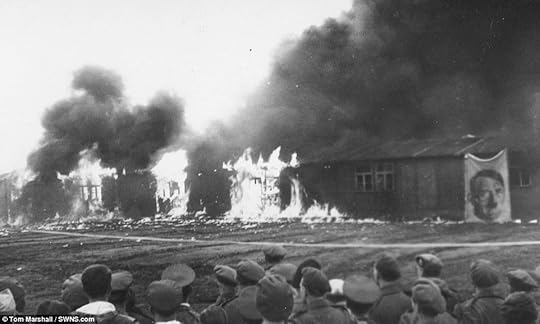
Campo di Bergen-Belsen dato alle fiamme, dopo la liberazione avvenuta il 15 aprile 1945 ad opera di inglesi e canadesi.
Dì loro che anche se il tuo cuore si trasforma in pietra, il tuo cervello in un freddo calcolatore e i tuoi occhi in obiettivi di una macchina fotografica, tu non ritornerai mai da loro. Loro farebbero meglio a cercarti nelle foreste eterne, perchè tu sarai fuggito dal mondo abitato dagli uomini, a cercare conforto tra le fiere nei campi pur di non vivere tra demoni acculturati. Persino gli animali sono stati dirozzati dalla civiltà - i loro zoccoli sono stati appiattiti e la loro crudeltà decisamente attenuata - non così l'uomo, diventato invece una bestia. Quanto più una cultura è sviluppata, tanto più crudeli sono i suoi assassini, quando più civilizzata una società, tanto più incivili i suoi barbari: con il suo sviluppo, i suoi misfatti diventano più terribili.
Salmen Gradowski, membro del Sonderkommando di Auschwitz
A dispetto delle molte ripetizioni (specialmente nella parte iniziale), questo libro rappresenta uno spunto di riflessione nonchè una ricca fonte di informazioni in merito alla liberazione dei prigionieri dai campi di concentramento, spiegando come la fine delle loro sofferenze era ben lungi dall'essere raggiunta, vuoi per una riabilitazione lenta e dolorosa dei prigionieri (che, nonostante il desiderio e il fervore dimostrato di tornare ad avere una vita "normale", porteranno sempre con loro gli orrori visti e subiti), che per meri motivi politici.
Presto euforia e tempesta delle emozioni si quietarono. C'era gioia, certo, eravamo liberi, i cancelli aperti, ma dove andare? La liberazione era arrivata troppo tardi, per i morti; ma anche per noi rimasti in vita. Avevamo perso le nostre famiglie, gli amici, le case. Non avevamo dove andare; non c'era nessuno ad attenderci da qualche parte. Eravamo vivi, certo. Eravamo scampati alla morte, non ne avevamo più paura; iniziò la paura della vita.
(Hadassah Rosensaft, sopravvissuta)
Un altro importante obiettivo del libro è quello di sfatare il mito delle liberazioni intese come momento di gioia incondizionata sia dalla parte dei liberatori (spesso in stato confusionale, pervasi da incredulità, shock e disgusto oltre che mossi a compassione e pervasi da un sentimento d'odio e di vendetta -in alcuni casi ingiustificata e impunita- nei confronti del popolo tedesco),
Alcuni soldati della Wehrmacht uscirono totalmente di senno. Dopo avere sistemato una trentina di cadaveri in una fossa, un caporale si strappò di dosso la Croce di ferro e la scaraventò per terra. Gli altri soldati della compagnia lo imitarono e stracciarono con aria disgustata mostrine e decorazioni.
(Edmund Swift, cappellano cattolico)
Mi ha lasciato un'impressione indelebile. Qui, i nazisti hanno bruciato migliaia di persone come fossero ciocchi. Le atrocità perpetrate dai tedeschi non hanno precedenti nella storia.
Quando rientrerò al mio reparto, lo dirò ai miei soldati e combatteremo i nazisti con odio ancora maggiore.
(S. Gryzlov, ufficiale)
sia da parte dei liberati, i quali raramente si sono abbandonati ad espressioni di gioia (spesso ricostruite dalla propaganda comunista), dimostrando nella maggior parte dei casi di rendersi appena conto di quello che stava realmente accadendo e delle sue implicazioni.
Ricordo che il Giorno della vittoria, quando entrammo nella baracca risistemata alla bell'e meglio, abbiamo annunciato in un sacco di lingue, "Sarete contenti di sapere che la guerra è finita, che la Germania è sconfitta". Non ci fu in pratica alcuna reazione, nessuna acclamazione, non l'ombra d'un sorriso nè il minimo gesto, nessun "bene!!!". Si limitavano a guardarci. La guerra è finita, ma non per loro. Penso che lo sapessero che per loro c'erano poche speranze.
(John Roger Dixey, studente di medicina britannico)
Quando sono entrato nella baracca ho visto degli scheletri viventi che giacevano sui letti a castello a tre piani. Come in una nebbia, ho sentito i miei soldati dire: "Siete liberi, compagni!" Ho la sensazione che non capiscano e comincio a parlargli in russo, polacco, tedesco, nei dialetti ucraini. Mi sbottono il giubbotto di pelle e mostro loro le mie medaglie... poi ricorro allo yiddish. La loro reazione ha dell'incredibile. Pensano che stia provocandoli; poi cominciano a nascondersi. E solamente quando dissi: "Non abbiate paura, sono un colonnello dell'Esercito sovietico e un ebreo. Siamo venuti a liberarvi" [...] Finalmente, come se fosse crollata una barriera... ci corsero incontro urlando, si buttarono alle nostre ginocchia, baciarono i risvolti dei nostri cappotti e ci abbracciarono le gambe. E noi non potevamo muoverci; stavamo lì, impalati, mentre lacrime impreviste colavano sulle nostre guance.
(Georgj Elisavetskij, uno dei primi militari russi ad entrare ad Auschwitz)
Altro importante oggetto di discussione è la "libertà" ritrovata dagli ex prigionieri, costretti a vivere nei campi sfollati allestiti dagli Alleati e i disaccordi che vi si sono creati (intestini come tra le grandi potenze), ma anche l'incapacità iniziale del mondo di comprendere cosa accadesse realmente dietro al filo spinato, di accollarsi anche solo parte della responsabilità, e che la minoranza che dovette patire le sofferenze maggiori fu proprio quella presente in numero minore nei campi: gli ebrei.
Sì. Ho avuto contatti con cristiani e debbo dirle che queste persone non avevano pressochè alcuna comprensione della nostra situazione. Quando dici a qualcuno che stai venendo da un campo di concentramento, ti risponde "Beh! ... i miei parenti sono stati uccisi dalle bombe ed è altrettanto brutto". Poi ci sono altri che ti dicono di non sapere che cosa succedeva in un campo di concentramento, e che se avessero saputo non avrebbero potuto dire nulla in ogni caso, per paura di finire a loro volta in un campo di concentramento. I punti di vista sono piuttosto divergenti. Posso dirle, tuttavia, che si sente molto raramente un tedesco ammettere che queste cose erano riprovevoli.
(Jürgen Bassfreund, sopravvissuto)
Displaying 1 - 30 of 30 reviews