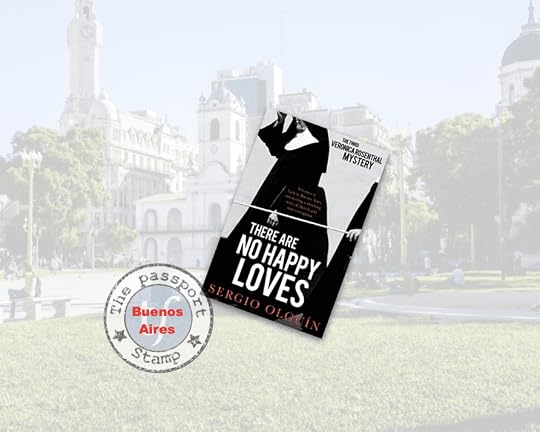
The third in Olguin’s Buenos Aires thriller series starring the gutsy, raunchy investigative reporter Veronica Rosenthal. Haunted by nightmares of her past, Veronica is soon involved in a new investigation. Darío, the sole survivor of a car accident that supposedly killed all his family, is convinced that his wife and child have in fact survived and that his wife has abducted their child. Then a truck searched in the port of Buenos Aires on suspicion that it is carrying drugs, is revealed to be transporting human body parts. These seemingly separate incidents prove to be tied in a shadowy web of complicity involving political and religious authorities. This is a dazzling thriller based on real events in Argentina but also a story about the possibilities of love, in which jealousy, eroticism, humor and even elusive moments of happiness make an appearance.
Sergio Olguín nació en Buenos Aires en 1967 y estudió Letras en la universidad de esa ciudad. Trabaja como periodista desde 1984. Fundó la revista V de Vian, y fue cofundador y el primer director de la revista de cine El Amante. Ha colaborado en los diarios Página/12, La Nación y El País (Montevideo). Es jefe de redacción de la revista Lamujerdemivida y responsable de cultura del diario Crítica de la Argentina. Editó, entre otras, las antologías Los mejores cuentos argentinos (1999), La selección argentina (2000), Cross a la mandíbula (2000)y Escritos con sangre (2003). En 1998 publicó el libro de cuentos Las griegas (Vian Ediciones) y en 2002 su primera novela, Lanús, reeditada en España en 2008 (Andanzas 647). Le siguieron Filo (2003, Tusquets Editores Argentina) y las narraciones juveniles El equipo de los sueños (2004) y Springfield (2007), traducidas al alemán, francés e italiano. Oscura monótona sangre mereció el V Premio Tusquets Editores de Novela, según el jurado, por la magnífica resolución de una trama de obsesión y doble moral, de pasión y conflicto social, en la que se ve envuelto el protagonista, un hombre dispuesto a traspasar todos los límites por una relación inconfesable.
"If he fixed his gaze on the photos for a few minutes, the images began to move slightly: Jazmín's hair fluttered in the breeze, her eyes narrowed, her lips murmured a word. And there she was, in front of him."
So reflects Darío, Jazmín's adoring father, following the tragic auto accident in which, according to official reports, both his wife, Cecilia, and his three-year-old daughter, Jazmín, did not survive the explosion of a fuel truck and the ensuing fireball.
There Are No Happy Loves begins with a recounting of Darío driving his family back to Buenos Aires on Route 11 at the end of their vacation when tragedy strikes. The story then shifts quickly to the city's port, where police, reporters, photographers, and Federico, now a Justice Department attorney, wait for a truck carrying a huge shipment of cocaine. Readers of the first two Verónica Rosenthal mysteries, The Fragility of Bodies and The Foreign Girls, will recognize Federico as a lawyer who plays a central role in the life of journalist Verónica.
There Are No Happy Loves can be read as a standalone novel; however, I strongly suggest reading both The Fragility of Bodies and The Foreign Girls for a much richer appreciation of the characters, especially Verónica and Federico, as well as a better understanding of where they currently are in their respective lives.
Poor Darío. After spending weeks in the hospital recovering from wounds and burns, he becomes obsessed with one thing: finding Jazmín. He has a strong feeling that Cecilia and Jazmín didn't perish in the fireball (their bodies were never recovered). Instead, he believes Cecilia kidnapped Jazmín and is hiding her from him, something she repeatedly threatened to do during their vacation, when they had several heated shouting matches.
Darío asks the police for assistance, but as far as they are concerned, the case is closed — Cecilia and Jazmín both died in the flames. Darío tries lawyers but gets the same response. As a last resort, since his brother, Lucio (from The Fragility of Bodies), told him about an investigative journalist who courageously seeks out the truth, Darío contacts Verónica. The plot is about to thicken and sizzle.
Meanwhile, at the port, the truck driver pulls out a gun and shoots himself in the temple. Then comes the shock for Federico and everyone else at the scene: they discover that the refrigerated truck is not filled with cocaine, but with body parts - legs, torsos, and arms - along with several boxes of naked babies.
Are these two seemingly separate incidents linked in any way? Yes, indeed. Sergio Olguín’s novel weaves a tale based on actual historical events involving political bigwigs and the Catholic Church in northern Argentina, creating a hair-raising thriller that will keep readers eagerly turning the pages until the very end.
I'm a slow reader, but like The Fragility of Bodies and The Foreign Girls, I finished this 400-page novel in just three days. To call There Are No Happy Loves a gripping thriller is almost an understatement. If you're up for a shocking tale of church and state corruption filled with memorable men and women—most especially the gallant Federico and the gritty, gutsy, smutty Verónica—this is your book. Read it. Soon.
This novel is written in Spanish by Sergio Olguin and translated by Miranda France but, unlike with some translations, it is not clumsy or jarring; France preserves the essence of the book beautifully and it flows seamlessly. It is also the third in the Veronica Rosenthal series but works well as a stand-alone. I've not read the previous two but didn't feel at too much of a disadvantage because of that. It essentially follows three people; Dario, the only survivor of a horror car crash which supposedly killed his wife Cecilia and daughter Jazmine, Veronica Rosenthal, the journalist looking into the crash and Federico, an attorney who is an ex love of Veronica and is investigating the transportation of dismembered body parts found in the truck that crashed into Dario and family. Veronica meets Dario and writes a piece on the crash that purportedly killed Cecilia and Jazmine questioning the veracity of their deaths and writes about the stolen body parts. After this, her entire life is thrown into jeopardy. She discovers that human cadavers can have a very high value on the black market. Human tissue is in high demand for skin implants, to plump up lips or smooth wrinkles. Ligaments and tendons are used to make athletes' injuries as good as new and bones are used for making screws and bolts for orthopaedic and dental implants, or ground down to make prothetic glues. From hazy memories of the car crash, Dario is convinced his wife Cecilia has run away with his daughter Jazmine and they have not both died in the car crash as the police insist. Veronica looks into this and she is propelled into an investigation which will reach as high as the chief of police and the archbishop Nogues. She discovers there is a corrupt adoption process at play. Is this horrifying process linked to the transportation of the body parts? If anyone will discover the truth, it will be Rosenthal, a once dazzlingly brilliant journalist who, due to an unexplained event in previous books, has taken a desk job at the paper she works for. But this case pulls her back onto the road of investigative journalism in this intricately plotted, page-turning thriller. "I'm no kamikaze" Rosenthal assures her editor but as she is pulled into this amoral world, we sense Rosenthal will risk everything, including her life, in order to get to the truth. Her first article, which points towards a link between the church and this petrifying adoption process, suggests there's a criminal network at work, throws her back into truth-seeking journalism and we're soon swept along with the mystery clinging to these two seemingly unrelated events. Rosenthal is an anti-hero, a flawed yet highly talented, fearless journalist. The book is shocking and, as events unfold, Sergio Olguin deals with Christian extremism with a deft hand, encompassing paedophilia, abuse of power and the heinous brainwashing that goes on in his Catholic church. It was fairly challenging at times due to the foreign names and the complex, intertwined stories, but is an intricately plotted, gruesome, pacy novel which can be lapped up in a few sittings. Fortunately, about two thirds of the way through the book, there is a recap of events and their links to one another, to keep us involved and gripped to its dramatic and illuminating conclusion. I would describe it as a cross between The Da Vinci Code and The Girl With The Dragon Tattoo. In Rosenthal, we have a heroine for our time as we urge her on to uncover truths as it gathers momentum and races towards its shattering conclusion. I give it four stars because it was at times difficult to follow and lacked a good old twist. But, given the opportunity, I would read the next Rosenthal mystery with pleasure.
The third book in the Verònica Rosenthal series opens dramatically, with a prologue of three people’s stories that don’t at first seem to be connected. Dario is about to break up with his wife, but he’s driving with her, their beloved toddler daughter and various relatives, home from a holiday, when the vehicle is involved in a fatal collision. Although he’s told that he’s the sole survivor, Dario believes that his wife and child escaped and he’s desperate to find them. Elsewhere, Verònica Rosenthal has also been left in charge of a toddler – her nephew – and she’s traumatised when she manages to lose him while they are out shopping. The third mini drama features Federico Córdova, an attorney, who is called to witness a judicial raid on a vehicle thought to be carrying drugs, which instead turns out to be full of human body parts. The rest of the novel gradually weaves these threads together, and a pattern emerges linking the events.
Verònica Rosenthal is an investigative journalist, working in Buenos Aires, Argentina, on an independent magazine. In this third novel she has been promoted to editing and the excitement of breaking the big stories seems to lie in her past. Her love life also seems defunct, with her former lover, Federico Córdova, having walked away some months before. Previously, we are told, Verò and Federico have pooled their skills as journalist and attorney, driven by a sense of justice as much as Veronica’s keen news sense.
I’ve never been to Buenos Aires – or anywhere in Argentina – and so I didn’t know what to expect from a crime series that is set there. I wasn’t surprised to find that South American corruption, the power of the established Catholic church and politics played a big part. I was fascinated by the sheer amount of realistic detail about everyday life in Argentina that the author provides, as well as the quirky elements, such as the obsession of a group of women with the details of each other’s love lives; the fact that every meeting seems to take place in a bar somewhere in the city and the intense affection the protagonist has for her little dog. All these details make the characters relatable and real. While it could be said that Olguìn’s descriptions of Buenos Aires doesn’t do much to promote its tourist industry, it is nevertheless fascinating to understand more about the way the city functions, the values the people hold dear, and the hold that parts of the establishment have over the lives of ordinary people.
I found There Are No Happy Loves absolutely gripping and loved the characters, who are imperfectly perfect. I was thoroughly engaged throughout and would definitely seek out other books in the series. I think fans of Stig Larsson’s Millennium series will enjoy the Verònica Rosenthal books, as the series share a protagonist engaged in slightly subversive magazine journalism who is committed to shining light into dark corners, such as corruption and establishment-endorsed wrongdoing.
The plot line that links the Rosenthal books is the on-off relationship between Verò and Federico, which has hit a very rocky patch, with each of them exploring other options. Readers will join me in hoping they both see sense and get back together! This romantic sub-plot and the abundance of detailed description throughout are cleverly used to increase the tension in the novel. You certainly won’t want to put the book down too often as you race towards the grand finale, with Verò’s life in danger and evil threatening to overpower good…
How lucky we are that Miranda France’s translation grants non-Spanish-speaking readers access to the drama, intrigue and very human emotions that this book depicts.
While publishers Bitter Lemon Press already had a prestigious catalogue of Argentine authors, including Ernesto Mallo and Claudia Piñeiro, the publication of the Verónica Rosenthal series by Sergio Olguín really seem to have particularly struck a chord with English language readers. 2019’s The Fragility Of Bodies was selected as one of the three best new thrillers by The Financial Times and was shortlisted in the CWA Crime Fiction In Translation category while last year’s The Foreign Girls The Times described Verónica Rosenthal as “a contemporary heroine to cherish.”
One of the successes of the series is that Olguín, through his superb translator Miranda France, makes the unfamiliar settings and environment appear familiar to the reader. This is in part due to the quality of the story-telling which succeeds in combining exciting character driven plots together with informative details that also enable the reader to gain an understanding of contemporary Argentine society. Olguin is unafraid to focus on issues such as child exploitation, corruption by the powerful, femicide and illegal adoptions, yet never at the expense of the overall plot. There Are No Happy Loves, like the earlier volumes, grabs your attention from the start and flows in such a fluid way that it challenges the reader to attempt to read it in one sitting.
‘No Hay Amores Felices’ as it was published in Spanish in 2016 see Verónica Rosenthal back in Buenos Aires. Following her ordeals covered in the previous novel, she faces regular nightmares and has lost her passion and drive for journalism. To her editor Patricia’s concern, she has barely submitted a credible news article since her series on femicide in north east Argentina. Since her on/off boyfriend Federico Córdova has left her she has found herself in most common company of Mr Jim Bean as she ruminates about what should have been. While her sisters try to involve her in routine family activities, she demonstrates herself to be a willing yet sadly inept baby sitter.
In a welcome return to the narrative style of The Fragility Of Bodies, There Are No Happy Loves features two other separate initially unrelated storylines in addition to Veronica's daily life, which will eventually and separately converge with hers. Darío Valrossa is a driver in a fatal road traffic accident and when he later wakes up from his convalescence, he is informed that his wife and his daughter Jazmin have died. Since the authorities have never found their bodies, Darío believes that both are alive. Meanwhile Federico, who has truly estranged from Verónica Rosenthal, is under the belief he is moving his life forward; while dating another girl called Verónica! As prosecutor he is involved in a police operation that starts as a raid for drug trafficking yet this results in the discovery of a truck full of mutilated bodies.
Dario, feeling he has explored all possible avenues to discover what has happened to Jazmin recalls how Verónica Rosenthal once helped his cousin in a previous exposure. When he approaches her there are hidden sentimental reasons as well as her inquisitive mind that stimulates her interest. When Dario tells her more about Jazmin’s upbringing there is some crucial information which compel her to try to leave her self-pity behind.
Despite this intrigue it is two female characters who push Verónica to recover her passion for her job. The first of these is her editor Patricia at ‘Nuestro Tiempo’ who is having to deal with the demands to restructure the magazine’s workforce amid a falling circulation. If these sections feel very realistic it is owed to Olguín’s own journalist background. Later she reconnects with her very first editor María Magdalena, a former nun who shares a similar taste in liquor. María’s background is particularly helpful to her when the clues lead Verónica Rosenthal to a sect of the Catholic Church. Coming from a Jewish background this is not an area of knowledge for her and the novel makes societal observations with Rosenthal facing some prejudice from devout Christians suggesting her religion is a motivation for her investigations.
The mystery of Dario’s daughter is uncovered however by then the head strong journalist has also discovered a widespread and practice which she is keen to expose. Meanwhile Federico is still on the trail of the mutilated bodies. Their narratives move in parallel and intersect yet with no more connection than the memories of one or another main protagonist about the other. This allows the narrator to toy with the reader about how the two will converge and whether it will be deliberate or come to chance. This positioning between his protagonists really allows their personalities to be revealed.
Verónica remains a fascinating character, still to find her place in the word. Wonderfully articulated in this English language version by Miranda France; she appears conflicted in a dilemma between what is expected of her and what she expects of her life. Her relationships with her family and Federico are in constant flux and tension. Resisting their attempts to push her into a stable and predictable life she impulsively rejects these for drinking benders and or erotic encounters in the suburbs. Yet her intense jealousy is revealed when she spoils a cocktail night or maliciously hacks an email account. As an unpredictable lead character there is constant doubt behind her behaviours even when her intentions are good. Most elusive of course are those moments of genuine happiness. When the possibilities of love appear to fade she suffers. As her experiences through the series take their toll on her which she does appear increasingly human. Meanwhile Federico has developed from a secondary character to almost joint lead role. As he reveals, he pays a psychoanalyst a monthly wage, a significant sign of his own mental fragility.
The quality of the novel is also shown in the high visual quality to Olguín’s prose. This provides a cinematic feel which perhaps demonstrates the author’s abilities as a scriptwriter. I would certainly feel there could be scope to develop this novel into two feature length parts. Buenos Aires is another character in the Verónica Rosenthal series which often gives the appearance of being as sophisticated as any European city. There are times I feel attracted to take a drink in Dada del Bajo yet the stories do make me wonder if my fellow patrons would be similarly scarred.
As is often the case in Latin America, behind many crimes and misdemeanours committed there are ultimately corrupt members of an institution. In an environment where such institutions are under suspicion there is greater faith held in journalists than police authorities. There Are No Happy Loves sees as Verónica gradually unravels a plot of complicity between politicians, doctors and ultra-Catholic priests. While featuring a very different plot and setting, there is a resemblance to The Foreign Girls with a quest for justice against criminal elements within institutions. Reaching the climax, the excitement intensifies as plans are quickly pulled together to infiltrate the perpetrators placing our heroine in danger. It is an essential strength of Olguín to portray the bad intentions of the powerful and the horrors that can be committed against the vulnerable and impoverished. However, unlike a gang of local scoundrels, it seems a full resolution can never be possible as institutional villains never be wholly overcome by one individual. Perhaps this realisation as much as personalities of the individuals is also a reason behind the lack of happiness of the novel’s title. One can only hope for a non-institutional based opponent that Verónica Rosenthal can overcome in the future.
There Are No Happy Loves is a wholly engrossing, gripping and thought-provoking instalment in an established series which can certainly be enjoyed as a standalone novel. I sincerely believe there are very few contemporary crime fiction authors who write such compelling and rounded stories as Olguín and I would highly recommend each of the Verónica Rosenthal novels. While the series was originally described as a trilogy, Sergio Olguín has stated that his ambition is to make ten novels in the series, following in the traditions of authors such as Maj Sjöwall and Per Wahlöö. It is my hope that he manages to do so, that they continue to be translated by Miranda France and published by Bitter Lemon Press. Reading a synopsis of the fourth novel “The Best Enemy” is almost enough to convince me to start Spanish lessons!
It’s a slow burn, but using powerfully rendered characters and expressive prose, Olguín has crafted a richly textured, deeply suspenseful psychological thriller with a daring feminist lead that kept me turning the pages to the end. Olguín introduces Darío Valrossa, an author of children’s books and sole survivor of a horrific car accident that supposedly killed and incinerated his entire family. But Darío is certain that his wife Cecilia and daughter Jazmín survived the crash. Because of their failing marriage, he believes Cecilia left the scene with Jazmín and went into hiding, keeping his daughter from him. When the police, bureaucrats, and lawyers refuse to listen to his story, Darío turns to Buenos Aires journalist Verónica Rosenthal for help, who he knows through a deceased cousin. Rosenthal is skeptical, but feels obligated to look into the matter because she feels she owes it to Darío’s deceased cousin Lucio, who she once had a relationship with. When Darío tells her he and his wife adopted Jazmín through an unusual arrangement, Verónica uses that as a starting point for her search to determine whether Cecilia and Jazmín are alive. Soon, she realizes the adoption process was not only unusual but probably illegal, which evolves into a larger mystery and, for Verónica, a bigger story. Unknown to Rosenthal, an investigation by her ex-boyfriend and a prosecuting attorney, Federico Córdova, into a truck that turned up full of human body parts links to the same shadowy web of powerful, corrupt political and religious authorities behind the illegal adoption ring that facilitated the adoption of Jazmín. Both Verónica and Federico must avoid running afoul of the formidable, shady police, judiciary, religious officials and some cold-blooded killers as they search for the truth independently until to their astonishment, they discover they are seeking the same answers that will expose the same crooked people. There Are No Happy Loves by Sergio Olguín is a slow burn psychological thriller that repays the reader’s patience with an electrifying conclusion.
🔔 Dario is a sole survivor of a car accident which has killed all his family members including his daughter. But he is convinced that his wife and daughter have survived the accident and his wife has run away with their daughter. When no one believes his story, he goes to Veronica for help. Veronica is a journalist who assures Dario of her help. But she has no idea that her investigation will uncover a heinous crime involving higher political and religious authorities.
🔔 This is a Spanish novel written by Sergio Olguin and translated by Miranda France. It’s third in the series featuring Veronica Rosenthal but can be read as a stand alone too. The plot was intriguing and focused on religious extremism, misuse of power, corruption at higher level, illegal adoptions and body trafficking. In addition to the on going investigation the story also dealt with Veronica’s relationship with her ex, Federico. The way they stalked each other did appear childish at times. I had no idea what’s the deal with them as I haven’t read the previous books but it seem they still have feelings for each other but no one is willing to admit it.
🔔 Talking about the MC, I may not agree with her sexual adventures but Veronica is a strong woman who is willing to go to any length to uncover the truth even if it means putting her own life in danger. In short it was an okay read and there weren’t much twists. But the last few pages were jam packed with action and they literally kept me on the edge of my seat.
🔔 Thanks to the author for the ARC in exchange of an honest review.
I didn’t enjoy this as much as the first two Veronica Rosenthal mysteries because the plot became fairly predictable in the closing stages and some of the plot jumps seemed a tad traditional particularly re. gender roles + Deus ex machina…I wonder if Olguín sacrificed the plot to promoting a number of reconciliations; Darío’s finale was a little too pat. That said the first two thirds twisted through interesting aspects of Argentinian life with plenty of gutsy moves from Veronica, and I suspect that Spanish speaking RC countries will probably enjoy the last third more than I did.
The third of the Veronica Rosenthal mysteries, the investigating journalist quickly becomes involved in a story of young mothers being encouraged to handover their newborn babies to an organisation that will find appropriate parents for them. As ever with Olguin's heroine, there's much more to this than meets the eye and quickly leads her into danger. Running throughout the book is her on-off relationship with Federico. The two had parted badly at the end of the second book in the series and he now has a new girlfriend - also Veronica.
As usual, the book is well written and translated.
Veronica Rosenthal, the intrepid and inscrutable Buenos Aires reporter readers grew to love in The Fragility of Bodies and The Foreign Girls, returns in another dark thriller to investigate the mysterious disappearance of a man’s wife and child.
An odd mix of light and dark in a thriller. The core plot exploring dark secrets in power is very good but the screwball zany duo not realising they’re still in love is rather sexist and does not work
Enjoyable thriller. Made me think about the adoption scandals that have been revealed recently in the UK. Pressure can take many forms. But hopefully corruption is not so widespread here as it is apparently in Argentina.
My problem with this book is that, after reading all 3 in the series, I've finally concluded I really don't like Veronica Rosenthal. She is selfish and irritating in her 'no rules apply to me' attitude.
This entire review has been hidden because of spoilers.
My first Argentinian thriller! Action packed, dramatic, and passionate. This is the third book in the series and probably best to start at the beginning.