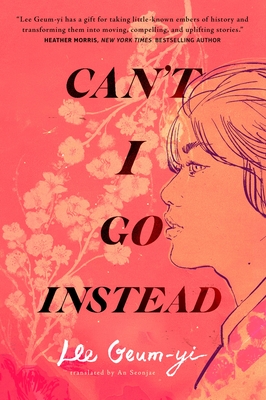
Two women's lives and identities are intertwined—through World War II and the Korean War—revealing the harsh realities of class division in the early part of the 20th century.
Can't I Go Instead follows the lives of the daughter of a Korean nobleman and her maidservant in the early 20th century. When the daughter’s suitor is arrested as a Korean Independence activist, and she is implicated during the investigation, she is quickly forced into marriage to one of her father’s Japanese employees and shipped off to the United States. At the same time, her maidservant is sent in her mistress's place to be a comfort woman to the Japanese Imperial army.
Years of hardship, survival, and even happiness follows. In the aftermath of WWII, the women make their way home, where they must reckon with the tangled lives they've led, in an attempt to reclaim their identities, and find their place in an independent Korea.
If you're familiar with PACHINKO, BEASTS OF A LITTLE LAND, and other stories detailing the Korean WWII experience, this won't bring anything new. That is not to say that these stories don't deserve to continue to be told.
This is the story of two women, the daughter of a Korean nobleman and her servant. As their lives intertwine during this period of hardship, which will survive? And which will thrive?
To the reviewer that didn't finish because Americans weren't seen in a good light, boy do I have some breaking news for you.
Can’t I Go Instead by Lee Geum-yi was a very moving saga that took place in Japanese colonized Korea during the early years of the twentieth century. It portrayed the distinct class divisions that existed during that time period. The lives of the two strong female protagonist characters were examined and followed through the decades of Korea’s turbulent history. Lee Geum-yi’s writing and research was quite impressive. I learned so much about Korean history and it’s people from reading Can’t I Go Instead.
Yun Chaetyeong was born into the lap of luxury. She lived at the Gahoe-dong mansion with her viscount father. On Chaeryeong’s eighth birthday, her father disclosed that he had a special surprise present for her for her birthday. Father and daughter went on a long drive to retrieve the present. Chaeryeong was quite surprised when her father offered land compensation to a family for the purchase of their daughter. Her father was buying her a maidservant for her eighth birthday. This was not what Chaeryeong had hoped for or wanted. When the targeted girl carried on so much about her fate, Sunam, a seven year old girl observing the scene, asked “Can’t I go instead?” Thus began the complicated and complex relationship of Chaeryeong and Sunam.
When Chaeryeong should have been actively seeking suitors for marriage, she convinced her father to allow her to travel to Kyoto, Japan to further her studies. Her father allowed Chaeryeong to bring Sunam along with her. Unfortunately, Chaeryeong fell in love with a man that was deeply involved with the Korean independence movement and Chaeryeong was implicated to be involved as well. When Chaeryeong’s father learned of this disastrous situation, he knew he had to do something to remedy the situation or his reputation and standing with the Japanese authorities would be compromised. He convinced Sunam to assume Chaeryeong’s identity and join the Women’s Brigade for the Imperial Army’s Consolation. Sunam was led to believe that she and the other women she met would be trained as nurses so that they could help take care of the injured soldiers that were returning from battle. Sunam was promised by her master, Chaeryeong’s father, that if she served her time, he would grant her her freedom and compensate her most generously monetarily. Sunam agreed but the situation she found herself in was far from what had been described to her. The situation Sunam found herself in was so far from the truth she had been told. In the meantime, Chaeryeong’s father changed his own daughter’s name and identity to a Japanese one. Chaeryeong was married off to a Japanese employee of her father and sent to live in America. The newly married couple, after dealing with set backs and complications, settled in San Francisco with an uncle of her new husband. The lives of both women in the ensuing years were challenging, harsh and difficult. Sunam learned first hand about the role Korean women played as “comfort women” to the Japanese imperial army and Chaeryeong experienced the prejudice Americans felt towards the Japanese living in the United States and having had to live in a Japanese internment camp during World War II. After the Second World War and the Korean War, both Chaeryeong and Sunam independently made their way back home to a changed Korea, an independent Korea free from Japanese occupation and rule. Would they be able to take their identities back? How would they fare in an independent Korea? Could they find their way back to one another or were they too damaged to allow that to happen?
I listened to the audiobook of Can’t I Go Instead that was performed very well by Michelle H. Lee. Throughout Can’t I Go Instead, I found myself drawn to Sunam’s character. She was smart, determined, thought of others before herself, made meaningful relationships with others, was ambitious, and overcame the challenges she faced by being born into a family with little to no means or status. I learned so much about Korean culture and history from this book. The author also portrayed the attitudes of the Japanese, Koreans, Americans and Chinese people towards the Japanese and Korean people. This was a well written historical fiction novel that I recommend very highly.
Thank you to Macmillan Audio for allowing me to listen to Can’t I Go Instead by Lee Geum-yi through Netgalley in exchange for an honest review. All opinions expressed in this review are completely my own.
واخيراً انتهت (مش بسبب ان هي وحشة بس بسبب اني كنت مشغولة بامتحانات الكلية لدرجة ان مكنتش بديها حقها في القراءة وهي فيها تفااااصيييل ومحتاجة تركيز جدا). المهم استمتعت بمعظم اجزاء الرواية وكانت تجربة مصالحة بيني وبين الادب الكوري (والاسيوي بشكل عام) بعد التجربتين اللي فاتوا اللي مكانوش احسن حاجة ، اكتر حاجة بس ضايقتني هي التقلبات المفاجئة في احداث الرواية و اللخبطة في السرد التاريخي (ودا كان بس في آخر 100 صفحة تقريباً) واللي خلاني مبقتش قادرة افرق الماضي من الحاضر بس علي الرغم من دا فهي رواية مليانة مشاعر وتفااصيل رائعة وكانت تجربة مميزة ♥.
كم أحب قراءة التاريخ من خلال الحكايا، من خلال الرواية، وهو ما نجحت هذه الرواية في ايصاله لي ********* في النهاية، سيضع القدر في طريقك من ينصف سيرتك، من يحكي عنك الحق، فلا تيأس ********* كلمة من طفلة صغيرة صنعت تاريخا واحداثا، كم هي بديعة هذه الفكرة، شكرا للمؤلفة
“If you go to the master's house in Seoul, you won't be hungry, and you'll have a good life, so why are you acting like this?"
"I don't want to. I want to live here with Umma and Appa. I don't like Seoul."
The Viscount's expression hardened, and the village head became visibly flustered. Just then, a little girl, smaller and younger than Ahn's daughter, stepped out from among the children at the gate and went to stand next to the crying child.
"Can't I go instead?" she asked.
Can't I Go Instead is An Seonjae's (aka Brother Anthony's) translation of 거기, 내가 가면 안 돼요 by 이군이 (Lee Geum-yi).
Like the earlier translation into English from the same team, The Picture Bride, much of the novel is standard historical fiction, melodramatic at times and rather dull exposition at others, but distinguished by some interesting insights into the Korean independence movement.
Viscount Hyeongman is a wealthy business in Japanese-ruled Korea. Ostensibly a supporter of the colonial authorities but with some personal sympathies with the independence movement, his main priority is his own status and wealth. On his birthday of his young daughter's Chaeryeong (채령) he decides to give her a present - a personal handmaid selected from the serfs in his estates. But the originally selected girl declines - and the 7 year-old Sunam (수남) spontaneously volunteers to go instead.
The two grow up as companions, albeit conscious on both sides of their very different social status.
And some years later when Chaeryeong is in trouble for (naively rather than deliberately) financially supporting anti-Japanese militants in Osaka, her father arranges for her to avoid prison by instead volunteering her for the newly formed “Women’s Brigade for the Imperial Army’s Consolation”, an organisation which he helped establish:
As the business representative of the Korean League for the Total Mobilization of the National Spirit, Viscount Hyeongman had taken the lead in establishing the Women's Brigade for the Imperial Army's Consolation. They started with the goal of recruiting young women, with a plan to dispatch the first batch of about a hundred fifty around the anniversary of the establishment of Manchukuo. To dispel some of the public criticism and worries, it had been announced that those who joined the Women's Brigade would be provided with clothes as well as a salary, and that they could later get a job as a nurse with the medical skills they learned. The date of the deployment had been set for March 6, which was just after the first full moon of the new year.
Of course nursing is not the comfort the women are forced to provide. And whether the Viscount is aware of her real fate or not, his next manoeuvre is to arrange for Sunam to 'go instead' of his daughter, hastily marrying Chaeryeong to one of his Japanese employees, giving her a false identity as a native Japanese, and sending her to the US, while Sunam becomes Chaeryeong.
Sunam herself escapes the clutches of the Imperial Army (indeed the plot is a little too faint-hearted and convenient in how she avoids the gang rape to which she had been conscripted) and, linking up with Ganghwi, Chaeryeong’s stepbrother and a pro-independence activist in Manchuria, finds her own way to the US.
There the lives of the two women form a tangled, parallel pair, with Sunam living as a Viscount’s daughter and Chaeryeong as if she was Japanese. And when the war ends their lives come back together - but as rivals, with each having a claim on their joint history.
The book’s highlight is the clever way it works in one of the foundational works of 20th century Korean literary fiction, 무정 (Mujong/The Heartless) by (이광수) Yi Gwang-su. Sunam takes the romantic aspects of the novel as a model for her own life, herself and Ganghwi even going to Lake Baikal in the footsteps of the protagonists. But Ganghwi hasn’t the heart to tell her that the author, having himself been prominent in the independence movement had recently (in the late 1930s) switched to supporting the Japanese colonialists.
And the sections set in the US are powerful (although seem to have offended some on Goodreads) for their indictment of the racism experienced by Asians in the country. Sunam, despite being a fierce supporter of the pro-independence fighters and herself a victim of the Imperial Army finds herself arguing strongly against the blanket policy of internment of at least 125,000 Japanese Americans (to which, unbeknownst to her and on the other side of the US, Chaeryeong has fallen victim):
In school she learned that America was a country founded by Europeans who had chased the natives out with guns and knives. Then they brought Africans, forcibly taken from their homes, to be enslaved. Now, slavery and the buying and selling of people was prohibited by law, but neglect and discrimination against Black people still persisted. East Asians who had been brought to the country to build railroads, bridges, and work sugarcane plantations received similar treatment. There were restaurants that Blacks and Asians were not allowed to enter, and there were separate doors and seats for them on buses. A Black man could not marry a white woman, and he had to call a white man "sir." Whites in America seemed to believe that they were superior to other races and more civilized.
It wasn't until Sunam's English had improved that she realized the names the Joneses used when referring to racial minorities were derogatory and belittling. The more she learned, the more it felt like nothing had changed from what it had been like in Korea under Japanese Imperial rule. .
As with The Picture Bride, 2 stars as a read to my taste, but rounded up to 3 for the Korean history.
أول ٣٠٠ صفحة : ايوا يعني فين القصة أخر ١٠٠ صفحة : 💀🤯🤡💔
النهاية جبتلي صدمة منهم لله
ممكن يعتبر حرق👇 أحنا نسيب كل الرواية ونركز على اخر بلوت تويست هل انت هتتوقعها؟ نووو ،بس الفكرة أنهم طلعوا سونام الذكية موت والي طول الرواية عارفة هي عايزه ايه اغبى حد في الكون كل دا بس عشان حددوا شخصيتها في الحب والجري ورا جونهي طب تشيريونج؟ هل هي بالخبث والدهاء أنها تعمل الي عملته في الأخر؟ بصراحة مش عارفة كان ممكن سونام تهرب من كل دا وكان عندها كذا فرصة ولكن زي ما قلت حجموا شخصيتها في بعد واحد وعلاقة واحدة
ولكن لو ركزنا على الفكرة الأساسية للرواية هنشوف حجم المعاناة الي الستات تعايشت معاه والي حصل في سونام ولا تشيريونج ميجيش ربع معاناة القصص الحقيقية
تتشابك حياة امراتين وهما "تشيريونج" ابنة الفيكونت و "سونام" الفتاة الريفية والتي جلبها الفيكونت لتصبح خادمة لدي ابنته تشيريونج؛ لنرى ماذا سيحدث لكل منهما فيما بعد..
تنقسم الرواية إلى جزئين: الجزء الأول فترة ما قبل الحرب العالمية الثانية والجزء الثاني أثناء الحرب العالمية الثانية.. نرى تاريخ دولة مُحتلة بأكملها، ونشاهد حالة من الفقر والجوع والإهانة تسيطر على الشعب الكوري أثناء احتلال اليابان له.. خضوع النساء للتطوع في الجيش الإمبراطوري الياباني بحجة العمل كمُمرضات.. ممارسة العبودية في ذلك الوقت.. والكثير من المعاملة الغير آدمية للشعب..
لو هنتغاضى عن "قلة وصف المشاعر" و "أخطاء الترجمة في بعض المقاطع" فالرواية دي حلوة جدًا وأرشحها بقوة.
For most of Can’t I Go Instead, I was genuinely enjoying the story. The first 80% was strong, I liked the pacing, the historical details, and the character dynamics. It felt like I was learning something while also getting invested in the characters.
But then the final stretch of the book completely changed things for me. Everything started falling apart, and it felt like all the character development we had built up to just didn’t go anywhere. I kept hoping the Viscount’s daughter would grow or redeem herself somehow, but she stayed the same cold, selfish person to the very end.
As for Sonam, I was really rooting for her. I thought she’d have a hopeful ending, maybe seeing her become a teacher or interpreter while being with her husband, raising their child, and finding peace. Instead, everything was taken from her: her husband died, her child died, and even before that, she gave birth and left the baby behind. The ending just felt needlessly cruel. And the part where she was raped? It felt completely unnecessary and added nothing to the story except more trauma. I found myself asking, did we really need to go there?
That said, the book as a whole wasn’t bad. I did learn a lot about Korean and Japan history which I appreciated. So while I had major issues with how it ended, I’d still recommend it, with a warning that it gets very heavy and might leave you feeling a bit hollow at the end.
رواية رائعة جدا والترجمة كتير حلو.. بتناول حقبة زمنية من بعد الحرب العالميه الاولى الحرب العالميه التانيه و بكمل مابعد الحرب تركيزها على كوريا وقت كانت تحت الاستعمار الياباني وبتتناول موضوع حرج جدا ما تم الكشف عنه الا بعد التسعينات!! مصلح او مفهوم فتيات الراحه الكوريات للجيش الإمبراطوري الياباني. كانوا بتسغلوا البنات الكوريات و بلزموا الاهالي يبعتوا بناتهم على اساس انهم (الكتيبة النسائية لعزاء الجيش الامبراطوري تقوم بمهمة علاج و تعزية الجنود الجرحى). طلعت التعزيه انه يتم استغلالهم و اضطهادهم و اغتصابهم بشكل متكرر و معاملتهم كإنهم حيوانات وليس بشر! طبعا الامبراطور وقتها وجد انه القرار الانسب من كتر ما الجيش الياباني عاث فساد في الحرب وكان يفسد و ينهب و يغتصب من هب ودب بالاول كانوا يجيبوا بنات بغاء من بيوت الدعاره و لكن مع انتشار الامراض ماقدروا على خسارة اعضاء الجيش لهيك قرروا استغلال الكوريين اللي كانوا تحت استعمارهم.
طبعا الرواية بتركز على قصة صبيتين من وقت ما ينخلقوا وحده بتكون بنت عائلة نبيلة كوريه ابوها يعتبر من اكبر الخونة الكوريين اللي كانوا يشتغلوا لمصلحة اليابان و التانيه الخادمه تاعتها اللي ابوها اشترالها اياها و هيي عمرها ٧ سنوات، التنتين تقريبا نفس العمر و فيهم شية من بعض حياتهم بتتشابك بشكل كبير. ورح تشوف كيف كل وحده نضجت و شو صار معها صعاب و شو صار معها على الصعيد العاطفي والنفسي كمان. رح تشوف كمية ظلم ووجع قلب وازا انت مو قدها ما تقرأها.
تجربة مختلفة نهائيًا عن كل ما مررت به من قراءات. تصميم الغلاف انتقالًا للعنوان، التنقل في الأحداث، المقدمة، الحقائق التاريخية، الاسقاطات على الشخصيات، الإلتزام بلغة أدبية دون التطرق لأي تعبير أو وصف غير لائق، لغة الترجمة، كل جزء من السرد في الرواية كان مؤلم ورائع معًا.
تبدء حكايتنا مع الطفلة العثّة، ذات القمل، بسؤال ذات الطفلة الفضولية "ألا يمكنني الرحيل؟". ثم مجددًا بعدما كبرت، تسألُ ذات السؤال تكفيرًا عن خطئها أو تقصيرها بظنّها. وأخيرًا، حين يغيب كلُ من اشتبك قدرها معهم، بل أصبحت هذه المرة تسمع "الرحيل" يناديها، لتنضم إليه.
وفي كل رحيلٍ لها، دون وجهة.. باتجاه مجهول.
---
أكاد أسمعُ الطفلة تهمس لي في ثنايا الرواية: أنا ممتنة، وجدًا.. لارتحالي، لمآلي، وقدري، ولِمن سمعني أول مرة حين سألت "الرحيل"، رغم أني لم أدرك معناه بعد حينها. آمنتُ بذلك الرجل، وكيف لا آمنُ له، وهو الوحيد الذي سمعني بعثّتي وقملي. لكنه مثلما كان سببًا في رحيلي، كان سببًا في ترحالي، ورحيلي.
"ما الحب الذي أظهرته لي؟ عندما أنظر إلى الوراء، أدرك الآن أنك كنت تقدرني مثل طائر في قفص. بالطبع، كنت طائرًا ثمينًا، لا مثيل له. كنت قوية ومرتاحة في القفص الذهبي. ولم أدرك حتى إن أطراف أجنحي قد قُطِعَت." ص 342 ----
كيم سونام ويون تشيريونج. قدرٌ مشترك، وحياة مُقسّمة دون عدالة. اللتان تتحدان في اللون، والشكل، والهيئة والعرق. لكن حين يأتي القاضي ليقسم الحياة بينهما: يملئ جرة إحداهما، تاركًا بعض قطرات من الماء للأخرى. فقط لاختلاف اللقب.
تلك التي حوّت جرتها بضع قطرات، ترتضي وتمتن، وتسعى لملئها.. بينما الأخرى تترك جرتها، لتحملها الأخرى، بل وتطالبها بقطرات الماءِ لديها، لأنها "من حقها".
الحياة لم تكن سهلة بدورها على "ابنة الفايكونت"، لكن ما أن رأت من يحمل لها جرّتها، تركت كُل شيء، وتبخترت في مشيتها وخُيلائها، بقصة ليست قصتها.
ختامًا: "مُنِحَت اسم هاروكو، وأُعجبت باسمها الجديد لأنه يعني (الرييع)، وتمنّت أن تكون حياتها، كما يوحي الاسم، من الآن فصاعدًا عاجة بلحظات مشرقة مثل أشعة شمس الربيع." ص 180
كنتِ هاروكو في قلوبنا، أحييتِ الزروع بعد صيفٍ كان ضيفًا ثقيل الظل.
Thanks to NetGalley & Forge Books for an eARC of this book. The following review is my honest reflection on the text provided.
DNF @ 25%
I’ve reread this book's description several times to convince myself to keep reading, but I have to give up. It’s moving too slowly, and I don’t have the attention span at the moment to commit further. This DNF is on me, not the book. I may try again at a later date.
Review originally posted here on Britt's Book Blurbs.
رواية جميلة وحزينة للغاية. لن أقول أنها أروع شيء قرأته لكنها تحمل الكثير من المعاناة والآلام التي كان يعانيها الشعب الكوري أثناء الاستعمار الياباني وخلال الحربين العالمتين، مما جعلها فريدة واستثنائية. كان سردا جميلا ولكن الأحداث كانت جد متداخلة مع بعضها البعض حتى أنه هناك الكثير من النقاط التي لم تشر إليها الكاتبة وبقيت تحمل علامة استفهام كبيرة. ناهيك عن النهاية التي أغضبتني بشدة ولكنها تبقى الحقيقة، واستمتعت بقرائتها رقم معاناتي مع فتور القراءة.
Consider me an ignorant, or I have no idea about history, of course I had learnt about Korea (north and south), Japan, China and most of the Asian countries (believe me) from books instead of reading history books. So this book had merged east with west, all the Asian countries, USA and the WWI! WWII! as well as the wars between Japan, china and Korea. Normally I hate wars, killings, and disruption of human lives. But frankly speaking, when I read historical fiction, I utterly enjoy it, apart from the learning, it’s how can people persevere, and how can they change their lives, To me this is a hard job, but I feel that in hard times, a certain strength opposes the struggle, and makes human beings do wonders . This is in theory. In practice, however, the feelings and the lives of those living under stressful times, is what I always wonder about. How can they live like that, if I am attacked, would I be able to attack back? I wonder
So the story is from before 1920 ( in fact four decades ago) and it all started when the Viscount wanted to buy a gift for his daughter on her birthday , I thought it will be a toy or some jewelry or a land even, but no, it was a girl from the village, when they had gone to pick up that girl they had been ready but another girl came and said “Can’t I go instead?” And then on the saga started.
The main characters are Sunam, Chaeryeong, Ganghwi, also the main maid Suren. And the book is actually chronological, and dwells in each chapter around the two girls, i.e the viscount daughter and the maid, even though the son, and the main maid can be also considered pivotal to the story. Sometimes you will get what is happening, but sometimes one can be confused. For example how is the girl Sunam looks like Chaeryeong? I had my conspiracy theory on that, maybe it was the viscount daughter and the whole thing is staged?, but maybe I am wrong.
The worst thing in the book is sending the girls to a (so called) woman’s Brigade, which was a Japanese military facility for the soldiers to relieve themselves (you know what I mean). At this point , I wanted to puke, where are we? Stone Age?
But I must say that the rhythm was great, and you can imagine everything in the book while reading it.
(Also a book mentioned in the novel called “For Whom the Bell Tolls” is most commonly known as the 1940 novel by Ernest Hemingway about the Spanish Civil War) and now I want to read it too.
Please don’t be upset with me for this review, we almost had a war, it’s called the 30 days war, thank god I wasn’t reading this book then. I would have been utterly devastated.
Apart from the missing information, I would still give the book 5 stars
Excerpts
“coveting only what looked good, tasted sweet, and felt comfortable.”
“and the servants hung a straw rope with pine branches and charcoal inserted into it across the middle door of the main house. If it had been a boy, a rope with red peppers would have hung instead.”
“Life running in a vast wilderness, where are you going? What are you looking for in this lonely world of pain?”
“You’re getting fresher day by day, like a purple morning glory soaked in dew, while I’m becoming a middle-aged woman, trapped in her room after giving birth to you.”
“They were very different from the Koreans she knew back home who were always noisy whenever they gathered.”
“The cosmetics popular in Japan and back home were almost the same, but the difference lay in the shape of the eyebrows. While Korean women preferred thin, crescent-shaped brows, in Japan, thick and more darkly drawn ones were popular among the women.”
“Mrs. Bradley is larger than her husband. I think the wife would win if they fought.”
“But Jeonggyu did not allow himself to admit that he was in love with Chaeryeong, a woman who spoke Japanese more fluently than Korean; a woman who didn’t understand the pain of living under colonial rule—and didn’t want to; a woman who lacked for nothing; but a woman who said that she loved him.”
“Several times a day, she would open the lid and look inside or shake it to hear the sound of the coins rattling.”
“Life is cruel, but so long as we’re breathing, we’re alive.”
“She made him realize that what he had once wanted in life was to meet people who had realized noble and high ideals.”
“She’d taken it for granted that women were ignored and treated poorly by men, the poor by the rich, the lowly by the high, the ignorant by the educated, and Koreans by the Japanese.”
“their love a tale that meandered longer than the Yangtze, the longest river in Asia.”
“In July, the leaders of the United States, Britain, and the Soviet Union had met in Potsdam, Germany, to discuss plans for the future of the defeated countries. When they were discussing Japanese issues, the Chinese Nationalist Party leader Chiang Kai-shek also attended. They concluded that Japan’s defeat was already a reality and confirmed the independence of Japanese colonies, including Korea. However, Japan had rejected the Potsdam Declaration and had continued fighting until the United States had dropped atomic bombs on Hiroshima and Nagasaki. Although an official announcement had not been made yet, news of the surrender had been leaked by Chairman Chiang Kai-shek’s office.”
إذا ديت بعين الإعتيار آخر جزئية من الكتاب فقد يكون تقييمي الكامل 3.25🌟 توقعت منذ إقتنائي للكتاب أن يكون رائع لكن لم يكن كذلك رغم وجود عناصر مفضلة لدي: نسائي، كوري، عن الحرب ومواضيع مهمة مع ذلك الرواية باهتة والعنصر الذي يفترض أن تقوم عليه هذا النوع من الروايات وصف المشاعر بدقة وعمق الشخصيات غير متوفر بأحيان كثيرة! إضافة للعشوائية بالإنتقال بالأحداث والتاريخ، بطيء ثم فجأة سريع ولايترك أي مجال للتعاطف والإتصال بما يحدث!
Too heart-moving and so compellingly narrated. A complex and descriptive plotline that brought me to follow the hardships and struggles of two women; Yun Chaeryeong and Kim Sunam—one having to live so well for her pro-Japanese viscount father and another was being sold as a maid to serve the viscount’s daughter—surviving the Japanese occupation during the WWII as well the political conflict and tension of Korean War. Almost epically plotted to me for how the timeline stretches from 1920s to the modern-day Korea; of historical incidents and tragedies that brought these two women closer in characters, upbringings and level of tenacity to live and survive due to their misplacement of identities.
A massive well crafted backstories that go quite cinematically pleasing, well researched on the cultural hue also social classism part that engrossingly observed on the mistreatment, gender stereotypes and the Japanese brutalities throughout the colonial era. I love Sunam’s narrative the most for how heart-rending and surreal her exploration goes; of poverty and her naivety that led her to trust the viscount too much— it irks me at times yet her dynamic and personality to crave for education really struck me with an enthralling admiration and empathy.
It gets bit intense on the later part as it delved into both Sunam and Chaeryeong’s immigrants journeys— as much as I did not like Chaeryeong that much it was sad too to see how she was stuck in between her father’s selfishness and her own desire and needs. Loving those subplots on independence movement in Ganghwi’s narrative as well that glimpse of Sunam’s haunting scene as a comfort woman and those friendship she found along her ways— the almost unrequited love story really adding a bit charm too to her plot.
Bittersweet execution yet devastating much on how affecting both fates come to the end. I fancy the straightforwardness on its storytelling and way the author wrapped and linked their years of living until the last chapter with another identity mess; an obsession, determination or perhaps just a real truth that need to be uncovered.
Thank you Pansing Distribution for the review copy!
THE GOOD: Absorbing and atmospheric. Interesting characters with grit and determination. The reader is definitely moved to what to unravel the story and find out how it ends. The author deftly treats unpleasant topics with sensitivity and lack of uncomfortable gory detail.
THE BAD: Exited at 68% when the story disappointedly devolved into an anti-American rant. All if this, after Americans/America saves several of our main characters, provides comfortable living and vast educational opportunities. Discrimination in their homeland is mentioned, but then recedes into the background as if it didn't exist. Classic, perverse case of double-think.
رواية تاريخية جميلة، حيث تتشابك هوية وحياة امرأتان خلال الحرب العالمية الاولى والحرب الكورية، لتكشف حقائق القاسية للانقسام الطبقي في القرن العشرين . تتبعها بعد ذلك حياة كل منهما ومدى قساوة التي عاشها كل منهما بحياة مختلفه عن الاخرى لكن بقاسم مشترك وهو المشقه ومحاولة النجاة. "" ألا يمكنني الرحيل "" عمل تاريخي استثنائي مليء بالتقلبات والمفاجأة، والمسرات والاوجاع، يسلط الضوء على تاريخ امة :بأوجاعها وكفاحها ولكن في الوقت نفسه لا يفشل في التركيز على حياة الشخصيتين الرئيسيتين.
مستحيل تتوقع النهاية الغريبة ذي ، الرواية كانت مجنونة ذا أدق وصف لها ؛ حياة الشخصيات كأنها سفينة تتقلب في امواج الحياة و مستحيل تثبت بأي شكل كان و طريقة السرد تخليك مهما كنت مو مهتم بشخصية مُعينة بتهتم غصب
بعد أن انهيتها بكيت ، بكيت كثيراً ، لا أدري لما هذا البكاء ولكنها خدشت قلبي ، رفقتها وكأنني شاهد يري ويسمع ويشعر بكل شئ ربما لذلك ذرفت الدموع و ودعتها في نهاية المطاف بقلبٍ حزين 💔
ترجمة تستحق تصنيف سبعة نجوم بدون شك. ليس فقط بسبب انها ترجمة من لغة صعبة وغير متداولة ومحدودة الانتشار جداً وهي اللغة الكورية لكن لأن المترجم لم يترك أي ثغره يمكن ان تتسبب في فقدان القارىء تركيزه اثناء متابعة هذا الكم الكبير جداً من الأحداث ، الأسماء الكورية متعددة المقاطع والتى حرص دائماً على ذكرها بالكامل في كل موقف وحدث حرصاً منه على ارتباط القارىء بالشخصيات نظراً لأنها رواية شخوص بالدرجة الأولى واخيراً قلة الهوامش الا فيما يستحق فعلاً تفسيره حتى لا ينفصل القارىء عن احداث الرواية
تحية تقدير واحترام للجهد الكبير المبذول والذي لا يمكن اغفاله بأي حال من الأحوال
لولا جودة الترجمة العالية لخرج العمل الأصلي بشكل مهلهل تماماً وانا اعني ما اقول تماماً
-------------------------
تقييم الرواية
⭐⭐⭐⭐⭐⭐⭐
سبعة نجوم مرة أخرى ؟ اعتقد انها رواية تستحق وربما ما هو اكثر من ذلك
في البداية لمن هذه الرواية؟
الاجابة بسيطة. لكل قارىء يريد ان يعيش دراما تاريخية مكتملة الأركان. شخصيات مبنية باحكام شديد ، حقبة زمنية غنية جداً باحداث عالمية غيرت شكل التاريخ ، حبكة غاية في الروعة رغم تشابك احداثها وامتدادها على مساحة جغرافية شاسعة جداً ، سرد يتناغم ايقاعه مع احداث مضى عليها مائة عام او يزيد ، خاتمة ذات تأثير عميق وتضرب بقوة على وتر تزييف التاريخ الذي نعرفه او نظن اننا كذلك !!
لأقرب لك الصورة ، اذا كنت من محبي كتابات وعوالم ايزابيل الليندي فهذه الرواية لك بدون اي شك. احرص على اقتنائها
( ألا يمكنني الرحيل ؟ ) رواية من الأدب الآسيوي ، انسانية في المقام الأول - على غرار الأدب اللاتيني - الذي يحكي لك التاريخ من خلال الشخصيات التي عاشته في شكل درامي حيث يمتزج الخيال بالحقيقة. هذا هو الشكل الأدبي الذي افضله شخصياً لمثل هذا النوع من الأدب. لا أريد منك ان تسقيني معلومات تاريخية يمكنني الحصول عليها ببساطة من أي محرك بحث او موسوعة على الانترنت. قدم لي التاريخ في شكل انساني درامي بحت
الرواية تأخذك الى كوريا منذ مائة عام عندما كانت تحت الاستعمار الياباني. تبدأ الأحداث بعد انتهاء الحرب العالمية الأولى وصولاً للوقت الحاضر من خلال قصة ( تشيريونج ) ابنة الفيكونت وخادمتها ( سونام ). رواية عن الاستبداد والقمع والفقر والاستعمار وانتهاك آدمية الإنسان ومآسي كثيرة عانت منها البشرية ولا تزال
على مدار ٤٠٠ صفحة ، كم مهول من الأحداث المتشابكة والشخصيات المتعددة رئيسية وثانوية التى تجعلك في حالة استمتاع متواصل ورغبة حثيثة في معرفة مصير الجميع بلا استثناء
الرواية ليست مجرد قصة واحدة تعيشها. داخل القصة الأصلية هناك العديد من القصص الفرعية والتي تتضافر جميعها لتشكيل الصورة النهائية للعمل الأدبي ككل
دعونا نتكلم عن عناصر الرواية
- لنبدأ بالشخصيات التي تمثل العنصر الأكثر جذباً لي في هذه الرواية
جميع شخصيات الرواية بلا استثناء تشعر انها من لحم ودم. بناء محكم لكل شخصية وابعادها وخلفياتها وطريقة تفكيرها وردود افعالها التى تتناسب مع المواقف والأحداث. لا توجد شخصية بدون هدف او لمجرد ملء فراغات شخصيات قريبة منك دائماً وتتفاعل معها بكل كيانك كما لو أنها متجسدة أمامك. شىء بديع ورائع جداً
- ماذا عن الحبكة ؟
كما ذكرت الرواية عبارة عن حبكة رئيسية تتفرع الى حبكات فرعية تكمل بعضها البعض من خلال تشابك الأحداث طيلة الوقت بين شخصيتي العمل الرئيسيتين ( تشيريونج ) و ( سونام ). كل شخصية تدور في عالم منفصل ومتصل طيلة الوقت. الخيط الدرامي الذي يربطهم حاضر دائماً حتى وان تباعدت الأحداث على مساحة جغرافية شاسعة تفصل بين الشخصيتين
- السرد والبناء الدرامي
هو بمثابة قائد الأوركسترا الذي يقود فرقة موسيقية لكنه هنا يقود رواية بكامل عناصرها بدون اي هفوة. اي خلل في سرد الأحداث ولو كان بسيطاً كان سيتسبب في انهيار الرواية ككل
الاحداث تدور على مسارات متوازية ويتم تناولها من عدة زوايا مختلفة لكن في النهاية تتجمع المسارات عند نقطة محددة تكون بمثابة ركيزة اساسية للبناء الدرامي ككل
الأصعب في الموضوع كان المساحات الجغرافية الشاسعة التى تدور فيها احداث الرواية. من كوريا الى اليابان الى الصين الى الولايات المتحدة ثم العودة في لكوريا بعد الاستقلال ومصير البطلتين في النهاية. لولا السرد المحكم لكانت متاهة لا فكاك منها ولا مخرج
النهاية
قدمت الكاتبة ختام بديع للرواية ، يثير التساؤلات حول حقيقة ما نعرفه عن التاريخ ؟ هل ما وصلنا هو التاريخ الحقيقي لما جري في ازمنة غابرة ام ان المنتصر دائماً هو من يكتب التاريخ ؟
ماذا لو تكشفت لك حقائق تجعلك مطالباً باعادة النظر في رؤيتك وقناعاتك التى آمنت بها لفترة طويلة من الزمن ؟
تضعك الكاتبة في صراع بين ما يمليه عليك ضميرك وما يفرضه عليك الواقع. لمن ستنتصر؟. نهاية مميزة وغير تقليدية على الإطلاق
-------------------------
خاتمة
الأدب الآسيوي - وكذلك اللاتيني - من أكثر أنواع الأدب التي تغوص داخل الانسان والتي تهتم بتقديم معالجات درامية تستعرض التاريخ والحاضر من خلال التجربة الانسانية البحتة بخيرها وشرها ونقائصها وتترك للقارىء الحُكم وتكوين وجهة نظر او تصحيحها في بعض الأوقات دون املاءات او دروس مباشرة عقيمة وهذا هو سر جمال هذا النوع من الأدب
ارشح الرواية لكل قارىء مهتم بالتفاصيل والمضمون الثري بدون التنازل عن المتعة الأدبية من خلال حبكة مميزة وجذابة جداً
سؤال غيرّ حياة طفلتين كوريتين الى الأبد، تتشابك حياة وهوية "تشايريونغ" إبنة الكونت وخادمتها "سونام" خلال الحرب العالمية الثانية والحرب الكورية لتكشف لنا الكثير من الحقائق القاسية للانقسام الطبقي في الجزء الاول من القرن العشرين.
ملحمة تاريخية مؤثرة للغاية، حبكة معقدة ووصفيه جعلتني أتابع مصاعب وكفاح إمرأتين.. إضطرت إحداهما إلى العيش بشكل مُترف مع والدها الفيكونت المؤيد لليابان، وتم بيع الأخرى كخادمة لها..
أبدعت "لي" في وصف الاحتلال الياباني خلال الحرب العالمية الثانية بالإضافة لإبراز الصراع السياسي المتوتر في الحرب الكورية.. وامتدادها الزمني من عشرينيات القرن العشرين حتى كوريا المعاصرة.. ووصفت الأحداث والمآسي التاريخية التي جعلت هاتين المرأتين تتقاربان في الشخصيات والتنشئة ومستوى الإصرار على العيش والبقاء بسبب تبدل هويتهما..
من خلال تجاربهما تعرفنا مع "سونام" بشكل مباشر على الدور الذي لعبته المرأة الكورية "كنساء متعة" للجيش الإمبراطوري الياباني، وشهدنا مع "تشايريونغ" التحيز الذي يشعر به الأمريكيون تجاه اليابانيين الذين يعيشون في الولايات المتحدة والذين اضطروا للعيش في معسكر اعتقال ياباني خلال الحرب العالمية الثانية..
وجدت نفسي منجذبه ومتعاطفة مع شخصية "سونام" وحياتها التي تمزق القلب فقد كانت ذكية، حازمة، طموحه وتفكر في الآخرين قبل نفسها..
تعلمت الكثير عن الثقافة والتاريخ الكوري من هذا الكتاب.. كما صورت المؤلفة مواقف الشعب الياباني، الكوري، الأمريكي والصيني تجاه الشعبين الياباني والكوري.. والوحشية اليابانية طوال الحقبة الاستعمارية..
كانت هذه الرواية الخيالية التاريخية مكتوبة بشكل متقن جداً، جذبني الطابع التاريخي الروائي الخالي من الملل، مليئة بالحب، الغيرة، الاصرار، المقاومة، الالم والموت.. كل الشكر والتقدير لترجمة محمد نجيب الرائعة.. أنصح بها جداً👌
للاسف اول من يدفع جرائم الحرب هن النساء بواسطة اجسداهن و حياتهن
تبين الرواية بنيتن من طبقتين مختلفتين أحدهما ابنة الفيكونت و اسمها تشيورنج و ابن فقير تدعى كيم سونام أثناء الاحتلال الياباني و كيف أن الحياة تلعب بالشخص و هو لا يتحكم بها
اقتباس ليس بالنص لكن من خلال ذاكرتي عندما وقعت سونام بحب ابن الفيكونت قالت لها كبيرة الخدم سيوران
( مهما تغير العالم فعالمك لن يتغير يجب أن تقبلي بها و أن لا ترفعي راسك لكي لا تنكسر رقبتك )
قليلة الكتب اللي تعيشني داخلها واشوفها بوضوح وهذي احدها جدًاا جميلة رغم انها ثقيلة شوي، قرأت اول ١٥٠ صفحة منها وتوقفت بس غالبًا لاني قرأتها بوقت مايناسب فمادخلت بالجو، لكن الان اقدر اقول وبكل ثقة انها في منتهى الروعة ما اخطأت عيني لما اختارتها
A good historical fiction read, with full respect to the effort behind its creation, it is not one that fully stayed with me.
The premise is strong, and the effort behind it is clear. Still, it didn’t quite reach the depth or emotional impact I was hoping for.
If you’re looking for a more powerful take on Korea during the Japanese occupation and the aftermath of World War II, I highly recommend Pachinko by Min Jin Lee.
For sweeping, multi-generational Asian historical fiction, you can’t go wrong with Lisa See.
For themes such as cultural appropriation, racial injustice, and the relentless pursuit of fame, Yellowface by R. F. Kuang is another compelling recommendation (though it differs in timeline and leans more toward a Chinese rather than Korean context).
I also wanted to share some thoughts on the characters:
Yun Chaeryong: Her personality and development throughout the story were convincingly crafted. While her actions were, at times, deeply unsettling, they remained consistent with her character, which made her arc believable.
Sunam: I found her character more difficult to reconcile. A bold young girl from a distant village who strives relentlessly for education would typically develop the confidence to assert her independence. Her inability to stand up for herself or move forward in pursuit of a new life and love felt inconsistent with the determination she demonstrated earlier. Education often broadens perspective and strengthens agency, which made this contrast harder to accept.
I understand the possible intention of creating a contrast between a dominant and a more passive character, but for me, that dynamic didn’t fully resonate.
Overall, it was still an enjoyable and worthwhile read but not a memorable one.
Can't I Go Instead follows the lives of two Korean women who are brought together when a wealthy viscount purchases a young Sunam to be the maidservant for his daughter, Chaeryeong. Despite their different upbringings the two girls form a kind of friendship (probably due to forced proximity more than anything else). As the two grow and fall in love, Chaeryeong finds herself in deep trouble so she's forced into an arranged marriage with a Japanese man. Meanwhile, Sunam assumes Chaeryeong's identity and is forced to become a comfort woman for the Japanese army.
Spanning decades of these women's lives and the hardships they endured, Can't I Go Instead is a raw and unsettling look into some ugly history that is rarely (if ever) talked about. This book is not very fast-paced and I did have difficulty keeping track of the many characters and the story at times (really difficult considering I was listening to the audiobook and had no text to refer to). Though a fictionalized account, I think this book is an important read (especially those who are unfamiliar with the unsettling treatment of Koreans at the hands of the Japanese). If you're looking for the feel-good story of the year, this is not it, but I think that is kind of the point. You're made to feel as the characters did after years of suffering (just kind of hollow).
Thank you to NetGalley and the publishers for this ALC. Michelle H. Lee was a great narrator.