Jump to ratings and reviews
Rate this book

Other Names for Love

Rate this book
A charged, hypnotic debut novel about a boy’s life-changing summer in rural Pakistan: a story of fathers, sons, and the consequences of desire.

At age sixteen, Fahad hopes to spend the summer with his mother in London. His father, Rafik, has other plans: hauling his son to Abad, the family’s rural estate in up-country Pakistan. Rafik wants to toughen up his sensitive boy, to teach him about power, duty, family—to make him a man. He enlists Ali, a local teenager, in this project, hoping Ali’s presence will prove instructive.

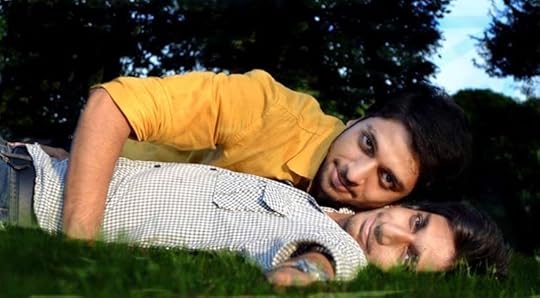
Instead, over the course of one hot, indolent season, attraction blooms between the two boys, and Fahad finds himself seduced by the wildness of the land and its inhabitants: the people, who revere and revile his father in turn; cousin Mousey, who lives alone with a man he calls his manager; and most of all Ali, who threatens to unearth all that is hidden.

Decades later, Fahad is living abroad when he receives a call from his mother summoning him back to Abad. His return will force him to face the past. Taymour Soomro’s Other Names for Love is a tale of masculinity, inheritance, and longing, set against the backdrop of a country’s troubled history, told with uncommon urgency and beauty.

256 pages, Paperback

First published July 12, 2022

64 people are currently reading
5316 people want to read

About the author

Taymour Soomro

4 books30 followers

Ratings & Reviews

What do you think?
Rate this book

Friends & Following

Create a free account to discover what your friends think of this book!

Community Reviews

5 stars
78 (10%)
4 stars
194 (26%)
3 stars
314 (42%)
2 stars
114 (15%)
1 star
31 (4%)
Displaying 1 - 30 of 167 reviews
Profile Image for Jaidee .
769 reviews1,507 followers
June 9, 2024
5 "fathers, sons, cousins, brothers, lovers" stars !!!

9th Favorite Read of 2023 Award

My thanks to Netgalley, the author and Farrar, Strauss & Giroux for an e-copy. This was released July 2022 and I am providing my honest review.

I was so wonderfully immersed in the lives of an upper middle class Pakistani Muslim family and the repetition of narratives amidst the decline of not just their power and wealth but of ways of being in a fairly rigid and patriarchal society. The sociological insights and psychological understandings here are immensely interesting and intricate. The tale is gauzy with issues of recollection, memory, ego, drama, spirituality and politics all causing degrees of warping that brilliantly depict the complexity in mens' lives.

Underneath all of this though are how the natural courses of love play out and both enrich and damage. Shame and pride, convention, beauty and the stories we tell ourselves to survive are often very far from what truly happened and transpired.

This is a complex and effective novel about masculine energies, ambitions and ways of being in a world that is often unjust and dangerous. The writing is deliciously inconsistent, descriptive and effective. Quite simply, an amazing first novel that filled me with compassion, understandings and a deeper appreciation for what truly is important in a life....

Bravo Mr. Soomro and I was so happy to read that you have found a masculine love of your own...

Profile Image for Ceecee .
2,741 reviews2,307 followers
June 6, 2022
3.5 rounded down

This is a novel about relationships especially between fathers and sons and how one experience can radically alter and change a life . Fahad has hopes of spending the summer in London with his mother but father Rafik has other plans. He takes Fahad to Abad in rural Pakistan where the family’s large estate lies, which is run like a medieval fiefdom where the people revere and hate Rafik in equal measure. Fahad is uninterested until he is introduced to seventeen year old Ali and gradually Fahad falls under a spell both of Ali and the area.

This is undoubtedly a well written short novel. You feel the oppression not just of the Pakistani heat but also that of Rafik. He is a very harsh man, there are no soft edges there. You sense Fahad’s constantly tumbling emotions especially that of being an outsider, he’s been uprooted here and he’s uncomfortable with the latter a feeling that pervades much of the novel. I find Ali a conundrum, he’s certainly unpredictable, he seems to have a predisposition to violence which he brushed aside as if it’s nothing. Although Ali is a massive influence on Fahad’s life he remains shadowy and I never see him in full technicolour.

The novel has numerous examples of conflict, that of father and son but also between Rafik and many others. This extends beyond the family lands in Abad and strays into the chaotic and cutthroat world of politics.

In the first half of the novel the writing feels hypnotic especially with the young Fahad and there’s a dreamlike quality especially in regard to his experiences with Ali. It becomes sharper in tone later as the events cast a shadow over Fahad’s present and future. Ultimately, you are left with a distinct feeling of uncertainty, a sense of searching for something elusive as the family ties with Abad are cut.

However, despite the many positives not least the obvious quality of the writing, I do have issues with it. There is abrupt switching between the perspectives of Fahad and Rafik which I do not care for as it’s Fahad’s take on events I want to read, not his fathers. It does contrast sharply in tone with the sensitivity of Fahad versus the harshness of Rafik which I’m sure is the authors intention and Rafik is certainly a different man at the end, thank goodness. There is also a continuity issue as it makes big jumps and ultimately I just find the novel sad and strange. However, if you are looking for something just a bit different to read then this will fit the bill.

With thanks to NetGalley and especially to Vintage for the much appreciated arc in return for an honest review.
Profile Image for Meike.
Author 1 book4,963 followers
July 16, 2022
Soomro tells a story about masculinity and family between Pakistan and Britain: Split in three parts, we meet our protagonist Fahad when he is 16 years old and traveling with his father Rafik to the family's estate in rural Pakistan. While shy Fahad loves theater and tends to be a loner, his father is keen to introduce him into the family business: Coming from a background of influential farmers and politicians, Rafik is well versed in power play, and letting the reader wonder how to morally judge this man - who brought wealth to the region, but is also a ruthless advocate of his own interest - is probably the most interesting part of the novel. Fahad befriends Ali, a local boy, while his father Rafik dives into a power struggle with his cousin Mousey. After a faithful incident, teenage Fahad is sent back home.

Part two and three are set 15 years later respectively and slowly untangle the family mystery surrounding the reasons for Rafik's downfall: Fahad, now living in London with his boyfriend and working as a writer, is called back to Pakistan after his father has squandered the family's land and money. And of course, Fahad also aims to find Ali...

While Fahad dominates the story, the third person narrator constantly switches his focus from father to son, thus revealing what has shaped the thinking of the two men. I have a hunch that the political aspects mentioned (corruption, lack of education and almost feudal structures in the poor countryside) are even more intriguing for people who are more familiar with Pakistan, as Soomro takes on the task to illuminate the dynamics within a family that is caught between power, morality, loyalty, and fear. The men in this novel constantly wear maks (the mask is even mentioned as an explicit motif), and yes, the idea is used much like in THE classic about gay men and societal appearances: Confessions of a Mask.

Still, I felt like the story was sometimes too timid, it didn't develop enough drive and punch - somehow the quiet elegance of the storytelling got in the way of writing a truly absorbing tale. The novel also shows some typical debut flaws (e.g.: Fahad breaking his glasses (that were never mentioned before!) and getting new ones in the countryside - a more obvious metaphor probably wasn't available). Still, I was intrugued by the story about two men who grew up in different worlds, who love each other and still fail each other because of the cards life has dealt them and because of their own limitations.

Taymour Soomro clearly has interesting stories to tell, and I am extremely curious to read his next effort.
Profile Image for Alexis Hall.
Author 59 books15k followers
Read
November 28, 2022
Source of book: NetGalley (thank you)
Relevant disclaimers: None
Please note: This review may not be reproduced or quoted, in whole or in part, without explicit consent from the author.

And remember: I am not here to judge your drag, I mean your book. Books are art and art is subjective. These are just my personal thoughts. They are not meant to be taken as broader commentary on the general quality of the work. Believe me, I have not enjoyed many an excellent book, and my individual lack of enjoyment has not made any of those books less excellent or (more relevantly) less successful.

Further disclaimer: Readers, please stop accusing me of trying to take down “my competition” because I wrote a review you didn’t like. This is complete nonsense. Firstly, writing isn’t a competitive sport. Secondly, I only publish reviews of books in the subgenre where I’m best known (queer romcom) if they’re glowing. And finally: taking time out of my life to read an entire book, then write a detailed review about it that some people on GR will look at would be a profoundly inefficient and ineffective way to damage the careers of other authors. If you can’t credit me with simply being a person who loves books and likes talking about them, at least credit me with enough common sense to be a better villain.

*******************************************

Probably not the best time for me to have read some reasonably heavy litfic about … like … queer people with complicated relationships with their fathers returning to their places of birth. Ahem.

Other Names for Love is told from the perspective of both father and son. It opens with the son, Fahad, as a teenager, being taken by his father, Rafik, to stay at Abad, the family estate in rural Pakistan—a piece of land that Rafik has painstakingly developed from jungle and now runs rather like a Medieval fiefdom. While at Abad, Rafik introduces Fahad to the son of a neighbour, a more conventionally masculine boy called Ali, in the hope of encouraging Fahad to be more masculine himself. Meanwhile, in the present, Fahad, who has established a life for himself in the west with his long-term partner Alex, is once again called back to Abad, this time to oversee its sale as Rafik slips further and further into infirmity.

As you can probably tell from that description, this is a book of themes. Some of them—not being super familiar with political corruption in rural Pakistan—I was less personally well-placed to entangle than others, especially when the book is regularly jumping time and perspective. Of course, this is my ignorance, not in any way the fault of the novel. Where I did connect, however, was careful exploration of identity, masculinity, queerness, family, and loss.

The writing is gorgeous, but the book itself has a fragmentary quality, partly, I think, deliberately so as past and present bend inexorably towards each other, and Fahad’s journey of self-discovery with Ali offers a dark parallel to Rafik’s future loss of self. Unfortunately, for me, I wished the sections had been more than merely thematically integrated—in particular, there’s an interim chapter where Fahad has fled to London and, presenting openly as a gay man, has an awkward dinner with his father, but this didn’t feel enough on its own to bridge the two halves. Essentially, the book excels in the details, but comes across (or came across to me) as somewhat woolly in terms of the broader narrative structure.

Even so, there was much I admired here and much that spoke to me. Other Names of Love is a deeply melancholy book, about the inescapability of the past and its wounds, but I guess, for better or worse, I was in the right place for it. Ho hum.

“It seemed to [Fahad] that […] he couldn’t remember a moment when he hadn’t thought of Abad, memories of the place shimmering through every memory since he’d left: the beaten brass of its fields, its sky silvered like a platter, its searing breeze. But to remember what wasn’t his, to remember something he didn’t have and could never have again, it was a different remembering, it was remembering loss, loss that recurred endlessly…”
Profile Image for Gumble's Yard - Golden Reviewer.
2,189 reviews1,797 followers
July 16, 2022
Fahad braced his back against his seat, an arm against the door, his heels against the mat in the seat well, twisting his head out of the sunlight through the window. The dampness in the copse, the sweet smell of the mulch, the dew that glittered at the points of leaves like the whites of eyes in the dark, a breeze tickling the hairs on the back of his neck, the ice cream sundaes at that hotel swirled with bright colour, crimson and purple and yellow, studded with shards of ice sharp as glass, and the inevitability of Ali, who was the logic that ordered everything before him and the only possible outcome.


This is the debut novel from a Pakistan born, Cambridge, Stanford Law School educated writer (who also was a PhD student at the UEA having taken a Creative Writing Course).

He has explained part of the genesis to the novel, in a Guardian interview, as “About 15 years ago, I wrote a novel so terrible and unpublishable that no one will ever see it. Having failed as a writer, I didn’t really know what to do. I wanted to run and hide and so I ran home to Pakistan and hid there with my family. But I also wanted to be useful and productive. Our farm has been in the family for generations. When I returned, my grandfather was managing it. He had been doing this for 40 years alongside his career first as a civil servant and later as a politician. I was curious about farming, about how it was done, about how it might be done better; though my grandfather was keen for me to restart my legal career, he taught me the logistics of seeds and tractors, harvests, threshing and crop-sharing.” - although as the Acknowledgements to the book makes clear the one missing character is his benevolent Grandfather.

The book opens (and for the first 100 pages or so is set) some decades ago, on a train journey from Karachi to the northern Sindh town of Abad – the 16 year old Fahad is travelling their with his rather despotic politician-farmer father Rafik who runs the family farm in the area. Years before when Rafik’s father died, his Uncle (Father’s brother) took over his Father’s political seat but gave Rafik the control farm (and half its revenue) which over years he improved and turned into more of a patriarchal/feudal holding accompanied by a largely tied vote so gaining political office.

Rafik’s cousin (Rafik’s recently deceased Uncle’s Son) and childhood friend who he nicknamed then and still calls “Mousey” has returned from London (where he lived for years) and determined to take back half of the farm – despite the active opposition and sabotage of Fahad who calls in the loyalty his years of largesse have earned him.

It is Fahad’s first visit since he was circumcised as an infant – he normally spends his term times in Karachi and his Summer’s in London with his mother, but his father in simple terms feels he needs to revisit his family’s roots and (in crude terms) “man-up” (spending too much time with his mother and acting at school). When Rafik decides a key part of the latter is linking Fahad up with Ali the brooding 17 year old son of a local landlord and businessman, there is an inevitability to the narrative trajectory of this section.

The third party narrative is effectively split between Rafik and Fahad. Fahad’s scenes are very descriptive, with both a palpable sense of the flies, colours and heat of the countryside, and with an atmosphere both of mystery (as he recalls an incident with a mysterious catlike creature at a local shrine) and self discovery (as he works through his feelings for Ali); Rafik’s by contrast seem slightly cariactured.

In the second section of the novel, after Mousey’s death we see Rafik’s political rise to national and even international prominence and a visit he makes to London to see his son, who was seemingly banished there after his trip to Abad but who has settled into an openly gay and well connected life there – Rafik and Fahad meeting in an awkward restaurant encounter. This section feels far too brief – and I had the impression of a well known short story writer struggling to fully commit to the novel form. However from the Guardian interview this seems a deliberate if not entirely confident decision

I had been writing a lot of short fiction. I shifted to writing the novel as part of a PhD [GY-GR comment - at the UEA], and my supervisor kept reading the chapters and telling me that they felt like short stories. Her argument, which I still don’t know I completely agree with, is that the energy of a sentence in a short story is different to the energy of a sentence in a novel – that, somehow, the sense of imminent foreclosure in a short story feeds down even to the level of a sentence. I thought, why don’t I separate the novel into parts so they feel like novellas? It also engaged with the way I wanted to tell the story. I wanted to show these men at very different stages of power in their lives.


The third part of the novel moves forward in time – Fahad now a successful and award winning novelist in a stable relationship in England, receives an unexpectedly panicked call from his mother. Rafik whose political star has long waned, and whose mental faculties are dimmed, has mortgaged the family home past the point where he can sustain payments and she wants Fahad to return to Pakistan and sell the family farm in Abad. His trip there as well as showing him the passage of time for both his father and the farm and countryside also forces him to revisit his memories of his previous time there and think again about Ali.

There are some nice and quite subtle touches in this section – for example some parallels between what happened to Fahad and what happened to Mousey and perhaps a hint that Rafik may also have been involved.

There is also an excellent but understated scene when the senile and now close to destitute Rafik shares his wife’s lunch with the birds “they knew him well enough— even the sparrows, even the mynahs hopped nearer. He scraped the entire dish of rice into an earthenware platter in the centre of the terrace so that it became a giant mound, so that grains spilled out onto the rough sandstone tiles.” – a clever echo I felt of his previous role as landowner and patriarch handing out sweets to children and money and food to their fathers.

I also liked the way that we gain only some hints of Fahad’s life between his two trips to Abad and the ways in which his time there has impacted on his life, rather than this being spelled out too obviously.

What by contrast starts off well but I think is overdone is Fahad’s job as a fictional author – which as well as being far too obvious a choice for a main character in a debut novel, became rather over-laboured and self-referential.

For example even before he travels we see

In the student’s story, a girl was raped in a field by an itinerant worker.The group discussed in detail how the student had choreographed the scene, and Fahad found himself remembering Abad again— the water thick as mud, the grey rocky earth, the dust that clouded up around you as you walked so that you appeared from it as if conjured by a sandstorm— but each thought shimmered both with warning and with poetry, luring him nearer like the dashing rocks of the Symplegades. What if, he wondered, for a terrible moment, he’d written nothing in so long because he hadn’t written this, because he’d written always so far away from himself, as though tossing a grenade?


And when his friends hear of the relationships of his Uncle, father and cousin they exclaim “Fahad should write about it, someone said. It was like something out of Tolstoy“ – which is a little too obvious for a book which both from blurb and the author’s “what I am reading” is partly a rewrite of “Fathers and Sons” by Turgenev.

Interestingly there are lots of overlaps between this book and the one I read previously – Kamila Shamsie’s “Best of Friends” including a youthful incident involving an older boy leading to an involuntary exile which then becomes a more permanent and deliberate one, and characters that move in establishment circles in the UK and Pakistan, but with the memory of the incident ever present. I did feel this was the much stronger book, although neither was really entirely to my liking because of the establishment setting.

But a promising debut and one that I think may well feature on literary prize lists – perhaps with the author being as successful as his character.

My thanks to Vintage, Harvill Secker for an ARC via NetGalley

Abad is just an idea, he told himself, whether the land is in your name or not. If you sell it, you can think of it still, as you have all these years. Return to it, even if only in your head, and it will be as much yours as anything has ever been. But have you really thought of it at all? It seemed to him that he had, he had, that he couldn’t remember a moment when he hadn’t thought of Abad, memories of the place shimmering through every memory since he’d left: the beaten brass of its fields, its sky silvered like a platter, its searing breeze. But to remember what wasn’t his, to remember something he didn’t have and could never have again, it was a different remembering, it was remembering loss, loss that recurred endlessly and now the thought prompted him to remember loss after loss: that last idyllic summer at Oxford, Mike, a cobbled hillside in Crete, their sweet old brandy- coated cocker Booze, Alex at the very start, the little girl they hadn’t adopted, everything he thought he’d be and have.
Profile Image for Emily Coffee and Commentary.
607 reviews267 followers
February 24, 2023
A crisp, elegant debut which honors its namesake. Other Names for Love examines the childhoods strained under traditional and parental expectation, the attractions that lead to life altering decisions. It is a fluid ode to patriotism, to fathers, to lovers, and to the self, which is caught between every memory, every regret, every attempt understand things long ago buried. Interpretive and melancholy.
Profile Image for Roman Clodia.
2,901 reviews4,659 followers
July 4, 2022
3.5 stars

Soomro's writing is gorgeous, and there's a tender, melancholic atmosphere that gives an almost tangible texture to the book. Abad in rural Pakistan is evoked meticulously so that we can smell and taste it from the sticky flies that get everywhere to the ice-cream sundaes with multi-coloured vermicelli in Greenlands. The fleeting love at the heart of the book feels imbued with the same haunting resonance as sixteen-year old Fahad experiences desire that never quite leave him.

Alongside this lyrical story is the more fractious relationship between Fahad, the sensitive, romance-reading son, and his more traditional father who wants to 'make a man' to inherit his family responsibilities. The push-pull of love and resistance between father and son, and between the generations, is handled with a kind of delicate robustness.

For all the good stuff, though, this feels like two or maybe three books crashed into one. It's always a hard sell to cram a life into a relatively short number of pages and here I loved the first 'volume' but struggled a bit with the swift time changes that sweep across the book chronologically. Something nearly always seems to get lost in the gaps, for me.

Nevertheless, this works beautifully on a sentence by sentence level and if the whole book had concentrated on what is section one here, I think I would have been a more satisfied reader. This kind of pushing everything into a debut seems such a common flaw in first novels - reviewers quite often highlight it, why aren't editors doing more to help writers shape their books more closely?

Overall, despite this not working wholly for me, Soomro is a wonderful writer - hopefully his next book will have a more assured shape to match the sensitive, pliant prose style.

Many thanks to Vintage for an ARC via NetGalley
Profile Image for Richard Derus.
4,194 reviews2,266 followers
December 30, 2022
The Publisher Says: A charged, hypnotic debut novel about a boy's life-changing summer in rural Pakistan: a story of fathers, sons, and the consequences of desire.

At age sixteen, Fahad hopes to spend the summer with his mother in London. His father, Rafik, has other plans: hauling his son to Abad, the family's feudal estate in upcountry, Pakistan. Rafik wants to toughen up his sensitive boy, to teach him about power, duty, family—to make him a man. He enlists Ali, a local teenager, in this project, hoping his presence will prove instructive.

Instead, over the course of one hot, indolent season, attraction blooms between the two boys, and Fahad finds himself seduced by the wildness of the land and its inhabitants: the people, who revere and revile his father in turn; cousin Mousey, who lives alone with a man he calls his manager; and most of all, Ali, who threatens to unearth all that is hidden.

Decades later, Fahad is living abroad when he receives a call from his mother summoning him home. His return will force him to face the past. Taymour Soomro's Other Names for Love is a tale of masculinity, inheritance, and desire set against the backdrop of a country's troubled history, told with uncommon urgency and beauty.

I RECEIVED A DRC FROM THE PUBLISHER VIA NETGALLEY. THANK YOU.

My Review
: What there is to say about fathers and their gay sons...well, that's just an ocean of story without any limits that I'm aware of. Fathers and sons...disappointments...sadness and silence, rage and screaming...all and none and more. It's a relationship most sons have, even if sometimes it's a relationship with an absence or a cipher. It's always going to resonate with fathers because of the terror of being inadequate, as their own fathers were, and with sons for the same reason.

This short, powerful read is the kind of take on the evergreen that leaves the reader not sure where his sympathies lie. Rafik is not really sure what the hell to do with Fahad; and equally, Fahad is not sure how to take Rafik's overbearing attempts to induct him into a life and lifestyle inimical to him. Not solely heterosexuality...the powerful political and economic family that Rafik comes from and wants to perpetuate.

I don't suppose anyone reading this is surprised that this is the crux of the story.

What transpires, and how we respond to it, is all down to the manner in which this eternal and evergreen tale is told. I wasn't always sure I liked the third-person narrator's abrupt shifts from Rafik's to Fahad's point of view. It's effective, in the sense that it conveys the broken relationship and poor communication between father and son. It's not always pleasant, though. It can feel jarring, and while I accept that was Author Soomro's intent, it's not always a positive service to the story.

What the family saga, no matter how compact one makes it, always does is spread the emotional focus of a story. Mousey, Rafik's cousin and rival for control over their feudal family estate, is limned deftly in relatively few words. His presence is more air than flesh...and then Ali, the local of Rafik's family estate, the one whom he entrusts with manning-up his fey son, is from the moment he appears a fleshly figure, outlined in the light of young love and intense desire. And, like those things, as fleetingly there but always, always part of one's mind, heart, body.

The beautiful as well as beastly problems of family, then, are our roadmap. And their inevitable end. There's no one gets out of this family alive, my father once said to me; I've never been sure if it was humor, threat, or sad truth he spoke. And so it is with all families. I'm totally sure the events of this novel...and its multivarious progenitors, from Lawrence's Sons and Lovers back to Balzac's Sarrasine...took place in slightly different form somewhere, sometime. The gift Author Soomro offers us is that he found the uniquely, specifically Pakistani iteration of this deviant's tale, and deftly turned it into the Platonic solid of the story.

While the son never has a father he can relate to, he never gives his father any kind of solidity by denying him a future. A lot of what Rafik can't reconcile himself to is the way the world changes, has changed. It's a grandparent's trick, to turn that terror of loss into an anchor of immanence. Rafik and Fahad don't ever see the world through the same lenses. (Where did those glasses come from?) They, like real fathers and sons, never wonder "what can I do?" but bemoan "what could I have done?"

A story of great affecting power, told elegantly, with honest sadness and truthful anger. Sounds like a great way to spend a winter's afternoon reading.
Profile Image for Ángela Arcade.
Author 1 book4,790 followers
September 15, 2023
La decepción, la traición… Tenía muchas ganas de que me gustara este libro, pero se ha ido por otra parte y me ha resultado más bien aburrido. En realidad creo que la sinopsis y el nombre son un desacierto. Es más un libro sobre la relación padre e hijo y en un contexto social y político que una historia intimista relacionada con el descubrimiento del amor. Aun así, el estilo del autor es bueno, y hay partes narradas de una manera muy bella. Solo por eso lo dejo en 3/5 estrellas.
Profile Image for Louise Wilson.
3,655 reviews1,688 followers
July 6, 2022
At age sixteen, Fahad hopes to spend the summer with his mother in London. His father, Rafik, has other plans: hauling his son to Abad, the family's rural estate in upcountry, Pakistan. Rafik wants to toughen up his sensitive boy, to teach him about power, duty, family - to make him a man. He enlists Ali, a local teenager, in this project, hoping his presence will prove instructive. Instead, over the course of one hot, indolent season, attraction blooms between the two boys, and Fahad find himself seduced by the wildness of the land and it's inhabitants: the people who revere and revile his father in turn; cousin Mousey, who lives alone with a man he calls manager; and most of all Ali, who threatens to unearth all that is hidden.

This is a thought provoking read with well developed characters. The story is told from different points of view. It tells of things we struggle to talk about and express. The story is told with a dual timeline, Fahad at sixteen, then Fahad and Rafik many years later. I did find the story confusing and disjointed in places, and there was no real emotion.

I would like to thank #NetGalley #Vintage and the author #TaymourSoomro for my ARC of #OtherNamesForLove in exchange for an honest review.
Profile Image for Carmel.
240 reviews4 followers
June 26, 2022
Thank you very much for NetGalley and Farrar, Straus and Giroux for sending me an advanced reader copy in exchange for an honest review! ☺️

1.0

I am really sad, reluctant and disappointed to be rating this book so low, given how deep and personal the themes are, but I have to be completely honest with myself. I did not enjoy this book at all, I found it boring, repetitive and lifeless - and I hate having to say that about a debut author, but sadly it’s just my true feelings.

The prose is, frankly, disjointed and confusing. It feels like the author doesn’t have a voice and is trying to mimic the tone of another author, it probably isn’t the case but that’s just honestly how it felt. The prose was terribly robotic, there was no emotion in it and it just didn’t feel like the author knew what he was writing about. And this could have been done stylistically, however it wasn’t executed well and just made the book feel longer than it should have been.

The characters are lifeless, they barely have a single emotional and cohesive thought, and whenever they talked, it didn’t feel real. The characters are very human, I will admit that but the way they are portrayed felt like they didn’t have any connection to each other or the world around them. Some times, I didn’t even know who was who cause I didn’t care enough about them to distinguish them. And the way the conversations were written were horribly confusing, they would talk about one thing but then move on to another and it left me feeling more disjointed than understanding. They also seem to lack any morals or personality, had they been written with any of those, I think the book would have been bearable.

The whole book was just terribly boring. It may have been me, and it may be because I’m probably not in the right place to read it, but it just felt like the plot drags. The way it was written felt like the author had no idea what he was writing and it felt like a train of thought - and if this was the case, then I don’t think I was the right person to read this unfortunately.

I wish the author well but I hope they review their future books more closely and maybe make more edits. This book felt like a first draft which is truly a shame.
Profile Image for diario_de_um_leitor_pjv .
781 reviews140 followers
June 23, 2024
Um história de uma tensa relação familiar, masculinidades e desejos no interior rural do Paquistão. Um livro que partindo de uma forma clássica cria uma tensão marcante de.uma história queer pouco usual.

Lido para a categoria "país nunca lido" do #bingodeverãodonaleitura.
.
Profile Image for Marieke (mariekes_mesmerizing_books).
714 reviews863 followers
June 22, 2022
Other Names for Love is a story about a father-son relationship in rural Pakistan. Fahad, the son, is sensitive and more feminine, and his father wants to toughen him up.

I loved the writing. It’s lyrical and tense, and while reading, I could feel the heat of rural Pakistan radiate from the pages. The pacing was relatively slow, and not much was happening, but somehow a slower pacing belongs in a novel like this. The book is on the shorter side, less than 300 pages, so it’s finished before you even know it.

What I didn’t know beforehand is that the story is told by Fahad, the son, and Rafik, the father. Usually, I love a dual narrative but in this case, not so much. While I liked Fahad’s voice, I hated Rafik’s voice. I hated constantly reading about ‘the boy’ instead of Rafik calling his son by his name.

So, while I really liked the writing and the atmosphere, I liked parts of the book less. If you’re thinking of reading this book, please check out other reviews!

I received an ARC from Penguin Random House UK in exchange for an honest review.

Follow me on Instagram
Profile Image for Ricky Schneider.
259 reviews43 followers
July 26, 2022
Soomro's both lush and arid debut novel is full of promising ideas and a gorgeous sense of place as he tells the heartrending story of a father and son reconciling their roles in each other's lives and their deep ties to their homeland in Pakistan. The writing is considered and well-crafted as we oscillate between the perspectives of Fahad and Rafik. The father and son are each given the chance to steer the story through a close third person narration. This approach can be jarring but is interesting as a choice as it evenly unpacks this complicated and fraught relationship.

Fahad is a sensitive and effeminate boy who stands in complete contrast to his brutish and prideful father. Rafik attempts to bring his son to their motherland to show him the farm that he is so proud of and to make a real man out of him, whatever that means. Amusingly, Rafik's plan backfires when the young man that he enlists to instruct Fahad in this journey toward manhood ends up falling for him and the two sneak away for trysts in the forest instead of learning about the family business.

All of this setup was wonderfully entertaining to watch unfold and it was building slowly to a potentially exciting collision of interests before a massive time jump derailed the narrative and essentially reset the novel. The story struggles from there to get back to where it had left itself but it never quite capitalizes on the promising premise that it set up. Instead, it predictably and unceremoniously unravels into an inconsequential ending. I understand and respect what Soomro was trying to do with this as it does illustrate the frustrating nature of fragile familial connections but it was certainly not where I was hoping the novel would go and I can't say that I enjoyed that choice.

Taymour Soomro has, however, deftly displayed his talent for writing evocative settings and exploring complex and profound themes. The land of Abad is almost its own character with its richly described landscape and its tempestuous sense of agency. The whims of nature toy with the tentative fate of this family as they try to understand their relationship with it. It's as if they are in an abusive relationship in which they are both the abuser and the abused. The concepts around land ownership, masculinity, and fatherhood are fascinating and deeply felt. Though I couldn't recommend this to anyone as a great read, I can see its value as a tender reflection on the author's British Pakistani identity and I do commend his beautiful love letter to home.
Profile Image for ♑︎♑︎♑︎ ♑︎♑︎♑︎.
Author 1 book3,803 followers
December 29, 2022
The story is interesting enough. The storytelling is remarkably conventional. The scenic details, beats, and dialogue all felt deeply familiar to me. Each sentence landed solidly. It felt as if the author decided to write a story in 2022 that was in the style of E.M. Forster. These aspects of the novel will delight many.
Profile Image for Adrian Dooley.
506 reviews158 followers
July 7, 2022
This one wasn’t for me unfortunately.

The book concentrates on the relationship between a father and son in Pakistan. Told from both view points and from two different periods in their lives, the first half of the book is set when the son is 16 and planning to go to London with his mother for the summer. His father has other ideas and hauls him off to their huge farm many miles away to try and make a man of him. It’s here that he has an early voyage of discovery.
The second half is set decades later where the son has been living in London since that summer and is summoned home by his mother as his father is starting to lose his memory and his mind, but has also lost all his money and soon the family home.

As I say this one wasn’t for me. I found the writing style and format quite jarring. There seemed a real lack of focus and discipline in the writing. I also found the dialogue exceptionally clunky to read. Maybe it’s a cultural thing but I did have to reread a lot of what they were saying to try and make sense of it.

There wasn’t enough meat on the bone of any of the characters for me to have any empathy with them. The story just didn’t work for me. It seemed unfocused, chapters seemed unfinished. We jumped from one situation to another without resolution of the previous. I just couldn’t connect with this book at all.

Thanks to the publisher for the ARC through Netgalley.
Profile Image for Fraser Simons.
Author 9 books296 followers
July 14, 2022
A low-key, emotional coming-of-age about a repressed teenage boy growing up with immense privilege, which then shifts into adulthood that nicely juxtaposes the themes introduced at the start.

I think the first part will be a bit plotless for some people, but when you get through that and the contrast becomes more apparent—just as it does to the protagonist—things click into place. It’s a very quiet novel, with no bombastic or melodramatic conflicts occurring. But it’s well constructed and hits home regardless; which I would argue takes more skill.

The audio-arc I got from Netgalley had a great narrator as well. I recommend it. He does a great job differentiating the characters’ voices without devolving into caricatures for female voices, which too often happens.
910 reviews154 followers
July 16, 2022
This read was an immediately immersive read...as if I were launched into a rabbit hole. The setting, the characters, and the story grabbed ahold of me and led me deeper into its pull. I thought Part 1 was particularly compelling.

I pre-ordered this book and started it as soon as it was released...and I'm so glad that I didn't have to wait.

Soomro may have written a debut novel but he doesn't present as a debut author. His voice is confident, experienced and tender. There are passages that are both poetic and wrenching emotionally.

He has created a whole world here and it's nuanced and complex...and affecting. (Please see my highlights for a few examples.)

I didn't agree with some of the events and outcomes but the unsatisfying impact of these add to the story.

I would definitely read more from Soomro.
Profile Image for Sofia.
1,350 reviews293 followers
October 19, 2022
Fathers and sons, inheritance, birth rights, acceptance. All complicated and intricately woven.

The only way we can get others to love something as much as we do is to give away or share the ownership of the 'loved' thing. Here I'm not talking about legal ownership but rather the sharing of decisions, the sharing of the care and the 'bounty' that comes from the love.

In Soomro's story Rafik's love for Abad was great but he was unable to share that love with his cousin or his son or the other people who live in Abad, so his love could not then be inherited and continue. I see this in my own life as well, holding on and keeping others away is a short term policy. Sad just like the book left me.

An ARC gently provided by author/publisher via Netgalley
Profile Image for Alison Bradbury.
282 reviews2 followers
June 4, 2022
Fahad is 17 when he is called to spend the summer at the family estate in Pakistan instead of in London as he prefers. Fahad is reluctant to be involved with estate life and shows little interest in anything other than reading. But then he is introduced to the son of his fathers friend. Fahad learns much about Pakistan from Ali and has his first taste of love too which causes him to flee from Pakistan and himself in shame. Fast forward 20 years and Fahad's father is visiting him in London and much has changed for Ali.

This is a novel that covers many many years but does so in such a disjointed fashion that it is very difficult to get into. With chapters that flick back and to between Fahad and his father we often get a couple of different views of the same event. It is a novel that requires close reading as things are hinted it, approached and then whirled away from before you can really get a handle on what you have read.

It is super descriptive - there is a very good sense of place but the characters are described almost from a distance, it's like watching the action through a curtain so you only ever get glimpses of the people involved. I am sorry that I couldn't rate this book higher but I just couldn't get into it and almost abandoned it at several points.

Thanks to Netgalley and the publishers for the ARC in exchange for an honest review.
Profile Image for Alex Zuno.
131 reviews41 followers
July 12, 2023
Por el título y la sinopsis que leí, esperaba encontrar una historia de amor entrañable entre dos hombres, sin embargo, la relación de Fahad, el protagonista, y de Ali, el chico del que se enamora, ocupa apenas un cuarto de la novela; está narrada de una forma un tanto idealizada y con poca cabida para el erotismo; los personajes tienen apenas un encuentro sexual que se cuenta de manera algo pudorosa…

En realidad esta novela va más de una relación padre-hijo en una sociedad marcada por el hetero patriarcado, en donde no se llama a las cosas por su nombre.

No conseguí empatizar del todo con los personajes. Me llama la atención la ausencia de personajes femeninos, salvo la madre de Fahad, todo se desarrolla en un entorno masculino.
Profile Image for Aoife Cassidy McM.
826 reviews380 followers
July 26, 2022
This novel, published earlier this month, has been touted as one that might feature on prize lists, so before today’s Booker Prize longlist announcement, here’s my review.

Billed as a story about a boy’s life-changing summer in rural Pakistan, Other Names For Love is really more a story of fathers and sons.

Actually, I would say the novel is to fathers and sons what Burnt Sugar by Avni Doshi was to mothers and daughters - difficult filial relationships, dementia, parental expectations and family duty. I wasn’t a fan of Burnt Sugar but I did quite like this one.

Sixteen year old Karachi native Fahad is hoping to spend a summer in London with his mother, dining out and going to the theatre, but his father Rafik, a landowner and powerful politician, has other ideas.

In an evocative opening scene on a train, Rafik takes Fahad to the family farm in Abad in rural Pakistan to “make a man” of his sensitive son. Fahad is guided by local boy Ali, for whom he develops feelings.

Years later, Fahad returns to Pakistan to assist his mother when his father has brought the family to the brink of financial ruin through his reckless pursuit of political power. Vowing to help his mother by ensuring the sale of the farm in Abad, Fahad has conflicting emotions on his return there, recalling his coming-of-age summer.

Beautifully descriptive, lyrical, literary prose and oblique storytelling lend this book a slightly dreamy quality, meaning some will love it but others will be frustrated or bored by it. I’m on the fence.

I enjoyed the writing but thought at times it obscured what was a decent story and rendered interesting characters impenetrable. The story skimmed over the entire middle period of Fahad’s life and this brief mid-section didn’t sit right within the book.

Overall, a beautifully written debut but not without its shortcomings from a reader’s perspective. 3/5⭐️

*Many thanks to the publisher @vintagebooks @penguinrandomhouse who contacted me in May and provided me with an eARC via @netgalley. As always, this is an honest review.*
3,541 reviews184 followers
February 18, 2025
This novel is garlanded with the sort of exuberant praise from classy authors which would make any one question their unwillingness to join such a fashionable chorus. But I can't add another enthusiastic review because, although I read the novel in one sitting and enjoyed it, I was constantly aware of its inadequacies. In particular I was reminded of Zulfikar Ghose's novel 'The Native' which also deals with life on a vast feudal estate which is a combination of noblesse oblige and physical brutality. The only difference is that Ghose's novel is set in 17th century Brazil and Soomro's in 1980's Pakistan. Reviewers have found Ghose's portrayal of the reality of how slave owners behaved in 17th century Brazil difficult to read yet I have found not a single quaver of unease about the equally abhorrent treatment of the peasants in Soomro's novel - at least in Ghose's novel the slaves were allowed to rebel, in Soomro the peasants are simply a background chorus of happy subservience such as even 'Gone With the Wind' would have blushed to display. In many ways this is a tale of the good old days of feudalism. In Ghose's novel the hero, Georgio, loses his estates and is reduced to slavery as part of his complex life story. Soomro's hero, Fahad, spends only three months on the estate before abandoning the estate and Pakistan for thirty five years as he moves to London and lives for many, many years off the money the estate produces while he lives one of the most fatuously 'gay' lives I have ever read - gayness here seeming to involve silk shirts, wrist-bangles and rings, hair and skin care products and elaborate dinner parties in Knightsbridge.

I struggle to understand what the novel is about, is it about the old feudal families of Pakistan (like the Bhuttos* I imagine) and their replacement by new men after various army coups? Is it a lament for the passing of an older, more agrarian, more settled world? Fahad leaves Pakistan at 16 and doesn't return for 35 years what connection with or knowledge has he of Pakistan? I left the USA at 12 and Ireland at 19 and lived most of the subsequent 45 years in London and though they are my roots I would not dare to speak of Ireland today as if I knew it. You might even wonder what Fahad knows of London having spent most of his life in a cocoon of moneyed privilege alien to almost everyone below a Khardasian level of wealth.

It is hardly even a novel about being gay - we see Fahad as a rather immature 16 year old in the midst of raging hormones and sexual lust for his only friend but, after a torrid passionate encounter under the stars, it all comes to an end in a complex and rather unconvincing French farce scene of mistaken identity and confusion which results in Fahad exiling himself, or is exiled by, his family to London. After that doing, and behaving as he wants, ceases to matter because he has no supervision and plenty of money.

I am sorry to keep harping on about money but it is the unspoken engine of everything that happens, for Farad's father it provides power, for Farad and his mother it provides shopping in Harrods. It is not surprising that Farad is such a slight and uninteresting character he really is only there in relation to his parents and others and he has no desire for any kind involvement with them.

Of course there are other aspects and threads to the novel but overall I found it very unsatisfying because the man at the centre of the novel, Farad, is someone I wouldn't spend a dinner party with, not that I would be invited to the dinner parties Farad attends.

I think my three stars are too generous but I will let them stand.

*If the name means nothing I strongly suggest googling Bhutto family of Pakistan.
Profile Image for Khai Jian (KJ).
622 reviews70 followers
December 21, 2022
"What did it matter, the history of a country? What did it matter that Simla might have a different but, for his father, that Kargil might have been different? What did it matter that Saddam's favourite son was the third, or that Reagan's father was a salesman, or that Gaddafi had planned to escape to Jeddah? It mattered, of course it mattered. It changed the course of people's lives. Hadn't his father's ambition changed the course of his?"

Other Names for Love opens with a 16-year-old Pakistani boy, Fahad, who was on his journey back to his family's rural estate in Abad with his tyrannical father, Rafik. Fahad is a sensitive and soft boy and Rafik intends to use this trip to "toughen" Fahad and teach him the ways of running their family's rural estate. Although, Fahad hopes to spend his summer holiday with his mother in London. During his days in Abad, Rafik introduced a local boy named Ali to Fahad so that Ali can show him the ways in Abad. However, a peculiar and romantic relationship formed between Fahad and Ali. Fahad further witnessed his father's ambition and abuse of power in Abad (in order to outrun his cousin/rival, Mousey, for a political position in Abad). Years later, Fahad managed to escape the claws of his father, at the expanse of his relationship with Ali, and became a successful writer. As Rafik aged and his memories deteriorates, Fahad was summoned back to Abad by his mother in order to manage his family's remaining estate in Abad, and perhaps, to care for his father. Fahad returned reluctantly and Fahad's past starts knocking through the doors of his memories.

I wouldn't categorize Other Names for Love as a book exploring queer relationships. While there are hints of LGBT relationships in the book, I would say that the main highlight is the exploration of a strained father-and-son relationship where the father is infused with qualities such as toxic masculinity, narcissism, hunger for power, male dominance, and a firm believer of the patriarchy system, and the son is a victim of the father's ambitions. Classism and racism are also exemplified through the initial dynamics between Fahad and Ali, the dynamics between Rafik and his workers, and the discriminatory remarks faced by Fahad in London. The play of memories by Taymour Soomro is rather interesting here as the past and present events alternate seamlessly between the passages. The alternate POVs of Rafik and Fahad work for me as it immediately creates two distinctive voices and characterization, representing 2 different factions (i.e. Rafik being the toxic patriarch and Fahad being the son who is eager for freedom and to escape from his father's self-imposed ambitions on him). While at times I do hope that Soomro went in deeper on the examination of relationships between his characters, as a debut author, Other Names for Love is quite solidly written. This is especially when Soomro managed to write with distinctive prose (by adopting a distinctive style in the dialogues for his characters, and a unique play of words and description). Other Names for Love is a 4/5 star rating for me and I really do think that this book should get more attention than it is having right now!
Profile Image for John Reid.
Author 1 book2 followers
September 14, 2022
Wonderfully written characters that permeate the writing throughout. An immense sense of place. Paced beautifully and theres a confidence in prose I've rarely seen in a debut.
Profile Image for Umar Tosheeb.
74 reviews
July 29, 2022
As someone who was born and grew up in a small village in Pakistan, and moved overseas at the age of 16. There is a lot in this book that I can relate to. Fahad’s father is a landlord in rural Sindh, and when he is a teenager, he takes him to the rural settlement of Abad, where their farm is. But unlike his father, Fahad is a sensitive boy more interested in books than the rural setting and people around him.

There is an uncle who after living in London for a long time returns to Abad. This uncle is someone Fahad can relate to. Fahad is eventually sent to London. And he doesn’t come back after decades.

Overall theme of the story is destiny, fate, and longing. The place you are born and grow up, it has a strong impact on you, and you can never get away from it.

Beautifully written book! I don’t want to add more to spoil the plot. But while reading I felt so close to Fahad, and it was like he is speaking for me.

Profile Image for charlotte,.
3,086 reviews1,063 followers
July 26, 2022
On my blog.

Rep: Pakistani characters & setting, gay mc

Galley provided by publisher

Other Names for Love is a heady kind of novel, one that sucks you into the setting and makes you feel as though you’re right alongside the characters. It’s a very character-driven novel, somewhat light in terms of plot, but with characters who very effectively carry the story along.

The story spans a few decades, starting out with Fahad aged sixteen and his father travelling to the village where his father grew up. In that village, Fahad discovers himself and his desires. Years later, he’s drawn back to the village to convince his father to leave.

The novel switches between Fahad’s POV and his father, Rafik’s. I thought this was effective—if you had had only Fahad’s POV, you would have struggled to sympathise at all with Rafik, but by adding his POV in, Soomro made sure to give you a balanced view from either participant (admittedly, each biased towards himself, as POVs are wont to be). The POVs also contrasted one another nicely, showing a difference between the two generations.

Perhaps it’s the number of classics I’ve been reading recently, but this is a book that I thought evoked those, in the heady heat of the summer, with its focus on familial relationships, and how those are maintained or broken down, or survive the breaking. Not just Fahad and Rafik’s but also Rafik’s relationship with Mousey, which is fraught, but the death of which is a catalyst for the events of the second half of the novel.

I read this book in the middle of a phase where I just wanted to read something that had meaning, as opposed to something mindless, and I think it fulfilled that remit to perfection. This is a book that gives you a lot to think about, because of the simple plot but detailed character work. It’s a book to read slowly and to take your time over (and we all know I can struggle to do that). Really, a book I would highly recommend.
Profile Image for Neil.
74 reviews13 followers
May 29, 2025
OTHER NAMES FOR LOVE sinks into a froth of emotion, whipping the senses and diluting reason. We're left fighting for grip alongside Fahad, whose physical displacement is only the first step of a haunting emotional dislocation. 

The novel's sweltry aura inflames its chaotic setting, darkens the yoke that blends human savagery with the predatory wilderness of upcountry Pakistan. It also exposes the suffocating view of masculinity nurtured within. This compression, when balanced against Fahad's sensitivity, gains a slinking body of its own. That's why, through the boy's senses, we can feel oppression's muggy breath on our skin. And, just like Fahad, we struggle to cross the void separating sultry desire from its sated form, the volatile impulse that leaves a fusty aftertaste for the mind to cleanse afterward.

Both Ali's appearance and the unpredictability of violence that he embodies add to the novel's tension. What feeds it is the pace, which behaves like a drumbeat steadily gaining momentum; a foreboding rhythm that works the characters' guts like marionettes. It torments Fahad wherever he goes, whoever he's with. 

Displaced memories ripple through his uprooted existence as an immigrant in London, leaving Fahad a stranger to his body and mind. Similarly, time both spills through his fingers, and clings to them like freshly-peeled onion skins. Which provocation his mind will get stuck on, which impulse will further challenge the sanity of his father, is a mystery that taunts until the end.

OTHER NAMES FOR LOVE gains its physicality from Soomro's writing, which is both poignant and poetic. His focus is glued to the few sharp points of each scene, with the rest only hazily hemming them in. This gives form, texture and taste to Fahad's dreamlike experience in Abad. His prose is also impossibly tender as it bares the fragile foundations of all that we yearn for, stripping our desires, pointing to the elongated shadow of the past that's forever dimming our view of the present.

Likewise, the story keeps pulling on knotted relationships, trying to even them out. Caged reflections tear their way through form and expression in an effort to restitch fates. The hopelessness of this task, weakened by the soul's yearning for both the body and devotion of another, serves as the pulse of OTHER NAMES FOR LOVE; one that we keep tracing with our thumbs as we slip deeper into its bloodstream. We're left searching for answers, indulging the caprices of identity; attempting to cement and name that, which is fluid.
Displaying 1 - 30 of 167 reviews

Can't find what you're looking for?

Get help and learn more about the design.