Kierrokset kovenevat äkkiväärän ja mustanhauskan trilogian viimeisessä osassa.
Järkeen ja järjestykseen luottava vakuutusmatemaatikko ja seikkailupuistoyrittäjä Henri Koskinen muuttaa yhteen taidemaalari Laura Helannon ja tämän tyttären kanssa. Samaan aikaan, kun Henri huomaa päätyneensä herttoniemeläisen isäkerhon aktiivijäseneksi, alkaa kilpaileva puistoyrittäjä laajentaa toimintaansa rikollisin keinoin.
Kuinka yhdistää yhä koveneva seikkailupuistobisnes ja ennustamaton uusperhearki? Niillä tuntuisi olevan vain yksi yhteinen nimittäjä: kumpikin sietää huonosti ruumiita. Ratkaistakseen mahdottoman yhtälön Henri joutuu astumaan kauas matemaattisen tarkasti rajatulta mukavuusalueeltaan.
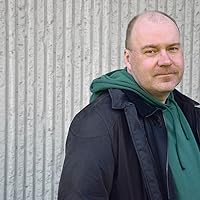
Antti Tuomainen (b. 1971) is one of Finland’s most acclaimed and award-winning crime fiction writers. To date, Tuomainen’s works have been translated into more than 25 languages. Crowned “The King of Helsinki Noir,” Tuomainen’s piercing and evocative style has never stopped evolving.
In The Man Who Died, Tuomainen displays a new side of his authorship and unveils his multifaceted ability in full. The novel, which combines Tuomainen’s trademark suspense with a darkly tinged humor, has won the hearts of readers and critics alike, and secured him the new title of King of Noir Comedy. The Man Who Died also became an international bestseller, shortlisting for the Petrona and Last Laugh Awards.
Palm Beach Finland was an immense success, with Marcel Berlins (The Times) calling Tuomainen 'the funniest writer in Europe'.
His latest thriller, Little Siberia, was shortlisted for the CWA International Dagger, the Amazon Publishing/Capital Crime Awards and the CrimeFest Last Laugh Award, and won the Petrona Award for Best Scandinavian Crime Novel of the Year.
No spoilers. 4 stars. Who knew there could be so much cutthroat murder, espionage, and intrigue in the adventure park business?...
The story begins...
... when Henri Koskinen, owner of YouMeFun, an adventure park bequeathed to him by his dead brother Juhani...
... sneaks into his rival's adventure park, Somersault City, after hours to spy on their business practices...
Their profits are low...
... yet they provide free park entrance, free food to their customers, and other gimmicks...
Also...
They have vowed to bankrupt Henri's adventure park...
From a window...
Henri sees an enormous beaver, their top attraction, lying on its stomach in the middle of Somersault City...
... with the park's owner dead in the huge beast's teeth, a steel ice cream cone shoved down his throat...
Just then...
As Henri decided to flee the scene, someone shouted: Murderer! at him...
As the Helsinki police try to solve the case, Henri is also desperate to find the murderer to clear himself of the crime...
Henri, an insurance actuary, applies mathematic probabilities to sort through the many suspects...
Is the murderer...
Niko Kotka, Joonas, or Olavi, who were working with the victim and his wife Elsa to financially ruin Henri and YouMeFun?...
Or maybe the culprit was...
Salmi and/or Lastumaki, two corrupt policemen with their own agenda...
Or could it be...
Sami, Taneli, or Tuukka, Henri's fellow fathers trying to raise school funds for their children to take a class trip to Paris?...
Love the characters' names. IKEA anyone?...
This story is book 3 of the RABBIT FACTOR series, and it had some very humorous moments like a headless motorcycle rider riding over a hill and into the sunset after trying to kill Henri, and a sabatour trapped inside an enormous banana attraction.
This author's Finnish noir mysteries never disappoint, and they are seamlessly translated into English by David Hackston.
An advertising error is that this is book 4 in the series when, in fact, this is book 3. That misstatement had me researching to see if I had missed an installment.
4.5★s The Beaver Theory is the third and final book in the Rabbit Factor trilogy by award-winning best-selling Finnish author, Antti Tuomainen. It is translated from Finnish by David Hackston, and narrated by David Thorpe. Just what might Henri Koskinen be doing in the middle of the night inside Somersault City, the adventure park of his new competitor, in view of the lifetime ban imposed on him last time he was there?
And how credible will the reason be for Henri’s proximity to the body of the owner, a large steel ice-cream-cone jammed into his mouth, now crushed beneath the park’s main attraction, an eighteen-metre-high beaver, should he have to tell it to DI Pentti Osmala of the Joint Division of the Helsinki Organised Crime and Fraud Units. Especially as there were many witnesses to his declaration that he would do what it takes to protect his own adventure park, You Me Fun from being forced into bankruptcy. Perhaps it’s as well he’s wearing a balaclava and manages to slip away…
To hear Henri’s explanation, we have to go back seven days: he and his cat Schopenhauer had just moved in with his girlfriend Laura Helanto and her daughter Tuuli, but he has barely hours to enjoy his happiness before it is rudely ripped away. On Monday his staff at You Me Fun are discouraged and despondent: Somersault City is offering free admission, free hot dogs, free helicopter rides and stand-up comedians. Their aim is to put You Me Fun out of business.
These are troubles he doesn’t want to share with Laura Helanto: she is busy with a new, exciting project, and Henri is determined to deal with it all himself, to keep it away from his newly-acquired happy family. Being part of that happy family entails attending a parents’ meeting at Tuuli’s school, and Henri finds himself co-opted into the enthusiastic (or is that aggressive) Dad’s Club, trying to raise funds for a students’ trip to Paris.
Two youthful policemen come to question him about the murder of his competitor, apparently convinced that he is the culprit, with no intention of looking further. When Pentti Osmala later pays a visit, Henri is surprised to find that his former nemesis seems to have become an ally, warning him that he needs to prove his innocence before the young pair prove his guilt.
Things don’t improve: You Me Fun rides are sabotaged, they have no customers, and his loyal staff issue Henri an ultimatum: he has three days to sort things out or they will take Direct Action.
Henri engages in some covert surveillance of the suspected killer, defends himself with a can of blue spray paint, and efficiently wields an ice-scraper for something other than its designated purpose, none of which he could have imagined doing when he decided to become an actuary. He tries hard to take Laura Helanto’s advice to go with the flow, something very much against his nature.
Before matters are resolved, there are two further violent deaths, Henri’s staff surprise and cheer him with some above-and-beyond loyalty and dedication, Henri makes a lot of blackcurrant jelly, a horse is stolen, there’s a gun battle, a sabotage attempt with ants is foiled, and Henri finds himself grateful for Esa’s seemingly excessive security measures.
In the nine months since the reader first met Henri, he’s possibly a little less socially awkward, but still wary of spontaneity, and more able to improvise, even if he still relies on mathematics to solve his problems: he is, after all, still an actuary. He’s of the opinion that “happiness resides where love and mathematics combine.” An entertaining and very satisfying finale.
I was sorry for this series ending as I had grown quite fond of Henri, our math whiz and problem-solving superhero. There is something satisfying about being privy of his thoughts as he navigates tasks and sorts through whatever latest problem he or his adventure park faces.
The final episode was most gratifying in the sense that it brought Henri to a closure point in his new blended family function, his adventure park and relationship with his one-of-a-kind employees, and the growth he has achieved in his life overall since stepping into the role of park owner.
On one hand, Henri personal life and achievements part of the story warrants a higher rating than I am inclined to give based on the plot alone. The challenges he confronts here are of a more mundane nature while the previous two books sported plots that were simultaneously absurd and hilarious.
So, less droll humor but I was happy at the conclusion and felt Henri was in an acceptable position to bid him farewell.
“We enter a world where the small, some would say humdrum existence of ordinary people, is suddenly enveloped in drama and absurdity.”
Then there was The Moose Paradox :
“The actual storyline is pretty nuts as usual, as who knew such dark and dastardly deeds could take root in a family adventure park? Who knew that the sourcing of play equipment could produce a maelstrom of violence and blackmail? Just when will dogged detective Osmala uncover the truth of the fiendish murders, committed with a plastic rabbit ear and a giant fake strawberry?”
And now to The Beaver Theory, and to be honest I could not be happier than to return to the weird and wonderful world of socially challenged Henri Koskinen, and his band of eccentric employees at the YouMeFun adventure park.
Not an amusement park, oh no, no, no. It’s an adventure park.
With Henri now living the semblance of a ‘normal’ person’s life, in a state of almost perfect domestic bliss, we fervently hope that life has become more settled.
More steady.
Less absurd.
Less violent.
But no.
Once again Henri’s very sanity is challenged by the dark forces seeking to put his park out of business and to see the demise of this perfectly pleasant ex-actuary, turned adventure park manager and his staff, by outdoing them in every area of entertainment that families want in their adventure park experience. But Henri won’t stand for that. And soon absurdity, scheming and murder prevail. The snowmobile episode in particular is an absolute doozy.
I wish I could find words enough to express how much I love this series overall. There’s something so enchanting and engaging about this little band of people, with their quirks of character, oddness of behaviour in some cases, but essential goodness, that is so totally endearing, and all so lovely…
Then.
Kapow💥
Tuomainen drops in these episodes of violence and nastiness with bomb-like precision, that pull you up short, but equally make you hoot with laughter as those bad guys, who threaten Henri and his business, are despatched in weird and wondrous ways, not always with malice aforethought. It is comedy gold, and never fails to make me snort with laughter, somewhat embarrassingly at times on public transport. Big kudos to David Hackston’s genius translation too, that this humour and some of the more ‘Britishisms’ Hackston employs, means that none of the humour and absurdity is lost in translation.
I honestly cannot recommend this book, and indeed, the trilogy as a whole enough. Weird, funny, violent, funny and weird again, Antti Tuomainen has more than proved his innate talent for bringing the absurdity to an almost state of normalcy, and enveloping us in this world of wonderful escapist delight. Highly recommended.
I absolutely loved The Beaver Theory—what a perfect send-off for Henri Koskinen. There’s just something irresistible about an insurance mathematician trying to keep adventure park chaos, shady competitors, and blended family life in some kind of logical order… and failing spectacularly. I laughed out loud at Henri’s deadpan observations, felt the tension twist as the stakes rose, and genuinely cared about how it would all turn out. Antti Tuomainen has this knack for mixing quirky humour with real heart and proper nail-biting moments, and this finale nails that balance. Clever, warm, and ridiculously entertaining—five stars from me.
4.5★s The Beaver Theory is the third and final book in the Rabbit Factor trilogy by award-winning best-selling Finnish author, Antti Tuomainen. It is translated from Finnish by David Hackston. Just what might Henri Koskinen be doing in the middle of the night inside Somersault City, the adventure park of his new competitor, in view of the lifetime ban imposed on him last time he was there?
And how credible will the reason be for Henri’s proximity to the body of the owner, a large steel ice-cream-cone jammed into his mouth, now crushed beneath the park’s main attraction, an eighteen-metre-high beaver, should he have to tell it to DI Pentti Osmala of the Joint Division of the Helsinki Organised Crime and Fraud Units. Especially as there were many witnesses to his declaration that he would do what it takes to protect his own adventure park, You Me Fun from being forced into bankruptcy. Perhaps it’s as well he’s wearing a balaclava and manages to slip away…
To hear Henri’s explanation, we have to go back seven days: he and his cat Schopenhauer had just moved in with his girlfriend Laura Helanto and her daughter Tuuli, but he has barely hours to enjoy his happiness before it is rudely ripped away. On Monday his staff at You Me Fun are discouraged and despondent: Somersault City is offering free admission, free hot dogs, free helicopter rides and stand-up comedians. Their aim is to put You Me Fun out of business.
These are troubles he doesn’t want to share with Laura Helanto: she is busy with a new, exciting project, and Henri is determined to deal with it all himself, to keep it away from his newly-acquired happy family. Being part of that happy family entails attending a parents’ meeting at Tuuli’s school, and Henri finds himself co-opted into the enthusiastic (or is that aggressive) Dad’s Club, trying to raise funds for a students’ trip to Paris.
Two youthful policemen come to question him about the murder of his competitor, apparently convinced that he is the culprit, with no intention of looking further. When Pentti Osmala later pays a visit, Henri is surprised to find that his former nemesis seems to have become an ally, warning him that he needs to prove his innocence before the young pair prove his guilt.
Things don’t improve: You Me Fun rides are sabotaged, they have no customers, and his loyal staff issue Henri an ultimatum: he has three days to sort things out or they will take Direct Action.
Henri engages in some covert surveillance of the suspected killer, defends himself with a can of blue spray paint, and efficiently wields an ice-scraper for something other than its designated purpose, none of which he could have imagined doing when he decided to become an actuary. He tries hard to take Laura Helanto’s advice to go with the flow, something very much against his nature.
Before matters are resolved, there are two further violent deaths, Henri’s staff surprise and cheer him with some above-and-beyond loyalty and dedication, Henri makes a lot of blackcurrant jelly, a horse is stolen, there’s a gun battle, a sabotage attempt with ants is foiled, and Henri finds himself grateful for Esa’s seemingly excessive security measures.
In the nine months since the reader first met Henri, he’s possibly a little less socially awkward, but still wary of spontaneity, and more able to improvise, even if he still relies on mathematics to solve his problems: he is, after all, still an actuary. He’s of the opinion that “happiness resides where love and mathematics combine.” An entertaining and very satisfying finale.
Excellent conclusion to the trilogy. Henri shows great character development throughout the series and becomes even more charming. The interplay between Osmala and Henri is particularly entertaining and satisfying.
Overall, enjoyable fast read with a twist of the absurd.
Henri Koskinen is back in another adventure-packed story.
Our beloved actuary, turned adventure park owner, finds himself fighting to save his park YouMeFun.
The new rival adventure park, Somersault City, are offering free entry and other perks, which means that all the customers decide to go there, instead of YouMeFun.
When the owner of Somersault City ends up dead, everyone’s eyes turns towards Henri…
I loved this book!!
What a change in Henri since The Rabbit Factor. At the start of the series, he was predictable and quite rigid, but thanks to inheriting the adventure park and meeting Laura Helanto, his life changed for the better.
Meeting Laura brought in some unexpected factors to Henri’s life equation. He is now a stepdad to Laura’s daughter Tuuli. His interactions with other dads were quite unusual, but that’s Henri for you! He speaks the full truth and nothing but the truth.
I found his speeches witty and entertaining, poor Henri obviously doesn’t realise that he is funny. I loved reading about the other park employees, especially Esa’s military stakeouts.
I feel a great deal of sadness that this is the last book in the series… Could there be a spin off?
I urge everyone to read this series. It’s witty, quirky and you will love awkward Henri, who has a heart of gold.
What a lovely way to finish this series off; the final volume in the Rabbit Factor trilogy featuring Henri Koskinen, the eccentric actuary, mathematician and adventure park owner.
Once again, Henri is forced to defend his park from a vicious takeover, and then has a fight for survival on his hands as he comes close to bankruptcy and losing the things that have become most important to him. As in the previous books there are a few nasty and very odd murders that Henri becomes involved in and is obliged to help solve in order to clear his own name using the rules of probability as his guiding strategy. This book still manages to be funny though despite the body count. It is quirky and very original.
In addition to solving murders, saving his business and staying one step ahead of villains and police in the process, through his new relationship with Laura and her daughter, Tuuli, Henri also finds himself appointed as the treasurer in a committee of dads brought together to fund a school trip to Paris with very little in the budget. It is fascinating to see if he can manage to solve all his problems using his own unique skills set.
There are plenty of shocks in store in this book but the themes I liked most were Henri's emerging realisation of the fact that you can change your mind about things, that there is a life beyond mathematics, and that everyone, him included, deserve to be part of a family. Such a different read. Unique series.
It was wonderful to return to the world of Henri Koskinen, actuary and accidental owner of a Helsinki adventure-park.
Since taking the reigns at YouMeFun after his brother's death, Henri has confronted various challenges - financial, managerial and criminal - and to do this he's developed a methodology that, while seeing the world very much in mathematical terms, is flexible enough to take account of a range of other factors too. In the course of the books he has developed and become more confident and The Beaver Theory very much shows him at the top of his game, as a rival adventure-park tries to undercut YouMeFun. Drastically undercut, as in, offer free admission and food. It's hard to see how YouMeFun can go on, even though Henri isn't above a little gentle burglary to resolve the issue - especially as things spiral into murder and he's faced with the need to prove his innocence as well as develop a business plan.
I loved that in this book Tuomainen raises the stakes not only by piling on the threats but also by giving Henri a deeper personal life. At the start of The Beaver Theory, Henri moves in with his girlfriend, artist Laura Helanto, and her young daughter. Not only does this give him new challenges to overcome - the dads at Tuuli's school, who induct Henri into their fundraising team, are truly terrifying and he spends most of this book coping with that - but it adds a resonance by giving him more to lose as well as more to love. One of the joys of these books is the depiction of Henri's internal life. Tuomainen has created a character who could have been pigeonholed as merely a depiction of someone on the spectrum or otherwise neurodiverse. Perhaps he is - but Tuomainen makes sure that's not all we see. Henri's a rounded, warm and complex man, a character it's truly fun spending time with, Tuomainen's writing really bringing him alive (helped in no small part I'm sure by David Hackston's lucid and compelling English translation).
And Henri's a person one can't help but fear for, surrounded as he is by rogues who may have a comic aspect but are nevertheless deadly (we witness several killings in the course of the book). And Henri's nemesis in the Helsinki police, Osmala, is also back, with a couple of rather sinister young colleagues who feel free to try and shake done YouMeFun.
All this, and a twisty, complex plot as well, makes The Beaver Theory very readable from the first page to the last and left me wanting more - though given what Henri goes through here I have to concede he deserves a bit of peace and quiet and the chance to spend time with his new family (not to mention his cat, Schopenhauer).
Oh, Henri. How I will miss him. But there could be no better send off than this, a book which combines all the wonderful golden humour that we have come to expect from Antti Tuomainen and this series, combining it with a touch of thrill and a whole host of positive emotions. The Beaver Theory finds Henri on the cusp of a(nother) major change in his life, and yet it is far from being the end of his journey of discovery. He has come a long way from the tight, logic driven recovering insurance actuary we met in The Rabbit Factor, to being a tight logic driven, active adventure park owner with parental responsibilities, and not just for Laura Helanto's daughter, Tuuli, either.
Now this series has become synonymous with the slapstick style, high jeopardy opening, one in which at least one person falls foul of an unusual fate, and The Beaver Theory is no exception. There will be little doubt as to the meaning behind the title after the opening chapter, but despite that small mystery being solved relatively quickly, the why's and wherefores of the story, and how Henri, once again, ends up under suspicion of a deed most deadly, will take a little longer to explain. Drawing readers back through the seven days leading up to that fateful and chucklesome prologue, the Antti Tuomainen gradually reveals the twisted happenings that seem to be leading to a severe decline in fortune for Henri's YouMeFun Adventure Park. Needless to say there are some less than virtuous antagonists in play, and this time they have some unexpected back up.
As much as the mystery that surrounds the prologue plays a key part in the story, and we do, after all, want to know exactly what happened and why, for me it is the characters that make this series really special. From the bad guys, as comedic and Fargo-esque as their endeavours may be, to the other School Dads in Henri's new 'friendship group', each adds colour and vibrancy to the story. Henri's relationship with Laura Helanto is sweet and seeing how he has changed so much by being in her life, really does make me smile when they are in scene's together. And watching him navigate life as a new Dad is also fun - not something that can easily be managed through a series of mathematical calculations - although his capabilities in this area do earn him some kudos amongst the other dads.
But above all else I love Henri and his YouMeFun family, because that is what they really are. Each of them, Esa, Kristian, Johanna, Sampaa and Minttu K, are so unique and yet brilliantly imagined that they create such a positive and warm feeling when you read about them, even in the most dire of circumstances that they face in this final episode of the series. Through them, their determination and dedication, Henri learns a valuable life lesson, one which spurs him on to more determined action. Henri, being Henri, it doesn't always end in the best way, and there are plenty of scenes in which his actions see things get completely out of hand, the story all the better for it. His personal growth throughout the series though has been a joy to read, and his often too serious, matter of fact observations contradict the comedic tone of the action so brilliantly that I always find myself with a huge smile on my face when I am reading.
Once again the pacing is superb, the story madcap but compelling, with the author's trademark humour en-pointe, resulting in the delivery of a pitch perfect finale. A huge shout out to David Hackston, whose consistently skilful translation of the author's work has brought Henri and his friends to life on the page, allowing us all to indulge in their hilarious antics for one final time. Strangely, the sadness I felt when thinking about this being the last book often felt as though it was reflected in the more melancholic and reflective moments of the book, but they are fleeting and few, and it is not long before the positivity and good humour shine through.
So whilst I will miss Henri and the gang, with a special adios reserved for dear Schopenhauer, I leave them with a smile on my face and the knowledge that the end to Henri's story is a fitting one. Most definitely recommended.
Jaburusele sai veel mitu vinti peale keeratud, sentimentaalsust kah juurde, aga hoogu oli rohkem kui teisel köitel ja nalja sai ka rohkem, nii et seda kannatas lugeda küll.
Trilogian viimenen osa oli näistä ehkä suoraviivaisesti toimivin jatkaen sitä yksinkertaista kaavaa. Ihmisiä kuolee ja asioita tapahtuu, jutut ratkeaa.
Antti Tuomaisen "Vakuutusmatemaatikko Henri Koskinen" -trilogian päätös Majavateoria (2022) on sujuvaa Tuomaista, mutta ei yllä kyllä avausosan tasolle - eikä oikein kakkososankaan. Valitettavasti.
Mukavaa luettavaa toki ja "pakkoluettavaa" kaikille Tuomaisen romaanien ystäville. Tarina ei kuitenkaan ollut parasta Tuomaista ja jotenkin laimea oli koko juoni. Tuomainen tekee kyllä myös sellaisen tempun, jota ei saisi näissä kirjoissa olla: nimittäin tarinan ratkaisuun vaikuttaa keskustelu, jota kirjassa ei kerrota, vaan käyty keskustelu tulee päähenkilön toteamana todellakin yllätyksenä lukijalle.
Jään odottamaan, mitä Tuomaiselta seuraavaksi. Arvioksi tälle 3,3/5.
Having read the other books in this series, I had quite high expectations, and The Beaver Theory certainly did not disappoint.
We again follow Henri in Iceland, on the brink of another big change in his life. He's moved in with Laura and her Daughter, but things aren't going too well at his adventure park, YouMeFun. Can Henri save the park using his mathematical problem solving skills? Be sure to pick your copy up to find out.
So what we have here is a highly entertaining conclusion to the series, full of humour and quirk.
It's laugh out loud funny, it's fresh, it's absurd, it's unpredictable and Henri is just so loveable.
Poor Henri Koskinen, he really is a hapless antihero! This is the third book in the series, and the premise remains the same in each, the adventure park Henri, an actuary, has ended up inheriting experiences various challenges in which he uses his analytical and mathematical skills to resolve. With a bit of unintentional law breaking happening along the way. Henri very much reads as being autistic, we see this in him identifying so strongly with his previous profession as an actuary, and in the interpersonal relationships he has with his employees, his partner Laura, and her daughter. He is very much a people pleaser but it unsure how act around others. Henri has a good heart and cares deeply about his responsibilities and I was rooting for him during all three books. This series is enjoyable and amusing, with a cast of eccentric characters.
@anttituomainen trilogy finishes with The Beaver Theory, as Henri once more seeks to bring order out of chaos.
I’ve really enjoyed the series, with its quirky black comedy humour and great central character in Henri. I’ve ‘discovered’ Antti as a result and have started to read some of his other comedy thrillers. Great fun.
I read somewhere there’s talk of a film, let’s hope so 👏🎬
Hoe weinig grappige boeken worden er geschreven? Dit is er eentje en het was echt zalig om te lezen tussen alle zware (maar zeer mooie, dat spreekt) kost door. Dat het over een wiskundige gaat die Henri heet was een wijze plus ☺️.
The end of Antti Tuomainen's story about an actuary who inherited an Adventure Park Well, the hero will predictably have to solve the problem of a frenzied competitor, and the reader will have to spend a few pleasant hours with a book or audiobook, as was the case in my case, Yuri Romanov reads well. To admit, it seemed to me that the third part goes to the code, but a somewhat similar scheme: 1. an external problem; 2. the timely reaction of the hero to it with the corpse formed in the process and the need to escape from possible accusations; 3. a happy ending - has somewhat lost the charm of novelty. But the cumulative effect of the series works on the story, and the description of family happiness has added a touch of lyricism to it.
If you've fallen in love with the trilogy before, "Beaver Theory" won't disappoint. But the Moose Paradox remains my favorite
Финальная битва бобра с ослом – Что-то мне подсказывает, что сейчас мы увидим ту самую точку, которая венчает букву «i». Что ж, предчувствия его не обманули Окончание истории Анти Туомайнена об актуарии, унаследовавшем Парк приключений, которая начиналась несколько абсурдистским "Фактором кролика", продолжилась блестящим и непредсказуемым "Парадоксом лося", завершается третьей книгой, чье заглавие словно создано для дурацких каламбуров про бобров с ослами (ну я и не удержалась, простите). Ясно, что в оригинале зубастый строитель плотин никак не ассоциируется с философскими категориями добра и зла, но перевод порой творит настоящие семантические чудеса.
"Теория бобра" заключительная часть трилогии вряд ли книгу возьмет для автономного чтения или прослушивания кто-то, не имеющий представления о предыстории, но на всякий случай напомню. Итак, вырванный из жизни рационального сотрудника страховой компании, Хенри Коскинен вынужден заниматься делами унаследованного парка приключений. Головных болей прибывает по экспоненте, о прибыли и прочих ништяках не стоит и говорить - раздолбай братец оставил парк в долгах, умудрившись задолжать бандитам. Справившись с бедами, герой переживает "воскресение" брата, которое сопровождается лютыми проблемами с поставщиками оборудования. Как позже выяснится - возникшими не без участия родственника.
Однако и здесь труд, порядочность, математическое мышление и толика удачи помогают справиться со всем, а к финалу Хенрик приходит, завоевав поддержку подчиненных, прежде недовольных его политикой разумной экономии, и сердце лучшей женщины на свете - Лауры Хеланто, бывшей дизайнерки парка, теперь свободной художницы. Сейчас, когда дела наладились и парк начал приносить небольшую прибыль, самое время погрузиться в семейную жизнь, освоиться в роли мужа и отца, и он даже начинает с посещения родительского собрания, где знакомится с другими папами, которые в Финляндии (сюрприз-сюрприз!) принимают равное с материнским участие в воспитании. И тут начинаются проблемы.
Да такие, каких он прежде и вообразить не мог. Какому владельцу бизнеса может прийти в голову, что по соседству откроется конкурент, у которого будет все то же самое, только в люксовом исполнении и бесплатно? На самом деле, ситуация не вовсе сказочная - в торговле сетевые магазины практически уничтожили мелкую розницу, действуя примерно так же: ассортимент шире, цены ниже, промоакции на выборочные товары. Но в индустрии развлечений все строится на иных принципах, потому политика парка "Сальто-мортале", переманившего клиентов реально бесплатными развлечениями с дармовой кормежкой в придачу, кажется бестолковой и разорительной. Но пока Хенрику так кажется, "Заходи, здесь весело!" идет ко дну.
Что ж, герою предсказуемо придется решать проблему взбесившегося конкурента, а читателю - провести несколько приятных часов с книгой или аудиокнигой, как было в моем случае, читает Юрий Романов хорошо. Признаться, мне показалось, что третья часть уходит на коду, а несколько однотипная схема: 1.внешняя проблема; 2.своевременная реакция на нее героя с образующимся в процессе трупом и необходимостью спасаться от возможных обвинений; 3.счастливое завершение - несколько утратила обаяние новизны. Но кумулятивный эффект сериала работает на историю, а описание семейного счастья добавило к ней нотки лиричности.
Если вы успели влюбиться в трилогию прежде, "Теория бобра" не разочарует. Но моим фаворитом остается "Парадокс лося"
Insurance actuary, Henri Koskinen is all set for a new adventure by moving in with his girlfriend, painter Laura Helanto, and her daughter, Tuuli. Many things about blended family life are bewilderingly incompatible with Henri's tenets of order and logic, and he is not too sure about the responsibilities that appear to come with being a 'school dad', but nevertheless he feels things are really looking up.
As Henri is getting his head around his new living arrangements, and the utter chaos of the extra-curricular activities of his fellow 'school dads', a challenge far greater than anything that has come before suddenly crops up where YouMeFun is concerned. Across town, a new adventure park, Somersault City, has just opened and it is hitting Henri's business hard. Henri and his faithful team are at a loss to work out how to compete with the newer attractions, free entry and food, and star-studded entertainments for parents, that are taking away their customers.
Henri decides to check out the competition for himself, and when he meets the shady crew running the operation, headed up by wannabe cowboy Ville-Pekka 'VP' Hayrinen, he is shocked to discover that they not only seem to be following a non-sensical business model, but they also want to grind YouMeFun into the dust in the process. When 'VP' subsequently ends up dead with an over-sized ice cream cone where nature never intended, Henri finds himself being fitted up for the murder by two hot-shot cops who have an agenda all of their own. Henri is going to need more than his mathematical skills to overcome the biggest hurdle of his adventure park career yet, especially now has family responsibilities...
Welcome to the final, joyful instalment of the Rabbit Factor trilogy by Antti Tuomainen. Henri is back in the thick of it once more, fighting to save YouMeFun, and his own skin, from the unscrupulous!
This third book is all about family, with three storylines that weave seamlessly together. As Henri takes baby-steps in the roles of live-in partner to Laura Helanto and father to her daughter Tuuli, his emotional development hits the steepest learning curve yet. On the YouMeFun front too, new feelings are stirring, with the team backing Henri to the hilt while he gets to grips with another fine mess that is not of his making. And in a triple, heart-string-plucking whammy, Henri works mathematical magic with the disorganised 'dads' group' to bring hope on the Parisian horizon. Amongst all the marvellous mayhem that ensues, Henri's capacity to understand love, friendship, human connection, and the benefits of 'going with the flow' blossoms, but he has many trials and tribulations to work through before the warm and fuzzy ending eventually dawns.
Henri's mathematical superpowers remain his core strength, despite being disparaged by his unwitting enemies, but he also has a lot of other skills and qualities at his disposal, honed through the battles he has been forced into since becoming the unexpected owner of an adventure park. The courage, determination, and resourcefulness of Henri and his team are not to be underestimated; and in a lovely twist, the inscrutable Detective Inspector Pentti Osmala has an intriguing role to play too, as he and Henri continue their 'so-much-left-unsaid' sparring.
I adored this book from start to finish. It is packed with Tuomainen's brand of dark, tongue-in-cheek humour that I have come to love so well. The absurd situations Henri continues to find himself in bring chuckle-worthy thrills and spills, with investigations of a giant beaver; the well-timed use of a spray can; some eye-opening horseplay; and ninja-like reactions with household implements... and if that was not enough to keep you entertained, there is the perfect level of emotional content to warm the cockles of your heart sufficiently to keep you toasty through the chills of a Finnish winter.
I am utterly bereft that this is the last book of Henri's adventures, but it is a fine conclusion to everything that has come before, and I tip my hat to the talented translator David Hackston for doing such a cracking job bringing Tuomainen's quirky comic genius to an English-speaking audience. A truly epic ending, to a fabulous trilogy!
The last book in a trilogy is often a bittersweet moment but never more so than with Antti Tuomainen's The Beaver Theory. His series of books about love, death and insurance mathematics are such a refreshingly different approach to crime fiction and actuary Henri Koskinen is one of the most memorably endearing characters I've ever had the pleasure of encountering. You could forgive poor Henri for finally expecting his days to become more settled after the chaotic turn his life first took in The Rabbit Factor, with further shocks, scheming and unfortunate deaths in The Moose Paradox. However, the opening chapter soon makes it clear that being the owner of an adventure park still results in him finding himself in the most extraordinary situations – this time featuring an enormous beaver and an ice-cream cone... As with the previous books, the narrative then flips back a few days to reveal exactly how he found himself in this predicament, and ultimately whether he can clear his name while discovering the truth about the nefarious goings-on at the rival Somersault City adventure park, save his own YouMeFun park and still adjust to life as part of a family. His romance with Laura Helanto has been one of the highlights of this series; despite previously only trusting the safety and reliability of mathematics, he has opened himself up to the uncertainty of love and now he and his cat, Schopenhauer have moved in with Laura and her young daughter, Tuuli. Henri being Henri, he takes his new role as a family man very seriously and consequently ends up joining an enthusiastic group of dads. As he becomes part of their social evenings and wildly ambitious fundraising plans, Henri's bemusement at this sudden change in his personal life is both hilarious and heartwarming, However, the storyline also has several darkly complex twists and turns, with more gruesome deaths to follow as Henri's increasingly versatile skill set also sees him become a private investigator. In one especially unforgettable scene, he bears witness to something which leaves an indelible impression on Henri and almost certainly the reader too. Antti Tuomainen perfectly strikes a balance between the warmth of cosy crime mysteries and the more dangerous, grisly end of the crime fiction spectrum here. As our doggedly determined hero risks everything – including perhaps his new state of happiness – he is forced to lie, scheme and take extreme measures to protect all he has come to hold dear. It's arguably his burgeoning awareness of what the different facets of his life have come to mean to him which leads to the escalating tension being so nail-biting in The Beaver Theory. The narrative seamlessly switches between suspense and comedy throughout; all crime fiction should involve some element of risk but the superbly empathetic development of Henri's character over the course of the trilogy ensures it's almost impossible not to become intensely invested in his story. As always it would be remiss of me not to mention David Hackston's excellent translation which captures all the drama, humour and hope, as well as the technicolour sense of place. I will miss Henri Koskinen and the eccentric yet largely loveable characters surrounding him but this compelling, touching tale of murderous plots, underhand tactics and unorthodox families is the perfect ending to this outstanding trilogy. I cannot recommend it highly enough.
As with the previous instalments the novel commences with a generous dose of slapstick violence resulting in death. This time it is death by ice cream, in the form of an eighteen-inch steel and plastic cornet which is rammed down the throat of the proprietor of the Somersault City adventure park. We know this because our intrepid hero, Henri Koskinen, was there to see it happen and now realises he is in trouble. Henri the former insurance actuary, is the owner of the YouMeFun adventure park and he shouldn’t be on site, he was there trying to conduct a little industrial espionage. Who knew adventure parks could be so dangerous. Now he will become the prime suspect and to think only a few days previous life was so good.
Just a week previous Henri had bid farewell to his old apartment and along with his cat Schopenhauer moved in with his girlfriend Laura Helanto and her daughter Tuuli. A truly momentous occasion for a man so uptight and set in his ways to finally embrace domesticity. Then when he returns to YouMeFun he discovers that business wasn’t slack it was non-existent, the park had literally no customers at all. How could this happen?
There is a new competitor in town, Somersault City, planning to make a big impact. No only is their admission free, but they are offering free hot dogs (regular, vegetarian and vegan!) Our man of logic and most importantly mathematics realises that this is not the way to run a business, along with all the marketing cost costs, zero income means a significant loss. Not something to be sustained for long but clearly intended to put Henri out of business, hence the need to a little snooping around.
Henri is the numbers obsessed staid actuary who believes that no matter the problem, mathematics and statistics will provide the answer, and in his world they usually do. Throughout the series we see him out of his comfort zone, learn to accept that there can be chaos and that he must just adapt to the situation. Moreover, for a man who doesn’t understand people, because numbers are far more predictable, he must learn how to love and accept people as they are. He realises the importance of family, finally recognising that he now is not part of one but three families in a loose sense. The changes are slow but remarkable and heartwarming. There may be fewer ‘duck out of water’ situation for him but there are still plenty of uncomfortable moments as be volunteers to join the ‘dads club’.
The adventure park team develop from a bunch of misfits to a tight unit working together and now respecting Henri and caring about the place, whilst remaining a bunch of misfits. They still provide a rich vein of humour, whimsical, nonsensical, surreal and in the case of Esa toilet with his unpleasant bodily functions. Esa is a man with his own exclusion zone to be breached at your peril.
David Hackston’s work on the translation perfectly captures the warmth, silliness and humour of the text, making reading a joy.
So, with The Beaver Theory our journey comes to an end, and what a ride it’s been, packed with ups and downs, a lot of laughter and plenty of corpses. I’m going to miss Henri, Laura and the gang but it’s a fitting finale that feels right, much better that than going on too long.
‘The Beaver Theory’ is the concluding chapter in thi amazingly original, hilarious trilogy and I am bereft. Henri, oh how I will miss you. Henri is one of the most authentic individuals I have ever had the pleasure to read about and whilst he has received a brilliant ending from this outstanding wordsmith, I am still sad that it is all over. While you could pick this up as a standalone I don't think you would understand the beauty and magic of this series unless you had read the previous two books. It is very much a whole story but just serialised into three original and witty instalments!
Henri Koskinen, owner of an adventure park and an insurance mathematician has made the bold decision to move in with painter Laura Helanto and her daughter. He is inserted into a new blended family, embarking on the school runs and is now involved with the ‘dad mafia’. But not everything is his life is going his way as a competing adventure park is seeking to wipe out YouMeFun and it seems to be working as they haven't had a customer for over a week. How can they compete with free entry, free hotdogs (normal, vegetarian and vegan) and half-naked popstars?! Henri decides to go on a reconnaissance visit and things go downhill from there. With a mounting body count can Henri bring happiness to both sides of his life?
I don't think there is anyone else in the world apart from Antti who could make actuarial mathematics funny! If it hadn't been an Orenda book I don't think going by the blurb this would have been a series for me but I trust that publishing house implicitly and I gave ‘The Rabbit Factor’ a try and I haven't looked back. This trilogy has been astonishing and the best part was seeing how Henri grows as a person. When we first met him he was very particular - everything needed to be done his way. But now in ‘The Beaver Theory’, we find a man who has grown exponentially for the positive. Yes, he has his quirks and still says what no other would but he has begun to think about how others feel and how his actions can affect others. His heart has grown to include so many people. There is his new family but also the employees of the adventure park and now the ‘dad mafia’ as well. This makes me happy for his happiness.
Antti is a master at making believable and well-formed characters. Each and every one is distinct with their own strong voice. Esa, Kristian, Johanna, Sampsa and Minttu K from the adventure park are hilarious in their own right but when they come together they form this cast that is out of this world! I honestly can't wait to see who plays them in the upcoming adaptation. Henri is of course being played by Steve Carrell and now when I read these books I see him in my head!
When I closed that last page, despite being sad there was an overriding feeling of happiness. Happiness that Henri was happy. Happiness that this book had given all its main characters a happy resolution. Happiness that I was there for that journey and happiness just in general. What more could you ask for?