In Bleeding Borders, Kristen Tegtmeier Oertel offers a fresh, multifaceted interpretation of the quintessential sectional conflict in pre-Civil War Kansas. Instead of focusing on the white, male politicians and settlers who vied for control of the Kansas territorial legislature, Oertel explores the crucial roles Native Americans, African Americans, and white women played in the literal and rhetorical battle between proslavery and antislavery settlers in the region. She brings attention to the local debates and the diverse peoples who participated in them during that contentious period.
Oertel begins by detailing the settlement of eastern Kansas by emigrant Indian tribes and explores their interaction with the growing number of white settlers in the region. She analyzes the attempts by southerners to plant slavery in Kansas and the ultimately successful resistance of slaves and abolitionists. Oertel then considers how crude frontier living conditions, Indian conflict, political upheaval, and sectional violence reshaped traditional Victorian gender roles in Kansas and explores women's participation in the political and physical conflicts between proslavery and antislavery settlers.
Oertel goes on to examine northern and southern definitions of "true manhood" and how competing ideas of masculinity infused political and sectional tensions. She concludes with an analysis of miscegenation -- not only how racial mixing between Indians, slaves, and whites influenced events in territorial Kansas, but more importantly, how the fear of miscegenation fueled both proslavery and antislavery arguments about the need for civil war.
As Oertel demonstrates, the players in Bleeding Kansas used weapons other than their Sharpes rifles and Bowie knives to wage war over the extension of slavery: they attacked each other's cultural values and struggled to assert their own political wills. They jealously guarded ideals of manhood, womanhood, and whiteness even as the presence of Indians and blacks and the debate over slavery raised serious questions about the efficacy of these principles. Oertel argues that, ultimately, many Native Americans, blacks, and women shaped the political and cultural terrain in ways that ensured the destruction of slavery, but they, along with their white male counterparts, failed to defeat the resilient power of white supremacy.
Moving beyond a conventional political history of Bleeding Kansas, Bleeding Borders breaks new ground by revealing how the struggles of this highly diverse region contributed to the national move toward disunion and how the ideologies that governed race and gender relations were challenged as North, South, and West converged on the border between slavery and freedom.
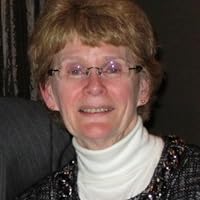
Kristen T. Oertel is the Mary Frances Barnard associate professor of 19th-century American history at the University of Tulsa. She is a native of the Kansas City area and graduate of Shawnee Mission North High School. Her research focuses on race and gender in the 19th century.
Oertel's first book, Bleeding Borders: Race, Gender and Violence in Pre-Civil War Kansas, was published by the Louisiana State University Press in 2009.
Oertel's second book, Frontier Feminist: Clarina Howard Nichols and the Politics of Motherhood is co-authored with Marilyn S. Blackwell and was published in 2010 by the University Press of Kansas.
This book provided a great series of essays that shone a light for me on a period of history that I'm only somewhat versed in. The focus on Kansas (territory and state) gave a new angle for me on pre-Civil War US history and it was fairly compellingly written and told. The biggest drawback for me was the writing style, which often felt quite telegraphed and structured in a sort of basic way. A lot of overly-explanatory paragraphs that so closely hewed to an elementary structure that it was sometimes jarring to have one section end with what amounted to a "The next section will explain X in greater detail" followed by a section beginning with "This section will explain X."
Besides perhaps needing a bit of a harsher edit or a tighter writing style, this was informative and illuminating and I would recommend it to people traveling through or interested in the region and its history.
The words of "bleeding" and "borders" contained in the title refers to the violence and terrorism resulting from the clash of interests between pro-slavery and anti-slavery forces that took place along Kansas-Missouri border prior to the American Civil War. Extremist from both sides were drawn to this part of the country to champion their cause in determining whether Kansas Territory would become a slave or free state. These conflicts in many ways served as a precursor to the Civil War that followed. The major power brokers (mostly white males) in this phase of history have been well documented by other historians. This book focuses on the activities of the less visible participants (women, Indians and slaves) of this historical era. The book goes on to explore how contrasting cultural values and fear of miscegenation motivated the different political interests.
The writing is very readable, but it has the flavor on an academic book with frequent references to material covered by other historians. Because of the nature of the subject, it necessarily ends up describing scattered events and personalities which limits the emotional identification by the reader with stories in the book. Consequently, I suppose it will fail to capture the attention of the popular reading audience. Nevertheless, it tells the stories of many overlooked ordinary people who worked hard at living and surviving. These are stories that deserve to be told and remembered. Their hard work laid the foundation of our current civilization.
Especially liked the analysis of how each side attacked the other's definition of manhood and the importance of "whiteness" to both sides. Some original insight and good food for further dialogue.
Good information but seems to be written for non history readers in that the author ends every piece of evidence with 'this means...' but a well researched book.