

What do you think?

Nothing Special
New York City, 1966. Seventeen-year-old Mae lives in a rundown apartment with her alcoholic mother and her mother's sometimes-boyfriend, Mikey. She is turned off by the petty girls at her high school and the sleazy men she typically meets. When she drops out, she is presented with a job offer that will remake her world: She is hired as a typist for the artist Andy Warhol.
Warhol is composing an unconventional novel by recording the conversations and experiences of his many famous and alluring friends. Tasked with transcribing these tapes alongside several other girls, Mae quickly befriends Shelley, and the two of them embark on a surreal adventure at the fringes of the counter-cultural movement. Going to parties together, exploring their womanhood and sexuality, this should be the most enlivening experience of Mae's life. But as she grows increasingly obsessed with the tapes and numb to her own reality, Mae must grapple with the thin line between art and voyeurism and determine how she can remain her own person as the tide of the sixties sweeps over her.
For readers of Ottessa Moshfegh and Mary Gaitskill, this blistering, mordantly funny debut novel brilliantly interrogates the nature of friendship and independence and the construction of art and identity. Nothing Special is a whip-smart coming-of-age story that brings to life the experience of young girls in this iconic and turbulent American moment.
Warhol is composing an unconventional novel by recording the conversations and experiences of his many famous and alluring friends. Tasked with transcribing these tapes alongside several other girls, Mae quickly befriends Shelley, and the two of them embark on a surreal adventure at the fringes of the counter-cultural movement. Going to parties together, exploring their womanhood and sexuality, this should be the most enlivening experience of Mae's life. But as she grows increasingly obsessed with the tapes and numb to her own reality, Mae must grapple with the thin line between art and voyeurism and determine how she can remain her own person as the tide of the sixties sweeps over her.
For readers of Ottessa Moshfegh and Mary Gaitskill, this blistering, mordantly funny debut novel brilliantly interrogates the nature of friendship and independence and the construction of art and identity. Nothing Special is a whip-smart coming-of-age story that brings to life the experience of young girls in this iconic and turbulent American moment.
240 pages, Hardcover
First published March 2, 2023
Ratings & Reviews
Friends & Following
Create a free account to discover what your friends think of this book!
Community Reviews
Displaying 1 - 30 of 499 reviews

June 15, 2023
I was intrigued by Nothing Special because it tells the story of a woman who worked for Andy Warhol. I’ve had a fascination with Warhol’s art for ages, so of course I wanted to read this. But the book was just so meh. Lots of whingeing about her life. Mae is 17 at the start of the book in 1966, living with an alcoholic mother and her sometimes boyfriend. She rides the escalator at Macy’s for fun, picking up strange men. It takes until the 30% mark before Mae even gets the job typing in Warhol’s Factory. It’s the 46% mark before she starts transcribing the tapes of his “book”.
The story felt dull. This is not a book about Warhol. Mae is the ultimate outsider, looking in. Privy to the tapes but not the people. At times the book takes on a stream of consciousness feel, but all it does is point out the lack of a coherent storyline. Here’s the best description of the book:
“ i got everything i needed from the tapes anyway. Listening to them was like falling down a trapdoor. time was fractured, nonsensical. What a strange world they had made for themselves, full of scorn and rage and competition, with moments of giddiness.”
The book is depressing. The blurb describes the book as “blistering, mordantly funny.” Don’t believe it. People degrade themselves first on tape and then on film. Being a part of something is more important than self respect. It does put a lie to the myth about the glamour of Warhol and his set.
Capitalization of words is haphazard. Some sentences didn’t start with a capital. The story is told in the first person and throughout, the i isn’t capitalized, even when another person is speaking. She also capitalizes some, but not all, names. Maud, yes; Dolores, yes; anita, no; edie, no. Ok is spelled as oK. I found I was paying more attention to the capitalization of words than the plot. Not a good sign.
My thanks to Netg and Bloomsbury Publishing for an advance. Copy of this book.
The story felt dull. This is not a book about Warhol. Mae is the ultimate outsider, looking in. Privy to the tapes but not the people. At times the book takes on a stream of consciousness feel, but all it does is point out the lack of a coherent storyline. Here’s the best description of the book:
“ i got everything i needed from the tapes anyway. Listening to them was like falling down a trapdoor. time was fractured, nonsensical. What a strange world they had made for themselves, full of scorn and rage and competition, with moments of giddiness.”
The book is depressing. The blurb describes the book as “blistering, mordantly funny.” Don’t believe it. People degrade themselves first on tape and then on film. Being a part of something is more important than self respect. It does put a lie to the myth about the glamour of Warhol and his set.
Capitalization of words is haphazard. Some sentences didn’t start with a capital. The story is told in the first person and throughout, the i isn’t capitalized, even when another person is speaking. She also capitalizes some, but not all, names. Maud, yes; Dolores, yes; anita, no; edie, no. Ok is spelled as oK. I found I was paying more attention to the capitalization of words than the plot. Not a good sign.
My thanks to Netg and Bloomsbury Publishing for an advance. Copy of this book.

March 15, 2023
enjoyed this but it does suffer from that modern malady of essentially being a short story stretched into a novel

Read
July 3, 2024There were some great observations in this unusual novel about a seventeen-year old who dropped out of school and took a job in Andy Warhol's studio transcribing the tapes Warhol recorded with the actor known as Ondine between 1965 and 1967, and which were published eventually as a: a novel by Andy Warhol.
I liked the way contemporary author Nicole Flattery reimagined the time and place. And the schoolgirl Mae, along with her equally young colleague Shelley, who both spent hundreds of hours typing out the banalities on the tapes, felt very real to me. They were portrayed as very bright—far too bright for the donkey work they were doing. Flattery had them adding their own creative edits to what they were typing up and I enjoyed that aspect. Speaking of Ondine, Mae says, I was more like an actor playing him than someone transcribing him.
Although Flattery doesn't explicitly make the connection, Shelley, because of her eagerness to become an actress instead of just a typist, reminded me of Norma Jean Mortenson who left her small town troubled life for the big city just as Shelley did, and whom Warhol later photographed in his trademark style:
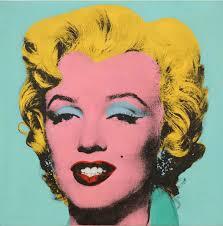
Shelley wasn't as lucky as Norma Jean though. Warhol did film Shelley but that was one of the most exploitive moments in this novel full of exploitation. But of course that was probably Flattery's point. After all Norma Jean was exploited throughout her short life too.
As I said at the beginning of this review, the author gives narrator Mae some great observations:
This one about her mother, for example:
She had never paid much attention, always dwelling in the basement of her own disappointments...
And this: People were impatient to find out who they were, and they wanted the movies to tell them.
The world kept telling us we had never been so free, but it was only when I was with Shelley, alive with her excitement, in her dream that had taken her across the country on a bus, that I believed it.
More about Shelley: She had an unnatural way of smoking, self-conscious and eager, a way that was recognisable from other girls who were trying to invent themselves.
And this description of Shelley which is full of contradictions and was part of the reason I began to see her as a Norma Jean/Marilyn character:
The front door [of the studio] was open. It always was. Anyone could wander in and anyone often did. Even that early in the morning, I wasn’t alone. When I walked in, Shelley’s hunched back was the first thing I saw. The wheels of her [type writing] machine were already in motion. Five or six paintings were leaning against the wall in a row. It was the first time I really looked at them. It was quiet enough to allow it. They were lurid, electric colours, like the streaks on Shelley’s face the night before. I recognised the famous woman from the painting. I’d seen up her skirt, I’d seen her in a swimming pool, but I hadn’t seen her like this. She looked preserved, embalmed. I thought of the bright, pink flesh of Shelley’s burger. Her face again and again, but the attention to detail didn’t make it more lifelike, only rendered her inhuman, as if she was just one of a million animals being sent off to be slaughtered.
‘Hi,’ I said and Shelley nodded at me. Her shirt was buttoned right to the top, as if she wasn’t the type of girl to throw up on the street, as if she constantly walked around being shocked and astonished by impropriety. She smelled heavily of drugstore perfume. Outwardly, she looked like she always did...
Flattery seems to think Warhol also exploited the actors and actresses who featured on the tapes, especially the actor Ondine: He was O on my pages. O was for Ondine, also known as The Pope, and he was the main talker, words tumbling from him in a ceaseless monologue. If I hadn’t seen him in the film [Chelsey Girls], a Coke in hand, I’d have thought he was born on the tapes. No family, no history. He existed only to be recorded...
So, all in all, this was an interesting look inside Andy Warhol's Factory in the 1960s.
The novel wasn't perfect though. When I came to this line, In the weeks afterwards, there was a change in how I treated the tapes, I had the thought that the story needed 'change' very badly too. Truth was, reading about the transcription of the tapes was nearly as exhausting as transcribing them must have been—but not nearly as exhausting as reading Andy Warhol's finished novel must be! I looked inside it and read the first few pages—I seriously doubt anyone has ever read the whole thing! But someone may turn up here to tell me I'm wrong...
I liked the way contemporary author Nicole Flattery reimagined the time and place. And the schoolgirl Mae, along with her equally young colleague Shelley, who both spent hundreds of hours typing out the banalities on the tapes, felt very real to me. They were portrayed as very bright—far too bright for the donkey work they were doing. Flattery had them adding their own creative edits to what they were typing up and I enjoyed that aspect. Speaking of Ondine, Mae says, I was more like an actor playing him than someone transcribing him.
Although Flattery doesn't explicitly make the connection, Shelley, because of her eagerness to become an actress instead of just a typist, reminded me of Norma Jean Mortenson who left her small town troubled life for the big city just as Shelley did, and whom Warhol later photographed in his trademark style:
Shelley wasn't as lucky as Norma Jean though. Warhol did film Shelley but that was one of the most exploitive moments in this novel full of exploitation. But of course that was probably Flattery's point. After all Norma Jean was exploited throughout her short life too.
As I said at the beginning of this review, the author gives narrator Mae some great observations:
This one about her mother, for example:
She had never paid much attention, always dwelling in the basement of her own disappointments...
And this: People were impatient to find out who they were, and they wanted the movies to tell them.
The world kept telling us we had never been so free, but it was only when I was with Shelley, alive with her excitement, in her dream that had taken her across the country on a bus, that I believed it.
More about Shelley: She had an unnatural way of smoking, self-conscious and eager, a way that was recognisable from other girls who were trying to invent themselves.
And this description of Shelley which is full of contradictions and was part of the reason I began to see her as a Norma Jean/Marilyn character:
The front door [of the studio] was open. It always was. Anyone could wander in and anyone often did. Even that early in the morning, I wasn’t alone. When I walked in, Shelley’s hunched back was the first thing I saw. The wheels of her [type writing] machine were already in motion. Five or six paintings were leaning against the wall in a row. It was the first time I really looked at them. It was quiet enough to allow it. They were lurid, electric colours, like the streaks on Shelley’s face the night before. I recognised the famous woman from the painting. I’d seen up her skirt, I’d seen her in a swimming pool, but I hadn’t seen her like this. She looked preserved, embalmed. I thought of the bright, pink flesh of Shelley’s burger. Her face again and again, but the attention to detail didn’t make it more lifelike, only rendered her inhuman, as if she was just one of a million animals being sent off to be slaughtered.
‘Hi,’ I said and Shelley nodded at me. Her shirt was buttoned right to the top, as if she wasn’t the type of girl to throw up on the street, as if she constantly walked around being shocked and astonished by impropriety. She smelled heavily of drugstore perfume. Outwardly, she looked like she always did...
Flattery seems to think Warhol also exploited the actors and actresses who featured on the tapes, especially the actor Ondine: He was O on my pages. O was for Ondine, also known as The Pope, and he was the main talker, words tumbling from him in a ceaseless monologue. If I hadn’t seen him in the film [Chelsey Girls], a Coke in hand, I’d have thought he was born on the tapes. No family, no history. He existed only to be recorded...
So, all in all, this was an interesting look inside Andy Warhol's Factory in the 1960s.
The novel wasn't perfect though. When I came to this line, In the weeks afterwards, there was a change in how I treated the tapes, I had the thought that the story needed 'change' very badly too. Truth was, reading about the transcription of the tapes was nearly as exhausting as transcribing them must have been—but not nearly as exhausting as reading Andy Warhol's finished novel must be! I looked inside it and read the first few pages—I seriously doubt anyone has ever read the whole thing! But someone may turn up here to tell me I'm wrong...

January 9, 2024
the best thing about this book is the writing. Nicole Flattery has a narrative style that is electrifying and evokes curiosity. Unfortunately the writing is the only thing that keeps you compelled by the narrative. This story is just not an interesting story to tell. Something about it feels false. Untrue. Story for book sake. Nicole has nothing interesting to say. The relationship Mae (the main character) has with Mickey is the most interesting. Everything else is "Bell Jar knock off core" which a lot of white women writers partake in these days hoping their novel will be the one that breaks of the 5o of them that come out yearly.

Did Not Finish
April 10, 2023The title is, unfortunately, apt. I read nearly half of this novel (109 pages!), waiting all the time for something to happen; something more than a disaffected teenager's flat narration or her older self's bitter remembrances. The premise of a typist working for Andy Warhol seemed promising, but here is the extent of his presence in what I read: "I never saw him come in but I felt the atmosphere change when he did" and Mae once approaching him to hand over a phone call.

March 22, 2023
I enjoyed this book and warmed especially to the primary character, narrator, Mae. She shares her thoughts with the reader in a conspiratorial way, and she is particularly funny and unpredictable in the many impromptu conversations that take place between her and her work colleague, with total strangers and with erstwhile school fiends. With little regard for the niceties of small talk, Mae goes straight to the heart of things. Slattery is excellent at writing dialogue
The style of the writing, the humour, and the setting, is all evocative of Sylvia Plath’s The Bell Jar , and I mean that comparison as a compliment. Mae and Esther Greenwood carry off an enticing combination of innocence and streetwise sass.
Flattery styles the book in a way in which the presence of Andy Warhol (“Drella”) is generally peripheral. He doesn’t start, or finish the book. What does get very well represented is the veneer of free living, hedonistic, rule breaking times… with unbroken joy and gaiety? Not. Waifs and strays are accumulated at The Factory (or The Loft). Some are monied, some are not. Mae and Shelley are two classic examples of youngsters wanting to break away from the parental yoke. But in its place are narcissists, takers, and predators. (“ everyone wore the same looks of regret, but none of us knew why”)(147). While Warhol may be (sensibly) largely invisible, the figure of Ondine (“The Pope”) emerges. I’m glad that his ‘fame’ seems to have been fleeting and I hadn’t heard of him until reading this book.
What is the message(s) of Nothing Special?
The three primary characters mostly baffled me, and it’s a book whose take aways still elude.
Mikey starts as a peripheral figure, and one whom the reader is inclined to disdain. He’s seemingly sleazy and forgettable. Flattery, though, re- positions him in the book and he becomes not only an (the) important character but the one who represents something bigger than the fleeting Warholian fifteen minutes of fame.
Mae and Shelley seem to be drifting aimlessly for the most part. Mae advises Shelley “ a lot of people don’t get anything they want”(205)
They arrive in The Loft without any specific goals, and they are as rudderless thirty years later.
One question I have is about the form of the book. The first five chapters are all named, with cryptic and amusing titles. Then the following eight chapters have no heading, until the closing chapter when the naming returns. Why?
I had the chance to hear Nicole Flattery in conversation with Claire-Louise Bennett at LRB Bookshop 08.03.2023
• 1960s Pressure to have freedom. The counter culture. Escape parents mind set.
• NF is Interested in typing!!
• Likes “ugly”, cruelty, and anger. Not everything in life is smooth.
• Presenting yourself constantly on Instagram, essentially on film, scares NF.
• Robert Altman’s film 3 Women was an influence (a friendship book depicting the increasingly bizarre, mysterious relationship between a woman and her roommate and co-worker).
• Mikey is the character she knows best. Not creepy. Some male friendships are great ones.
• NF is not a first draft writer. (She needed ten or eleven). Its hard to write a novel. Wrote too much. Next one will also be a novel.
• The book all about secrets. Shouldn’t give them up too easily. Not liberating to share it all.
I did smile at Nicole Flattery‘s book dedication which has a strange formality to it.
“ For my mother and father, with gratitude”
I will certainly read Nicole Flattery again.
The style of the writing, the humour, and the setting, is all evocative of Sylvia Plath’s The Bell Jar , and I mean that comparison as a compliment. Mae and Esther Greenwood carry off an enticing combination of innocence and streetwise sass.
Flattery styles the book in a way in which the presence of Andy Warhol (“Drella”) is generally peripheral. He doesn’t start, or finish the book. What does get very well represented is the veneer of free living, hedonistic, rule breaking times… with unbroken joy and gaiety? Not. Waifs and strays are accumulated at The Factory (or The Loft). Some are monied, some are not. Mae and Shelley are two classic examples of youngsters wanting to break away from the parental yoke. But in its place are narcissists, takers, and predators. (“ everyone wore the same looks of regret, but none of us knew why”)(147). While Warhol may be (sensibly) largely invisible, the figure of Ondine (“The Pope”) emerges. I’m glad that his ‘fame’ seems to have been fleeting and I hadn’t heard of him until reading this book.
What is the message(s) of Nothing Special?
The three primary characters mostly baffled me, and it’s a book whose take aways still elude.
Mikey starts as a peripheral figure, and one whom the reader is inclined to disdain. He’s seemingly sleazy and forgettable. Flattery, though, re- positions him in the book and he becomes not only an (the) important character but the one who represents something bigger than the fleeting Warholian fifteen minutes of fame.
Mae and Shelley seem to be drifting aimlessly for the most part. Mae advises Shelley “ a lot of people don’t get anything they want”(205)
They arrive in The Loft without any specific goals, and they are as rudderless thirty years later.
One question I have is about the form of the book. The first five chapters are all named, with cryptic and amusing titles. Then the following eight chapters have no heading, until the closing chapter when the naming returns. Why?
I had the chance to hear Nicole Flattery in conversation with Claire-Louise Bennett at LRB Bookshop 08.03.2023
• 1960s Pressure to have freedom. The counter culture. Escape parents mind set.
• NF is Interested in typing!!
• Likes “ugly”, cruelty, and anger. Not everything in life is smooth.
• Presenting yourself constantly on Instagram, essentially on film, scares NF.
• Robert Altman’s film 3 Women was an influence (a friendship book depicting the increasingly bizarre, mysterious relationship between a woman and her roommate and co-worker).
• Mikey is the character she knows best. Not creepy. Some male friendships are great ones.
• NF is not a first draft writer. (She needed ten or eleven). Its hard to write a novel. Wrote too much. Next one will also be a novel.
• The book all about secrets. Shouldn’t give them up too easily. Not liberating to share it all.
I did smile at Nicole Flattery‘s book dedication which has a strange formality to it.
“ For my mother and father, with gratitude”
I will certainly read Nicole Flattery again.

July 19, 2023
this novel really is nothing special. we follow mae and her work she did for andy warhol. i found mae to be a partially compelling character, but the lack of information on her transcribing was a huge letdown. what was she hearing? what was really happening in those tapes? i felt that this suffered from being a short story that dragged into a novel.
February 24, 2025
So completely fulfilled with this, and I am left to question why we haven't discussed or brought this novel into the light of the mainstream. It is in the familiar vein of Sally Rooney's writing in combination with the atmosphere of a not so contemporary era. Set mostly in the 60s, the novel follows a young woman who begins transcrbing tapes from Andy Warhol and her blooming new friendship with a Shelley, whom she met at this job. It is a wonderful and raw coming age story; so observative and reflective of its time, I felt transported. Flattery interogates women's desire to be more than a spectacle and the pursuit for belonging and fulfillment in a society which will inevitably leave her invisible. I found it also a great as a means to dissect and somewhat critique celebrity culture, Mae's development as an unapologetic and critical young woman brings forth a new perspective on idolisation- (great for me because I love Andy Warhol so i get caught in the fantasy). As we progress through this we can feel and accompany Mae's change and growth, the harsh realities and shifting relationship dynamics are of an individualistic nature yet speak to the universal experience of growing up and finding yourself. If you enjoy the literary writings of Sally Rooney and crave books set in New York at the center of the art scene and pop culure, this is for you. Please read this, I want to talk to people about this. Will read again in the future <3

April 20, 2023
The title says it’s ‘nothing special,’ and I guess it’s true when you think of the fact that there’s not much happening here, apart from two young women typing and becoming friends behind the scenes of the art world. But to me this novel was really about wanting to be ‘special,’ wanting to stand out from the crowd, yet at the same time wanting to belong to the incrowd. And I think Flattery is doing a very good and convincing job here. Mae and Shelley really come alive.
I liked Mae’s voice which reminded me a bit of the narrator in My Year of Rest and Relaxation by Moshfegh. It’s nonchalant, as if she doesn’t care, and kind of funny.
So a well written and well thought out novel that I really enjoyed. Plus it was educational! I only knew of Andy Warhol’s paintings, and nothing about his films and books. It made me curious as hell.
Thank you Bloomsbury and Edelweiss for the ARC.
I liked Mae’s voice which reminded me a bit of the narrator in My Year of Rest and Relaxation by Moshfegh. It’s nonchalant, as if she doesn’t care, and kind of funny.
So a well written and well thought out novel that I really enjoyed. Plus it was educational! I only knew of Andy Warhol’s paintings, and nothing about his films and books. It made me curious as hell.
Thank you Bloomsbury and Edelweiss for the ARC.

Want to Read
January 12, 2023sally rooney blurb + andy warhol's factory girl coming of age = a very happy me

April 22, 2023
nicole flattery is one of the most exciting new voices in irish fiction, especially in the canon of millennial women writers. i had pretty low expectations heading into this one, as i had read plenty of middling reviews beforehand. however, once I settled myself into flattery’s unique, staccato like prose and her laissez-faire sense of humour, I was utterly hooked.
when we meet mae, her life is slowly beginning to unravel. raised by her single mother with a revolving door of boyfriends, her laidback attitude and foot in mouth syndrome make her stand out from her peers. she can be catty, callous and wants to do everything but blend in. an encounter with an older boy leaves her with a sense of aimlessness, but his mother’s advice and contacts lead her to start working for one of the biggest cultural icons of 1960s New York - Andy Warhol. as she integrates into the lifestyle of the Factory and begins working with Shelley on a secret project of warhol’s, she thinks she has found what she’s looking for in the gritty underbelly of the art scene. but when the web untangles and starts to feel uncomfortable, will mae’s voyuerism and tendency for chaos cause her life to fold in on itself too?
mae is the textbook definition of an unlikeable character, but flattery makes her inner monologue irresistibly compelling. we’ve all had thoughts about people we wouldn’t dare say out loud, but mae’s characterisation allows us to live that reality with seemingly no consequence. there’s definitely a bit of holden caulfield internally, but mae is definitely less insufferable.
I love how flattery captured art scene at the time; the atmosphere, the highs and comedowns and most of all, kept the most well-known figure at arms length. if you’re looking for a novel about Warhol, this is not it. instead, nothing special is about the hedonism, the directionlessness of the new generation and how defying expectations became the norm - and once something becomes the norm, how do you rebel against that? how mae sees the world is resolute, but flattery combats this swiftly with her canny historical context and research and a plethora of other characters that engage in activities so jaw-dropping, that their motivations are obvious.
nothing special took me totally by surprise. from flattery’s wholly unique writing style and dark, comic humour to the way she effortlessly captures the atmosphere of the period that feels so genuine and realistic. mae’s character is not one I will forget in a hurry, and there is so much that anyone can unpack from this book.
when we meet mae, her life is slowly beginning to unravel. raised by her single mother with a revolving door of boyfriends, her laidback attitude and foot in mouth syndrome make her stand out from her peers. she can be catty, callous and wants to do everything but blend in. an encounter with an older boy leaves her with a sense of aimlessness, but his mother’s advice and contacts lead her to start working for one of the biggest cultural icons of 1960s New York - Andy Warhol. as she integrates into the lifestyle of the Factory and begins working with Shelley on a secret project of warhol’s, she thinks she has found what she’s looking for in the gritty underbelly of the art scene. but when the web untangles and starts to feel uncomfortable, will mae’s voyuerism and tendency for chaos cause her life to fold in on itself too?
mae is the textbook definition of an unlikeable character, but flattery makes her inner monologue irresistibly compelling. we’ve all had thoughts about people we wouldn’t dare say out loud, but mae’s characterisation allows us to live that reality with seemingly no consequence. there’s definitely a bit of holden caulfield internally, but mae is definitely less insufferable.
I love how flattery captured art scene at the time; the atmosphere, the highs and comedowns and most of all, kept the most well-known figure at arms length. if you’re looking for a novel about Warhol, this is not it. instead, nothing special is about the hedonism, the directionlessness of the new generation and how defying expectations became the norm - and once something becomes the norm, how do you rebel against that? how mae sees the world is resolute, but flattery combats this swiftly with her canny historical context and research and a plethora of other characters that engage in activities so jaw-dropping, that their motivations are obvious.
nothing special took me totally by surprise. from flattery’s wholly unique writing style and dark, comic humour to the way she effortlessly captures the atmosphere of the period that feels so genuine and realistic. mae’s character is not one I will forget in a hurry, and there is so much that anyone can unpack from this book.

January 28, 2024
Leider hat dieses Buch null meinen Geschmack getroffen. Es war langweilig, nichtssagend und hat beim Lesen wirklich keinen Spaß gemacht. Der Klappentext lässt das Buch außerdem sehr interessant klingen, weil es darum gehen soll, dass die Protagonistin für Andy Warhol arbeitet und dessen Gespräche aufzeichnen muss. Der Plot selbst dreht sich dann aber meistens um ganz andere, in meinen Augen langweilige Dinge und das Warhol Thema kommt nur ab und zu auf.
Es könnte durchaus sein, dass ich das Buch in seiner Tiefe vielleicht nicht richtig verstanden habe. Allerdings hatte ich aber auch einfach keine Lust darauf, mir das Ganze noch zu analysieren und eine tiefere Bedeutungen zu entschlüsseln.
☁️ Fazit:
Keine Weiterempfehlung von mir.
1.5 ⭐️
Es könnte durchaus sein, dass ich das Buch in seiner Tiefe vielleicht nicht richtig verstanden habe. Allerdings hatte ich aber auch einfach keine Lust darauf, mir das Ganze noch zu analysieren und eine tiefere Bedeutungen zu entschlüsseln.
☁️ Fazit:
Keine Weiterempfehlung von mir.
1.5 ⭐️

February 27, 2023
Nothing Special is a coming of age novel set in 1960s New York in which the author imagines the lives of two young women – Mae and Shelley – caught up in the hedonistic world of Andy Warhol’s studio, known as The Factory. It became the place to be for artists, musicians, socialites and wannabe performers. The book brilliantly captures the art scene of New York of the period, a time of sexual experimentation, drug-taking, non-stop parties and pushing the boundaries of convention.
Teenage Mae is something of an outsider. She has a troubled relationship with her mother and the only person she is really close to, or who looks out for her, is her mother’s sometime partner, Mikey. Mae says things others wouldn’t dare, or even think. One such occasion brings about the end of her relationship with her only schoolfriend. Alienated, she drops out of school in favour of aimlessly wandering the streets of New York City or riding the escalators of Macy’s department store.
A chance encounter brings her to The Factory where she is given a job as a typist – typing being the only thing she excelled in at school – and is befriended by Shelley, a fellow typist. The girls form a bond over their shared desire to escape from a life of boring convention. Or at least that’s what Mae believes as Shelley, although presenting herself as a runaway, is noticebly reticent about her family background.
Initially Mae is employed typing up fairly humdrum documents, mainly letters requesting money written in the name of the rich girls who hang around the loft space of The Factory. When Mae joins Shelley transcribing the tapes which will form the basis of Warhol’s book, a, A Novel, she views it as a sign of her specialness. Mae comes to believe she is playing a key role in producing something important, not realising that her role will only ever be peripheral. However, until that point she is drawn into a frenzied, hedonistic lifestyle where anything goes. When understanding dawns, it brings disillusionment and a feeling of worthlessness. ‘The prospect of success, the possibility that I could have become known through these typewritten pages: it now seemed like an obscene, perverted dream…’
Although I was familiar with Andy Warhol and some of his art, I had no idea he had written a novel and knew nothing about the nature of the book or that it was based on a series of taped conversations, reproduced verbatim complete with pauses, repetitions, etc. I had also never heard of ‘Ondine’ (the stage name of actor Robert Olivo), one of the people who appears on the tapes. So, thank you, Google. I think this put me somewhat at a disadvantage although we do, through Mae and Shelley’s reaction to what they are listening to, get a sense of the explicit, sometimes disturbing and voyeuristic nature of the material. I had some sympathy with Mikey’s no-nonsense response to Mae’s description of the work she’s engaged in as ‘writing’. “Who is on the tapes?”, he asked. “Friends, people like that.” “Recording your friends,” he leaned back. “That doesn’t sound like writing, Mae. It’s eavesdropping. It’s surveillence.” I have to say Warhol, the figure to whom everyone gravitates, comes across as self-absorbed and manipulative, taking advantage of people’s desire for their ‘five minutes of fame’.
The author really puts the reader inside Mae’s head, allowing us to witness her sparky humour and rebellious spirit but also her neediness and frequent loneliness. For me, this is the standout aspect of the book. One of the painful things about her story is that we know pretty much from the beginning that Mae’s life will be one of disappointment.
Nothing Special is definitely not ‘nothing special’. It’s inventive, thought-provoking and original.
Teenage Mae is something of an outsider. She has a troubled relationship with her mother and the only person she is really close to, or who looks out for her, is her mother’s sometime partner, Mikey. Mae says things others wouldn’t dare, or even think. One such occasion brings about the end of her relationship with her only schoolfriend. Alienated, she drops out of school in favour of aimlessly wandering the streets of New York City or riding the escalators of Macy’s department store.
A chance encounter brings her to The Factory where she is given a job as a typist – typing being the only thing she excelled in at school – and is befriended by Shelley, a fellow typist. The girls form a bond over their shared desire to escape from a life of boring convention. Or at least that’s what Mae believes as Shelley, although presenting herself as a runaway, is noticebly reticent about her family background.
Initially Mae is employed typing up fairly humdrum documents, mainly letters requesting money written in the name of the rich girls who hang around the loft space of The Factory. When Mae joins Shelley transcribing the tapes which will form the basis of Warhol’s book, a, A Novel, she views it as a sign of her specialness. Mae comes to believe she is playing a key role in producing something important, not realising that her role will only ever be peripheral. However, until that point she is drawn into a frenzied, hedonistic lifestyle where anything goes. When understanding dawns, it brings disillusionment and a feeling of worthlessness. ‘The prospect of success, the possibility that I could have become known through these typewritten pages: it now seemed like an obscene, perverted dream…’
Although I was familiar with Andy Warhol and some of his art, I had no idea he had written a novel and knew nothing about the nature of the book or that it was based on a series of taped conversations, reproduced verbatim complete with pauses, repetitions, etc. I had also never heard of ‘Ondine’ (the stage name of actor Robert Olivo), one of the people who appears on the tapes. So, thank you, Google. I think this put me somewhat at a disadvantage although we do, through Mae and Shelley’s reaction to what they are listening to, get a sense of the explicit, sometimes disturbing and voyeuristic nature of the material. I had some sympathy with Mikey’s no-nonsense response to Mae’s description of the work she’s engaged in as ‘writing’. “Who is on the tapes?”, he asked. “Friends, people like that.” “Recording your friends,” he leaned back. “That doesn’t sound like writing, Mae. It’s eavesdropping. It’s surveillence.” I have to say Warhol, the figure to whom everyone gravitates, comes across as self-absorbed and manipulative, taking advantage of people’s desire for their ‘five minutes of fame’.
The author really puts the reader inside Mae’s head, allowing us to witness her sparky humour and rebellious spirit but also her neediness and frequent loneliness. For me, this is the standout aspect of the book. One of the painful things about her story is that we know pretty much from the beginning that Mae’s life will be one of disappointment.
Nothing Special is definitely not ‘nothing special’. It’s inventive, thought-provoking and original.

July 20, 2023
Flattery captures the poor experience of coming-of-age perfectly. The insecurity, the abundance of choices and the inability to make one, the melodrama of family and friendship, the banal yet all-consuming significance of work and art, the excitement, the people who become revelations. She so wholly creates the atmosphere surrounding the characters and writes according to the tumult of the time that you are quickly transfixed. I’m excited to see what’s next of Flattery and I really hope there is more.

December 29, 2023
It’s really nothing special … nothing happens.
February 28, 2023
Many thanks to NetGalley and Bloomsbury Publishing for the eArc in turn for an honest review.
Nicole Flattery's Nothing Special lives up to its name.
With a strong start, the prose was sharp, clean and exciting. But this plummeted around the 20% mark. For paragraphs at a time i was swimming through a slog of nothing, nothing, nothing. At 50%, when the climax was supposed to punch me in the face, i was still swimming, desperate for a sign of shore, for plot, for something to connect to, for a character to root for (not even a likeable one! just tolerable would have done!!). In the end, I struggled to feel anything but irritation. The blurb promised one thing and I received another. Reading became a chore. Not a great sign.
So, why was it so painful? I felt like an AI generator had been fed Moshfegh's Eileen and My Year of Rest and Relaxation, picked out the most uninspired passages, merged them, then spat the results between Flattery's otherwise satisfying prose. That is to say, the book felt very incongruous.
If i had to recommend an audience, i'd choose young adults who are full of the equal excitement and terror at entering the real world, like Mae is. Unfortunately, this recommendation is put forth grudgingly; like the protagonist, i dropped out of school without telling anyone. Lost childhood friends. Found a "big girl" job. But there is nothing in these pages that sixteen year old Daisie didn't know about the world. Somehow, i doubt Mae's profound observations on loneliness and wanting to escape her life will be shocking to any other teenager going through the same.
I do think this book came at the wrong time for me, and i will give Flatterly's work another go because i really enjoyed the first few chapters and there was so much potential for this book to be amazing.
Nicole Flattery's Nothing Special lives up to its name.
With a strong start, the prose was sharp, clean and exciting. But this plummeted around the 20% mark. For paragraphs at a time i was swimming through a slog of nothing, nothing, nothing. At 50%, when the climax was supposed to punch me in the face, i was still swimming, desperate for a sign of shore, for plot, for something to connect to, for a character to root for (not even a likeable one! just tolerable would have done!!). In the end, I struggled to feel anything but irritation. The blurb promised one thing and I received another. Reading became a chore. Not a great sign.
So, why was it so painful? I felt like an AI generator had been fed Moshfegh's Eileen and My Year of Rest and Relaxation, picked out the most uninspired passages, merged them, then spat the results between Flattery's otherwise satisfying prose. That is to say, the book felt very incongruous.
If i had to recommend an audience, i'd choose young adults who are full of the equal excitement and terror at entering the real world, like Mae is. Unfortunately, this recommendation is put forth grudgingly; like the protagonist, i dropped out of school without telling anyone. Lost childhood friends. Found a "big girl" job. But there is nothing in these pages that sixteen year old Daisie didn't know about the world. Somehow, i doubt Mae's profound observations on loneliness and wanting to escape her life will be shocking to any other teenager going through the same.
I do think this book came at the wrong time for me, and i will give Flatterly's work another go because i really enjoyed the first few chapters and there was so much potential for this book to be amazing.

December 23, 2025
Me gustó bastante, amo las novelas situadas a mediados del siglo xx. Me la pasé subrayándola.

July 30, 2023
2.5 stars rounded up
I understand this book is getting some positive critical attention, but I just kept thinking that calling it Nothing Special was a pretty risky move, given that it’s just so darn close to the truth. I had to lash myself to keep reading, and I’m not sure I could have finished if it hadn’t been such a slender book. It’s an interesting enough premise: it’s the mid-60s in New York, and a young girl drops out of high school and lands a job transcribing hundreds—thousands?—of hours of recorded interviews Andy Warhol has made of the regulars at his Factory, with his intention of turning them into a book. The problem for me was that the young protagonist and her pal, the other girl who’s doing the transcribing, were very unlikeable, and I felt nothing even as they were degraded and victimized by exposure to the dingy cohort surrounding them. I think the book is meant to be a scathing indictment of the commercialization of celebrity culture, but it didn’t seem to have anything new to say and I just wasn’t engaged at all.
I understand this book is getting some positive critical attention, but I just kept thinking that calling it Nothing Special was a pretty risky move, given that it’s just so darn close to the truth. I had to lash myself to keep reading, and I’m not sure I could have finished if it hadn’t been such a slender book. It’s an interesting enough premise: it’s the mid-60s in New York, and a young girl drops out of high school and lands a job transcribing hundreds—thousands?—of hours of recorded interviews Andy Warhol has made of the regulars at his Factory, with his intention of turning them into a book. The problem for me was that the young protagonist and her pal, the other girl who’s doing the transcribing, were very unlikeable, and I felt nothing even as they were degraded and victimized by exposure to the dingy cohort surrounding them. I think the book is meant to be a scathing indictment of the commercialization of celebrity culture, but it didn’t seem to have anything new to say and I just wasn’t engaged at all.

November 30, 2023
this was indeed Nothing Special

April 12, 2023
I received this book from the publishers via NetGalley in exchange for an honest review.
Set in New York in the 1960's, this book follows 17-year-old Mae as she breaks away from her home-life and begins to work as a typist for Andy Warhol, transcribing his book and become immersed in a world much bigger, brighter and vulgar than her own.
This book is very much a coming of age-type novel as we see Mae really grow a lot during the book, and regress at times too, and begin to really understand the true side of the world away from the shelter of her home and school. I myself don't know much about the art world in general and knew nothing about Andy Warhol except his name and some of his art before going into this book. The artist himself isn't much of a character in the book but instead is always on the periphery and never interacts with Mae or her new friend Shelley.
I liked the setting of this and found the concept of the novel very unique and I don't think I've ever really read anything like it before. I think the book was well-written, and we do get a true sense of who Mae is, and who she wants to become in the book, and we see glimpses of her as an older woman as well not completely satisfied with the direction her life took and her complicated relationship with her mother. Despite being a part of something 'big', Mae's life remains small and ordinary.
I enjoyed this but I don't think I'd ever reread the book. However, I'm sure those with a lot more knowledge about the art world and this time period would enjoy the story even more.
Set in New York in the 1960's, this book follows 17-year-old Mae as she breaks away from her home-life and begins to work as a typist for Andy Warhol, transcribing his book and become immersed in a world much bigger, brighter and vulgar than her own.
This book is very much a coming of age-type novel as we see Mae really grow a lot during the book, and regress at times too, and begin to really understand the true side of the world away from the shelter of her home and school. I myself don't know much about the art world in general and knew nothing about Andy Warhol except his name and some of his art before going into this book. The artist himself isn't much of a character in the book but instead is always on the periphery and never interacts with Mae or her new friend Shelley.
I liked the setting of this and found the concept of the novel very unique and I don't think I've ever really read anything like it before. I think the book was well-written, and we do get a true sense of who Mae is, and who she wants to become in the book, and we see glimpses of her as an older woman as well not completely satisfied with the direction her life took and her complicated relationship with her mother. Despite being a part of something 'big', Mae's life remains small and ordinary.
I enjoyed this but I don't think I'd ever reread the book. However, I'm sure those with a lot more knowledge about the art world and this time period would enjoy the story even more.

November 4, 2023
Eine nette Zeitreise, die ein gutes Gefühl für die Zeit und Gesellschaft rund um Andy Warhol als Idol gibt - schon irre, was da so in seinem Atelier The Factory abging und wie das v.a. die jungen Frauen, die in diesem kreativen Irrsinn arbeiteten, beeinflusst hat.
Mehr zum Buch in unserer ausführlichen Besprechung @ Papierstau Podcast: Folge 268: Unser Wahnsinn in allen Ehren
Mehr zum Buch in unserer ausführlichen Besprechung @ Papierstau Podcast: Folge 268: Unser Wahnsinn in allen Ehren

Read
January 23, 2023In NOTHING SPECIAL, Nicole Flattery's treatment of determined, bewildered young women—as they discover the vast distance between how they are perceived and how they feel themselves to be—is brilliantly gloomy, droll and so out-of-body as to be real. These under-loved characters search Warhol's factory floor for a stronger sense of self, for an essential destiny, desperately longing to be identified as special, while asserting that nobody is; least of all the factory owner. They try on and take off their survival instincts like costumes, in a painful, beguiling, apt twist on art for art’s sake.
(I expect this one will divide readers, just as her story collection did (plus the inevitable 'Where's Warhol?!'s) -- but if you really liked her story collection, take that as an indicator.)
(I expect this one will divide readers, just as her story collection did (plus the inevitable 'Where's Warhol?!'s) -- but if you really liked her story collection, take that as an indicator.)

February 29, 2024
Nothing Special is a sneaky, strange novel. Even the title, it’s nothing special, you probably wouldn’t like it anyway. The novel is about Mae, she’s smart but very confused about her place in her 1960’s downtown New York. She traverses the sticky diners, the seedy movie theatres and steals from the upper class apartments. Mae is seeking connection but doesn’t know who she wants to connect to. I love how Flattery has written a novel about power and being cool, about the constant undercurrents of power in all interactions and how Mae is attuned to them. I can see that some people might not connect with Nothing Special, particularly if you’re expecting a historical novel about Andy Warhol’s factory scene. Nothing Special is more a coming of age and a careful sideways glance at class, friendship and pretension.

March 5, 2023
Brilliantly written, it felt like every word on the page had a purpose. Our main character Mae is devastatingly blunt in her observations of the world and people around her, in a way that brought to mind books like Convenience Store Woman by Sayaka Murata. I also love the way the author told the story of this iconic moment in time through the people on the periphery, often overlooked and forgotten. Loved this book, I only wish the modern day intro and 80's epilogue weren't there, I think Mae coming of age in the '60s as a frozen moment in time would have been stronger.
I was provided a copy if this book in exchange for a fair and honest review.
I was provided a copy if this book in exchange for a fair and honest review.

May 6, 2024
I don’t feel like this book actually has much to do with Andy Warhol. He basically didn’t show up until the story until halfway through and even still, it was about Mae’s outsider status in the office. This could’ve been any coming of age story really, and unfortunately because of that it wasn’t amazing.
November 26, 2023
This book is properly named.


April 4, 2023
Nothing Special is a witty, modern debut novel from Nicole Flattery and follows the lives of two young women who are navigating the complex world of Andy Warhol's Factory in New York in the 1960s. Mae is a seventeen-year old recent high school dropout who lives in a rundown apartment with her mother who turns to alcohol for comfort, as well as her mothers on-and-off again boyfriend, Mikey.
After a random meeting on passing escalators, Mae comes across an opportunity to try something new. It’s here where she enters the exclusive, thrilling world of Andy Warhol and finds herself at the Factory—the artist’s studio known for its elusive parties, famous guests, and progressive (or controversial) happenings. Mae joins a group of women who take care of the operational aspects supporting the artist’s work, yet while they seem peripheral, are the ones actualizing the proliferation of Warhol’s legacy. Mae gets tasked with being a typist for Warhol’s unconventional novel featuring recorded conversations of some of his famed and alluring friends. At first, Mae is thrilled with the prospect of a new world opening up to her, but as time goes on, she contemplates her identity, belonging and relationships in the midst of Warhol’s growing influence in art, media and entertainment.
Although the book started off slow for me, the writing style is witty, honest, and contemplative. Flattery's writing style allows the reader to feel like they are in on a secret, yet there is still so much left to the imagination and so much we’ll never know. For those who are unfamiliar with Andy Warhol's work, this book will definitely pique your curiosity. As someone who is intrigued by art and media, the perspective of a character who seems peripheral to Warhol's work, yet forms part of the foundation of what is known of Warhol today, was an interesting aspect of the book. While the story was engaging, it read like one really long short story, and I found myself wanting more from the ending. I also wanted to hear more about the relational aspects in Mae's coming-of-age story and felt let down by the ending. This is definitely one of those books that are not plot-driven and more just for the vibes.
Overall, Nothing Special is a fascinating read and has the potential to be one of the "it-girl" books of the summer. Thank you to Bloomsbury Publishing and NetGalley for an advanced digital copy. Nothing Special hits the shelves in July 2023!
After a random meeting on passing escalators, Mae comes across an opportunity to try something new. It’s here where she enters the exclusive, thrilling world of Andy Warhol and finds herself at the Factory—the artist’s studio known for its elusive parties, famous guests, and progressive (or controversial) happenings. Mae joins a group of women who take care of the operational aspects supporting the artist’s work, yet while they seem peripheral, are the ones actualizing the proliferation of Warhol’s legacy. Mae gets tasked with being a typist for Warhol’s unconventional novel featuring recorded conversations of some of his famed and alluring friends. At first, Mae is thrilled with the prospect of a new world opening up to her, but as time goes on, she contemplates her identity, belonging and relationships in the midst of Warhol’s growing influence in art, media and entertainment.
Although the book started off slow for me, the writing style is witty, honest, and contemplative. Flattery's writing style allows the reader to feel like they are in on a secret, yet there is still so much left to the imagination and so much we’ll never know. For those who are unfamiliar with Andy Warhol's work, this book will definitely pique your curiosity. As someone who is intrigued by art and media, the perspective of a character who seems peripheral to Warhol's work, yet forms part of the foundation of what is known of Warhol today, was an interesting aspect of the book. While the story was engaging, it read like one really long short story, and I found myself wanting more from the ending. I also wanted to hear more about the relational aspects in Mae's coming-of-age story and felt let down by the ending. This is definitely one of those books that are not plot-driven and more just for the vibes.
Overall, Nothing Special is a fascinating read and has the potential to be one of the "it-girl" books of the summer. Thank you to Bloomsbury Publishing and NetGalley for an advanced digital copy. Nothing Special hits the shelves in July 2023!

August 26, 2023
So this book doesn’t really have a plot. If you’ve seen Sofia Coppola’s Marie Antoinette you’ll understand what I mean when I say it’s comparable to that film which was like watching a VOGUE to a really good soundtrack. Nothing Special has very purposeful and beautiful writing, but it feels like you’re getting a peek into someone’s life at a time of great personal growth vs reading something with a beginning middle and end. The characters aren’t particularly likable but I loved reading this. I was torn between 4 and 5 stars because I enjoyed it so much but it’s not a “wow” story in itself. My sister would say I like it because it’s dark and sexual and the prose is sometimes devastating, but in a good way.
Displaying 1 - 30 of 499 reviews