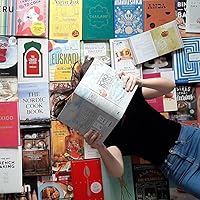
The plant-led follow-up to The Flavor Thesaurus, "a rich and witty and erudite collection" (Epicurious), featuring 99 essential ingredients and hundreds of flavor combinations.
With her debut cookbook, The Flavor Thesaurus, Niki Segnit taught readers that no matter whether an ingredient is “grassy” like dill, cucumber, or peas, or “floral fruity” like figs, roses, or blueberries, flavors can be created in wildly imaginative ways. Now, she again draws from her “phenomenal body of work” (Yotam Ottolenghi) to produce a new treasury of pairings-this time with plant-led ingredients.
More Flavors explores the character and tasting notes of chickpea, fennel, pomegranate, kale, lentil, miso, mustard, rye, pine nut, pistachio, poppy seed, sesame, turmeric, and wild rice-as well as favorites like almond, avocado, garlic, lemon, and parsley from the original-then expertly teaches readers how to pair them with ingredients that complement. With her celebrated blend of science, history, expertise, anecdotes, and signature sense of humor, Niki Segnit's More Flavors is a modern classic of food writing, and a brilliantly useful, engaging reference book for every cook's kitchen.
Niki Segnit had not so much as peeled a potato until her early twenties, when, almost by accident, she discovered that she loved cooking. Much as she enjoys haute cuisine, she’s not likely to reproduce it at home, preferring to experiment with recipes from domestic kitchens abroad. Her background is in marketing, specialising in food and drink, and she has worked with many famous brands of confectionary, snacks, baby foods, condiments, dairy products, hard liquors and soft drinks. Since summer 2010 she has written a weekly column on food combinations for The Times. She lives in central London with her husband.
The cover of this book is lovely, opened it up and was shocked not to find a single image. This is called plant led pairings, this means that there are lists of flavour pairs and what they go well with, for example ginger and orange go well with beef, cranberries and cheese go well with eggs. There aren't really any recipes, just suggestions of what goes well with what. This is an odd concept for a book, I can imagine it's useful if you want to create something new yourself and want some starting point ideas. I can imagine it's useful if you are a contestant on bake off? This wasn't an easy book to read and really needed some food photos or at least some illustrations to make it more enjoyable. 2.5 stars
I love (and often turn to) the original "Flavor Thesaurus" so was very glad to have the opportunity to see an early copy of the forthcoming newest plant-based version of this incredible reference guide, "Flavor Thesaurus: More Flavors." As with the original thesaurus, usage is simple and straightforward: look up an ingredient and see the various flavors that it goes well with. So, for example, in the miso section, nobody will be surprised to see the old standby pairings, such as ginger, garlic, and seaweed, but I had never thought of combining miso with banana (Segnit references the delicious-sounding banana cake with miso butterscotch served in the London restaurant Jikoni) or yogurt (Segnit quotes fermentation guru Sandor Katz who confirms that the fattiness of the yogurt goes well with miso).
The whole book is well-written and considered and takes a broad, international perspective. The author is rigorous about citing sources and provides fascinating examples of pairings. The book offers a wonderful spark for brainstorming new recipes. Personally, I find it an incredibly exciting and creative way to expand my horizons as a home cook.
Segnit covers the more familiar combinations, but also pushes the reader to consider other less common pairings, which I would probably not have thought of on my own. Here are only a few out of many fantastic ideas that I hope to experiment with:
• Coffee & fennel: Segnit notes that the sweet hint of anise syrup or Greek ouzo is a great addition to coffee.
• Chocolate & aubergine (eggplant): Segnit refers us to the Southern Italian dish of melanzane al cioccolato, in which, in one version, steamed slices of aubergine are rolled in ricotta and then dipped in a warm chocolate sauce.
• Plum & kidney bean: Segnit references the Georgian dish lobio tkemali made of kidney beans, nuts and spices with a sour plum sauce, and notes that if we can’t find sour plums we can use tamarind as a substitute.
• Lemon & dried peas: Segnit reminds us of the Cypriot lemony yellow split pea soup called louvana, adding that it is reminiscent of avgolemono.
I could go on and on, but this gives you an idea of what a gem the book is. You can bet that I will be purchasing a hard copy when it comes out to put on my kitchen shelf right next to the original "Flavor Thesaurus." My thanks to Bloomsbury Publishing and NetGalley for the opportunity to read the ARC.
What an amazing book! Flavor guides are not uncommon but a thesaurus is a brilliant and unique idea that everyone interested in cooking should embrace. The concept is that Niki Segnit ( author of Lateral Cooking and The Flavor Thesaurus) creates pairings and mixtures between flavors. Rice for instance, paired when many different flavors and items. Or Chocolate.
This is an extraordinary compendium that speaks to all chefs (but especially to us vegetarians and vegans). This book is recommended to anyone who wants to try to go off recipe, experiment in the kitchen, or just learn more about flavors and cooking in general!
Niki Segnit won the André Simon Award for best food book, the Guild of Food Writers Award for best first book, and was shortlisted for the Galaxy National Book Awards. #Bloombsury #TheFlavorThesaurus
Please note that there are two links to this review as there are two entries for this book due to US and British/Canadian spellings of both flavor and flavour!
I received a copy of this book in exchange for an honest review.
I own Miss Segit's original flavour thesaurus and was happy to see that this one was based on vegetarian cooking. However, the book is very inconsistent in its content as some of the combinations had added history, jokes, personal reflections, etc. and although some of it was enjoyable at first, it really got annoying as some pairings had a lot of information and some had none.
It is an okay book...just play. Maybe if you just see the pairings and ignore all the extras the author added in, you might enjoy it more. I just wanted her to GET TO THE POINT and leave it there.
3.5-4 The little intro stories to each ingredient are wonderful. If you have/read the original thesaurus, it’s the exact same framework, with more pairings and interesting combinations to draw inspiration from. Great book for foodies & folks into cooking.
é um livro para ir consultando, mas que eu queria muito lê-lo de uma ponta à outra. amo-o. sublinhei mesmo muita coisa. a minha cultura gastronómica aumentou um bocadinho e a minha lista de pratos a cozinhar/experimentar aumentou exponencialmente.
Useful for new flavor combinations you hadn't thought of and recipes you hadn't heard of. A lot of it is purely the author's opinion on what is good, so you may disagree with some entries - luckily every entry is short, and you can skip what you aren't interested in.
(Note: I received an advanced reader copy of this book courtesy of NetGalley)
I’ve encountered other various flavor-pairing guides before, but never one with a plant-based focus, so as a vegetarian I loved this premise. I also enjoyed the way that the author organized this guide, making it quite easy to jump to and explore new flavor pairing ideas that might potentially change things up in my kitchen.
What I didn’t enjoy as much was Niki Segnit’s additions to each listed pairing. I recognize that the combination of food history blurbs, cooking suggestions, short recipes, light-hearted commentary and anecdotes were meant to add variety. However, for me the experience ended up translating into frustrating inconsistency more than anything. However, that could be chalked up unfortunate coincidence - it seemed like many of the pairings I personally was interested in ended up being paired with author recollections and jokey remarks instead of tips or information that I would have found practical.
Besides that though, for what it is it seems like this can be quite the helpful guide, especially for those who want to expand the limits of their cooking while keeping their homes meat-free to any sizable degree.
I couldn't believe what interesting reading, not to mention dishes, came from this collection of endless novel combinations of mostly ordinary food items. Rather than read from cover to cover, for starters I just made my way through the food index at the back and looked up the ones that stood out for whatever reason. One thing led to another, and eventually I pretty much covered the book.
There's so much to learn from the book. You can follow the rudimentary recipes that appear throughout, or you can simply start with a suggested combination of two or three ingredients and use your own experience or imagination to go from there. It's a great way to get out of a cooking rut..
An added feature of the book is a fresh, humorous turn of phrase with every new paragraph. The author is just about as inventive with words as she is with food ingredients.
I own the first book, but have never read it cover to cover like I did this one. Overall it’s pretty good. Definitely appealing for food nerds. I think if every chapter was as good as the honey chapter this would be a 5 star. But this book is very UNEVEN. Some descriptions are incredibly helpful and insightful and some are rambling stories or insane descriptions. The description of cauliflower made me think I had never had cauliflower before. When I read it to my family they didn’t understand the description at all. I’m made some notes along reading it about some things I found odd about the book that I’ll just include a few here. These might be an American vs British take on things. But just some random oddities that I don’t know if they were filler for the ARC or if this really is how the book is going out. * Insane pointless story for Black beans and Cumin and doesn’t tell me about black beans and cumin * Description of kale in white beans and kale is insane. * Oats and maple syrup went off on a tangent about golden syrup supremacy instead of talking about maple syrup. I’m an American reading this and golden syrup really isn’t a thing here, I have to make my own for some Scandinavian baking recipes. As an upper Midwesterner maple syrup and oats is a BELOVED combo. I don’t think of oats without maple syrup. I think either don’t include maple syrup and instead just have golden syrup or actually talk about maple syrup. * Oats and maple syrup went off on a tangent about golden syrup supremacy instead of talking about maple syrup. I’m an American reading this and golden syrup really isn’t a thing here, I have to make my own for some Scandinavian baking recipes. As an upper Midwesterner maple syrup and oats is a BELOVED combo. I don’t think of oats without maple syrup. I think either don’t include maple syrup and instead just have golden syrup or actually talk about maple syrup. * Saying people don’t really like green beans… is that a British thing? I asked around here and green beans seem pretty well regarded in the upper Midwest. Some things I liked: * Honey Chapter * I like buckwheat and apple description * the suggestion of which pomegranate varieties to look out for. Those are the kinds of things people are looking for from this book and again this is super uneven. Very inconsistent.
I received a copy of this book through NetGalley in exchange for an honest review.
This book was around 3.5 stars for me.
This is a helpful book for someone who wants to improve their understanding of flavors and learn about which foods go well together. I like that it's plant-based and has a variety of foods. The book is broken down by ingredient and lists what combinations go well with it including anecdotes, comments, and ideas about the pairings. Some are detailed and include helpful times and others are informational or short so there's not a lot of consistency. There aren't pictures in this book of any of the pairings and not a lot of recipes.
It's a helpful book to get an idea of what to try with some foods and expand your tastes.
As someone who already owns and regularly uses Niki Segnit's original FlavorThesaurus, I have been eagerly awaiting her newest book and it does not disappoint. With this addition, Signet delves into more vegetarian territory, offering lots of delicious and interesting pairings for complimentary and in some cases, contrasting flavours. This book is a wonderful stand-alone volume that will give lots of ideas to the vegetarian or veggie-curious reader but is also an incredible accompaniment to the original volume that rounds out the collection. A fantastic read!
Thank you to NetGalley and the publisher for an ARC in exchange for an honest review.
This is a wonderful addition to any cooks shelf. This is not your typical cookbook. There are plenty of recipes, but the beauty of this book is the educational information about spices, herbs and flavor combinations. We learn how to how to better understand flavors, mix and match them, change up your favorite existing recipes and expand your overall flavor palate with some small changes. It is wonderful for all cooks from beginners to those who are seasoned cooks. This would be a wonderful gift as well as a terrific purchase for yourself.
I received a copy of this book in exchange for a fair and honest review.
Very good reference book for plant-based and vegetarian flavor pairings. It is not a cookbook, though, and I’m ok with that. I’m constantly looking for inspiration for ingredients on hand and I know this book will help. The descriptions range from matter of fact…this is what goes with that…to funny little personal stories like Black Bean & Cumin (too long to include here) and the short, but sweet, description for Black Bean & Egg: “Slide a fried egg onto some black beans. Add ketchup. Stab the yolk and whaam! Lichtenstein for breakfast.” This sequel and its older sibling, The Flavor Thesaurus, are both on my Christmas list.
Rounded up to 3 stars. This is another book that enraptured me with the premise but didn’t do a lot for me. Each food has a half dozen suggested pairings with a lot of rambling anecdotes about them. Most of the pairings struck me as either predictable or odd, and not in a fun way. It’s very long and is another that feels like an encyclopedia. There are no photos or recipes, other than occasional general suggestions. It’s an interesting read but perhaps better as a library read.
A book that lists foods and what flavorings would go with that food and why it pairs well with it. Example: I looked up cherries and found many foods and spices that would pair well with cherries. Almonds, bananas, chocolate, cinnamon, etc. Under each food is an explanation why it pairs well with cherries and recipe ideas. Every kitchen should have this book. It would be a great wedding or birthday gift.
Very glad the authoress decided on a second volume, although I have not read the first. Although I do not fully subscribe to her interpretation of flavor families (see Nik Sharma for another family), the info on individual flavors is valuable. very glad to have so many vegetarian flavors included - yuzu!, tumeric and mustard!, tamarind!, radish! to name a few. Recommended.
I hadn’t read or known of Segnit’s previous books, but this plant-forward one snagged my vegetarian attention. All to say: I came to read it as a totally blank slate, and my mind is blown; I’m honestly shaken and awed each time I dip in
bardzo lubię pierwszą część tej książki i często z niej korzystam, szukając inspiracji jedzeniowych. druga część jest bardzo podobnie napisana, ale jest w niej więcej roślinnych smaków, bez wiec myślę, że będę korzystać z niej jeszcze częściej niż z pierwszej.
She notes at the end that some people read her first book "like a really long menu" and frankly, there is no greater compliment I can pay to this delightful book. Even though I bloody hate sesame.
The Flavor Thesaurus by Niki Segnit is a good reference for trying new flavors and mixing different foods. I tried making a few new dishes for me. One was a chili with cocoa powder inspired by this book. I liked the organization of the book. I would recommend this book for chefs and home cooks to learn something new.
A great basic cookbook to have at hand for reference. The ingredients in here are accessible, but make for unique combinations. The stories and analogies with each combination are nice to have. The lay out is practical and functional, which works well for this book. A downside is that sometimes I am missing an ingredient, and it turns out it is in the other book. It would have been great to have a combination of both the first and this book, resulting in more combinations. Still five stars for the amount of effort and research there must be in this cookbook, and because I have no other book like it.