

What do you think?
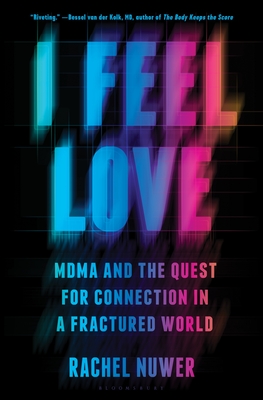
I Feel Love: MDMA and the Quest for Connection in a Fractured World
The unlikely story of how the psychedelic drug MDMA emerged from the shadows to the forefront of a medical revolution -- and the potential it may hold to help us thrive.
Few drugs in history have generated as much controversy as MDMA--or held as much promise. Once vilified as a Schedule I substance that would supposedly eat holes in users' brains, MDMA (also known as Molly or Ecstasy) is now being hailed as a therapeutic agent that could transform the field of mental health and outpace psilocybin and ketamine as the first psychedelic approved for widespread clinical use. In I Feel Love , science journalist Rachel Nuwer separates fact from fantasy, hope from hype, in the drug's contested history and still-evolving future. Evidence from scientific trials suggests MDMA, properly administered, can be startlingly effective at relieving the effects of trauma. Results from other studies point to its usefulness for individual and couples therapy; for treating depression, alcohol addiction, and eating disorders; and for cultivating personal growth. Yet scientists are still racing to discover how MDMA achieves these outcomes, a mystery that is taking them into the inner recesses of the brain and the deep history of evolution. With its power to dismantle psychological defenses and induce feelings of empathy, self-compassion, and love, MDMA may answer profound questions about how we became human, and how to heal our broken social bonds.
From cutting-edge labs to pulsing club floors to the intimacy of the therapist's couch, Nuwer guides readers through a cultural and scientific upheaval that is rewriting our understanding of our brains, our selves, and the space between.
Few drugs in history have generated as much controversy as MDMA--or held as much promise. Once vilified as a Schedule I substance that would supposedly eat holes in users' brains, MDMA (also known as Molly or Ecstasy) is now being hailed as a therapeutic agent that could transform the field of mental health and outpace psilocybin and ketamine as the first psychedelic approved for widespread clinical use. In I Feel Love , science journalist Rachel Nuwer separates fact from fantasy, hope from hype, in the drug's contested history and still-evolving future. Evidence from scientific trials suggests MDMA, properly administered, can be startlingly effective at relieving the effects of trauma. Results from other studies point to its usefulness for individual and couples therapy; for treating depression, alcohol addiction, and eating disorders; and for cultivating personal growth. Yet scientists are still racing to discover how MDMA achieves these outcomes, a mystery that is taking them into the inner recesses of the brain and the deep history of evolution. With its power to dismantle psychological defenses and induce feelings of empathy, self-compassion, and love, MDMA may answer profound questions about how we became human, and how to heal our broken social bonds.
From cutting-edge labs to pulsing club floors to the intimacy of the therapist's couch, Nuwer guides readers through a cultural and scientific upheaval that is rewriting our understanding of our brains, our selves, and the space between.
384 pages, Hardcover
Published June 6, 2023
About the author
Rachel Nuwer
4 books12 followersAlso see this author profile: Rachel Love Nuwer. She is the same person, but did not use her middle name on the cover off all her books.
Ratings & Reviews
Friends & Following
Create a free account to discover what your friends think of this book!
Community Reviews
Displaying 1 - 30 of 88 reviews

May 17, 2023
Some people might feel ashamed or embarrassed by the decisions of their youth. Fear is reasonable, as illicit drug use carries major penalties. Humiliation is also a side effect, as it might allude to vulnerabilities in our mental health and home life, or private struggles we prefer to remain hidden. Nevertheless, it’s clear that a culture shift is underway in the US, where curiosity and candidness are becoming more commonplace in the world of drug use. Humans have become so desperate for community, empathy, and acceptance that we are redefining the means by which we acquire them.
I Feel Love: MDMA and the Quest for Connection in a Fractured World, by Rachel Nuwer, evangelizes the uses for MDMA in ways never before explored. The book discusses the science behind MDMA’s synthetization, its journey on the DEA’s list of banned substances, and its potential in revolutionizing therapy techniques.
We first learn the origins of MDMA, how it was synthesized in the labs of German pharmaceutical manufacturer, Merck, under questionable origins. Was MDMA the byproduct of a rivalry with Bayer in a race to develop blood clotting medication, or was its ancestry more sinister as part of Nazi Germany’s efforts at mind-control during the World Wars?
We next meet the cast of characters vigilantly championing the alternative uses of MDMA: eccentric scientists, psychologists, and psychiatrists who have joined forces to decriminalize MDMA in controlled settings. Each activist shares stories of recreational experimentation from their youths and how it molded both their careers and belief systems on banned substances. Some of these researchers are more aggressive with their methods and ideologies, some are more cautious, so whether you’re fully bought in on decriminalizing substances or you’re a bit more hesitant and just now exploring and deconstructing, there is a researcher and style for all readers. In these sections, we learn the difference between the experimentation associated with recreational drug use versus the fine-tuning of proper treatment doses. Personally, I’ve always looked at all drug use under a recreational lens due to my own ignorance, but these chapters respectfully expose the nuance we should account for in treatment settings.
If I were to hone in on a specific audience I Feel Love will most immediately impact, it’s undoubtedly individuals who are still processing their trauma or suffering from PTSD. This book is for people who feel even more lost after trying traditional forms of therapy to no avail, for the loved ones and support systems of people who actively are in therapy, and for people who have lost loved ones who couldn’t get the help they needed. Because trauma manifests in many forms, Nuwer introduces a wide spectrum of participants:
Naomi – a woman who came to America from a German displaced persons camp. Her Romanian mother and Hungarian father were Holocaust survivors whose grief permeated their home but was never openly discussed.
John – a man who witnessed the murder of his mother as he pretended to sleep in his childhood bed.
Lori – a former alcoholic and addict who discovered the bodies of her mother and the two women she killed in a love triangle gone wrong.
We met rape victims and war veterans, individuals exploring their gender and sexuality. The stories are significant and applicable; even if you have never personally struggled with trauma or PTSD, there’s a strong chance a loved one has. Reading these chapters with the goals of acceptance and lack of judgment are how we destigmatize trauma and provide adequate resources to those who need them, even if they don’t fit the past precedent of care.
Nuwer does an excellent job of empowering the stories she included when all too often the trend is victimhood. She masterfully toes the line of sympathy and empathy: none of these individuals want pity, they simply desire their trauma and grief to be recognized and respected. It’s hard enough to admit we need help, it’s harder still to admit when something that worked for most doesn’t work for all. Traditional forms of therapy were insufficient, and the vulnerability to try new methods enshrouded in controversy is courageous. My hope is that these stories set a new standard in care and expand the reach of non-traditional therapy.
While it undoubtedly supports the flow of her MDMA foundation-building and storytelling, it’s not until the last pages of the chapter “Destigmatization” that Nuwer addresses intersectionality within the drug culture and the stigmatic spotlight minorities face. Sure, the conversation of max incarceration goes well-beyond MDMA; however, these arguments, as well as the broader banned substance community, are fully enmeshed in one another. The mentioning of higher incarceration rates for minorities and longer sentences for non-violent drug offenses comes a bit too late for my personal preference. While Nuwer does a fantastic job of building up to this well-documented statistic, I find it hard for true destigmatization to occur if it’s not disruptive and uncomfortable to the overall story.
I Feel Love is the counterargument argument the War on Drugs needs. It is scientifically-backed, well-researched, and thought-provoking. As someone who has been challenging her biases since uncovering the broader realm of drug use, I Feel Love has disrupted my entire world view. I’d argue it has made a strong case for deeper progressive research versus restrictive legislation. Individual suffering is both personal and unique. MDMA-based therapy gives hopeless individuals the ability to address their past head-on and move forward with healthier behaviors and coping strategies.
I Feel Love is set to be published on July 6th, 2023. Thank you to Bloomsbury Publishing for sending me an advanced reader copy, and best of luck to Rachel Nuwer on the success of an empathetic, fantastically researched body of work.
I Feel Love: MDMA and the Quest for Connection in a Fractured World, by Rachel Nuwer, evangelizes the uses for MDMA in ways never before explored. The book discusses the science behind MDMA’s synthetization, its journey on the DEA’s list of banned substances, and its potential in revolutionizing therapy techniques.
We first learn the origins of MDMA, how it was synthesized in the labs of German pharmaceutical manufacturer, Merck, under questionable origins. Was MDMA the byproduct of a rivalry with Bayer in a race to develop blood clotting medication, or was its ancestry more sinister as part of Nazi Germany’s efforts at mind-control during the World Wars?
We next meet the cast of characters vigilantly championing the alternative uses of MDMA: eccentric scientists, psychologists, and psychiatrists who have joined forces to decriminalize MDMA in controlled settings. Each activist shares stories of recreational experimentation from their youths and how it molded both their careers and belief systems on banned substances. Some of these researchers are more aggressive with their methods and ideologies, some are more cautious, so whether you’re fully bought in on decriminalizing substances or you’re a bit more hesitant and just now exploring and deconstructing, there is a researcher and style for all readers. In these sections, we learn the difference between the experimentation associated with recreational drug use versus the fine-tuning of proper treatment doses. Personally, I’ve always looked at all drug use under a recreational lens due to my own ignorance, but these chapters respectfully expose the nuance we should account for in treatment settings.
If I were to hone in on a specific audience I Feel Love will most immediately impact, it’s undoubtedly individuals who are still processing their trauma or suffering from PTSD. This book is for people who feel even more lost after trying traditional forms of therapy to no avail, for the loved ones and support systems of people who actively are in therapy, and for people who have lost loved ones who couldn’t get the help they needed. Because trauma manifests in many forms, Nuwer introduces a wide spectrum of participants:
Naomi – a woman who came to America from a German displaced persons camp. Her Romanian mother and Hungarian father were Holocaust survivors whose grief permeated their home but was never openly discussed.
John – a man who witnessed the murder of his mother as he pretended to sleep in his childhood bed.
Lori – a former alcoholic and addict who discovered the bodies of her mother and the two women she killed in a love triangle gone wrong.
We met rape victims and war veterans, individuals exploring their gender and sexuality. The stories are significant and applicable; even if you have never personally struggled with trauma or PTSD, there’s a strong chance a loved one has. Reading these chapters with the goals of acceptance and lack of judgment are how we destigmatize trauma and provide adequate resources to those who need them, even if they don’t fit the past precedent of care.
Nuwer does an excellent job of empowering the stories she included when all too often the trend is victimhood. She masterfully toes the line of sympathy and empathy: none of these individuals want pity, they simply desire their trauma and grief to be recognized and respected. It’s hard enough to admit we need help, it’s harder still to admit when something that worked for most doesn’t work for all. Traditional forms of therapy were insufficient, and the vulnerability to try new methods enshrouded in controversy is courageous. My hope is that these stories set a new standard in care and expand the reach of non-traditional therapy.
While it undoubtedly supports the flow of her MDMA foundation-building and storytelling, it’s not until the last pages of the chapter “Destigmatization” that Nuwer addresses intersectionality within the drug culture and the stigmatic spotlight minorities face. Sure, the conversation of max incarceration goes well-beyond MDMA; however, these arguments, as well as the broader banned substance community, are fully enmeshed in one another. The mentioning of higher incarceration rates for minorities and longer sentences for non-violent drug offenses comes a bit too late for my personal preference. While Nuwer does a fantastic job of building up to this well-documented statistic, I find it hard for true destigmatization to occur if it’s not disruptive and uncomfortable to the overall story.
I Feel Love is the counterargument argument the War on Drugs needs. It is scientifically-backed, well-researched, and thought-provoking. As someone who has been challenging her biases since uncovering the broader realm of drug use, I Feel Love has disrupted my entire world view. I’d argue it has made a strong case for deeper progressive research versus restrictive legislation. Individual suffering is both personal and unique. MDMA-based therapy gives hopeless individuals the ability to address their past head-on and move forward with healthier behaviors and coping strategies.
I Feel Love is set to be published on July 6th, 2023. Thank you to Bloomsbury Publishing for sending me an advanced reader copy, and best of luck to Rachel Nuwer on the success of an empathetic, fantastically researched body of work.

July 21, 2023
This book was fantastic! So well written and well researched. I learned a TON from it. Nuwer really did her homework and presented all the information in an engaging, thorough, and thoughtful way. The book covered a lot of ground, I was surprised by what a huge timespan it covered. I don't feel like any information was missing or questions were left unanswered.
The research around MDMA is so intriguing and it's exciting to consider all the potential for good it has if our society chooses to make it accessible to more humans. It was also absolutely wild to learn about all the ways government has both 1) used it for malicious purposes in their own CIA and Army research and 2) suppressed research on it and done everything possible to criminalize it and keep it away from the people when it could help and heal so many.
The research around MDMA is so intriguing and it's exciting to consider all the potential for good it has if our society chooses to make it accessible to more humans. It was also absolutely wild to learn about all the ways government has both 1) used it for malicious purposes in their own CIA and Army research and 2) suppressed research on it and done everything possible to criminalize it and keep it away from the people when it could help and heal so many.

March 22, 2024
I am fairly unclear on who this book is aimed at. I was looking for some Pollan-esque reportage, but that's not what this is. This has elements of popsci reportage as well as elements of magazine-level random interviews with people who have done the drug. I enjoyed parts of this book, but the discursive personal anecdotes really detracted from the science for me. Nuwer's writing style is meandering and full of extraneous detail. I learned some things. I remain unsurprised at governmental asshattery around any sort of drugs.
The worst thing about the experience for me was the incredibly lousy narration. Someone needed to proof-listen, as the narrator continually mispronounces, mis-speaks, and generally blunders around multisyllabic words in a way that was painful to my ear. Very nearly caused me to bail out, it was so bad.
I am eager to read a scientific or pop-sci book about MDMA. This was not it.
The worst thing about the experience for me was the incredibly lousy narration. Someone needed to proof-listen, as the narrator continually mispronounces, mis-speaks, and generally blunders around multisyllabic words in a way that was painful to my ear. Very nearly caused me to bail out, it was so bad.
I am eager to read a scientific or pop-sci book about MDMA. This was not it.

October 5, 2023
I really loved this book. I got it from a new friend who seems to be beautifully open-minded while approaching middle age. That's my favourite kind of feature in humans, definitely: getting more flexible with age.
I wrote a book about drugs, addiction (to name a few themes) and the good life and though it was published a year ago I'm not still through with the subject. Because drugs are such a profound thing, it's never about the substance but about so much more. Good and bad. It's about transcendence, a new pathway in the brain, a fresh angle and about connection. It's truly about living. Deeply in our DNA as humans, always was there, way before civilisations. And at the same time it's about trauma, our horrible society and the times we live in and such. Or addiction is, actually.
I did MDMA first around ten years ago. It opened a new dimension. It played a major role in my life for a few years in mostly positive ways. I made such deep connections with people, saw the world as a loving place full of opportunities and possibilities, it felt like a vast playground and it was so clear that it was about people I met. All is about people. And it was like a curtain was pulled off. I felt more like myself, it was easier to be me and not to feel shame, to meet new people and to just drop the feeling of "that person doesn't like me" to "we all want the best for each other", it stayed with me.
I really felt love. So many times. With friends, strangers and lovers.
And music. Something about music while on MDMA.
Music, hugging and kissing.
To me the best thing is that I remember everything so well. The nights, my behaviour and the feeling. I have access to it once it has ended. I always have the time we kissed with M while Tiny Dancer was playing, when I saw Kavinsky with A, when I saw Mos Def by myself, when we made love with J and other J and third J and when I've just walked from one place to another with friends m, having an electric conversation.
And somehow... always when I've taken MDMA something magical has happened. Something unexpected, nice, sweet. I've met interesting persons, they've come up to me to introduce themselves. It really feels like the universe is doing some kinds of tricks.
This was a great study with a lot of testimonials. To be taken with a grain of salt, of course. But I really do agree with mostly everything in this book. This chemical won't save the world, but I really would recommend it to anyone who is looking to see the world in a new way. And as with other psychedelics, you musn't do it all the time. Do it once, twice or thrice, with friends at a party or at a festival. You'll remember it forever – the feeling of love.
I wrote a book about drugs, addiction (to name a few themes) and the good life and though it was published a year ago I'm not still through with the subject. Because drugs are such a profound thing, it's never about the substance but about so much more. Good and bad. It's about transcendence, a new pathway in the brain, a fresh angle and about connection. It's truly about living. Deeply in our DNA as humans, always was there, way before civilisations. And at the same time it's about trauma, our horrible society and the times we live in and such. Or addiction is, actually.
I did MDMA first around ten years ago. It opened a new dimension. It played a major role in my life for a few years in mostly positive ways. I made such deep connections with people, saw the world as a loving place full of opportunities and possibilities, it felt like a vast playground and it was so clear that it was about people I met. All is about people. And it was like a curtain was pulled off. I felt more like myself, it was easier to be me and not to feel shame, to meet new people and to just drop the feeling of "that person doesn't like me" to "we all want the best for each other", it stayed with me.
I really felt love. So many times. With friends, strangers and lovers.
And music. Something about music while on MDMA.
Music, hugging and kissing.
To me the best thing is that I remember everything so well. The nights, my behaviour and the feeling. I have access to it once it has ended. I always have the time we kissed with M while Tiny Dancer was playing, when I saw Kavinsky with A, when I saw Mos Def by myself, when we made love with J and other J and third J and when I've just walked from one place to another with friends m, having an electric conversation.
And somehow... always when I've taken MDMA something magical has happened. Something unexpected, nice, sweet. I've met interesting persons, they've come up to me to introduce themselves. It really feels like the universe is doing some kinds of tricks.
This was a great study with a lot of testimonials. To be taken with a grain of salt, of course. But I really do agree with mostly everything in this book. This chemical won't save the world, but I really would recommend it to anyone who is looking to see the world in a new way. And as with other psychedelics, you musn't do it all the time. Do it once, twice or thrice, with friends at a party or at a festival. You'll remember it forever – the feeling of love.

August 15, 2023
This was a beautiful, educational, and inspirational read. Nuwer lucidly recounts the history of MDMA and describes in vivid detail and through touching human testimony the compound's impact upon individual lives and within the broader culture. Her book helps to discredit some of the harmful Drug War-era lies that have long circulated around MDMA, while also shining a light on some of its clinical benefits. Nuwer does not urge reckless, hedonistic use of MDMA (or any other drug) in her book; rather, she stresses the importance of set, setting, and safety. I highly recommend this read for anyone who's concerned about mental health, trauma, and drug policy.
August 18, 2023
A must-read for anyone interested in psychedelics, psychiatry, or the mind generally. I FEEL LOVE seamlessly weaves the colorful history of MDMA and its diverse cast of characters with the latest scientific findings for a story that's equal parts entertaining and educational.
The writing is warm and accessible, with a dry sense of humor, and the author's depth of research is impressive: dozens of scientists, doctors, patients, recreational users, proponents, skeptics, chemists and even DEA agents are interviewed. Whereas the MDMA episode of the TV adaptation of "How To Change Your Mind" left me intrigued but also feeling like I had just watched an infomercial, I FEEL LOVE's more comprehensive and scientifically grounded approach--the limits and potential pitfalls of MDMA assisted therapy are not taken lightly--adds significant credibility to its enthusiasm for MDMA's potential.
The writing is warm and accessible, with a dry sense of humor, and the author's depth of research is impressive: dozens of scientists, doctors, patients, recreational users, proponents, skeptics, chemists and even DEA agents are interviewed. Whereas the MDMA episode of the TV adaptation of "How To Change Your Mind" left me intrigued but also feeling like I had just watched an infomercial, I FEEL LOVE's more comprehensive and scientifically grounded approach--the limits and potential pitfalls of MDMA assisted therapy are not taken lightly--adds significant credibility to its enthusiasm for MDMA's potential.
May 29, 2023
Such an insightful dive into the therapeutic use of MDMA. Admittedly, this is a topic that I knew very little about, so I appreciated that Nuwer provided specific examples of it working, as well as used layman terms throughout so I was easily able to understand. I recommend this book for anyone who is interested in therapeutic psychedelics, as well as those, like myself, who are interested in the constantly changing world of therapy.
August 31, 2023
I fucking love Rachel Nuwer’s writing and reporting
January 20, 2024
Put it on your 2024 reading list

January 11, 2025
Incredibly impressive and searingly extensive look into the science, history, psychology, sociocultural processes, and future of MDMA. I think this book is so important, but I do think that it could have benefitted from more editing. It was easy to get distracted or lost in the over abundance of story-telling and facts within the deep dives of all the aforementioned levels of analysis.

November 4, 2025
Just keep rolling along and you will find your way.

September 3, 2026
Highly recommend if you want to learn about the history and science of MDMA. It's a great narrative about the researchers, dealers, and cultures that helped shape how MDMA grew in popularity. Some chapters were more interesting than others, but otherwise, it was a solid read.

June 6, 2023
Appreciated the history, storytelling and personal additions made by this author as a way to educate and connect the readers to the topic - MDMA. Growing up in the 80’s and 90’s drug policy was meant to scare, and I (and my parents/teachers/peers) presumed it was based on good science. I am grateful for books like these that take the time to explain the science and history in such a thoughtful way. I am inspired by this book and the possibility that if we approach therapy, policy, diagnosis that have seemed untreatable or without paths forward (PTSD and Autism, for example) drugs with curiosity it is possible that we might not only find connection but healing.

August 27, 2023
This book is wonderful. Folks who enjoy psychedelics and those who don’t can’t argue with the central premise of the research and history highlighted within: MDMA has and will continue to make people feel connected to themselves and others in a way we can’t quite access without it. I loved this book and want everyone to read it to continue to demystify psychedelic-assisted psychotherapy and the beauty and importance of responsible recreational drug use.
December 31, 2023
Very well researched, informative, and hopeful.
February 18, 2025
3.5 stars
Mixed feelings on this one. I did enjoy it but if the intent was to make readers sympathetic towards MDMA, I look a little less favorably on the drug than I did before. MDMA comes with legitimate risks and while users report overwhelmingly positive experiences in both recreational and therapeutic settings, I finished this book thinking that LSD and Psilocybin have much more promise in the realm of psychiatric interventions. I am also less disappointed by the FDA's failure to approve MDMA for therapeutic use than I was last year when that decision was released. But, I'll continue to watch these developments with bated breath.
Beyond MDMA itself, I feel like Nuwer was very much trying to emulate the success of How To Change Your Mind, which she references several times. Maybe that comparison is inevitable when writing about hallucinogens as therapeutics but I'm not convinced this book added anything new to the conversation.
Criticism aside, though, I did learn from this book and it gave me a lot to talk about. Still thinking about a few of the anecdotes
Mixed feelings on this one. I did enjoy it but if the intent was to make readers sympathetic towards MDMA, I look a little less favorably on the drug than I did before. MDMA comes with legitimate risks and while users report overwhelmingly positive experiences in both recreational and therapeutic settings, I finished this book thinking that LSD and Psilocybin have much more promise in the realm of psychiatric interventions. I am also less disappointed by the FDA's failure to approve MDMA for therapeutic use than I was last year when that decision was released. But, I'll continue to watch these developments with bated breath.
Beyond MDMA itself, I feel like Nuwer was very much trying to emulate the success of How To Change Your Mind, which she references several times. Maybe that comparison is inevitable when writing about hallucinogens as therapeutics but I'm not convinced this book added anything new to the conversation.
Criticism aside, though, I did learn from this book and it gave me a lot to talk about. Still thinking about a few of the anecdotes
April 26, 2026
The author brings a lot of her biases and preconceived notions about drugs to the book in a way that doesn't feel terribly nuanced or interesting.
Not a doctor here, but I also think there's quite a bit of pseudoscience in this book. There's a bit where the author tells the story of a woman supposedly curing herself of asthma by using MDMA to overcome generational guilt about the holocaust. Seems unlikely, sorry.
The author's definition of trauma is also so broad that it encompasses nearly everyone on the planet.
Finally, she cites Oprah as a source. Oprah, progenitor of Dr. Phil and Dr. Oz. I knocked off another star just for that.
Something I'd be interested in learning more about is how supposedly MDMA can bathe the neurons in oxytocin in a way that helps reopen the critical learning period for the brain. There is some cool stuff in here. I just wish it was handled with more care and less woo.
Not a doctor here, but I also think there's quite a bit of pseudoscience in this book. There's a bit where the author tells the story of a woman supposedly curing herself of asthma by using MDMA to overcome generational guilt about the holocaust. Seems unlikely, sorry.
The author's definition of trauma is also so broad that it encompasses nearly everyone on the planet.
Finally, she cites Oprah as a source. Oprah, progenitor of Dr. Phil and Dr. Oz. I knocked off another star just for that.
Something I'd be interested in learning more about is how supposedly MDMA can bathe the neurons in oxytocin in a way that helps reopen the critical learning period for the brain. There is some cool stuff in here. I just wish it was handled with more care and less woo.
December 3, 2023
Rachel does a great job showcasing the opportunities for MDMA in this book. She not only showcases the research and studies that were done before it became illegal, but also shares the experiences of people since then who have used it in a variety of settings. I think Rachel does a great job addressing concerns in studies that are opposed to MDMA.
Rachels spends a good section of the book talking about trauma. My biggest takeaway is trauma looks different to different people and occurs irrespective of socio economic status. This is definitely a book I will be talking about for a long time.
Rachels spends a good section of the book talking about trauma. My biggest takeaway is trauma looks different to different people and occurs irrespective of socio economic status. This is definitely a book I will be talking about for a long time.

May 26, 2024
A well-written history of the use and research of MDMA. Learned a lot reading this book and am very intrigued by the directions of psychedelic research within the field of mental health. This book also offered compelling evidence about the dangers of drug prohibition (broadly) and the potential afforded by decriminalization and legalization, including regulated drug use to decrease unnecessary fatalities. I remain wary, however, of any substance being framed as societal panacea; this book carefully toes the line on this perspective. While the author certainly favors its use to promote insight and connection with oneself, others, and the world, she importantly unpacks concerns, such as overdose and the unintended possibility of fortifying connection among members of hate groups (e.g., white nationalists reinforcing their perspectives after taking MDMA together).

June 29, 2024
Great reading! I heard about this book while listening to the episode ‘The therapeutic potential of MDMA’ of The Vox’s The Gray Area podcast. I have been wanting to learn more about MDMA and this book seemed to be a must-read…and I was right! It is very well-researched and written. I didn’t search for other books on the topic, but this one seems to be the most comprehensive one, touching on the history, regulation, prohibition, effects, social aspect, etc.!
November 15, 2023
Definitely one of my favourite reads of the year. Deserves the same recognition as How To Change Your Mind. Wish I could get everyone I know to read this book (doubtful- since I gave my copy of HTCYM to at least 3 family members who didn’t even open a page!)

August 24, 2024
Incredible book detailing MDMA’s fraught history and its demonization, as well as its massive potential when used in tandem with therapy. 9.1/10

March 8, 2024
So so fascinating. No surprise it was a Scientific American Best Book of 2023. Loved this deep dive into all of the complexities that surround this drug, especially as someone in the pharma industry.

July 30, 2024
Amazingly well researched and written with great love. I've been reading it for over a year, simply because I didn't want it to be over in four hours.

January 28, 2024
I Feel Love for this book. Highly recommend if you're a curious noob like me.

February 15, 2024
One of the best book about the subject. It tells the story of the molecule since the beginning and it’s full of valuable information.
Definitely recommended either you are an experienced psychonaut or just curious.
Definitely recommended either you are an experienced psychonaut or just curious.
February 18, 2025
By far the best book focusing on MDMA, giving an all around detailed overview about its history, therapy potential, scientific background all the controversies and misinformation surrounding the "drug". In my opinion the information aligns well with the current scientific knowledge about MDMA. The reader will get fairly good overview about other psychedelics aswell.

August 29, 2023
Well done! Rachel does a great job shinning the light of the sun on this wonderful molecule!

September 10, 2024
A nonfiction page-turner. So well researched and diverse in its perspective. Worth the read if you have ANY connection with this molecule.
Displaying 1 - 30 of 88 reviews