This collection of twenty short stories featuring Miss Marple was a true delight to read. Or rather, to re-read since I’d previously met them all in other collections. As with a similar collection of Poirot stories, this work gave me a chance to focus on the character of the sleuth herself, independent of her individual cases. The following is what I felt to be the important elements of her nature:
Attitudes to Others:
- ‘you wouldn’t like my opinions. Young people never do’
- quite a negative impression of humanity: ‘there is a great deal of wickedness in village life; I hope you young people will never realize how wicked the world is’; ‘ a lot of people are stupid’; ‘the depravity of human nature is unbelievable’: ‘in this wicked world, I’m afraid the most uncharitable assumptions are often justified’.
- still, abundant interest in others: ‘human nature is always interesting … it’s curious how certain types of people always act in exactly the same way’
- feels lawyers always have ‘catches’ in stories of their cases
- about doctors: ‘half the time the best of them don’t know what’s wrong with you’
- 'human nature is much the same everywhere': ‘everybody is much alike; but fortunately, perhaps, they don’t realize it’
- ‘girls were just as obstinate then as they are now, and will always be’
- ‘women should never give other women too much power over them’
- ‘gentlemen always prefer the same type’
- rather reclusive: ‘I am not very found of staying in other people’s houses’
- no sympathy for evildoers: ‘I have no patience with modern humanitarian scruples about capital punishment’
- ‘I don’t believe in paragons. Most of us have our faults’
Background:
- like Poirot, emerged in first stories as quite an old character: a ‘gentle, fussy-looking, elderly spinster’; with ‘placid, china-blue eyes’; ‘sweet faced, and some said, vinegar-tongued’
- had a German governess who taught her the language of flowers; was instructed in bits and pieces of facts, such as the three forms of diseases for wheat, the method of making needles etc.
- strong member of the local community: always raising funds or helping organize local events, attends meetings at the Woman’s Institute
- ‘I am an old woman. Nobody wants me or cares about me’.
Mental Abilities:
- phenomenal memory; despite this, believes that ‘it is a good thing that people’s memories are short’
- a good listener: pays attention to village gossip since ‘old ladies normally gossip about people and 90% of tittle tattle is true’
- seemingly infinite curiosity: for eg: wonders why a village resident only wore her new fur coat once
- it is her belief that ‘a mediocre amount of intelligence is sometimes most dangerous. It doesn’t take you far enough’
Mental Attitudes:
- total lack of any superstition: a hard-nosed realist
- still, believes in prayer as ‘highly efficacious when a real problem is encountered’
- chooses to see ‘the facts’ and ignore ‘the atmosphere’
- very rarely surprised: ‘I always find one thing very like another in this world’
- also, well accustomed to surprises: ‘it is, so often, the unexpected that happens in this world’
- needs mental activity: her doctor calls a mystery to solve a ‘mental tonic’ for her recovery from the flu
Personal predilections:
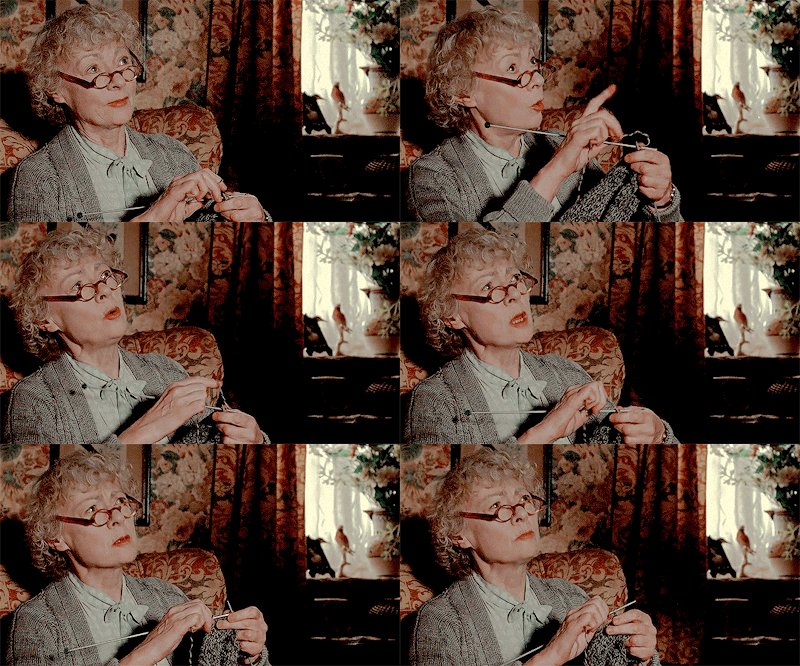
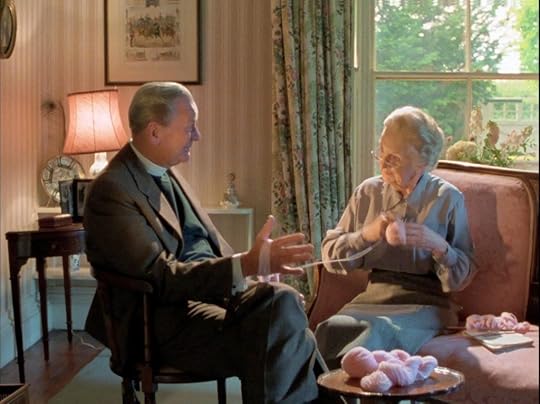
- quite reticent and unassuming, often hiding behind her knitting
- ‘it’s quite better to be quiet’
- self-deprecating: compared to the younger generation ‘I am not clever at all. I am hopelessly Victorian’
- quite fond of romantic developments, even when they are quite tangential to the crime in question: love ‘should always be allowed to foster’
- religious: ‘the hand of God is everywhere’
‘Professional’ practice:
- usually reminded of a similar parallel in the present crime to a particular situation which had once occurred in St. Mary Mead
- fervent concentration of physical details; exceptional eye for the seemingly inconsequential: for eg: ‘gardeners don’t work on Sundays’
- difficulty expressing herself: ‘I always explain things badly’, rambling discourse, with facts out of order
- learns from ‘experience’: for eg.: by knowing people, is totally certain a seemingly obliging husband is determined to kill his wife
- not well versed in criminal parlance: calls a ‘fence’ a ‘post and rails’
Supposedly based on one of Christie’s own aunts, Marple’s character seemed to combine the seemingly contradictory elements of amazing insight into human affairs and intense personal timidity. Thoroughly delightful.
Well recommended.