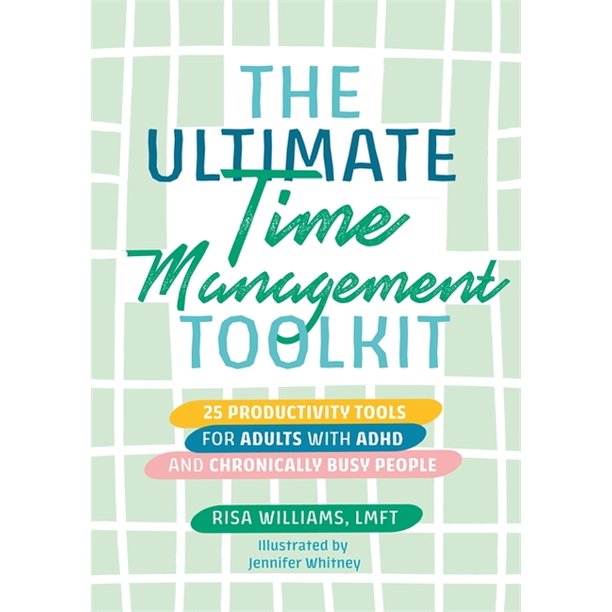
Do you find time constantly slipping away from you? Or does completing a to-do list feel totally unachievable? We all have 24 hours in a day, but sometimes putting them to good use can feel like an impossible task. The Ultimate Time Management Toolkit is here to change that!
Written by a clinical therapist and author of The Ultimate Anxiety Toolkit, this book focuses on practical methods and strategies, including creative worksheets and easy to use techniques, to help you find your motivation, achieve your goals and feel less stressed about organizing your time.
With 25 different techniques based on CBT, mindfulness and narrative therapy, you can find out which strategies work best for you to help transform how you use your time and learn how to feel empowered to make positive changes to habits in your daily life.
[b]Why do you write like you're running out of time?[/b]
As a student, then as a teacher (briefly), and now as a publishing professional, time management has always been essential to me, juggling personal, academic, and then professional commitments. Managing the tension between my MPhil studies and the part-time job that paid for them was my first real dilemma, and then teaching is a constant time management struggle. In many ways, getting a 9-5 office job was liberating: I'd learned a huge amount about time management from teaching, and selling advertising kind of dictated my priorities - you made sales calls while people tended to be at their desks, and then did the admin when they were likely to be away from their desk. I thought I was sorted.
But then I started taking my writing more seriously, and I started acting in community theatre groups, and things began to get a lot more complex. I began to feel that I never quite had enough time in the day to do the things I wanted, and my life now feels like a constant struggle to balance work, "paying hobbies", my personal life and social commitments, all while avoiding burnout. It's led to insane periods in my life where I'm rehearsing three plays at once all while working a 40 hour week, and trying to meet a short story competition deadline, and then friends get offended when I try and duck out of a party invitation. Because I don't like offending people, I am very bad at saying no to things. When I started self-publishing, where I do my own formatting, often design my own covers AND record my own audiobooks, not to mention the marketing side, I crossed an event horizon of constant stress and panic. I don't even know what to do with free time when I have it these days.
Gosh that's a lengthy intro. Suffice it to say that The Ultimate Time Management Toolkit could have been designed for me. Written to help people with ADHD, anxiety disorders and CHRONICALLY BUSY PEOPLE - which was the term where I recognised myself most clearly. Risa Williams has put together 25 tools to help people think about their relationship to time and the tasks they feel they have to achieve.
This 200 page book is a pleasure to read, text nicely spaced out, with fun illustrations, lively terminology like the "task-intensity metre" and "the frustration surfboard", and worksheets that include colouring exercises, etc, but the fun is clearly underpinned by the author's expertise as a therapist, and backed up by copious citations and a substantial bibliography.
If you can carve out the time to read this book, and spend some time with the tools, exercises, and worksheets contained therein, then I can't promise that all your piles of busyness will suddenly melt away, but there are some great techniques for changing how we think about our tasks and to-do lists. It's certainly helped me think seriously about how I approach my day, whether I'm working from home or going into the office. I used to think I was good at time management, but then the world changed, and this book feels like a tool that will help me to get on top of things again.
Excellent Book! This book provides a great tool kit for living in the 21st century. With many individuals juggling work and other day-to-day personal responsibilities, this book should be in everyone's bookcase!
I bought this book for my spouse as a gift due to their hectic work schedule. After reading it, their time management and productivity has greatly improved. As a result, I ended up reading the book and was able to apply some of the suggested strategies before I finished with the 1st chapter! I highly recommend this book for anyone who seeks to improve their productivity.
(10.06.2025) 4/5✨ Ciekawa książka. Wiadomo każdy jest inny, komuś pomoże coś a komuś innemu nie. Jestem w trakcie próbowania niektóry sposobów Naprawdę momentami fajne tipy. I ciekawe informacje
Another great book from Risa Williams! We live in a fast-paced world. So it's easy for me to feel easily overwhelmed and lose track of things. Reading The Ultimate Time Management Toolkit allows me to take a pause and spend a good 15 minutes being present. This is a great book for those who feel the need to take back control of their busy schedules and want to learn how to prioritize better. These exercises help remind us that we have full control of our own lives. That we shouldn't let our jobs, projects, and calendars, take control of us and our emotions.
Ciekawa pozycja, szczególnie dla osoby, która dopiero ma stwierdzone ADHD i sama doszła do pewnych sposobów z książki na własną rękę. Język książki jest bardzo prosty, przejrzysty, z przykładami i ćwiczeniami. Nie zastąpi terapii ani samodzielnej pracy, ale może być przydatną wskazówką dla osób, które borykają się z produktywnością.
Another accessible, immediately applicable treasure chest of tools from Risa Williams. I've started using several strategies straight away including the task intensity meter, the brain warm-up, and the gear shifter. I'm a pretty organized person already and still found these tools helpful to better understand and monitor how and where I spend my energy. I'm also a therapist and have been incorporating Risa's tools and explanations into my work with individuals who struggle with productivity. Brilliant!
I worry about time a lot. I burn myself out a lot because I worry the things I need and want to get done won’t. The tools in Williams book are thoughtful, realistic tools. The tools have changed my relationship to time, how I prioritize my tasks, how to give myself credit for my accomplishments and most importantly when to take a break.
Useful and easy to read. I'm looking to implement some of the suggestions and see if they help with my time management / energy levels. I would suggest you don't rush through it, but consider the tools in turn and work through some of the worksheets. It's the type of book that you'll get out what you put in.
The Ultimate Time Management Toolkit is a fantastic guide to help you be more productive and get more done in a day. I especially liked the focus on what to do when you need to feel calm, as I find that often when we get stressed or busy that's when it becomes so much harder to focus and follow through. I'd recommend this to anyone who wants to make better use of their time
Some good self care and self talk ideas along with the usual time management stuff. Liked the neuroscience nuggets, interesting to see what the research says.