

What do you think?

Alias Emma #1
Alias Emma
8 hours, 16 minutes
In this “high-octane spy thriller in the Ian Fleming mold” (CrimeReads), a British spy has twelve hours to deliver her asset across London after Russia hacks the city’s security cameras. Can she make it without being spotted . . . or killed?
Nothing about Emma Makepeace is real. Not even her name.
A newly minted secret agent, Emma's barely graduated from basic training when she gets the call for her first major assignment. Eager to serve her country and prove her worth, she dives in headfirst.
Emma must covertly travel across one of the world’s most watched cities to bring the reluctant—and handsome—son of Russian dissidents into protective custody, so long as the assassins from the Motherland don’t find him first. With London’s famous Ring of Steel hacked by the Russian government, the two must cross the city without being seen by the hundreds of thousands of CCTV cameras that document every inch of the city’s streets, alleys, and gutters.
Buses, subways, cars, and trains are out of the question. Traveling on foot, and operating without phones or bank cards that could reveal their location or identity, they have twelve hours to make it to safety. This will take all of Emma’s skills of disguise and subterfuge. But when Emma’s handler goes dark, there’s no one left to trust. And just one wrong move will get them both killed.
In this “high-octane spy thriller in the Ian Fleming mold” (CrimeReads), a British spy has twelve hours to deliver her asset across London after Russia hacks the city’s security cameras. Can she make it without being spotted . . . or killed?
Nothing about Emma Makepeace is real. Not even her name.
A newly minted secret agent, Emma's barely graduated from basic training when she gets the call for her first major assignment. Eager to serve her country and prove her worth, she dives in headfirst.
Emma must covertly travel across one of the world’s most watched cities to bring the reluctant—and handsome—son of Russian dissidents into protective custody, so long as the assassins from the Motherland don’t find him first. With London’s famous Ring of Steel hacked by the Russian government, the two must cross the city without being seen by the hundreds of thousands of CCTV cameras that document every inch of the city’s streets, alleys, and gutters.
Buses, subways, cars, and trains are out of the question. Traveling on foot, and operating without phones or bank cards that could reveal their location or identity, they have twelve hours to make it to safety. This will take all of Emma’s skills of disguise and subterfuge. But when Emma’s handler goes dark, there’s no one left to trust. And just one wrong move will get them both killed.
Audiobook
First published August 2, 2022
About the author
Ava Glass
4 books728 followersAVA GLASS is a former crime reporter and civil servant. Her time working for the government introduced her to the world of spies, and she's been fascinated by them ever since. She lives in the south of England.
Ratings & Reviews
Friends & Following
Create a free account to discover what your friends think of this book!
Community Reviews
Displaying 1 - 30 of 1,807 reviews

July 31, 2022
**Many thanks to NetGalley, Random House-Ballantine, and Ava Glass for an ARC of this book! Now available as of 8.2!**
"But every man everywhere, no matter how much you train him, underestimates a smiling young woman."
Emma Makepeace counts on this bit of information. As a spy with a faux surname, she has been waiting for a Big Important Assignment, and she finally has one: deliver doctor (and Russian target) Michael Primalov safely to MI6 before the Russians nab him. Eager to spread her wings, Emma takes the battle against the clock head on, racing through the city and attempting to keep stubborn Michael by her side until he reaches the desired locale. Of course, this would be far less dangerous if the Russians hadn't hacked into the city's CC TV...and therefore had an inside look at each move this pair makes. When the bell tolls, will it have tolled its last for Michael...AND Emma?!
Coming off of a CIA-heavy thriller, I figured this would be enough of a change of pace to hold my interest. After all, Alias Emma is a Spy Novel...and doesn't try to be anything else! As much as I wanted to hear the twangy James Bond guitar riffs in my head (and honestly tried to force it at times!), I can't say that I fully connected with this story. Emma was a likable enough character (although not the hippie her chosen secret surname would imply, so that was a bummer) but her scenes with Michael, which make up most of the narrative and plot, were just...not that interesting.
There was running. Lots and lots of running. In fact, I bet these two put in more miles than Forrest...and in one day, no less!
However...I don't personally find running and car chases and jumping off of bridges etc. etc. to be that interesting. The parts of the book I DID connect to were all set in Emma's past, and the backstory of how and when and most importantly WHY she became a spy. I honestly found this far more interesting than the main plot itself, and found myself oddly looking forward to these passages (?) which is such a strange thing to say about an action novel driven by, well, action.
Not sure if this was a 'wrong mood' sort of read, or just too close to an action movie for me. I have to admit, 90% of action moves I watch, I either end up falling asleep or zoning out completely...UNLESS they have interesting backstory. I could absolutely see Emma as an interesting heroine for a series, but since this one walked through the majority of her younger life, I can't say that I'd feel compelled to read more.
Though there's nothing necessarily wrong with this zippy little spy book and its protagonist, the dizzying cover alone probably should have been a warning to me personally that the one and only female spy for me is and will forevermore be ~11 years old, has a red notebook...and is named Harriet. 🔍📓
3.5 stars
"But every man everywhere, no matter how much you train him, underestimates a smiling young woman."
Emma Makepeace counts on this bit of information. As a spy with a faux surname, she has been waiting for a Big Important Assignment, and she finally has one: deliver doctor (and Russian target) Michael Primalov safely to MI6 before the Russians nab him. Eager to spread her wings, Emma takes the battle against the clock head on, racing through the city and attempting to keep stubborn Michael by her side until he reaches the desired locale. Of course, this would be far less dangerous if the Russians hadn't hacked into the city's CC TV...and therefore had an inside look at each move this pair makes. When the bell tolls, will it have tolled its last for Michael...AND Emma?!
Coming off of a CIA-heavy thriller, I figured this would be enough of a change of pace to hold my interest. After all, Alias Emma is a Spy Novel...and doesn't try to be anything else! As much as I wanted to hear the twangy James Bond guitar riffs in my head (and honestly tried to force it at times!), I can't say that I fully connected with this story. Emma was a likable enough character (although not the hippie her chosen secret surname would imply, so that was a bummer) but her scenes with Michael, which make up most of the narrative and plot, were just...not that interesting.
There was running. Lots and lots of running. In fact, I bet these two put in more miles than Forrest...and in one day, no less!
However...I don't personally find running and car chases and jumping off of bridges etc. etc. to be that interesting. The parts of the book I DID connect to were all set in Emma's past, and the backstory of how and when and most importantly WHY she became a spy. I honestly found this far more interesting than the main plot itself, and found myself oddly looking forward to these passages (?) which is such a strange thing to say about an action novel driven by, well, action.
Not sure if this was a 'wrong mood' sort of read, or just too close to an action movie for me. I have to admit, 90% of action moves I watch, I either end up falling asleep or zoning out completely...UNLESS they have interesting backstory. I could absolutely see Emma as an interesting heroine for a series, but since this one walked through the majority of her younger life, I can't say that I'd feel compelled to read more.
Though there's nothing necessarily wrong with this zippy little spy book and its protagonist, the dizzying cover alone probably should have been a warning to me personally that the one and only female spy for me is and will forevermore be ~11 years old, has a red notebook...and is named Harriet. 🔍📓
3.5 stars

July 3, 2022
3.5 STARS
I am a big fan of spy/espionage novels. This one even features a female spy, so I was super excited.
Secret agent Emma Makepeace finally gets assigned the job she has been wanting with the agency. She must bring Michael Primalov to safety with the help of M16. It is a dangerous assignment. They need to cross London while the unnamed Russian assassins are chasing them. There is much running, chasing, and hiding. The Russians have hacked and control all the cities CCTV cameras, so it is a tremendous task. She isn't exactly James Bond. I don't feel like she was quite ready for the job.
I just didn't enjoy Emma's character as much as I should have. She seemed tough at times and then other times Michael was the one saving her!! LOL
Flashbacks give us the background on how Emma was recruited and how she came to want revenge against her native Russia. She has good reason!
In the end, the characters fell flat as well as the spy mission (for me anyway). Others have enjoyed it more so check out their reviews!
Thanks to Netgalley for my arc. OUT August 2, 2022
I am a big fan of spy/espionage novels. This one even features a female spy, so I was super excited.
Secret agent Emma Makepeace finally gets assigned the job she has been wanting with the agency. She must bring Michael Primalov to safety with the help of M16. It is a dangerous assignment. They need to cross London while the unnamed Russian assassins are chasing them. There is much running, chasing, and hiding. The Russians have hacked and control all the cities CCTV cameras, so it is a tremendous task. She isn't exactly James Bond. I don't feel like she was quite ready for the job.
I just didn't enjoy Emma's character as much as I should have. She seemed tough at times and then other times Michael was the one saving her!! LOL
Flashbacks give us the background on how Emma was recruited and how she came to want revenge against her native Russia. She has good reason!
In the end, the characters fell flat as well as the spy mission (for me anyway). Others have enjoyed it more so check out their reviews!
Thanks to Netgalley for my arc. OUT August 2, 2022

May 8, 2022
4-5 stars rounded up
Spooks, spies, covert agencies and assassins stalking their prey with ruthless intent. Emma Makepeace is an agent for the Vernon Institute and has more reason than most to want to halt GRU agents currently pursuing Russian defectors with deadly results. She’s assigned an incredibly difficult role to persuade paediatric oncologist Michael Primalov to come to the safety of an MI6 protected safe house. The Russians primary target is Michael‘s mother Elena who escaped to the West 20 years ago with some vitally useful information. The task proves very hard and dangerous and Emma‘s boss Ripley denies her any additional support and then seems to have gone dark. What is going on at the Institute? She’s on her own, watching, waiting and running not knowing when enemies will seize the moment to strike. A lethal game of cat and mouse plays out on the streets of London.
Wow. I think I’ve just about caught my breath and my heart rate has returned to normal. This is a fast paced, high octane, adrenaline fuelled and gripping novel in the best tradition of British spy thrillers. It’s crisply written, there’s nothing unnecessary to get in the way of the tense excitement and encroaching danger. At times it’s a silent war of wits to the death, it’s an exercise in escaping traps and then hitting brick walls that exercises every ounce of ingenuity, guts and blood. It’s a fearful action packed race to survive and who can be trusted adds extra layer to the suspense. There are some great locations adding another ingredient to the drama and the City of London is a great backdrop. What about the finale? Let’s just say it’s Shepperton studio action movie worthy starring Jane Bond. There’s a wry smile from me from time to time especially at the ultimate end. Revenge is definitely a dish best served icy cold. What a cracking read!
With thanks to NetGalley and especially to Random House UK, Cornerstone for the much appreciated arc in return for an honest review.
Spooks, spies, covert agencies and assassins stalking their prey with ruthless intent. Emma Makepeace is an agent for the Vernon Institute and has more reason than most to want to halt GRU agents currently pursuing Russian defectors with deadly results. She’s assigned an incredibly difficult role to persuade paediatric oncologist Michael Primalov to come to the safety of an MI6 protected safe house. The Russians primary target is Michael‘s mother Elena who escaped to the West 20 years ago with some vitally useful information. The task proves very hard and dangerous and Emma‘s boss Ripley denies her any additional support and then seems to have gone dark. What is going on at the Institute? She’s on her own, watching, waiting and running not knowing when enemies will seize the moment to strike. A lethal game of cat and mouse plays out on the streets of London.
Wow. I think I’ve just about caught my breath and my heart rate has returned to normal. This is a fast paced, high octane, adrenaline fuelled and gripping novel in the best tradition of British spy thrillers. It’s crisply written, there’s nothing unnecessary to get in the way of the tense excitement and encroaching danger. At times it’s a silent war of wits to the death, it’s an exercise in escaping traps and then hitting brick walls that exercises every ounce of ingenuity, guts and blood. It’s a fearful action packed race to survive and who can be trusted adds extra layer to the suspense. There are some great locations adding another ingredient to the drama and the City of London is a great backdrop. What about the finale? Let’s just say it’s Shepperton studio action movie worthy starring Jane Bond. There’s a wry smile from me from time to time especially at the ultimate end. Revenge is definitely a dish best served icy cold. What a cracking read!
With thanks to NetGalley and especially to Random House UK, Cornerstone for the much appreciated arc in return for an honest review.

June 4, 2025
It’s been a long time since I’ve read a spy novel, and I’m happy I did again because it was packed with suspense and it made me forget the rest of the world!

July 6, 2022
Move over James Bond! Well that was a whole lot of fun! I do like a spy/action thriller occasionally. Emma Makepeace is a spy for a very covert British organisation (I.e. not MI5 or MI6). Her father was a Russian spy for the Brits and when things got too hot for him he sent his pregnant wife to the West saying he would join her when he could but he never made it out alive. Emma decided from a young age that she wanted to be a spy to make the Russians pay for his death.
Recruited from a young age after a stint in the army by the enigmatic Charles Ripley she was trained in the art of spy craft. Now Ripley has a mission for her. A number of former Russian scientists that had defected to the West have been killed by the GRU. The British ones were all close associates of Dimitri and Elena Primalov who have already been placed in protective custody. But their son, Michael, a paediatric oncology specialist refuses to join them. He will not leave his patients. Emma is to convince him to leave.
She tries a couple of times but he steadfastly refuses until they are attacked and Emma takes on two Russian heavies herself to protect him. Finally he sees the danger and they go on the run. But when she calls for Ripley to organise a “hot extraction” he is not available and she she is told to make their own way to their HQ. Emma is immediately suspicious, she has never trusted Ripley’s 2IC, Ed Masterton, and she fears a coup. What follows is a thrilling cat and mouse chase across London as Emma and Michael try to evade capture in the most ‘watched’ city in the world. There is CCTV everywhere. But Ripley has left her a very helpful clue in a secret dead letter drop.
Whew, that was quite nerve-wracking! Emma is such a warm hearted likeable young woman and crazy brave. The pace was relentless as the two fugitives tried to avoid as many cameras as possible but the Russians were never far behind. This was pure action and so much fun, I couldn’t put it down. Apparently there are to be more Emma books and I will be very keen to read them! Many thanks to Netgalley and Random House UK, Cornerstone for the much appreciated arc which I reviewed voluntarily and honestly.
Recruited from a young age after a stint in the army by the enigmatic Charles Ripley she was trained in the art of spy craft. Now Ripley has a mission for her. A number of former Russian scientists that had defected to the West have been killed by the GRU. The British ones were all close associates of Dimitri and Elena Primalov who have already been placed in protective custody. But their son, Michael, a paediatric oncology specialist refuses to join them. He will not leave his patients. Emma is to convince him to leave.
She tries a couple of times but he steadfastly refuses until they are attacked and Emma takes on two Russian heavies herself to protect him. Finally he sees the danger and they go on the run. But when she calls for Ripley to organise a “hot extraction” he is not available and she she is told to make their own way to their HQ. Emma is immediately suspicious, she has never trusted Ripley’s 2IC, Ed Masterton, and she fears a coup. What follows is a thrilling cat and mouse chase across London as Emma and Michael try to evade capture in the most ‘watched’ city in the world. There is CCTV everywhere. But Ripley has left her a very helpful clue in a secret dead letter drop.
Whew, that was quite nerve-wracking! Emma is such a warm hearted likeable young woman and crazy brave. The pace was relentless as the two fugitives tried to avoid as many cameras as possible but the Russians were never far behind. This was pure action and so much fun, I couldn’t put it down. Apparently there are to be more Emma books and I will be very keen to read them! Many thanks to Netgalley and Random House UK, Cornerstone for the much appreciated arc which I reviewed voluntarily and honestly.

October 11, 2022
This was a British spy thriller with a female protagonist that kept this reader interested.
A page turning thrill ride with dark corners, kick action and just enough human connection to know that maybe this could be a series worth following (if it became one).
A page turning thrill ride with dark corners, kick action and just enough human connection to know that maybe this could be a series worth following (if it became one).

October 31, 2022
2/5 Estrellas
Se supone que esto es un libro de espías, al estilo de los clásicos de Le Carré, Greene, Forsyth y compañía.
La realidad es que es más simple que el mecanismo de un chupete y totalmente insulso y predecible.
Una agencia gubernamental británica tiene que salvar a un ciudadano ruso, que pertenece a una familia de antiguos informantes expatriados, al servicio de la corona. Ya sabemos que los rusos ni olvidan ni perdonan.
Está familia parece que es muy importante, ya que han pasado secretos nucleares claves a occidente, blablabla.....muy original.
Le encargan el trabajo a una agente totalmente inexperta que se encuentra que tiene que trasladar al susodicho importantísimo ciudadano hasta la sede de una Agencia de espionaje atravesando todo Londres. Pero resulta que la dejan abandonada, no se sabe por qué, por la noche, sin cobertura, sin armas, perseguida por no se cuántos rusos, que además han hackeado el sistema de cámaras de vigilancia de Londres....no pueden caminar por las calles, ni tomar el transporte público, ni taxis......pero claro no se les ocurre robar un coche y darse un paseíto, tienen que sufrir penalidades sin cuento, sin credibilidad ninguna.
Insustancial, predecible y absolutamente prescindible.
No lo puedo decir más claro......igualito que Le Carré....en fin.
Se supone que esto es un libro de espías, al estilo de los clásicos de Le Carré, Greene, Forsyth y compañía.
La realidad es que es más simple que el mecanismo de un chupete y totalmente insulso y predecible.
Una agencia gubernamental británica tiene que salvar a un ciudadano ruso, que pertenece a una familia de antiguos informantes expatriados, al servicio de la corona. Ya sabemos que los rusos ni olvidan ni perdonan.
Está familia parece que es muy importante, ya que han pasado secretos nucleares claves a occidente, blablabla.....muy original.
Le encargan el trabajo a una agente totalmente inexperta que se encuentra que tiene que trasladar al susodicho importantísimo ciudadano hasta la sede de una Agencia de espionaje atravesando todo Londres. Pero resulta que la dejan abandonada, no se sabe por qué, por la noche, sin cobertura, sin armas, perseguida por no se cuántos rusos, que además han hackeado el sistema de cámaras de vigilancia de Londres....no pueden caminar por las calles, ni tomar el transporte público, ni taxis......pero claro no se les ocurre robar un coche y darse un paseíto, tienen que sufrir penalidades sin cuento, sin credibilidad ninguna.
Insustancial, predecible y absolutamente prescindible.
No lo puedo decir más claro......igualito que Le Carré....en fin.

August 2, 2022
4.5 breakneck speed foot chase
Who would have thought that a foot chase could be so compelling? We encounter Emma Makepeace as she is fresh on a new case. She’s new to the job too at The Agency. Tasked with bringing in a reluctant asset, Emma must use all her skills to keep Michael and herself safe.
The Russians REALLY want to grab Michael to have leverage against his mother. Picture a team of assassins chasing these two throughout London on one long night. The odds are truly against them as somehow the Russians control the CCTV cameras that are all around London, they can’t just use transport, or they will be found immediately. They take to the London streets, using tunnels and dark alleys to evade the Russians and get to MI6 headquarters.
I could picture this one as a movie and the pace was tense! In fact, I was so invested in this one that I read it in one day. I wasn’t sure if the pair would make it to MI6 as the Russians seemed to have every tool at their disposal.
I am excited to discover this author and I’m hoping that there will be future books featuring Emma. Grab this one for a great British spy summer read!
Thank you to NetGalley and Random House/Ballantine for the copy of this one to read and honestly review.
Who would have thought that a foot chase could be so compelling? We encounter Emma Makepeace as she is fresh on a new case. She’s new to the job too at The Agency. Tasked with bringing in a reluctant asset, Emma must use all her skills to keep Michael and herself safe.
The Russians REALLY want to grab Michael to have leverage against his mother. Picture a team of assassins chasing these two throughout London on one long night. The odds are truly against them as somehow the Russians control the CCTV cameras that are all around London, they can’t just use transport, or they will be found immediately. They take to the London streets, using tunnels and dark alleys to evade the Russians and get to MI6 headquarters.
I could picture this one as a movie and the pace was tense! In fact, I was so invested in this one that I read it in one day. I wasn’t sure if the pair would make it to MI6 as the Russians seemed to have every tool at their disposal.
I am excited to discover this author and I’m hoping that there will be future books featuring Emma. Grab this one for a great British spy summer read!
Thank you to NetGalley and Random House/Ballantine for the copy of this one to read and honestly review.
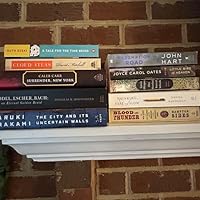
March 23, 2024
I hadn’t planned to read this spy novel just now, but we were about to take a short train trip and I grabbed the first print book that caught my eye on the way out the door. Given the chatty woman who sat next to me at one point I didn’t finish on the trip, but I was engaged enough to wrap it up soon after we got home.
Is this le Carre? Nope, not by a long shot. But what it is, is entertaining. The writing isn’t anything special, but it’s good enough that I didn’t notice it.
The plot has our heroine, Emma, struggling to navigate a guy across London overnight to the MI6 building south of the Thames. Normally she would rely on assistance from the staff at the super-secret spy agency she works for, but she doesn’t know who she can trust there.
The biggest problem, though, is those CCTV cameras that are omnipresent in London. Turns out the bad guys have hacked into the camera system and can anticipate her every move.
Glass does a great job of creating strategies for Emma, then working through the extent to which they are successful, and how much closer they get her to her destination. Emma, like everyone else in the book, has a backstory that gets rolled into the plot.
There will be a follow up, and I might just read it. It’s fun to be swept up in a fast moving plot. :-)
Is this le Carre? Nope, not by a long shot. But what it is, is entertaining. The writing isn’t anything special, but it’s good enough that I didn’t notice it.
The plot has our heroine, Emma, struggling to navigate a guy across London overnight to the MI6 building south of the Thames. Normally she would rely on assistance from the staff at the super-secret spy agency she works for, but she doesn’t know who she can trust there.
The biggest problem, though, is those CCTV cameras that are omnipresent in London. Turns out the bad guys have hacked into the camera system and can anticipate her every move.
Glass does a great job of creating strategies for Emma, then working through the extent to which they are successful, and how much closer they get her to her destination. Emma, like everyone else in the book, has a backstory that gets rolled into the plot.
There will be a follow up, and I might just read it. It’s fun to be swept up in a fast moving plot. :-)

April 19, 2022
🌟 🌟🌟🌟🌟
The clock is ticking!
Secret agent Emma Makepeace, is on her first op for the ‘Agency’, an outfit that prefers to remain in the shadows. She has until dawn to bring a man to the safety of MI6, or they could both end up dead. It’s going to be a very long night indeed!
After leaving the army, Emma Makepeace was assessed and recruited by the ‘Agency’, and has been working undercover in a shop in Camden, (not her dream job it has to be said) but then she gets the call that will cement her career with the Agency, if she doesn’t end up dead first!
Her task is to get Paediatric cancer specialist Michael Primalov to safety - on the other side of London, and from there to who knows where? That alone isn’t going to be easy - Michael loves his job and has no intention of going anywhere, he thinks Emma is blowing things up out of all proportion. However, events prove that the Russians are definitely closing in on his parents and himself. His parents are Russian dissidents, who defected to the UK some twenty years ago, and it’s clear that if the Russians can’t get to the parents directly, then Michael is a sure way of getting to them.
Now it might appear to be easy enough to get Michael and herself across London, but there’s a massive CCTV presence, and when the Russians take control of the cameras - well that’s a whole different ball game - imagine being tracked every step of the way - Emma can’t use any technology (too easy to trace) can’t use any type of transport ( for the same reason), this has to be done on foot and as covertly as possible. To make matters even worse, Emma’s handler is about to go dark, leaving her and her asset in even bigger danger.
With a thrilling game of cat and mouse right the way across London, the tension never lets up, creating some heart stopping moments. ‘Alias Emma’ would make a spectacular all action movie, and this is an easy 5 stars for me!
*Thank you to Netgalley and Random House UK Cornerstone, Century, for an ARC in exchange for an honest unbiased review *
The clock is ticking!
Secret agent Emma Makepeace, is on her first op for the ‘Agency’, an outfit that prefers to remain in the shadows. She has until dawn to bring a man to the safety of MI6, or they could both end up dead. It’s going to be a very long night indeed!
After leaving the army, Emma Makepeace was assessed and recruited by the ‘Agency’, and has been working undercover in a shop in Camden, (not her dream job it has to be said) but then she gets the call that will cement her career with the Agency, if she doesn’t end up dead first!
Her task is to get Paediatric cancer specialist Michael Primalov to safety - on the other side of London, and from there to who knows where? That alone isn’t going to be easy - Michael loves his job and has no intention of going anywhere, he thinks Emma is blowing things up out of all proportion. However, events prove that the Russians are definitely closing in on his parents and himself. His parents are Russian dissidents, who defected to the UK some twenty years ago, and it’s clear that if the Russians can’t get to the parents directly, then Michael is a sure way of getting to them.
Now it might appear to be easy enough to get Michael and herself across London, but there’s a massive CCTV presence, and when the Russians take control of the cameras - well that’s a whole different ball game - imagine being tracked every step of the way - Emma can’t use any technology (too easy to trace) can’t use any type of transport ( for the same reason), this has to be done on foot and as covertly as possible. To make matters even worse, Emma’s handler is about to go dark, leaving her and her asset in even bigger danger.
With a thrilling game of cat and mouse right the way across London, the tension never lets up, creating some heart stopping moments. ‘Alias Emma’ would make a spectacular all action movie, and this is an easy 5 stars for me!
*Thank you to Netgalley and Random House UK Cornerstone, Century, for an ARC in exchange for an honest unbiased review *

June 13, 2022
Really excellent spy thriller with a dynamic female lead and a thrill ride of a story that is exciting and unpredictable throughout
I loved Emma our main protagonist, not perfect but still brilliant living a life in the shadows. The author sets the scene with descriptive, immersive writing and sends the reader on a rollercoaster ride through London that is massively addictive.
A pitch perfect start to what I hope will become a long running and successful series
I loved Emma our main protagonist, not perfect but still brilliant living a life in the shadows. The author sets the scene with descriptive, immersive writing and sends the reader on a rollercoaster ride through London that is massively addictive.
A pitch perfect start to what I hope will become a long running and successful series

November 8, 2023
3.5 Stars
I don’t normally read spy thrillers, but after reading the synopsis and some reviews, I decide to give Alias Emma a chance. It was such a quick and fun read that I could easily see being a movie filled with tons of action and just enough comedy.
I don’t normally read spy thrillers, but after reading the synopsis and some reviews, I decide to give Alias Emma a chance. It was such a quick and fun read that I could easily see being a movie filled with tons of action and just enough comedy.

August 1, 2022
Thank you NetGalley for providing this book for free in return for an honest review.
There are so many great spy thrillers out there… but this isn’t one of them.
Two dimensional characters and a preposterous premise.
If you’re going to base an entire book on the premise of needing to get an asset to safety across London, at least make it somewhat believable.
How about hiding out until MI6 came to you?
How about jacking a car and just driving there?
How are they going to find you and stop you with all the other cars around?
There’s a scene where they run into paramedics with an ambulance- he’s a doctor, show them your id and have them take you to MI6 in the ambulance.
Her boss is a great spy but doesn’t realize his next in command is corrupt, even when he leaves Emma and her asset to die?
I don’t mind suspension of disbelief but this is more like suspension of my brain.
There are so many great spy thrillers out there… but this isn’t one of them.
Two dimensional characters and a preposterous premise.
If you’re going to base an entire book on the premise of needing to get an asset to safety across London, at least make it somewhat believable.
How about hiding out until MI6 came to you?
How about jacking a car and just driving there?
How are they going to find you and stop you with all the other cars around?
There’s a scene where they run into paramedics with an ambulance- he’s a doctor, show them your id and have them take you to MI6 in the ambulance.
Her boss is a great spy but doesn’t realize his next in command is corrupt, even when he leaves Emma and her asset to die?
I don’t mind suspension of disbelief but this is more like suspension of my brain.
This entire review has been hidden because of spoilers.

July 1, 2022
Yu3.5* rounded up
Gotta love a razor sharp, action packed British spy thriller with a kick ass female protagonist. When Russian agents start killing off defectors, new and therefore unknown agent, Emma Makepeace is assigned to quickly get the son of a top Russian scientist who defected 20 years ago with some very valuable information to safety. First she has to convince the handsome doctor to leave behind the children he treats at the hospital. There isn't much time because it looks like they sent a whole army of assassins and they have hacked all of London's security cameras. To make matters worse, Emma's trainer and handler is mysteriously unavailable and the second in command leaves Emma hanging out there on her own. It's sort of Emma versus Goliath. Let the games begin!
My guess is that this will be a series and rumor has it that the movie rights have already been optioned. Congratulations to Ava Glass.
I received a drc from Random House/Ballentine via Netgalley. Available now from your local library or favorite bookstore.
Gotta love a razor sharp, action packed British spy thriller with a kick ass female protagonist. When Russian agents start killing off defectors, new and therefore unknown agent, Emma Makepeace is assigned to quickly get the son of a top Russian scientist who defected 20 years ago with some very valuable information to safety. First she has to convince the handsome doctor to leave behind the children he treats at the hospital. There isn't much time because it looks like they sent a whole army of assassins and they have hacked all of London's security cameras. To make matters worse, Emma's trainer and handler is mysteriously unavailable and the second in command leaves Emma hanging out there on her own. It's sort of Emma versus Goliath. Let the games begin!
My guess is that this will be a series and rumor has it that the movie rights have already been optioned. Congratulations to Ava Glass.
I received a drc from Random House/Ballentine via Netgalley. Available now from your local library or favorite bookstore.

August 5, 2024
2-Stars for "Alias Emma" - a DNF @ 57% - It was OK, but not OK enough to survive the DNF
I have a small, personal rule: I try to limit to Ten, the number of audiobooks that rest, uneasily, on my "Currently Reading" shelf. When I become somewhat, but not definitely dissatisfied with a "Currently Reading" book, I will make suitable comments in my "Listening Activity" and the book, as likely as not, will be replaced with something new in future weeks.
"Alias Emma" is a fine example of my DNF inclinations.
It is worthy of note that as of today, I still have 3,723 "Unheard" audiobooks in my GR library.
From my "Listening Activity":
July 20, 2024 – 42 % Heard: "Russian assassins, British spies, and set in the modern day - lots of action and fun to read."
July 28, 2024 – 57 % Heard: "I haven't been able to read listen to much at all for the past week or so, and I am happy to be back! Two people are chased, almost caught, and escape; chased some more, almost caught, and escape again; rinse and repeat... Not as exciting as it sounds."
August 4, 2024 – Shelved as: a-dnf-maybe-try-again.
Hopefully, Audible will accept its return and give me back a credit😊
I have a small, personal rule: I try to limit to Ten, the number of audiobooks that rest, uneasily, on my "Currently Reading" shelf. When I become somewhat, but not definitely dissatisfied with a "Currently Reading" book, I will make suitable comments in my "Listening Activity" and the book, as likely as not, will be replaced with something new in future weeks.
"Alias Emma" is a fine example of my DNF inclinations.
It is worthy of note that as of today, I still have 3,723 "Unheard" audiobooks in my GR library.
From my "Listening Activity":
July 20, 2024 – 42 % Heard: "Russian assassins, British spies, and set in the modern day - lots of action and fun to read."
July 28, 2024 – 57 % Heard: "I haven't been able to read listen to much at all for the past week or so, and I am happy to be back! Two people are chased, almost caught, and escape; chased some more, almost caught, and escape again; rinse and repeat... Not as exciting as it sounds."
August 4, 2024 – Shelved as: a-dnf-maybe-try-again.
Hopefully, Audible will accept its return and give me back a credit😊

June 9, 2024
What a thrilling ride! I was captivated from first to last by our heroine, a female spy. Excellent narration provided by Sophie Colquhoun.
Favorite quotes:
"He considered her face a moment longer and then made up his mind. "I don't want your money, I'll do it for nothing." For some reason amid all the awfulness that lifted her heart. The way Londoners looked out for each other when all went to hell was one of the best things about this over priced over crowded city."
"When we get there, all I want is a huge cup of tea." [...] "Maybe they'll have sandwiches at MI6," she said, warming to this fantasy, "And cake!"
Favorite quotes:
"He considered her face a moment longer and then made up his mind. "I don't want your money, I'll do it for nothing." For some reason amid all the awfulness that lifted her heart. The way Londoners looked out for each other when all went to hell was one of the best things about this over priced over crowded city."
"When we get there, all I want is a huge cup of tea." [...] "Maybe they'll have sandwiches at MI6," she said, warming to this fantasy, "And cake!"

November 1, 2022
Emma Makepeace, new MI6 Agent, was embedded in a patchouli-scented shop monitoring a climate change activist whose organization had Russian money funneling through it. Though she found him to be harmless, her work continued until she was called to headquarters by emergency communication. Her new order was to convince a doctor, Mikail (Michael) Primalov, that his life is in grave danger. His parents, former Russians who now work for MI6, have already been taken into protective custody, but with Michael unguarded, they are all at risk for torture and death. They will not go deep undercover until their beloved only son is with them, safe. Emma has twenty-four hours to trek Michael across England, where there are facial recognition cameras on every corner that have been hacked by the Russians, without being captured, killed, disavowed by her own government, or left bearing the blame for all that goes wrong.
This is a very exciting novel, especially once Emma is sent to intercept Michael. The action becomes non-stop as it is taking place over a twenty-four hour period, and the reader is left breathless as their run for the opposite side of England occurs while the two are being mercilessly tracked by the Russians. I thoroughly enjoyed the dynamic of Emma and Michael, who helped Emma as much as he was helped by her as they ran to the other side of the river across the country to the safety of a different MI6 branch. Something underhanded seemed to be happening at Emma’s branch of MI6. Her boss and mentor, Charles Ripley, was suddenly replaced by his second-in-command who refused Emma’s call for help and left her stranded to make her own way with Michael. I wish the budding romance between them was allowed to develop, as they both deserved to be happy after the trauma they experienced. I also wish the motivation for every character in the book from Emma’s mother to Ripley was not revenge, because instead of sounding like a government mission, it read very much like vigilantes hunting for retribution. However, “Alias Emma” was an excellent read overall, and I believe it will appeal to readers of government espionage, thrillers, and mysteries.
I’d like to thank NetGalley, Ava Glass, and Moonflower Books, Ltd/Bantam Books for the ability to read and review this ARC.
This is a very exciting novel, especially once Emma is sent to intercept Michael. The action becomes non-stop as it is taking place over a twenty-four hour period, and the reader is left breathless as their run for the opposite side of England occurs while the two are being mercilessly tracked by the Russians. I thoroughly enjoyed the dynamic of Emma and Michael, who helped Emma as much as he was helped by her as they ran to the other side of the river across the country to the safety of a different MI6 branch. Something underhanded seemed to be happening at Emma’s branch of MI6. Her boss and mentor, Charles Ripley, was suddenly replaced by his second-in-command who refused Emma’s call for help and left her stranded to make her own way with Michael. I wish the budding romance between them was allowed to develop, as they both deserved to be happy after the trauma they experienced. I also wish the motivation for every character in the book from Emma’s mother to Ripley was not revenge, because instead of sounding like a government mission, it read very much like vigilantes hunting for retribution. However, “Alias Emma” was an excellent read overall, and I believe it will appeal to readers of government espionage, thrillers, and mysteries.
I’d like to thank NetGalley, Ava Glass, and Moonflower Books, Ltd/Bantam Books for the ability to read and review this ARC.
August 25, 2022
ALIAS EMMA
By: Ava Glass
Publication: August 2, 2022 by Bantam Books
Move over Emma Peel of the beloved 60’s TV series The Avengers and Eve Polastri of the more recent 2018 series: “Killing Eve”. This is the first appearance of Emma Makepeace in her thrilling page-turner action spy debut. This clever and ingenious heroine grapples with a horde of Russian GRU spies and assassins. Emma is a newly trained spy for the Vernon Institute of England and is tasked with the near impossible feat of delivering and protecting pediatric oncologist, Michael Primalov, to the safety of a MI6 safe house. His lone crime is being the son of Elena, who defected to the West twenty years ago, and bringing with her vital scientific data. Lately multiple other scientists associated with Elena have been brutally assassinated by Russian agents in London. She must first convince Michael of his imminent danger, and then successfully deliver him across London to MI6, while the Russians have successfully hacked into London’s famed CCTV camera network that virtually blankets the city.
Ava Glass crafts a masterful narrative that is a cinematic gem that deftly captures the readers imagination, as Emma against all odds attempts to deliver Michael to safety while avoiding the ever watchful cameras through the darkened alleys and tunnels under London. She must use disguise and subterfuge , and at times hand-to-hand combat, to avoid capture by the Russian assassins, A lethal cat and mouse contest plays out in the shadows and tunnels of London. Relief from the tension and intrigue of the chase, are deftly provided by flashback chapters involving the training and backstory of Emma’s motivation to become a spy.
The action is non-stop and explosive, ratcheting up to an exhilarating high octane denouement. I couldn’t put this gripping novel down and finished in one seating. In my mind’s eye I pictured Diana Rigg or Uma Thurman playing Emma Makepeace in an ongoing series.
Reportedly this is the first novel in a continuing Emma series. …. I’m on board for more!
Thanks to NetGalley and Bantam Books for supplying an Uncorrected Proof in exchange for an honest review.
By: Ava Glass
Publication: August 2, 2022 by Bantam Books
Move over Emma Peel of the beloved 60’s TV series The Avengers and Eve Polastri of the more recent 2018 series: “Killing Eve”. This is the first appearance of Emma Makepeace in her thrilling page-turner action spy debut. This clever and ingenious heroine grapples with a horde of Russian GRU spies and assassins. Emma is a newly trained spy for the Vernon Institute of England and is tasked with the near impossible feat of delivering and protecting pediatric oncologist, Michael Primalov, to the safety of a MI6 safe house. His lone crime is being the son of Elena, who defected to the West twenty years ago, and bringing with her vital scientific data. Lately multiple other scientists associated with Elena have been brutally assassinated by Russian agents in London. She must first convince Michael of his imminent danger, and then successfully deliver him across London to MI6, while the Russians have successfully hacked into London’s famed CCTV camera network that virtually blankets the city.
Ava Glass crafts a masterful narrative that is a cinematic gem that deftly captures the readers imagination, as Emma against all odds attempts to deliver Michael to safety while avoiding the ever watchful cameras through the darkened alleys and tunnels under London. She must use disguise and subterfuge , and at times hand-to-hand combat, to avoid capture by the Russian assassins, A lethal cat and mouse contest plays out in the shadows and tunnels of London. Relief from the tension and intrigue of the chase, are deftly provided by flashback chapters involving the training and backstory of Emma’s motivation to become a spy.
The action is non-stop and explosive, ratcheting up to an exhilarating high octane denouement. I couldn’t put this gripping novel down and finished in one seating. In my mind’s eye I pictured Diana Rigg or Uma Thurman playing Emma Makepeace in an ongoing series.
Reportedly this is the first novel in a continuing Emma series. …. I’m on board for more!
Thanks to NetGalley and Bantam Books for supplying an Uncorrected Proof in exchange for an honest review.

March 6, 2023
Competent espionage thriller. The fast pace of the chase across London in a single night made less frantic by interspersion with details of the protagonist's background.
I've probably been a bit spoiled by my reading of spy fiction being largely limited to the high quality of le Carre and the like, so anything less is mediocre by comparison. Still, fast and fun, with a nice sense of tradecraft, although the prose tends to the cliché and there is the occasional carelessness of detail which is at odds with the supposed highly-trained attention of the central character. Also, one of the plot tensions of the story seems simply abandoned, neither resolved nor teased for the next instalment.
I've probably been a bit spoiled by my reading of spy fiction being largely limited to the high quality of le Carre and the like, so anything less is mediocre by comparison. Still, fast and fun, with a nice sense of tradecraft, although the prose tends to the cliché and there is the occasional carelessness of detail which is at odds with the supposed highly-trained attention of the central character. Also, one of the plot tensions of the story seems simply abandoned, neither resolved nor teased for the next instalment.

August 12, 2022
Felt like a YA novel to me… but just not very good. Terrible dialogue and very unrealistic with cardboard cutout characters. People just don’t talk like that.
I didn’t feel the suspense with this one at all.
I didn’t feel the suspense with this one at all.

February 3, 2024
By some accounts, London is the most surveilled city on Earth. The home of over 300,000 public and private CCTV cameras (slightly more than the number of Prets and Costa Coffee outlets), London likely shows us the future of urbanism worldwide. If you watch enough contemporary British political or espionage films, you'll see the camera network playing a co-starring role. It's a wonder that Brit villains can get away with anything without leaving behind a huge trail of video clips for the good guys to follow.
So what if the network turns against the good guys?
Emma Makepeace gets to find out in Alias Emma. This junior operative in an unnamed MI5-like agency gets assigned to a mission that should be a doddle: escort Michael Primalov to an agency safe house to protect him from possible kidnappers. The goal's simple, but the degree of difficulty is huge. Primalov is the son of master double agents from the Cold War; the abductors are actually GRU assassins; and Russian hackers have taken time off from concocting conspiracy theories for the MAGA crowd to take over London's vaunted CCTV system, giving them a ringside seat to everything Emma and Michael do. Our Heroes have to cross Metro London while staying off camera and not using any form of electronics the hackers can pick up on along the way.
The author put together a satisfying puzzlebox of a plot. It's well paced and makes good use of the sprawl beyond London's tourist heart. Locations are sketched economically but well enough to picture, especially if you've spent any time in the city. The inevitable Netflix or Prime movie is clearly visible in the prose. In a way, though, this is all beside the point. This story is essentially a two-hander with a vast cast of redshirts, and as such, it lives and dies on the strength of its two main characters. So, how did the author do?
Emma is the very picture of the plucky, quick-thinking heroine. However, she's not Jane Bond. She makes mistakes, she gets in over her head, she gets tired and frustrated and hungry and even has to stop for a restroom now and then. Also, she tends not to solve problems kinetically, preferring to outwit her legion of pursuers rather than outfight them (though she gets her hands dirty when she has to). In other words, she's recognizably human despite her particular set of skills, which makes rooting for her more than just a duty. Chapters interspersed throughout the chase action show us the making of Emma; some of the backstory plows familiar ground, but it mostly explains how she got the way she is.
Primalov is, despite his gender, the damsel in distress in this story. He starts out dangerously close to a saint (he's a doctor who treats kids with cancer), but over time he loosens up and gets with the program. He, too, is recognizably human, reacting to the craziness in reasonable ways that make him relatable as the audience surrogate.
Emma and Michael start out bickering and being irked by each other, but through shared adversity and a romance-like arc (stop me if you've heard this before) they bond as a team. A lesser writer would have them find some time in the middle of Act II to make whoopie, even though it would be entirely inappropriate and logistically fanciful. Mercifully, the author never forced them to consummate their relationship or even spend much time thinking about doing so.
Where's the fifth star? As other reviewers have noted, the ending tries too hard to tie up all the loose ends, to the plot's detriment. The story ends when the chase does, though the text doesn't, unnecessarily lessening the climax's impact.
Alias Emma is a 269-page chase scene that could've been a slog in less-skilled hands. But the author knows her stuff, and she's given us two personable protagonists, a lot of London atmosphere, and enough well-orchestrated action to keep you pleasantly occupied for a few hours. If you like it, there's a sequel on the shelves and probably more coming up. And the next time you're in a major city, look up and smile for the cameras -- you never know who's watching.
So what if the network turns against the good guys?
Emma Makepeace gets to find out in Alias Emma. This junior operative in an unnamed MI5-like agency gets assigned to a mission that should be a doddle: escort Michael Primalov to an agency safe house to protect him from possible kidnappers. The goal's simple, but the degree of difficulty is huge. Primalov is the son of master double agents from the Cold War; the abductors are actually GRU assassins; and Russian hackers have taken time off from concocting conspiracy theories for the MAGA crowd to take over London's vaunted CCTV system, giving them a ringside seat to everything Emma and Michael do. Our Heroes have to cross Metro London while staying off camera and not using any form of electronics the hackers can pick up on along the way.
The author put together a satisfying puzzlebox of a plot. It's well paced and makes good use of the sprawl beyond London's tourist heart. Locations are sketched economically but well enough to picture, especially if you've spent any time in the city. The inevitable Netflix or Prime movie is clearly visible in the prose. In a way, though, this is all beside the point. This story is essentially a two-hander with a vast cast of redshirts, and as such, it lives and dies on the strength of its two main characters. So, how did the author do?
Emma is the very picture of the plucky, quick-thinking heroine. However, she's not Jane Bond. She makes mistakes, she gets in over her head, she gets tired and frustrated and hungry and even has to stop for a restroom now and then. Also, she tends not to solve problems kinetically, preferring to outwit her legion of pursuers rather than outfight them (though she gets her hands dirty when she has to). In other words, she's recognizably human despite her particular set of skills, which makes rooting for her more than just a duty. Chapters interspersed throughout the chase action show us the making of Emma; some of the backstory plows familiar ground, but it mostly explains how she got the way she is.
Primalov is, despite his gender, the damsel in distress in this story. He starts out dangerously close to a saint (he's a doctor who treats kids with cancer), but over time he loosens up and gets with the program. He, too, is recognizably human, reacting to the craziness in reasonable ways that make him relatable as the audience surrogate.
Emma and Michael start out bickering and being irked by each other, but through shared adversity and a romance-like arc (stop me if you've heard this before) they bond as a team. A lesser writer would have them find some time in the middle of Act II to make whoopie, even though it would be entirely inappropriate and logistically fanciful. Mercifully, the author never forced them to consummate their relationship or even spend much time thinking about doing so.
Where's the fifth star? As other reviewers have noted, the ending tries too hard to tie up all the loose ends, to the plot's detriment. The story ends when the chase does, though the text doesn't, unnecessarily lessening the climax's impact.
Alias Emma is a 269-page chase scene that could've been a slog in less-skilled hands. But the author knows her stuff, and she's given us two personable protagonists, a lot of London atmosphere, and enough well-orchestrated action to keep you pleasantly occupied for a few hours. If you like it, there's a sequel on the shelves and probably more coming up. And the next time you're in a major city, look up and smile for the cameras -- you never know who's watching.

August 18, 2023
4⭐️
Big thanks to Ava Glass and Bantam Books for a copy of this book in exchange for my honest opinions!!
Okay, so first off this isn’t my usual genre - spies, covert operations, shadowy governments and books with a ton of action in it. But this one surprised me at how easy it was to get wrapped up in this tale! It’s a pretty short read but it will definitely keep you interested with how crazy things get!
Emma Makepeace is the MC in this book who takes on a dangerous operation of protecting a doctor and trying to escort him to basically witness protection while avoiding Russians who are after him. But the kicker is they have to avoid major streets, cannot take any vehicles and have to stay out of sight because the Russians took over all CCTV. This ultimately leads to a chase to see who will win.
This thoroughly kept me entertained and was an amazing first in a series that gave us an insight on how Emma got into the spy business, a little bit of her past and what she’s after all while giving us her first major mission. I will say there was a point where I was like there’s still a bit left in this book, where could it possibly be going but then it kept me hooked again to where I’m looking forward to reading the second book that comes out soon!
Alias Emma is definitely a 4-star read that I would recommend to fans of spy thrillers and/or shows like Alias. This is a short and quick read at just under 300 pages that would work as an easy read to get you out of a reading slump.
‼️ SPOILERS BELOW - read at your own risk! ‼️
- first off I LOVED the brief bits of chemistry she had with Michael and I’m hoping hoping hoping that he will return in some way or another. Although idk how Glass will manage it since he’s in protective custody and all.
- could there be any way we think Emma’s dad is still alive??? Idk why but I’m getting vibes that there’s more to that tale and I want to know more. Her mom is also kinda sketch to me she’s so paranoid there’s no way she didn’t absolutely lose her mind when Emma joined the British army.
- who’s right and who’s wrong here? Ed Masterson? Traitor or just an power hungry idiot?? Excited for this aspect of the next book. And also Ripley I want to know more about him - good, bad, or just out for revenge? Obvi he has some high up contacts but how will this play out?
Big thanks to Ava Glass and Bantam Books for a copy of this book in exchange for my honest opinions!!
Okay, so first off this isn’t my usual genre - spies, covert operations, shadowy governments and books with a ton of action in it. But this one surprised me at how easy it was to get wrapped up in this tale! It’s a pretty short read but it will definitely keep you interested with how crazy things get!
Emma Makepeace is the MC in this book who takes on a dangerous operation of protecting a doctor and trying to escort him to basically witness protection while avoiding Russians who are after him. But the kicker is they have to avoid major streets, cannot take any vehicles and have to stay out of sight because the Russians took over all CCTV. This ultimately leads to a chase to see who will win.
This thoroughly kept me entertained and was an amazing first in a series that gave us an insight on how Emma got into the spy business, a little bit of her past and what she’s after all while giving us her first major mission. I will say there was a point where I was like there’s still a bit left in this book, where could it possibly be going but then it kept me hooked again to where I’m looking forward to reading the second book that comes out soon!
Alias Emma is definitely a 4-star read that I would recommend to fans of spy thrillers and/or shows like Alias. This is a short and quick read at just under 300 pages that would work as an easy read to get you out of a reading slump.
‼️ SPOILERS BELOW - read at your own risk! ‼️
- first off I LOVED the brief bits of chemistry she had with Michael and I’m hoping hoping hoping that he will return in some way or another. Although idk how Glass will manage it since he’s in protective custody and all.
- could there be any way we think Emma’s dad is still alive??? Idk why but I’m getting vibes that there’s more to that tale and I want to know more. Her mom is also kinda sketch to me she’s so paranoid there’s no way she didn’t absolutely lose her mind when Emma joined the British army.
- who’s right and who’s wrong here? Ed Masterson? Traitor or just an power hungry idiot?? Excited for this aspect of the next book. And also Ripley I want to know more about him - good, bad, or just out for revenge? Obvi he has some high up contacts but how will this play out?

June 5, 2024
This was a really strong debut novel with a lot of clever nods to James Bond, Emma Peel, and George Smiley. The author is clearly steeped in the tradition of spy thrillers and did a great job with the pacing of this non-stop story of a day in London, with the main character trying to avoid compromised CCTV cameras (and Russian spies) as she tries to get across the city to MI6 with a doctor who needs to be in witness protection because of his mother's past history as a Russian scientist who traded secrets. Emma is like a female James Bond, using all her smarts, tradecraft, gadgets, and skills to outwit the villains at every turn. While it seemed at moments like the pair couldn't possibly cope with one more setback, it was still a thrill ride, and I would definitely read a sequel (The Traitor is published and The Trap is being published this fall). Expertly narrated by Sophie Colquhoun; I listened as I read along and hope that she will narrate the sequels.

December 6, 2023
Well, that wasn't good :(
Lazy, "tell-don't-show" writing (Chapter 4 begins with the sentence "There'd never been a time when Emma did not want to be a spy;" Chapter 7 starts with "At school, Emma had always felt somehow separate from the other children"); terrible tradecraft (right away on page 8, Emma abandons the shop where she's been working in alias and undercover for months and races "at full steam" straight to her organization's top secret HQS without any attempt to see if she's being followed; and then later than day she takes TOP SECRET files home from that same secret HQS to study in her apartment - isn't that kinda what got Donald Trump in trouble??); and a plot devoid of anything resembling a surprise or an "I didn't see that coming" twist. Because I SAW IT ALL COMING.
Indeed, the Goodreads blurb - "A British spy has twelve hours to deliver her asset across London after Russia hacks the city’s security cameras. Can she make it without being spotted…or killed?" - isn't a teaser, it's THE ENTIRE STORY. The only question is the one posed there - can she make it or not? And sure, I won't spoil the ending, but use your imagination. Or really, don't - because you won't need it; everything is just that obvious.
The back-cover endorsement from Karen Cleveland ("Move over James Bond - there's a new hero in town, and she's fantastic") should have warned me off, as I disliked her Need to Know even more than this book. Am still looking for a cool female spy character but, well…am still looking.
AND FINALLY: Stupid title. So okay, "Emma's" not her real name. Irrelevant; never mentioned again...even "Harriet the Spy" is better; but that one was already taken.
Lazy, "tell-don't-show" writing (Chapter 4 begins with the sentence "There'd never been a time when Emma did not want to be a spy;" Chapter 7 starts with "At school, Emma had always felt somehow separate from the other children"); terrible tradecraft (right away on page 8, Emma abandons the shop where she's been working in alias and undercover for months and races "at full steam" straight to her organization's top secret HQS without any attempt to see if she's being followed; and then later than day she takes TOP SECRET files home from that same secret HQS to study in her apartment - isn't that kinda what got Donald Trump in trouble??); and a plot devoid of anything resembling a surprise or an "I didn't see that coming" twist. Because I SAW IT ALL COMING.
Indeed, the Goodreads blurb - "A British spy has twelve hours to deliver her asset across London after Russia hacks the city’s security cameras. Can she make it without being spotted…or killed?" - isn't a teaser, it's THE ENTIRE STORY. The only question is the one posed there - can she make it or not? And sure, I won't spoil the ending, but use your imagination. Or really, don't - because you won't need it; everything is just that obvious.
The back-cover endorsement from Karen Cleveland ("Move over James Bond - there's a new hero in town, and she's fantastic") should have warned me off, as I disliked her Need to Know even more than this book. Am still looking for a cool female spy character but, well…am still looking.
AND FINALLY: Stupid title. So okay, "Emma's" not her real name. Irrelevant; never mentioned again...even "Harriet the Spy" is better; but that one was already taken.

October 18, 2022
Alias Emma~ Ava Glass
Ambo Anthos, ⭐️⭐️⭐️⭐️⭐️
Ik heb echt ouderwets genoten van dit boek! Samen met Emma en Michael rende ik door de straten van Londen tot ik uitgeput was. Ik voelde de camera's op mijn rug branden, en de Russen in mijn nek hijgen. De schrijfstijl van Ava Glass zorgde ervoor dat ik direct in het verhaal zat vastgezogen, en ondanks mijn slechte concentratie toch door het verhaal heen vloog. Het is een heerlijk, spannend verhaal, dat geen moment saai wordt. Ik ben heel erg benieuwd naar de rest van Emma's avonturen als geheim agent, en ook al zou dit perfect een stand alone kunnen kunnen, ben ik blij met de wetenschap dat er nog meer volgt! Wat mij betreft een echte aanrader ♡
www.facebook.com/thebookbabecisz
Ambo Anthos, ⭐️⭐️⭐️⭐️⭐️
Ik heb echt ouderwets genoten van dit boek! Samen met Emma en Michael rende ik door de straten van Londen tot ik uitgeput was. Ik voelde de camera's op mijn rug branden, en de Russen in mijn nek hijgen. De schrijfstijl van Ava Glass zorgde ervoor dat ik direct in het verhaal zat vastgezogen, en ondanks mijn slechte concentratie toch door het verhaal heen vloog. Het is een heerlijk, spannend verhaal, dat geen moment saai wordt. Ik ben heel erg benieuwd naar de rest van Emma's avonturen als geheim agent, en ook al zou dit perfect een stand alone kunnen kunnen, ben ik blij met de wetenschap dat er nog meer volgt! Wat mij betreft een echte aanrader ♡
www.facebook.com/thebookbabecisz

July 23, 2022
I received a free e-galley from the publisher, via Netgalley.
After a brief but stellar career in covert operations with the British Army, Emma Makepeace is recruited to MI5, where she undergoes intensive training in espionage. Now her boss, Ripley, has tapped her for her first real operation, and it’s a doozy.
Russian agents have been targeting scientist defectors living in the UK, and there is word that they plan to kidnap Michael Primalov, the son of a star scientist, so that they can bend her to their will. Ripley tells Emma that Michael has dismissed the seriousness of the situation, refusing to leave his life as a pediatric oncologist to go into hiding. Maybe Emma, being closer to Michael’s age, will be able to persuade him.
No sooner does Emma start the job than all hell breaks loose. It seems as if London—possibly the most CCTV-filled city in the world—is filled with murderous Russian agents tracking her and Michael as they try to make their way to safety. Worse yet, it quickly becomes clear that Emma is on her own, with no assistance from her agency.
This is a compact, fast-paced thriller with a cinematic feel. I read it in an afternoon and the time flew by. Yes, you could say there are occasional improbable aspects to Emma’s operation, but I’d say less so than your average 007 or Bourne film.
After a brief but stellar career in covert operations with the British Army, Emma Makepeace is recruited to MI5, where she undergoes intensive training in espionage. Now her boss, Ripley, has tapped her for her first real operation, and it’s a doozy.
Russian agents have been targeting scientist defectors living in the UK, and there is word that they plan to kidnap Michael Primalov, the son of a star scientist, so that they can bend her to their will. Ripley tells Emma that Michael has dismissed the seriousness of the situation, refusing to leave his life as a pediatric oncologist to go into hiding. Maybe Emma, being closer to Michael’s age, will be able to persuade him.
No sooner does Emma start the job than all hell breaks loose. It seems as if London—possibly the most CCTV-filled city in the world—is filled with murderous Russian agents tracking her and Michael as they try to make their way to safety. Worse yet, it quickly becomes clear that Emma is on her own, with no assistance from her agency.
This is a compact, fast-paced thriller with a cinematic feel. I read it in an afternoon and the time flew by. Yes, you could say there are occasional improbable aspects to Emma’s operation, but I’d say less so than your average 007 or Bourne film.

July 12, 2023
3.5 stars
This is a straight-up spy thriller. The bulk of the action takes place in a single night with our heroine Emmawalking running a targeted man through London all night. I was afraid this was going to turn into a stupid romance, but it didn’t.
The night trek is interrupted by flashbacks of Emma’s life—how she became a spy and some of her early missions. This tended to disrupt the momentum of the main story. Yet putting all this backstory together at the beginning would have made the reading impatient to get to the “real story.” So I’m not sure what the best solution is. It probably would have been better to cut some of the backstory, even though it was interesting stuff.
Language: Some occasional strong language
Sexual Content: None
Violence/Gore: Several murders, fights with knives and guns; not very graphic
Harm to Animals:
Harm to Children:
Other (Triggers):
*Reader’s Choice Nominee Fall 2023*
This is a straight-up spy thriller. The bulk of the action takes place in a single night with our heroine Emma
The night trek is interrupted by flashbacks of Emma’s life—how she became a spy and some of her early missions. This tended to disrupt the momentum of the main story. Yet putting all this backstory together at the beginning would have made the reading impatient to get to the “real story.” So I’m not sure what the best solution is. It probably would have been better to cut some of the backstory, even though it was interesting stuff.
Language: Some occasional strong language
Sexual Content: None
Violence/Gore: Several murders, fights with knives and guns; not very graphic
Harm to Animals:
Harm to Children:
Other (Triggers):
*Reader’s Choice Nominee Fall 2023*

June 30, 2025
IN A NUTSHELL
'The Chase' was more John Wick than John Le Carré: fast-paced, violent, action-packed, exciting and requiring an enormous suspension of disbelief. If you want a thrill ride with a kick-ass woman as the lead and just enough contemporary context to give it some grounding in reality, then you'll enjoy meeting Emma Makepeace.
I’m a fan of contemporary British spy novels. Still, this series had passed me by until I heard Ava Glass being interviewed on ‘Woman’s Hour‘ on Radio 4 about the news that two of the candidates to become the next head of MI6 are women. She presented herself well, established her credentials as a journalist who has worked closely with spies for many years and then plugged her book in a polite low-key way that I admired. I looked her up and found the her 2022 debut novel, then titled ‘Alias Emma‘ and now, for reasons only publishing gurus understand, retitled ‘The Chase‘, was shortlisted for the 2023 CWA Ian Fleming Steel Dagger. I checked out the audiobook sample, thought Sophie Colquhoun was a great choice as the narrator and downloaded the book,
My wife and I listened ‘The Chase‘ on a couple of long drives. It provided a welcome distraction. It was engaging, easy to follow and nicely paced. Listening to the all-night-long chase across London with Emma Makepeace trying to keep her charge safe from Russian kill teams was dramatic and exhausting. If the story had only been about the chase, it might have been a sort of female version of a John Wick movie – all action and no character development. Ava Glass avoided this by intercutting the present-day action with scenes from Emma’s past that explained why and how she became a spy, gave context on why she was selected for this perilous assignment and why she wasn’t getting any support carrying it out.
This was entertaining in an action movie way but, like the action movies, it required a significant effort to suspend disbelief. Much was made of how heavily surveilled central London is but no mention was made of the many Armed Response Units the Met has in place. I struggled to believe in a scenario in which the police made no response to men firing shots from Range Rovers speeding along the banks of the Thames in the middle of the night.
I enjoyed the thrills the story provided and I admired Emma Makepeace's stubborn courage but I didn't feel that I was getting the kind of insider view of the British Intelligence Service that I get from Mick Herron or John Le Carré. Even so, I'll pick up the next two books in the series when I'm next in the mood for an espionage thriller.
I recommend the audiobook version of 'The Chase'. Click on the YouTube link below to hear a sample of Sophie Colquhoun's narration.
https://www.youtube.com/watch?v=_JTAl...
'The Chase' was more John Wick than John Le Carré: fast-paced, violent, action-packed, exciting and requiring an enormous suspension of disbelief. If you want a thrill ride with a kick-ass woman as the lead and just enough contemporary context to give it some grounding in reality, then you'll enjoy meeting Emma Makepeace.
I’m a fan of contemporary British spy novels. Still, this series had passed me by until I heard Ava Glass being interviewed on ‘Woman’s Hour‘ on Radio 4 about the news that two of the candidates to become the next head of MI6 are women. She presented herself well, established her credentials as a journalist who has worked closely with spies for many years and then plugged her book in a polite low-key way that I admired. I looked her up and found the her 2022 debut novel, then titled ‘Alias Emma‘ and now, for reasons only publishing gurus understand, retitled ‘The Chase‘, was shortlisted for the 2023 CWA Ian Fleming Steel Dagger. I checked out the audiobook sample, thought Sophie Colquhoun was a great choice as the narrator and downloaded the book,
My wife and I listened ‘The Chase‘ on a couple of long drives. It provided a welcome distraction. It was engaging, easy to follow and nicely paced. Listening to the all-night-long chase across London with Emma Makepeace trying to keep her charge safe from Russian kill teams was dramatic and exhausting. If the story had only been about the chase, it might have been a sort of female version of a John Wick movie – all action and no character development. Ava Glass avoided this by intercutting the present-day action with scenes from Emma’s past that explained why and how she became a spy, gave context on why she was selected for this perilous assignment and why she wasn’t getting any support carrying it out.
This was entertaining in an action movie way but, like the action movies, it required a significant effort to suspend disbelief. Much was made of how heavily surveilled central London is but no mention was made of the many Armed Response Units the Met has in place. I struggled to believe in a scenario in which the police made no response to men firing shots from Range Rovers speeding along the banks of the Thames in the middle of the night.
I enjoyed the thrills the story provided and I admired Emma Makepeace's stubborn courage but I didn't feel that I was getting the kind of insider view of the British Intelligence Service that I get from Mick Herron or John Le Carré. Even so, I'll pick up the next two books in the series when I'm next in the mood for an espionage thriller.
I recommend the audiobook version of 'The Chase'. Click on the YouTube link below to hear a sample of Sophie Colquhoun's narration.
https://www.youtube.com/watch?v=_JTAl...

February 8, 2024
I’ve spent so much time immersed in the Slough House world in the past year or so, reading or listening to the books or watching the TV series, that it’s a bit startling to read an espionage novel set in the world of the British intelligence services that is completely absent the sarcastic snark and cynicism of Slow Horses. Don’t get me wrong—this is an earnest thriller done right. A young female agent is given sole responsibility for convincing the doctor son of a pair of Russian defectors that his life is in danger and then get him to safety on the other side of London before they’re both killed by the many Russian agents on their trail. The catch? (Oh, there are so many catches!) The massive network of CCTV cameras across the city has been hacked by the Russians and their every move is visible, aiming the Russians right at them. Thrilling stuff. (If you’ve ever seen the 1998 German movie Run, Lola, Run you’ll have an idea of the relentless, frenetic pace of their race towards safety.) As soon as I finished this, I put myself on my library’s waitlist for the newly published second entry in this series. It’s a series! O joy!
August 10, 2022
This was a good book, but, at times I found it a little confusing and rushed. I had to keep going back to re-read pages as I just couldn’t keep up. This spoiled the story for me as I don’t like doing that. I like a book to flow easily. My thanks to Netgalley and the publishers for giving me the opportunity to read this book in return for an honest review.
Displaying 1 - 30 of 1,807 reviews