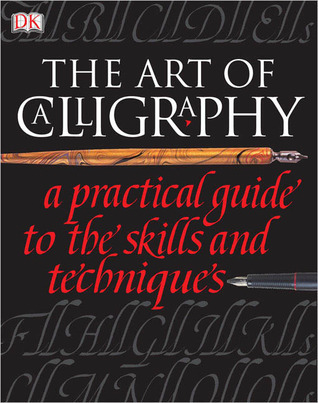
A richly illustrated manual traces the history of Western calligraphy, demonstrates various scripts, and shows manuscripts and inscriptions from the past, as it offers step-by-step guidance on how to master the essential skills and techniques of fine writing. Reprint.
Librarian Note: There is more than one author in the Goodreads database with this name. This profile may contain books from multiple authors of this name. See this page for more information.
Great book with a huge collection of examples and instructions step by step to learn calligraphy techniques. If you're into calligraphy this one is a must.
An excellent guide to calligraphy that includes several hard-to-find Gothic variations and Gothic-derived scripts alongside the more traditional scripts. The historical examples are abundant, and are printed clearly enough that the larger examples can be used as models.
Also, in a genre of books where the script exemplars tend to look nothing whatsoever like the historical examples, many of the scripts in The Art of Calligraphy actually look like the examples. That's rare praise. I'm working on Fraktur now, and I consult the historical example when I have questions about the script exemplar. You can't do that with most calligraphy books, even the otherwise excellent Medieval Calligraphy: Its History and Technique. If you want to learn scripts as they were actually written, that's priceless.
The ductus provided are excellent, and tips on the finer details of the scripts are inserted in the ductus descriptions and around the margins of the page. The tips are valuable. I learned from them even when reading pages on scripts I'd already studied exhaustively.
However, each script gets only one two-page spread of instruction, total. There's little to no information on letter, word, and line spacing, no explanation of how the letter shapes relate to one another, no "building block" strokes, and only as many examples of letter variations as will fit in the remaining space--that's not many. Casual readers may find this a blessing. There's enough information to learn to write a close resemblance of the historical script, but not too much to overload you. Calligraphers who are good at picking up the details on their own won't need more, especially with the excellent historical examples included. People in the middle--that's me--may find that they want more information.
But I can't complain too much. The book is beautiful, the exemplar scripts are easy to learn from, and the scripts are both attractive and rare. Well worth reading.
The Art of Calligraphy is one of my very favorite books of all time and is a great guide to enhance your handwriting and helps you practice the art of fine handwriting. With this book it showed me techniques and skills used hundreds of years ago to perfect calligraphy and gothic writting. This is a wonderful book and I recommend it to people that want to improve their handwriting!!
This was my fist calligraphy book ever, and I still refer to it time to time, especially for the wonderful timeline of calligraphy writing styles found at the beginning of the book!
Ever wonder how we came from Roman type, to Celtic swirls, to English Copperplate to a more German Blackletter? Well, the timeline in this book shows you all that.
Also, there is a wonderful chart at the back that has all the letters of all the 20 different alphabets as a quick-view.
At the beginning you find the usual items you need to work at calligraphy, how to do it (properly) and then in between also lots and lots of examples of real documents! (I love those examples so much).
This book has less of the more modern calligraphy (so works of art featuring calligraphy) but there are better books for that.