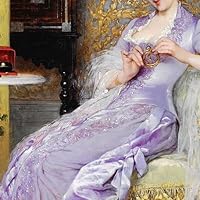
A very enjoyable read. As its title implies, the book has 2 heroines, Catherine and Paris (the girl being named Catherine-Paris in homage to the martyrdom of the city during the Franco-Prussian war of 1870). Catherine is the grand-daughter of some prince from Moldavia, but she is noble by nature as well as by blood, whereas Adam, the Polish prince she makes the mistake of marrying is the epitome of the aristocratic cad. Fascinated by Catherine's beauty, Adam is tricked into marrying her by his own mother, hellbent on her only son begetting a son so that the Zamosc estate remains under her control. Adam, whose only pleasure is to pursue creatures in flight, be they animals or women, quickly tires of his wife just because she is his for good. At first, Catherine remains a model of virtue, but eventually she falls in love with an inventor and pilot, who has the advantage of being French and therefore, more civilized. Unfortunately they wait until the beginning of the first world war to make up their minds, at which point Catherine, who holds an Austrian passport, becomes an "enemy" of her lover. In her naivety, she hopes her in-laws will help up get her marriage annulled, but of course, everybody conspires to prevent her from getting a divorce, which would put paid to any hope of keeping Zamosc in the family. When she falls pregnant with Robert's child, her mother-in-law makes sure Catherine's confessions of adultery never reach anyone. This being the case, when Catherine's son is born, he is legally Adam's heir. And that's where Bibesco lost me: the book ends on a note of triumph, with Catherine swearing to her old tutor that she will make a perfect little Frenchman of her son. Why would her mother-in-law, who has spent years plotting for the birth of this all-important heir, let Catherine keep control of him? Léonille Léopolska is a wonderful villain, and Bibesco's satirical depictions of the futile pursuits of a degenerate aristocracy are wickedly funny and spot-on. On the other hand, her lyrical descriptions of the beauty of Paris and the greatness of French civilization, while sometimes a bit fulsome, also read well because they are so obviously heart-felt. It's a great pity then that the book ends in a manner both abrupt and illogical.