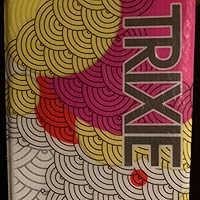
“Teams succeed to the degree that there is a free flow of ideas. Read this book to learn how to bring out the best in others—and in yourself.” —Scott Galloway, bestselling author of The Four and Post Corona
the number of ideas you or your team can generate in a set amount of time
We all want great ideas, but few actually understand how they’re born. Innovation doesn’t come from a sprint or a hackathon—it’s a result of maximizing ideaflow.
Jeremy Utley and Perry Klebahn of Stanford’s renowned Hasso Plattner Institute of Design (aka the “d.school”) offer a proven strategy for coming up with great ideas by yourself or with your team, and quickly determining which are worthy. Drawing upon their combined decades of experience leading Stanford’s premier Launchpad accelerator and advising some of the world’s most innovative organizations, like Microsoft, Michelin, Keller Williams Realty, and Hyatt, they’ll teach you how
• Overcome dangerous thinking traps • Find inspiration in unexpected places • Trick your own brain to be more creative • Design and deploy affordable experiments • Fill your innovation pipeline • Unleash your own creative potential, as well as the potential of others
Perhaps you have experienced low ideaflow. Have you been in that quiet conference room, with a half-filled whiteboard, and an unmet business target?. With the proven system in this book, entrepreneurs, managers, and leaders will learn how to tap into surprising and valuable ideas on demand and fill the creative pipeline with breakthrough ideas.
I read it twice. My notes- carry a notebook and capture your ideas, don’t trust your memory. Look back on the notebook often.
Think of a seed (problem statement) before bed, your mind will mull on it. When you wake, just start writing ideas without judgement.
Great problems to focus on addressing start with “You know what sucks…”
Dare to be obvious. Sometimes what we think is obvious is not and there lays the issue.
Diverge your thinking. Flood the problem with ideas- you need more ideas than you think. Don’t stop when one sounds attractive, keep going. Spin off. And these are not done in one sitting. Let the ideas stew.
Create a portfolio or test more than one idea at a time. Pilot. Simple quick tests. One hypothesis at a time. Baseline needed to measure growth. Observe in real world conditions. Look long. Desirability over feasibility. Momentum over perfection. Create ghost products and see how people respond.
Listen. Look. Notice. What are competitors doing? Reverse your assumptions. Go somewhere adjacent and study execution.
Seek to understand your customers better, and better and better- helps refine problems.
Play with how might we questions by framing with scale, quality, emotion, expectations, similarities, subtraction, diverge.
Analogous exploration- who does this successfully?
Ideaflow est un livre de croissance professionnelle accessible mais raffiné, s’adressant aussi bien aux travailleurs autonomes qu’au COO d’une grande entreprise. Les auteurs, tous deux issus du corps professoral de la réputée d.school de l’Université Stanford, réussissent à démystifier la créativité, souvent perçue comme un talent inné, en la présentant comme un processus que l’on peut cultiver au quotidien si on se donne la peine de l’exercer. Ce qui distingue l’ouvrage est sa polyvalence dans l’approche, qui ne se limite pas aux jobs de « créatifs ».
J’ai particulièrement apprécié la manière dont le livre challenge nos préconceptions et propose des outils concrets pour générer, structurer, tester et classer des idées, rendant la créativité plus rationnelle si je peux l’exprimer ainsi.
Petit bémol dans la tendance à simplifier la manière dont une entreprise peut réellement améliorer son ideaflow et mettre en place un pipeline de tests d’idées. Le passage à l’action est en vrai plus complexe en fonction des dynamiques organisationnelles.
Ideaflow est une lecture inspirante que je recommande fortement.
Ideaflow is a book on how organizations maximize potential adaptability, growth, and/or innovation by generating as much ideas as possible into what they define as the 'idea pipeline'. I think the book is targeted towards business leaders, managers, and RnD-related fields in order to enhance the capability for the organization.
The book explores "what kind of ideas should we generate?" and "how do we view these ideas and evaluate them?". Also, the book explores various examples on how to create a condition within the organization where the two questions prior can be achieved. Ideaflow favors narratives and anecdotes rather than rigid constructs - so you may expect some redundancy in terms of insight within multiple parts.
However, my biggest critique is the lack of fundamental reasoning and insight exploration. When the book dives into a concept or example, it does go down to a level where the change, impact, or benefits takes place, but not to where we understand why it actually works.
Overall, it's a good and light read for anyone interested in innovation. I believe this will suite people who are struggling on creating an 'innovative culture' or looking to improve their organization's capabilities.
26/30 Ideaflow argues that the most important predictor of innovation success is not talent, intelligence, or even execution, but the rate at which an individual or organization generates, tests, and refines ideas. Utley and Klebahn—both affiliated with Stanford’s d.school—define “ideaflow” as the volume and velocity of ideas moving through a system. Their core claim is blunt: bad ideas are not the enemy; too few ideas are.
The book is structured around dismantling common myths about creativity. First, it rejects the notion that good ideas arrive fully formed or through solitary genius. Instead, innovation is framed as a numbers game governed by systems. The more ideas you generate, the more raw material you have for refinement, recombination, and eventual breakthroughs. Quality emerges downstream from quantity.
Utley and Klebahn emphasize psychological safety as the precondition for ideaflow. Teams that fear judgment, premature criticism, or reputational damage will self-censor, choking off idea generation. The authors draw heavily on case studies—from IDEO, Pixar, Google, and startups—to show how high-performing creative cultures normalize unfinished, even “bad,” ideas. Leaders are urged to model curiosity, reward experimentation, and separate ideation from evaluation.
A large portion of the book focuses on practical techniques to increase ideaflow: structured brainstorming formats, idea quotas, reframing questions, rapid prototyping, and deliberate exposure to diverse inputs. One recurring tool is the insistence on asking better questions—shifting from “What’s the best solution?” to “How might we generate 20 ways this could work?” Ideas are treated as cheap, abundant, and disposable; learning is the real asset.
Another important theme is speed. Ideas lose value when trapped in discussion or perfectionism. The authors advocate fast cycles of testing, feedback, and iteration, even when the ideas are incomplete. This bias toward action aligns ideaflow with lean startup thinking, but framed less as market validation and more as creative metabolism.
The book closes by urging organizations to measure ideaflow—tracking idea generation rates, experiment counts, and learning velocity—rather than fixating solely on outcomes. In this sense, Ideaflow positions itself as a management manifesto: innovation should be managed like a flow system, not a talent competition.
Critical Review
Ideaflow is at its strongest when it demystifies creativity. By treating ideas as provisional objects rather than precious insights, the book liberates teams from paralysis and ego. This is especially valuable in environments—corporate, academic, or bureaucratic—where fear of being wrong suppresses initiative. The emphasis on psychological safety, reframing questions, and separating ideation from judgment is well-supported and genuinely useful.
The book is also highly actionable. Readers can apply its techniques immediately, whether in workshops, product teams, or solo creative practice. Its tone is encouraging without being fluffy, and its examples—while familiar—are deployed clearly. For leaders who default to outcome obsession, Ideaflow provides a corrective by shifting attention to process quality.
That said, the book has significant blind spots.
First, it tends to flatten differences between domains. The same ideaflow logic is applied to product design, organizational change, personal creativity, and strategy. In practice, not all fields reward high idea volume equally. In domains constrained by regulation, capital intensity, or irreversible risk, excessive ideation without strong filters can be wasteful or dangerous. The book acknowledges evaluation later—but underestimates how early constraint sometimes matters.
Second, Ideaflow risks overcorrecting against judgment. While premature criticism is harmful, so is prolonged suspension of discernment. Skilled practitioners don’t just generate more ideas—they generate better starting ideas because of taste, experience, and internalized standards. The book downplays the role of cultivated judgment, treating it as something that emerges automatically from iteration. That’s only partially true.
Third, the book is managerially optimistic. It assumes leaders can engineer ideaflow primarily through culture and process. Power dynamics, incentives, and institutional politics receive less attention than they deserve. In many organizations, people don’t withhold ideas because they fear embarrassment—they withhold them because ideas threaten existing hierarchies. No amount of brainstorming ritual fixes that.
Finally, while the title claims ideaflow is “the only business metric that matters,” this is rhetorical overreach. Ideaflow is a leading indicator, not a substitute for execution, capital discipline, or strategy. The book is strongest when read as a process philosophy, weakest when it presents itself as a universal metric.
Overall Assessment
Ideaflow succeeds as a practical, morale-resetting book about creativity and innovation. It is especially valuable for teams stuck in caution, perfectionism, or consensus-seeking. Its central insight—that innovation depends on how freely ideas move—is correct and well-argued.
However, its enthusiasm sometimes outruns its nuance. Ideaflow is not sufficient on its own; it must be paired with strong filters, clear stakes, and mature judgment. Read charitably, the book is a powerful antidote to creative stagnation. Read literally, it risks turning creativity into an abstract KPI divorced from reality.
If you have read any books on JTBD, lean startup, design thinking, VoC, etc, you probably won't gain much from this book. Like most books, this could have been a blog post with some key takeaways instead of a ~300 page book.
“Creativity isn’t just how we solve problems. It’s how we contribute the very best of ourselves.” You will see how this concept comes to life in Ideaflow, written by Jeremy Utley and Perry Klebahn. The book is an inspiration from page one throughout. Not only does Utley and Klebahn showcase the reasons why creativity is essential to today’s work (regardless of what industry you work in), they give tangible ways to raise your idea quota in your everyday. Through concepts like participating in learning circles, creating a customer council, and cross-pollinating your network, you learn how to diversity your perspectives on problems. The authors do not stop there, they then go on to provide ways to stoke your creativity in solving those problems with producing a high quantity of ideas to test in iterative and low risk ways.
I especially liked the chapter that showcases a variety of organizations and their adventures in using Ideaflow to achieve various solutions they most likely would have overlooked. No matter what industry you are in, no matter what size your company is, there is a place for Ideaflow when you can create the safe, open environment to invite different perspectives and ideas into the work.
The book reignited my love for falling in love with the problem, not the solution. Creativity isn’t just something you are born with. You can strengthen it over time. Utley and Klebahn provide amazing exercises to do just that. They also provide proof points on the more human-centered solutions you will develop when you engage in Ideaflow and experiment your way forward.
Creativity isn’t magic. It’s math. And Ideaflow makes a surprisingly convincing case that innovation works better when you treat it like reps at the idea gym.
Jeremy Utley and Perry Klebahn’s Ideaflow: The Only Business Metric That Matters came out in 2022. It’s business nonfiction, kind of in that design thinking meets productivity lane. The idea’s simple: how many ideas you produce per unit of time is the only number that really matters if you want to be more creative. The book lays out how to increase that flow. Daily idea quotas. Rapid testing. Lightweight feedback. It covers solo work and teams. The examples come from places like Google X and Netflix but stay accessible.
I already knew Jeremy Utley’s work so I was probably biased. But still I found it really engaging. The writing moves fast. It’s direct, not academic. And a lot of the tools actually feel usable. Like something I’d try tomorrow, not file away and forget. The core argument, volume over perfection, wasn’t new to me but the way they structured it made it click. There were a few moments where it leaned a bit too feel good. And I don’t think everything they say works for every kind of creative work. But overall? It delivers. 4/5. Strong. Not perfect. Definitely worth it.
I am always on the lookout for advice from experts on how to help my clients succeed. In this case, I turned to two faculty members at Stanford's renowned d.school for tips on my "Breakthrough Creativity" training.
Overall, this was an enjoyable read that did contribute to my knowledge of creativity and the creative process. I especially enjoyed the authors' examples of how they applied their concepts in their roles as organizational consultants.
Having said that, I thought the book suffered from the same shortcoming as most nonfiction works I read: length and density. Like most nonfiction authors, Utley and Klebahn would have written a better work if it were about 75% as long (less details, fewer examples).
Still, I'm glad I read this book by two experts on a subject I find endlessly fascinating. I just wish it were a little less wordy at times - hence the three stars instead of four or five.
My top read of the year; Concepts that you can apply immediately.
When this book was announced it immediately went to the top of my list of books to read. As a leader of teams that rely on idea generation and accompanying processes, this book was everything that I expected. Jeremy and Perry offer pragmatic information and concepts that can be immediately applied, beginning with the simple fact that "every problem is an idea problem." Don't let bias creep into your idea generation. Embrace the fact that we need to generate lots of ideas because as Jeremy and Perry discuss, "By focusing on solutions, you're looking through the wrong end of the telescope." This book will take you through a multitude of actionable lessons. It’s a journey well worth traveling that will provide amazing tools for your toolbox and prove that Ideaflow is indeed the critical metric.
Ideaflow: The Only Business Metric That Matters" offers valuable insights on fostering a culture of innovation and creativity in a business setting. The author presents several practical examples and actionable steps for implementing an idea-driven approach to business. However, the book tends to repeat some of its points several times, which can make it feel a bit repetitive. Some parts of the book feel rushed and could benefit from more detail, while other sections feel like they drag on for too long. Overall, the book contains valuable information, but it could have been presented in a more engaging and concise way. This book is worth reading for those interested in business and innovation, but it may not be the most enjoyable read.
This is a solid book about the creative process, written by a Stanford professor who has studied innovation and creativity at some of the top companies in multiple industries. One of the main points he makes in the book is that the number and range of our ideas is directly correlated with the quality of our products or services and our eventual success. Even more importantly, he makes the point that if the quality of ideas is distributed normally, then we have to be willing to entertain really terrible ideas (long tail left) if we want to allow ourselves to discover the really brilliant ideas (long tail right); that is, if we cut off bad ideas, we cut off our access to some of our potentiall greatest ideas, and we end up settling for good enough.
The book brings the idea of being creative to everyone. It clearly establishes that you don’t need to be a designer or an artist to be creative and instead almost every job can benefit from creativity. The techniques mentioned in the book largely apply to an individual trying to foster creativity within themselves and then within the organization they work at. The key ideas are simple, some you might already be applying at work without thinking of them as techniques, others that you see others around you applying at times. None of it seems far fetched and most techniques you can put to practice right away.
This book offers a wealth of practical examples that effectively illustrate its creative techniques. The strength lies in Part 2, which presents innovative methods for sparking idea generation. However, Part 1, while informative, feels unnecessarily lengthy as it focuses on justifying the methodology. These foundational concepts could have been more efficiently woven into Part 2, creating a more streamlined reading experience.
The abundant real-world examples are particularly valuable, as they help readers immediately understand how to apply each concept to their own situations. This hands-on approach transforms abstract theories into actionable strategies.
Overall, I think this book had some very good points to make and it is worth reading. One of my key takeaways was to test often and cheaply. Do not invest a lot of effort in an idea that does not have support.
I read the audiobook version and I am unhappy to report that the producers committed the sin of letting the author's read their own book. There are professionals that should be hired as listening to the authors read was painful. Take a deep breath and read the entire sentence at one time. Even voice professionals shouldn't read their own book (sorry, Wil Wheaton)
Ideaflow takes the concept of generating a quantity of ideas to be able to create a good idea to test and develop. In this book Jeremy and Perry , layout simply the concepts of design thinking to solve problems in a manner that is quickly adaptable to your daily needs. Anyone who wants to encourage a team to brainstorm new ideas should read this book.
Challenging yet motivational. Top notch! I have nothing negative to say about it. It’s not great writing, but it’s not bad at all. Is that negative?! I was grasping at straws. It’s a good book and any business owner or leader should read it. They will pick up something out of it that will benefit them.
This was a good book to inspire a new thought process. At times the book was written for team leads or managers which made it harder to relate to but overall I was able to get something out of each chapter.
I will definitely be keeping it on my bookshelf to return to when my memory fades from the tactics it mentions.
Some of the ideas were interesting but I am not sure if it a topic that will stick with me over time. The most valuable insights are around pushing against our instinct and not being afraid to fail.
I will likely look to document more of my ideas after reading this book but curious if it will have an last impact.
This entire review has been hidden because of spoilers.
Advice is sound and told in practical ways. Real-life examples of real, believable problems. I'm sold, I have already started implementing the advice by the authors. I'd recommend this to anyone interested in improving their work habits or making their job more enjoyable. Absolutely recommend!
I thought it was a great read, I enjoyed the things to think about, some of the chapters with lists of things to take away and ideas of how. The real life examples that were embarassing to the author but ht home of things to do differently!
Really good, practical ideas about increasing the quantity and quality of ideas within a business. I did skim a lot of the anecdotes because, like most business books, there is a lot of filler here. But the concepts and practices are solid and useful.
So it starts off a bit corny and the examples run a bit long in places but overall I found the concepts insightful and thought provoking. I will be putting several of these ideas into practice and will be talking about it for a long time.
True to its name, this book is bubbling with ideas on how both individuals and organisations can better generate ideas, and execute on them. Creativity is the precursor to innovation and this book does great justice to the topic!
O carte foarte bună pe care o recomand oricărui om, indiferent de ce face sau în ce domeniu activează. Creativitatea este necesară peste tot, iar fluxul creativ este un indicator care contează foarte mult.
I very much liked the reminder that all problems are in search of a solution. Writing down two minutes to a prompt w/o judgment at first. Bring in different perspectives. Creativity and time for reflection in a reflexive job.
Great book written by Stanford d.school executives on how to cultivate business ideas and run experiments to find innovative solutions. It gives recommendations on how to make ideation a regular part of your process.