

What do you think?

Think Bigger: How to Innovate
In Think Bigger , Sheena Iyengar―an acclaimed author and expert in the science of choice―answers a timeless question with enormous implications for problems of all kinds across the “How can I get my best ideas?”
Iyengar provides essential tools to spark creative thinking and help us make our most meaningful choices. She draws from recent advances in neuro- and cognitive sciences to give readers a set of practical steps for coming up with powerful new ideas. Think Bigger offers an innovative evidence-backed method for generating big ideas that Iyengar and her team of researchers developed and refined over the last decade.
For anyone looking to innovate, the black box of creativity is a mystery no longer. Think Bigger upends the myth that big ideas are reserved for a select few. By using this method as a guide to creative thinking, anybody can produce revolutionary ideas.
Iyengar provides essential tools to spark creative thinking and help us make our most meaningful choices. She draws from recent advances in neuro- and cognitive sciences to give readers a set of practical steps for coming up with powerful new ideas. Think Bigger offers an innovative evidence-backed method for generating big ideas that Iyengar and her team of researchers developed and refined over the last decade.
For anyone looking to innovate, the black box of creativity is a mystery no longer. Think Bigger upends the myth that big ideas are reserved for a select few. By using this method as a guide to creative thinking, anybody can produce revolutionary ideas.
248 pages, Hardcover
Published April 11, 2023
About the author
Sheena Iyengar
3 books135 followersSheena Iyengar is the S.T. Lee Professor of Business at Columbia University and a recipient of the Presidential Early Career Award. She holds an undergraduate degree from the Wharton School of Business and a doctorate in social psychology from Stanford University. Her work is regularly cited in periodicals such as the New York Times and the Wall Street Journal, Fortune and TIME.
Considered one of the world's experts on choice, Sheena has written her own book, The Art of Choosing. In the book, she explores questions such as why choice is powerful, and where its power comes from; the ways in which people make choices; the relationship between how we choose and who we are; why we are so often disappointed by our choices; how much control we really have over our everyday choices; how we choose when our options are practically unlimited; and whether we should ever let others choose for us, and if so, whom and why.
Considered one of the world's experts on choice, Sheena has written her own book, The Art of Choosing. In the book, she explores questions such as why choice is powerful, and where its power comes from; the ways in which people make choices; the relationship between how we choose and who we are; why we are so often disappointed by our choices; how much control we really have over our everyday choices; how we choose when our options are practically unlimited; and whether we should ever let others choose for us, and if so, whom and why.
Ratings & Reviews
Friends & Following
Create a free account to discover what your friends think of this book!
Community Reviews
Displaying 1 - 13 of 13 reviews

August 20, 2023
کتابب درباره خلاقیت. اینکه خلاقیت ذاتی نیست و اکتسابیه و برای رسیدن به ایدههای خلاقانه راهکارهایی رو ارائه داده که به نتیجه مطلوب برسه.
برای افرادی که به دنبال خلاقیت و نوآوری هستند مفیده و با مثال تمام 6 مرحله خلاقیت رو توصیف کرده.
برای افرادی که به دنبال خلاقیت و نوآوری هستند مفیده و با مثال تمام 6 مرحله خلاقیت رو توصیف کرده.

July 7, 2023
#getabstract

August 1, 2023
Sheena Iyengar is a baller.

November 4, 2022
This book is good for its structure on how to think of, develop and present an idea. The author is teaching a course and provides a framework on how to innovate. There are several interesting and new examples on innovation and some of them are from well known companies. There is an interesting thought that innovation is not necessarily a completely new thing/solution but a combination of existing old things to solve a problem. Sometimes problem solving is connected to making a product/solution more efficient. Overall an interesting book and I liked the story of innovation behind the Statue of Liberty.
May 3, 2025
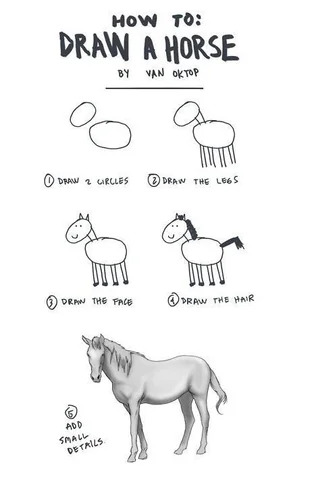
Dr. Iyengar provides some fresh perspectives on creativity and problem solving in a programmatic and structured way that anyone can follow. That being said, at a few of the steps she lays out, I felt like:

October 8, 2025
Since I heard an interview of Iyengar on the Hidden Brain podcast, I wanted to learn more about how she teaches creative problem-solving. She starts with the standard steps: identify a big problem that you care about, define criteria for evaluating solutions, and break the big problem into smaller sub-problems. Then for the ideation phase, she tells the story of engineer Lloyd Trotter, which was new to me. At General Electric, Trotter accelerated institutional learning among manufacturing plants by arranging for managers of high-performing plants to mentor managers of lower-performing plants. Iyengar formalizes this process of learning from precedents: For each subproblem identify successful precedents both inside and outside the problem domain, then copy strategically. She replaces standard networking, which produces many low-quality conversations, by "idea-working," which produces a few high-quality conversations with people involved in those successful precedents. This structured ideation process is the main contribution of the book. Remarkably, although blind, Iyengar uses visual examples from paintings and sculptures to illustrate her ideas.
March 14, 2025
Obvious Repackaged
I heard the author on a podcast - and she was fabulous, which made me buy this book. And the book is a far cry from being fabulous! The six step method is childish, at best. Books are written to share non-obvious insights to expand the horizon of learning. This isn’t that.
I heard the author on a podcast - and she was fabulous, which made me buy this book. And the book is a far cry from being fabulous! The six step method is childish, at best. Books are written to share non-obvious insights to expand the horizon of learning. This isn’t that.

Read
June 26, 2023My interview with Professor Sheena Iyengar on "Think Bigger" for The Armen Show:
http://www.armenshirvanian.com/podcas...
http://www.armenshirvanian.com/podcas...

August 18, 2023
This book made me feel excited to try Iyengar’s method for innovating. She presents a compelling view, and I have ideas I’d like to test. I’d like to see an outline/bulleted summary of each step in her process to help me remember.
October 1, 2023
Iyengar has written a fascinating follow up to The Art of Choosing. She takes on what it means to be creative, and how to break seemingly huge tasks into smaller, related, and less complex goals, by drawing from the accumulated work that has come before.

November 22, 2023
کتاب بسیار خلاق، بدیع و نو
متناسب با تکنولوژی روز
ارائه آمار درست و به روز...
ولی متاسفانه اصلا برای من کار نکرد....
متناسب با تکنولوژی روز
ارائه آمار درست و به روز...
ولی متاسفانه اصلا برای من کار نکرد....

June 1, 2025
Great innovative book as a business owner open my horizon to new ways to advance my business a bit long winded but overall good

April 5, 2023
Nothing is completely new and, if that is the case, if there is no particular genius about those who get innovative ideas, then we can all get them!
This book is amazing at breaking down how one gets inspiration. With beautiful examples and detailed case studies, there is really so much information here, I just can't recommend it enough!
In this link you'll find the main ideas I gathered from it. Check them out to see if this book is for you:
https://shereadsbusiness.com/2023/04/...
This book is amazing at breaking down how one gets inspiration. With beautiful examples and detailed case studies, there is really so much information here, I just can't recommend it enough!
In this link you'll find the main ideas I gathered from it. Check them out to see if this book is for you:
https://shereadsbusiness.com/2023/04/...
Displaying 1 - 13 of 13 reviews